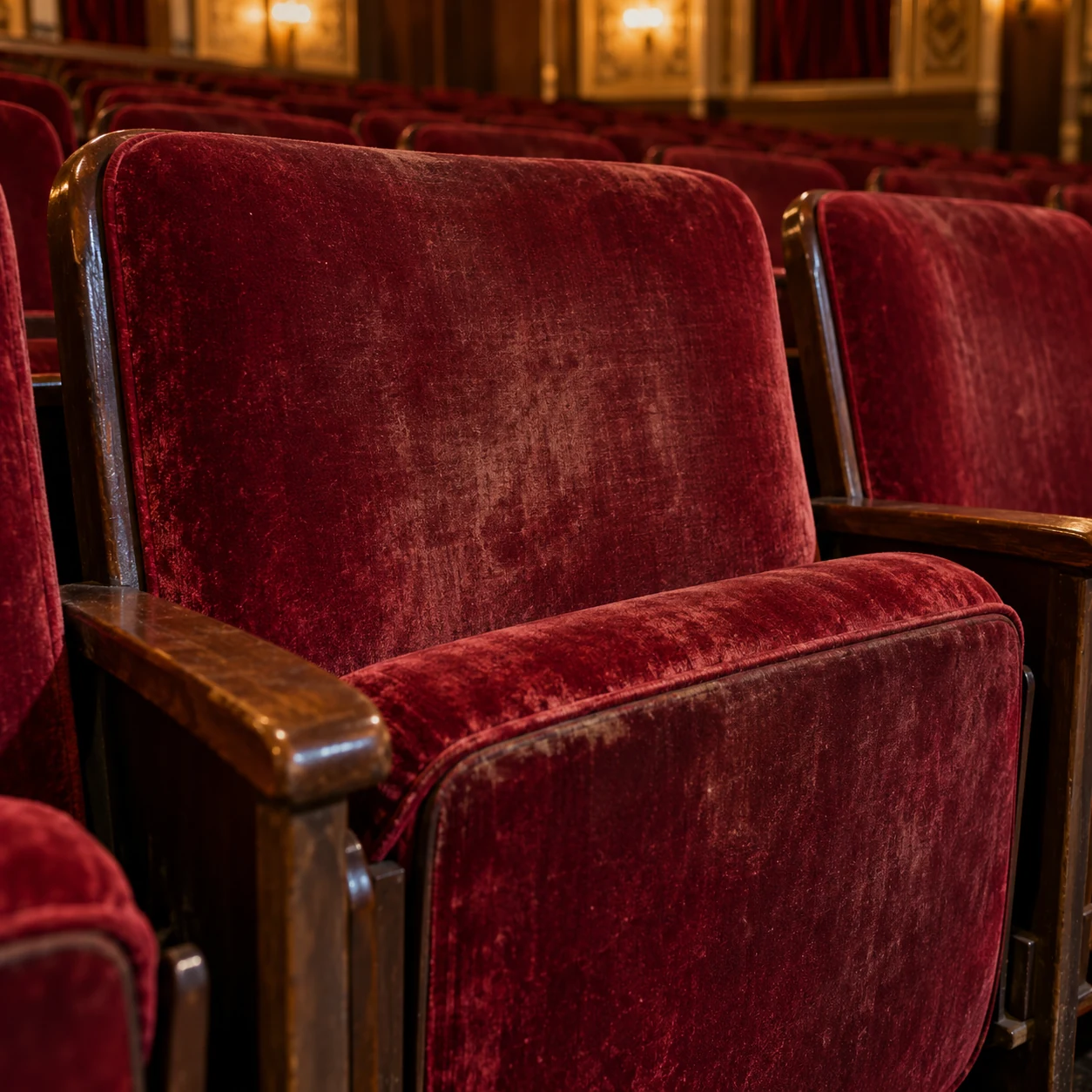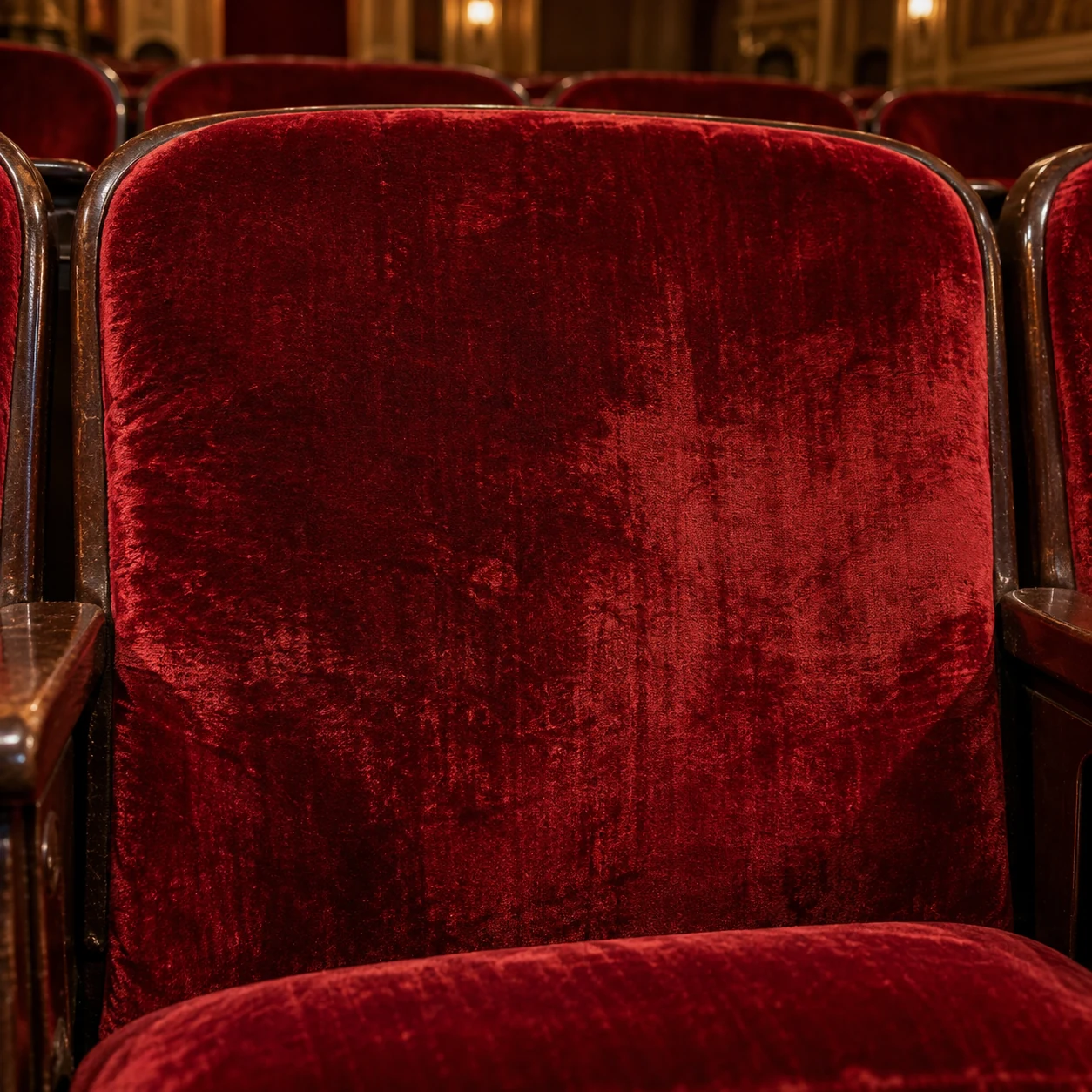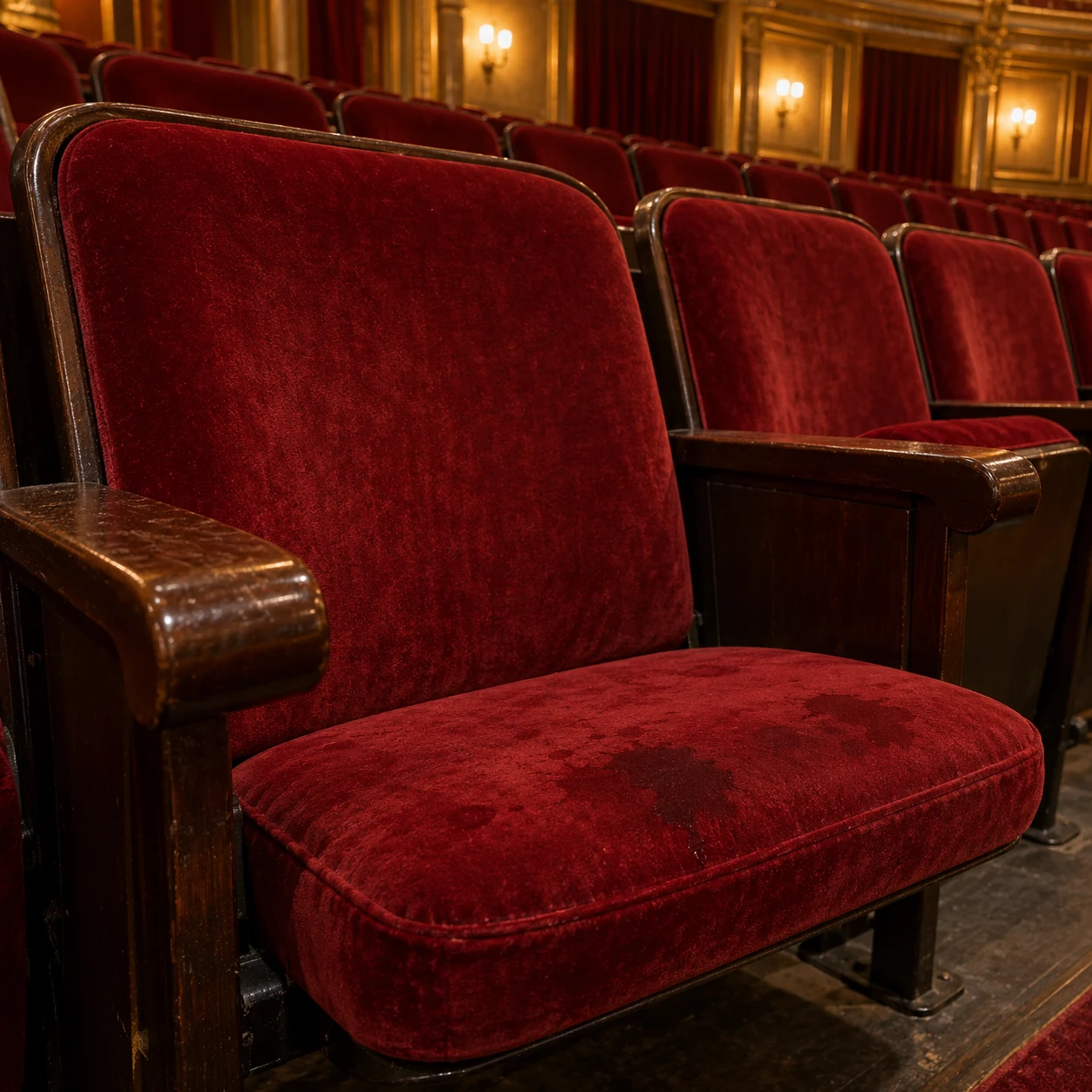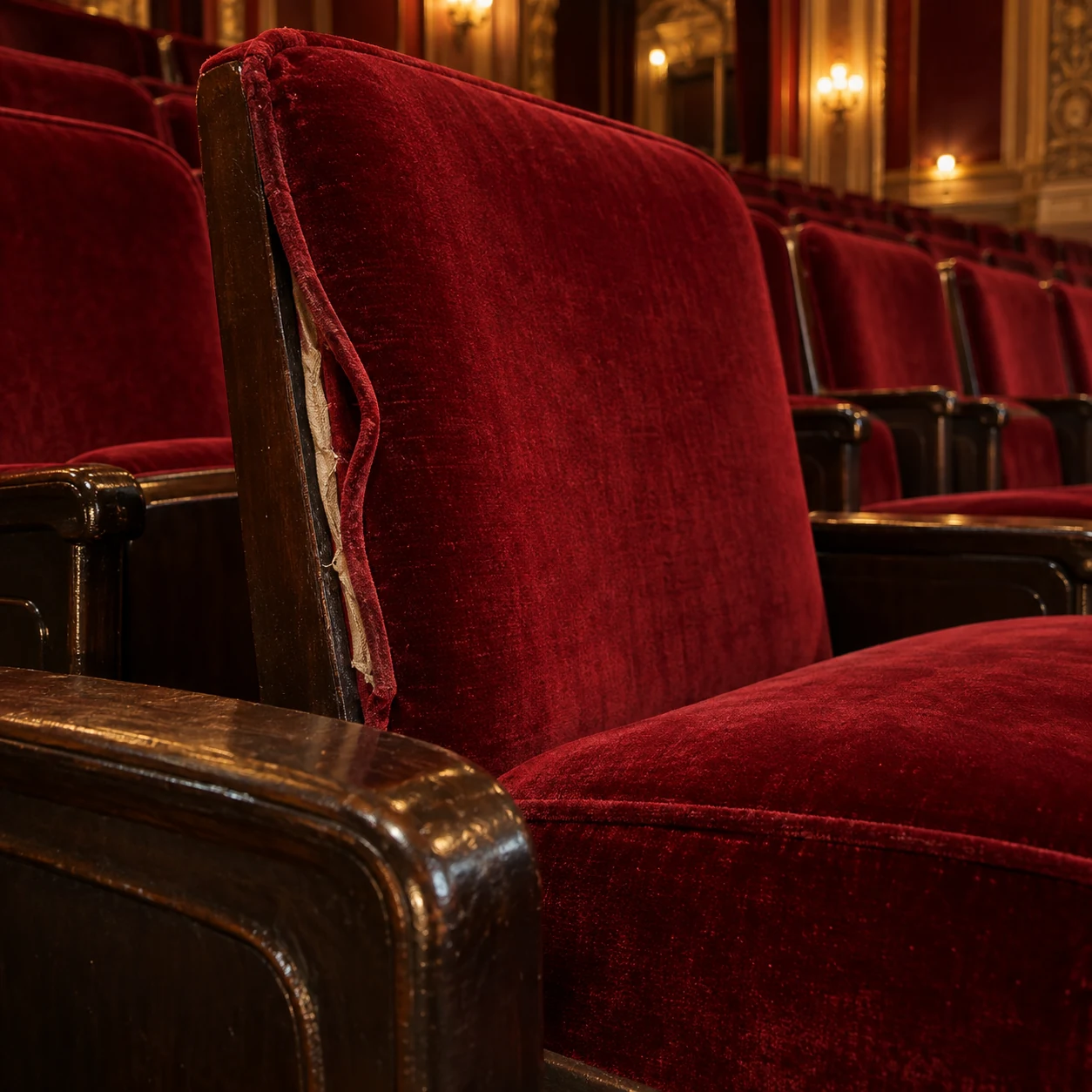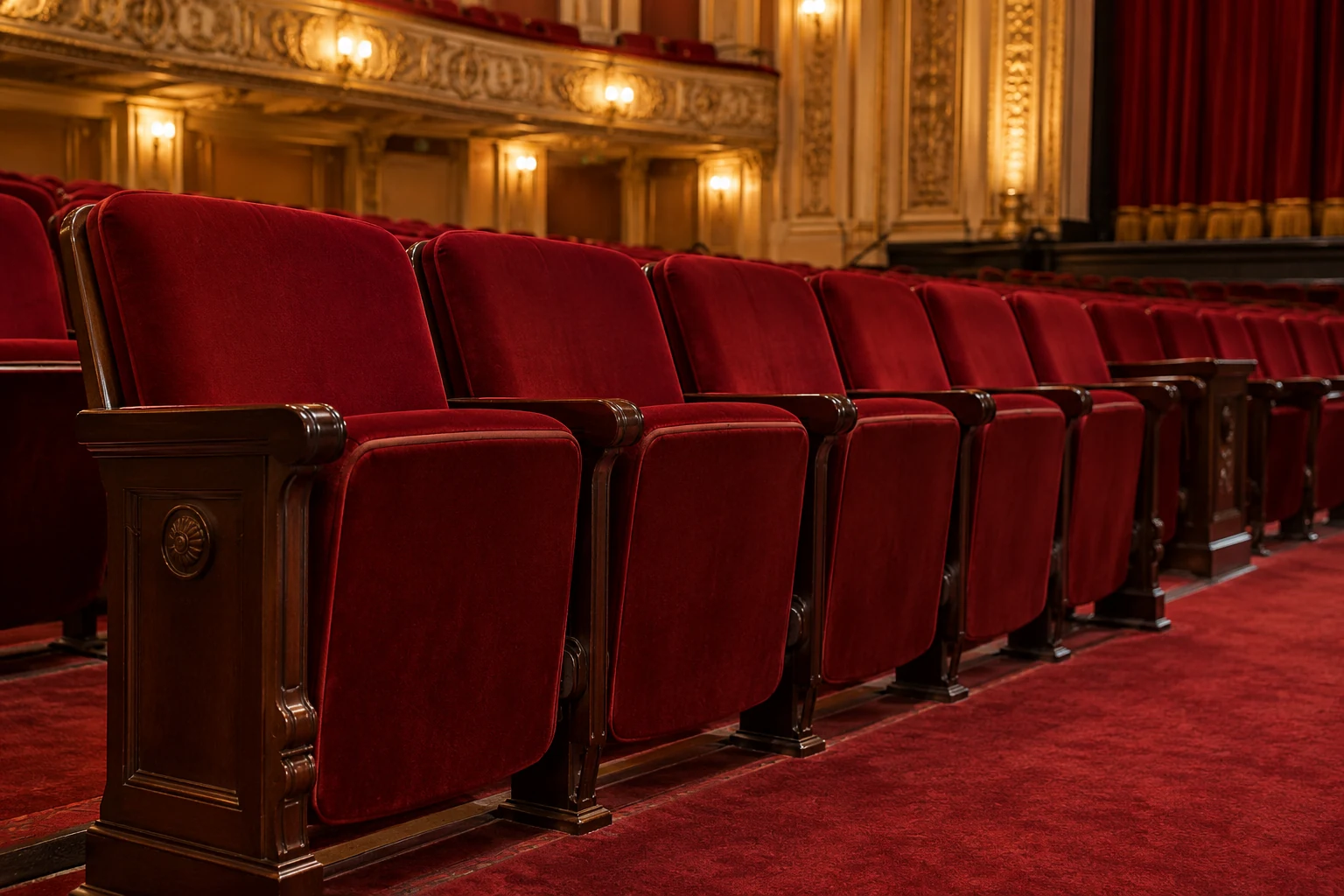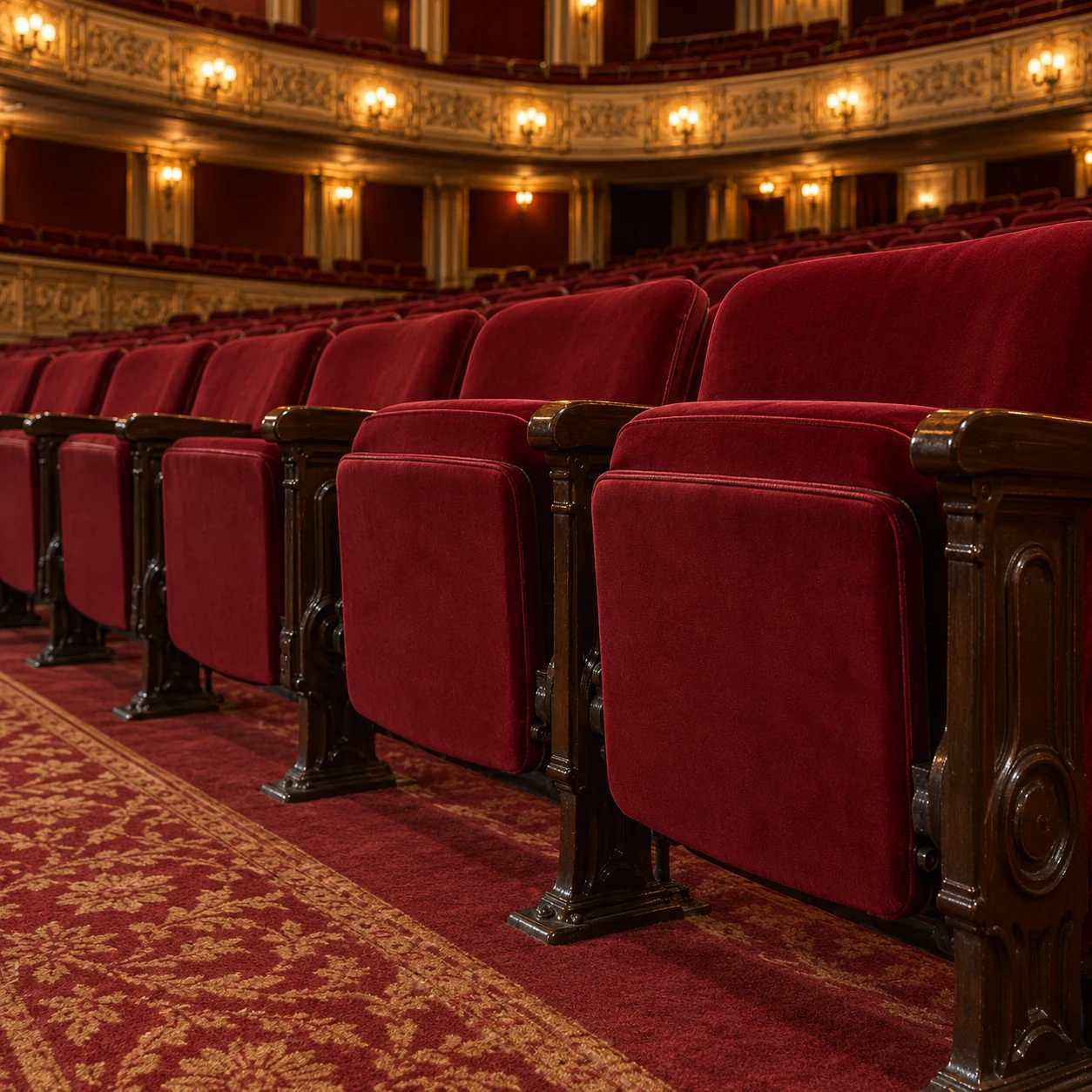
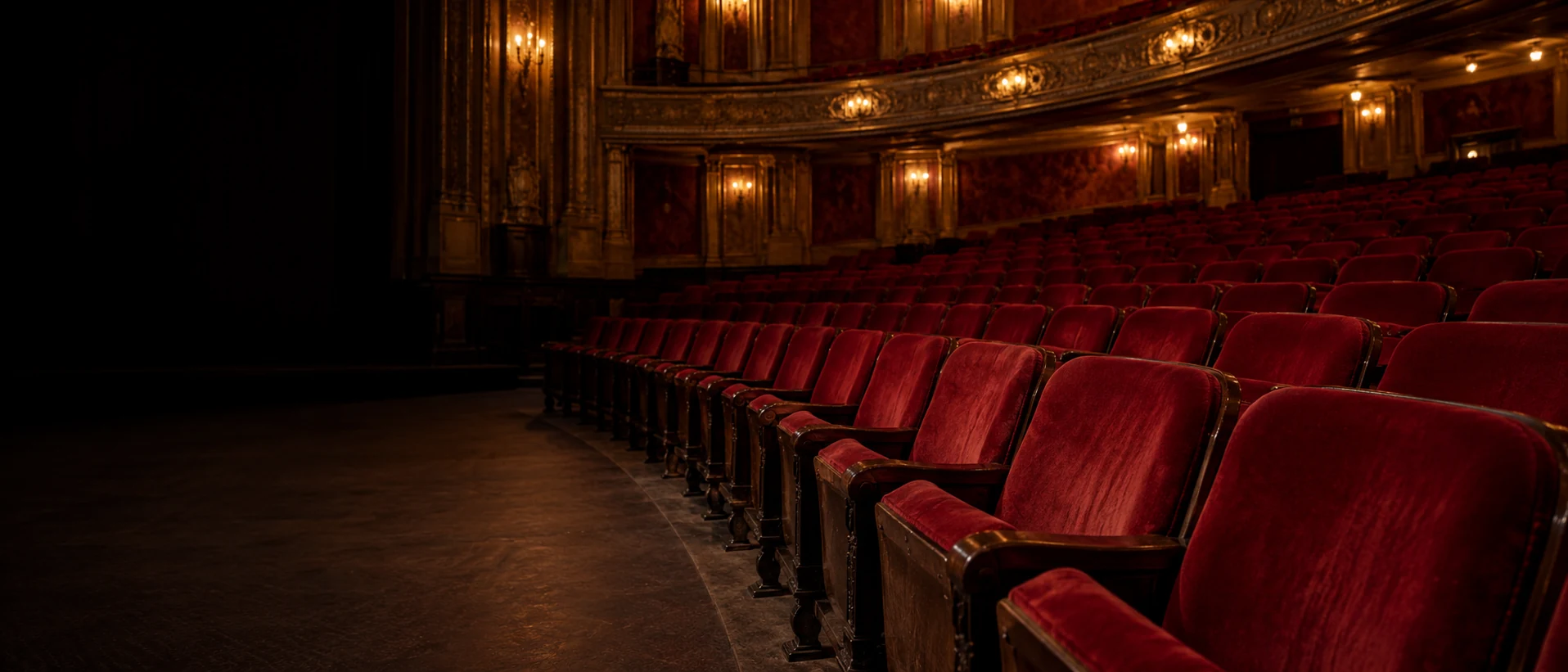
Theater seating reupholstery NYC: a house of red velvet seating before doors
Home / Industries / Entertainment / Theater Seating Reupholstery
Theater seating reupholstery

The room was tuned with these seats in it.

Theater seating reupholstery in New York houses: velvet, foam and webbing replaced row by row, matched to the absorption the room was built around, and worked between performances.

Why it is not just fabric

A house full of seats is a tuned surface

The upholstery in an auditorium is the largest soft area in the building. It was specified with the room, not after it, which is why theater seating reupholstery is an acoustic job before it is a decorating one. The same logic runs through auditorium seating of every kind.
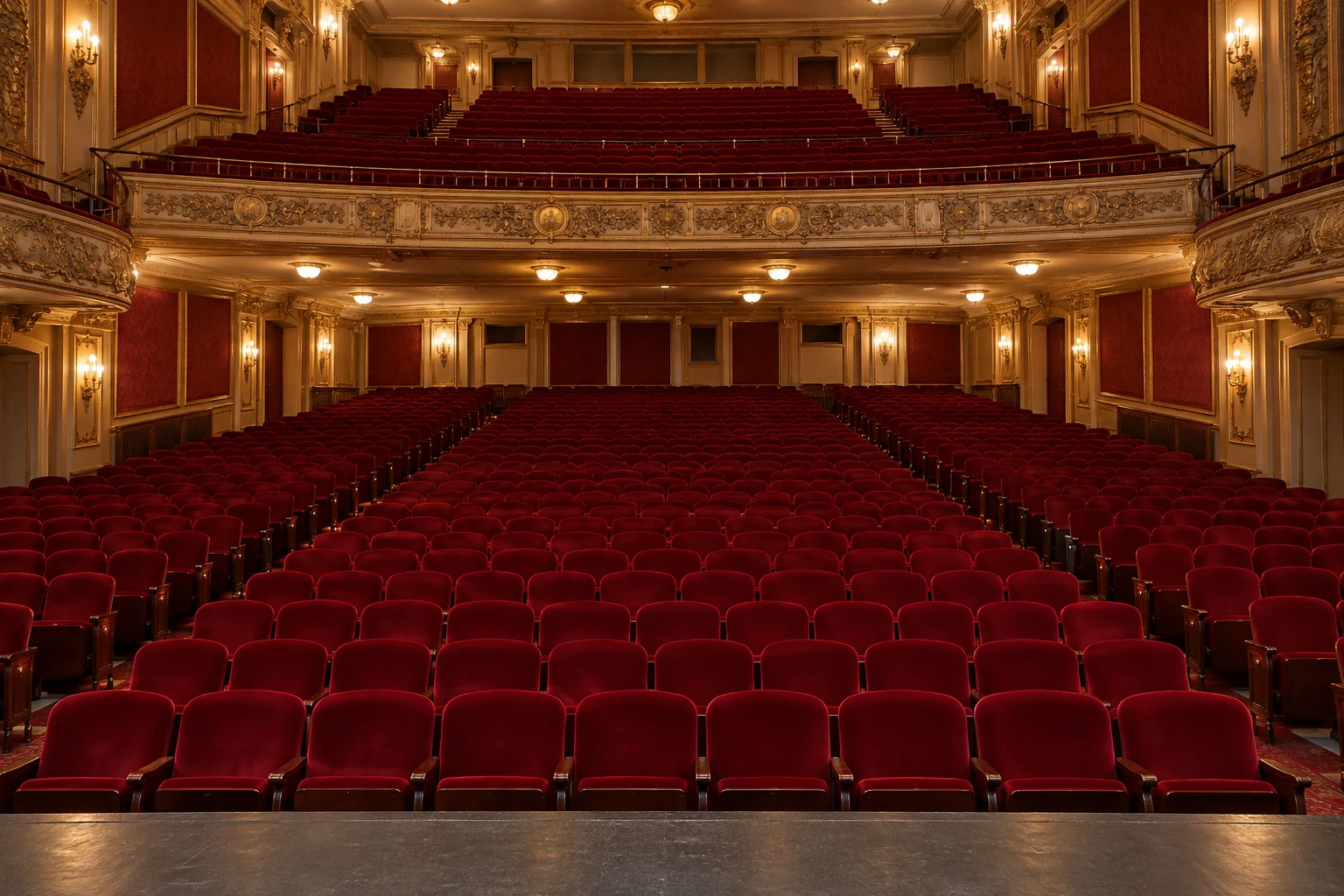
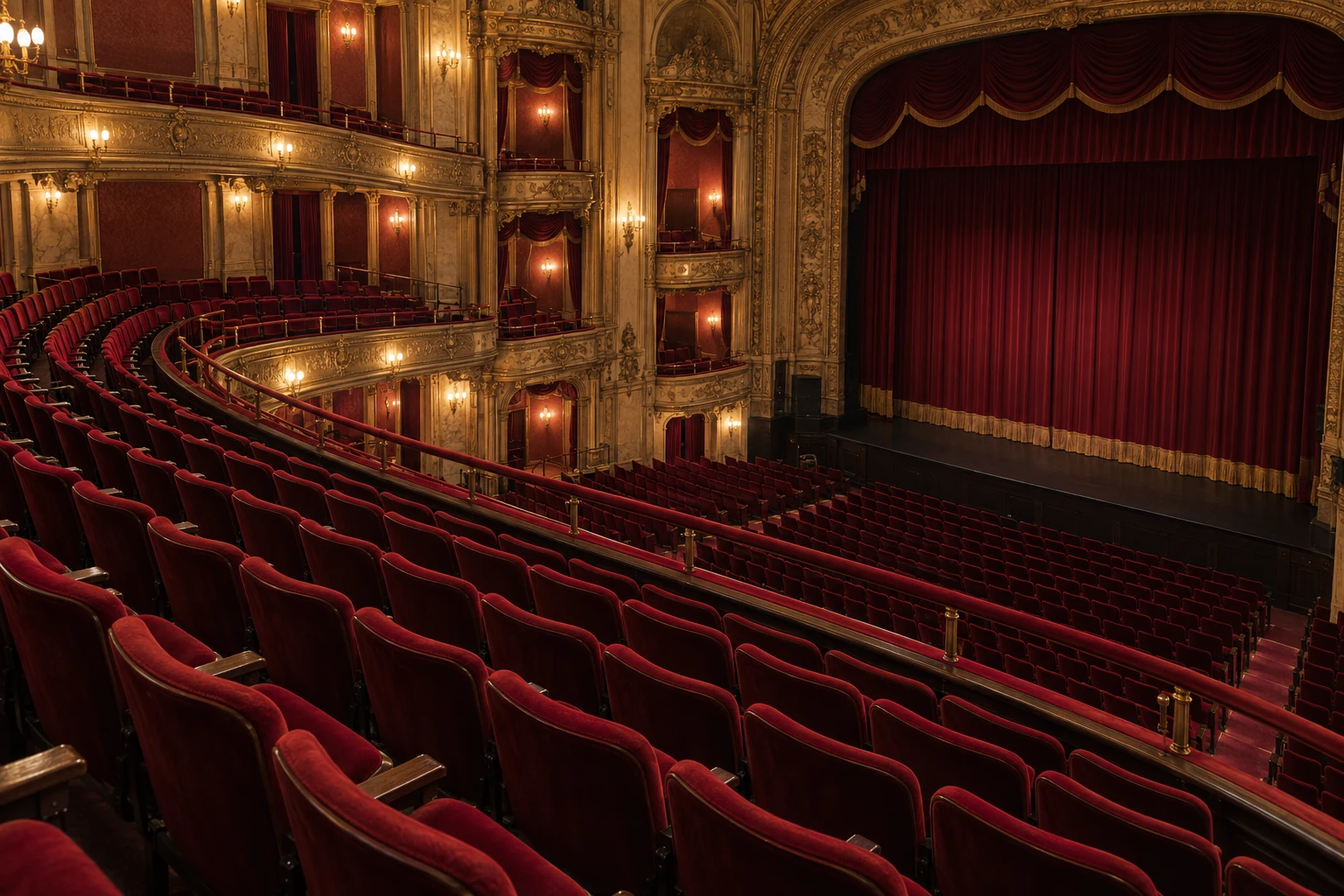
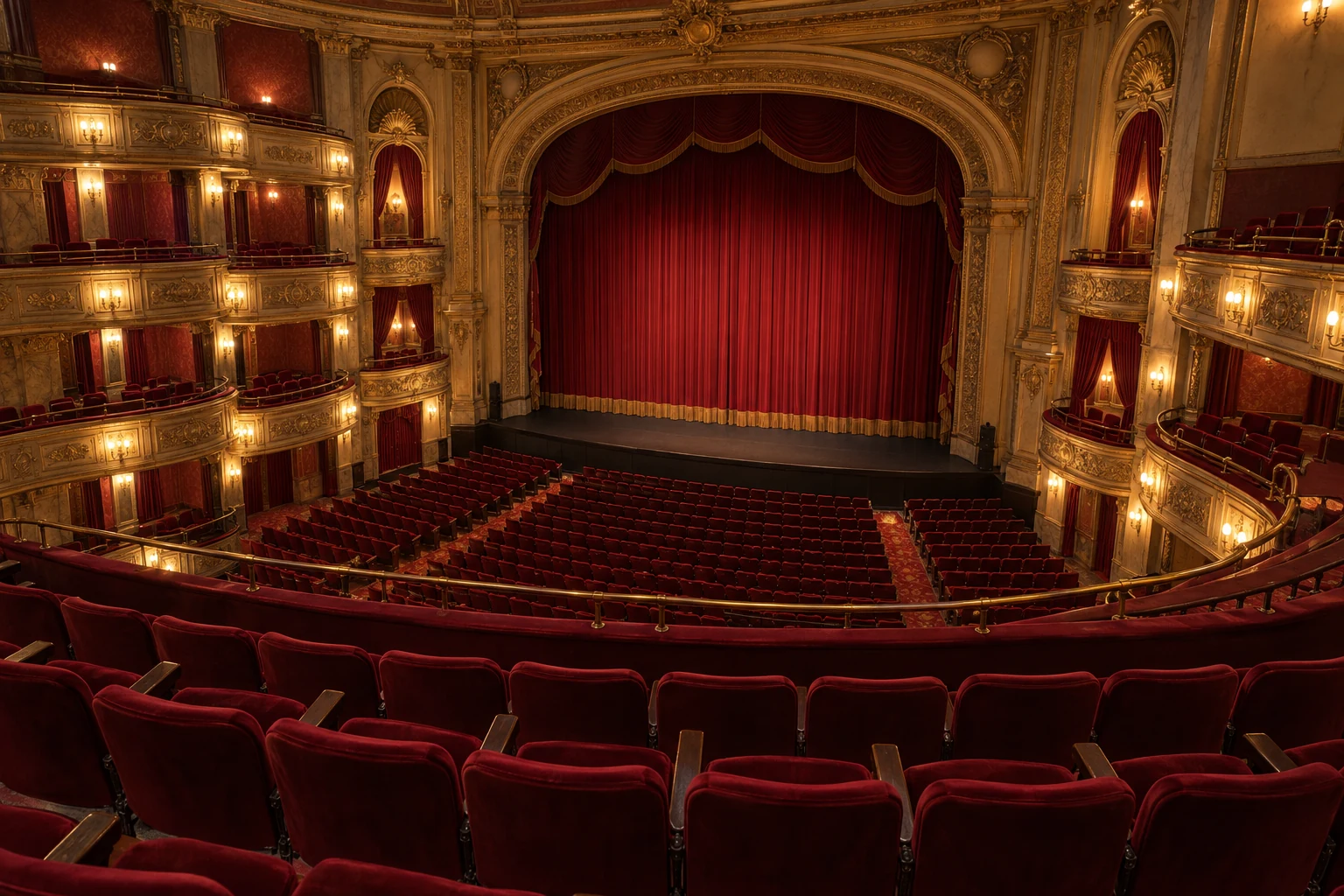
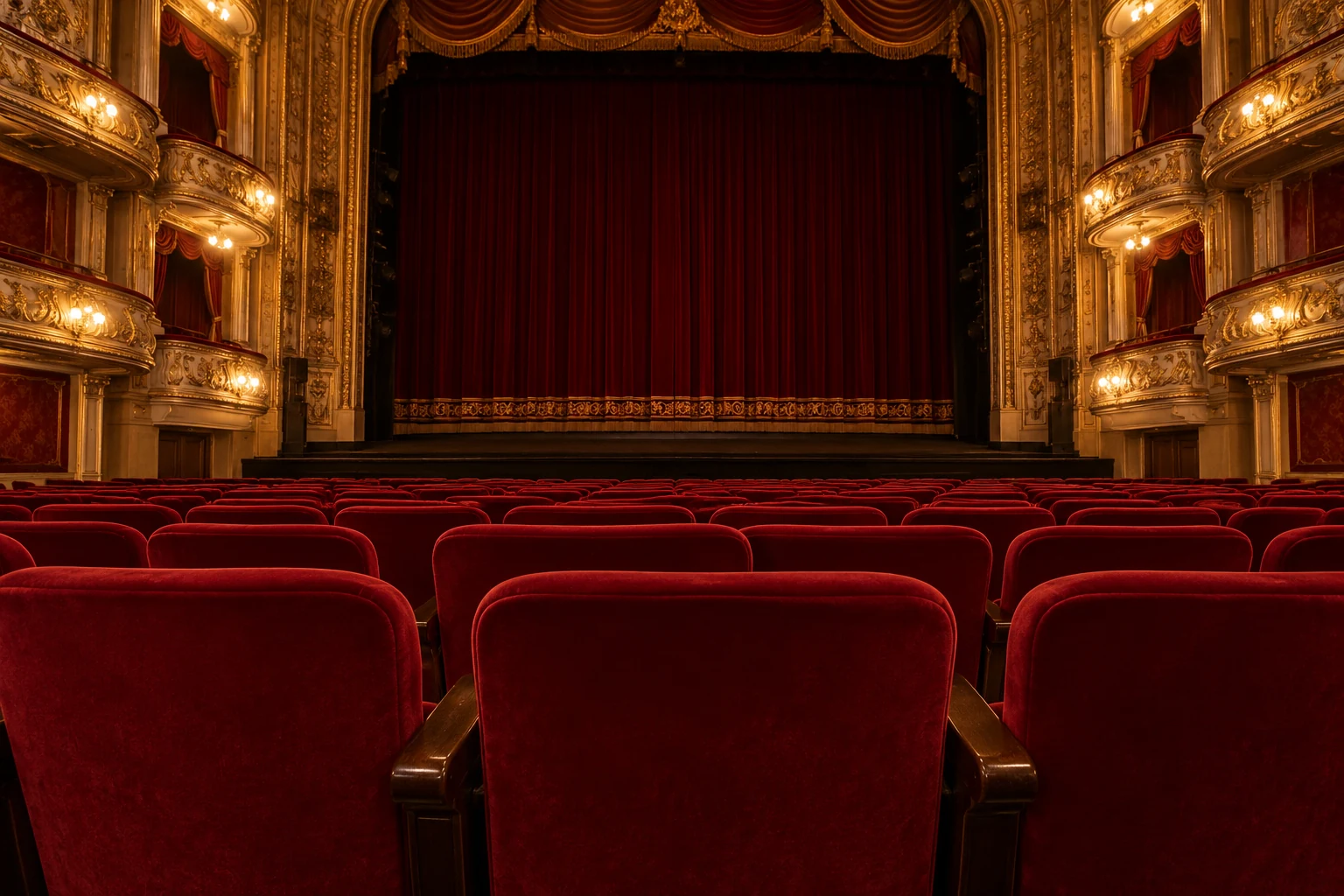
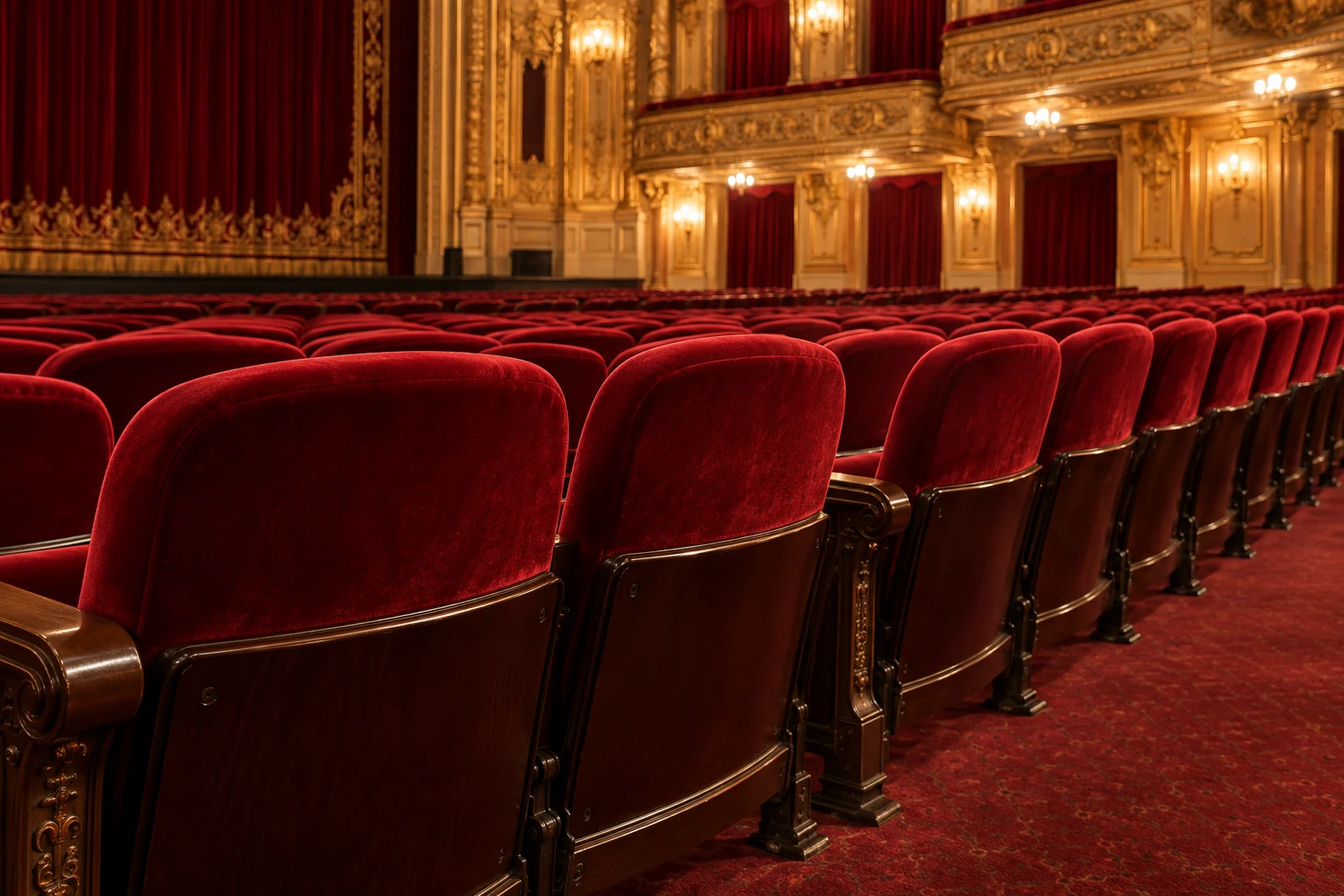
A theater house of red velvet seating seen from the stage
01Seen from the stageEvery seat back faces the performer. Together they are the first surface the room answers with.
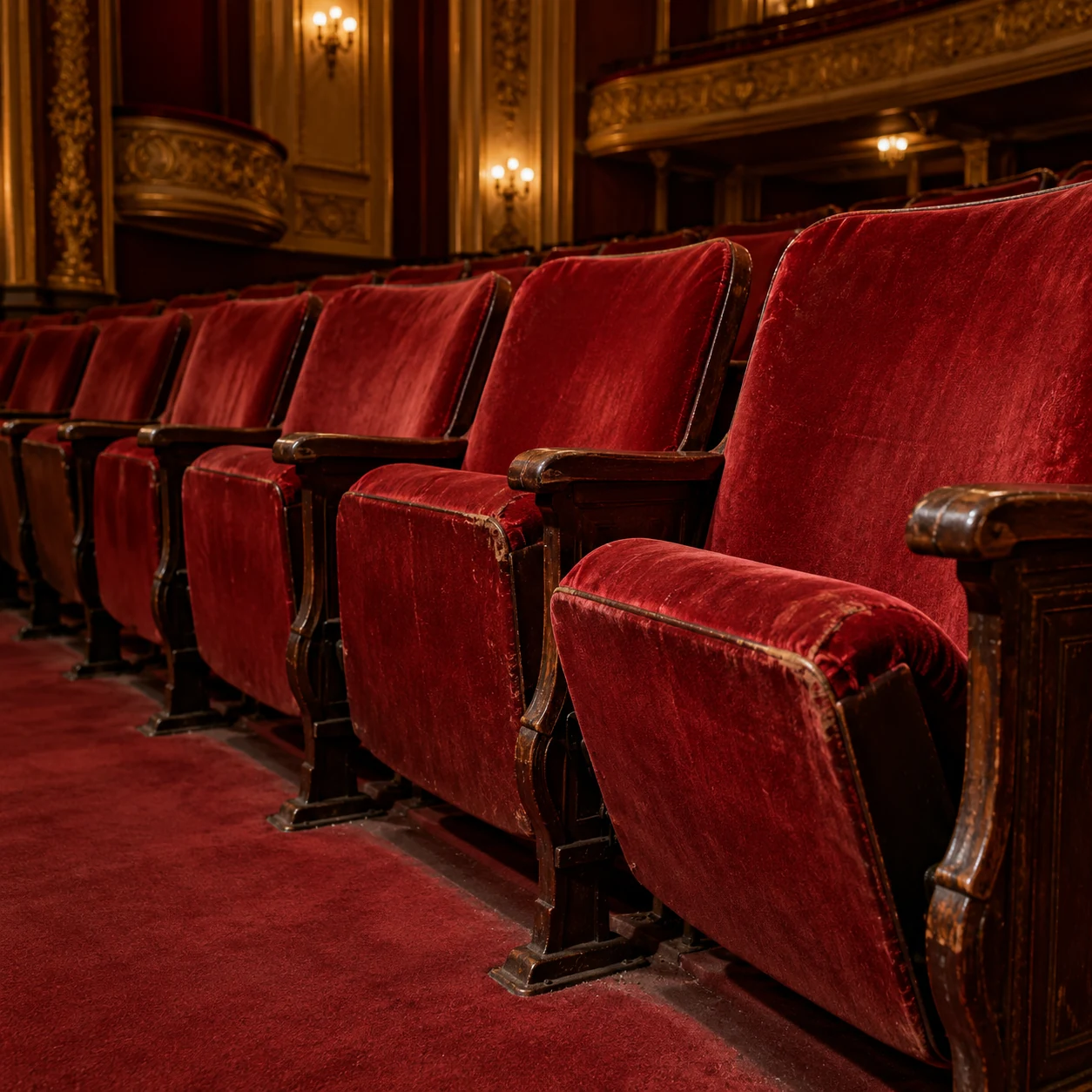
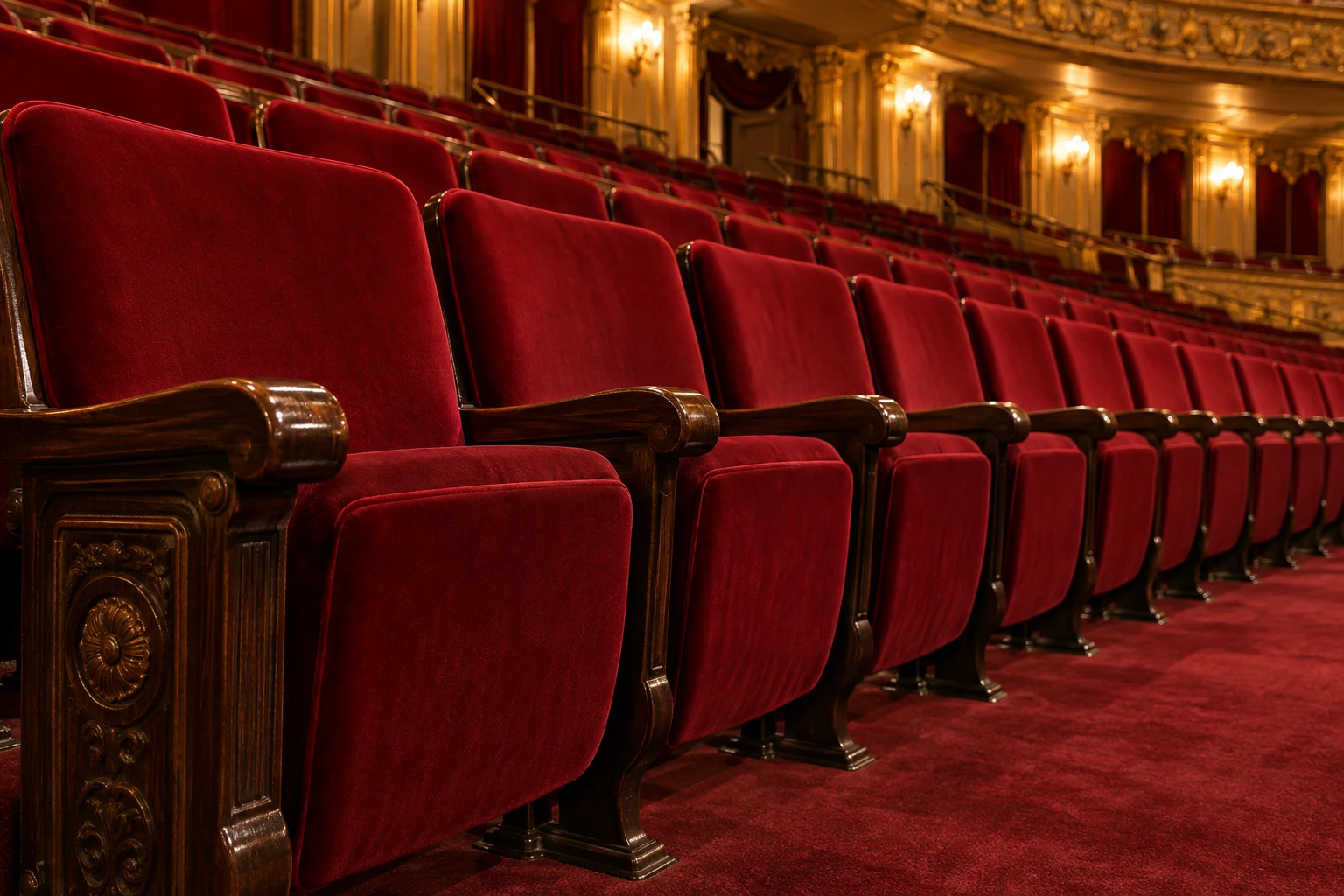
Curved rows of red velvet theater seating seen from a box
02From the boxesCurved rows put one cover at a dozen angles. A wrong pile direction shows from the side.
A theater balcony view over red velvet seating toward the curtain
03From the balconyThe balcony reads the tops of the backs — the panel that fades first.
An empty seat stands inUpholstered seating is specified so an empty seat absorbs close to what a seated person does, and the house sounds the same half sold as it does full.
Three things carry itThe cover weight, the foam density and the open area under the pan. Change one without the others and the room changes with it.
It is written downHouses that plan across a season — the way the theatre field schedules dark weeks — keep the spec on file. We add to it rather than start over.
What you are buying

An empty seat is standing in for a person

That is the whole reason these seats are built the way they are. A cover swap that ignores the build under it gives you a brighter room and a house that sounds thin on a light night — the opposite problem to a cinema recliner, where the mechanism sets the rules.
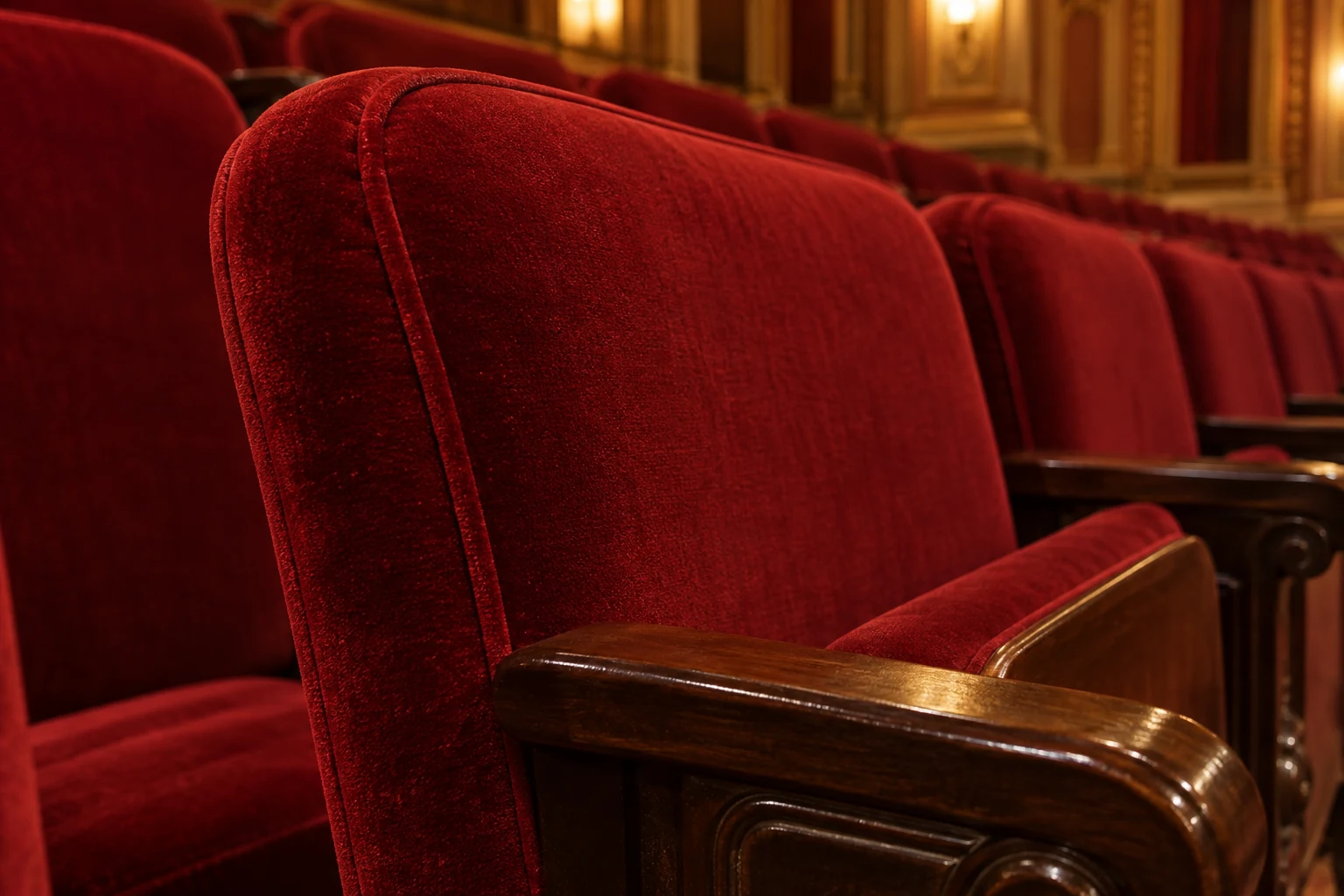
Close view of the velvet pile on a theater seat back
The pileMohair and cotton velvets read differently under house lights, and absorb differently too.
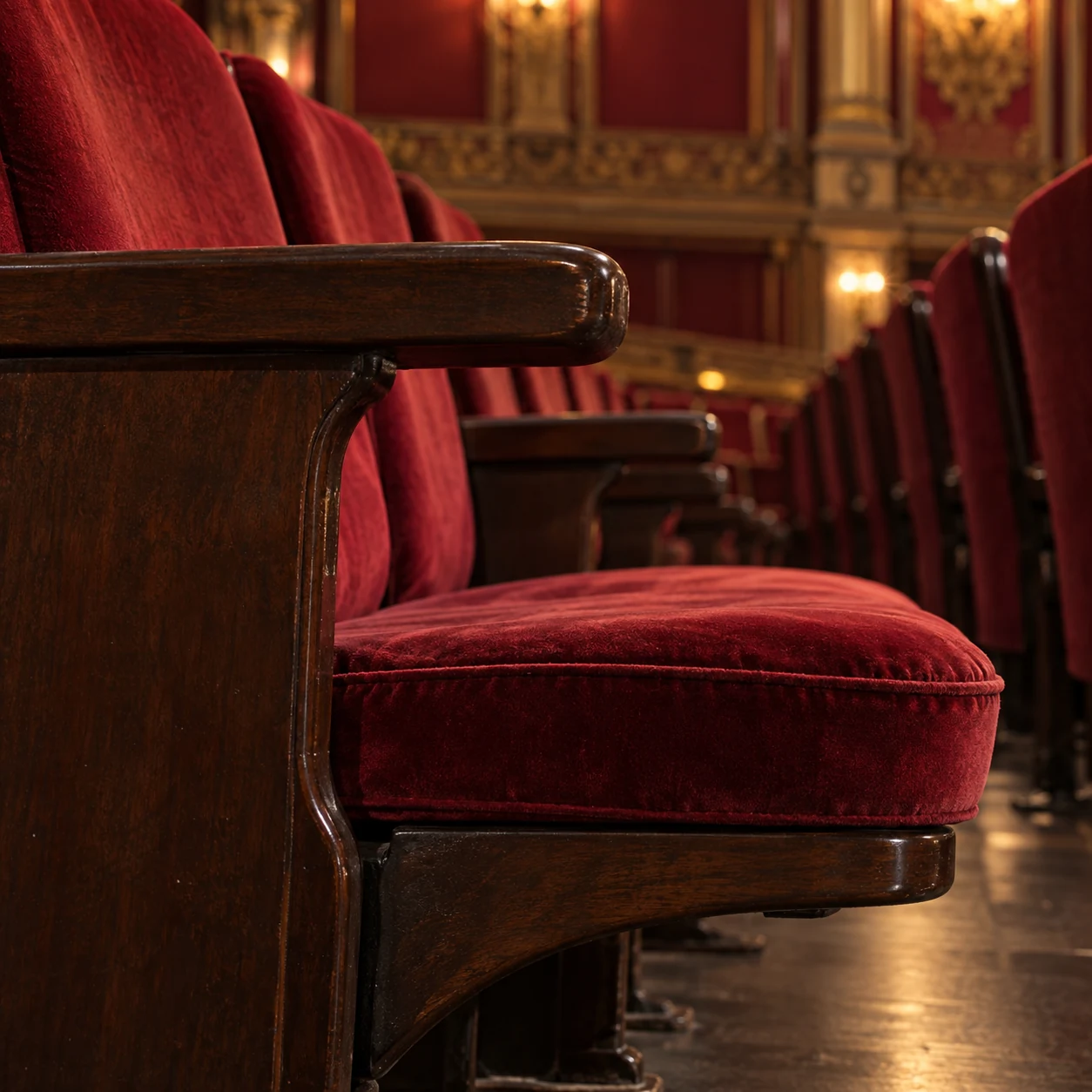
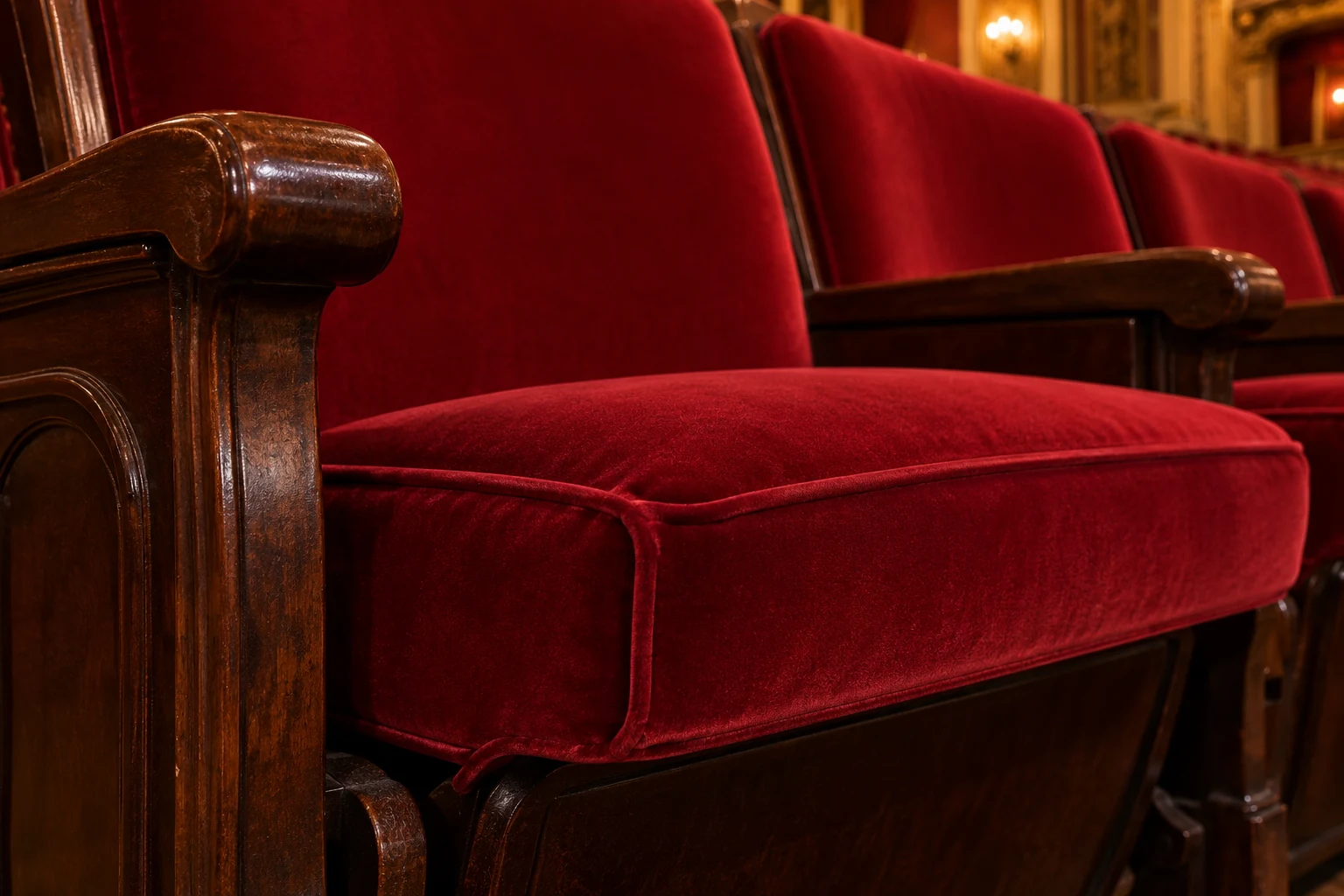
Close view of a theater seat arm and cushion
The edge rollWhere the cover turns the front edge is where a cheap recover gives itself away.
A recovered red velvet theater seat in profile
ProfileThe seat keeps its shape. We copy the old panels rather than draw new ones.
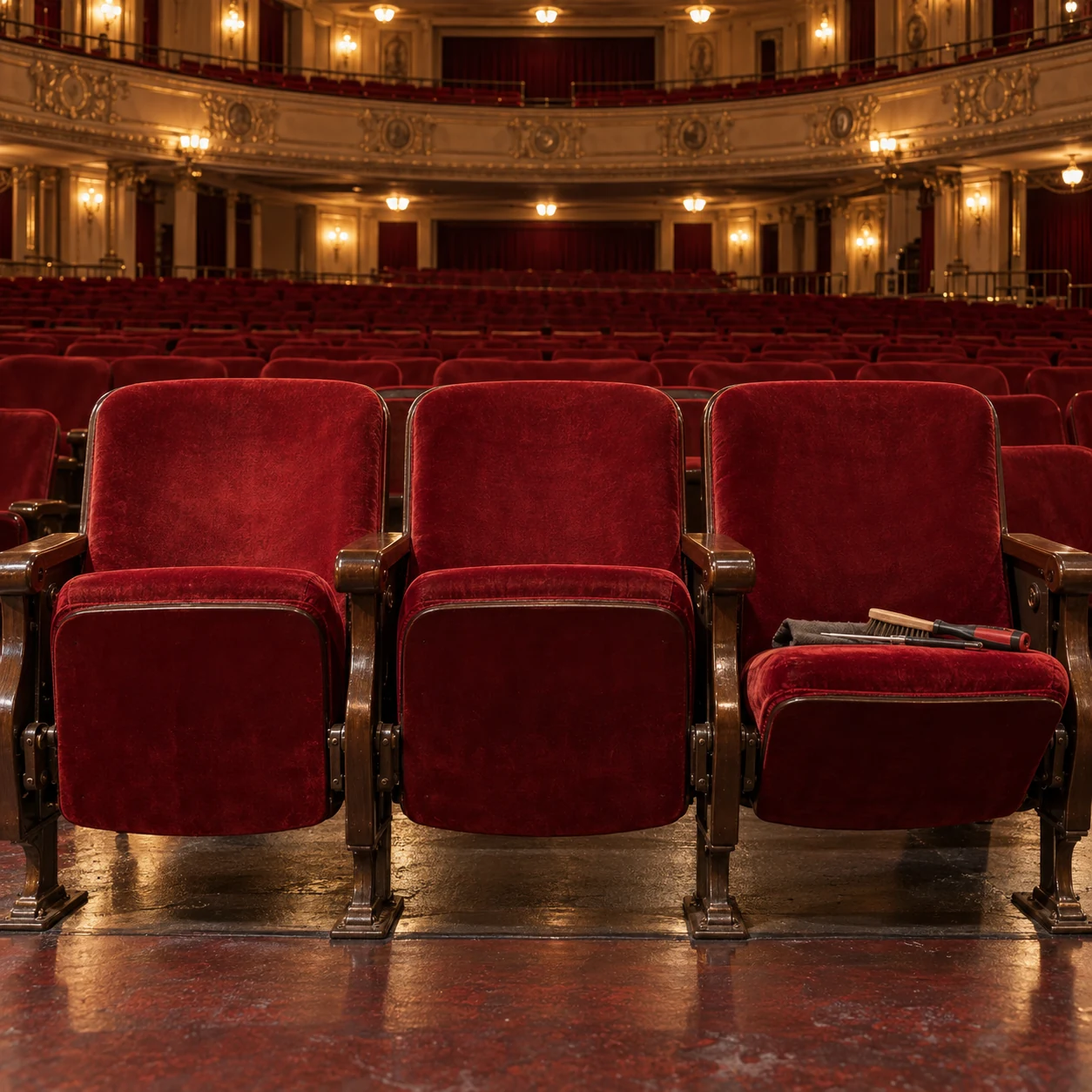
Three theater seats in fresh red velvet
Fresh velvetOne batch, so a row does not shade across its own width.
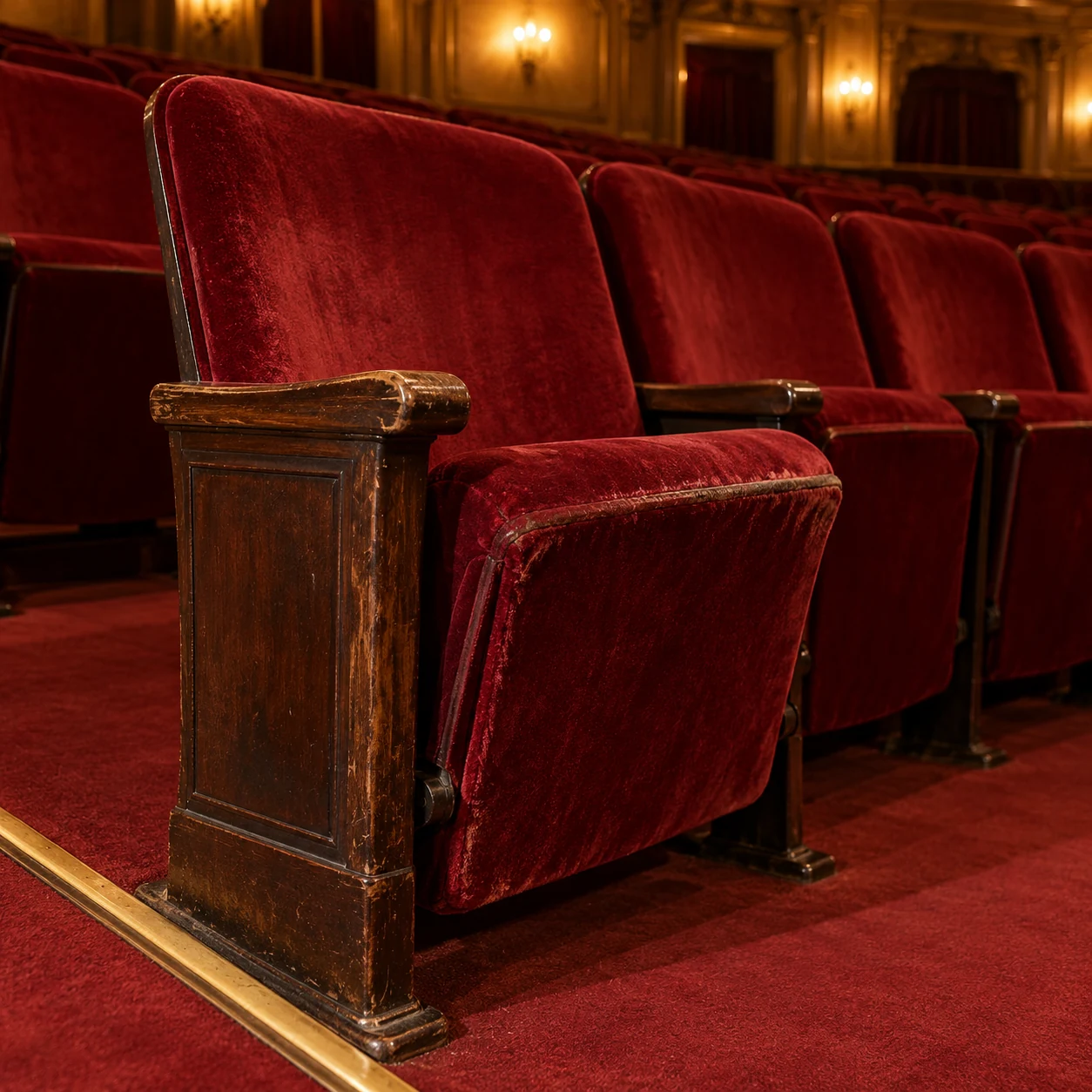
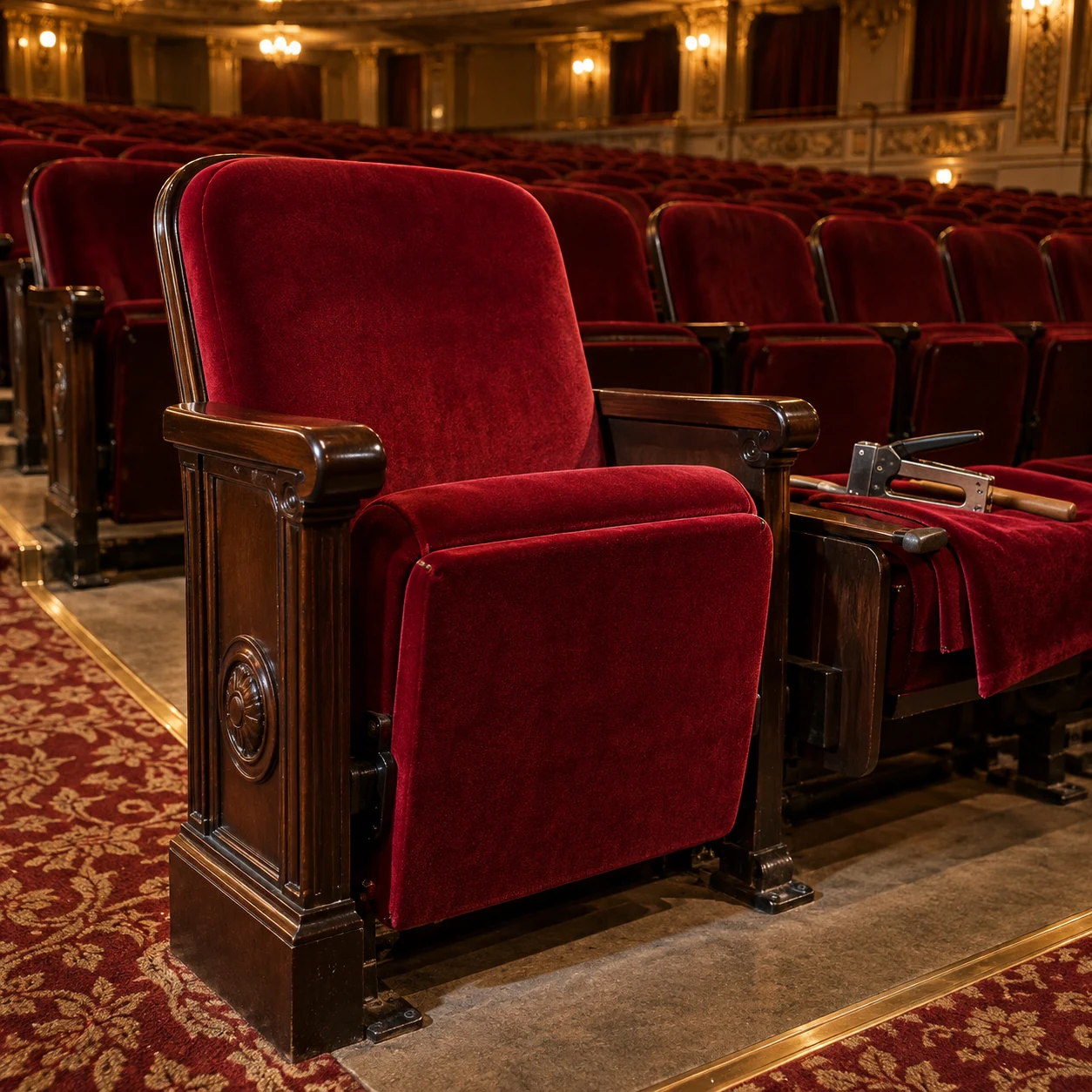
An aisle-end theater seat with a carved cast standard
Aisle endsThey take the whole row’s traffic and are specified heavier than the seats inside it.
How a house goes

The pile goes long before the cover does

By the time a seat is visibly torn it has already stopped doing its acoustic job. These are the eleven things we find on a walk, in the order a house usually meets them. Single faults are seat repairs, not a recover.
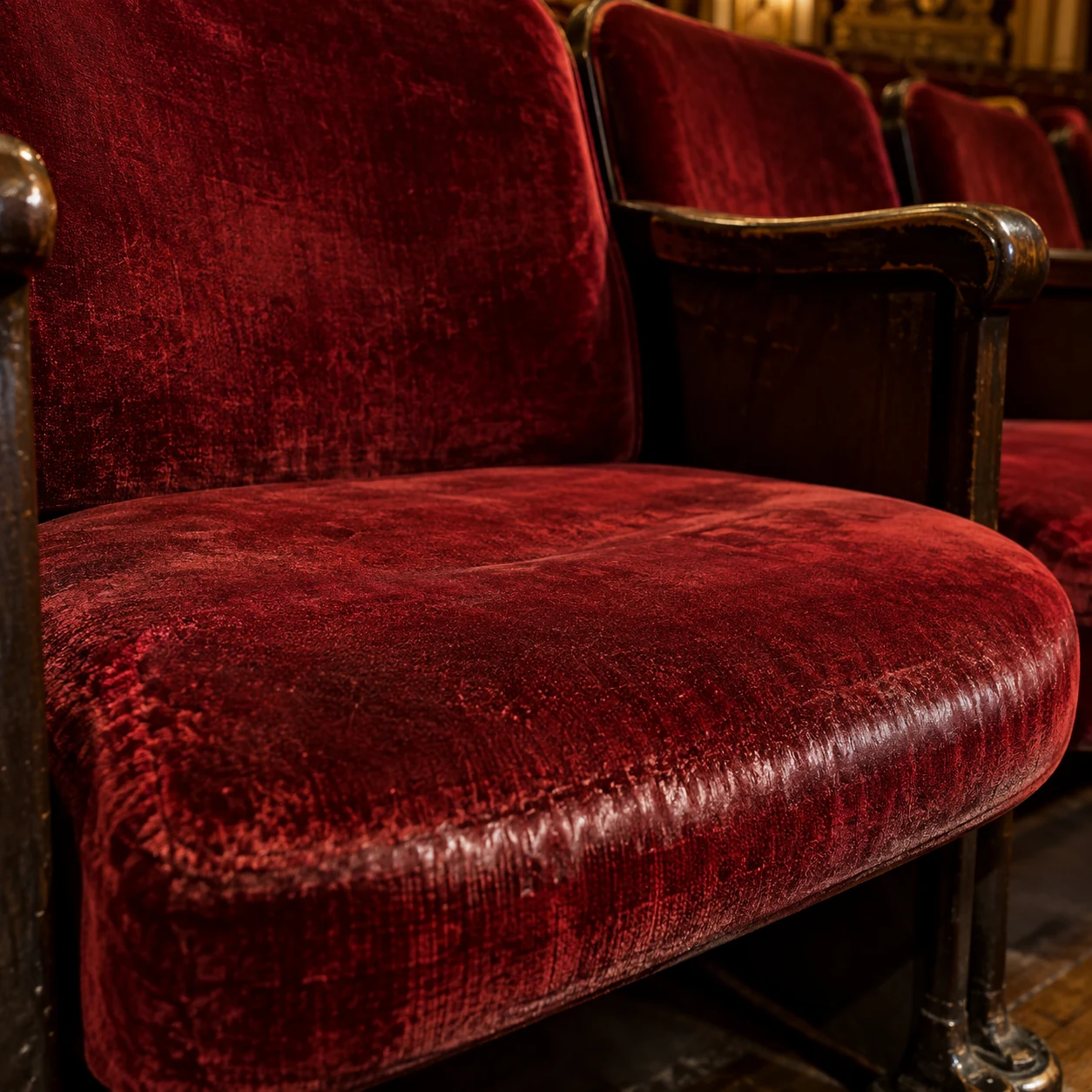
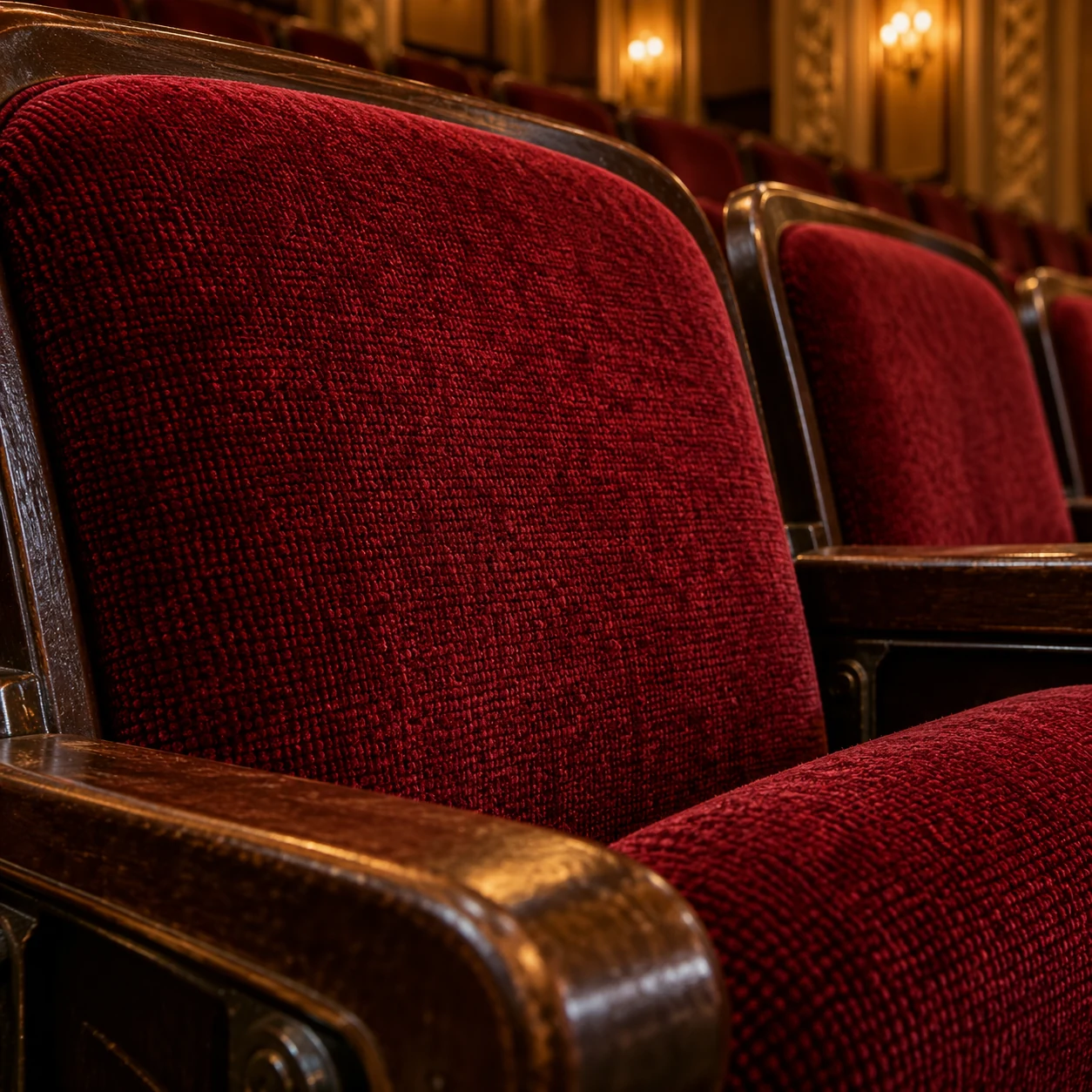
Crushed velvet pile on a theater seat
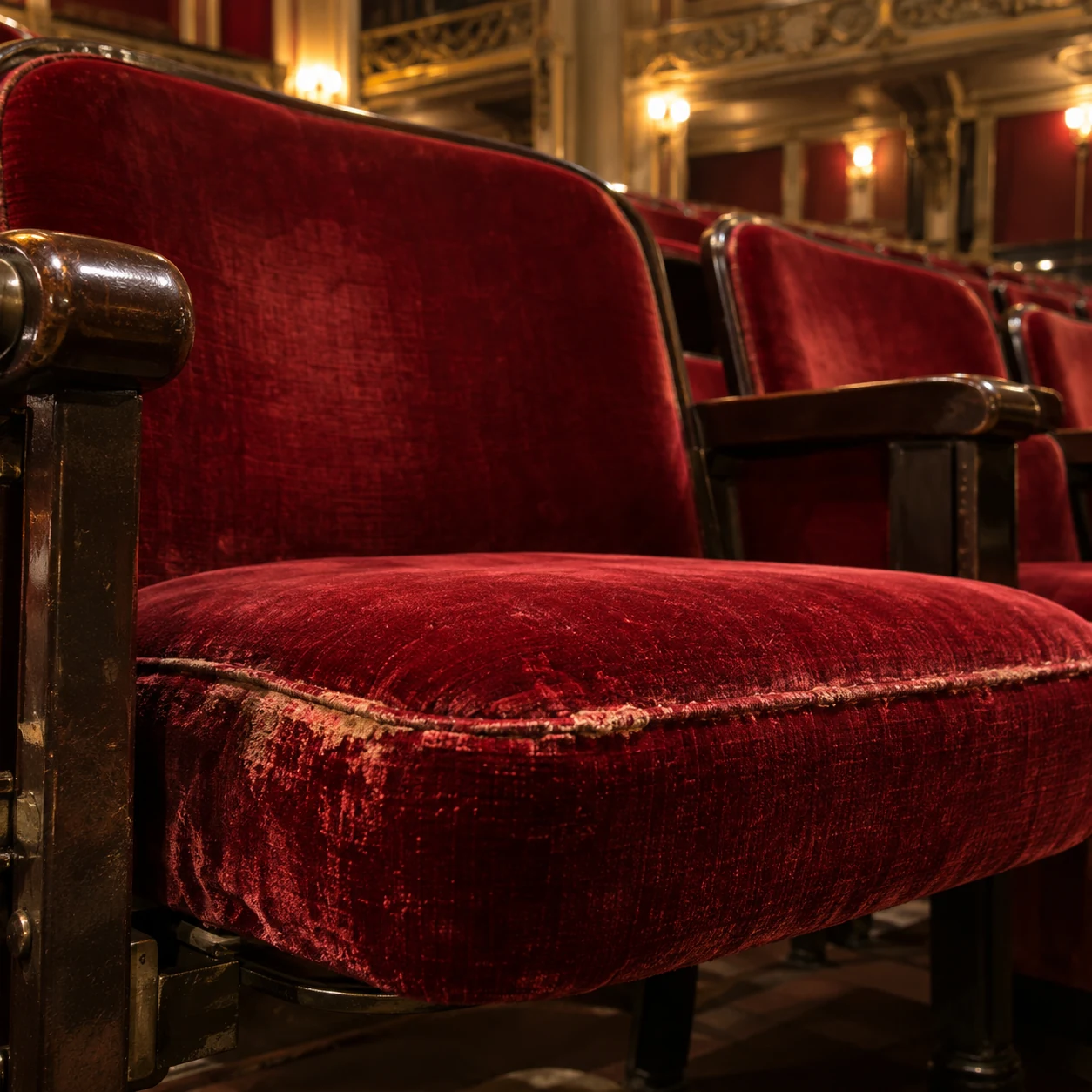
01Crushed pileThe nap lies flat where every audience sits, and reflects more than it did.
Worn flat velvet on a theater seat arm
02Worn armsTwo arms per seat, every performance, always the same two inches.
Polished velvet on a theater seat back
03Polished backsCoats and shoulders burnish the back until it shines under house lights.
Shiny worn velvet on a theater seat back
04ShineA shined panel in a matt row means that block is older.
A stained red velvet theater seat
05MarksDrinks and dye transfer. Cleaning lifts some and flattens the pile doing it.
A split seam on a theater seat back
06Split seamsThread fails before the cloth, usually at the top corner of the back.
A worn arm and seat front on a theater seat
07Front edgeThe edge you push off takes the load of standing up, twice a show.
A theater seat front edge worn through
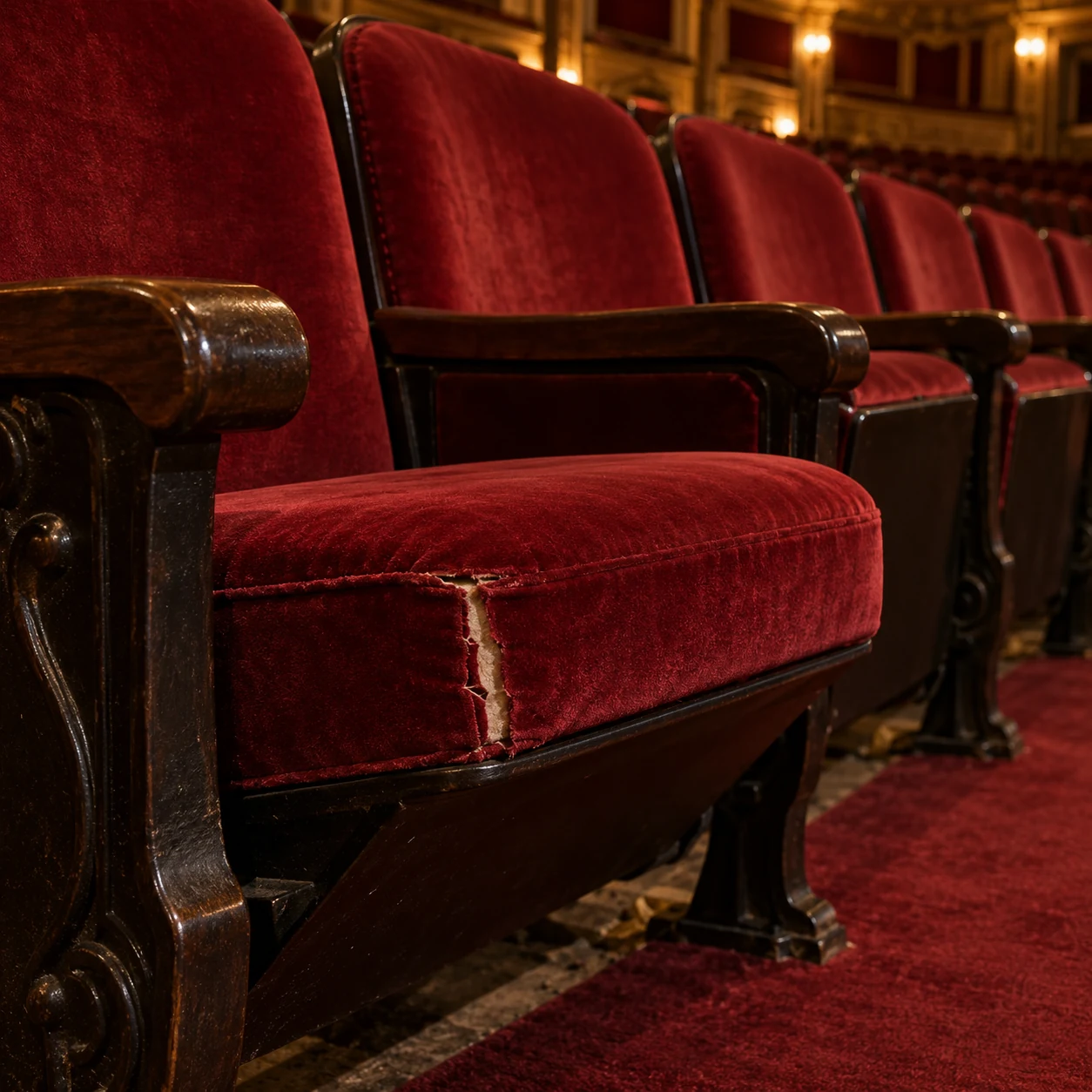
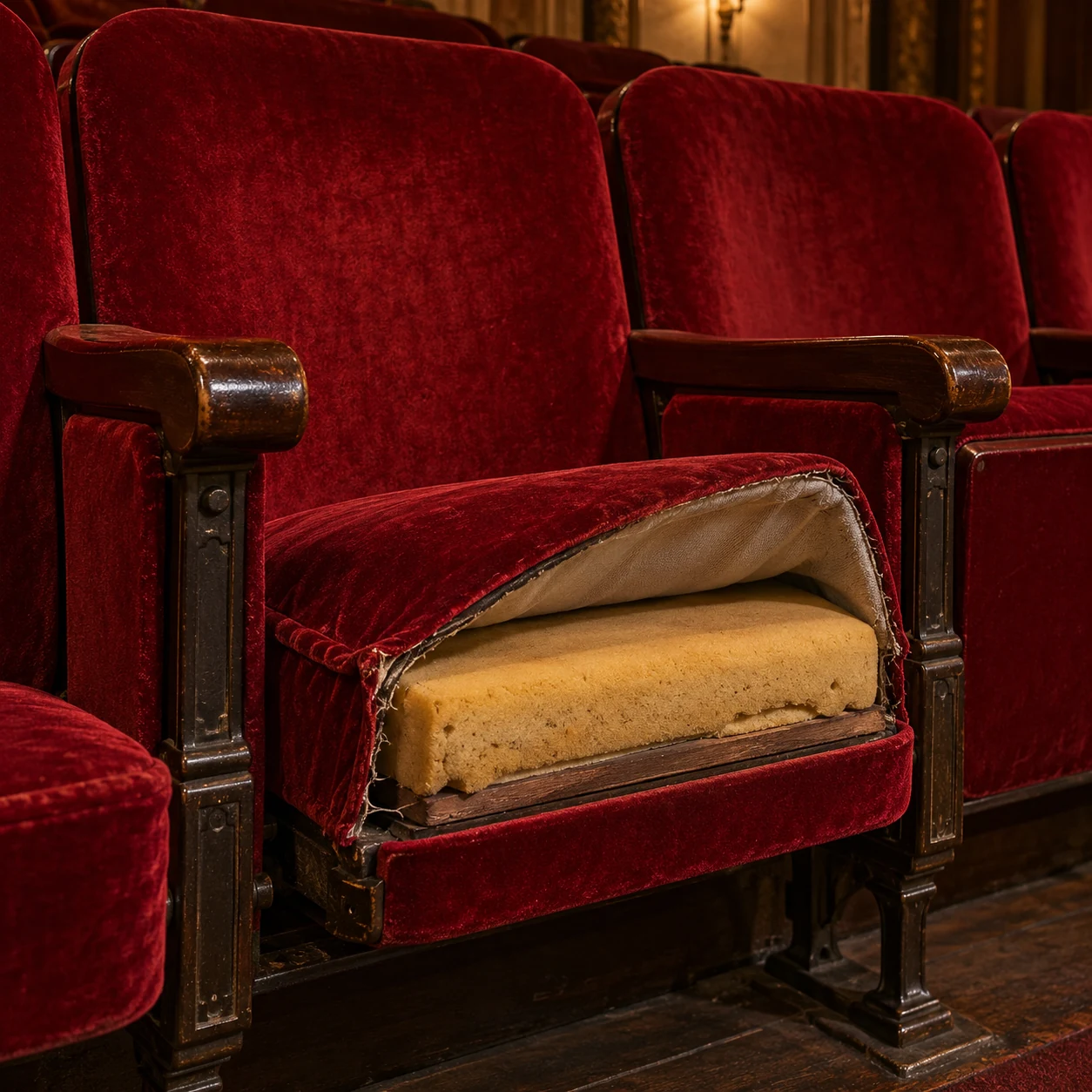
08Worn throughOnce the cover opens, the foam takes the wear directly.
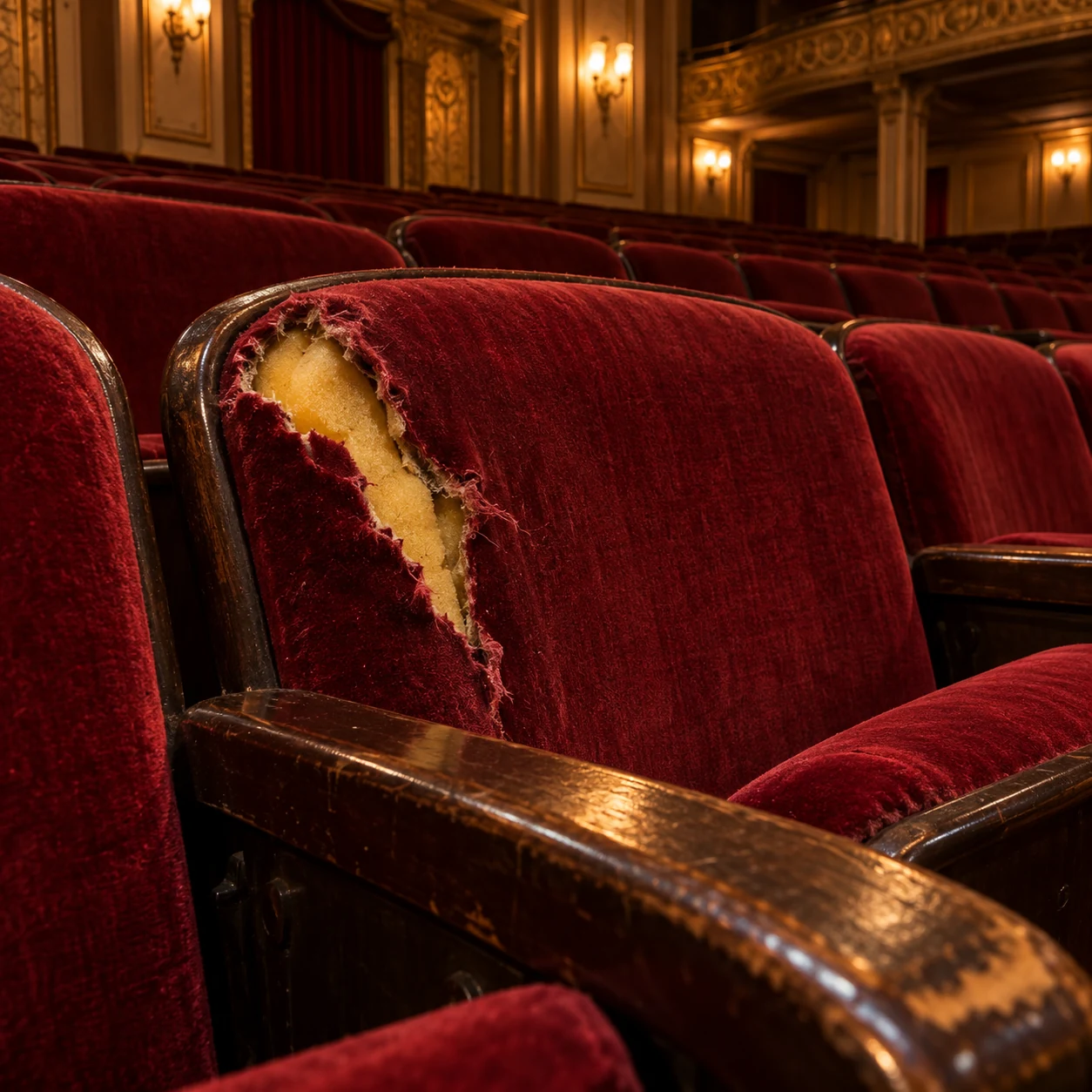
A torn theater seat back with foam showing
09Open tearsA tear is a seat you cannot sell.
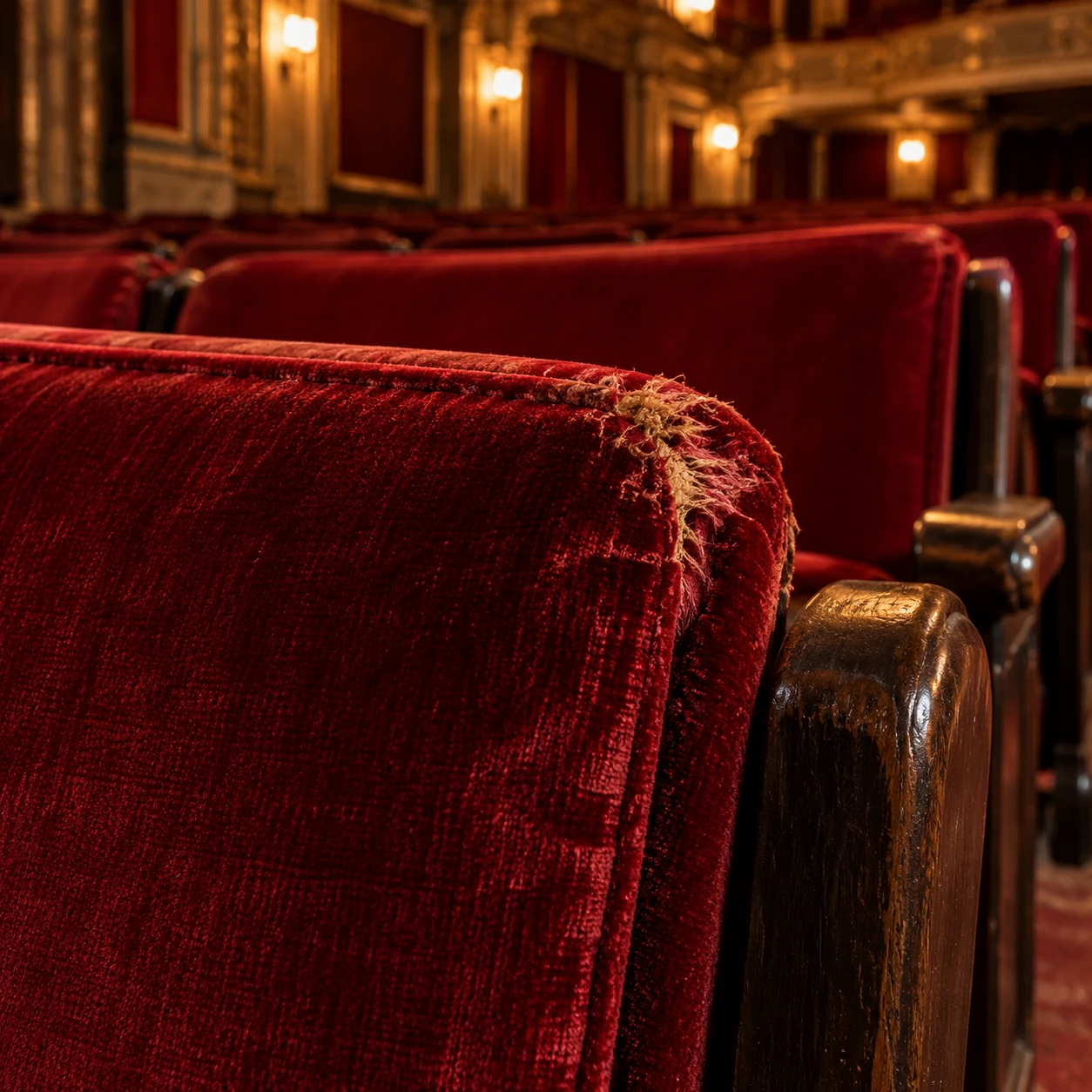
A frayed top edge on a theater seat
10Frayed edgesThe top roll frays where hands pull on it in the dark.
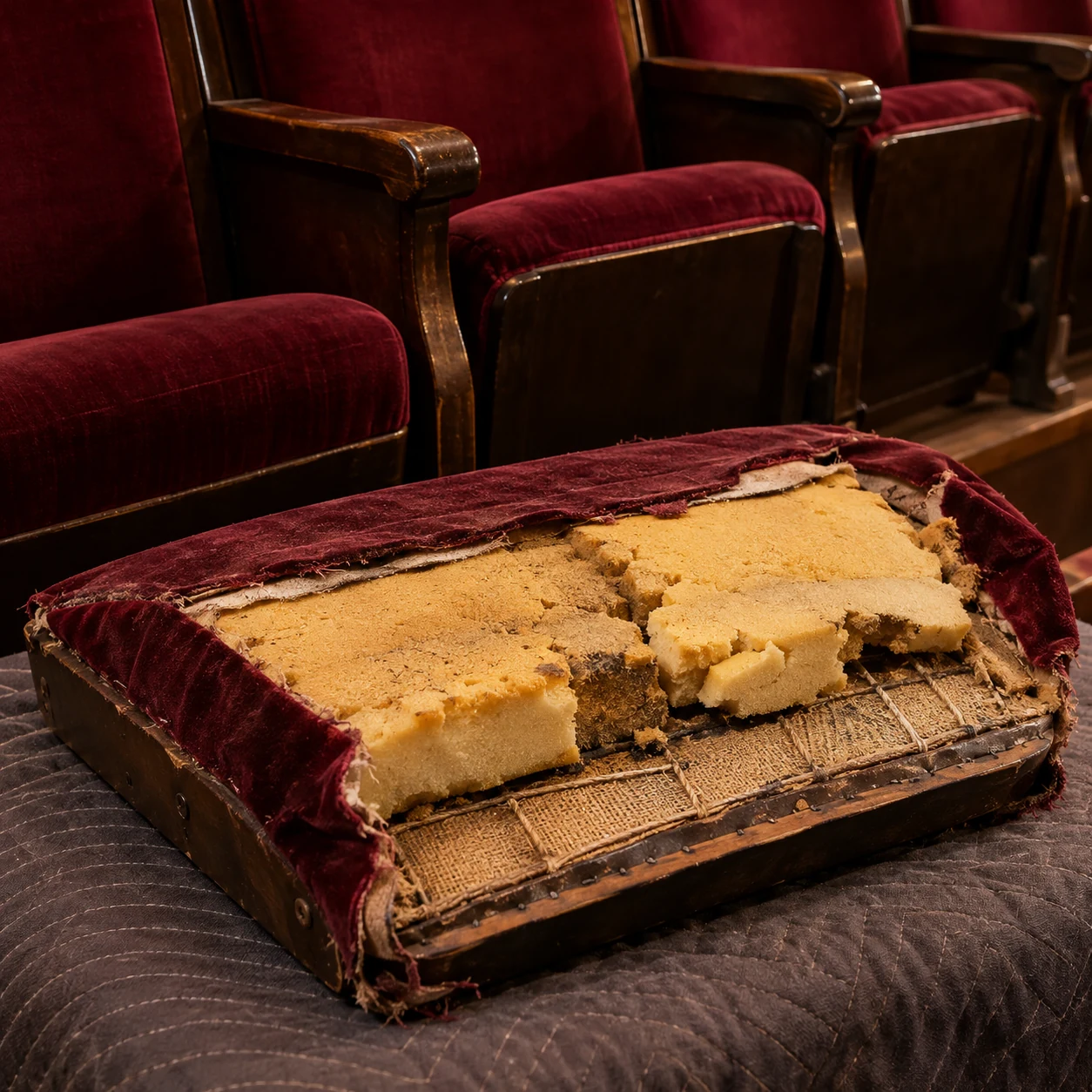
A theater seat cushion lifted off showing springs and foam
11CollapseFoam and webbing give out together, often under a cover that still looks fine.
How much at once

One row, a block, or the house

Theater seating reupholstery is quoted in seats, and the count comes off a walk of the house rather than a floor plan. Large counts run as a bulk project across seasons.
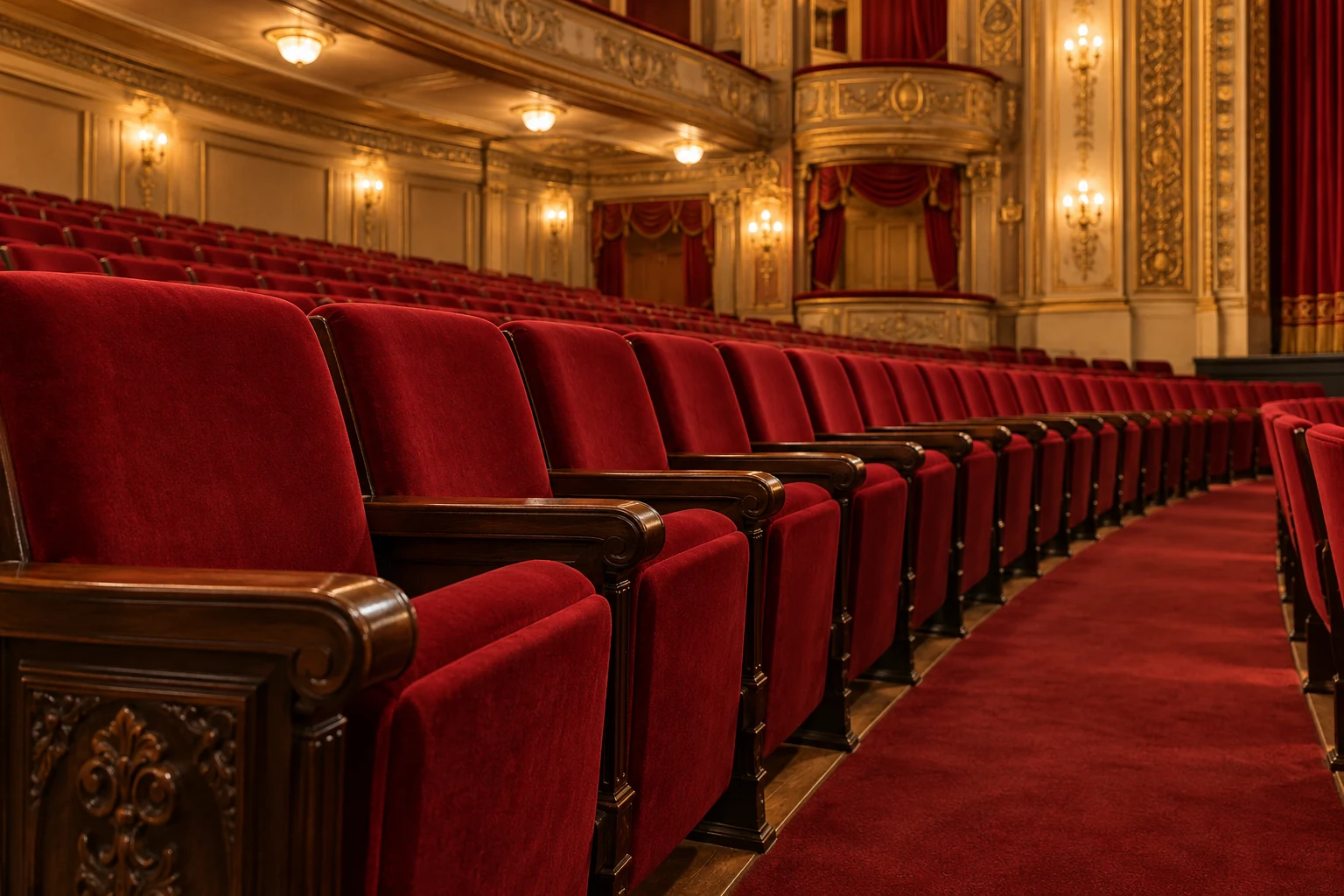
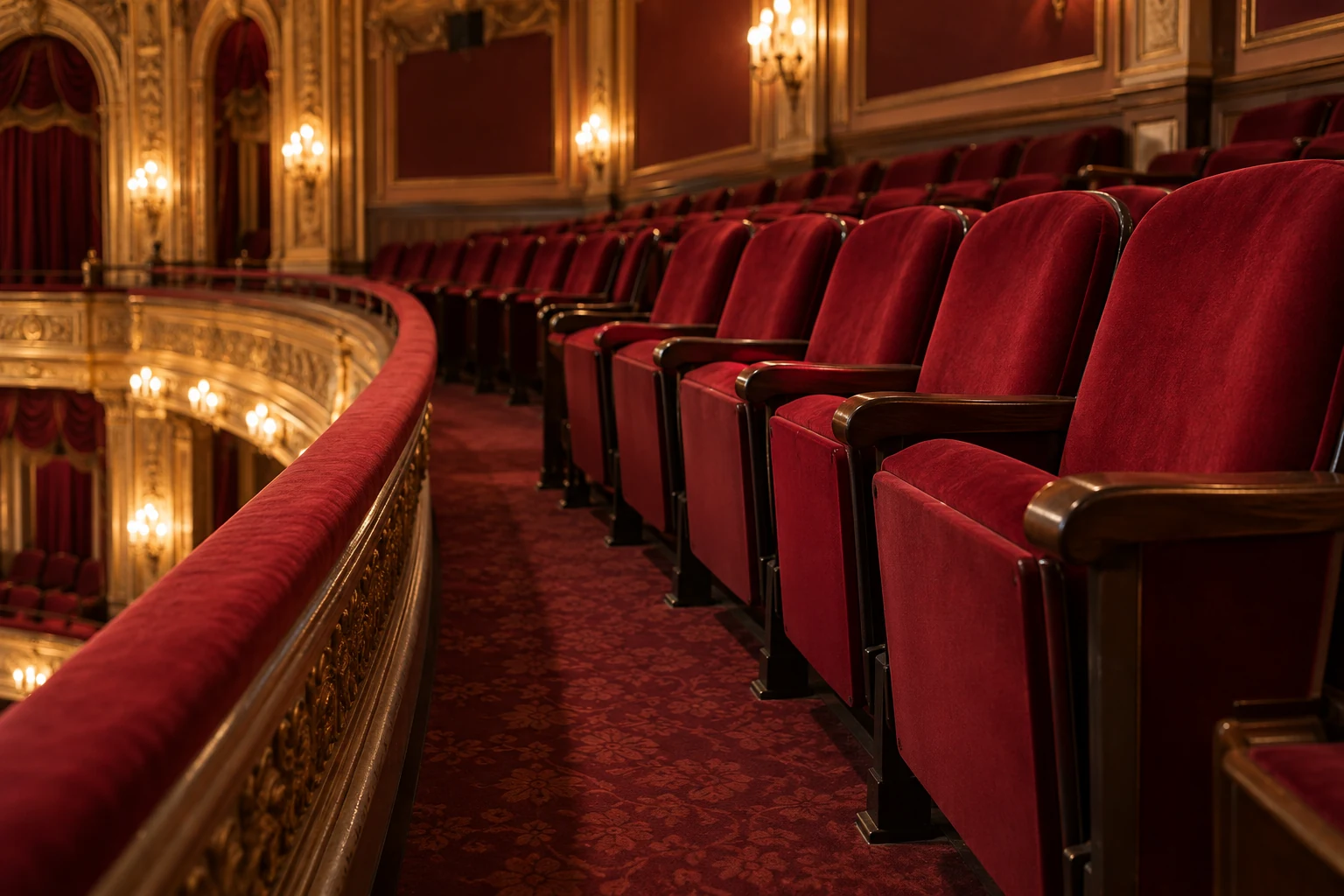
A row of red velvet theater seating receding toward the stage
01One rowOff the standards after the last show, back before the next.
Curved rows of theater seating at balcony level
02A block of rowsThe worst rows travel together, so batch and pile direction stay common.
A theater house seen from the middle of the stalls
03The whole houseOne programme against your dark weeks, with the spec recorded for next time.
Stripping down

The build-up comes off in a recorded order

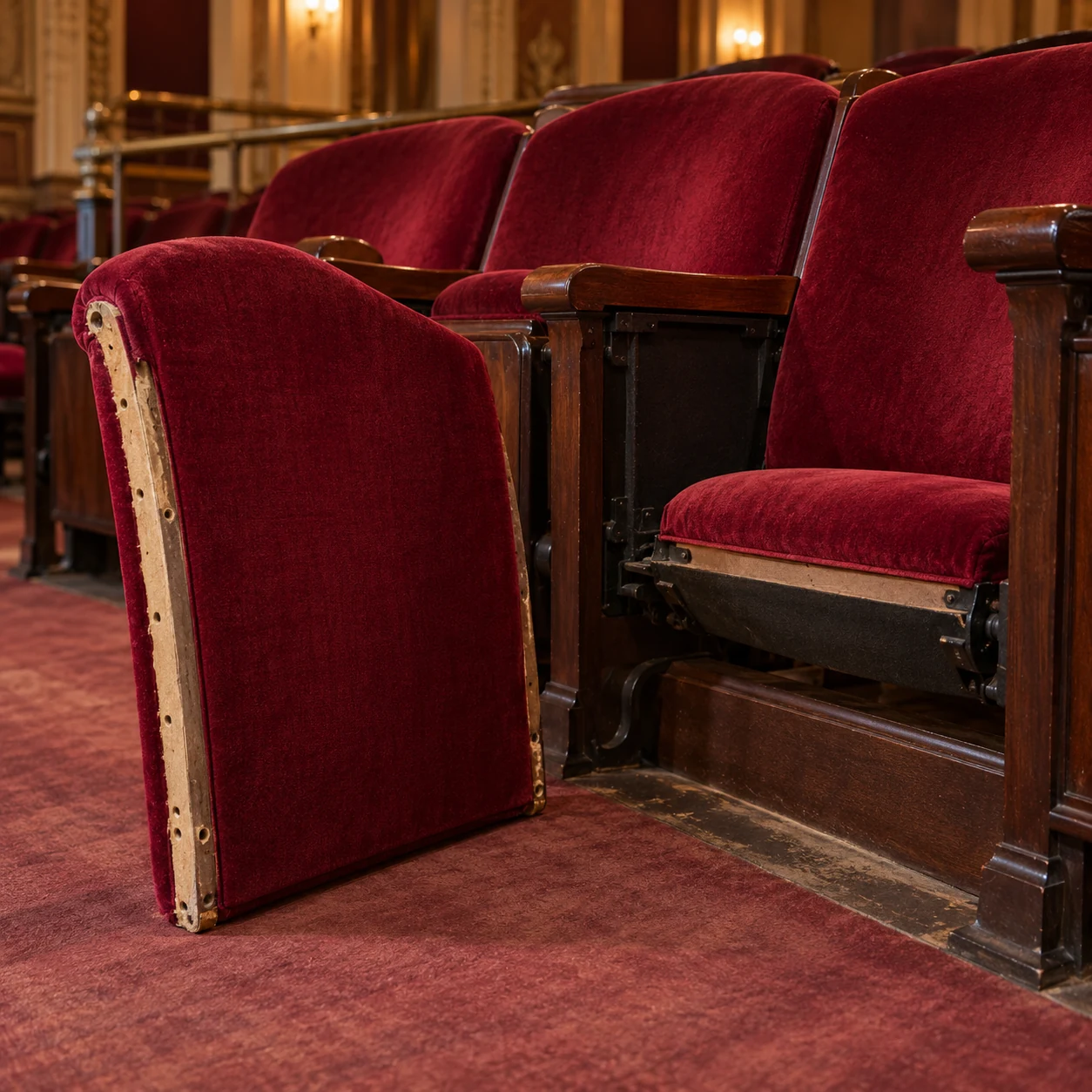
Theater seating reupholstery starts by taking the seat apart in a recorded order, with every layer photographed and kept as the pattern for what replaces it, the way any documented project runs. Cast standards, hinges and number plates never leave the house.
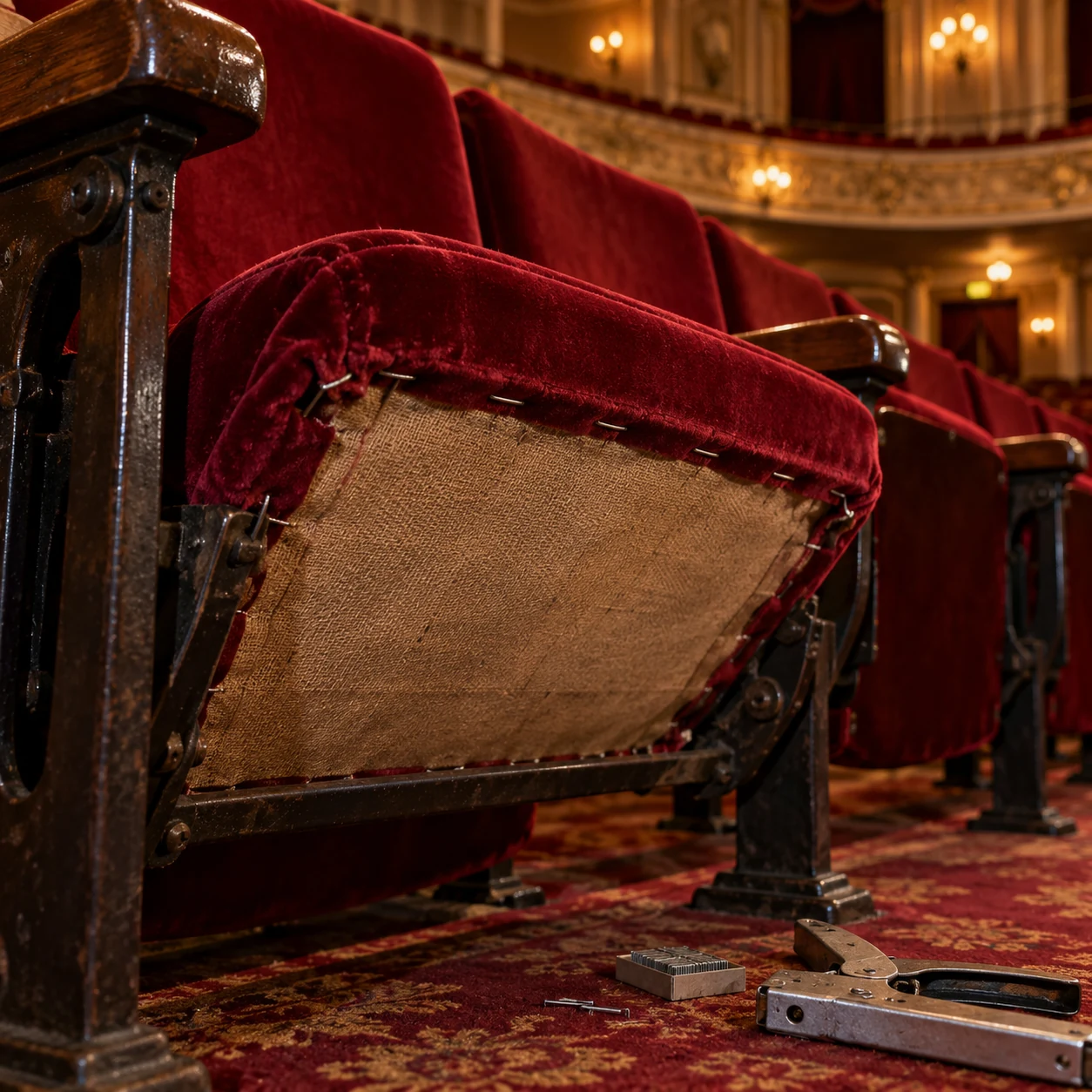
A theater seat back stripped to its burlap
01Cover offTacks and staples out. The cover is kept whole — it is the pattern.
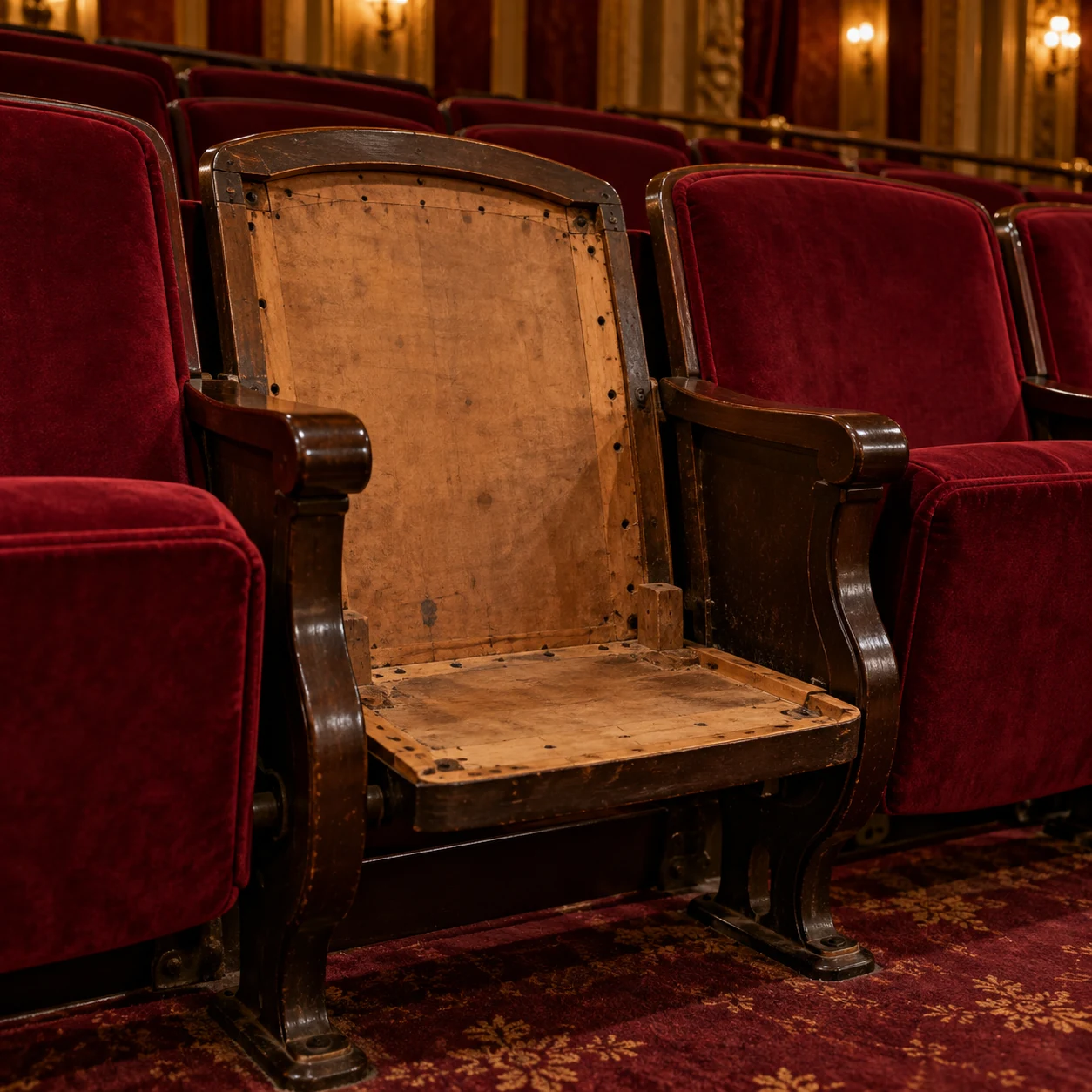
A theater seat with its back panel removed
02Back panelThe outside back comes away first so the inside can be reached.
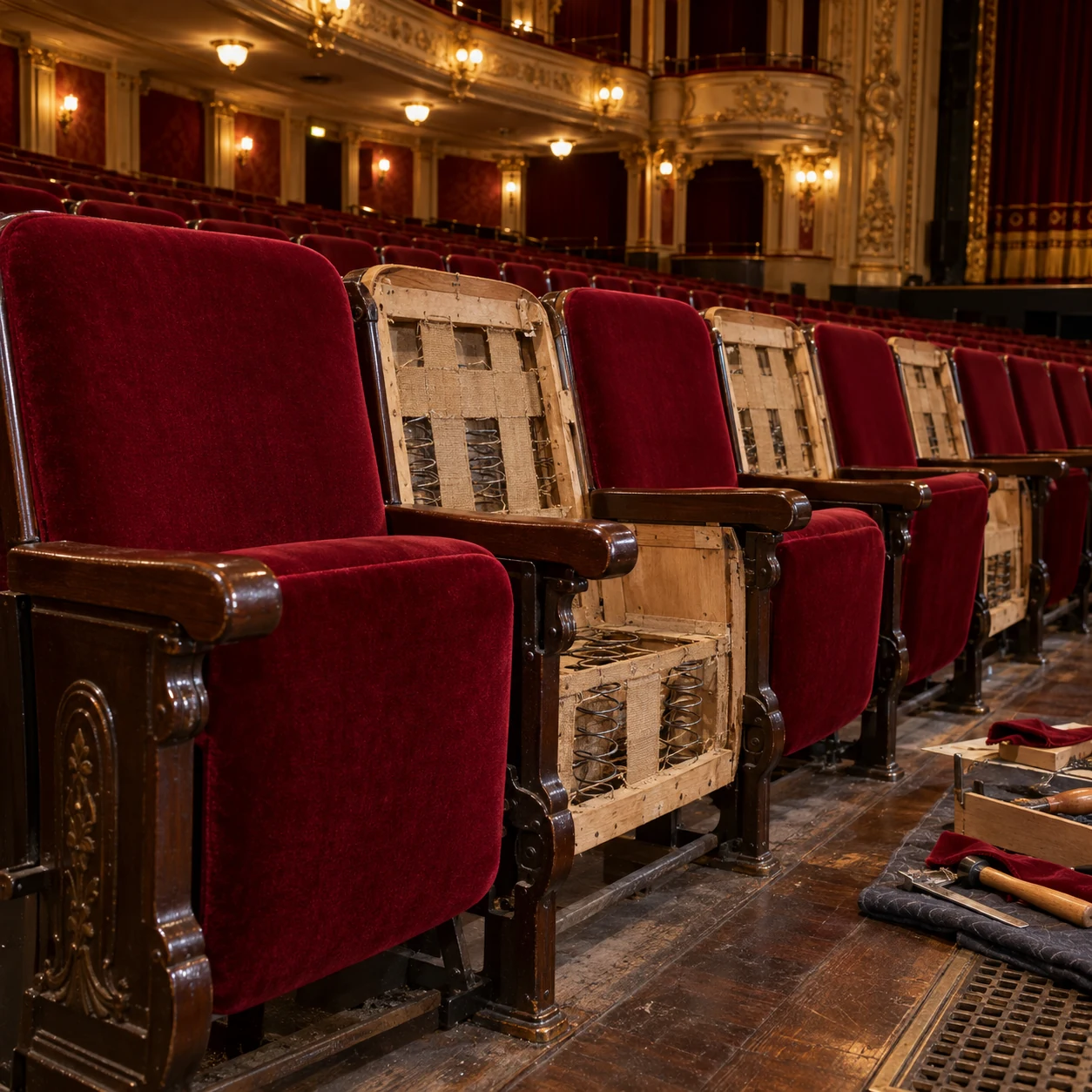
A theater row with seat covers removed
03Row openedA block is opened together, so one seat’s findings are checked in all.
A bare wooden theater seat pan
04Down to frameInspected, re-glued and re-webbed before anything soft goes near it.
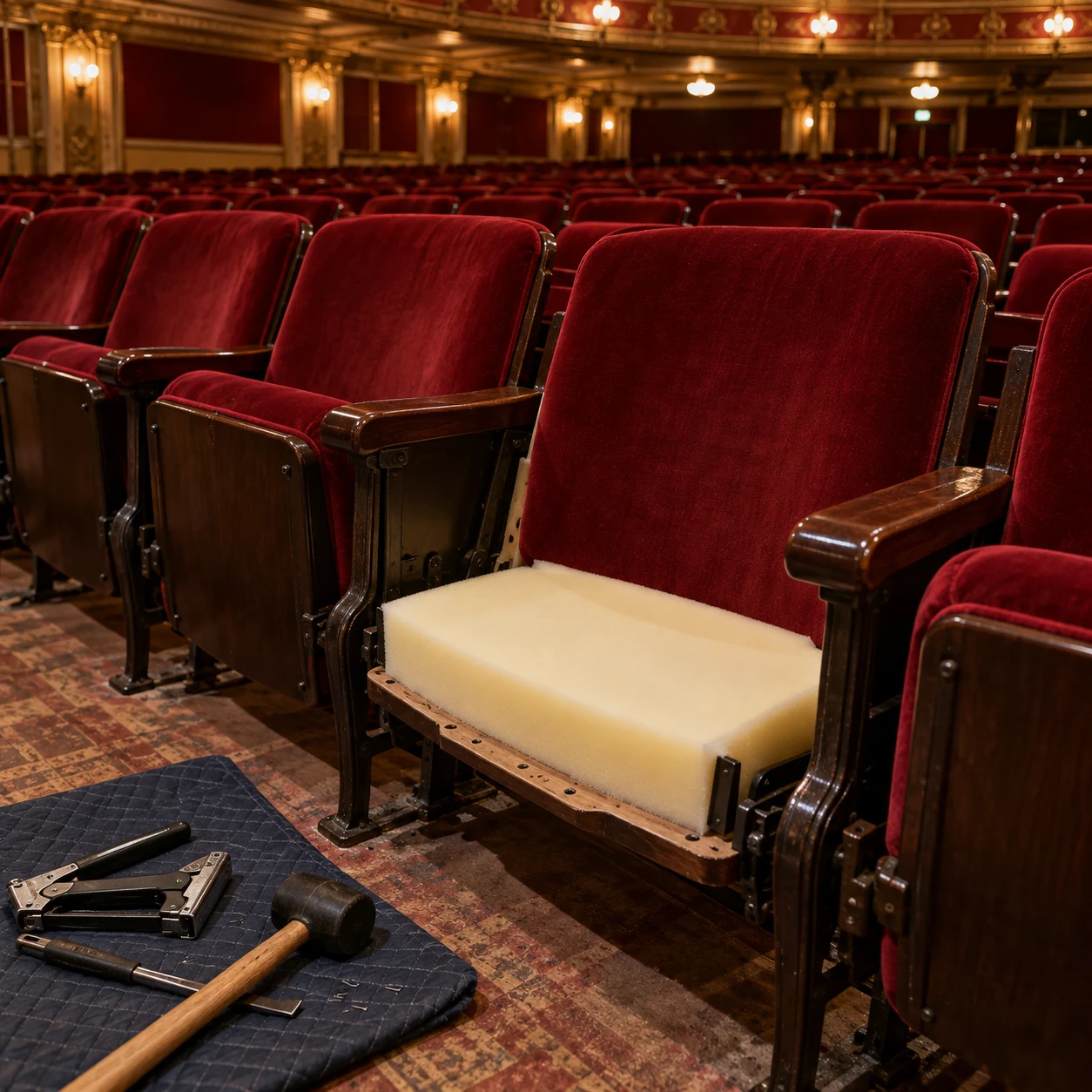
Exposed foam in a theater seat under its cover
05Foam judgedFoam is replaced by density, not age. Some of it is still working.
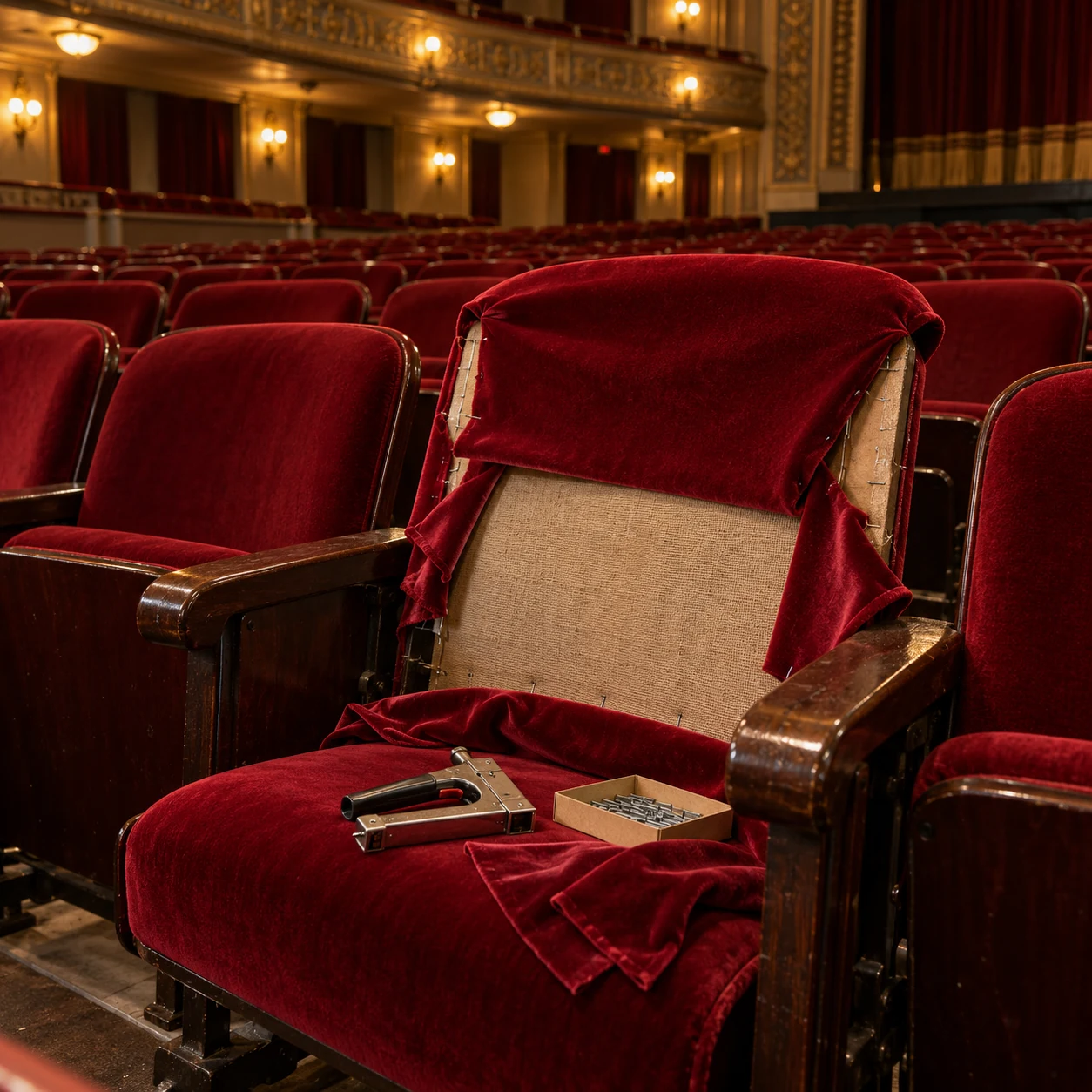
New velvet laid over a theater seat back
06New cover laid onOffered up against the old panel before a single staple goes in.
What goes back on

Matched to the house, not to a catalogue

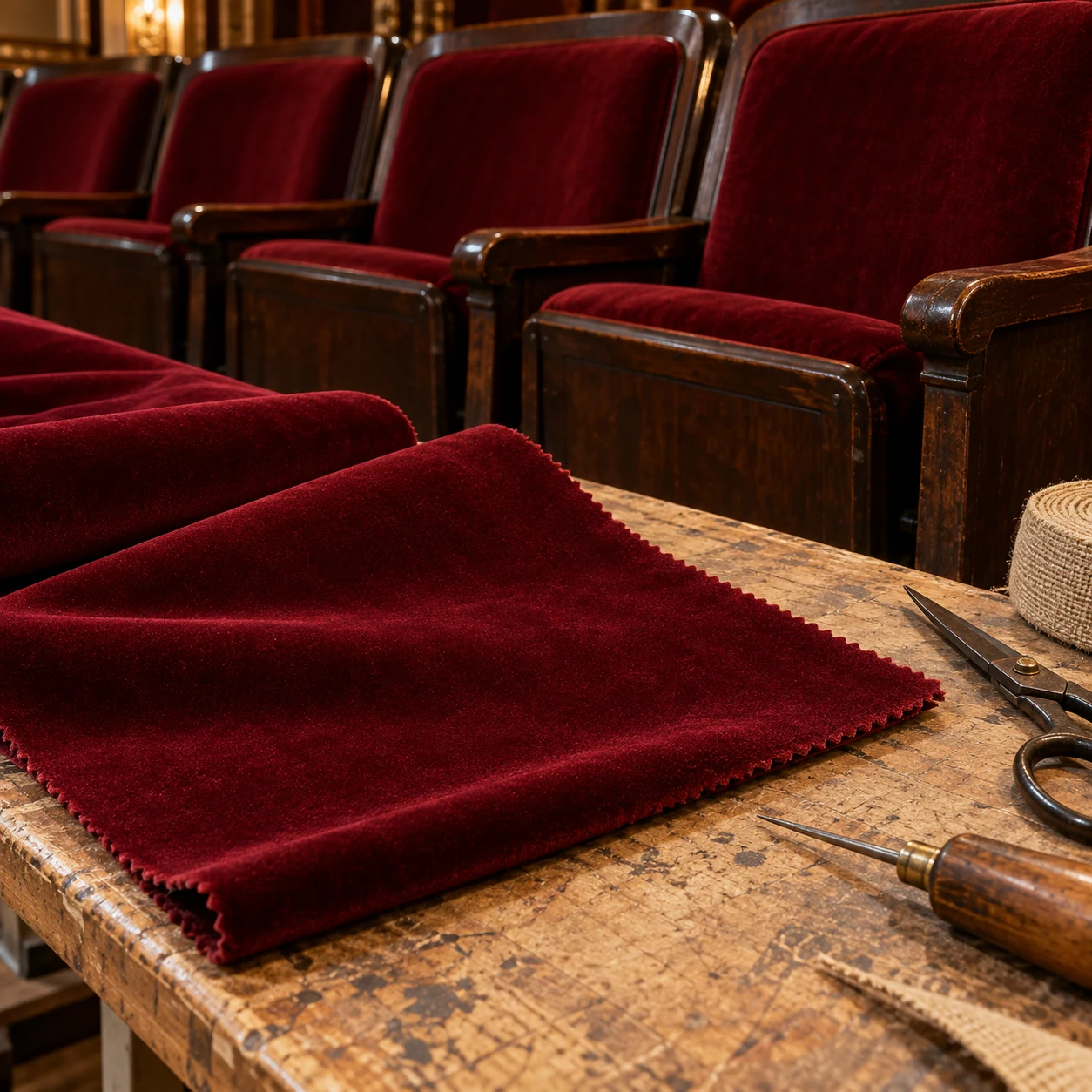
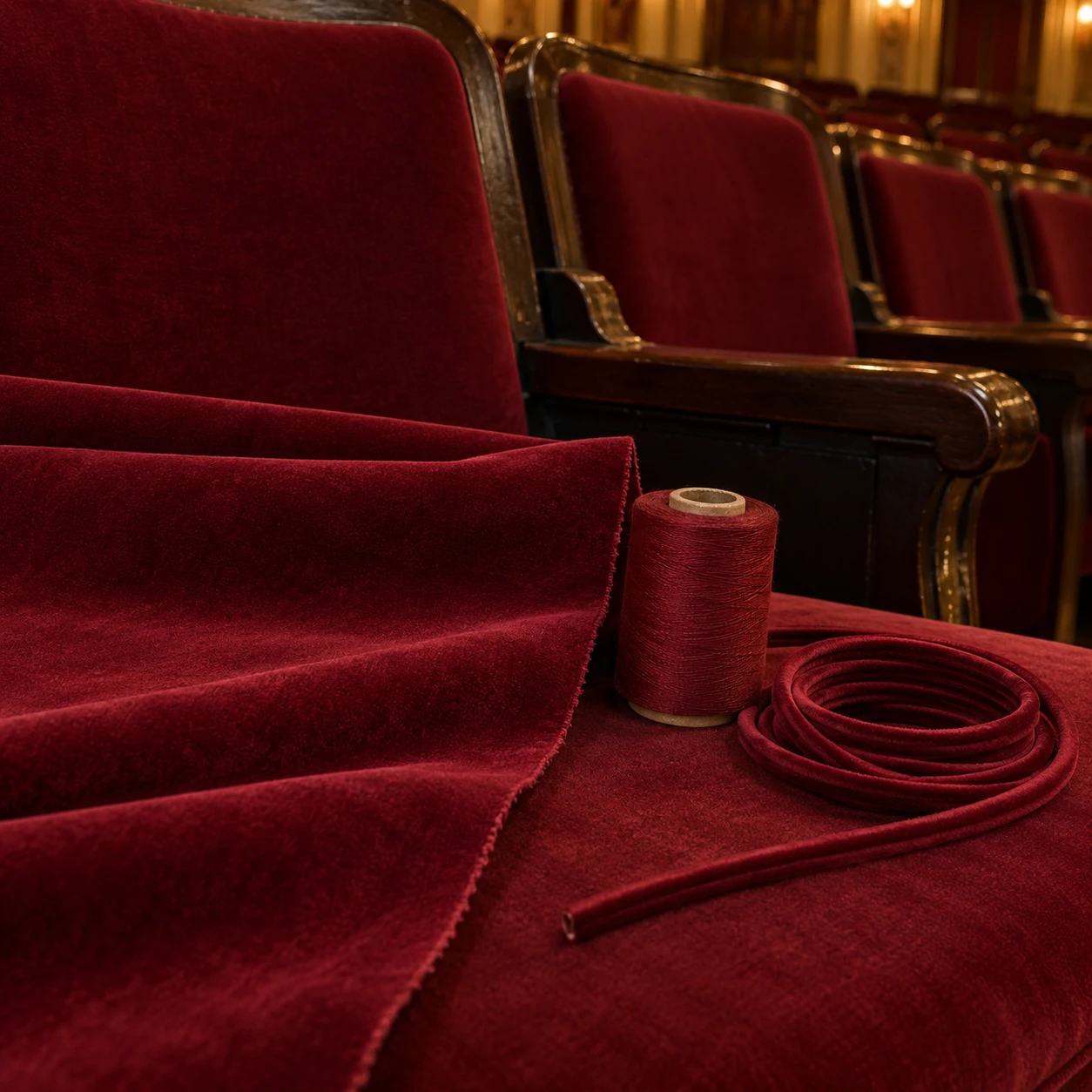
Every theater seating reupholstery job is specified from samples brought to your auditorium and judged under the house lights, because a velvet that matches in a showroom can read a shade out from row H. See how material matching is recorded.
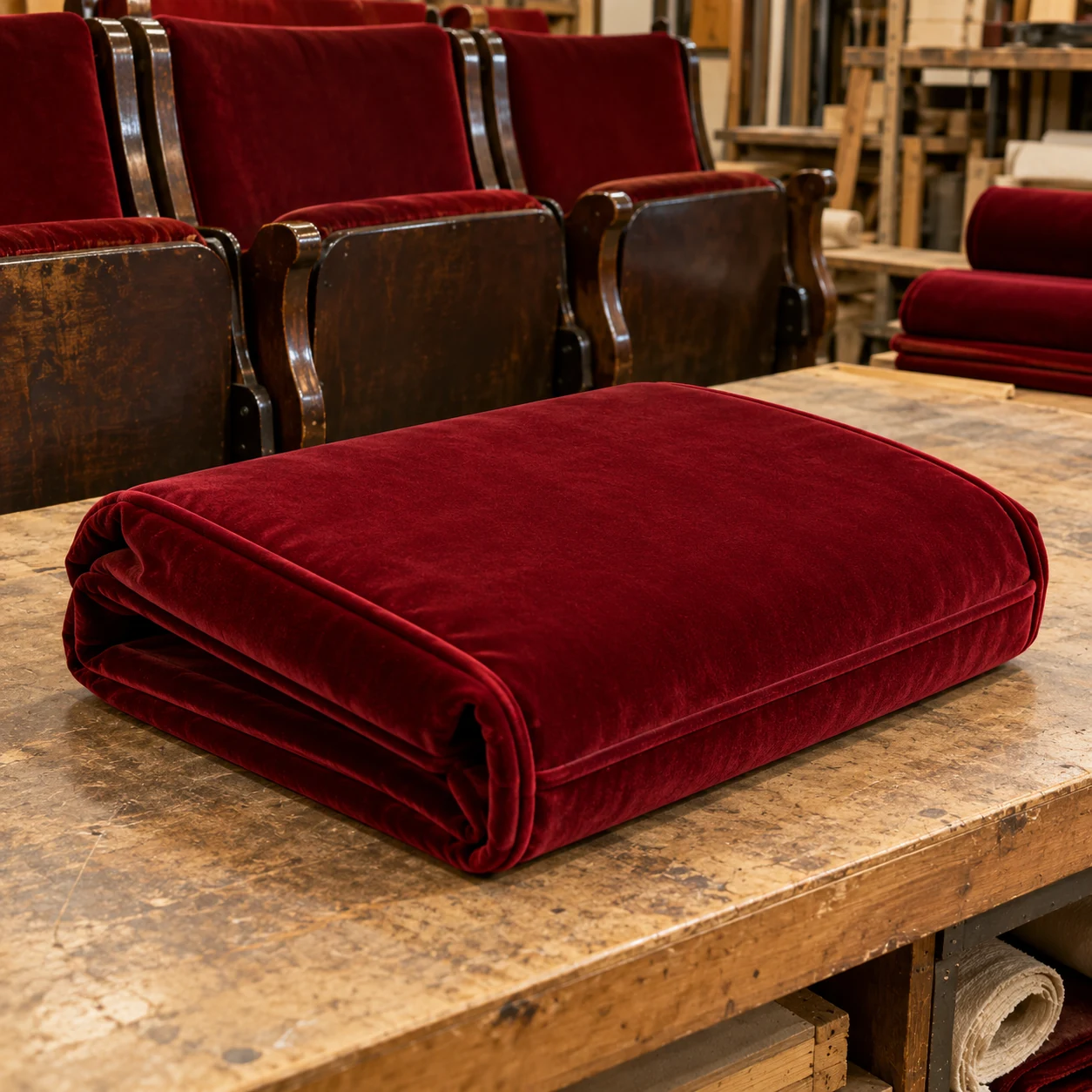
Folded red theater velvet on a workshop bench
Contract velvetChosen for weight and rub count as well as colour.
Red theater velvet with thread and piping cord
Thread and cordMade up to the old profile so the seat keeps its line.
Cut foam and rolled fabric for theater seating
FoamDensity is specified against the code your house is inspected to.
A bolt of red theater velvet on a workshop bench
One batchBought at once to finish the programme, balance stored for the next block.
Cut and sewn

The old panels are the drawing

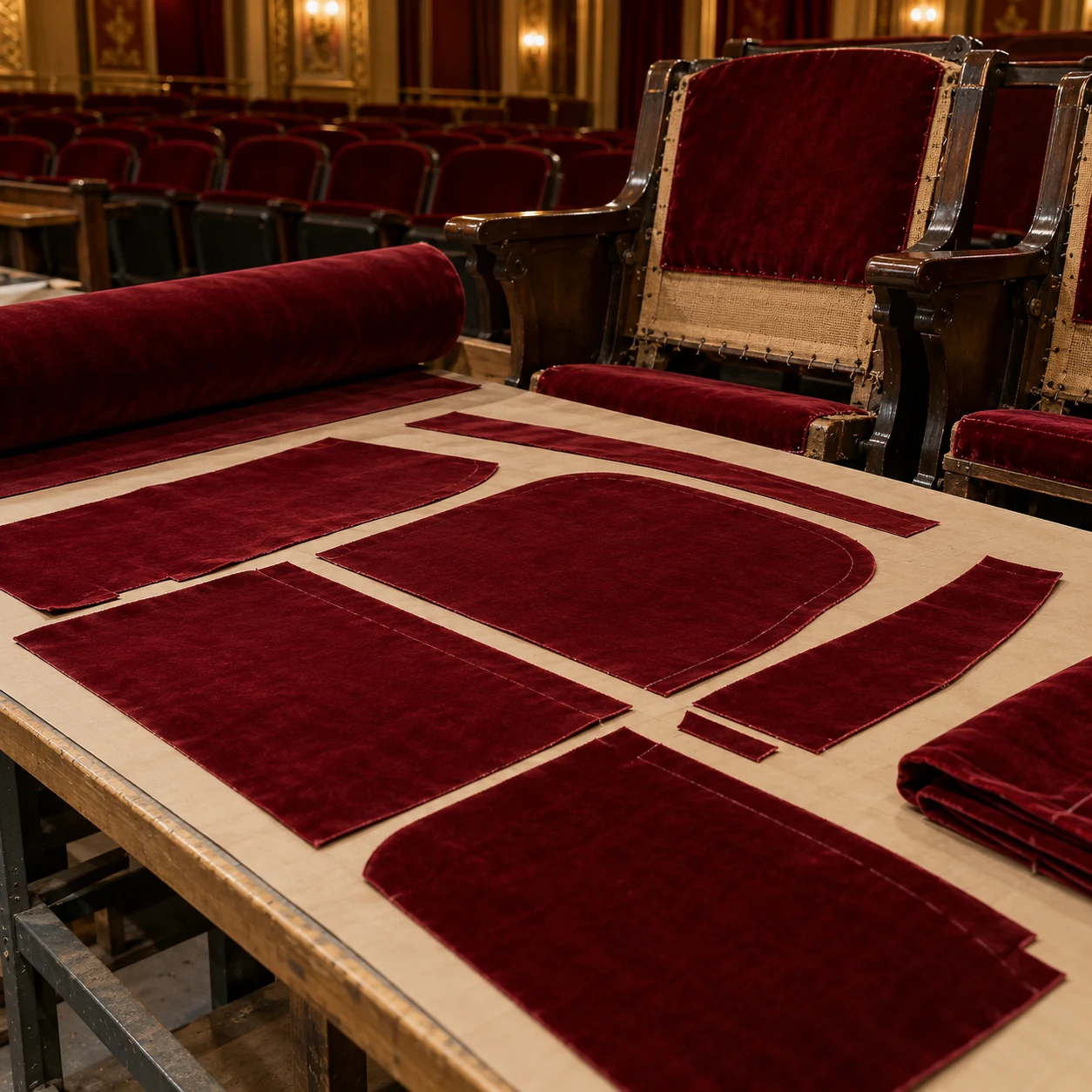
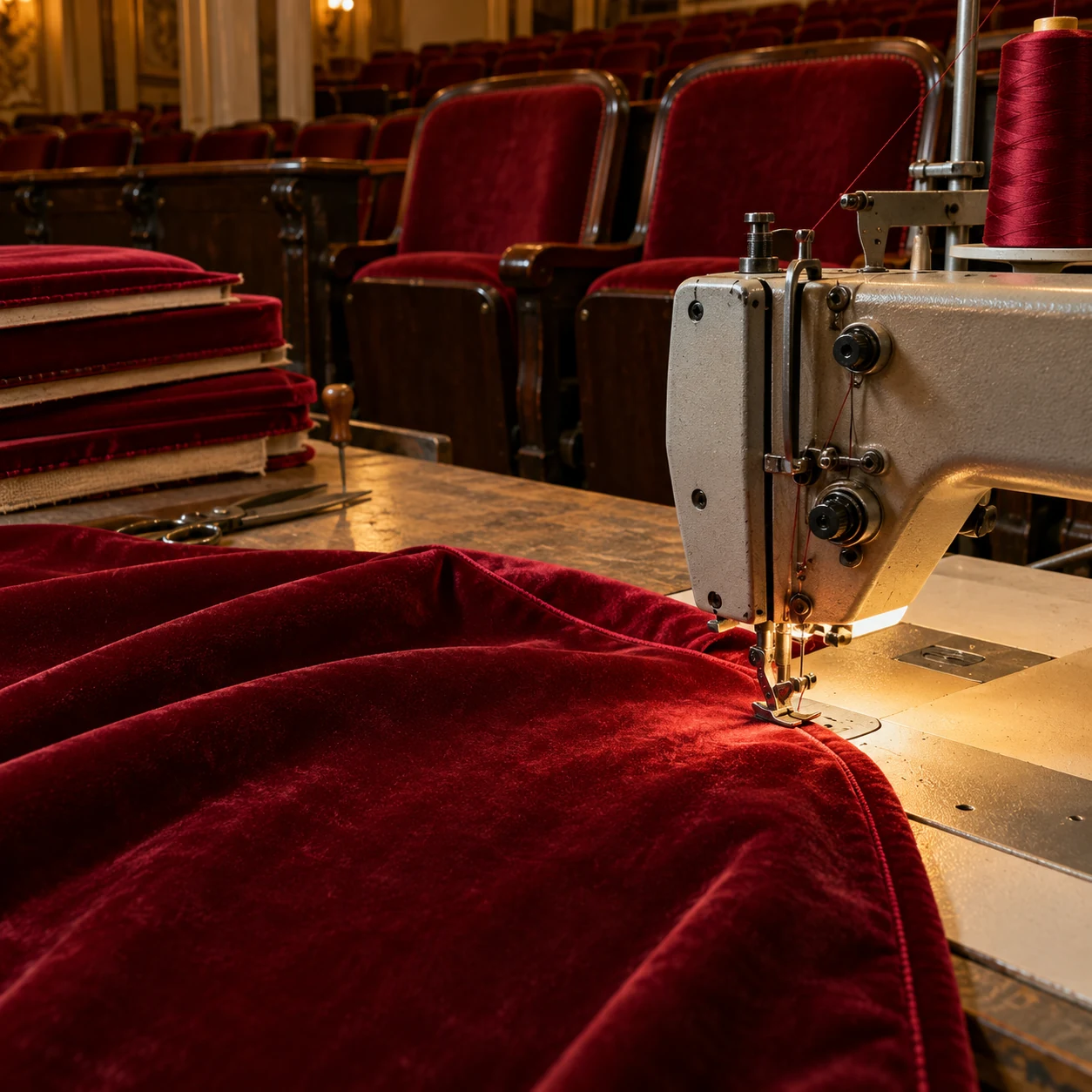
Nothing is patterned from scratch. The panels that came off the seat are laid out, corrected for the shrink in the old cloth, and cut again in the new — standard contract fabric upholstery practice.
Cut red velvet panels laid out on a cutting table
01CutSeats of one type are cut together, pile running one way.
A velvet seam sewn on a machine for theater seating
02SewnStitched to the original line so the cover sits where the old one did.
A theater seat arm beside rolled velvet
03FittedFitted to the frame it came off, not to an average of the row.
New foam on a theater seat frame
04Built upWebbing, foam and wadding, in the recorded order and thickness.
Back in the house

Every seat returns to its own number

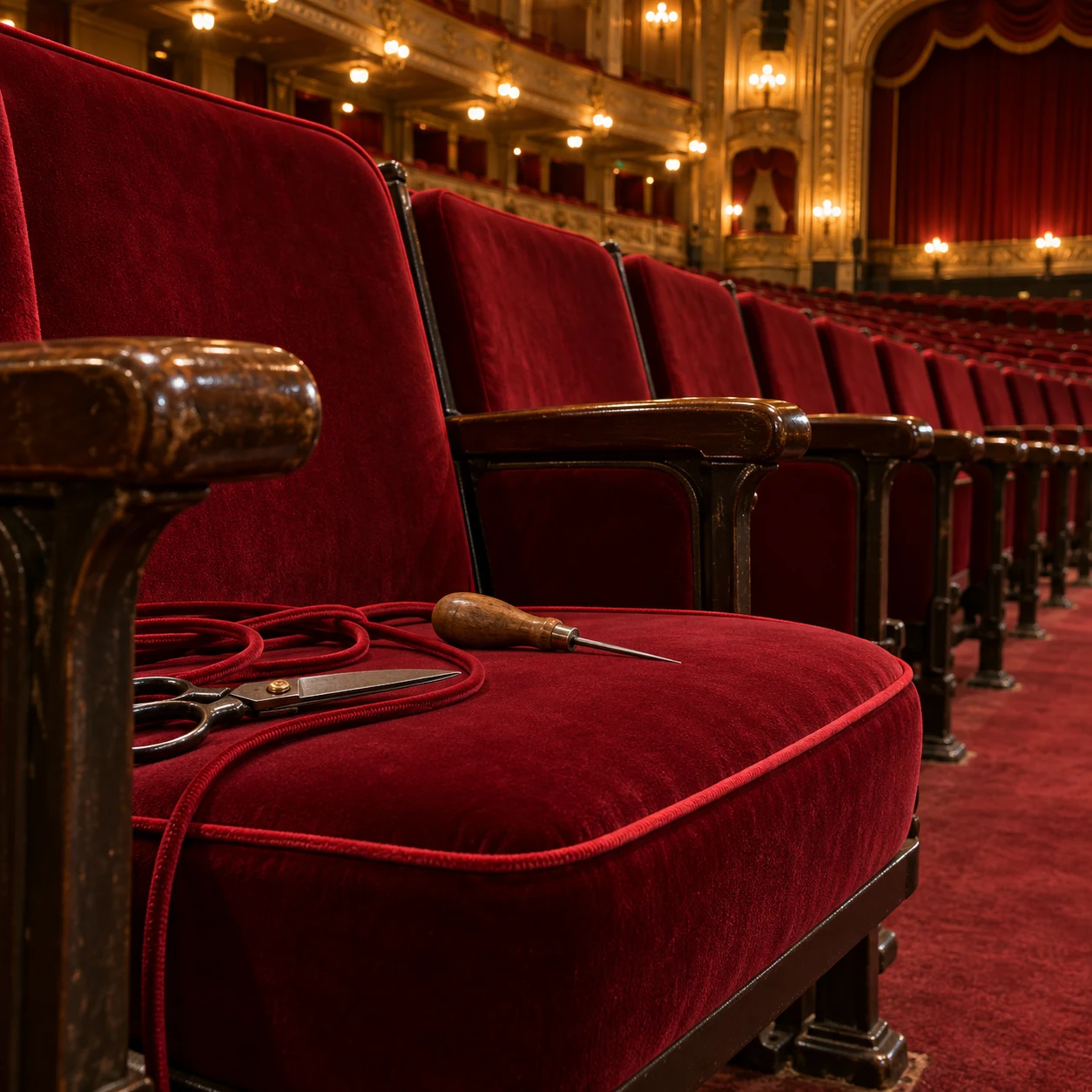
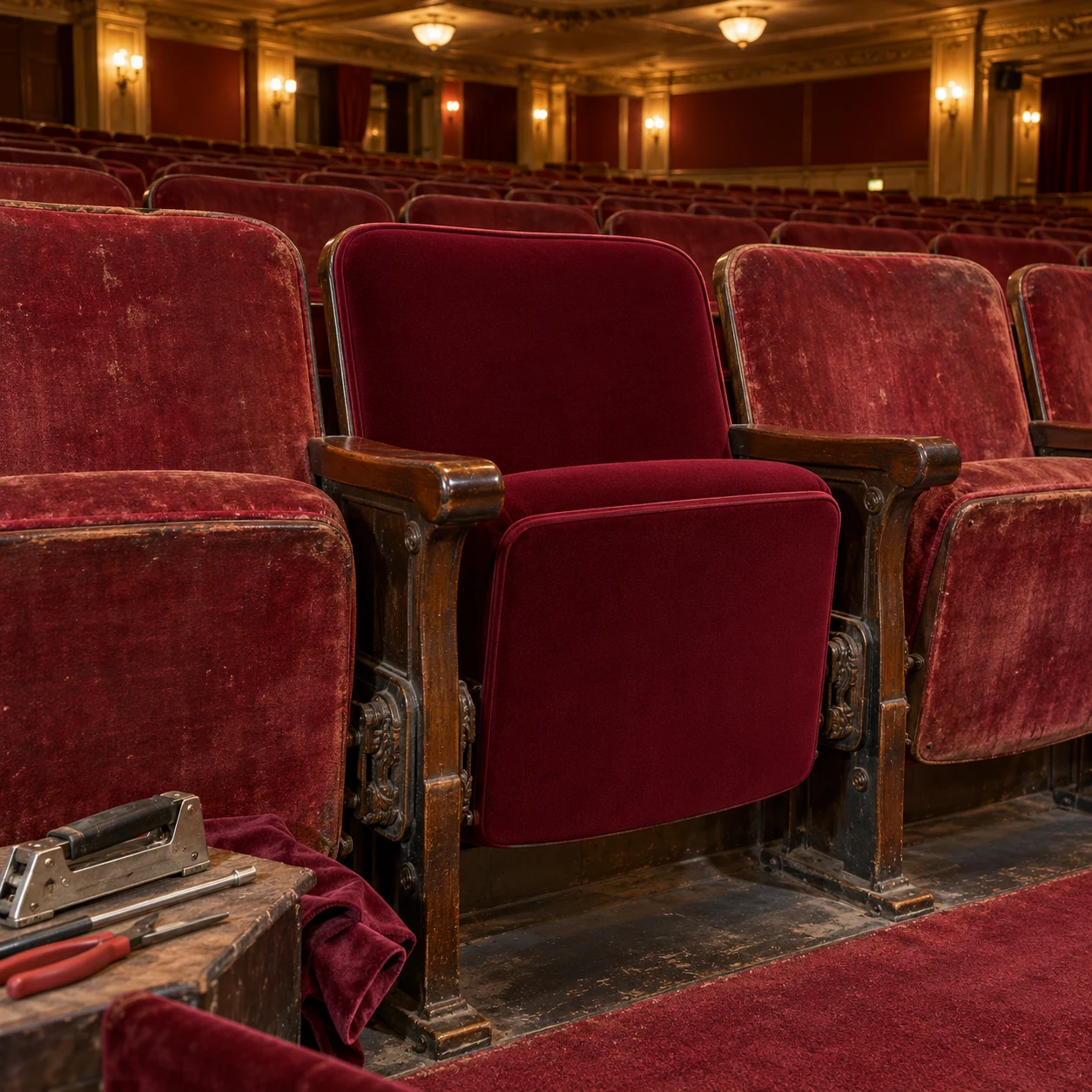
Seats are tagged as they come out. A recovered seat goes back on the standard it left, torqued to the same fixings, and the row is sat in before it is signed off. Most of it happens on overnight calls.
Shears and an awl resting on a theater seat pan
01On siteSmall work is done in the row, in the hours the house is dark.
A theater seat cover being fitted in the row
02Fitted in placeChecked bolted down — a seat on a bench sits differently.
Tools resting on the arm of a theater seat
03One seat at a timeThe rest of the row stays sellable while one seat is worked.
Three theater seats part way through a programme
04Mid programmeA house part way through reads as one house, not as two.
Finished rows

What the row looks like signed off

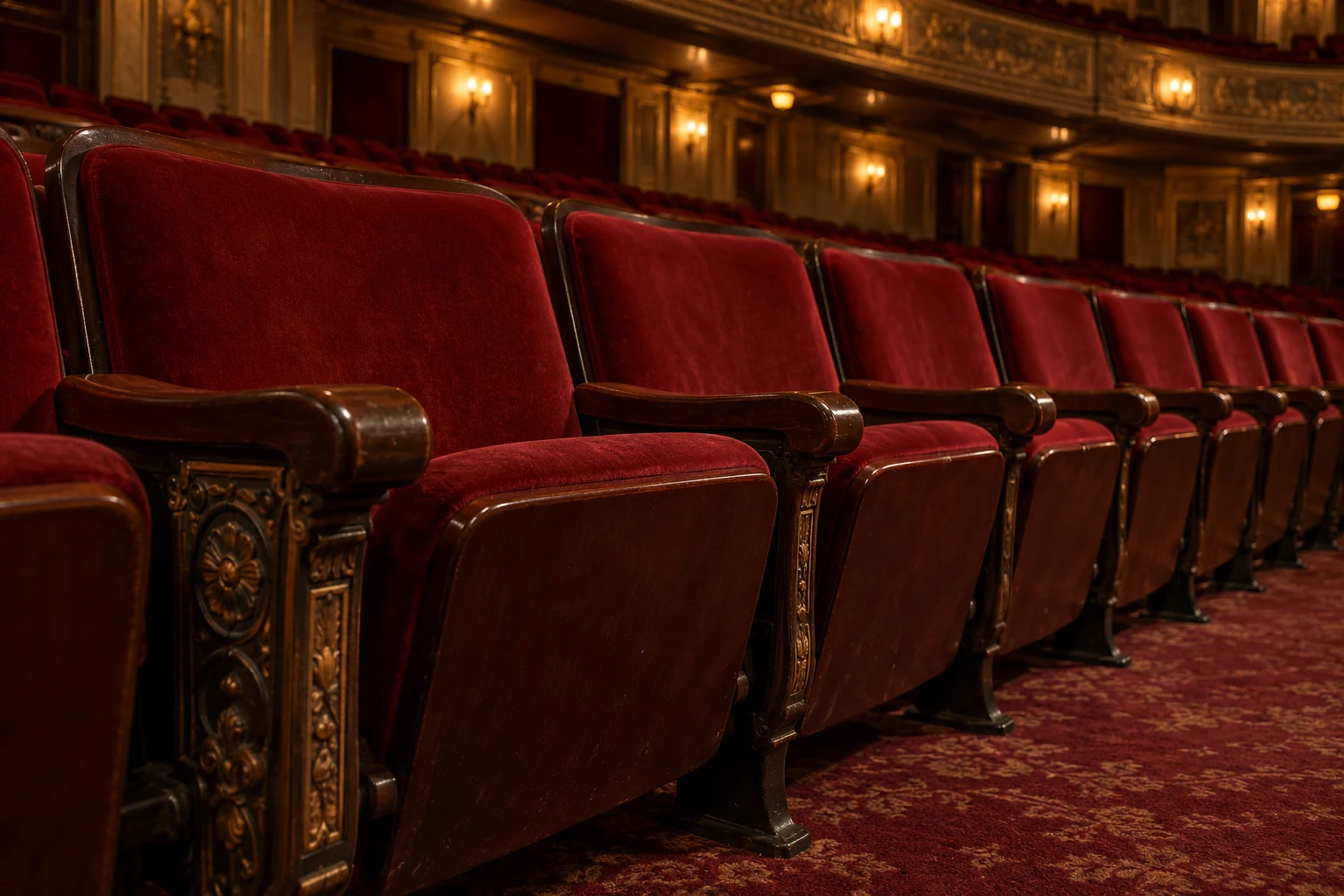
Same profile, same fixings, same seat numbers. The only thing that changed is the part that wears. Compare the before and after work.
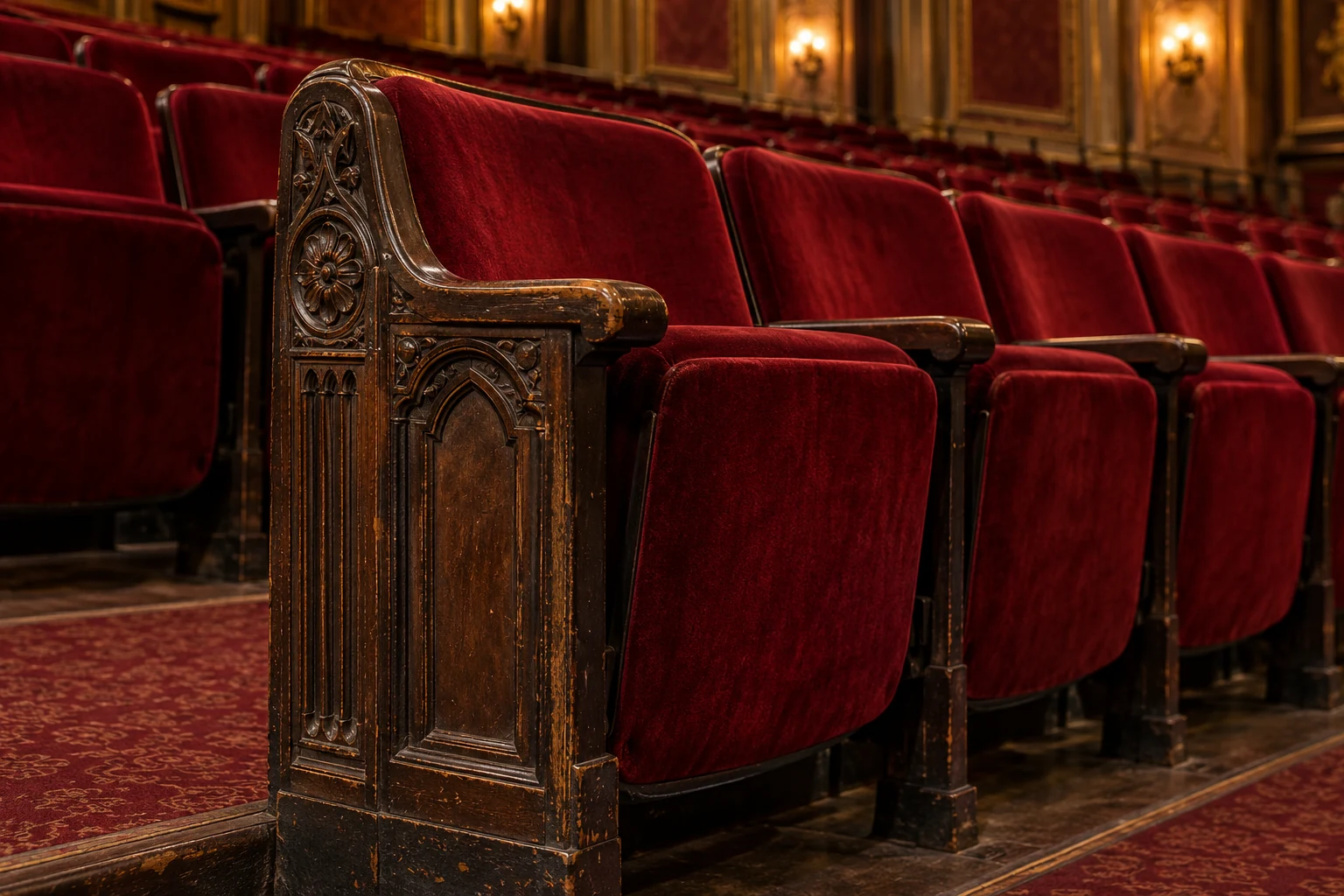
A theater row with a carved cast standard recovered
Carved standardsCast ironwork cleaned and kept. Only the soft parts are new.
A theater row with a gothic cast standard recovered
Period housesWhere the standard is protected fabric, nothing is drilled or replaced.
A recovered theater row under warm house light
Under house lightChecked under the lights it lives under, not shop lights.
A long recovered row of theater seating
Along the rowPile direction held so the row does not shade end to end.
A recovered theater row seen front on
Front onFronts line up because the covers were cut from the seats.
A recovered theater row seen from the side
From the sideThe edge roll is the line the audience sees walking in.
Houses finished

Two auditoriums, two calendars

Two theater seating reupholstery programmes, both worked around a schedule that could not move, the same way an event venue is programmed.
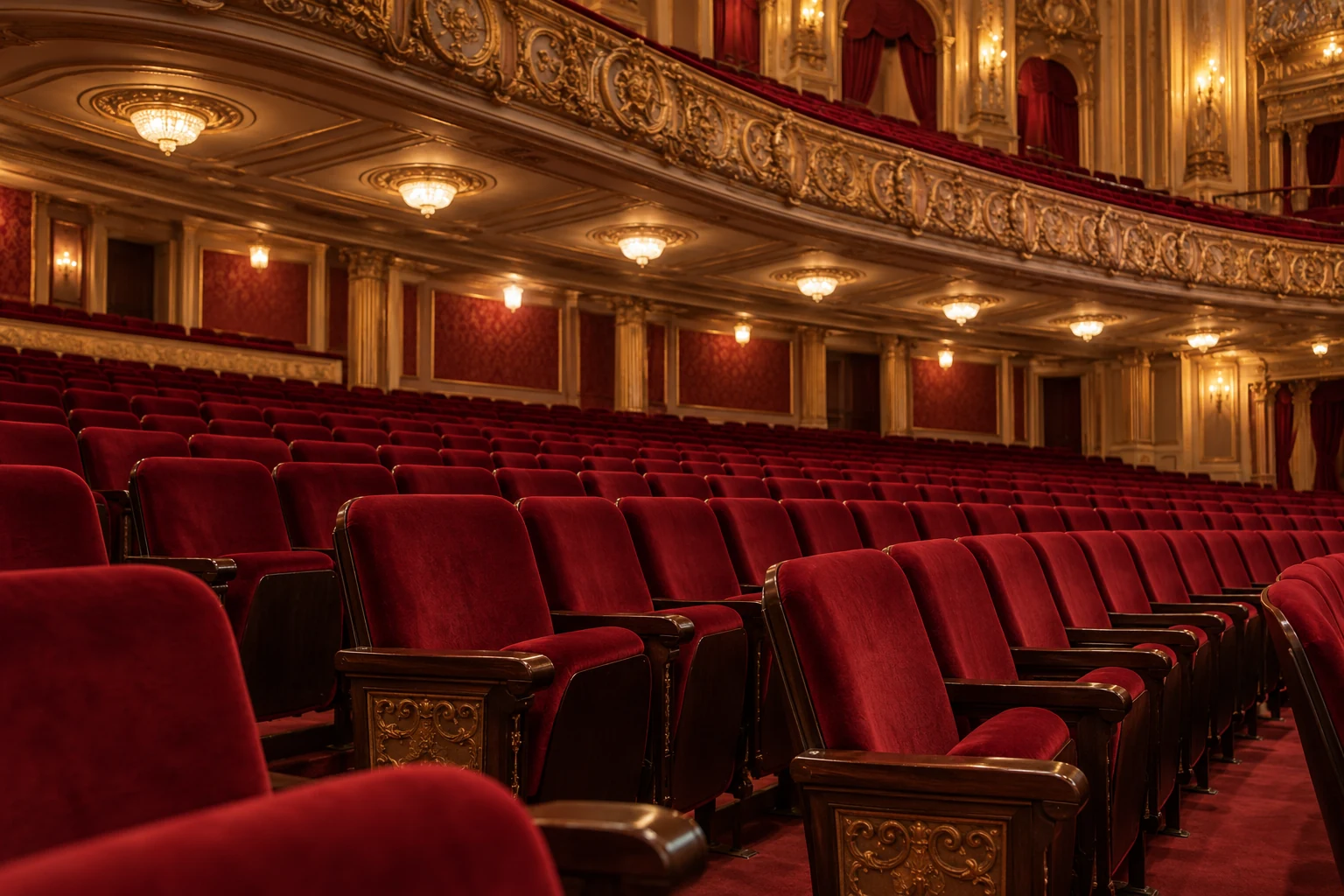
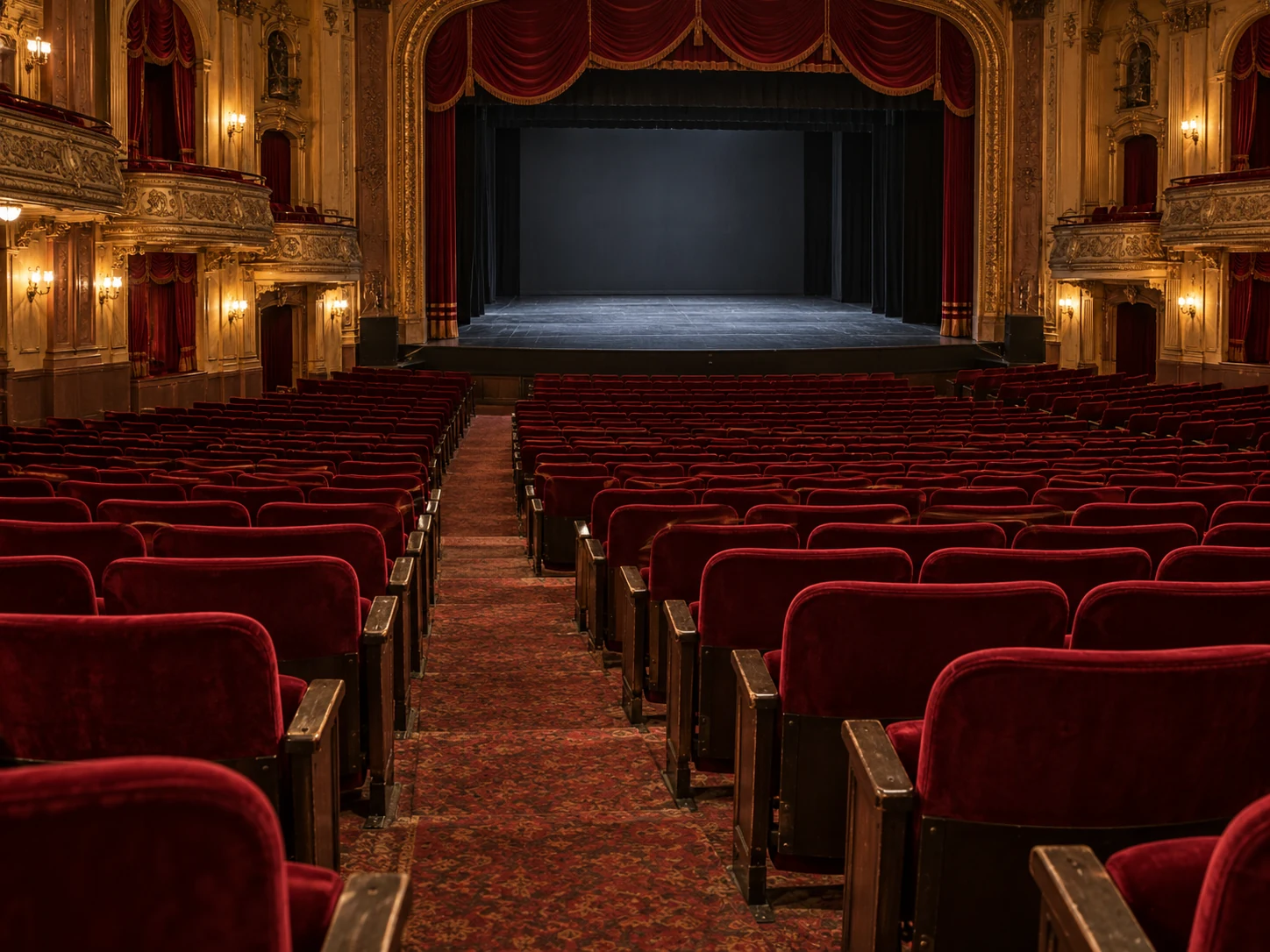
A recovered theater house with balcony seating
A balcony houseStalls in the spring dark weeks, balcony the next season, one batch.
A recovered theater house seen down the centre aisle
A centre-aisle houseWorked outward from the aisles, where the wear always starts.
Questions

Theater seating reupholstery questions

Ask us about one row before you ask about a house, or start with a free estimate. Call (347) 310-7483.

Will theater seating reupholstery change how the house sounds?

It can, and that is the part most quotes ignore. An empty upholstered seat absorbs sound at close to the rate an occupied one does, which is what keeps a half-full house sounding like a full one. We match cover weight, foam density and the open area under the pan to what is there, so the room you tuned is the room you get back.

Can you work between performances?

Yes. Seats come off their standards after the last show and go back before the next, or a block travels to the shop while the rest of the house stays in service. Nothing happens during a performance.

Do we have to do the whole house at once?

No. Most houses start with the worst rows and work outward across seasons. We record the batch and the foam spec, so a block done two years later still matches.

Will new seats match the ones we keep?

New velvet is cut from one batch and checked against a seat from the house under your own lights before anything is sewn. Where a run cannot be matched exactly, we say so before you commit.

What happens to the frames and the standards?

They stay. Cast standards, hinges and the number plates are yours and they are reused. Only the soft build-up comes off.

How long does a house take?

A single row is an overnight job. A block is usually a week of nights. A whole house is planned against your dark weeks and quoted as a programme, not a day rate.
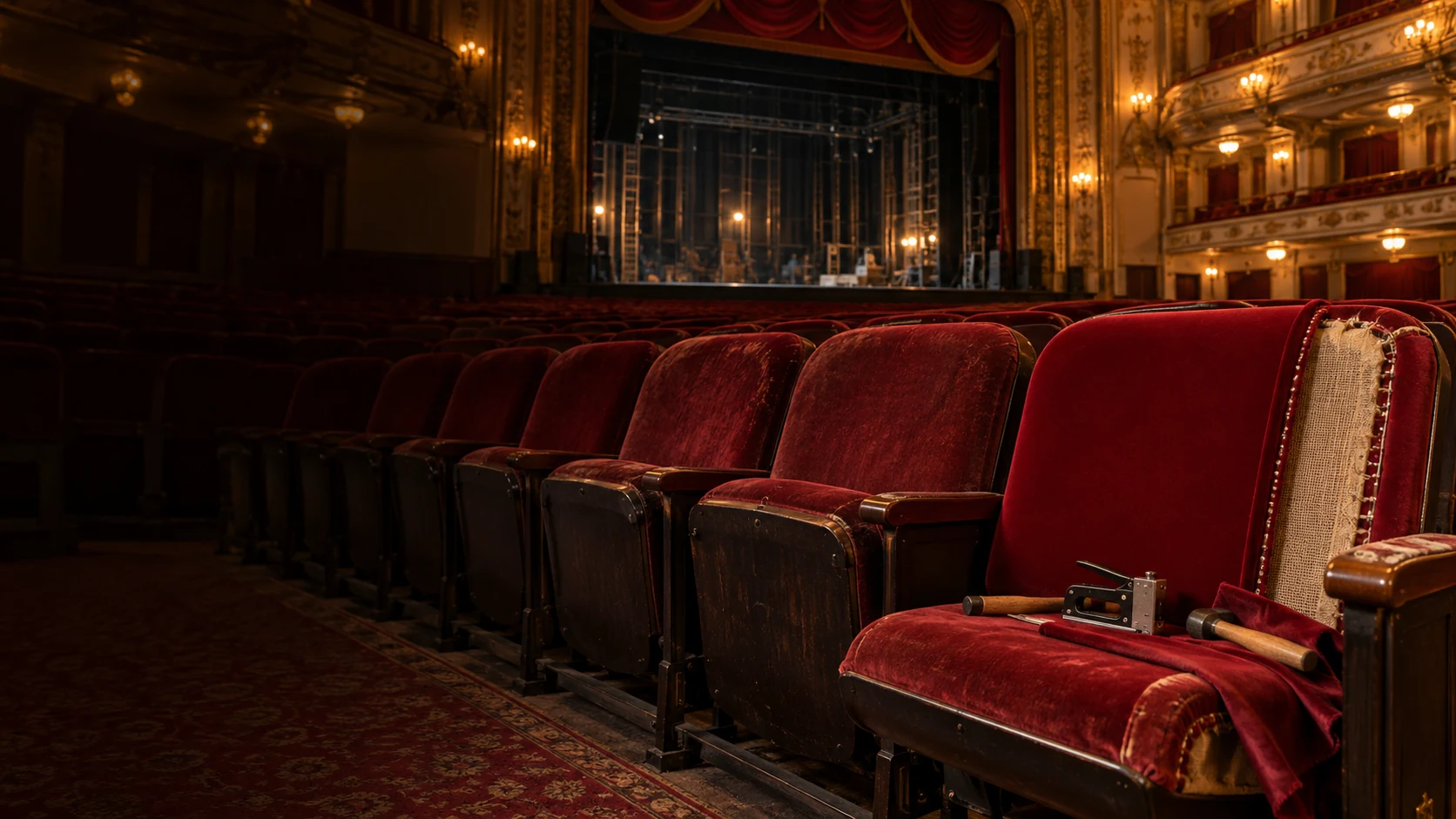
A theater house with one seat part way through reupholstery
Next step

Let us open one seat before you commit the house.

One seat stripped and rebuilt tells you what theater seating reupholstery costs per seat in your house, what the rest of the rows need, and how many nights it takes. Then you decide how much of it to do.

Scroll to Top