
Home/Commercial/Capabilities/Material matching
Leather material matching
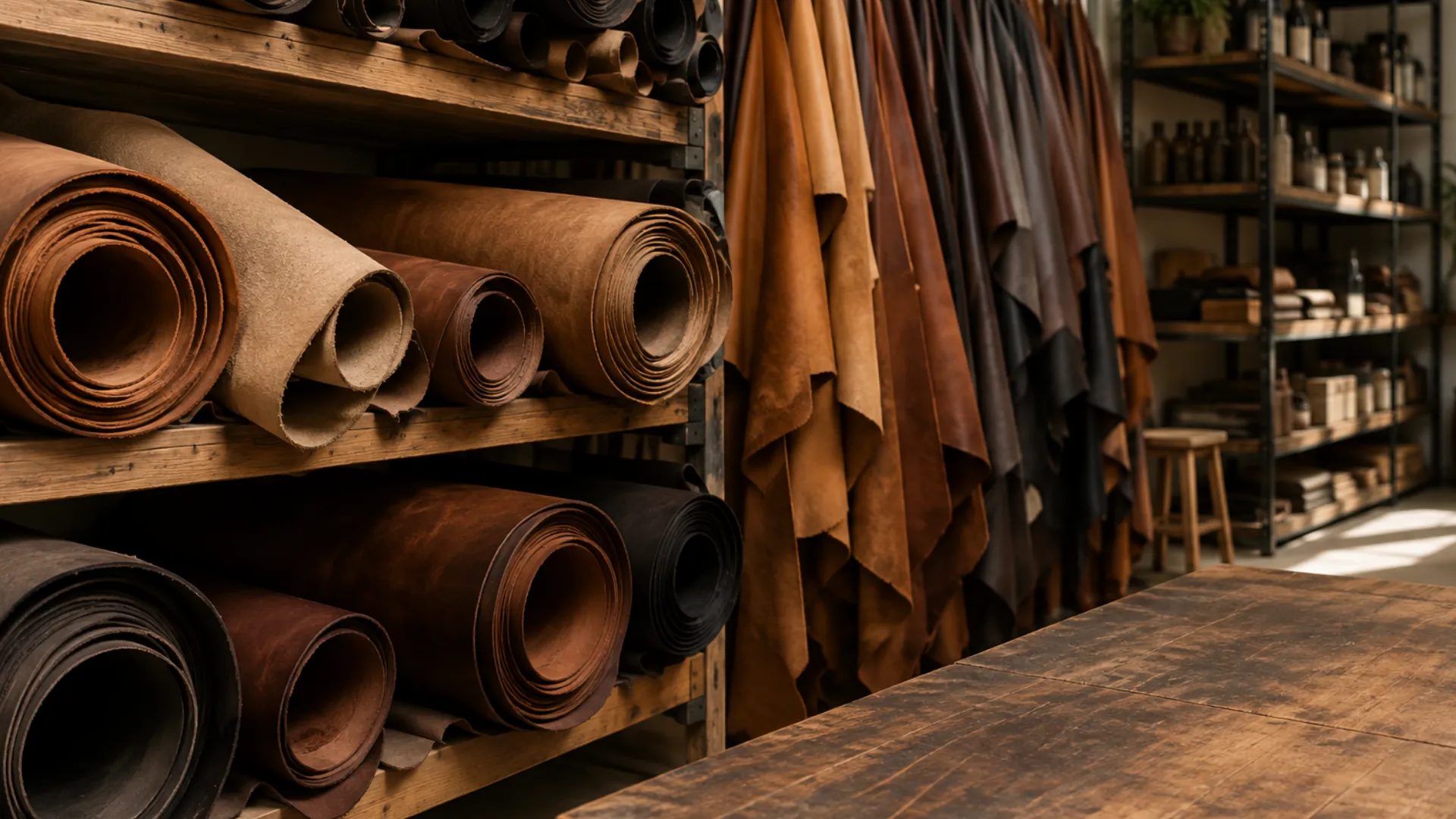
We find the hide your panel was cut from.
Before a panel, a bench or a whole unit is recovered, we source the hide, vinyl or fabric to recover it in: grain, weight, temper and finish. For commercial furniture across New York City, Long Island and New Jersey.
The read
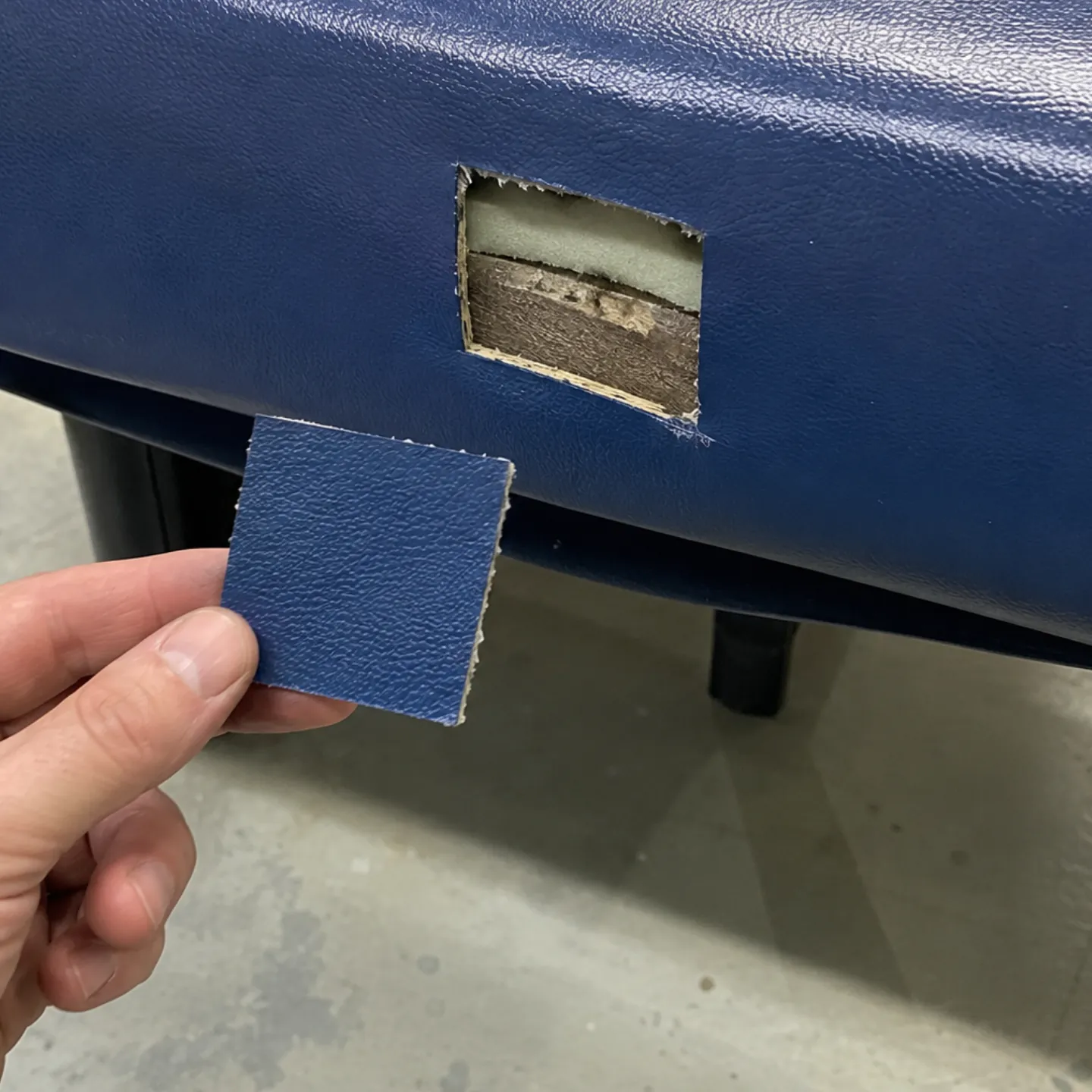
Matching starts with a piece of the actual furniture.
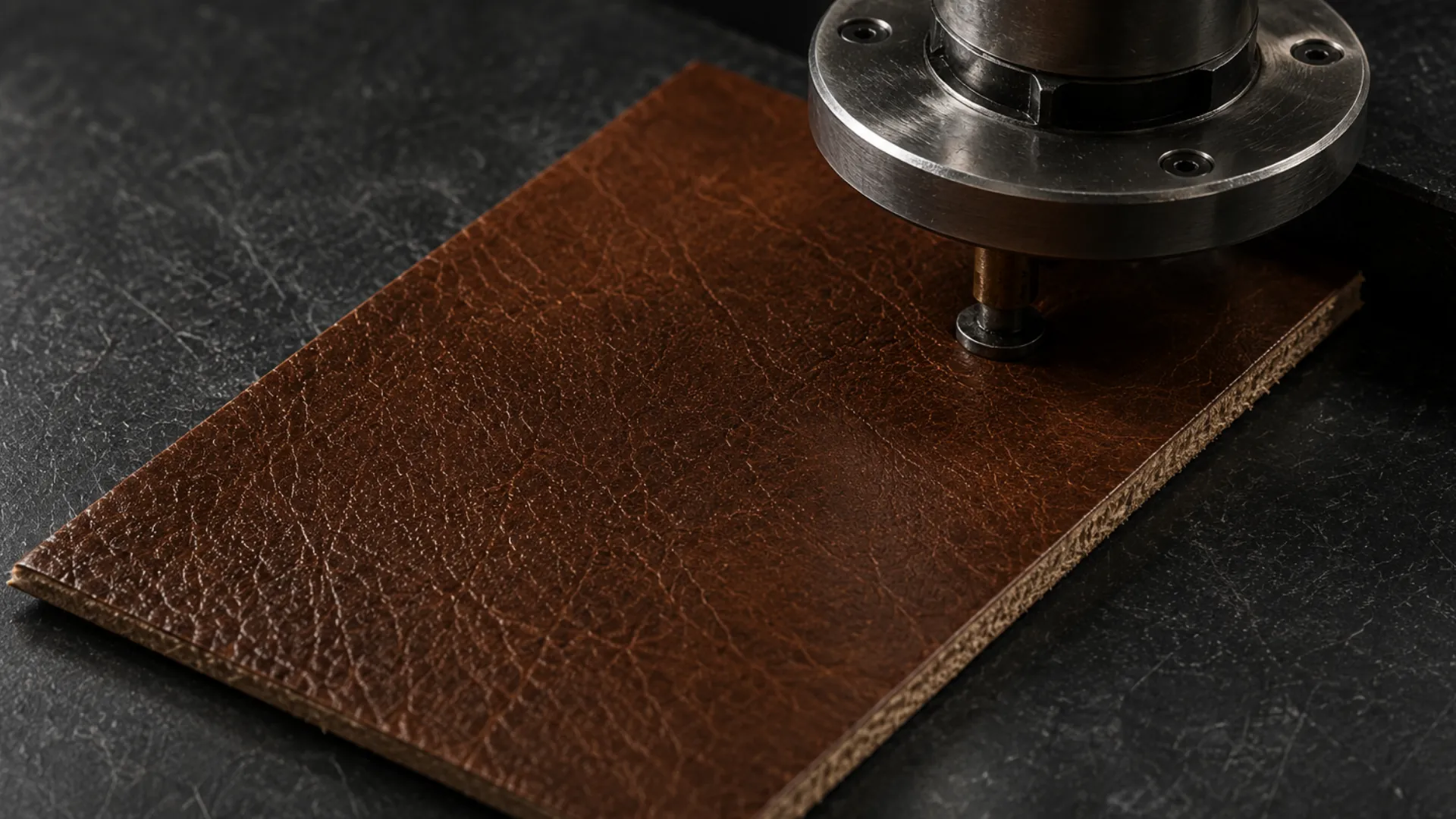
Leather material matching always ends in reupholstery: one bench in a row of ten, one panel, or the whole unit. Nothing is ordered from a photograph. A sample is cut where nobody sees it, and seven things are read off it. Six have nothing to do with colour.
- 01SubstrateHide, vinyl, faux, bonded or fabric. It decides everything after it.
- 02GrainNatural or embossed, and at what repeat.
- 03ThicknessIn millimetres, at an unworn edge.
- 04TemperStiff or soft. It decides where a seat creases.
- 05FinishAniline, semi-aniline or pigmented; topcoat on vinyl.
- 06BackingKnit or woven, and which way it runs over a curve.
- 07Duty ratingWhat the piece has to survive, in abrasion cycles.
Four dimensions
Four things decide whether a new panel disappears.
Colour is not one of them. All four are settled before material is bought, because none can be corrected afterwards.
 01
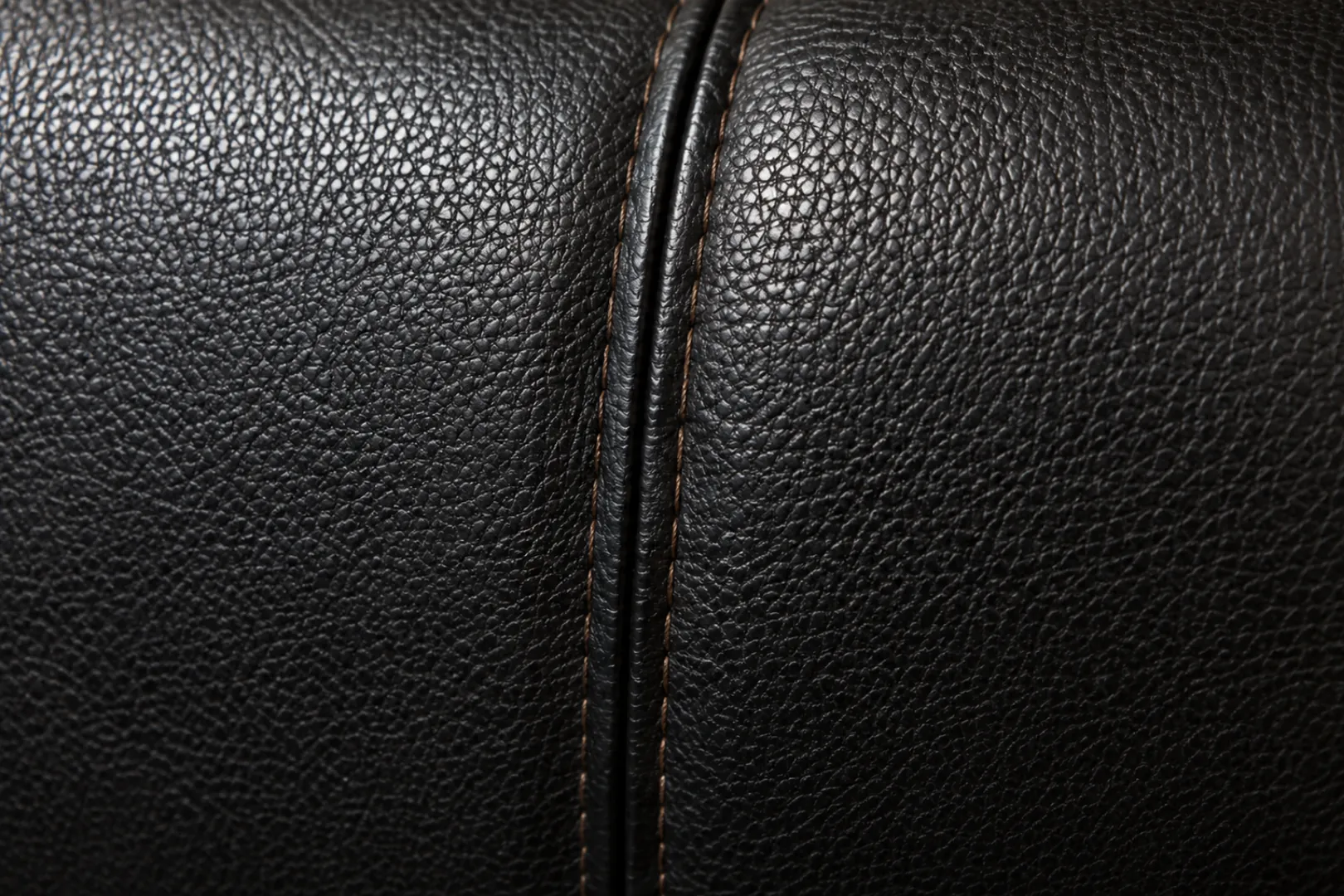
01Grain
Commercial hides are almost always embossed, so the question is whose grain, and at what repeat.
Wrong, andthe panel reads as a patch from six feet away.
- 02
Weight and temper
So the new panel drapes and creases like its neighbours. Thickness is measured; temper is judged by hand.
Wrong, andthe corner sits proud and the seat creases in a new place.
- 03
Finish
Aniline, semi-aniline or pigmented. Each takes light and wear differently.
Wrong, andit holds a different sheen and ages away from the piece.
- 04
Performance
A bar stool, a waiting room, a lobby bench. The abrasion rating and cleaning code are part of the match.
Wrong, andit looks right on the day and fails first.
 01
01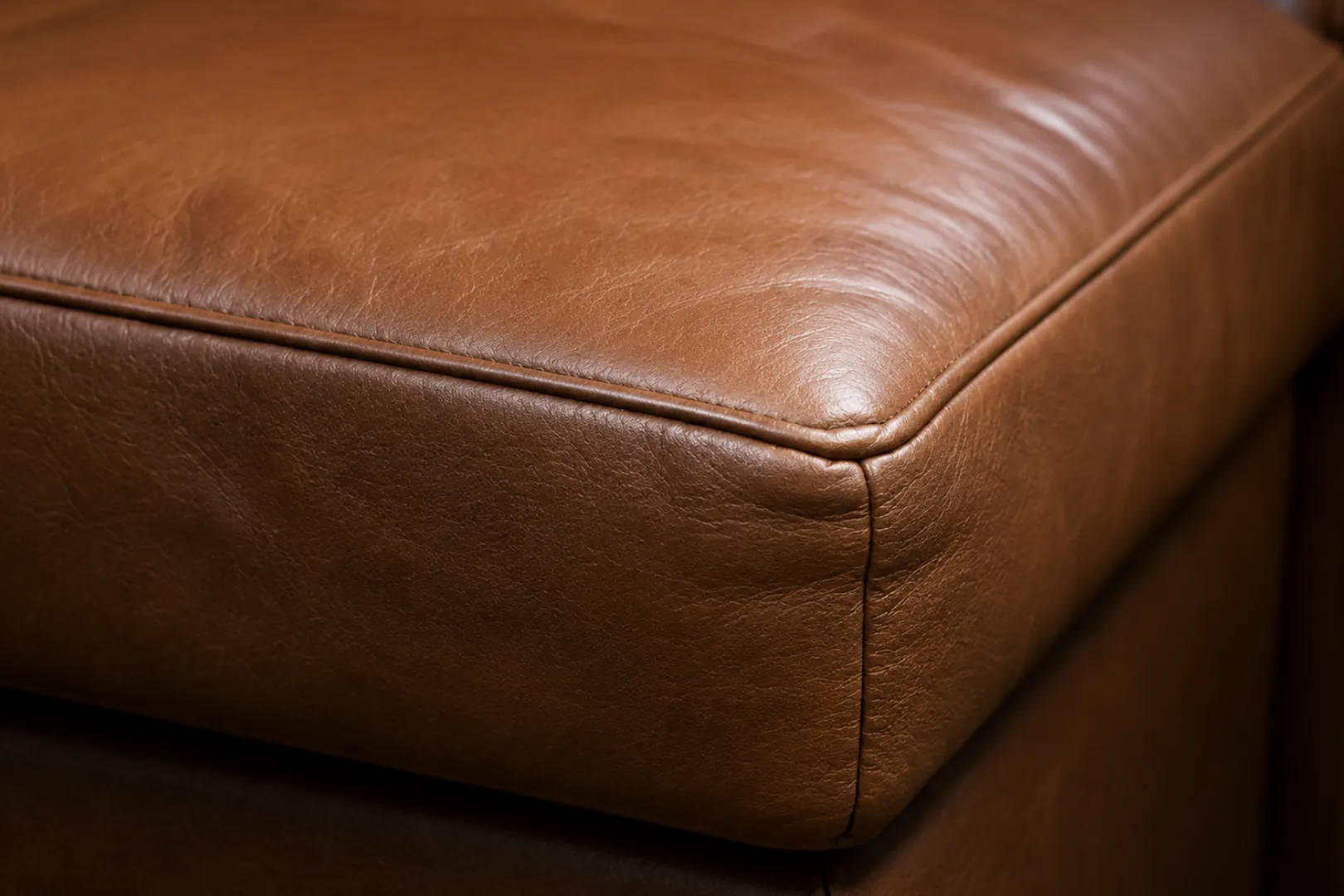 02
02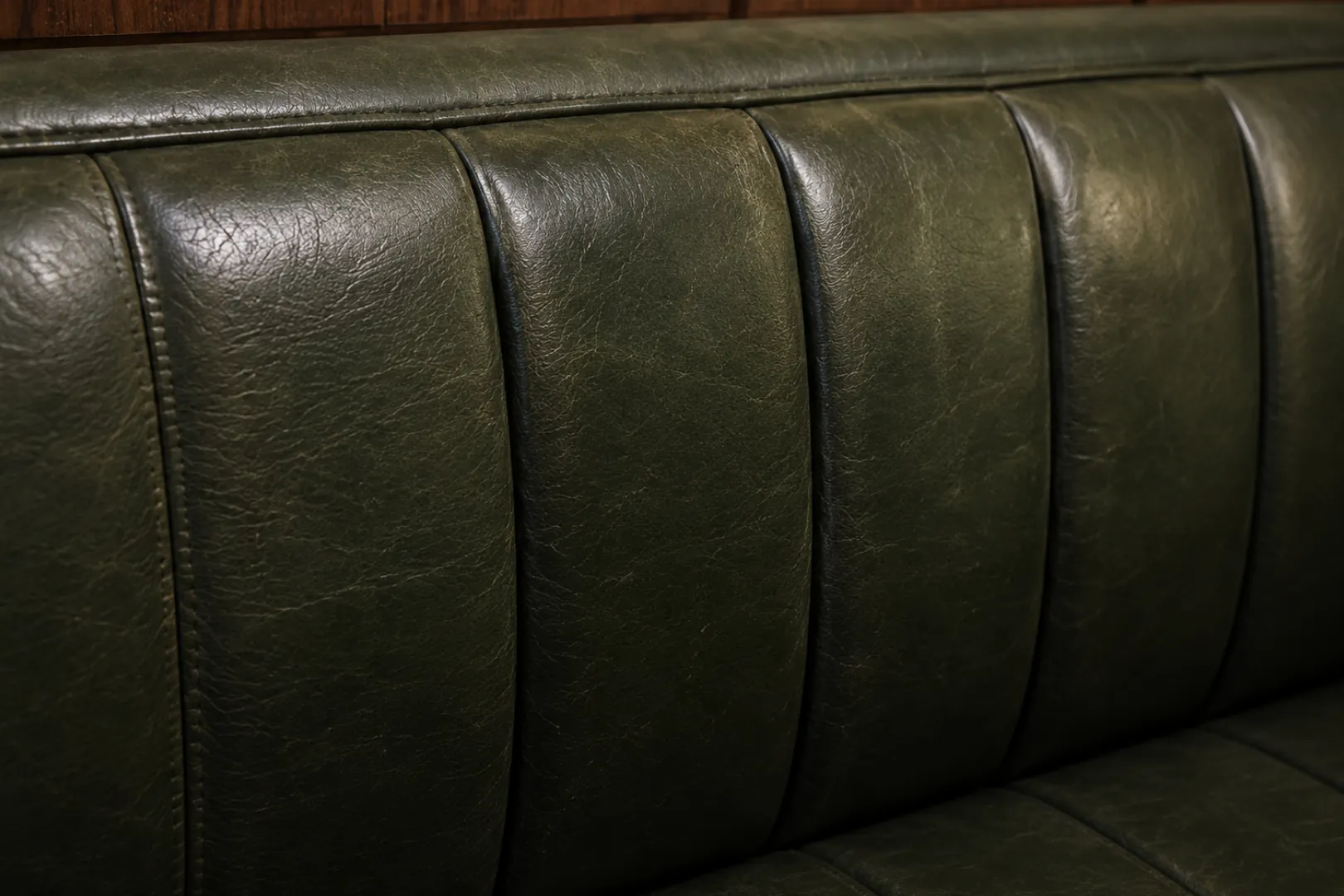 03
03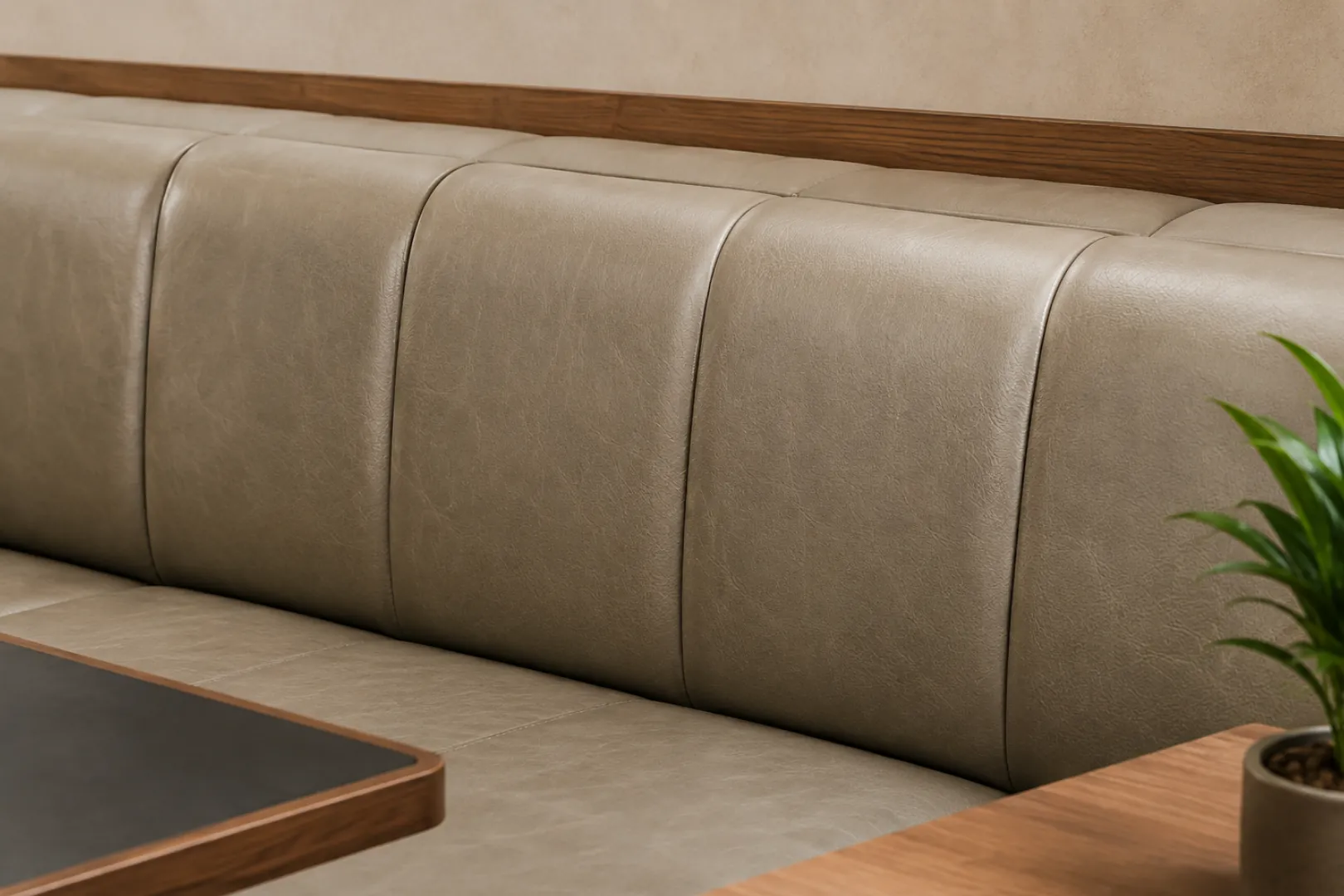 04
04Why it is settled first: pigment can be re-mixed and a stitch can be run again. A panel cut from the wrong hide has to come out and be cut again. That is why on-site repairs arrive with the material already sourced.
Hide and vinyl
Two problems, matched two ways.
Leather material matching splits in two. Hide is matched on grade and finish; vinyl and fabric on gauge, backing and rating. Most commercial rooms hold both. If you know what your furniture is covered in, start there.
Hide
Grade first, then finish.
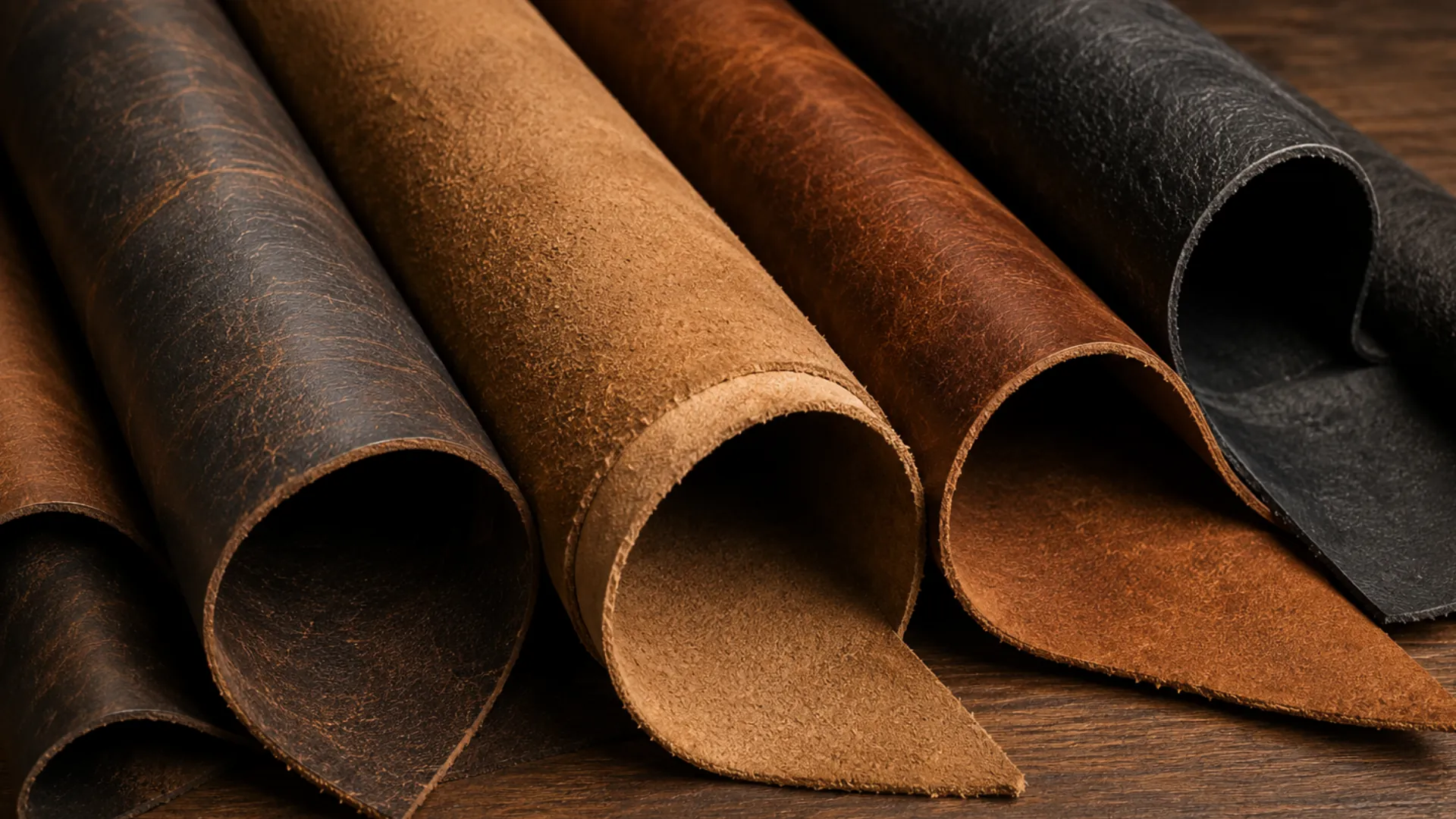
Where the hide was split decides how it folds. The finish decides how it takes light and wear.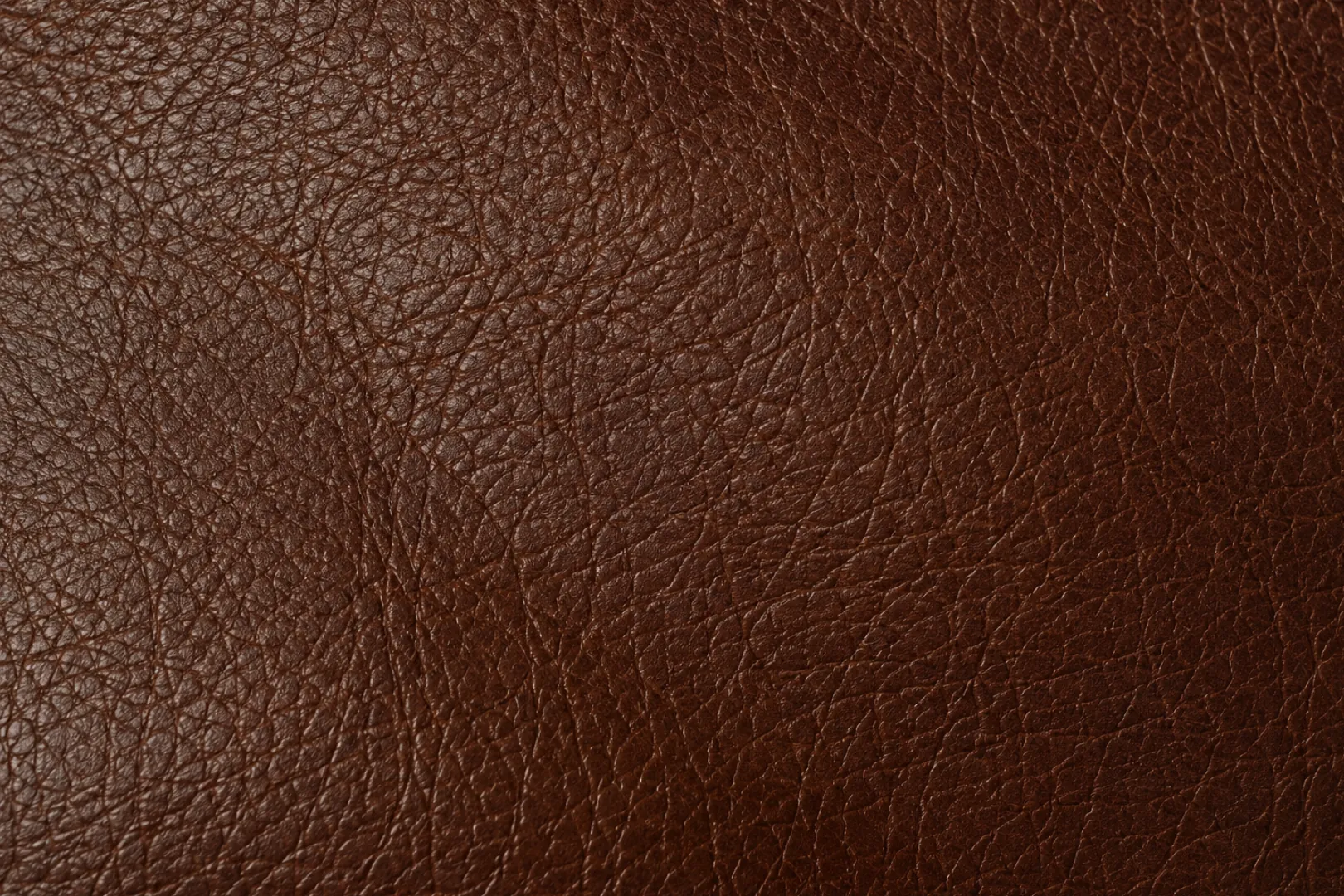 Full-grainNatural, unsanded grain
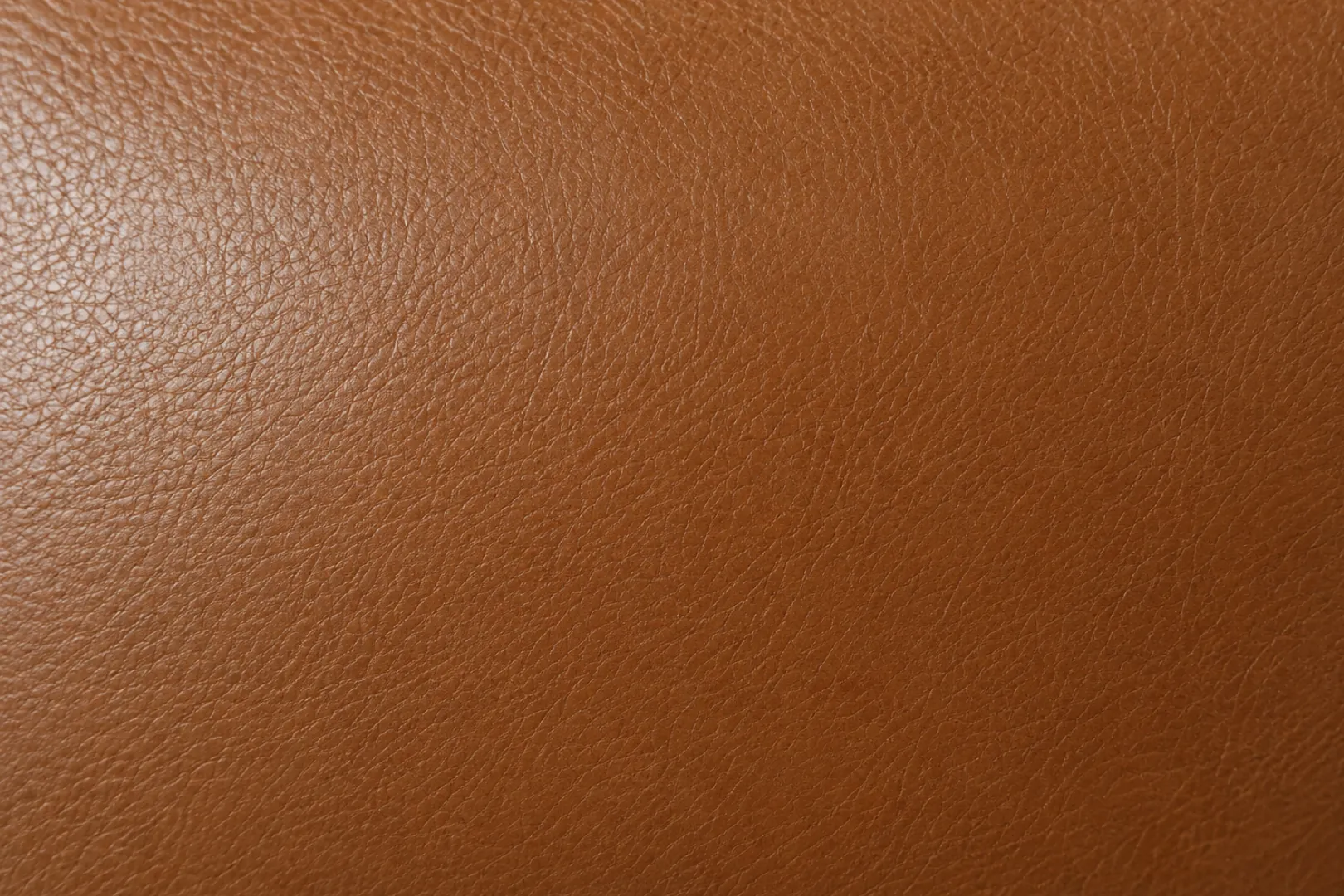 Top-grainSanded and refinished
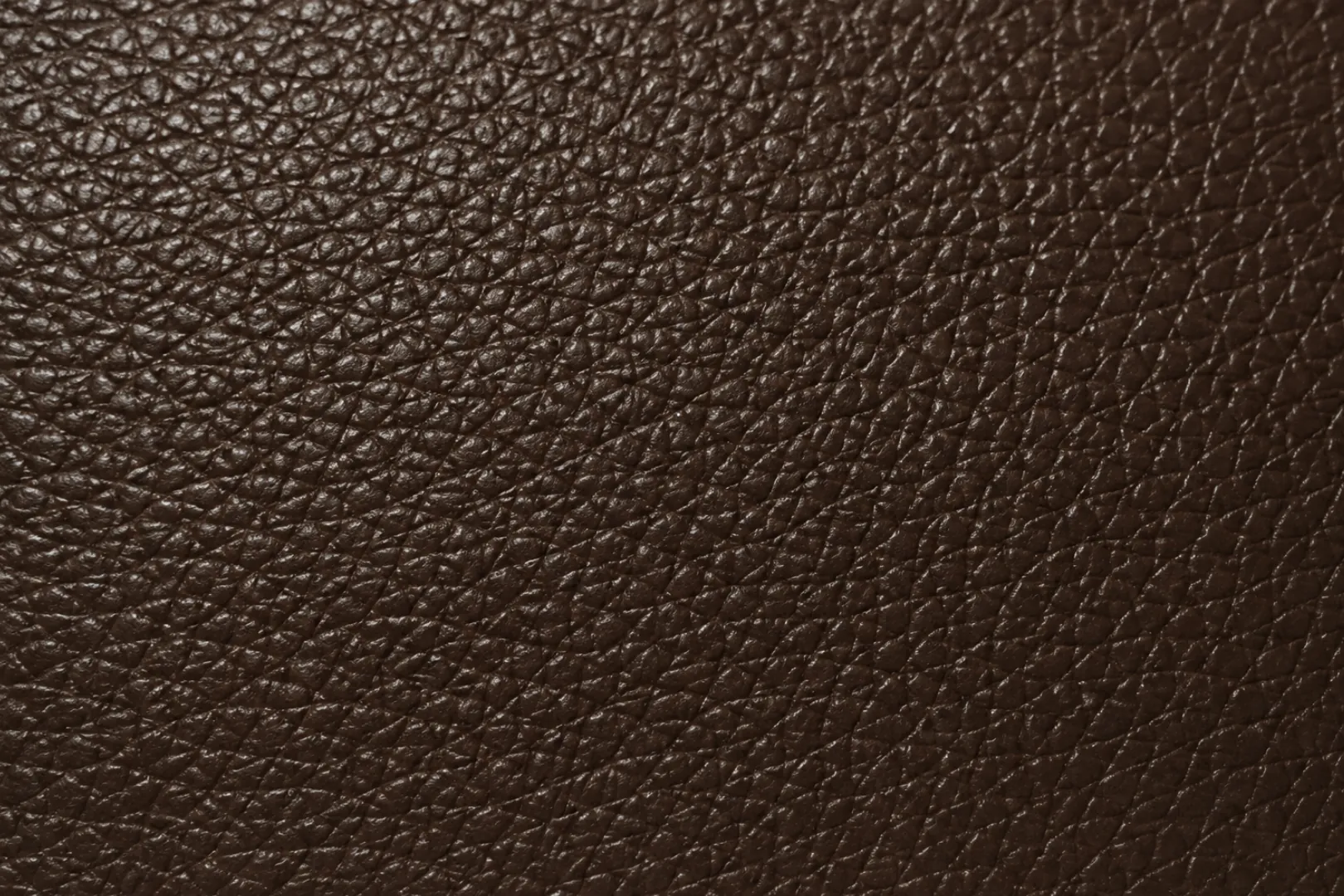 Corrected-grainEmbossed to a set pattern
 SplitLower layer, coated
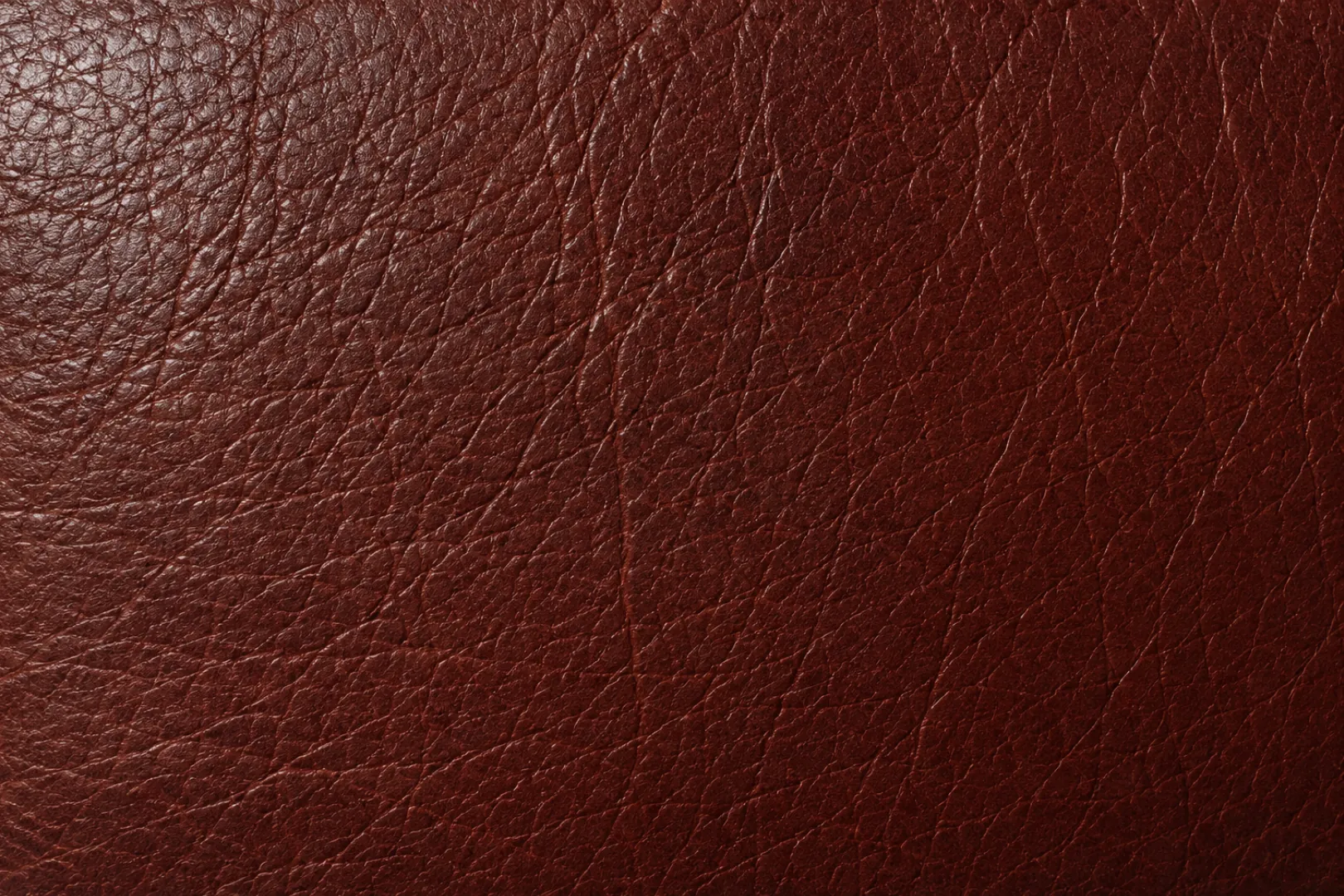 AnilineDyed through, no topcoat
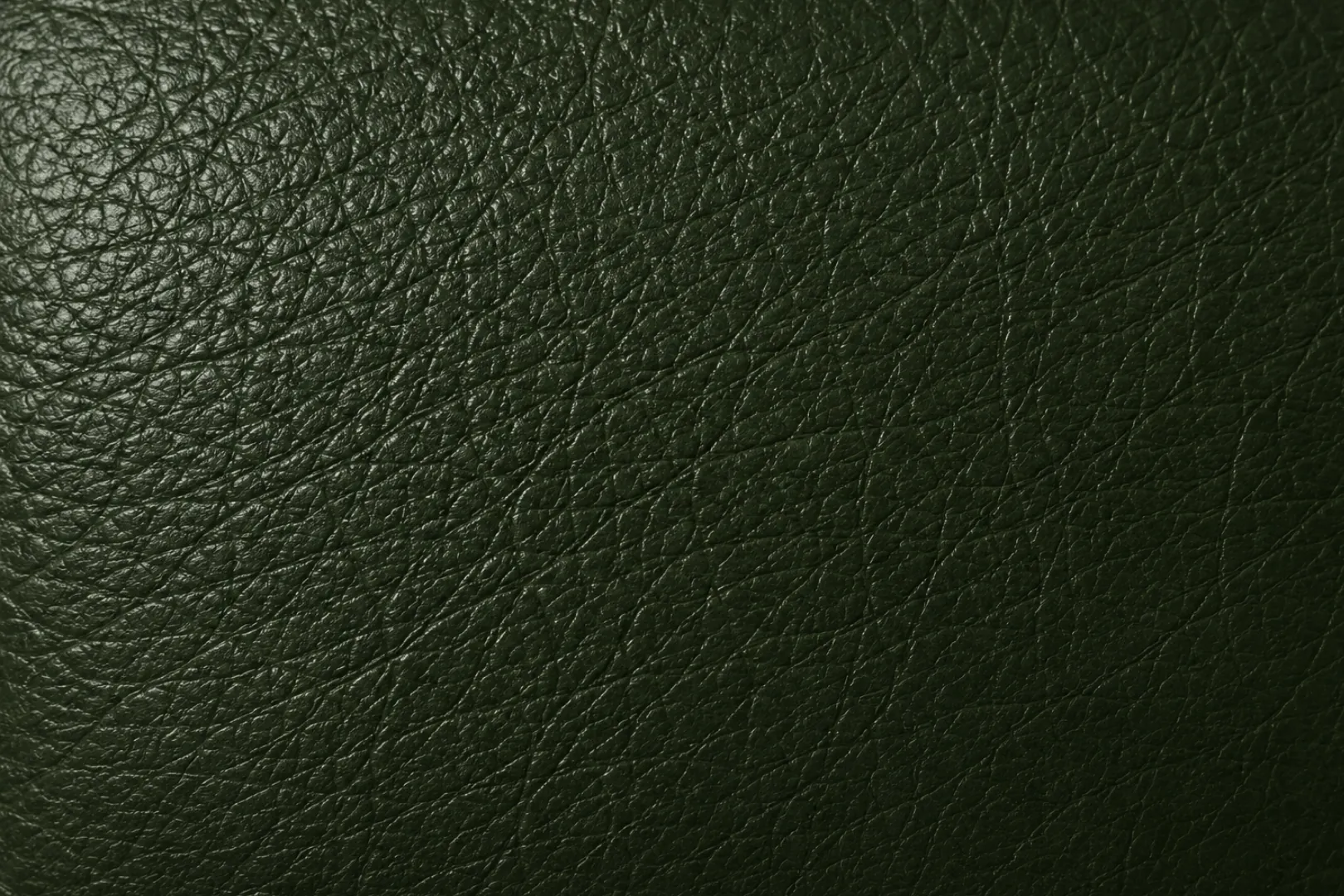 Semi-anilineLight protective coat
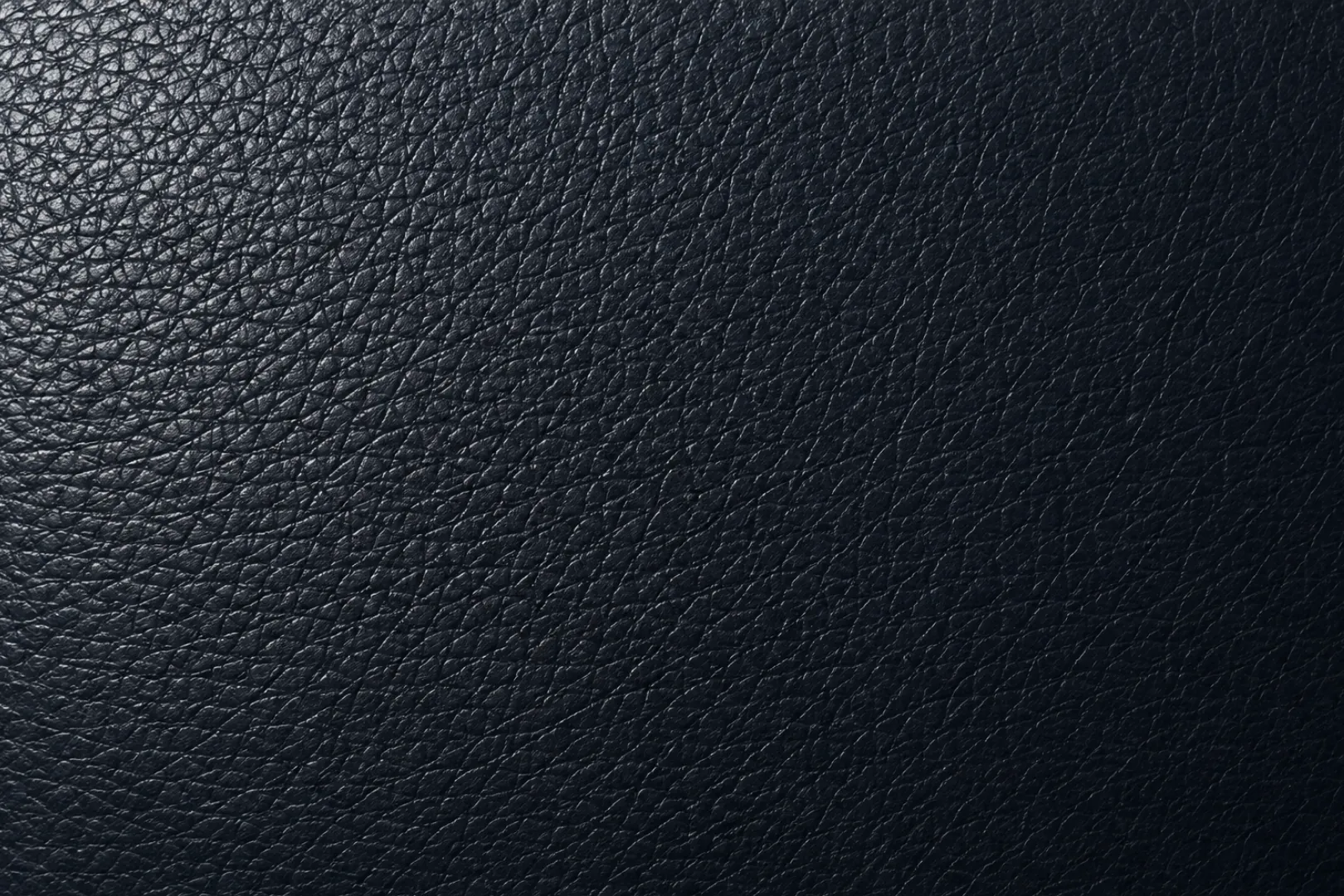 PigmentedMost commercial seating
 NubuckBuffed top surface
 SuedeNapped underside
Vinyl and fabric
Gauge, backing, rating.
Drop below the rating it was specified at and the booth fails again.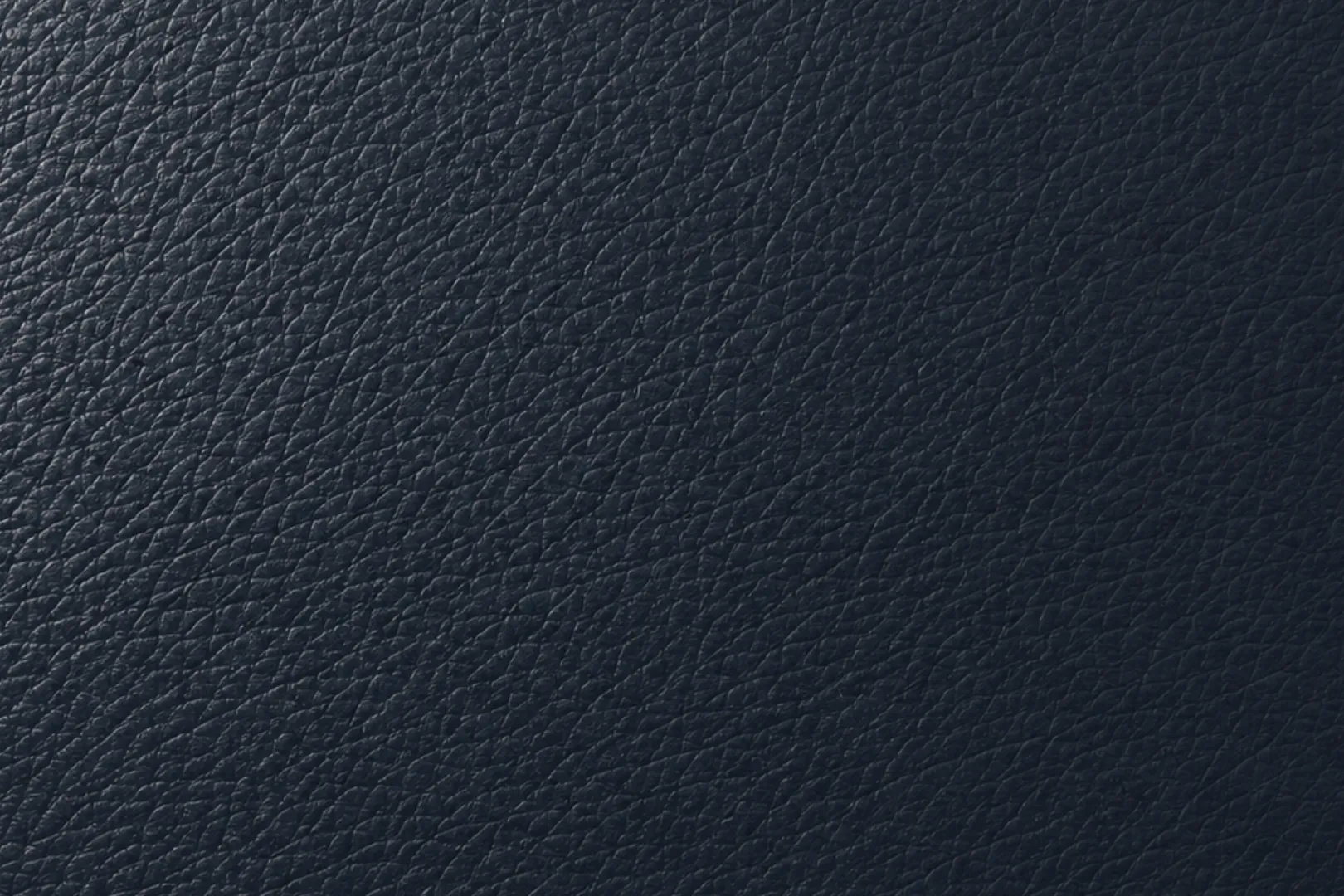 Commercial vinylRated in double rubs
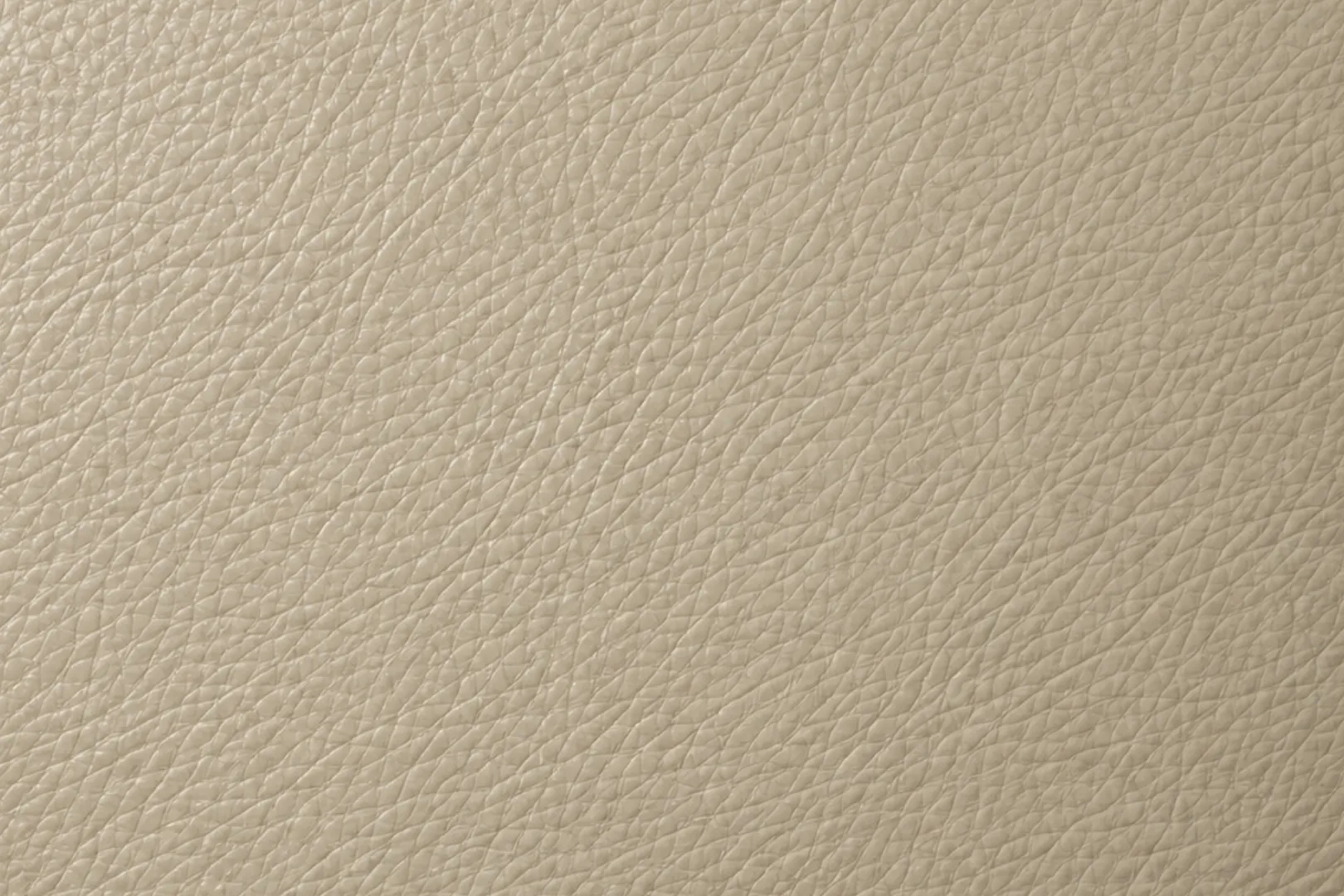 VinylCoated, knit-backed
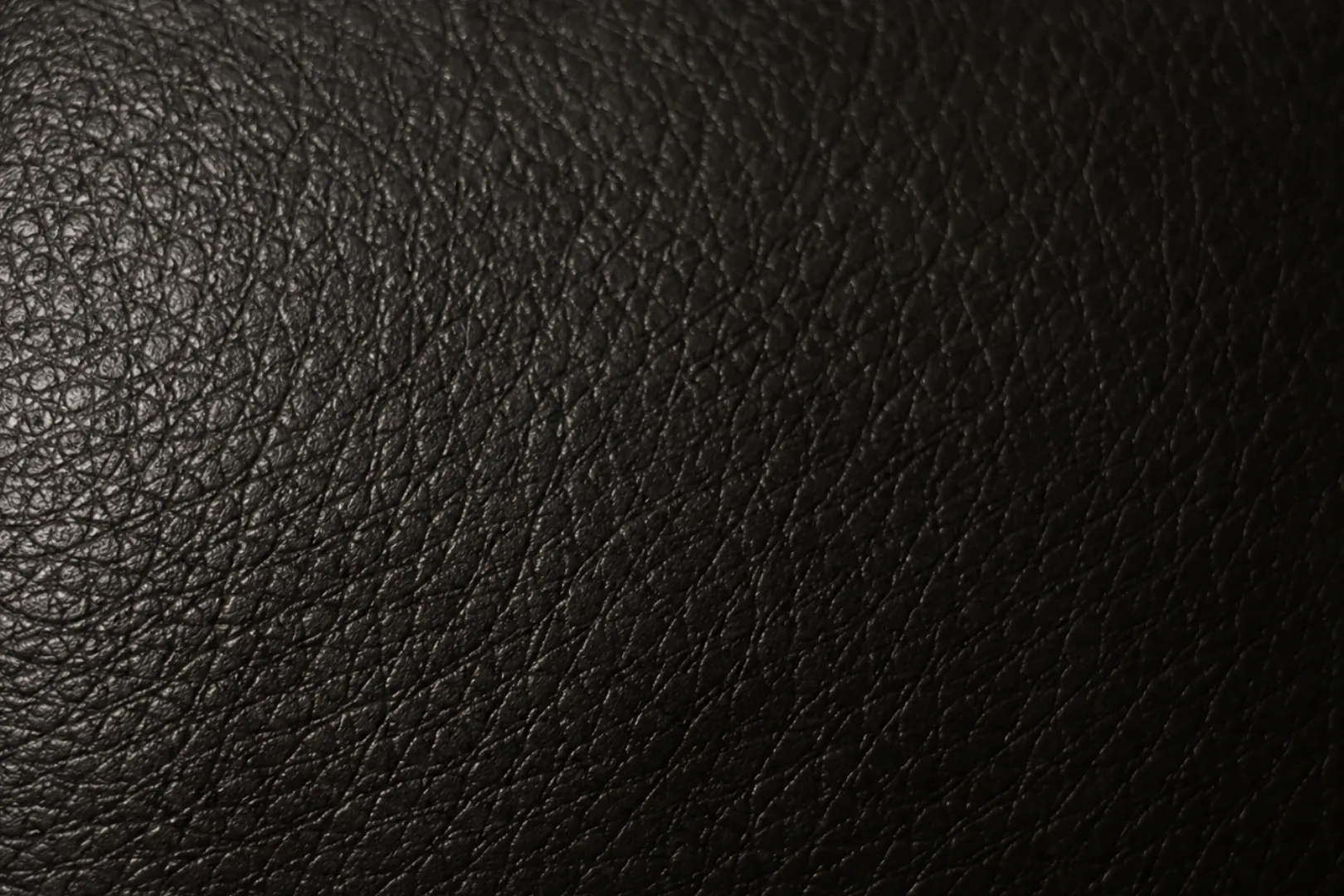 Faux leatherPolyurethane surface
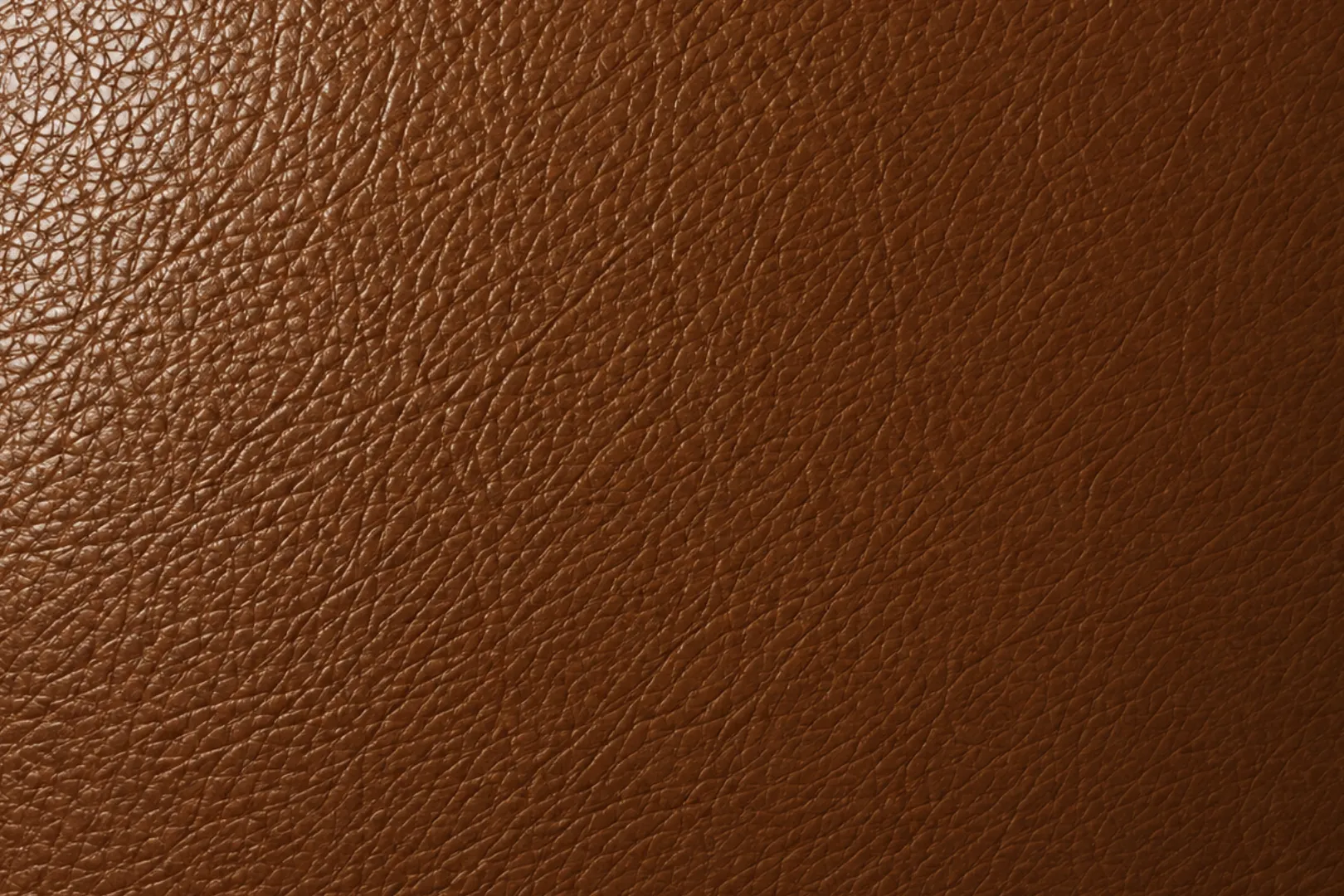 BondedPeels; rarely matched
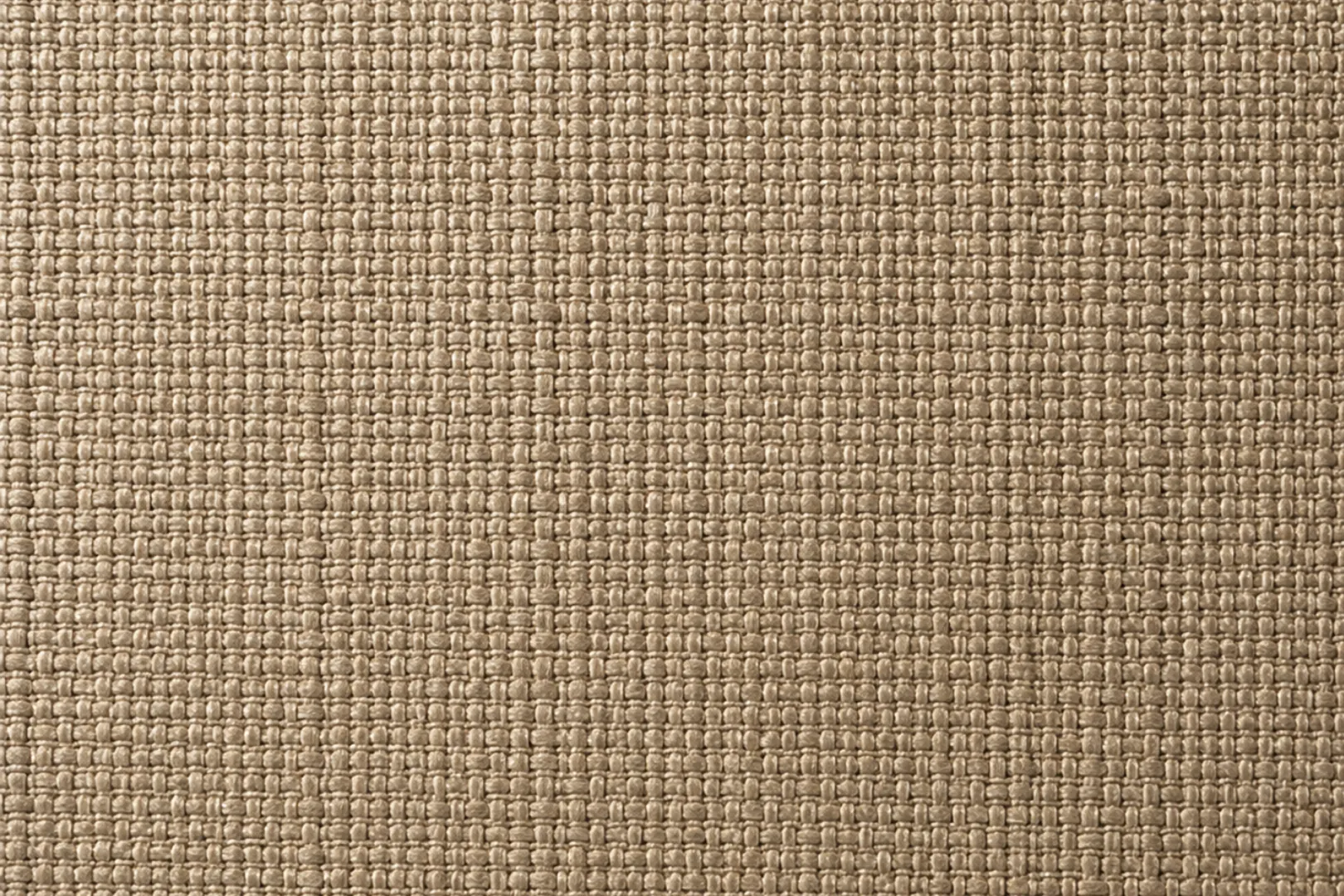 Performance fabricSolution-dyed, cleanable
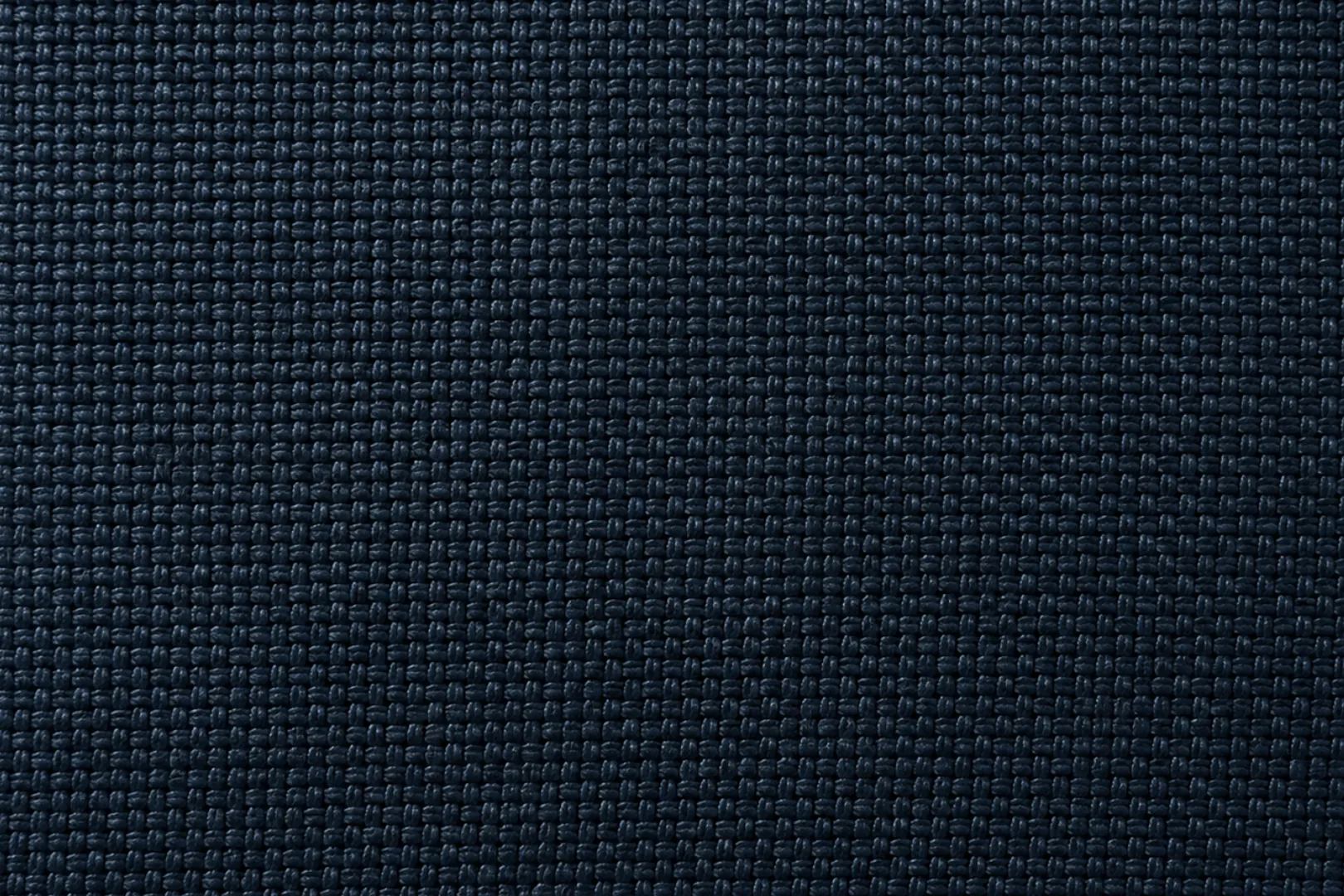 Upholstery fabricWeave, repeat, direction
Every material, explained: all materials.
Discontinued
The original is usually gone. That is the normal case.
Booths outlive the material they were made in, so most leather material matching starts from an article that has been withdrawn. Five steps, in this order.
- 01
Identify the original
From the sample, and from any selvedge stamp, tag or fit-out spec that survives.
- 02
Chase the source
Back to the original supplier, then its successor article, then our own book of past matches.
- 03
Search current stock
Across houses such as Global Leathers and District Leather Supply: grain first, then weight, finish and rating.
- 04
Approve a real sample
A cutting comes back and is held against the piece, in your room, under your light.
- 05
Change the plan, not the standard
If nothing is close enough, recover a whole bay, both arms or all six chairs, so the new material has nothing to sit beside.
A whole element that has to leave for a bench recover goes out under pickup and delivery and comes back fitted.
Not colour
Colour is checked last, not first.
A hide in the right shade but the wrong weight still reads as a repair. Get the material right and colour becomes a bench problem with a known answer.
What the panel is made of
- Substrate: hide, vinyl, faux, bonded or fabric
- Grain pattern and its repeat
- Thickness, and temper by hand
- Finish: aniline, semi-aniline, pigmented
- Backing, weave and direction
- Abrasion rating and cleaning code
What shade it ends up
- The shade the piece is now, not as it shipped
- The light the room actually has
- Sheen against the neighbouring panels
- Where new work blends into old
How this runs
The sourcing is our job. You hear before you ask.
How close it gets
Exact, or the nearest current article. Which one is settled before anything is ordered, with a cutting in your hand and the difference named.
Who runs it
We do: the sample, the supplier, the mill, the cutting. None of it needs your time, and none of it is a line item on the quote.
What you are told
Everything, as it happens: what the sample read, what was found, what it does to the date. One contact, in writing.
Questions
Matching, answered.
What is leather material matching?
The sourcing step inside a reupholstery job. A sample is cut from a hidden part of the piece and read for substrate, grain, thickness, temper, finish, backing and duty rating. The replacement is ordered against those readings, exact where the article still exists, otherwise the closest current material, approved as a physical cutting first.
Can you match leather or vinyl that has been discontinued?
Usually, and it is the normal case. We identify the original, chase the mill for it or its successor, then search current stock. If nothing is close enough, we widen what gets recovered so the new material has nothing to sit beside.
How do you match vinyl on commercial booths?
On gauge, backing and rating rather than hide grade: total thickness, knit or woven backing and its direction, the embossing repeat, the topcoat, and the abrasion rating it was specified at. Drop below that rating and the booth fails in the same place.
Will a replaced panel be visible next to the old ones?
That is what leather material matching exists to prevent. When a panel shows, the cause is almost never colour. It is grain at a different repeat, a heavier hide, a softer temper or a different finish, all decided by which material is bought.
What if you cannot match the material?
You are told before anything is ordered. The answer is usually a change of plan, not a compromise: recover a whole bay, both arms or all six chairs. You approve that first, and the sourcing stays our work throughout.
Start with a sample
Show us the piece. The reading takes one visit.
Tell us what the furniture is covered in and how many pieces are affected. Leather material matching across NYC, Long Island and New Jersey starts from a cutting taken where nobody sees it. A failed panel that cannot wait goes through emergency repairs.