
Home/Commercial/B2B Programs/Emergency Furniture Repair
Damaged Seating,
Back In Service
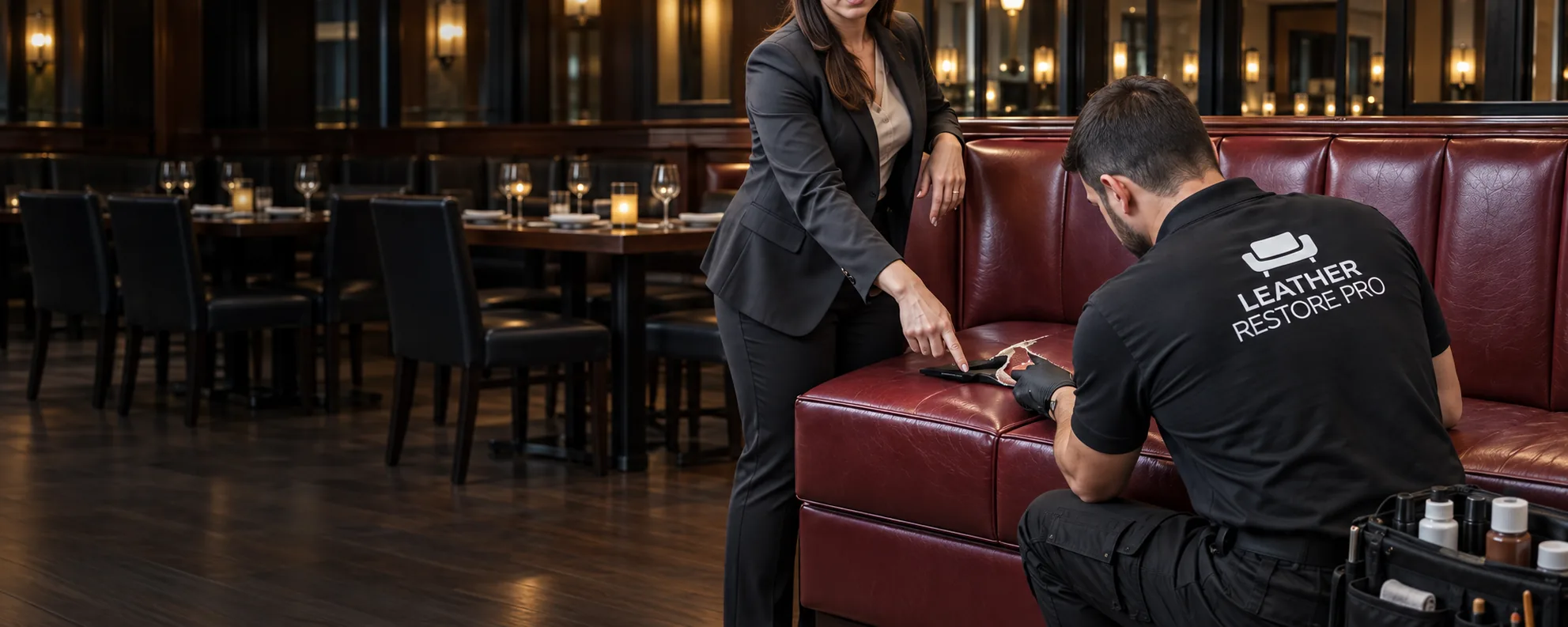
Emergency furniture repair starts with a photo, not a truck roll. Send us the damage and you get back what failed, whether it can be repaired in place, and the earliest visit that fits around your operating hours.
New York · Long Island · New Jersey
Priority triage
Photos read before anyone travels.
On-site assessment
The repair path confirmed in the room.
Off-hours options
Planned around your service hours.
COI available
Issued to your entity before the first visit.
Clear documentation
Photos, scope and a written summary.
When it cannot wait
Fast decisions beat fast promises.
Anyone can say they will hurry. What actually gets a seat back into service is deciding the right four things in the right order.
Name the fault
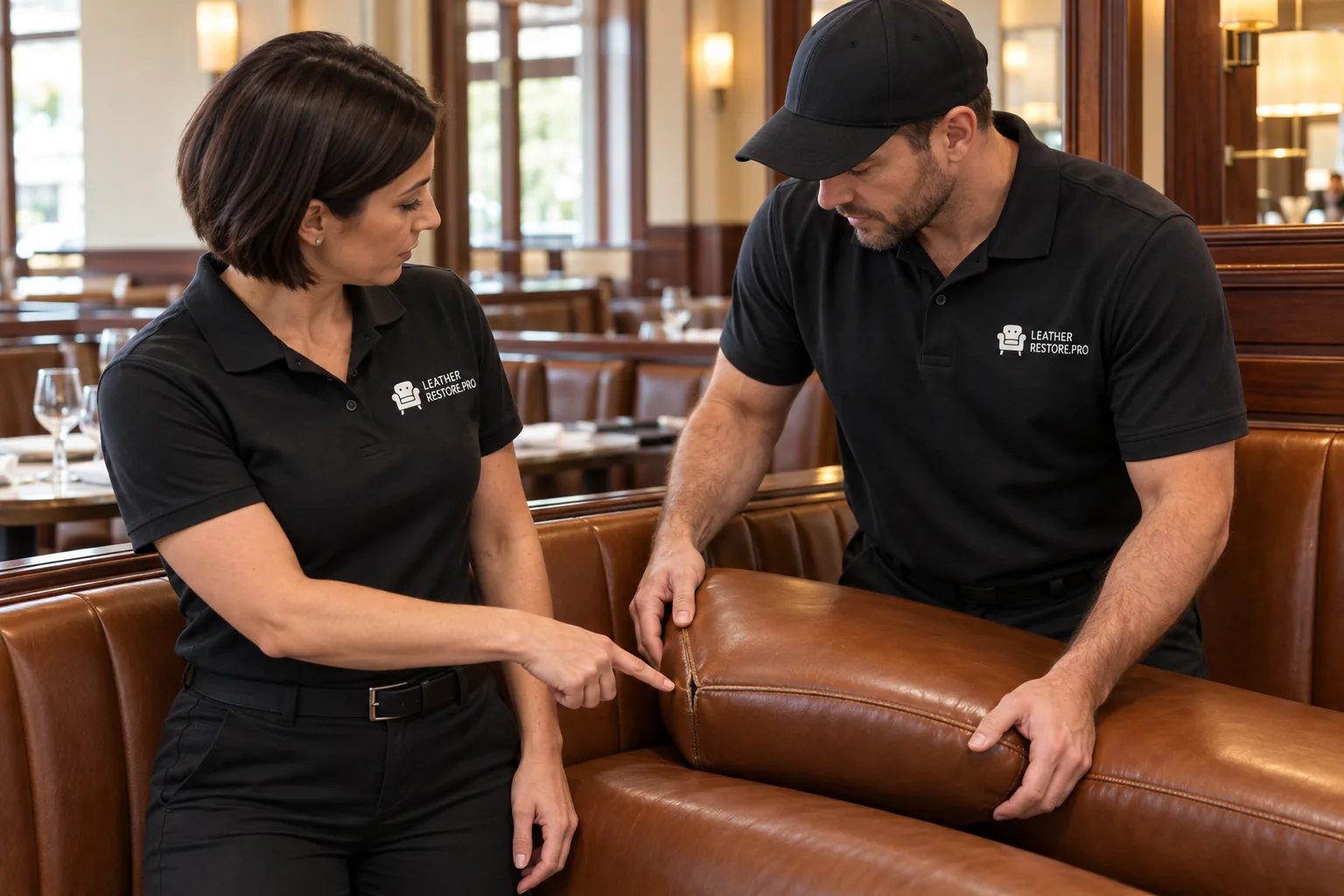
A split seam, a failed panel and a collapsed base are three different jobs. Naming which one it is comes before quoting it.
Confirm it is repairable
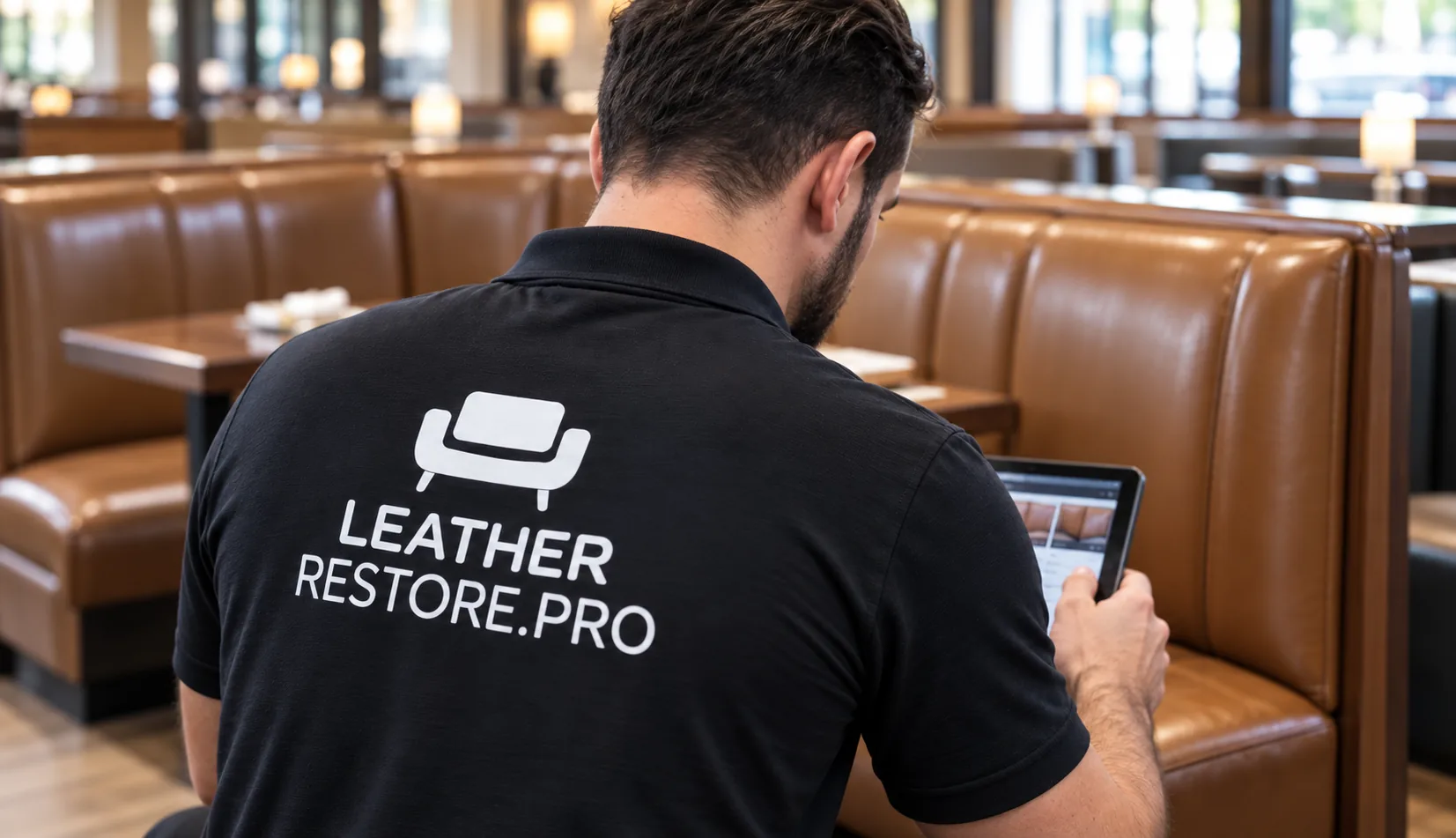
Some damage closes cleanly. Some needs material that has to be matched and ordered. You hear which early, not after the visit.

Fit the work to your hours
Access is agreed around covers, check-ins and office hours, so the repair does not become a second disruption.
Do the smallest sound repair
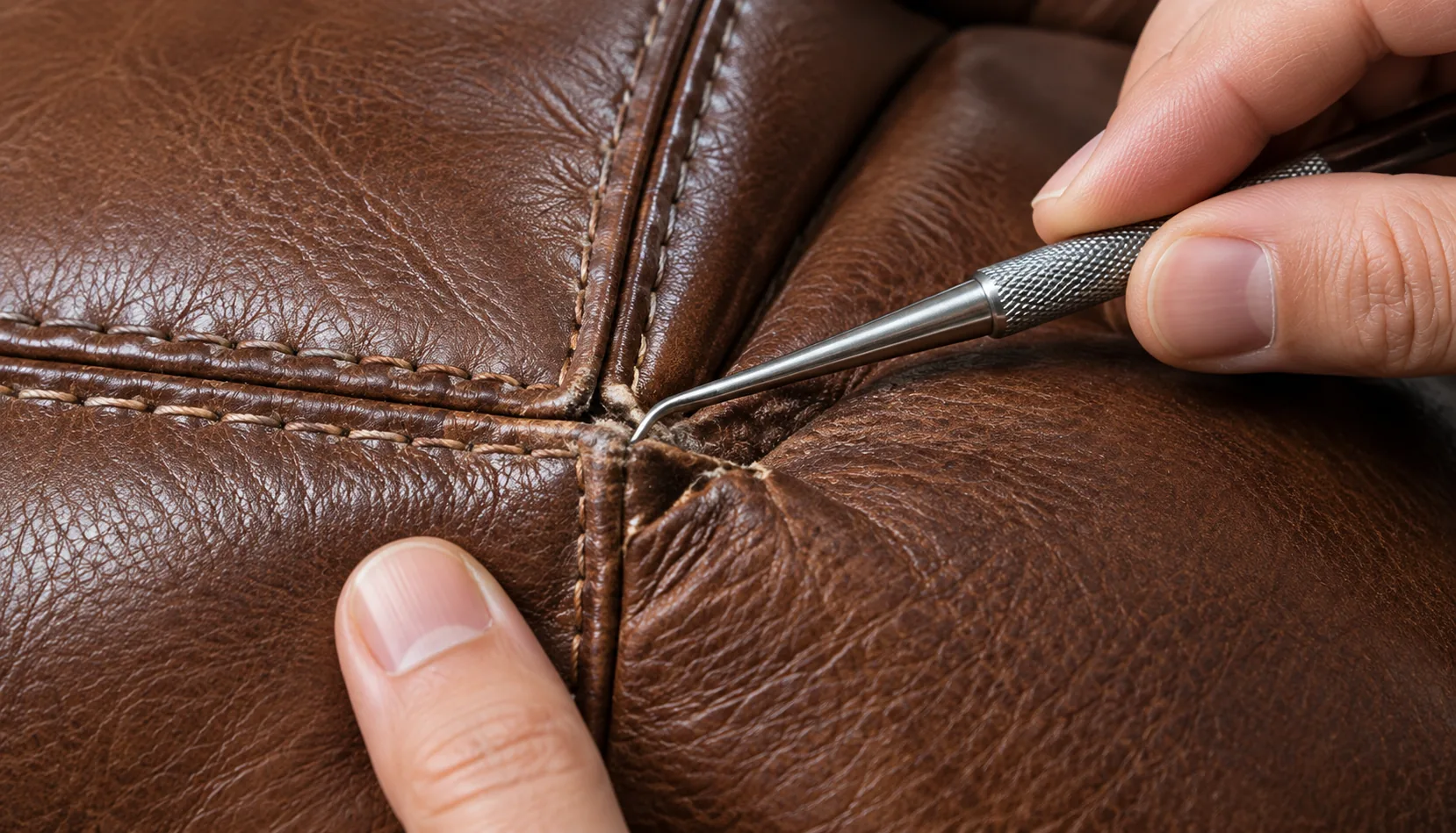
The least invasive fix that returns the piece to daily service and holds under commercial use.
What takes a seat out of use
The damage that empties a table tonight.
Commercial seating rarely fails slowly. These are the faults that turn a working chair into one nobody is allowed to sit on.
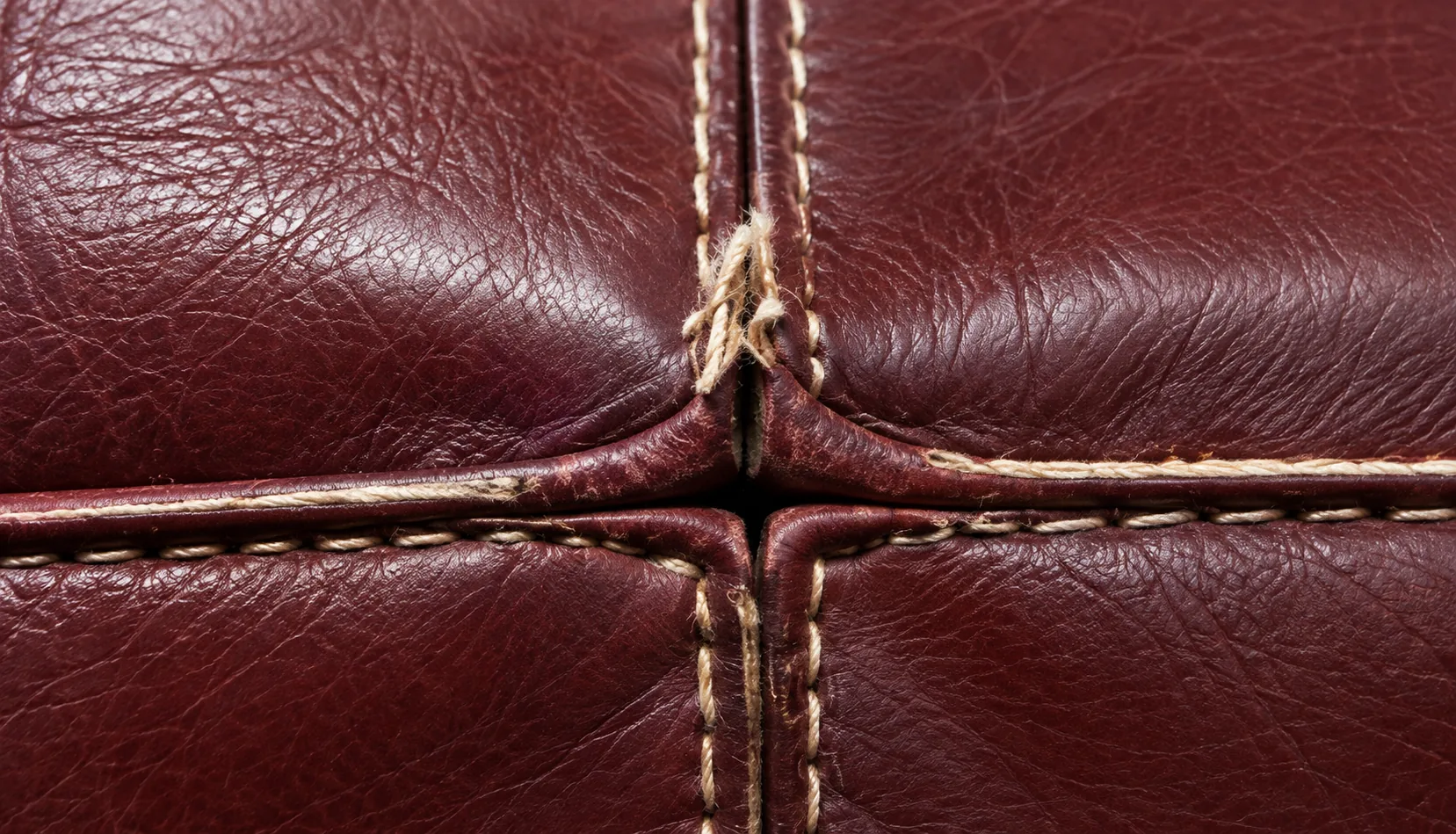
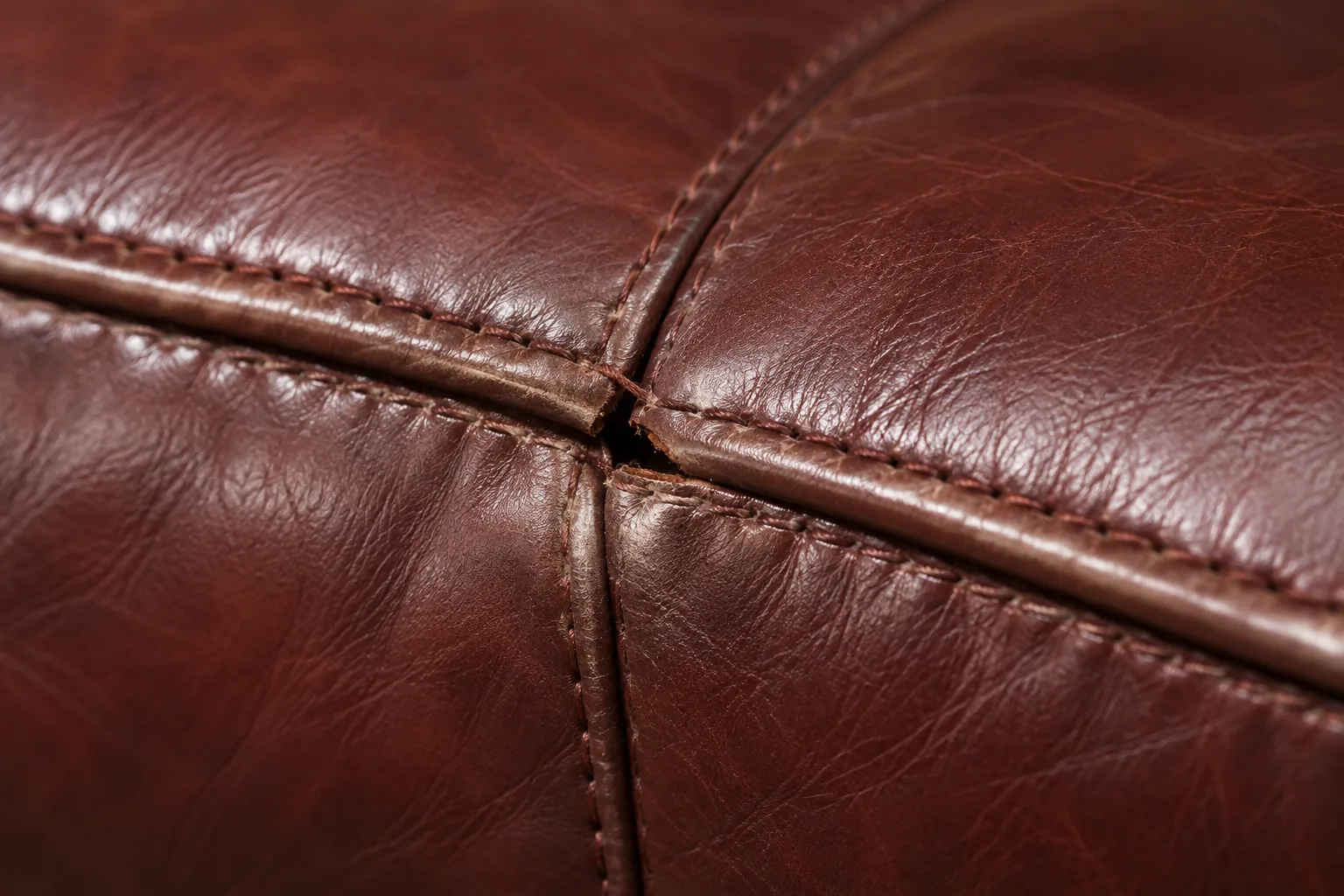
Open seams & pulled stitching
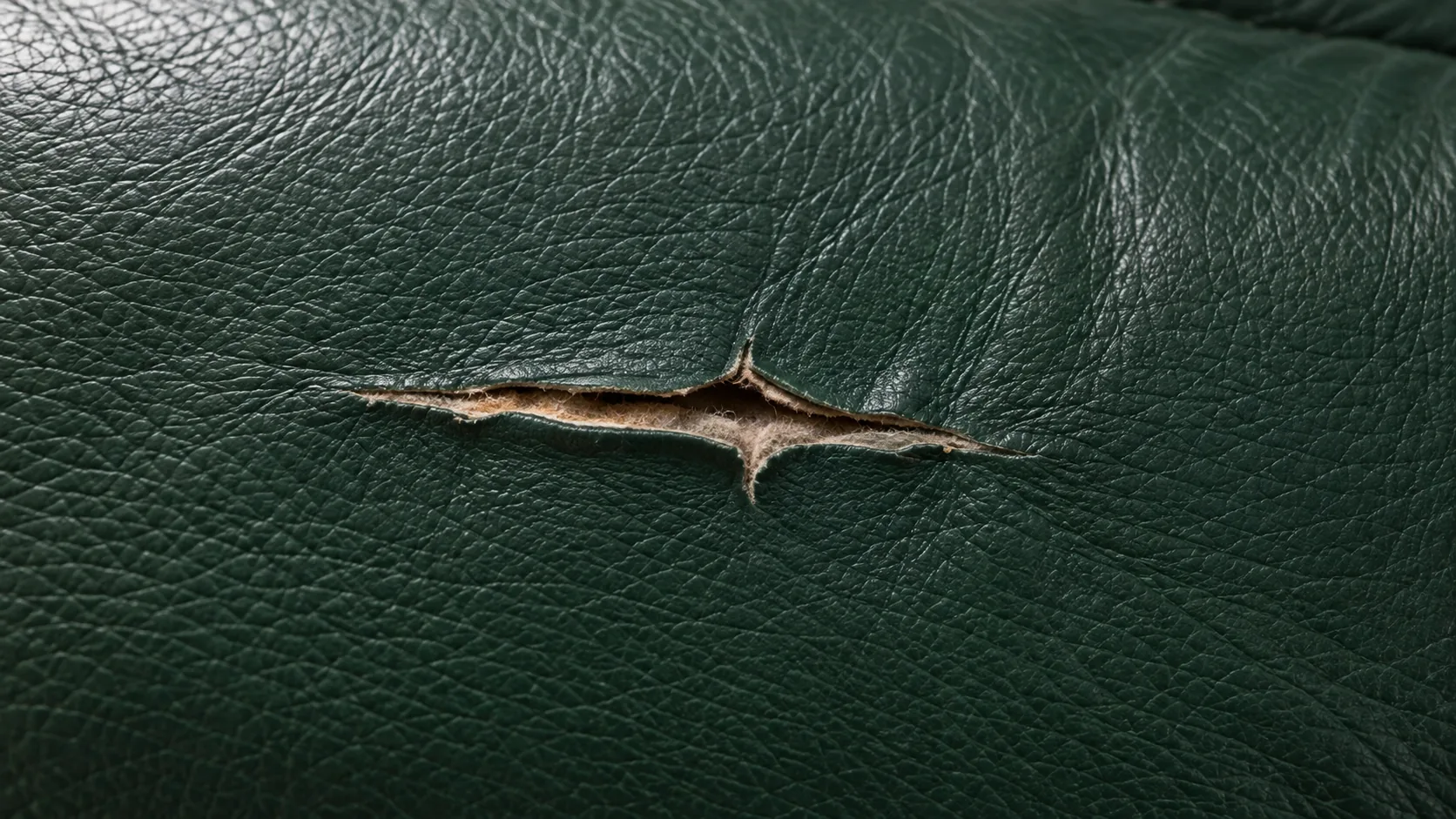
Cuts, tears & punctures
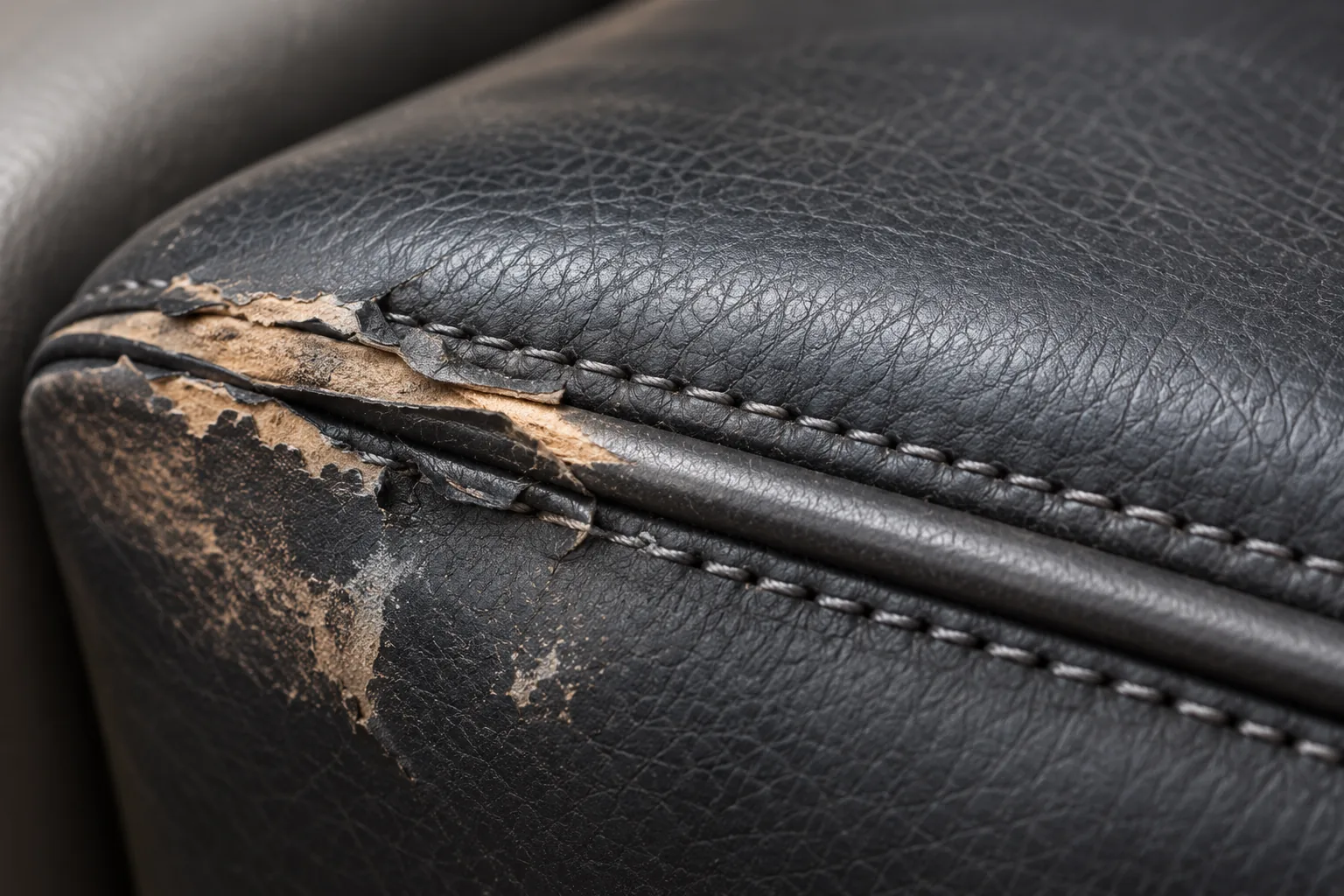
Cracking & flaking finish
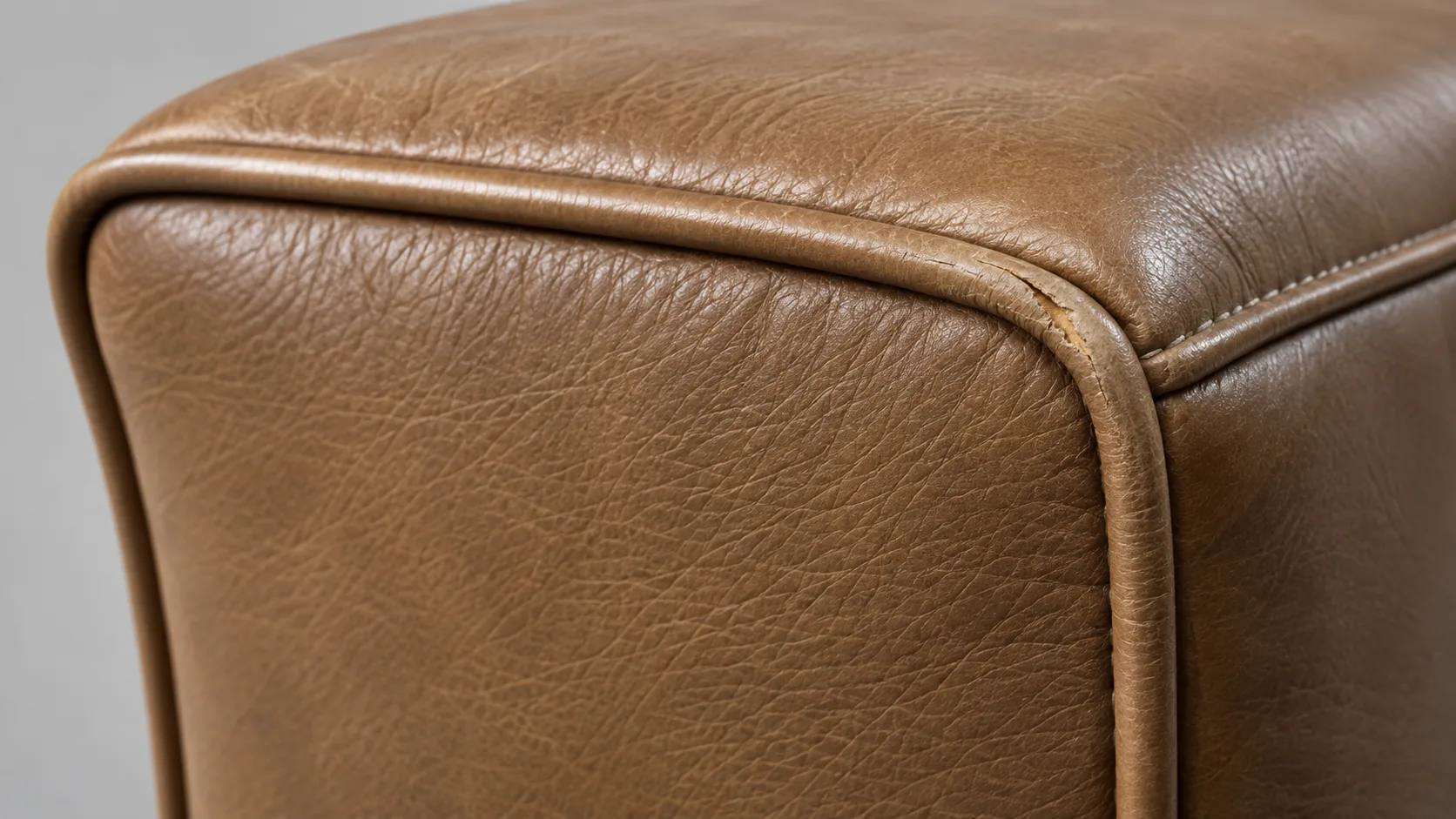
Worn piping & edges
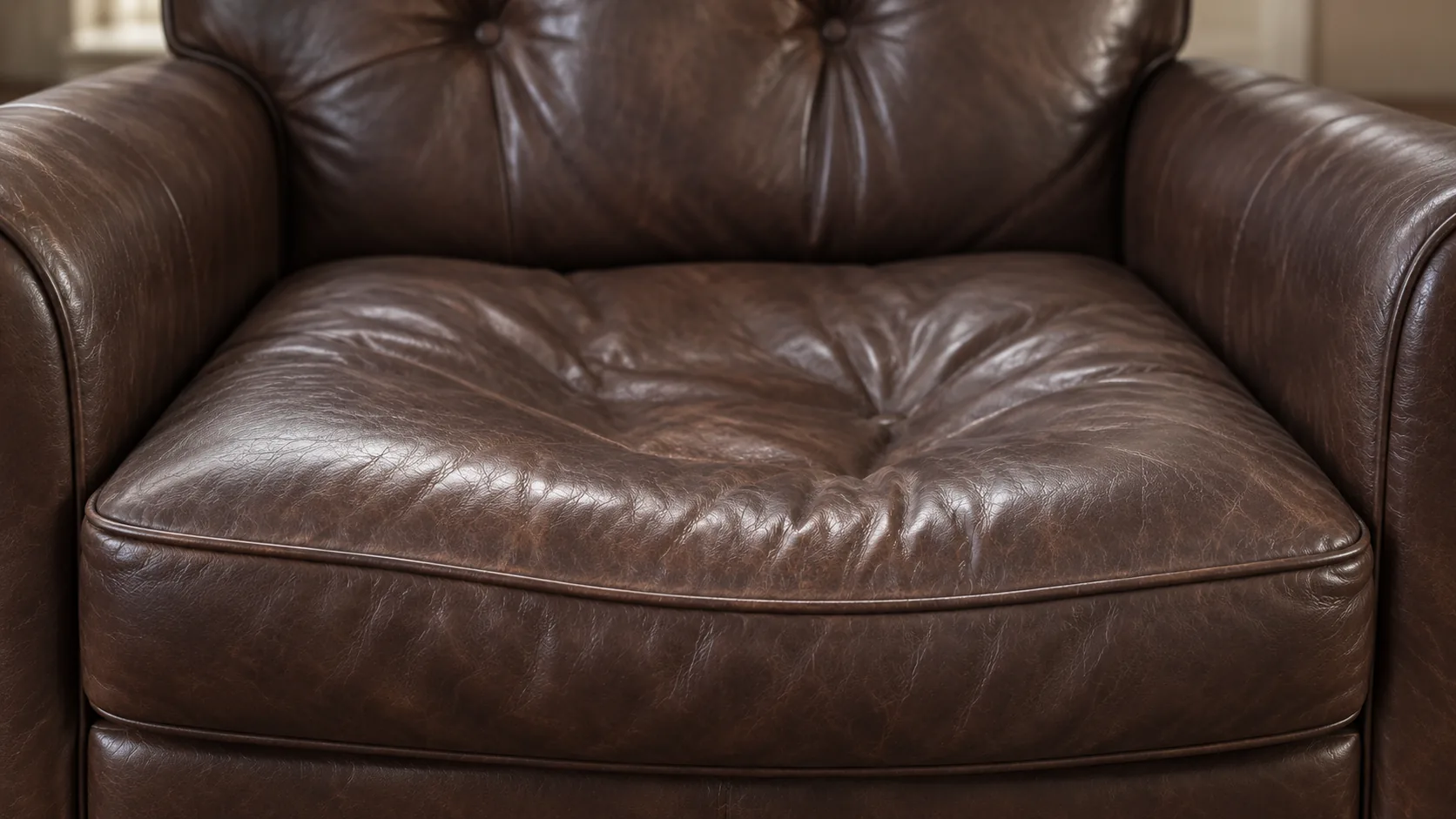
Collapsed seat support
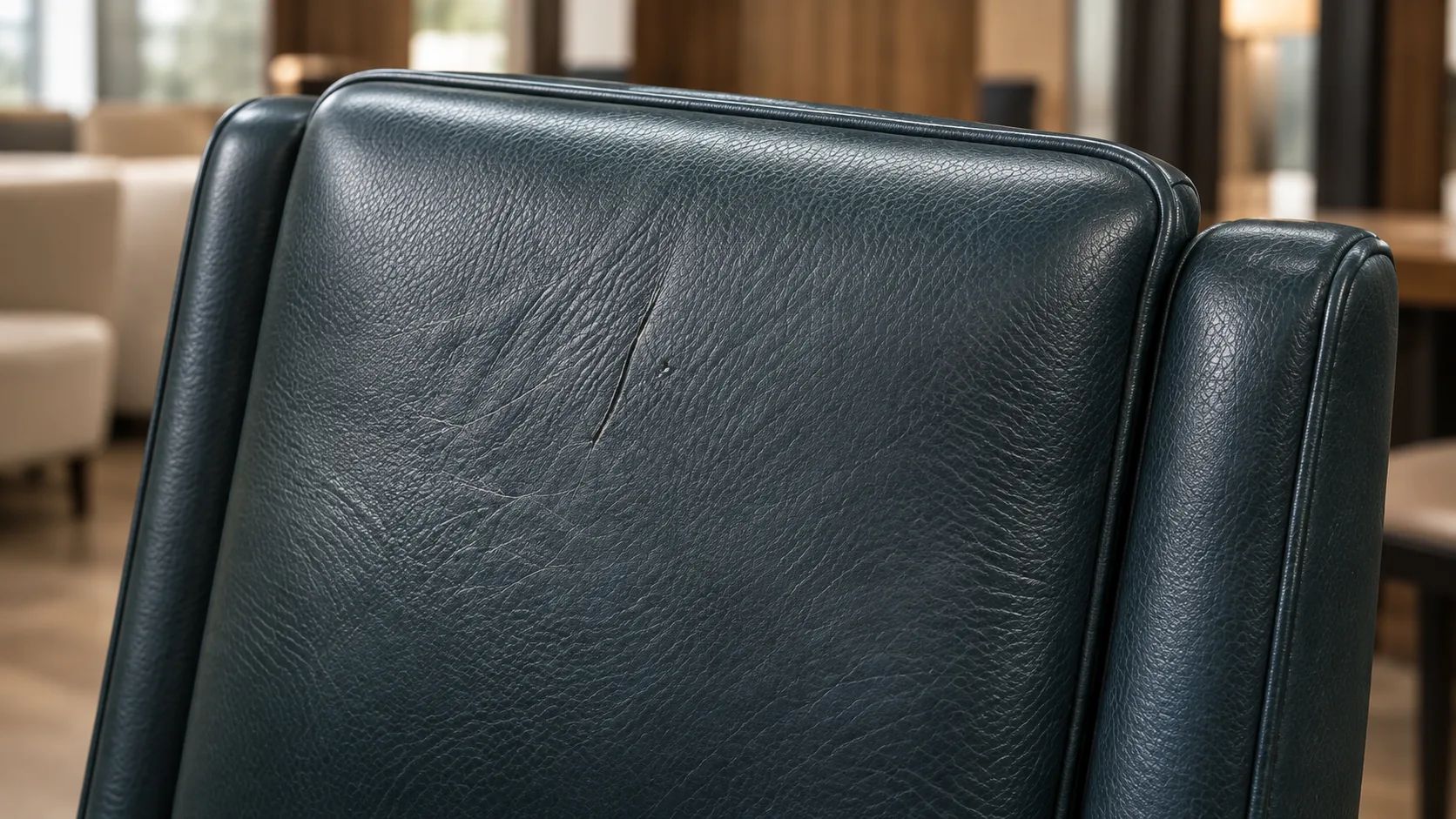
Stretched, slack upholstery
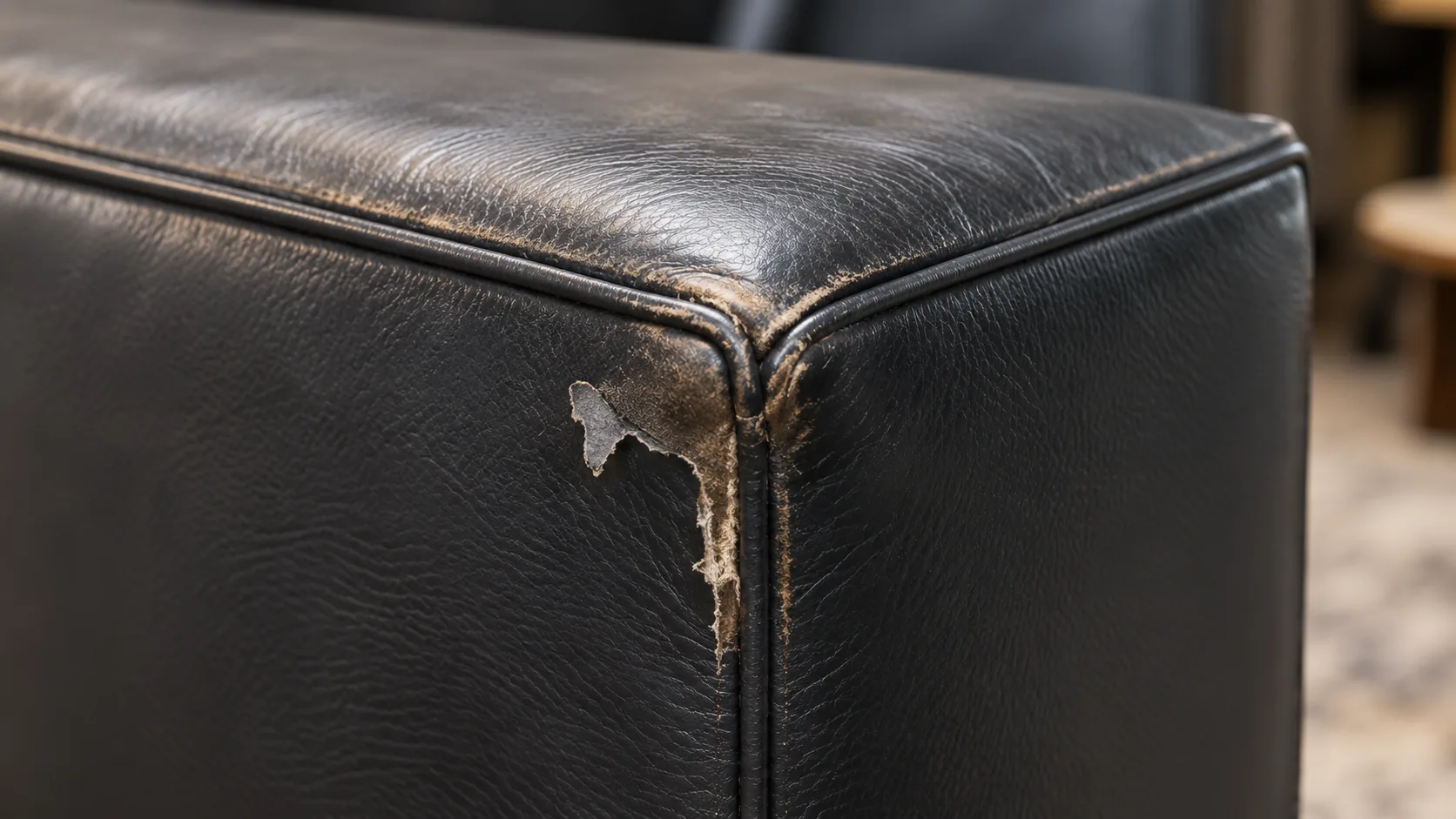
Impact & moving damage
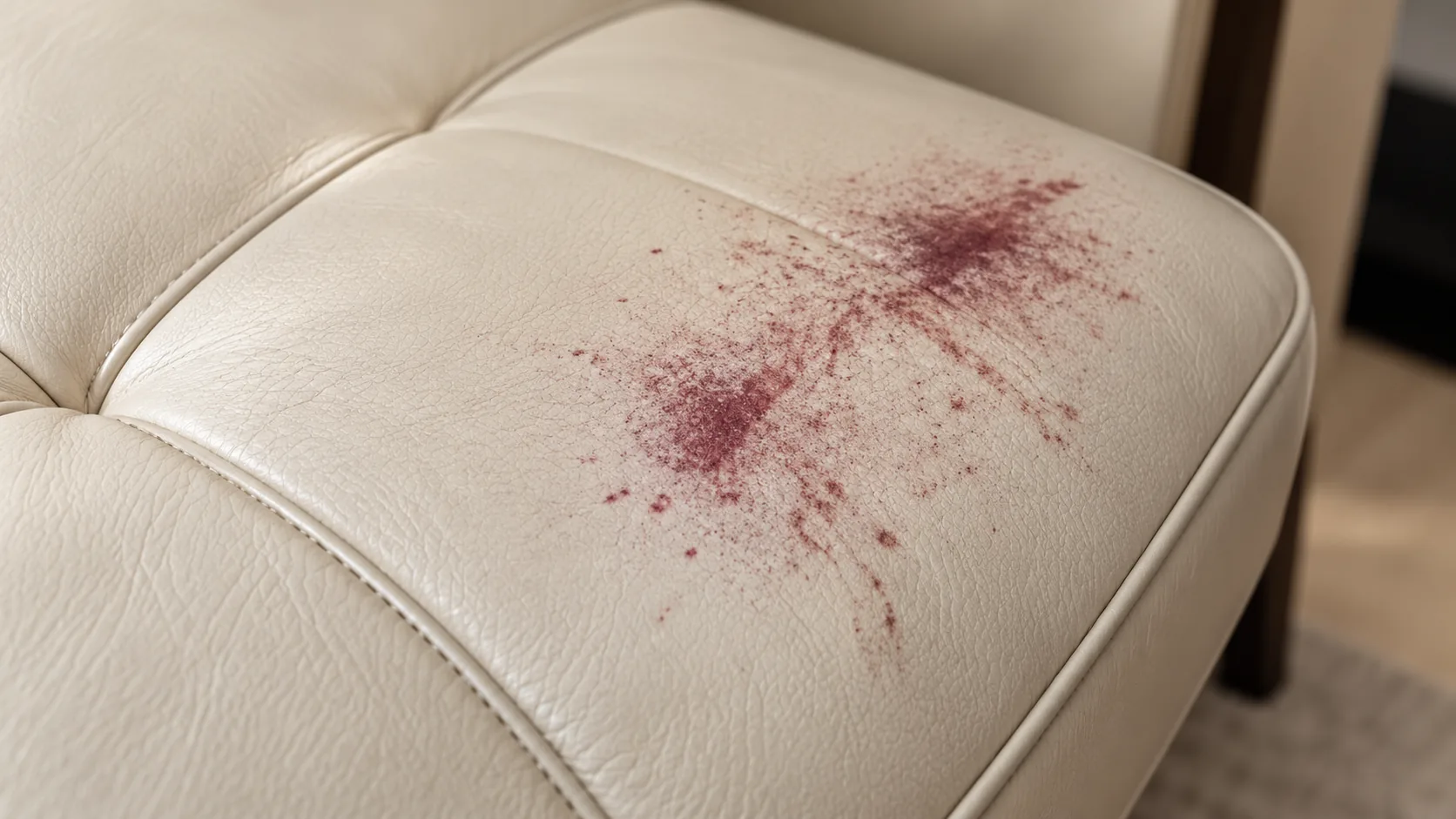
Sudden stains & dye transfer
Exposed staples, a split frame or a collapsed base are safety faults rather than cosmetic ones. Take the piece out of use first and photograph it second. In a food business a split seat is a cleanable-surface problem before it is a cosmetic one, and an inspector works from the FDA Food Code.
Before anyone travels
Start with photos. Know the next move.
A few good photographs settle most of an emergency furniture repair before a van is booked — what failed, whether it closes or needs material, and how long the room is affected.
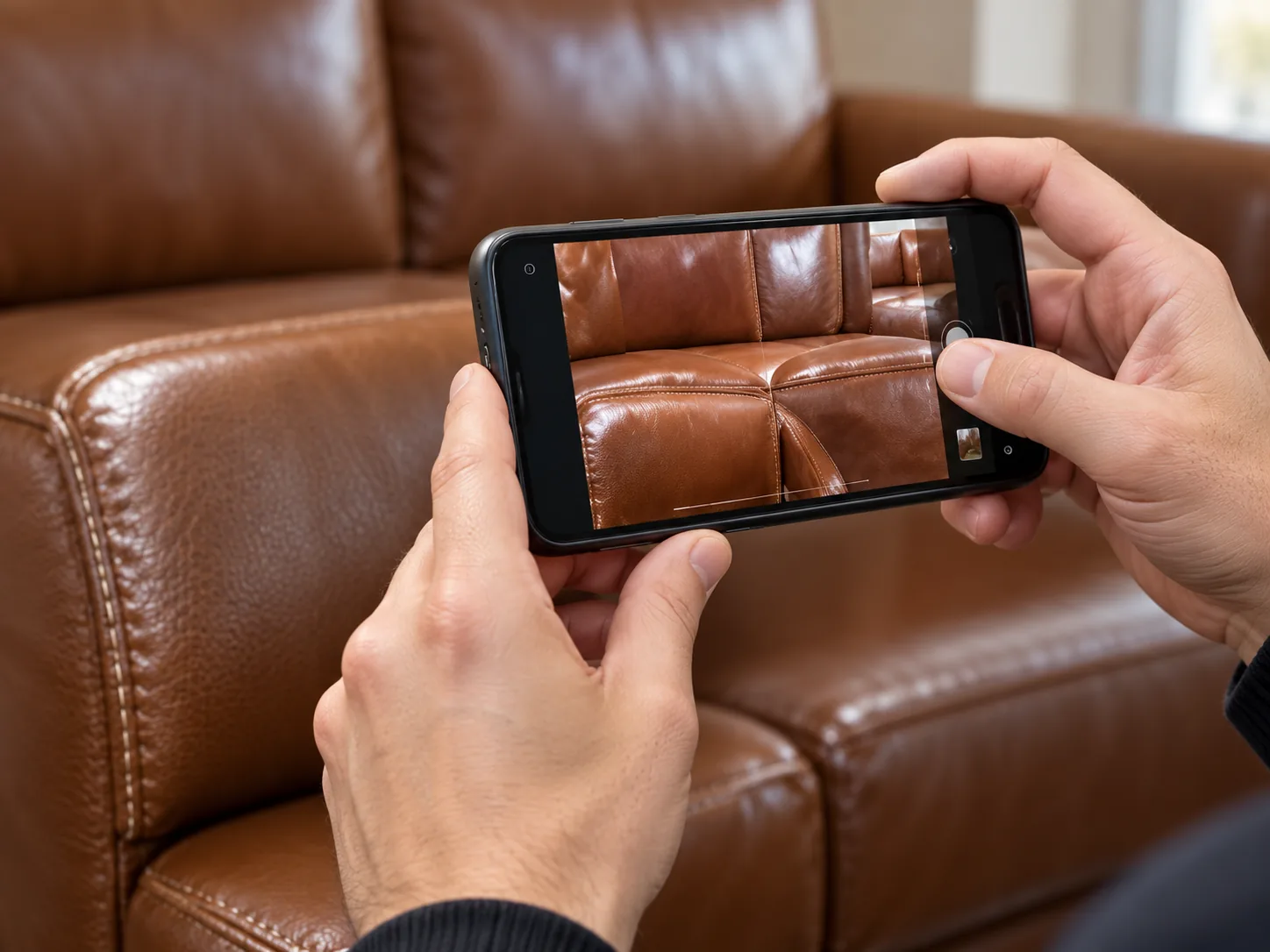
Shoot wide, then close
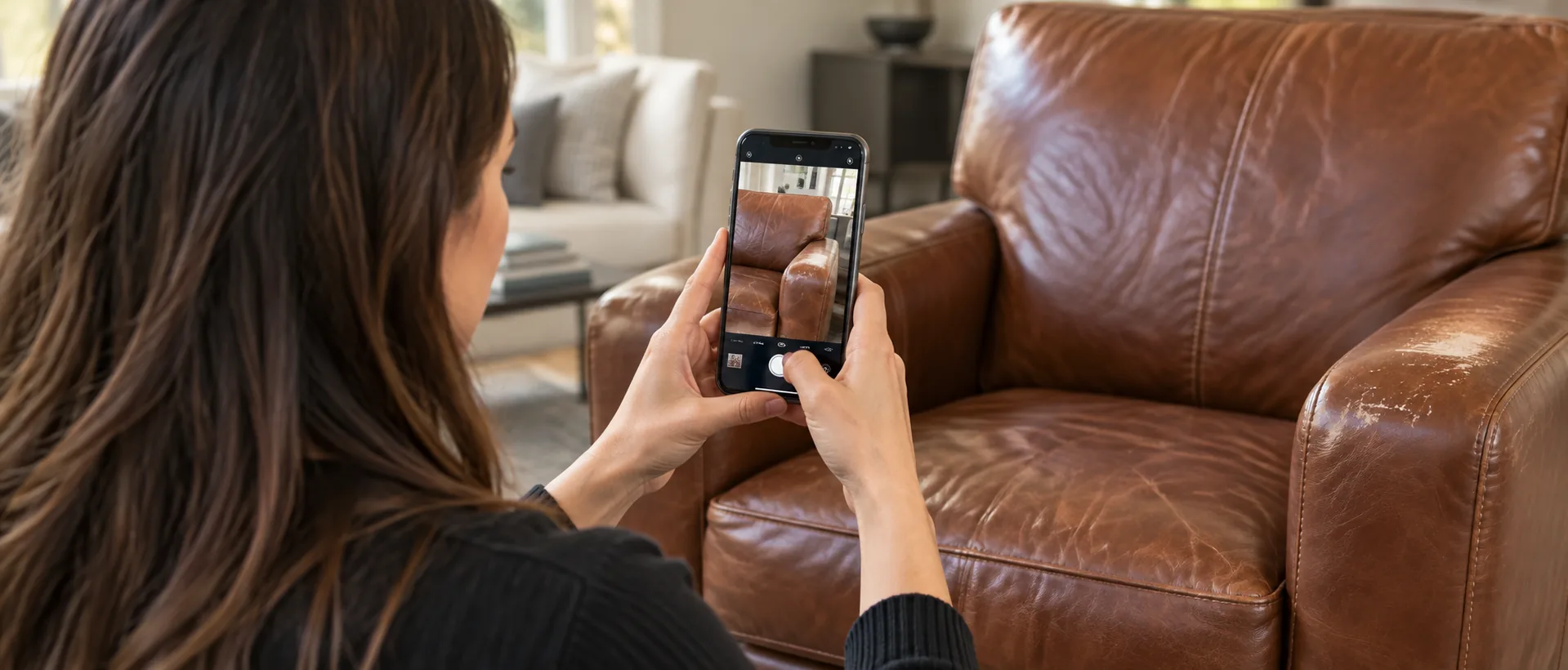
One frame of the whole piece so we can read its construction, one of the damage itself. With only the close-up the fault gets guessed at.
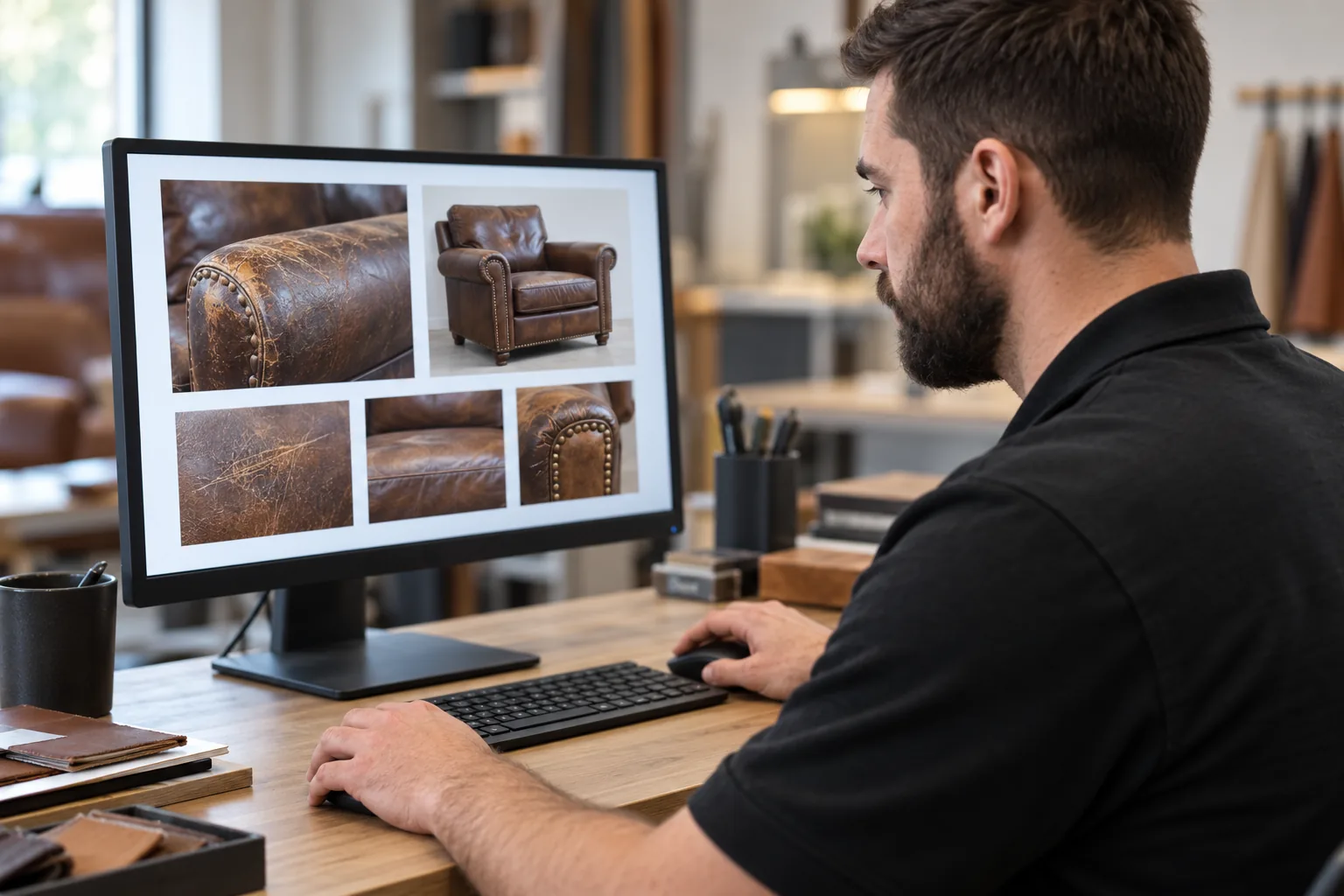
Get a repairability read
We come back with what failed, whether it can be repaired in place, and what the repair would need.
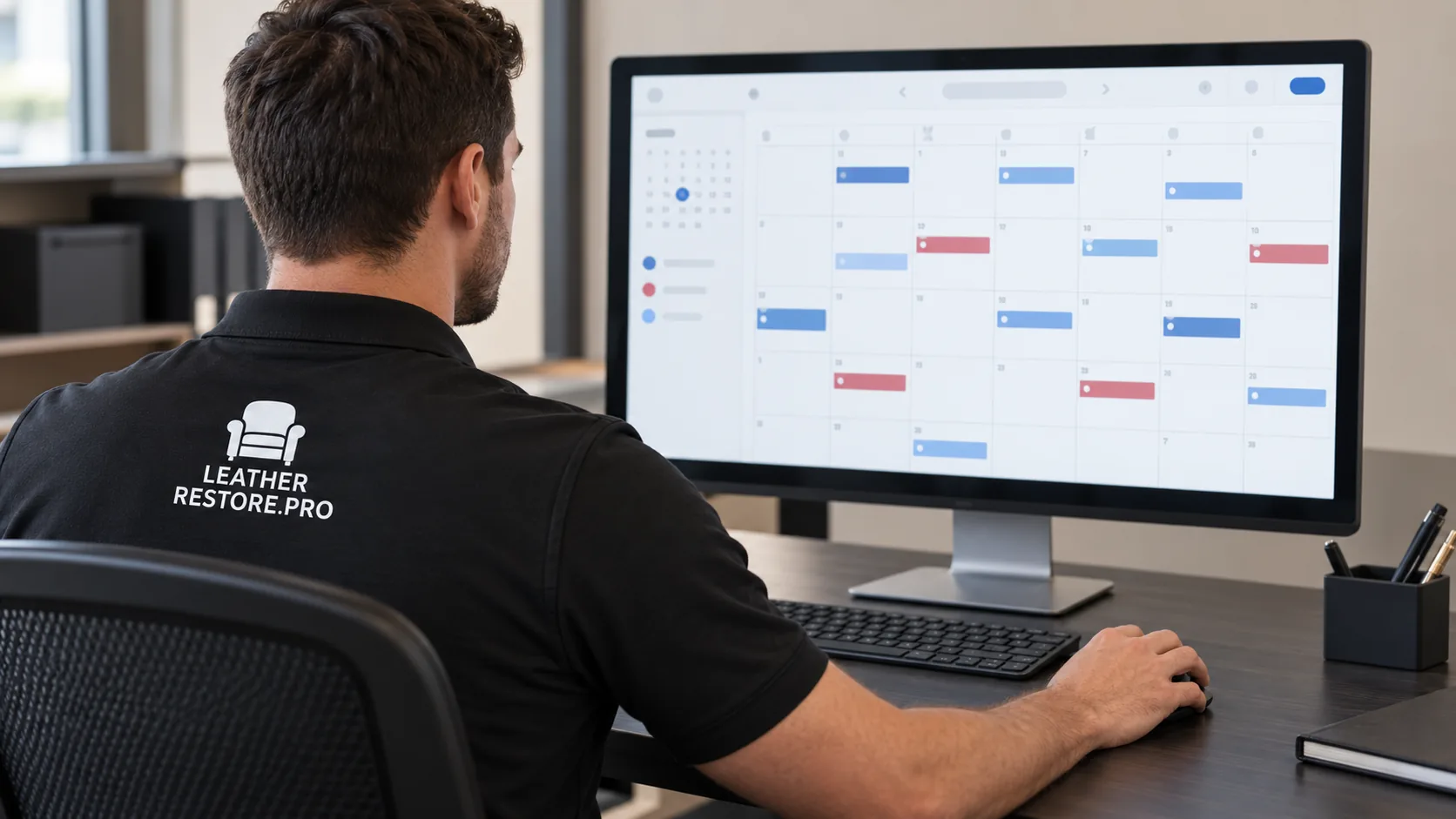
Lock the earliest workable slot
The earliest visit that actually suits the room, not the earliest one that suits our calendar.
Before you photograph anything
If the piece is unstable, or a staple, spring or frame edge is exposed, take it out of use now. That is not a repair decision, it is a safety one.
Send photos for reviewThree routes, one decision
The right emergency furniture repair for the damage.
The route is chosen by what failed and how much of the room it affects — not by whichever option is quickest to sell.
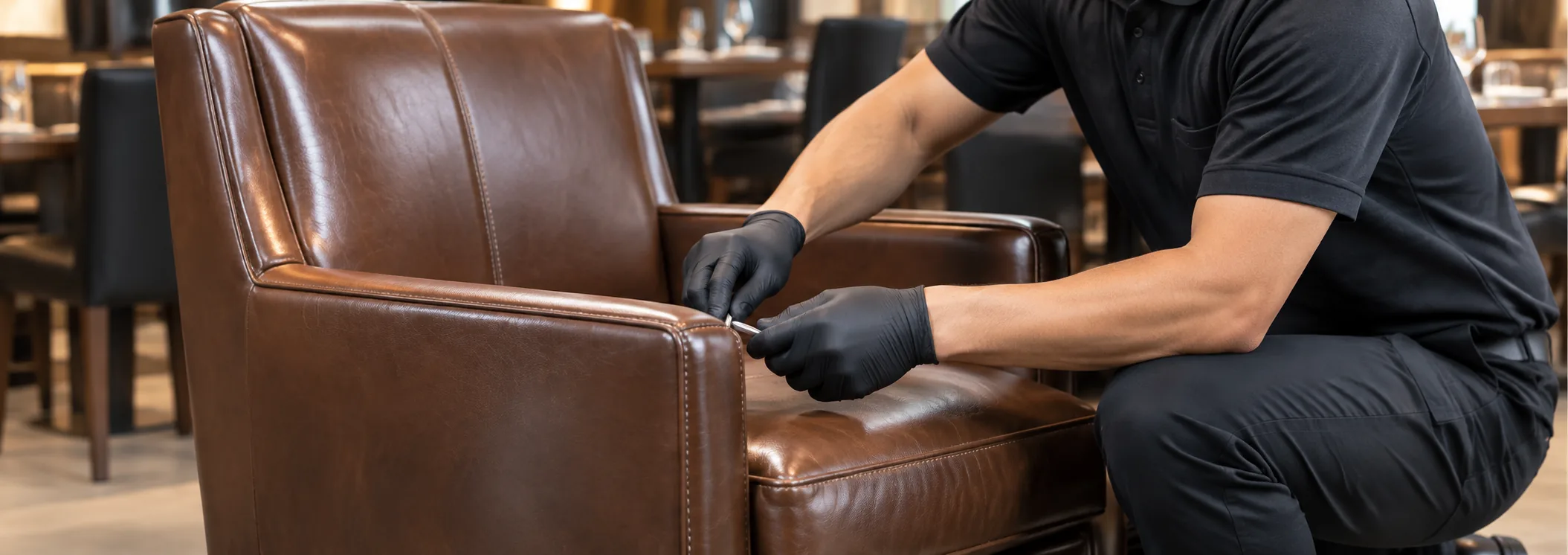
Repair on site
- Seam, surface and panel work done in the room
- Nothing leaves the building
- Best for single pieces and small counts
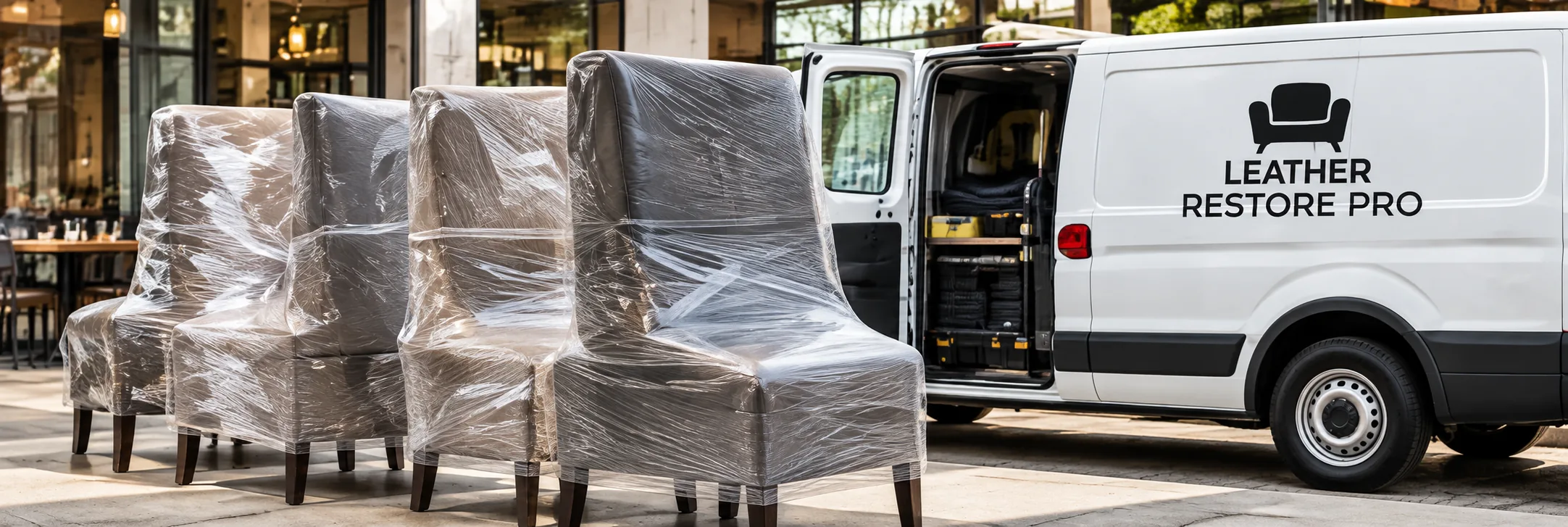
Collect and repair in the workshop
- For frames, structure and full recovers
- Pieces are wrapped, labelled and returned to the same room
- Best when the damage runs deeper than the surface
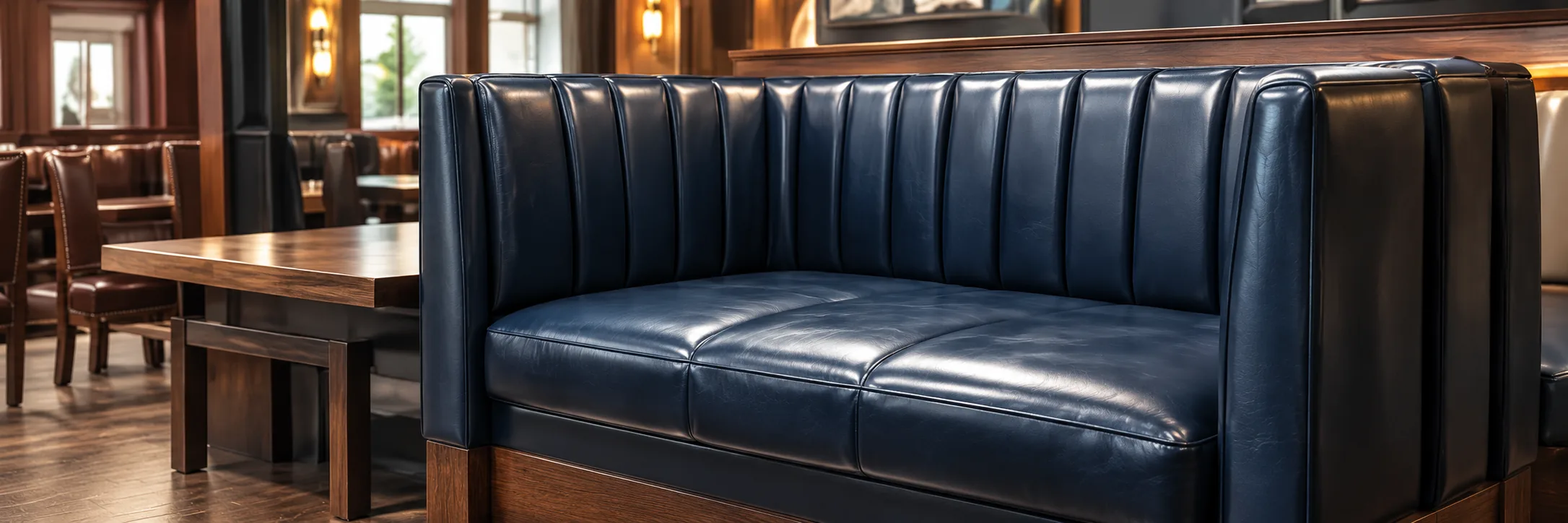
Stabilise now, finish in phases
- The unsafe pieces first, the rest on a schedule
- One section closed at a time, never the whole room
- Best for larger counts and fixed banquette runs
The sequence
From first message to completed repair.
Every emergency furniture repair runs the same six moves. You are told what happens next at each one, and the piece is photographed either side of the work.
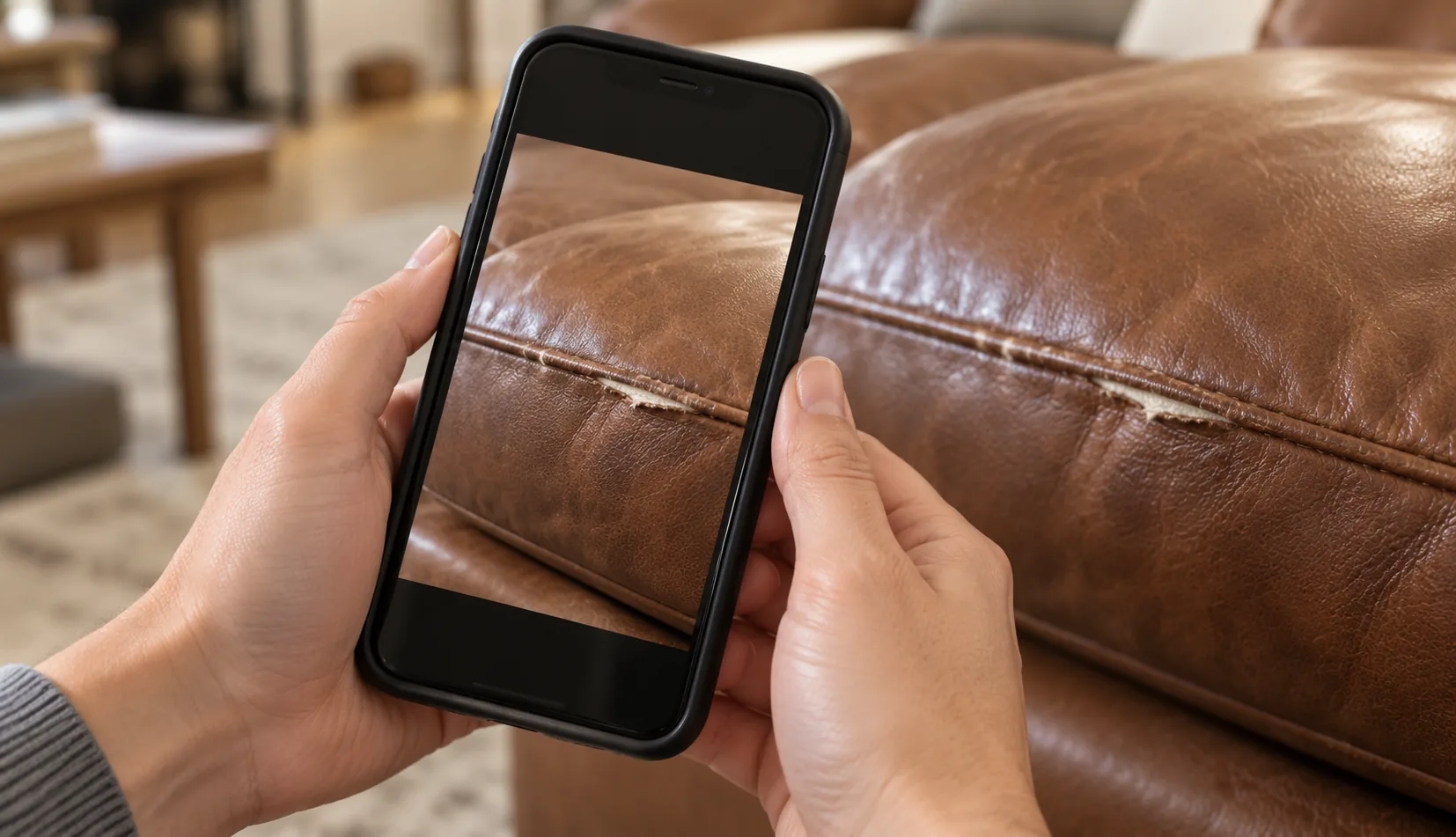
Send photos
Wide and close, plus the address and the piece count.

We read them
The fault is named and a repair route proposed.
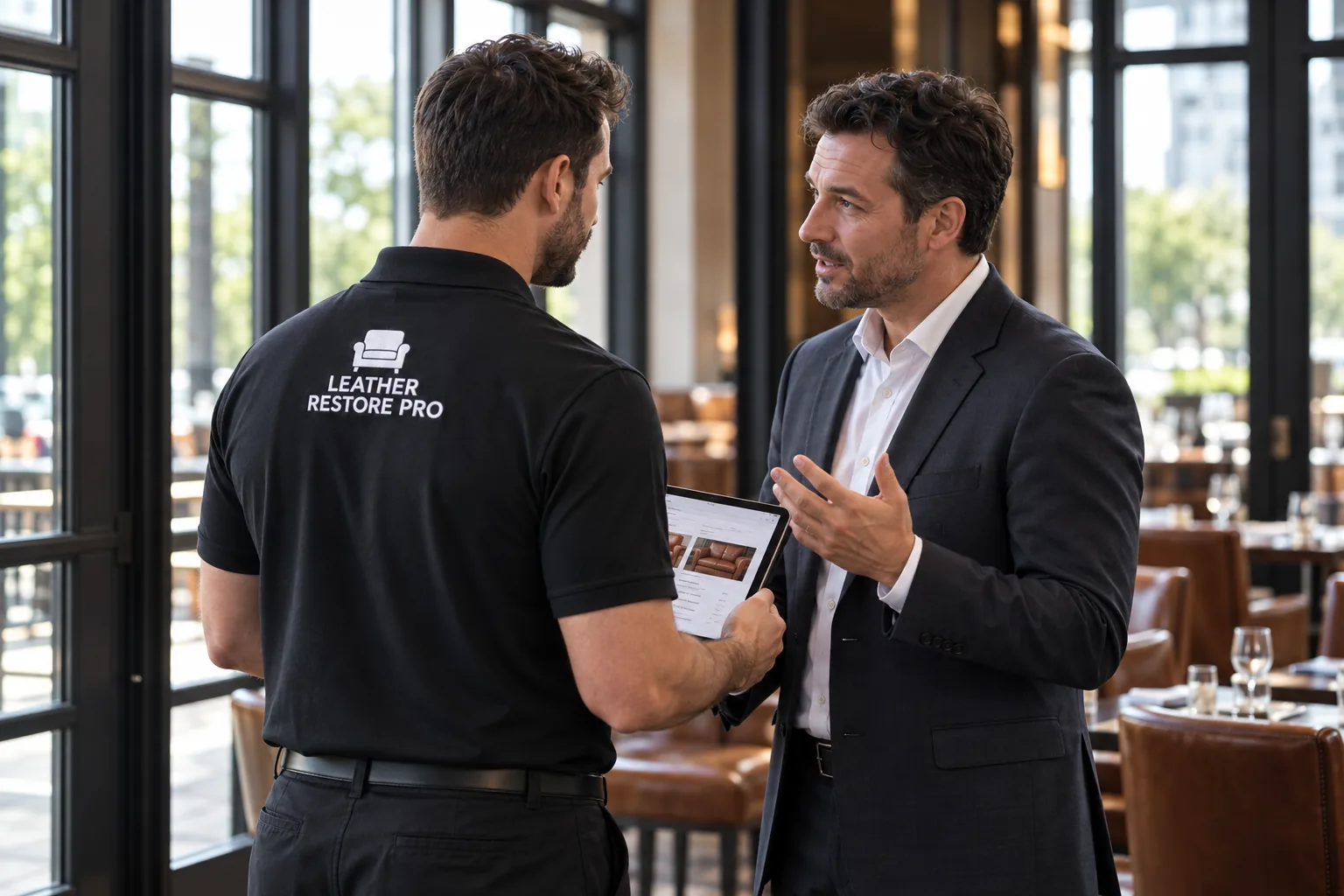
Confirm on site
Access, hours and the final count are agreed.
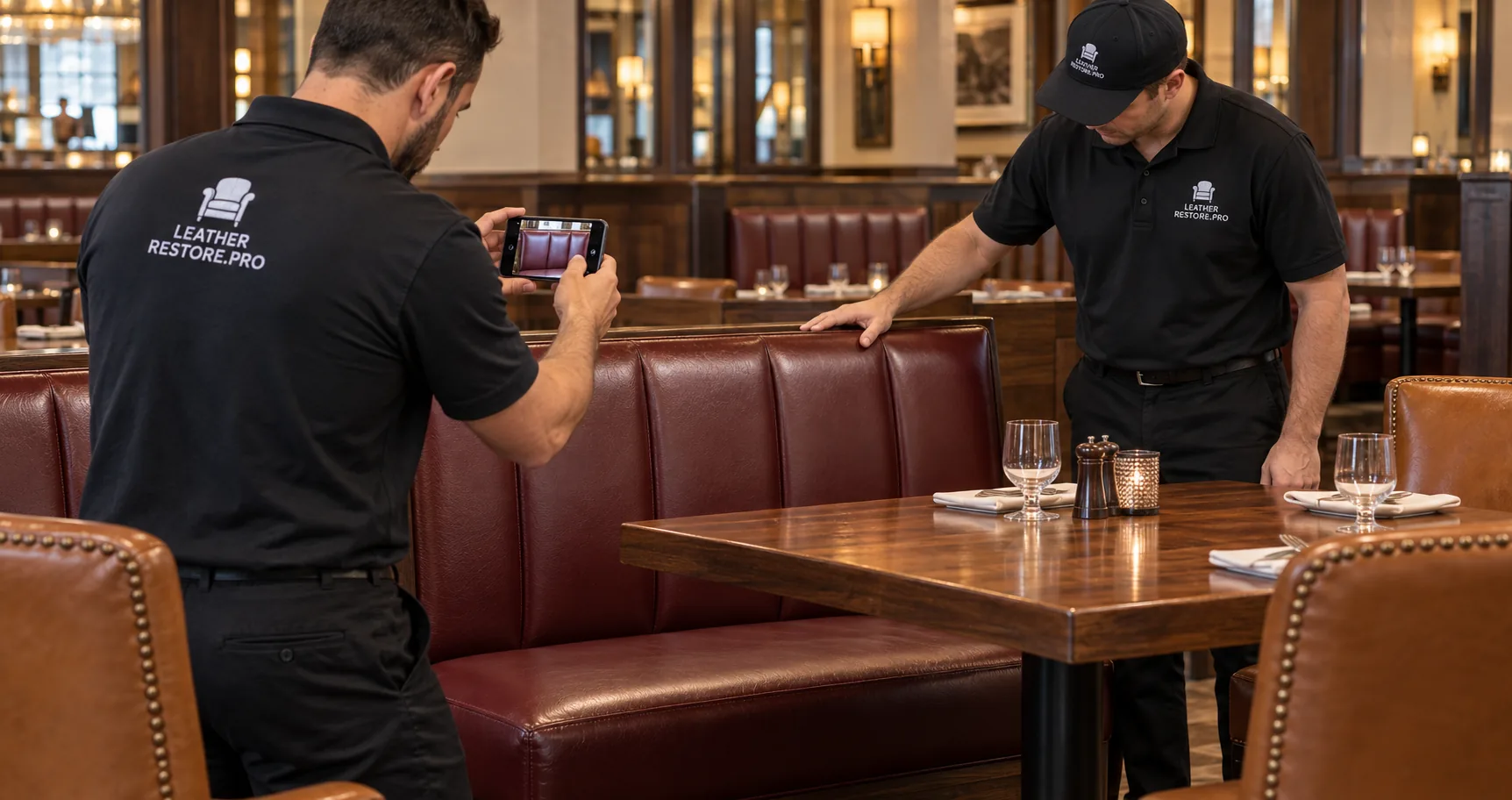
Record the before
Condition is photographed before a tool comes out.
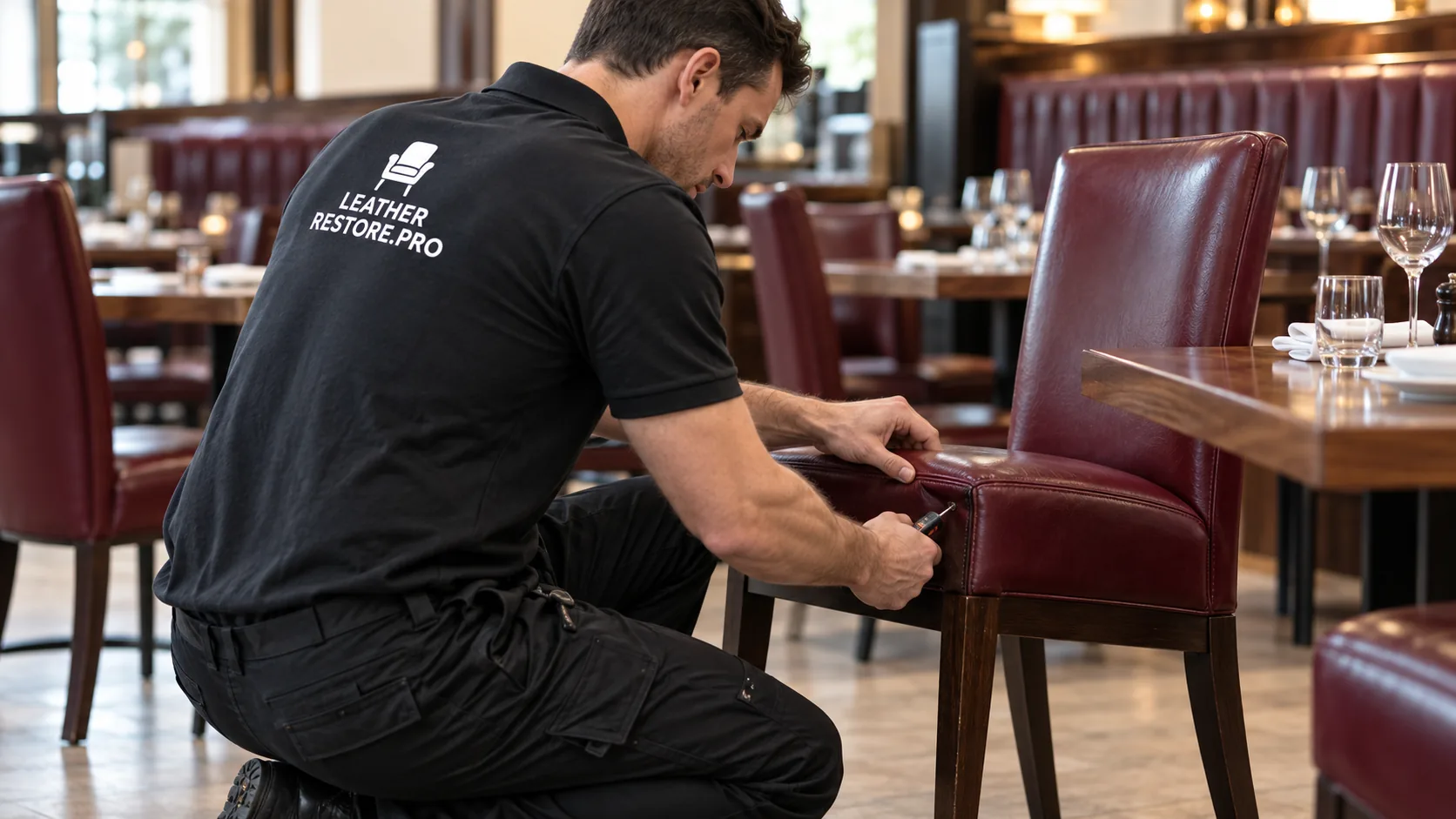
Repair or stabilise
Work happens in the room, or the piece is collected.
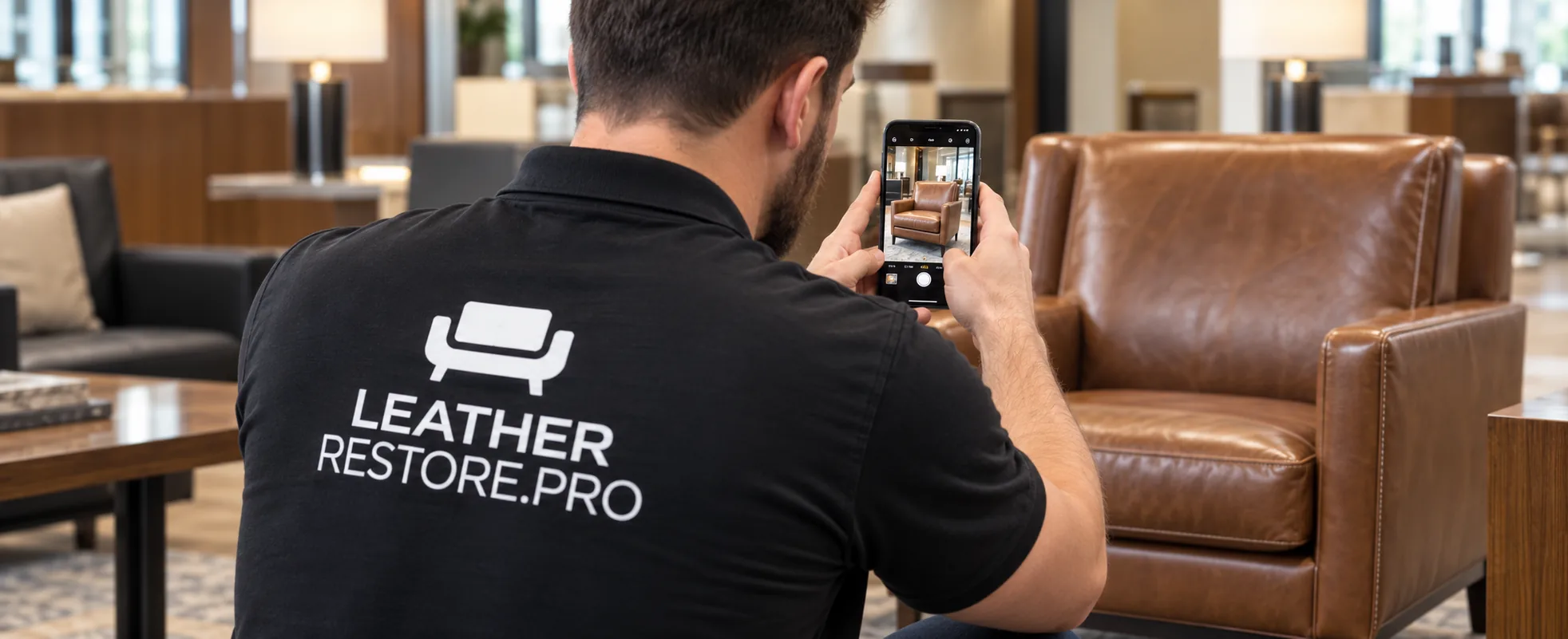
Photograph the result
The finished piece is photographed back in place.
Access, not disruption
Service planned around your operating hours.
Closing a dining room in service usually costs more than the repair itself, so the visit is built around when the room is free.
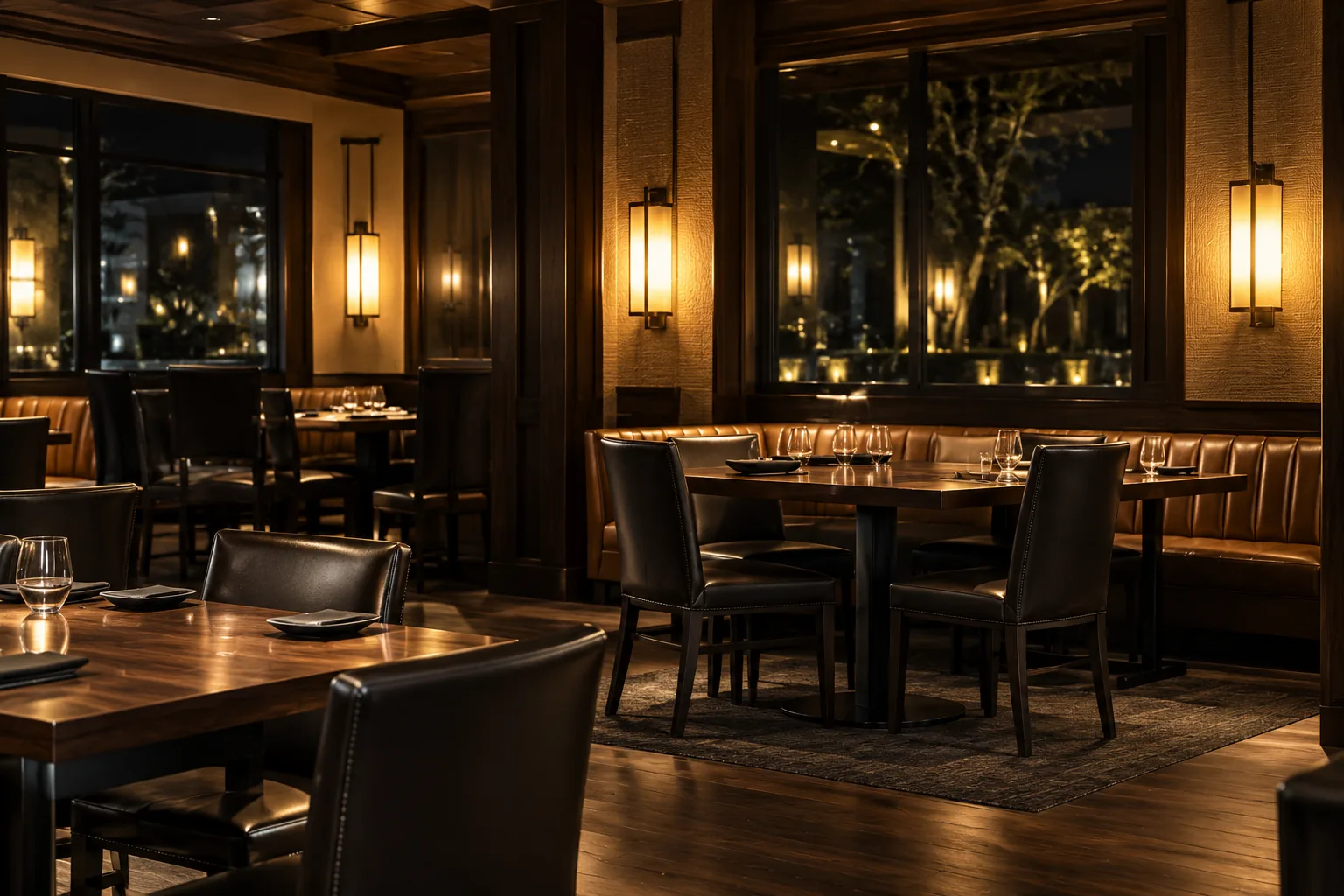
After closing
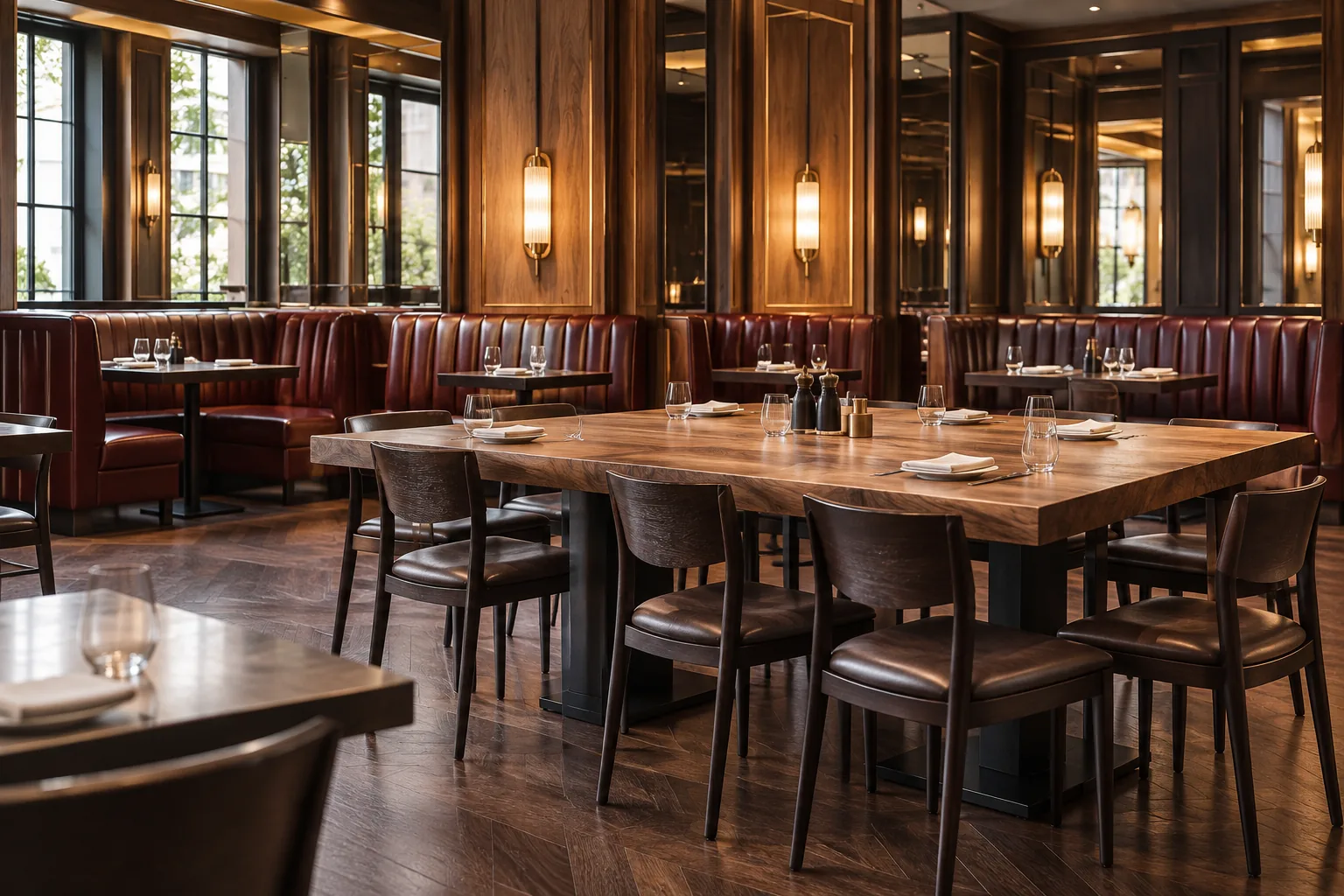
Around evening service
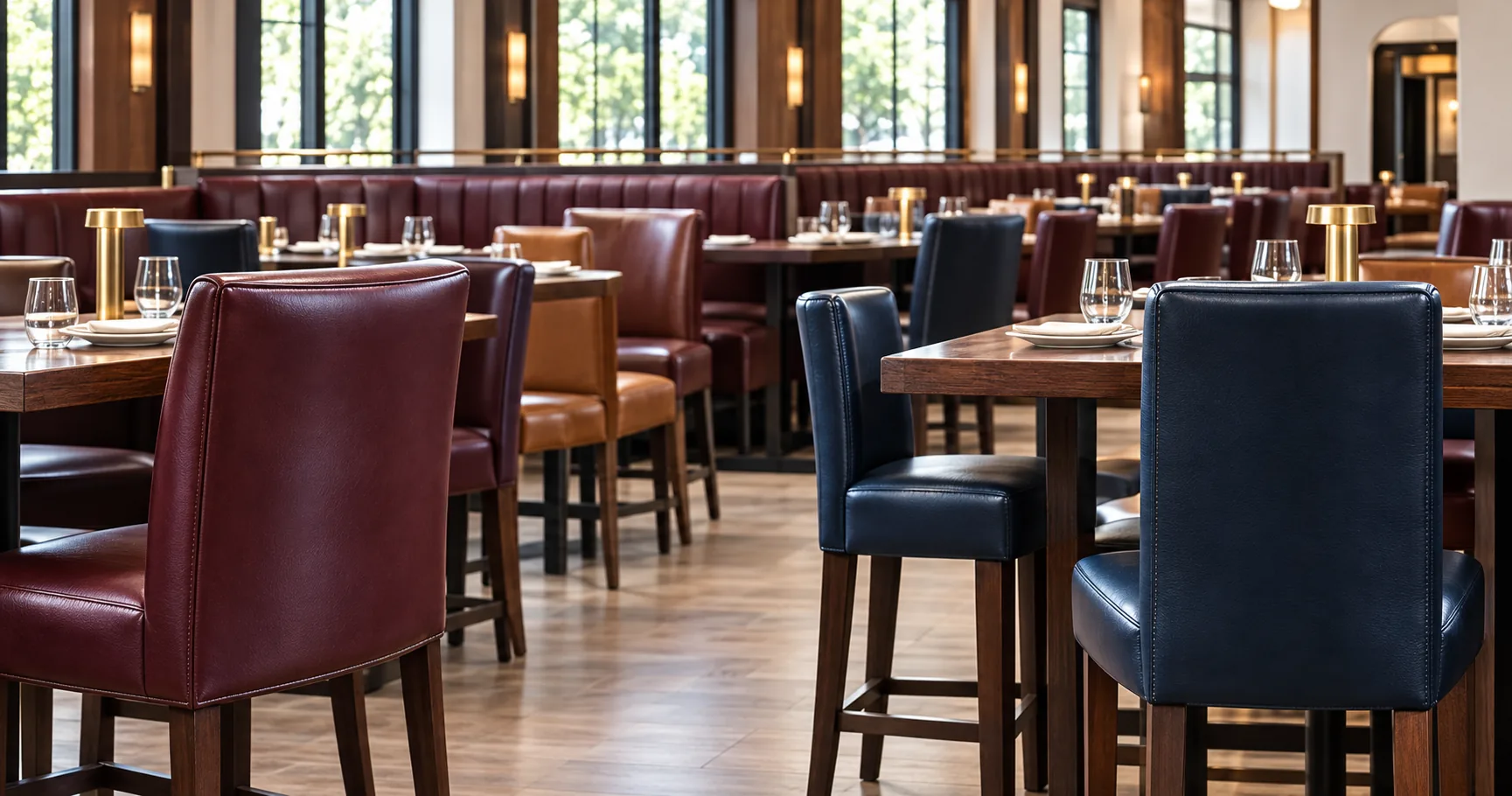
Before opening
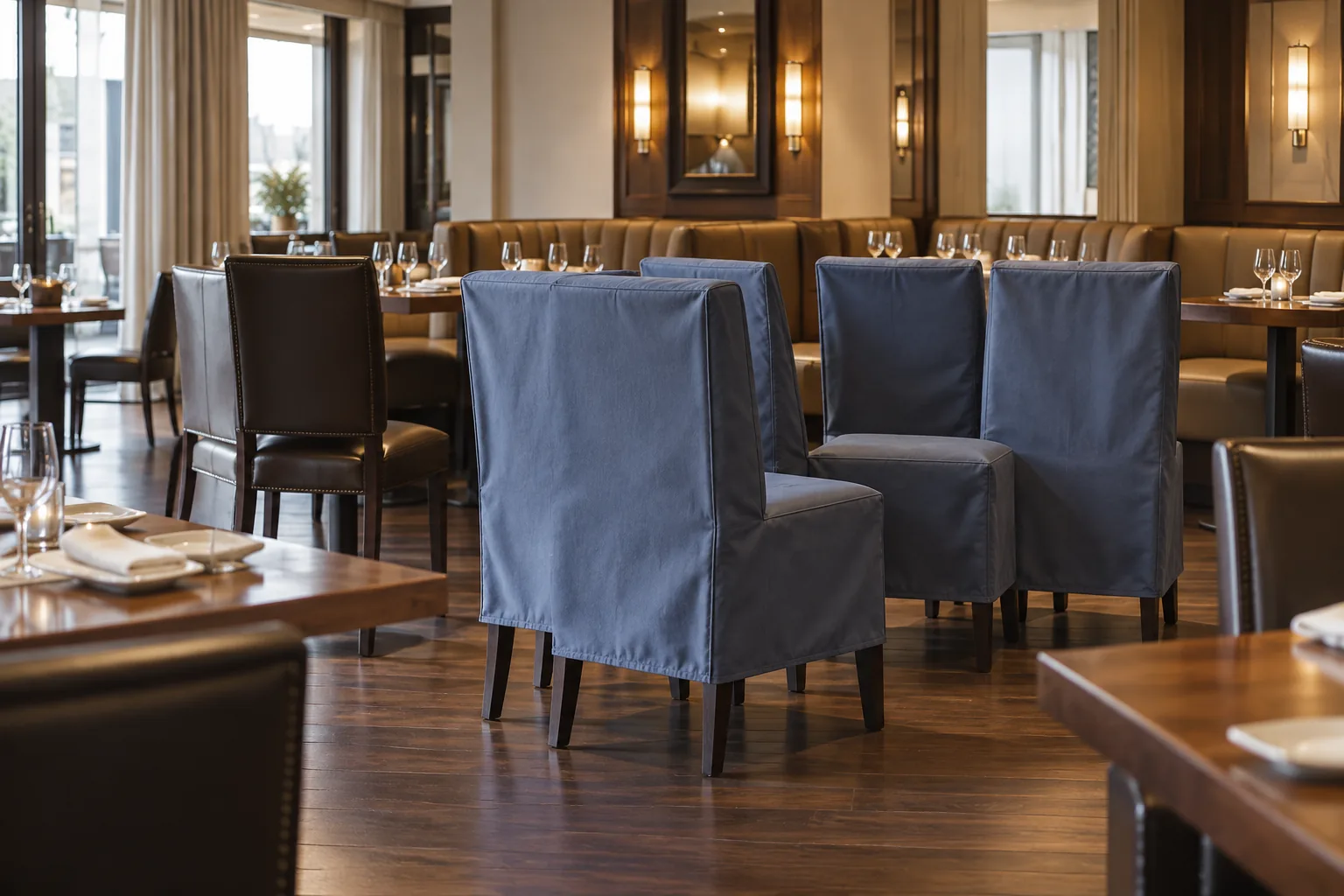
One section at a time
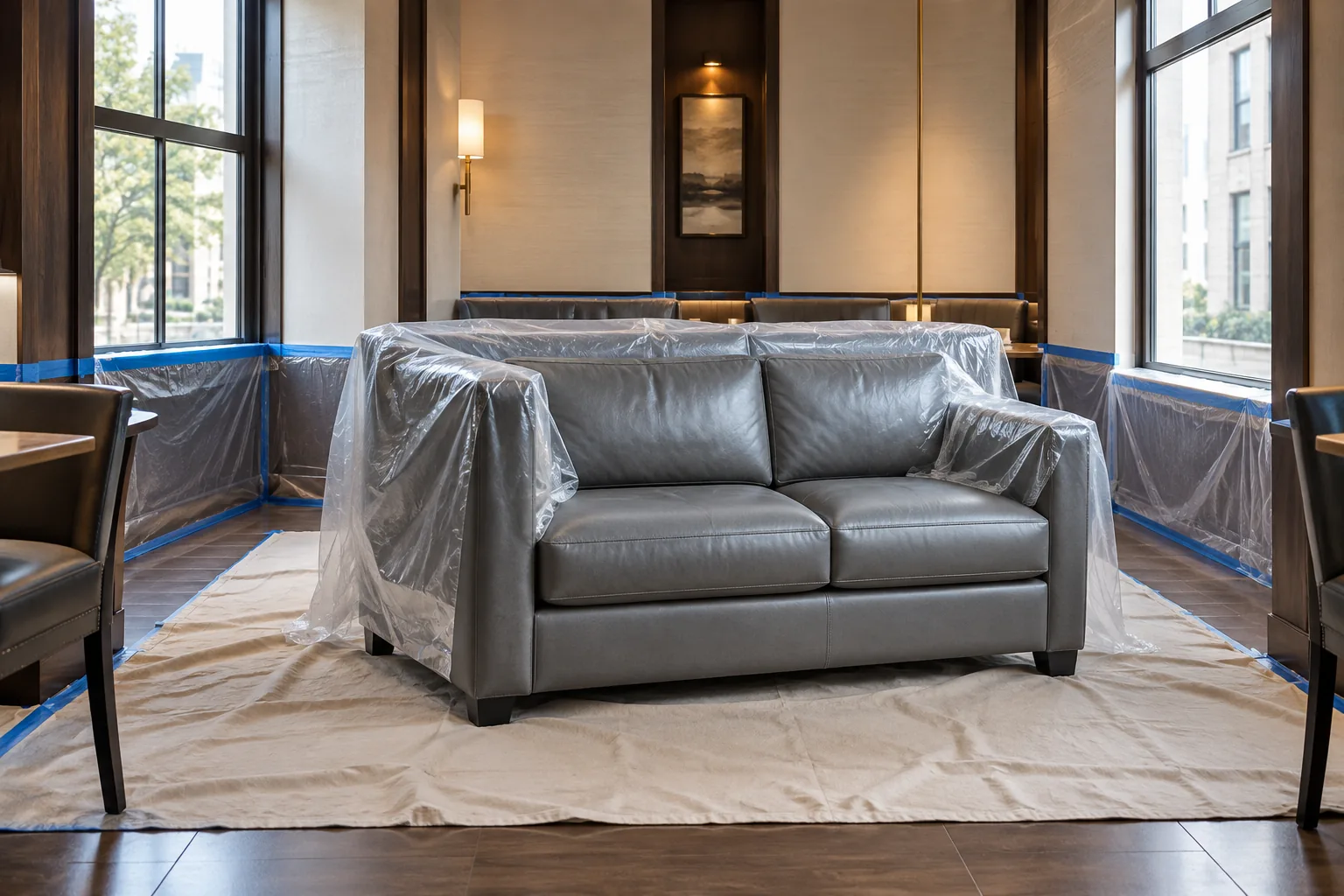
Protected work area
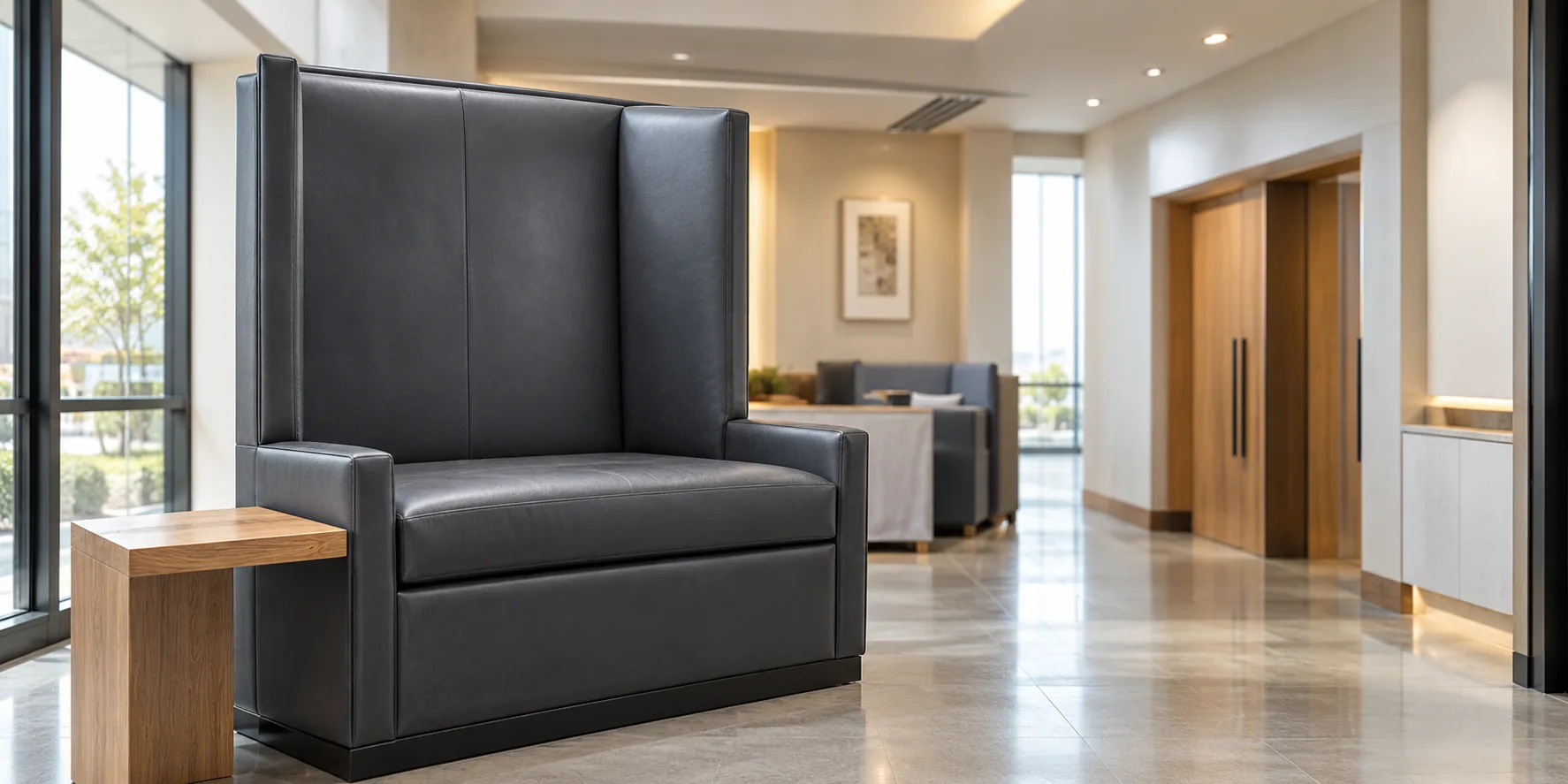
Clean handover
Evening, overnight and pre-opening visits are routine. Off-hours service and overnight work are both scheduled the same way.
Who calls us first
Priority support for rooms that stay open.
Spaces where a seat out of service is lost revenue the same day, not a job for next quarter. Tell us if the damaged run includes accessible seating and it goes first — the ADA Standards scope how many dining surfaces have to be accessible.

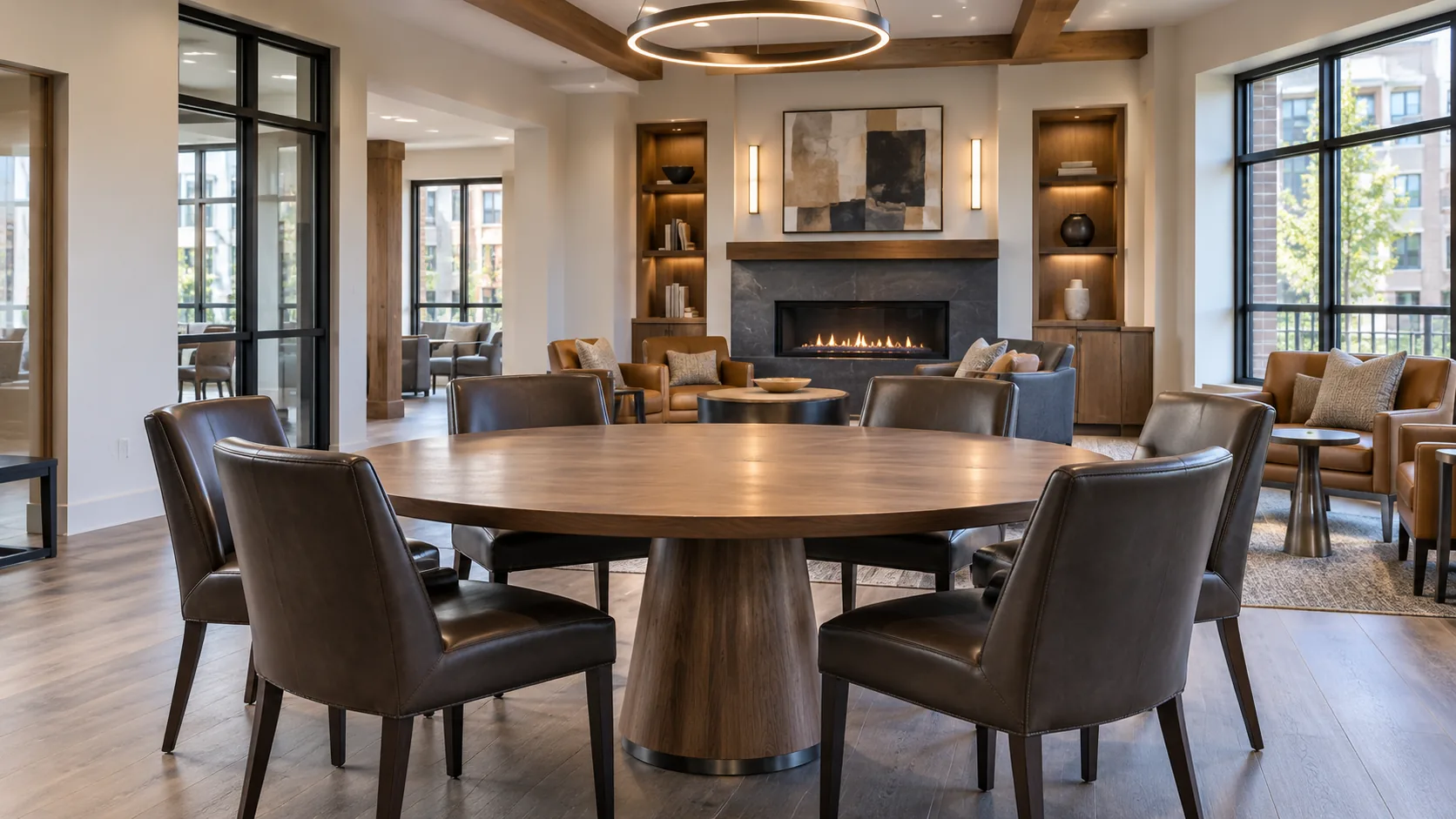
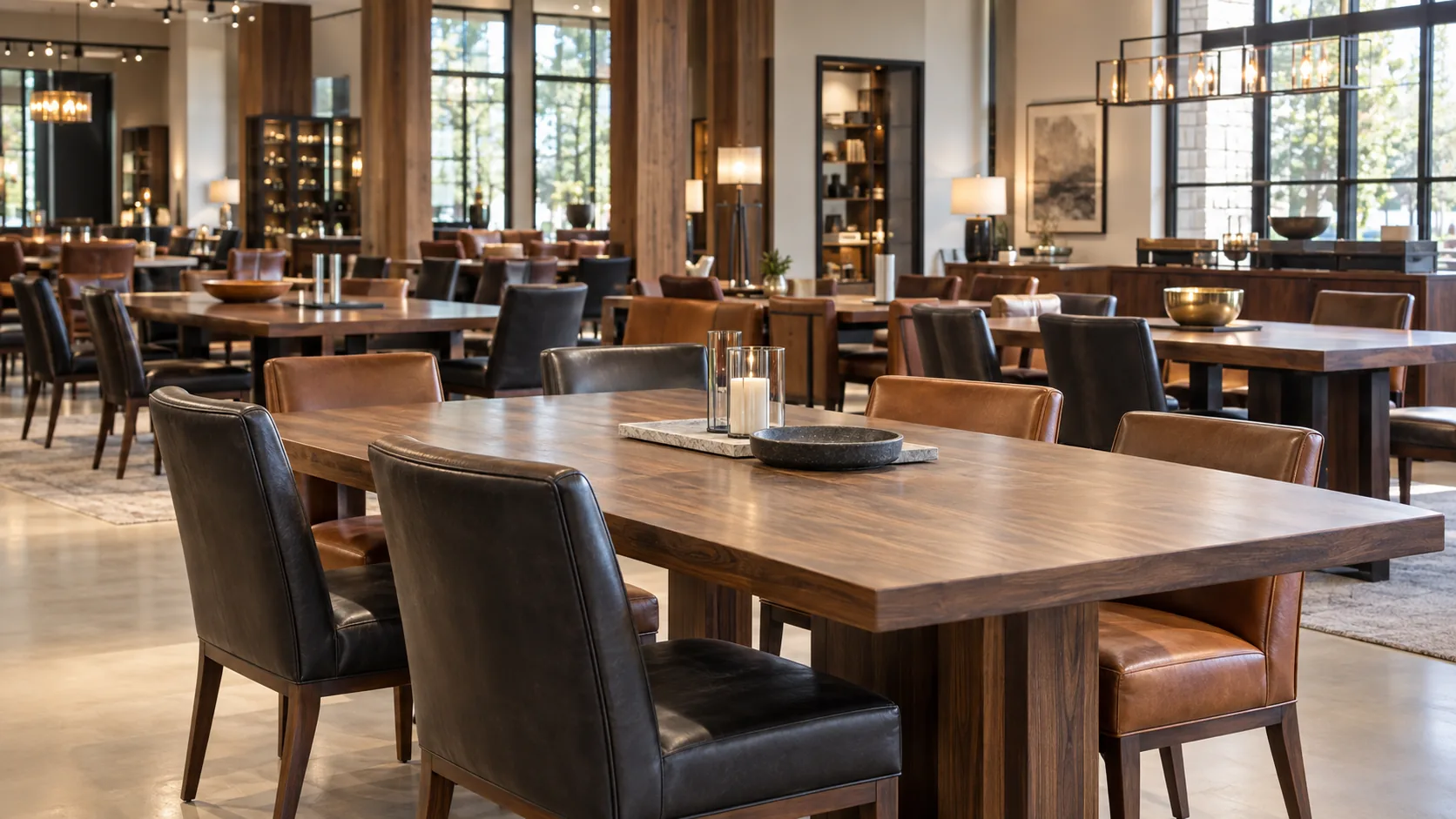
What we assess
Commercial seating we can get back into service.
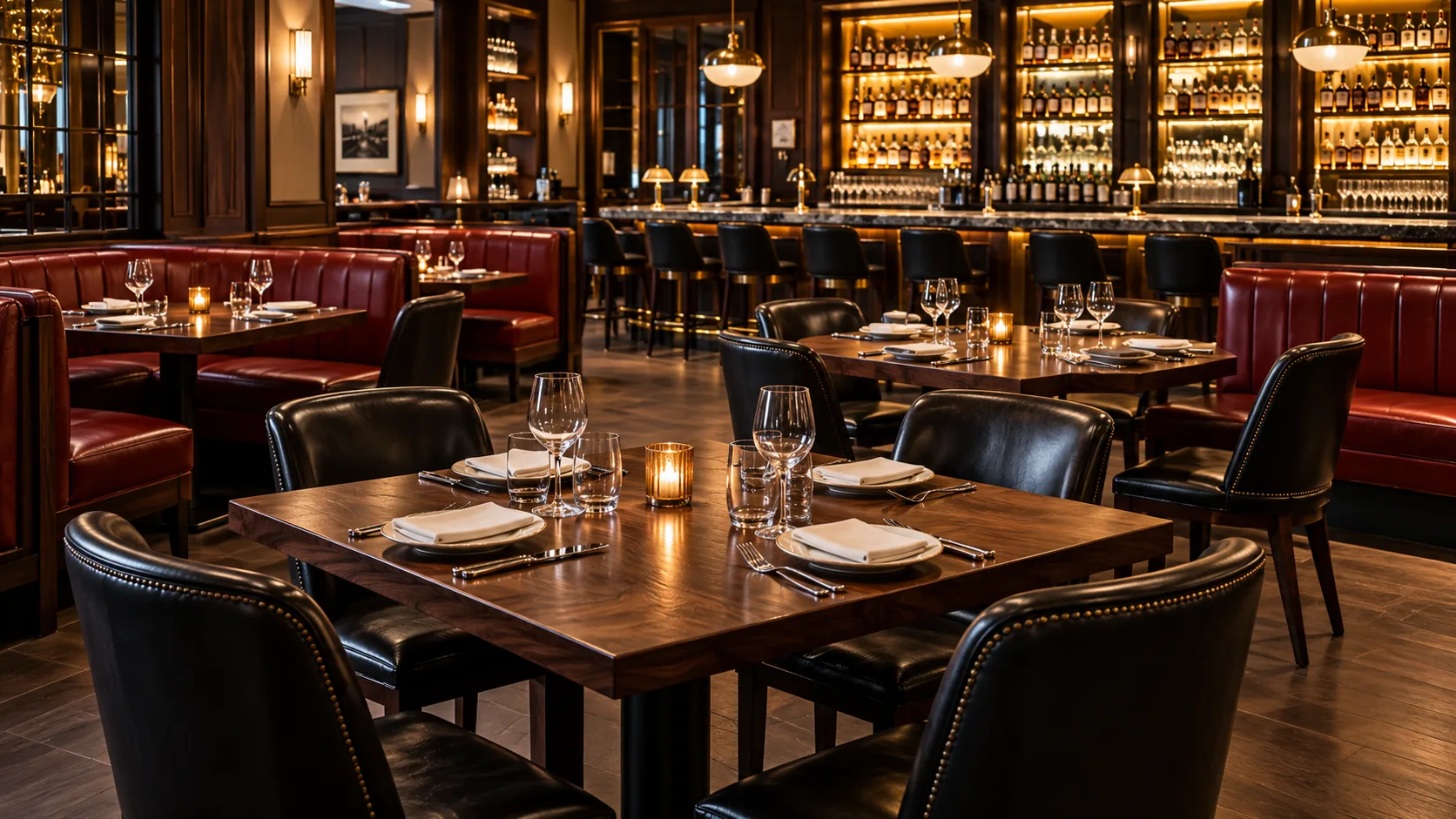
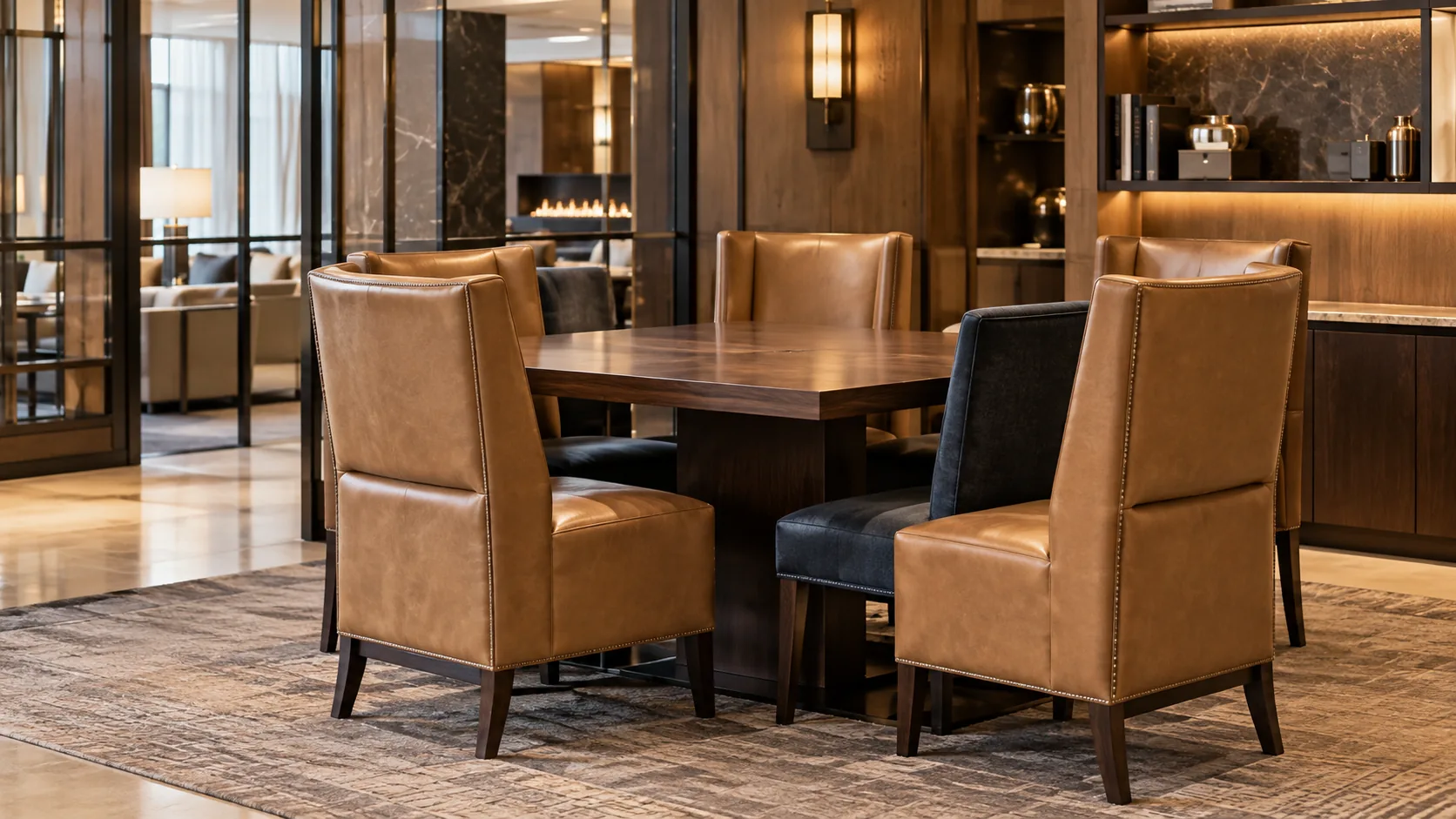
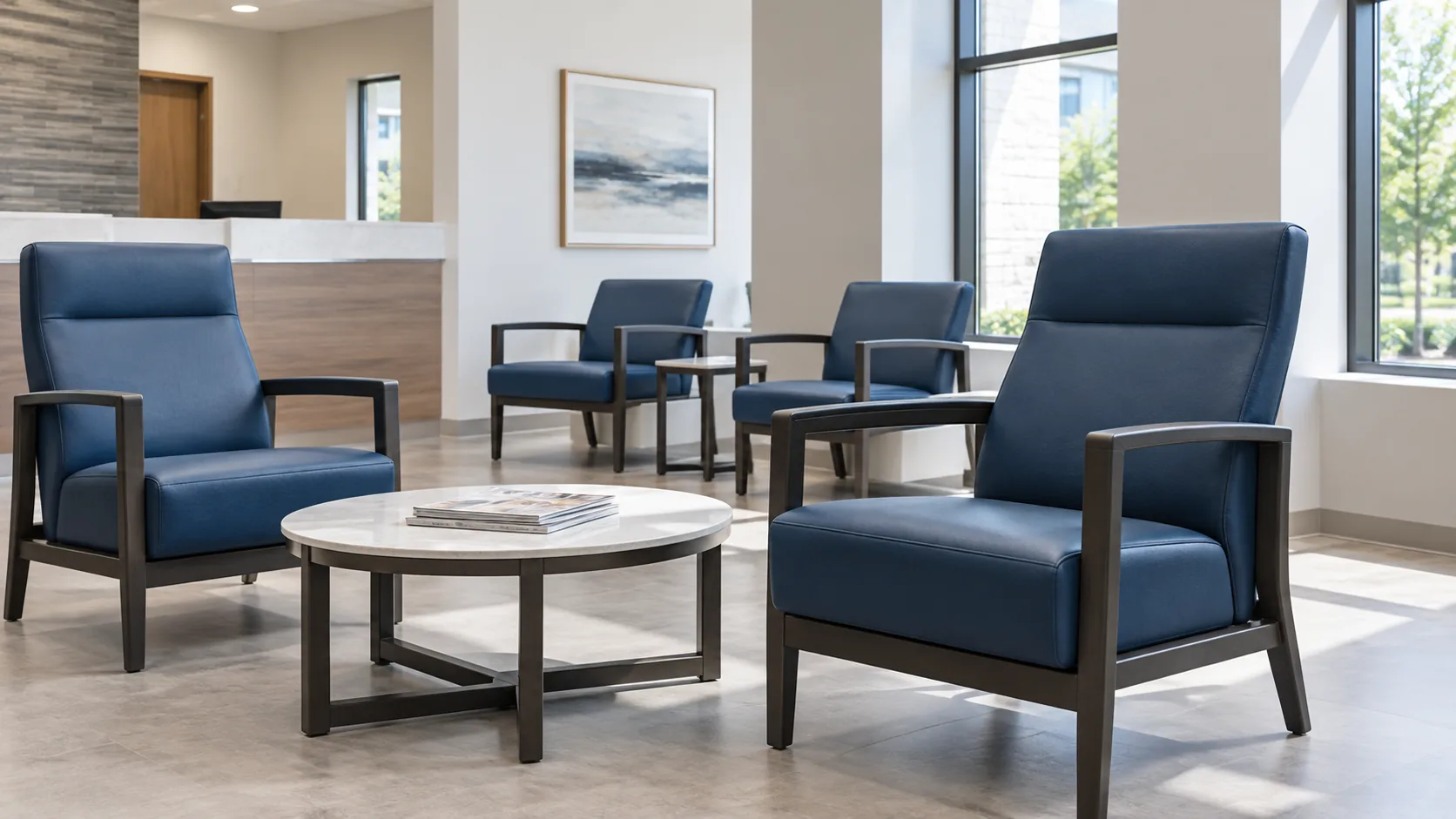
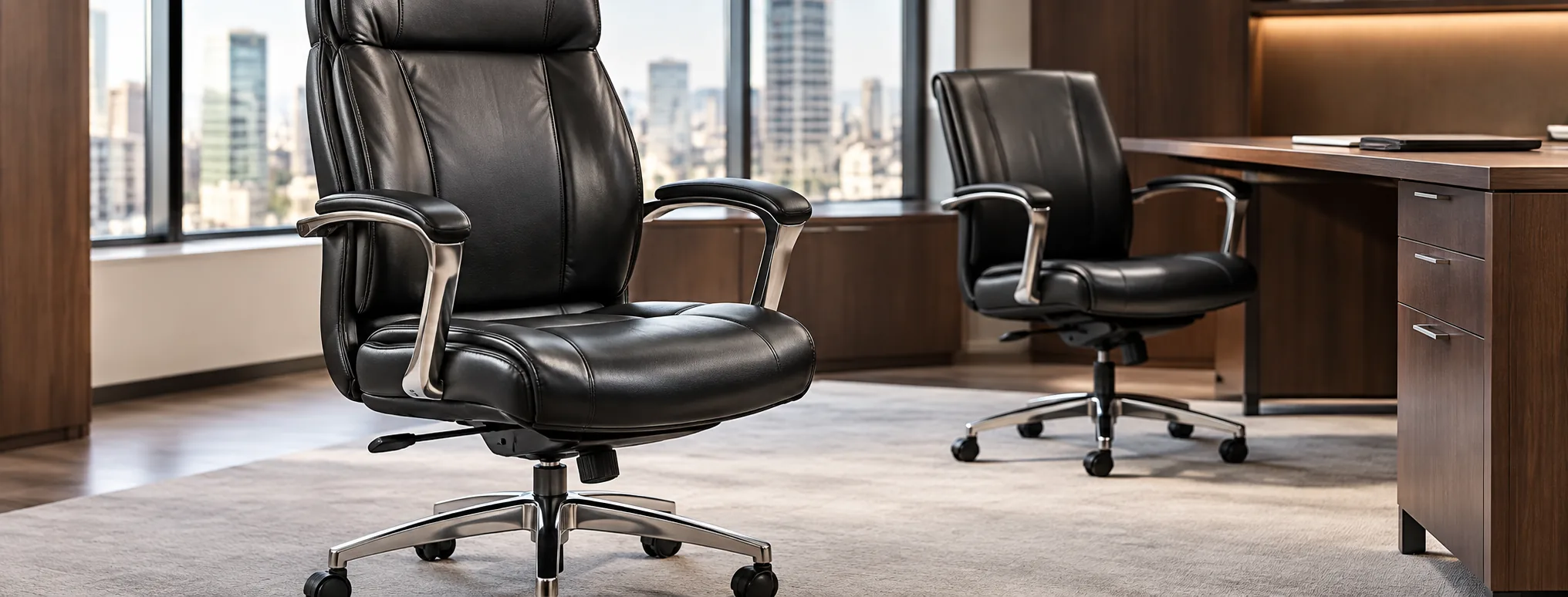
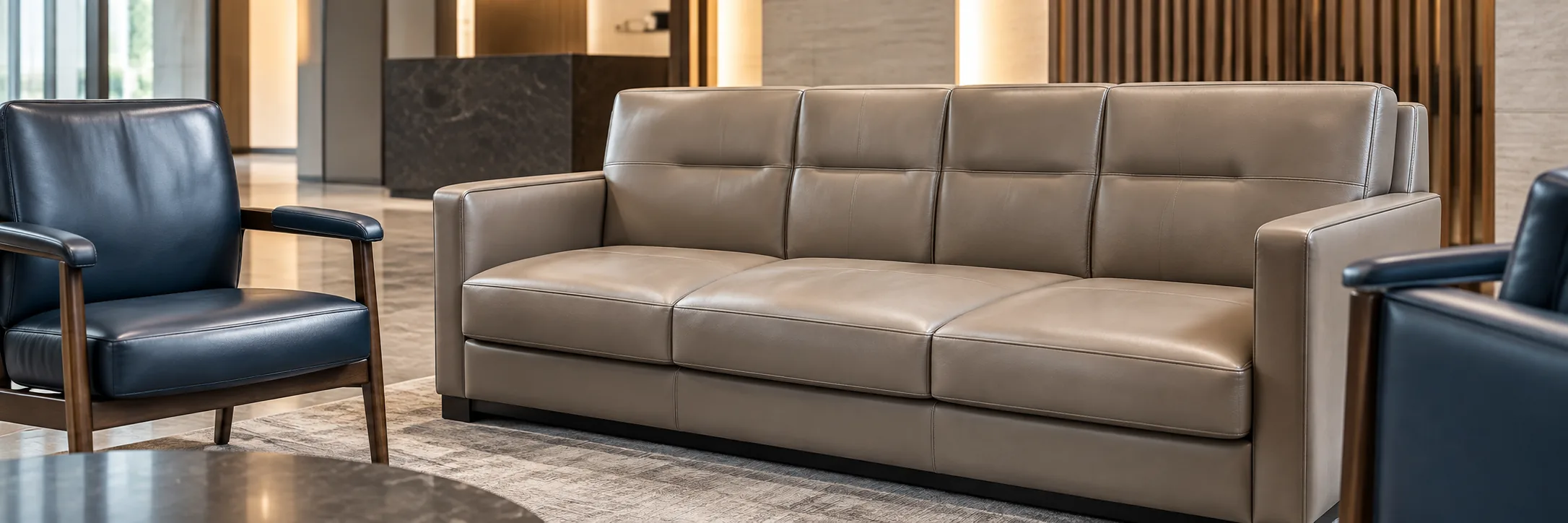
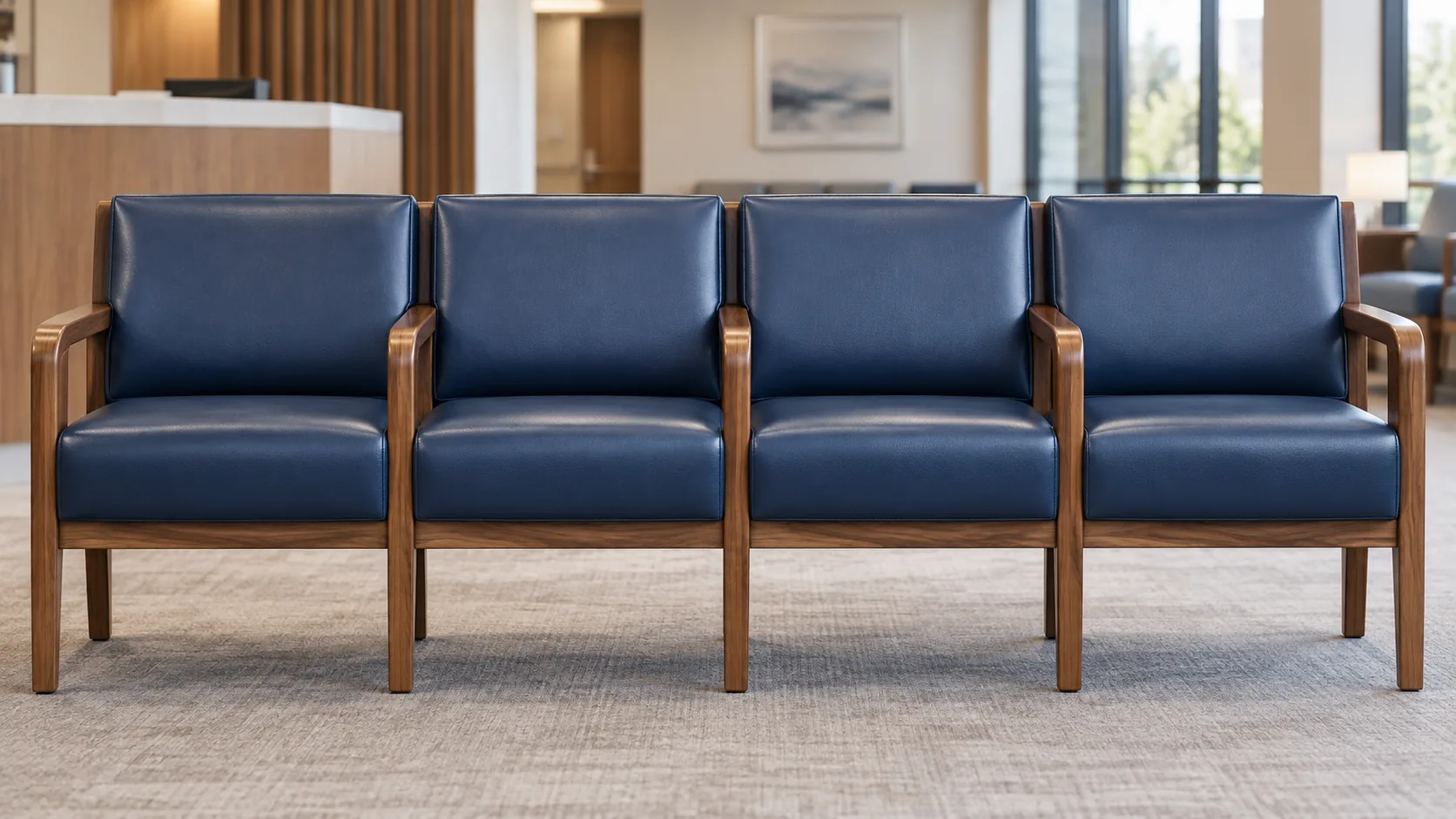
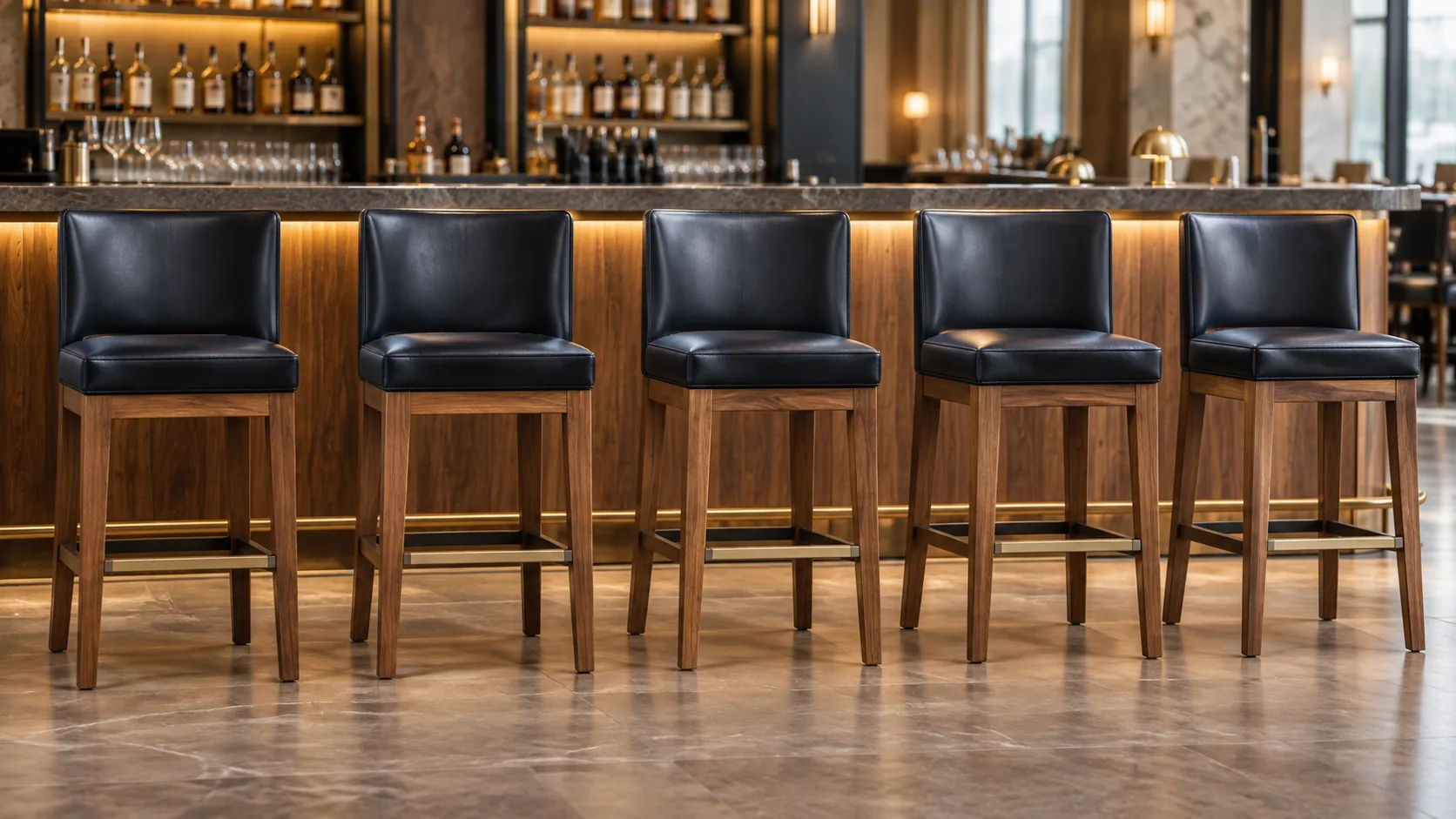
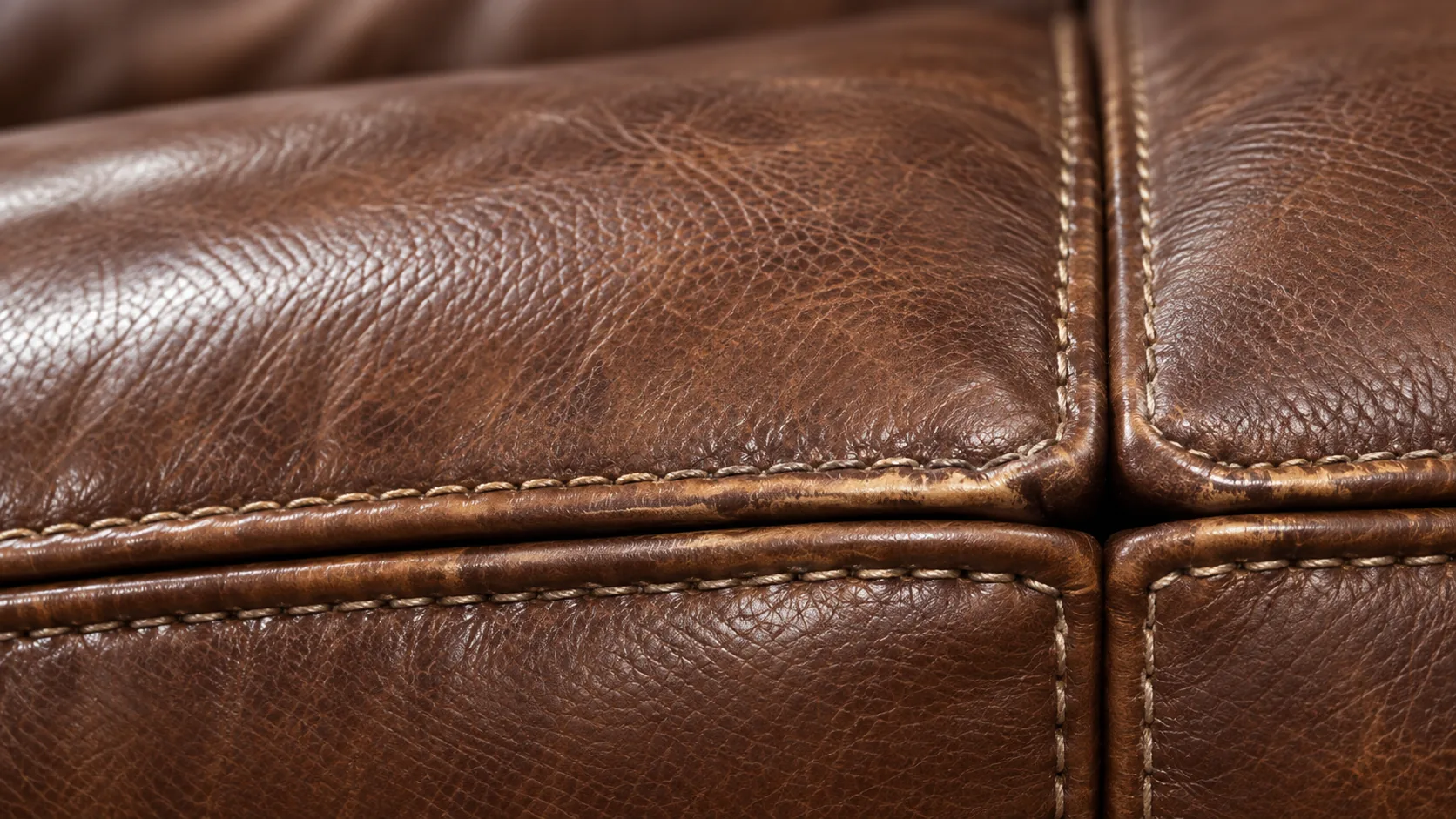
Fixed runs, loose pieces and the cushions inside them all reach us as emergency furniture repair requests. Each links through to how that piece is normally repaired.
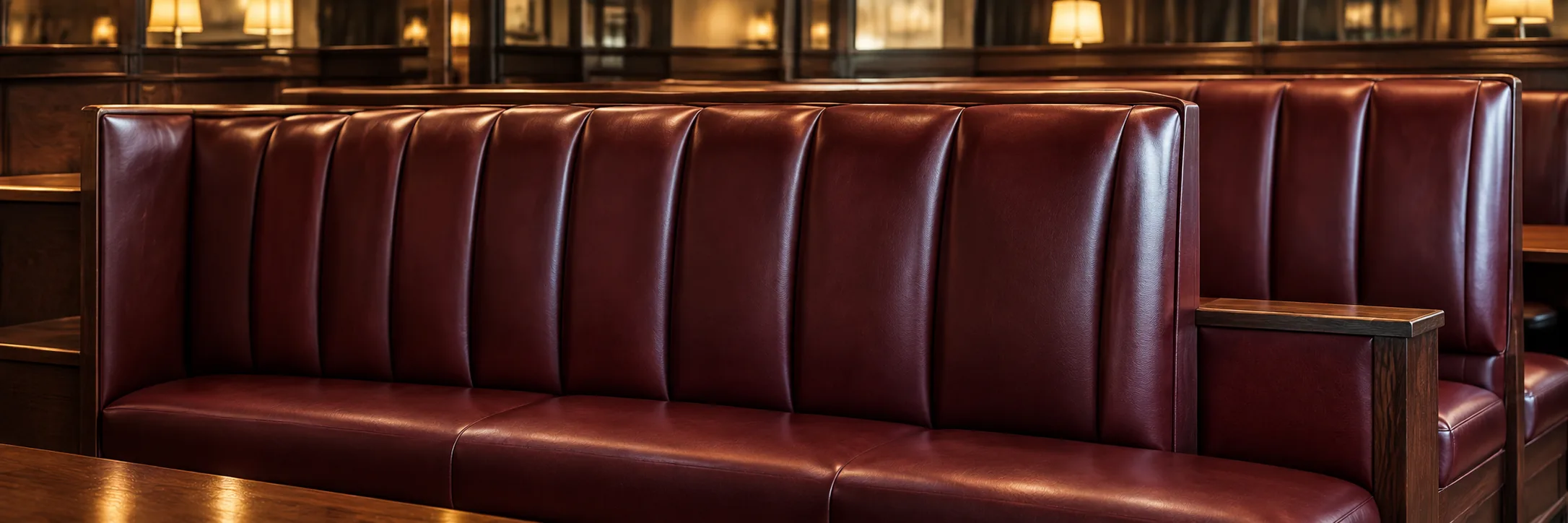
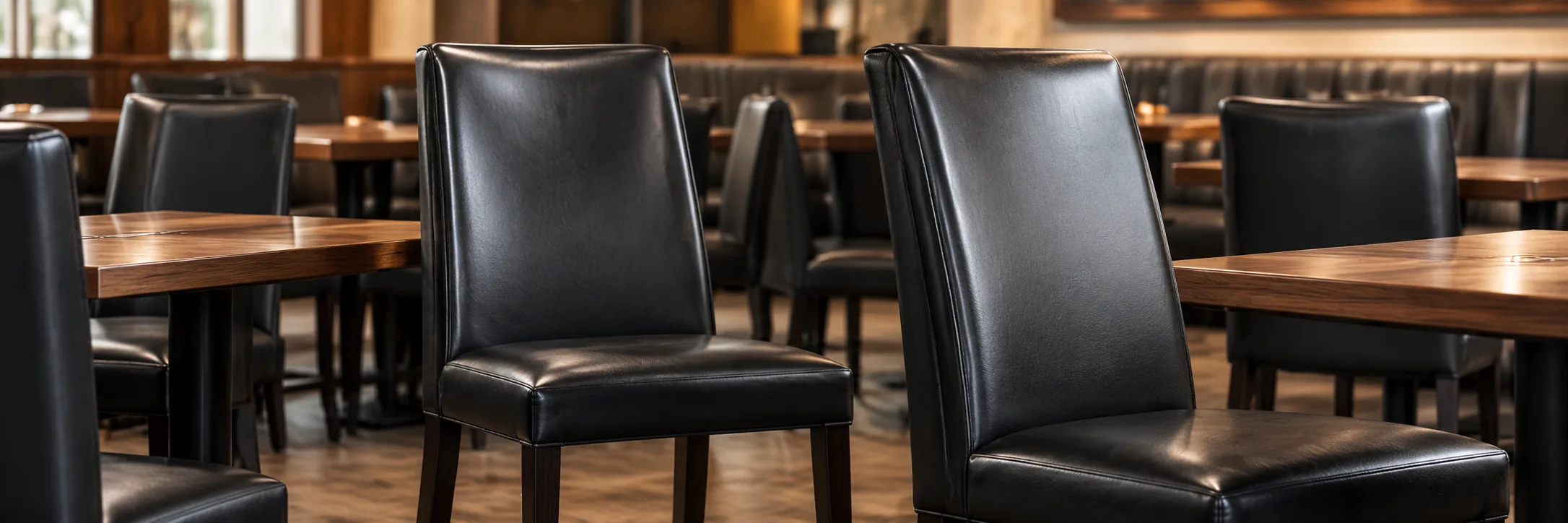
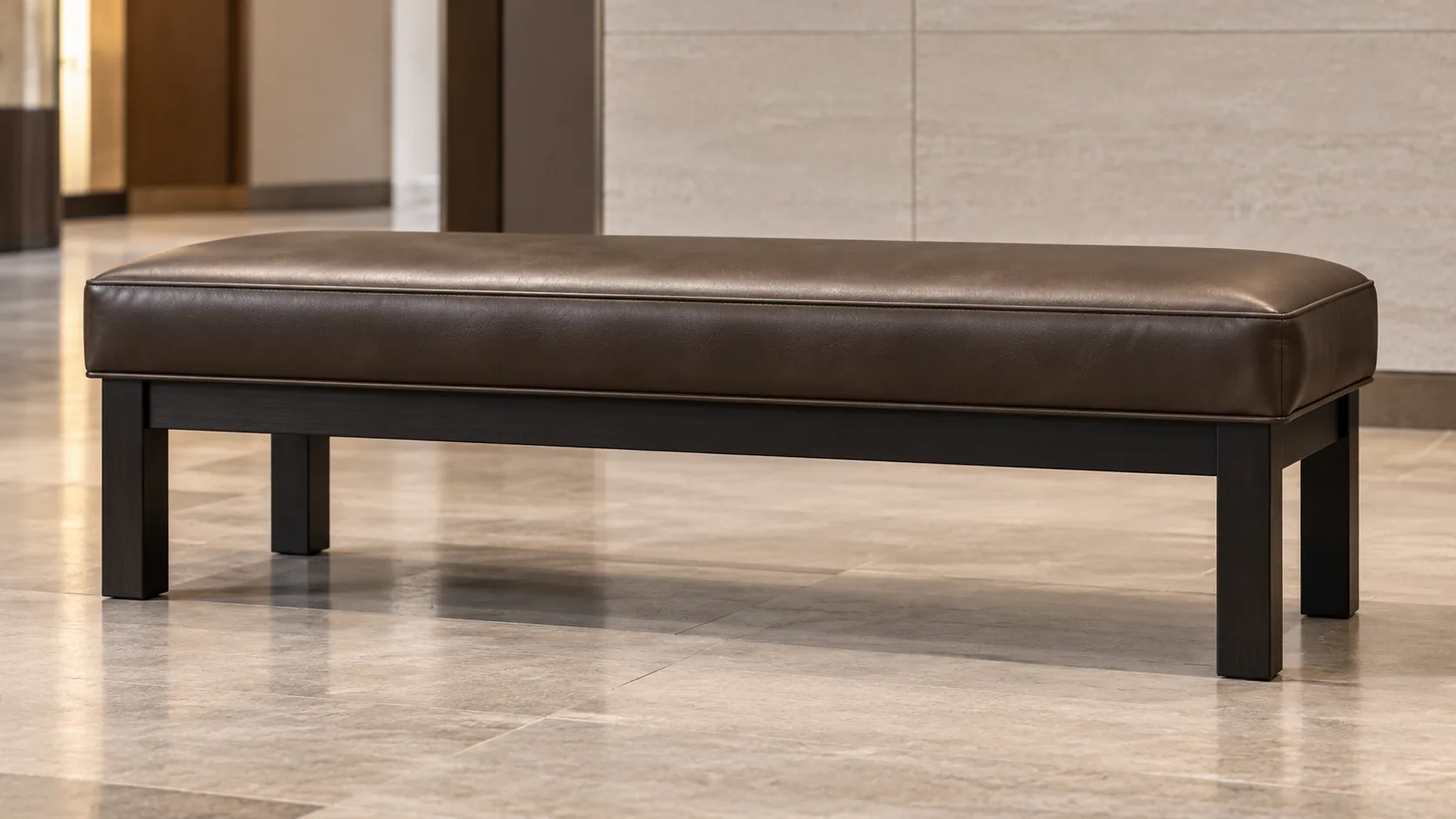
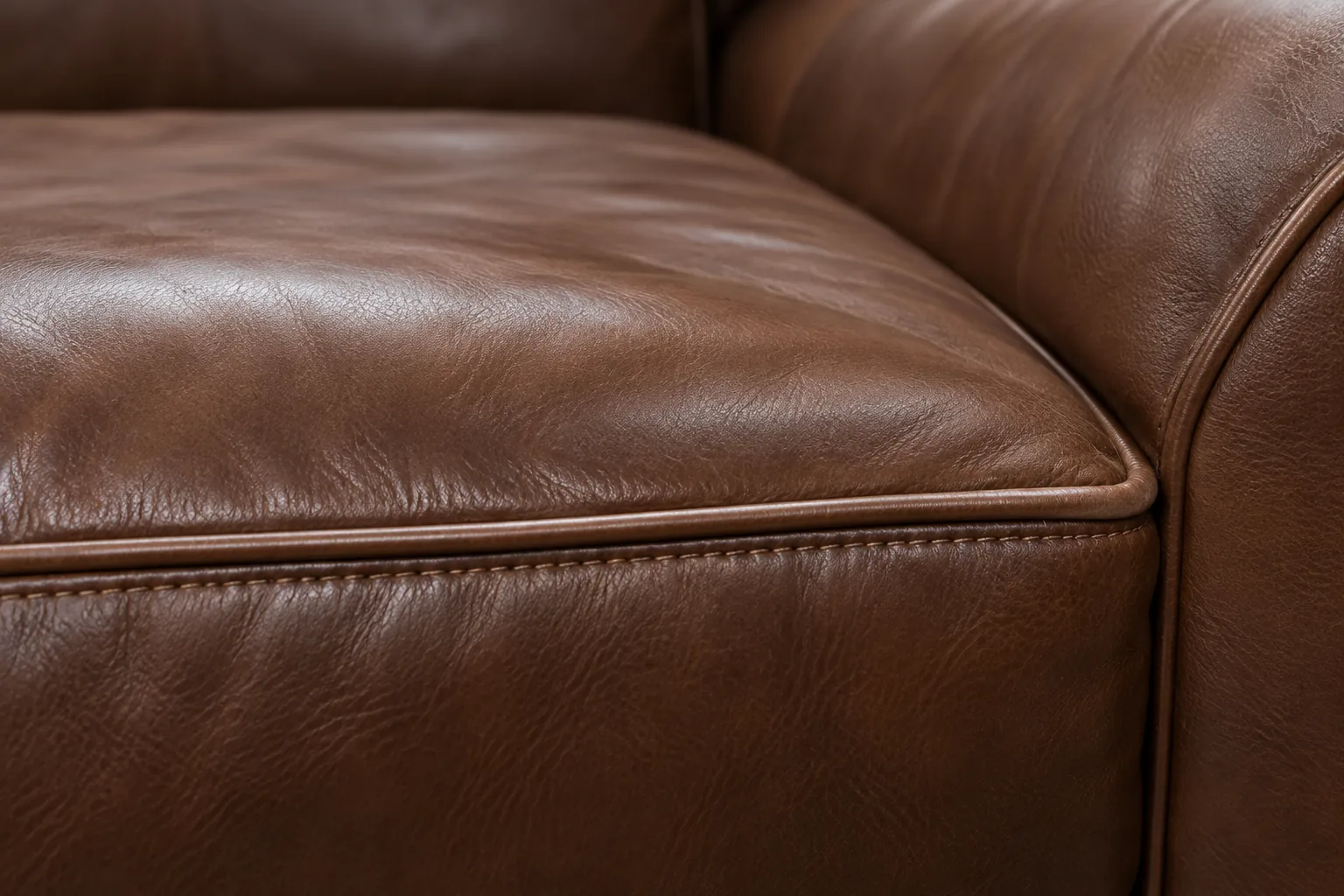
Repair before replacement
Repair first, when repair makes sense.
Most damage that reaches us as an emergency furniture repair is repairable. Replacement is the answer when the frame or the support has gone, and we will say so rather than sell a repair that will not hold.
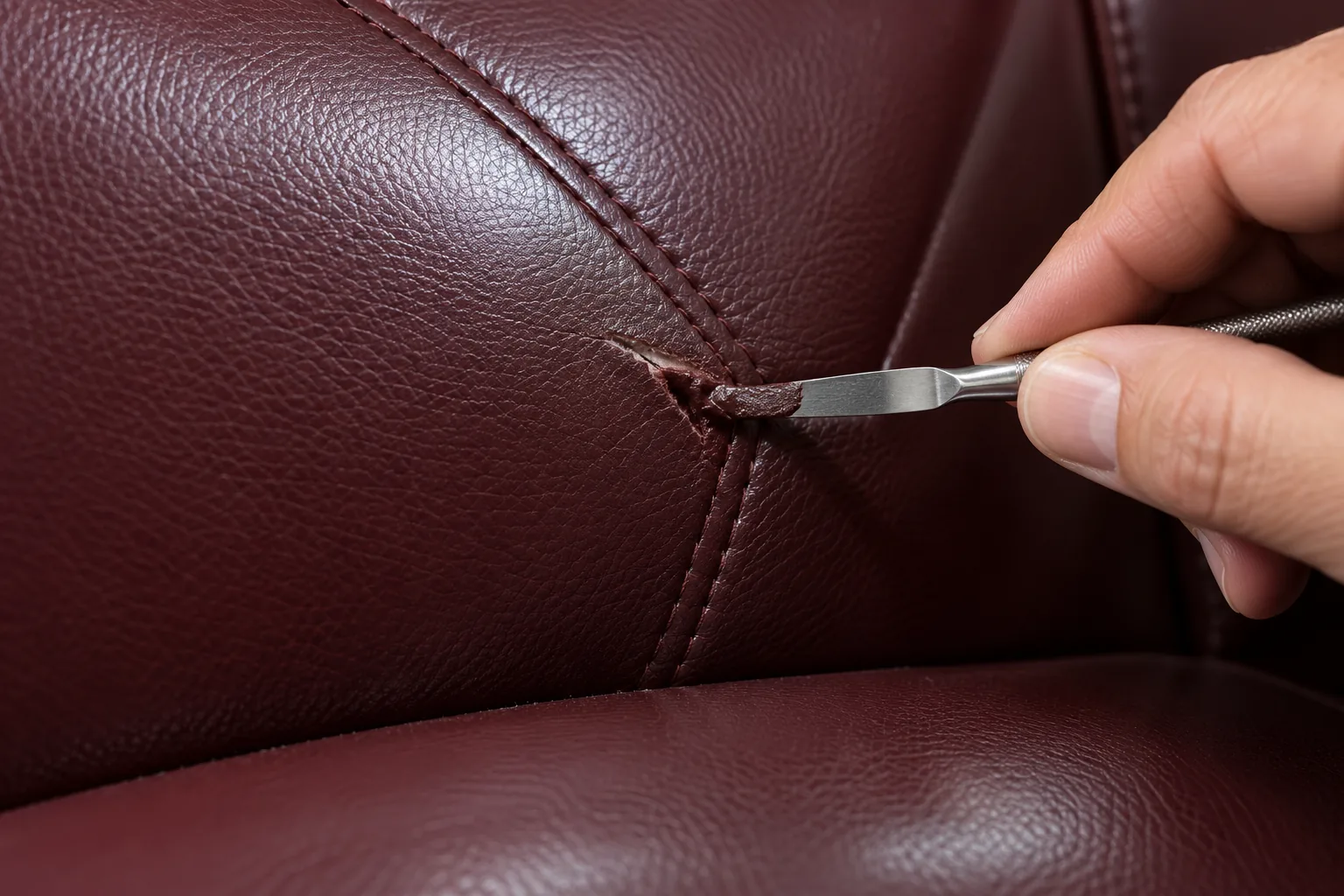
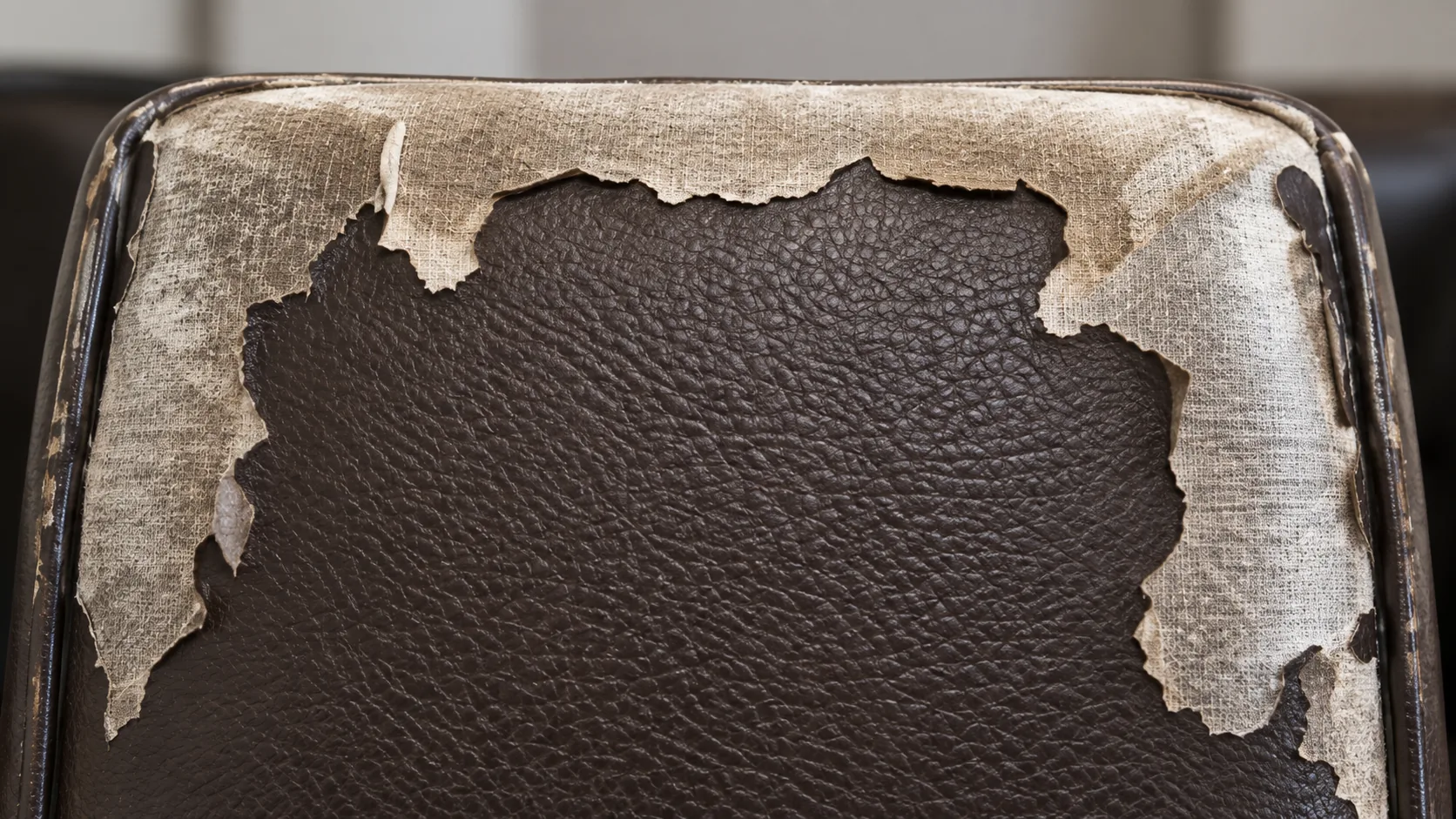
Eight things, two minutes
Help us triage the request quickly.
Send these with the first message and the reply is a repair route instead of a list of questions.
Submit an emergency requestA wide shot of the whole piece
So we can read its construction.
A close shot of the damage
Fill the frame with the fault.
How many pieces are affected
One chair and eleven chairs are different jobs.
The business name and address
So we can check travel and parking.
The material, if you know it
Leather, vinyl or fabric changes the route.
When it happened
Fresh damage and old damage repair differently.
Your access hours
When the room is free and who lets us in.
Any operating deadline
An event, an inspection or a reopening date.
Paperwork that survives the week
Clear records from damage to completion.
Property teams, moving claims and insurers all ask for the same six things, so commercial work is documented that way by default.
Photo intake
What you sent, with the fault marked.
Written scope
The repair route and what it does not cover.
Material notes
The products and materials used on the piece.
Before photos
The original condition, dated.
Completion photos
The same angles after the work.
Repair summary
A plain record of what was done.
What these jobs look like
Three emergency furniture repair jobs, start to finish.
The same damage can end in three different repairs. These are the three routes, each shown on the piece it was done to.
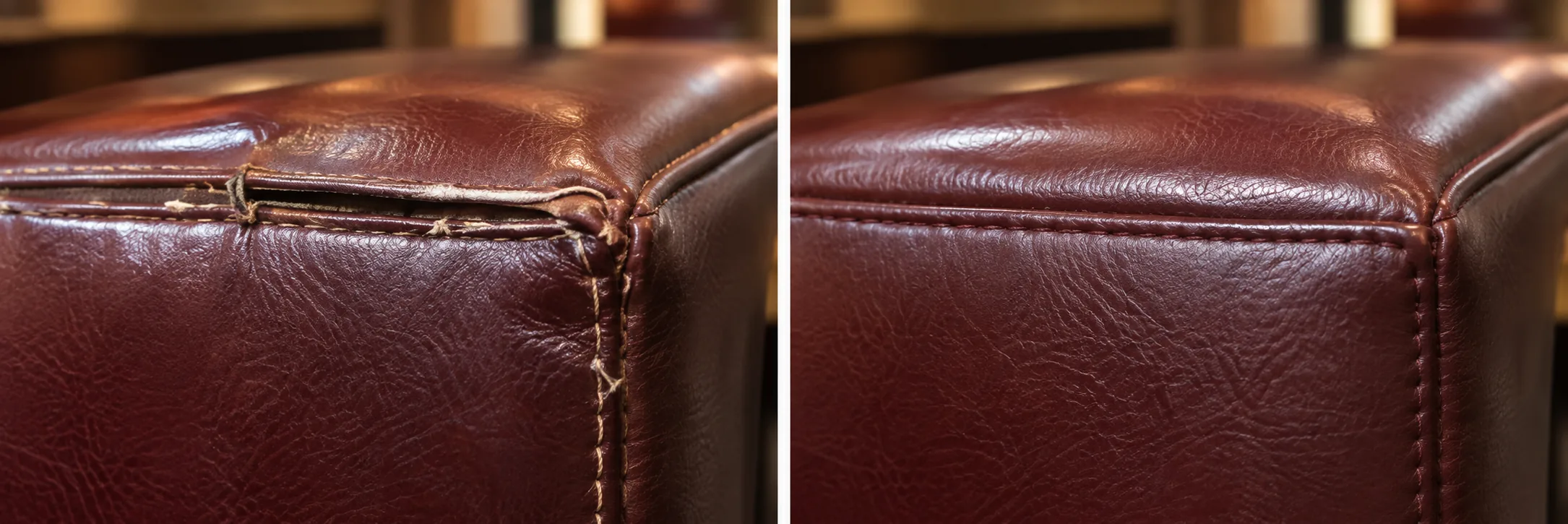
Restaurant booth seam
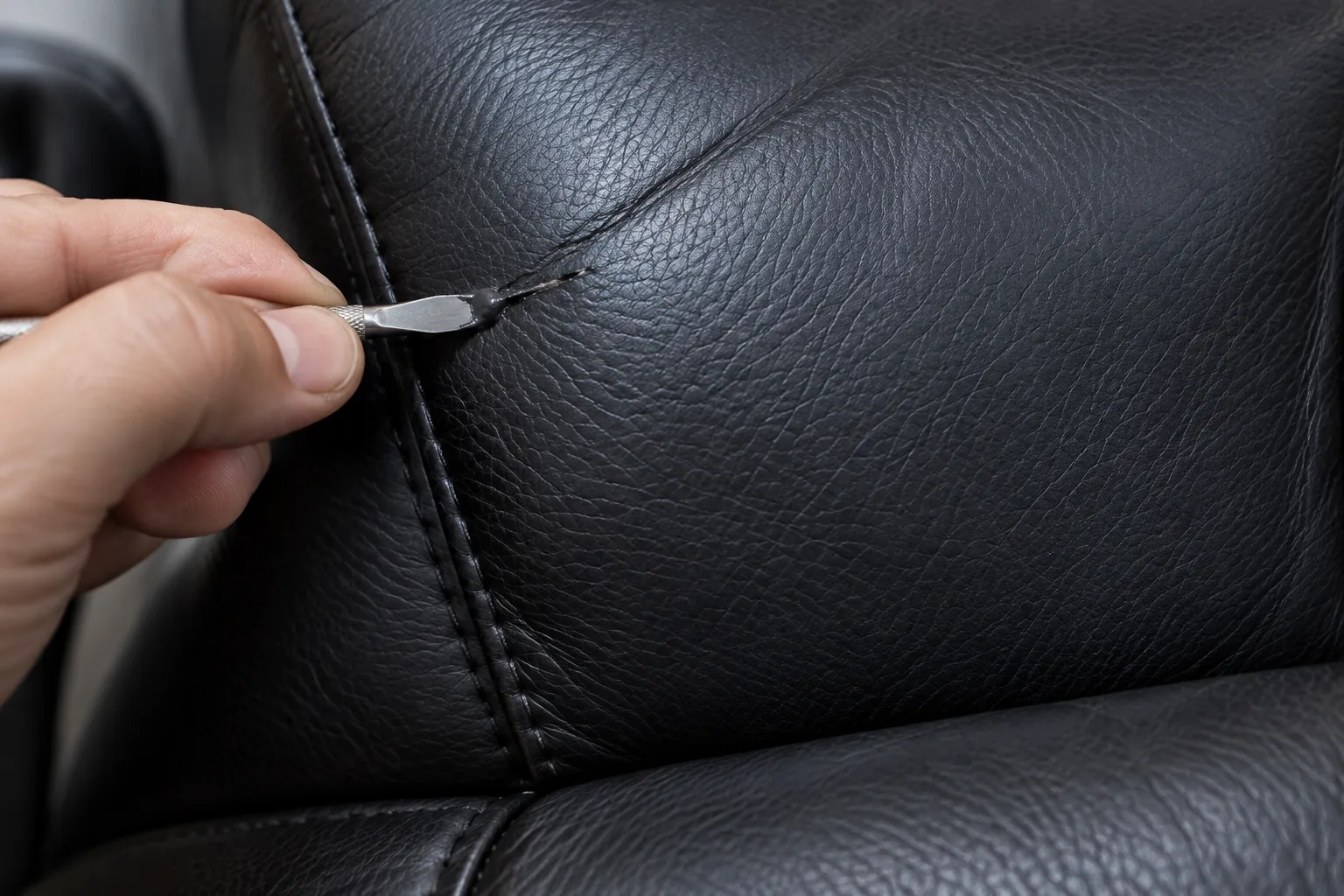
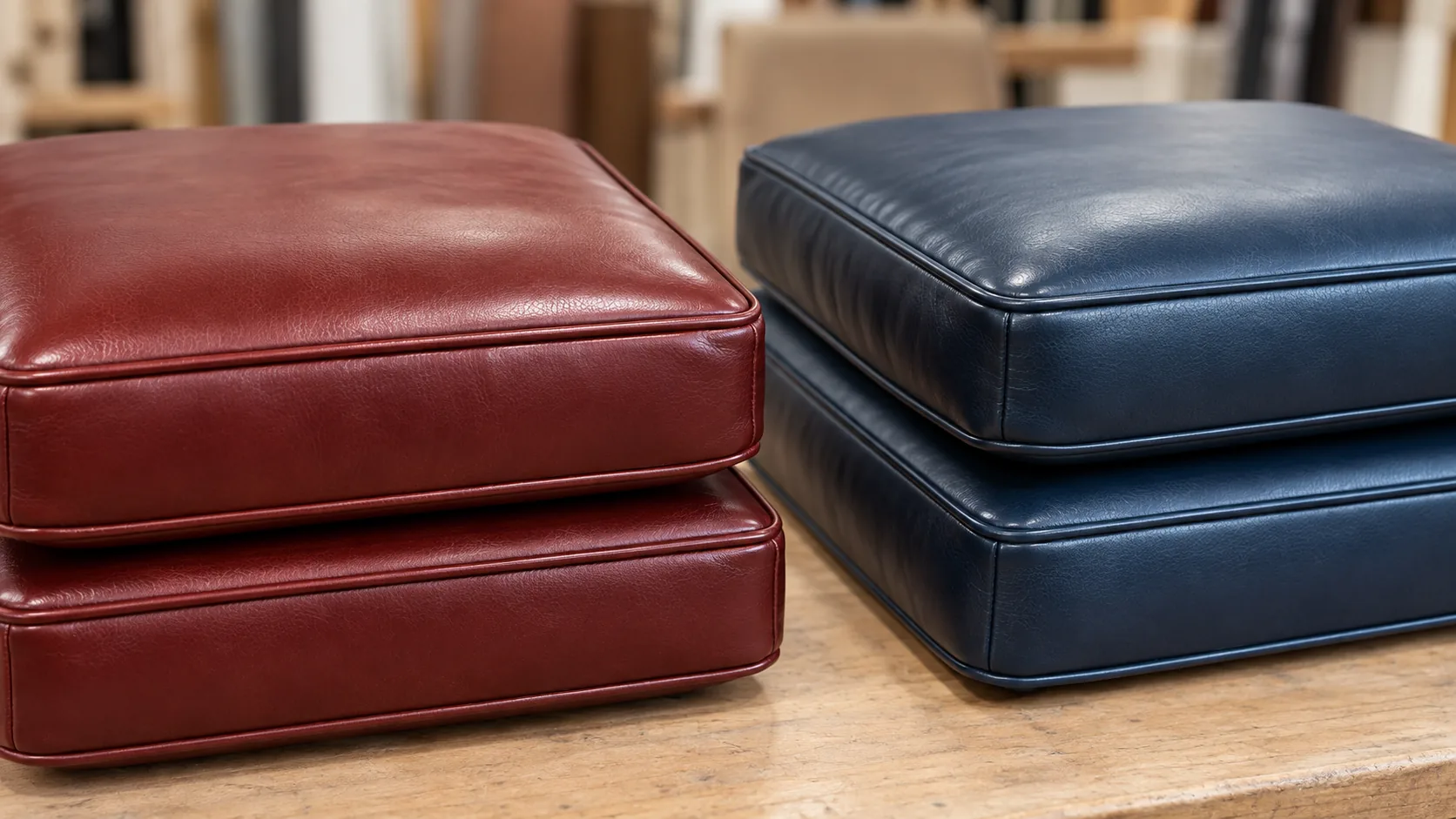
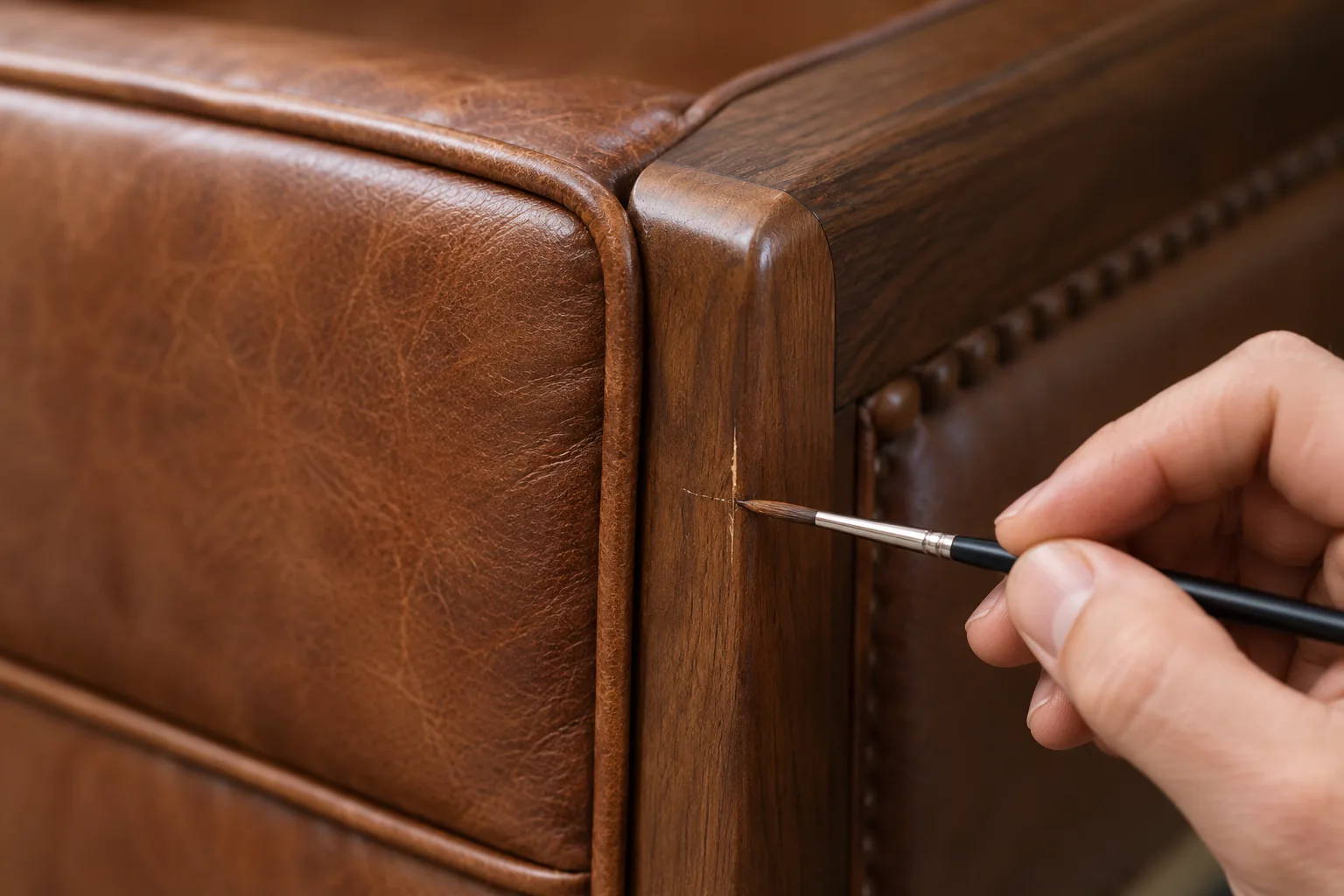
A seam opened along a banquette run. Closed and re-dyed in place, with the section back in service the same visit.
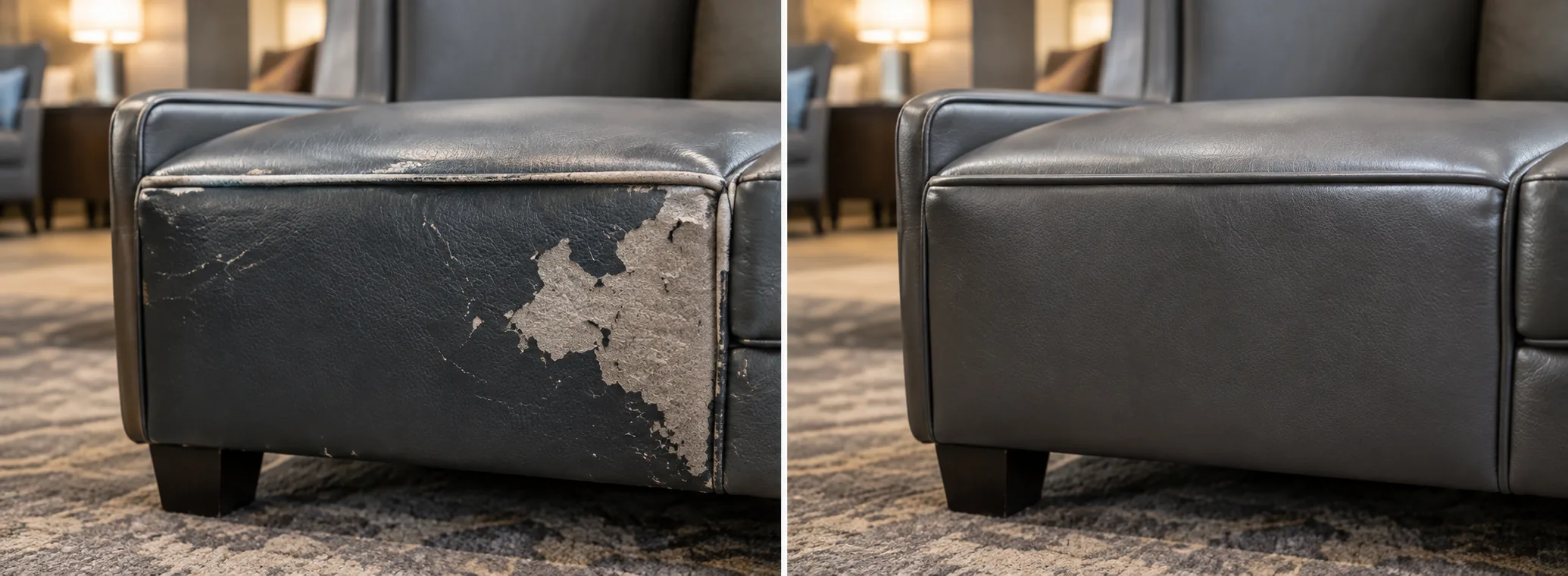
Hotel sofa panel
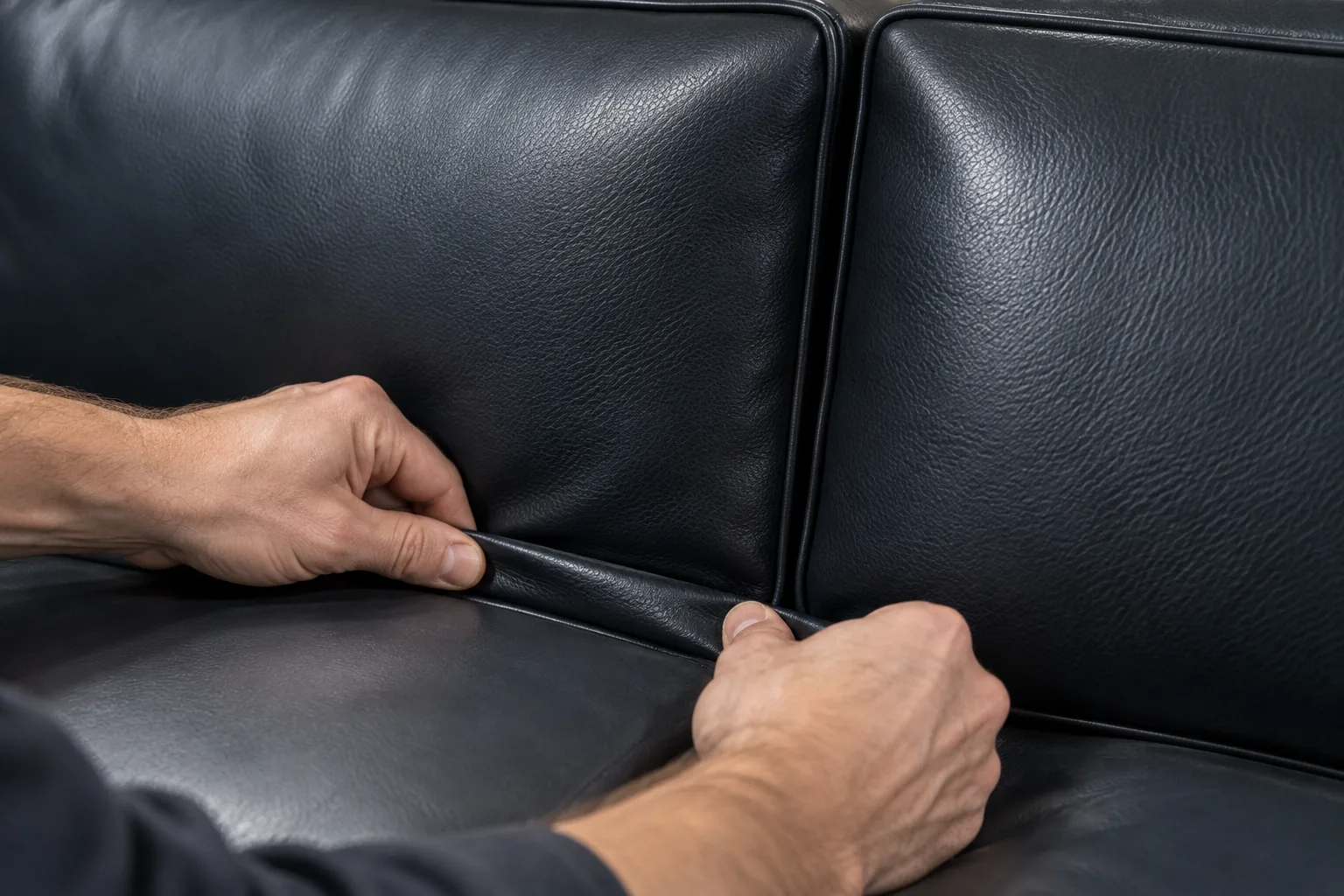
Damage too deep to close. The panel was replaced and matched to the surrounding hide rather than patched over.
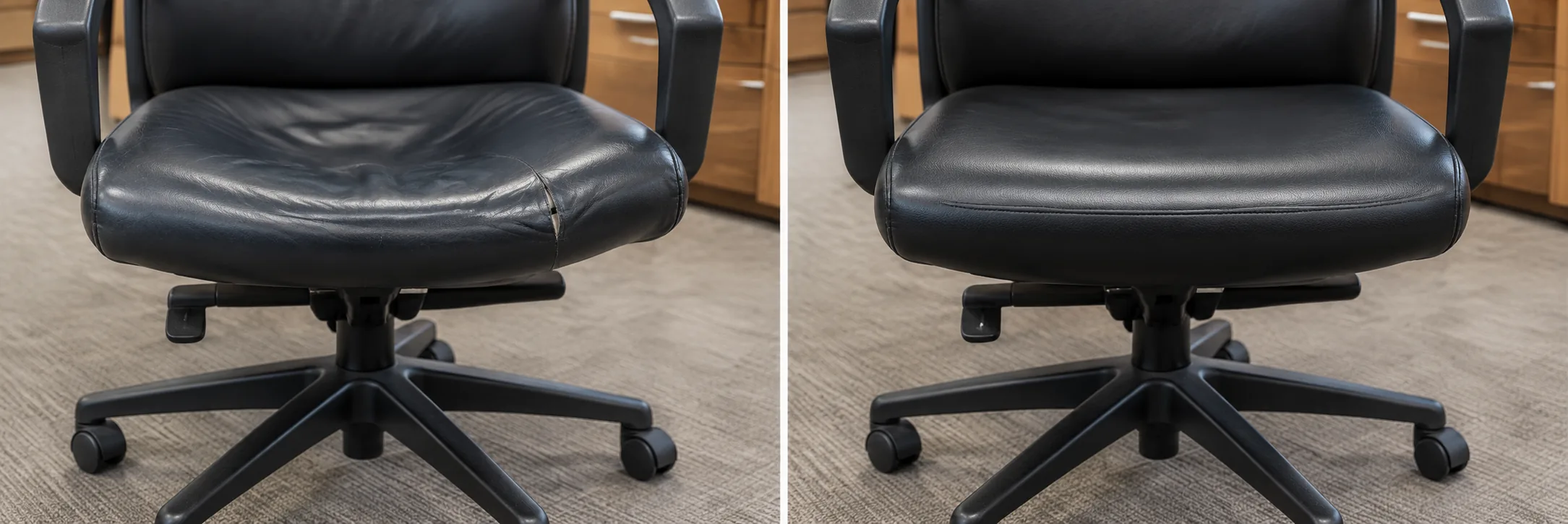
Office chair seat
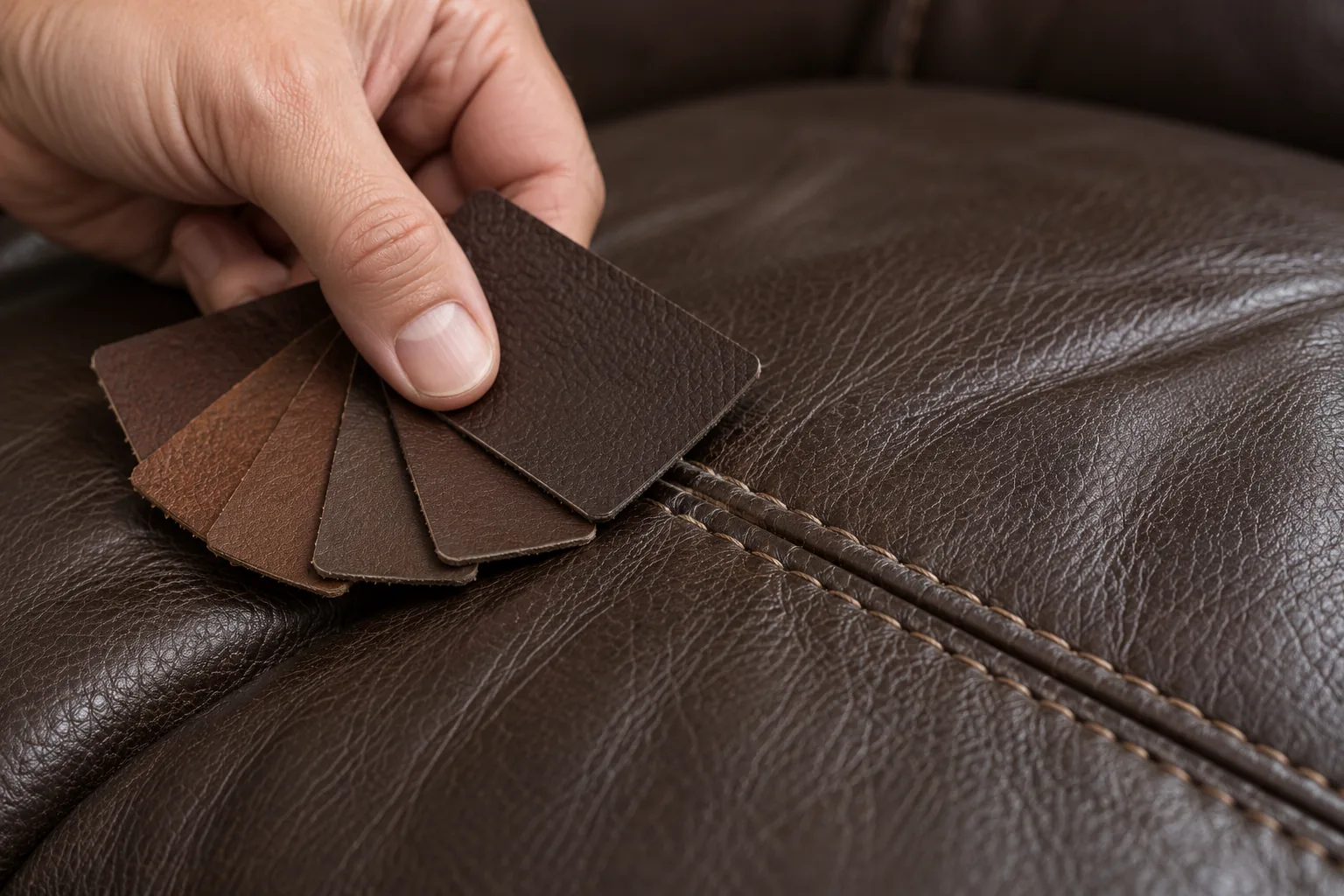
Upholstery that had failed across the whole seat. Recovered, so the chair matches the rest of the room again.
More completed work, on residential and commercial pieces alike: before and after gallery.
After the urgent one
Urgent today. Preventable next time.
Nearly every emergency furniture repair we attend was a small fault a few months earlier. Scheduled care is what stops the next one becoming a closed section.
Explore commercial maintenanceRegular inspections
Faults get found while they are still small.
Early seam repairs
An open seam only ever gets longer.
Protection on high-wear areas
Arms, edges and entry-side seats first.
Scheduled colour and surface care
Keeps the finish even so repairs stay invisible.
Before you send it over
Emergency furniture repair questions, answered plainly.
What counts as an emergency furniture repair?
Damage that takes a seat out of service: an open seam, a failed panel, a collapsed base, or anything with an exposed staple or frame. If a guest cannot safely sit on it, treat it as urgent.
How quickly can you review photos?
Photos marked as an emergency furniture repair are triaged ahead of routine enquiries. We will not quote a response time we cannot hold for every request, so send the photos and we will tell you where you sit.
Can the repair be done on site?
Often, yes. Seam, surface and panel work is regularly completed in the room. Structural work and full recovers usually need the workshop. On-site repairs.
Do you work outside business hours?
Yes. Evening, overnight and pre-opening visits are normal for us, because closing a dining room in service costs more than the repair. Off-hours service.
Can you provide a certificate of insurance?
Yes, naming your entity and property, issued before the first visit. COI and insurance documentation.
What if the matching material has to be ordered?
We say so at the photo stage. Where it matters, the piece is stabilised and made safe to use first, and the finishing visit follows once the material lands. Material matching.
Can you document the damage for a claim?
Yes. Before photos, a written scope, material notes and completion photos are standard on every emergency furniture repair, which is usually what an insurer or a property team asks for.
Do you handle pickup and delivery?
Yes. Pieces are counted, labelled, wrapped and returned to the room they came from. Pickup and delivery.
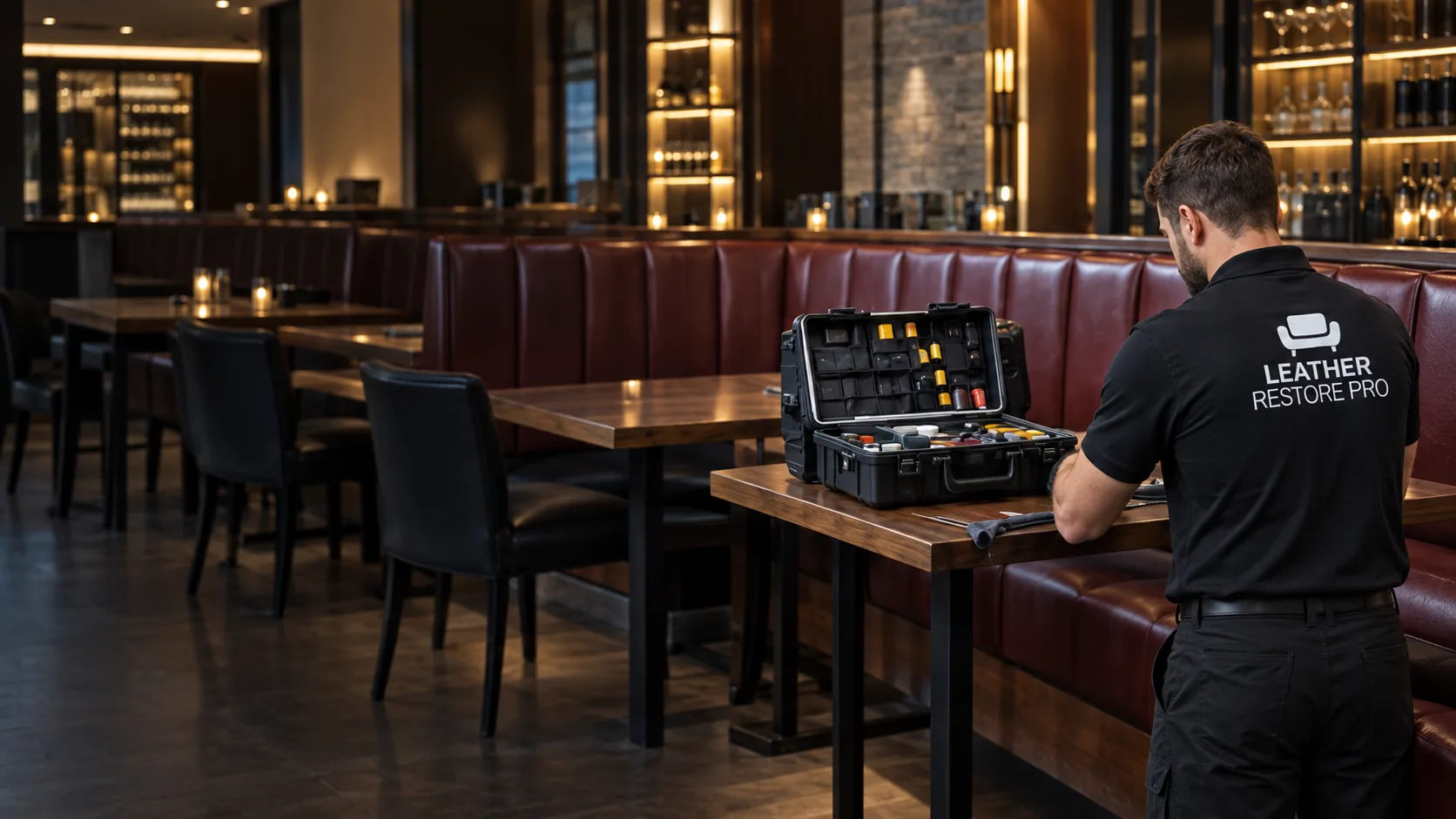
Send it now, not Monday
Send photos. Get a clear repair plan.
Wide shot, close shot, how many pieces and when the room is free. You will get back what failed and what it takes to put it right.