
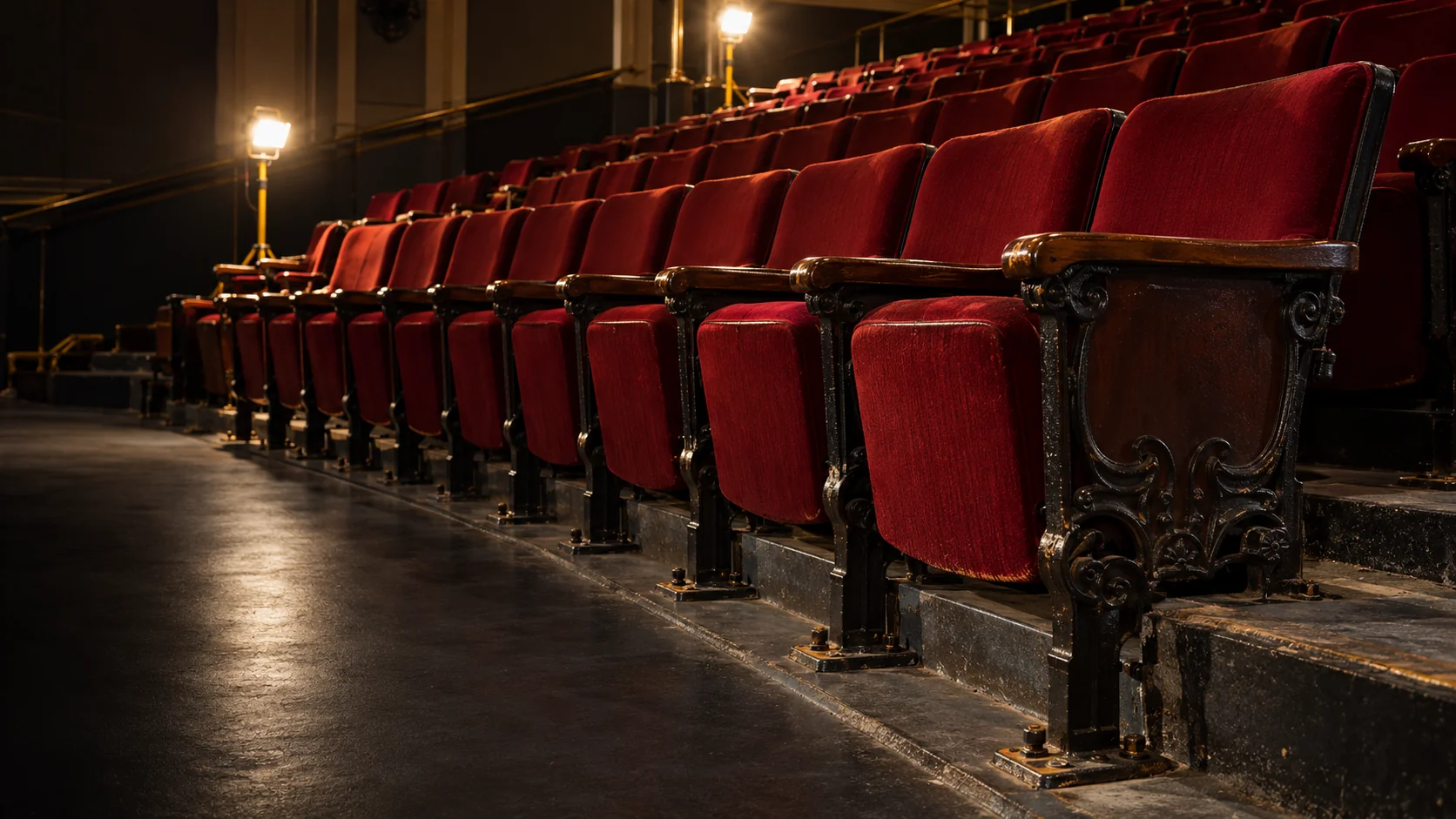
Nobody makes this seat anymore.
Most auditorium seating outlived the company that built it. The row is bolted, numbered and spaced to the floor, so the only way to keep it uniform is to rebuild what is already there.
Five parts, and only the soft ones are ours.
Auditorium seat repair means the upholstered half. The castings and floor fixings stay with your seating contractor, the trade covered by bodies like USITT, and we say so before quoting.
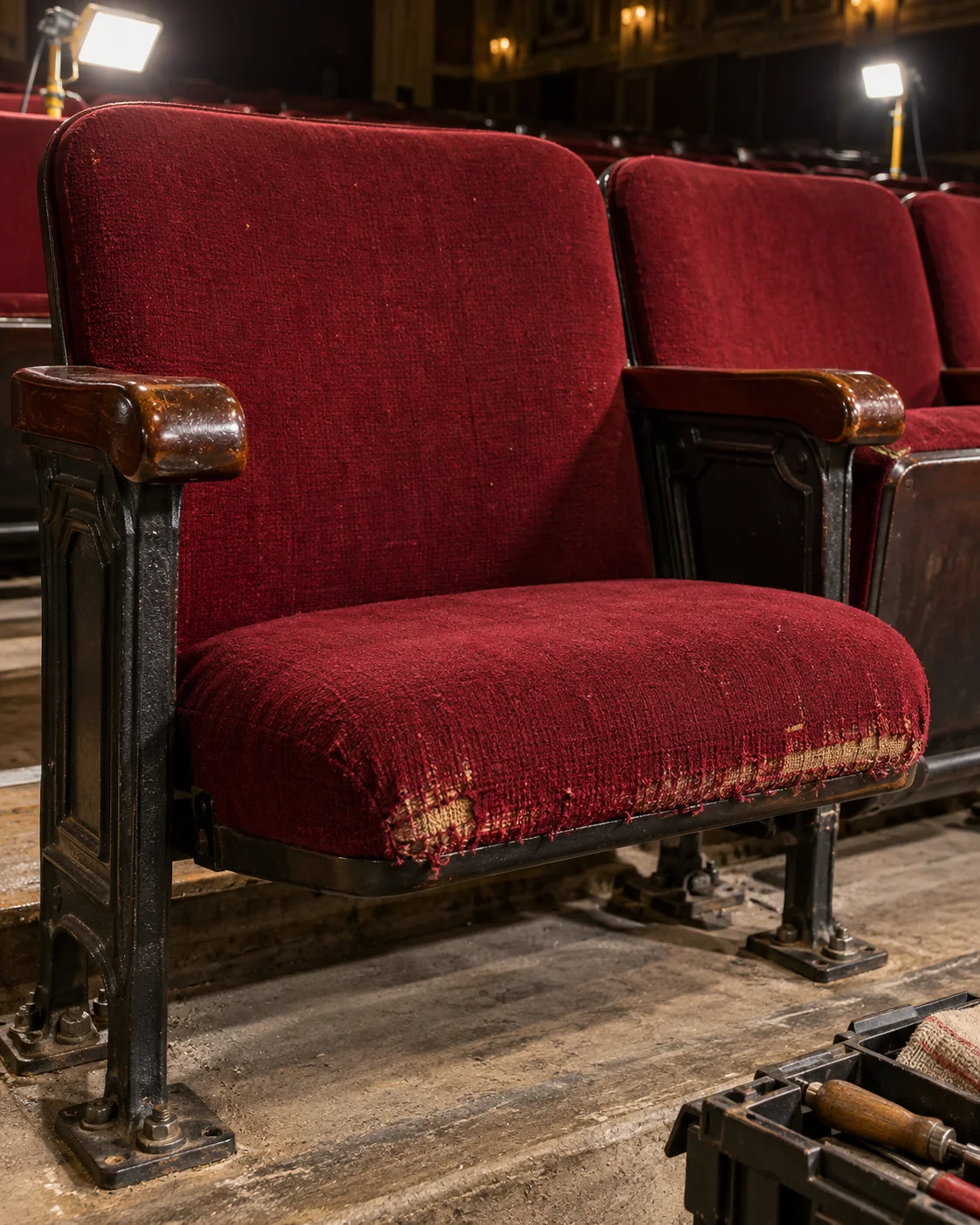
Seat pan
Worn through at the front edge, where every patron slides out.
We rebuild it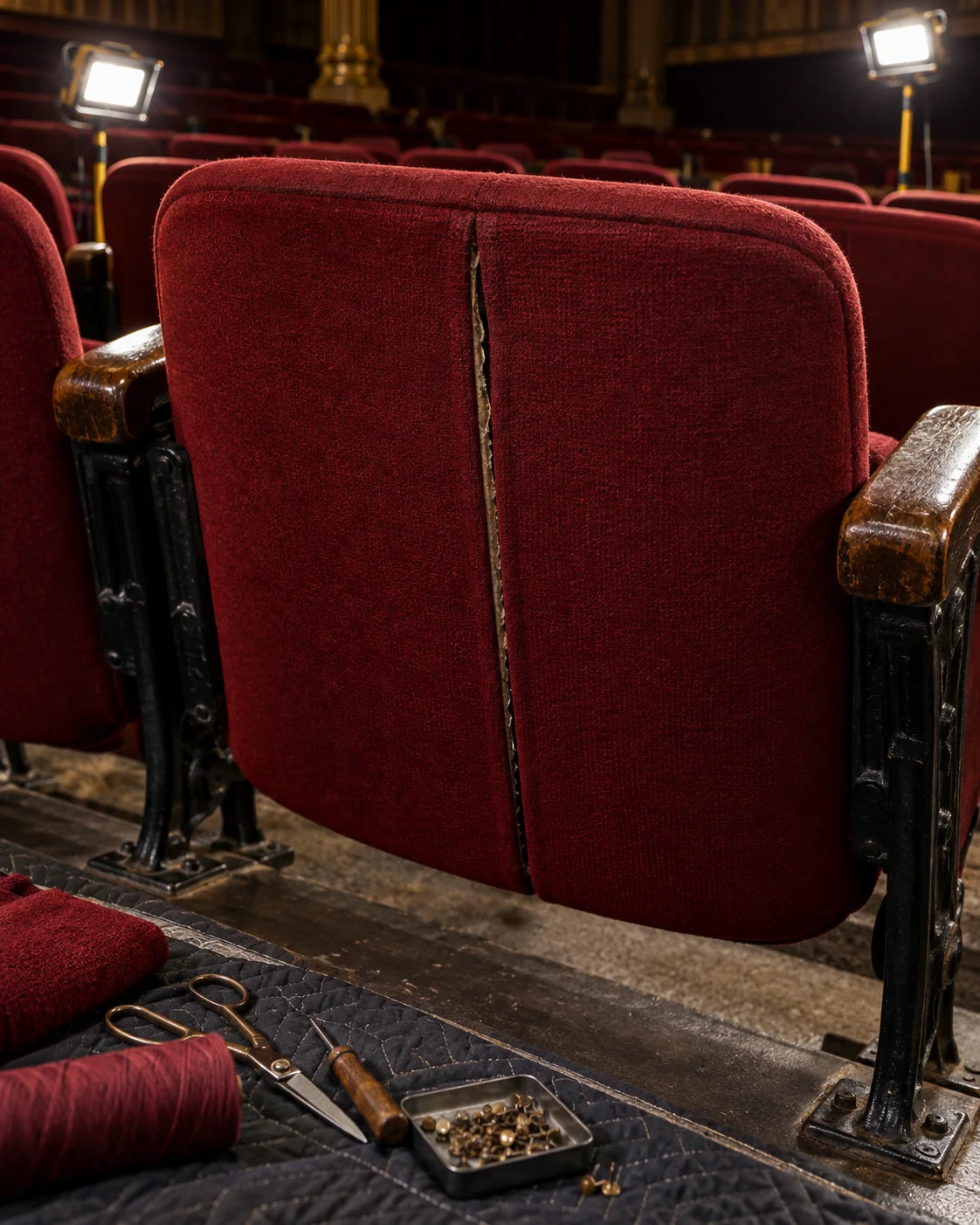
Back panel
Seams open where knees press from the row behind.
We rebuild it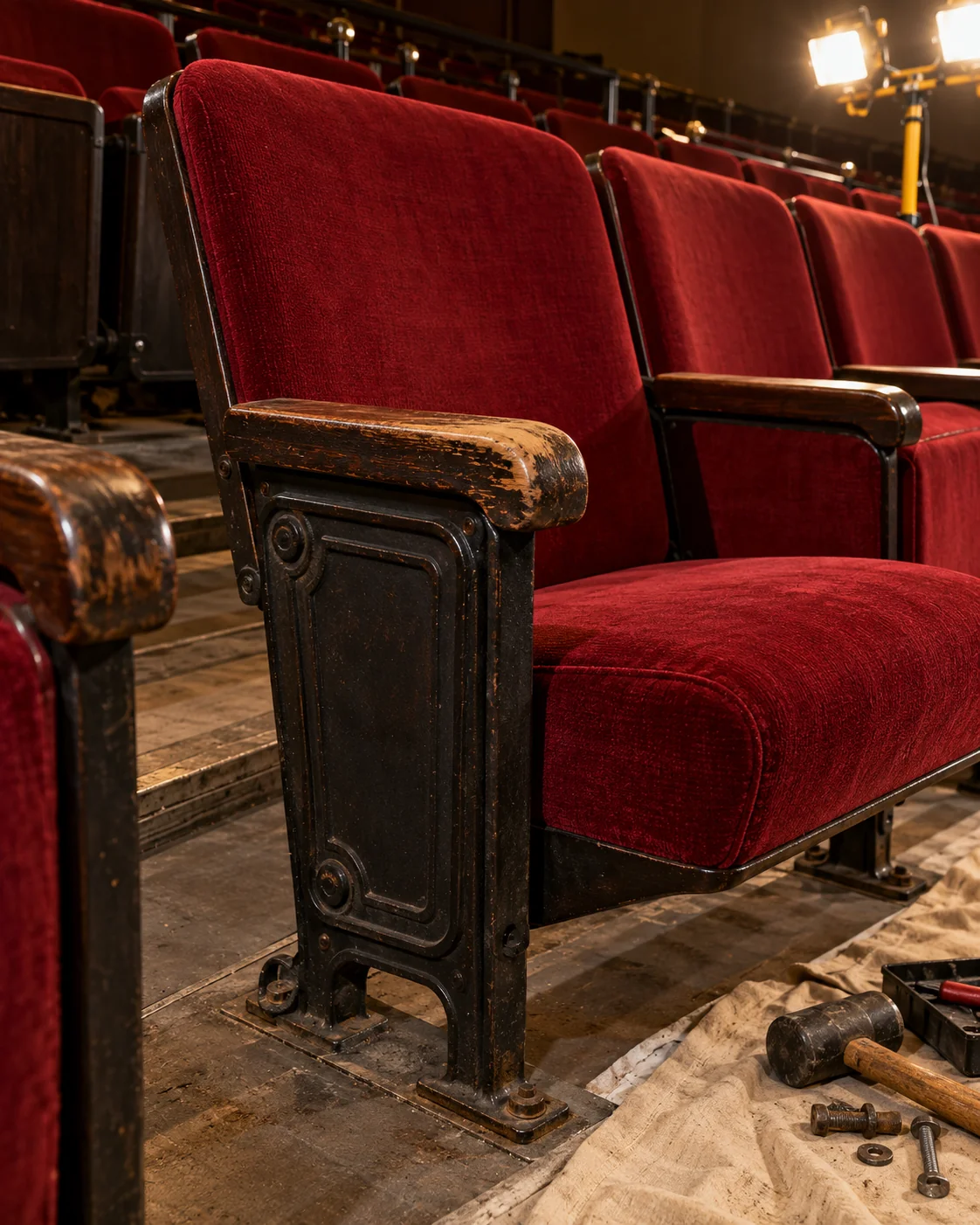
Arm caps
Rubbed bare on the aisle seats first, then down the row.
We rebuild it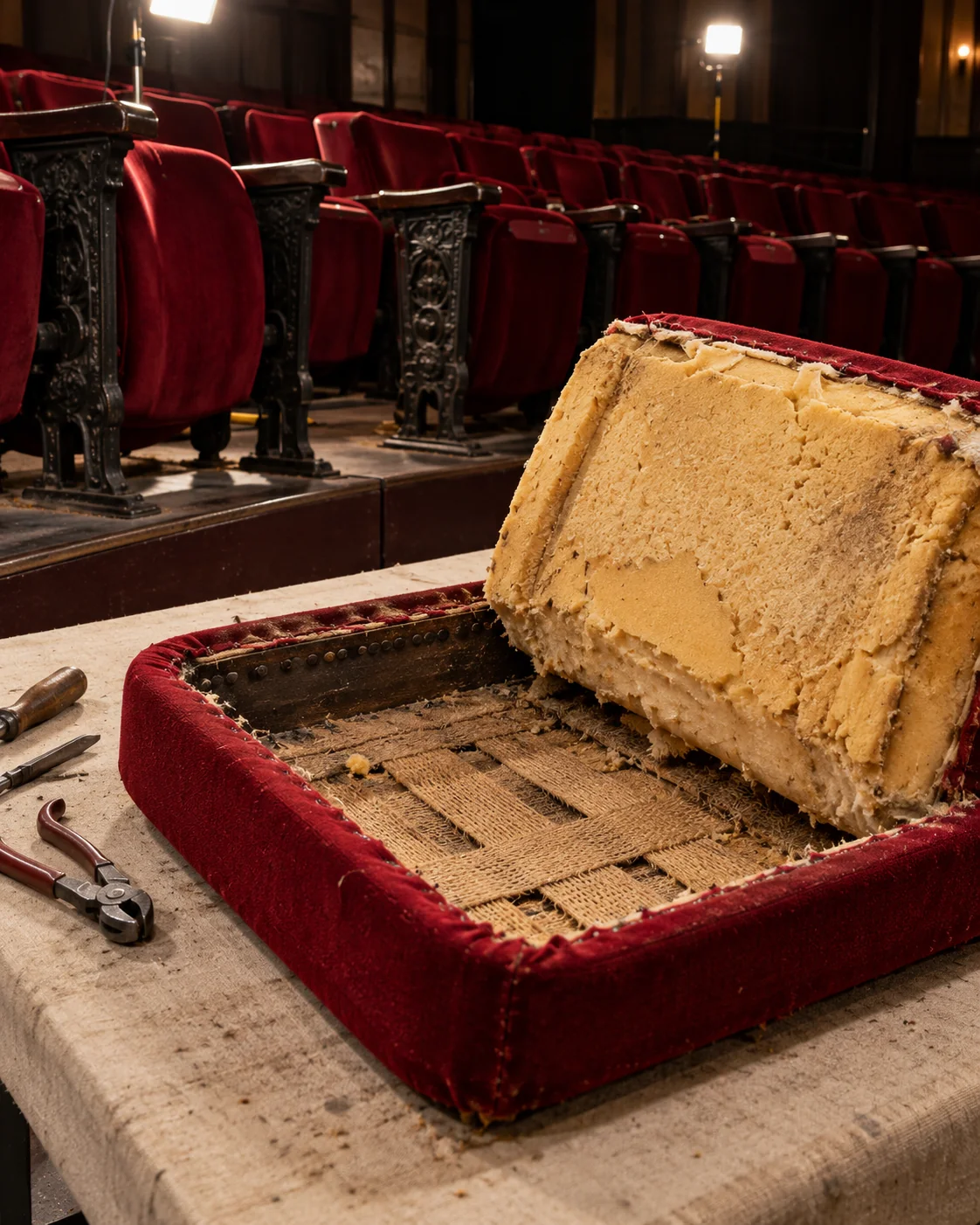
Foam
Packed flat after decades, so the seat sits low and hard.
We replace it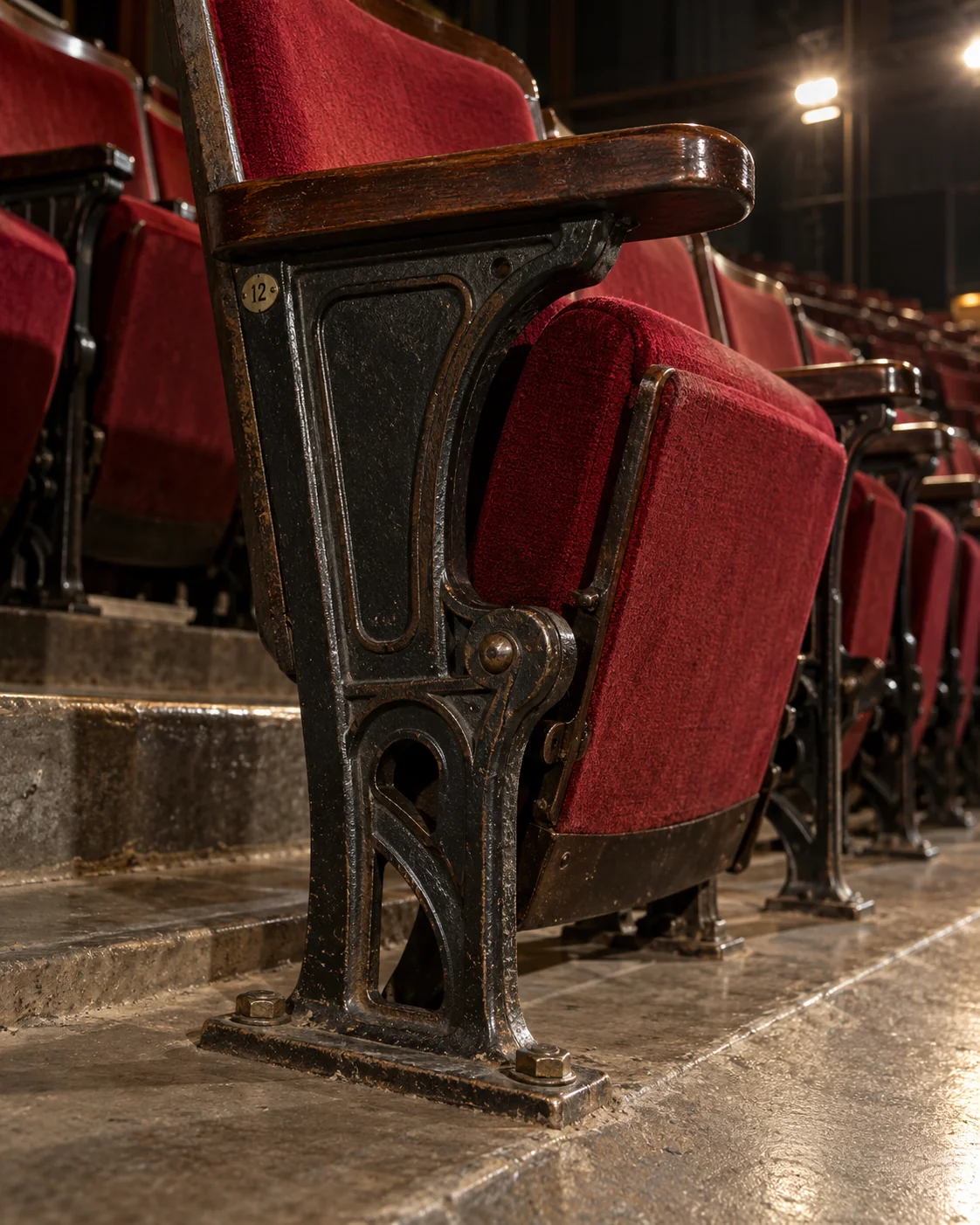
Standards and hinges
Cast iron, bolted to the floor, often older than the building's last renovation.
Your seating contractor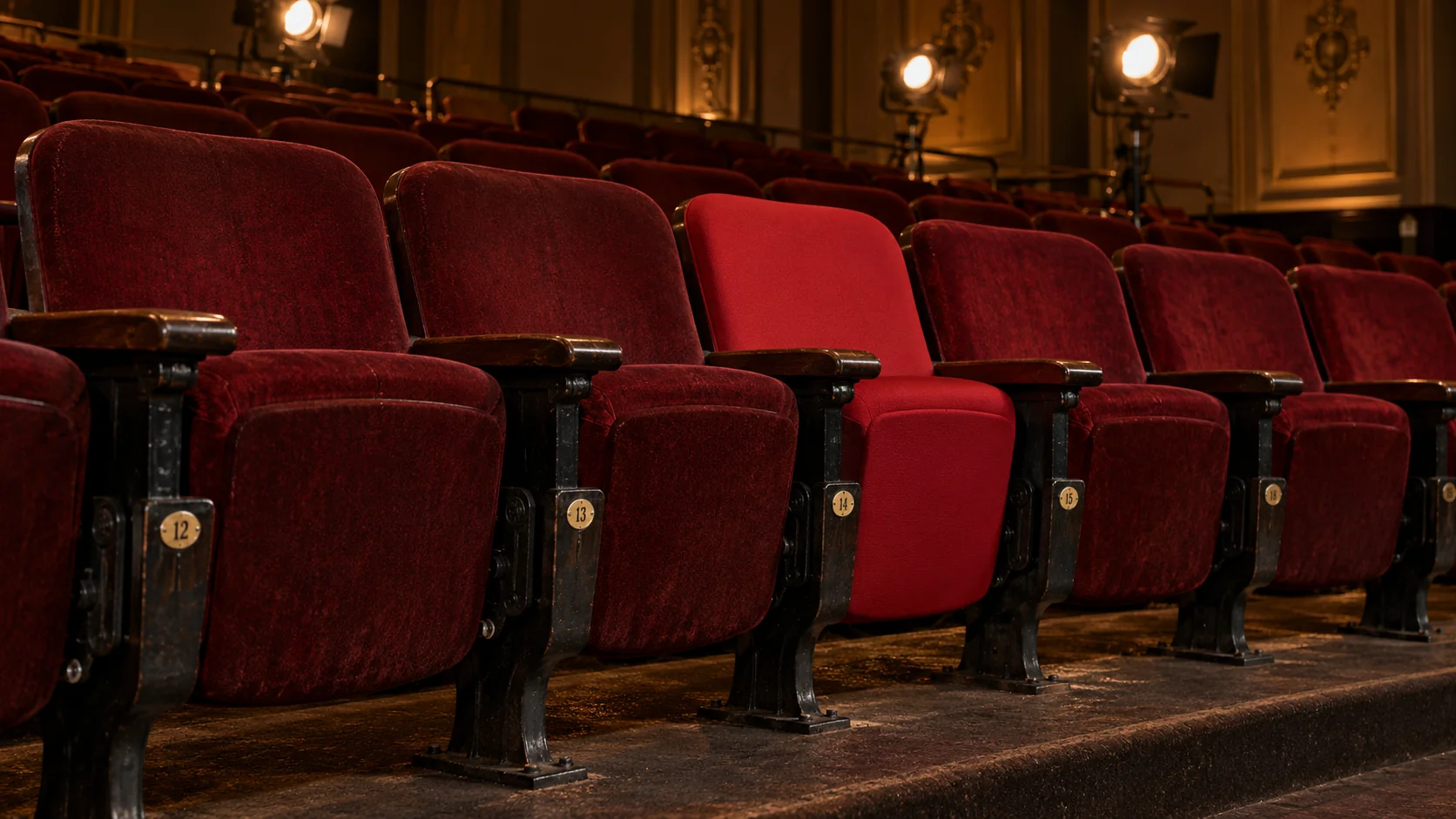
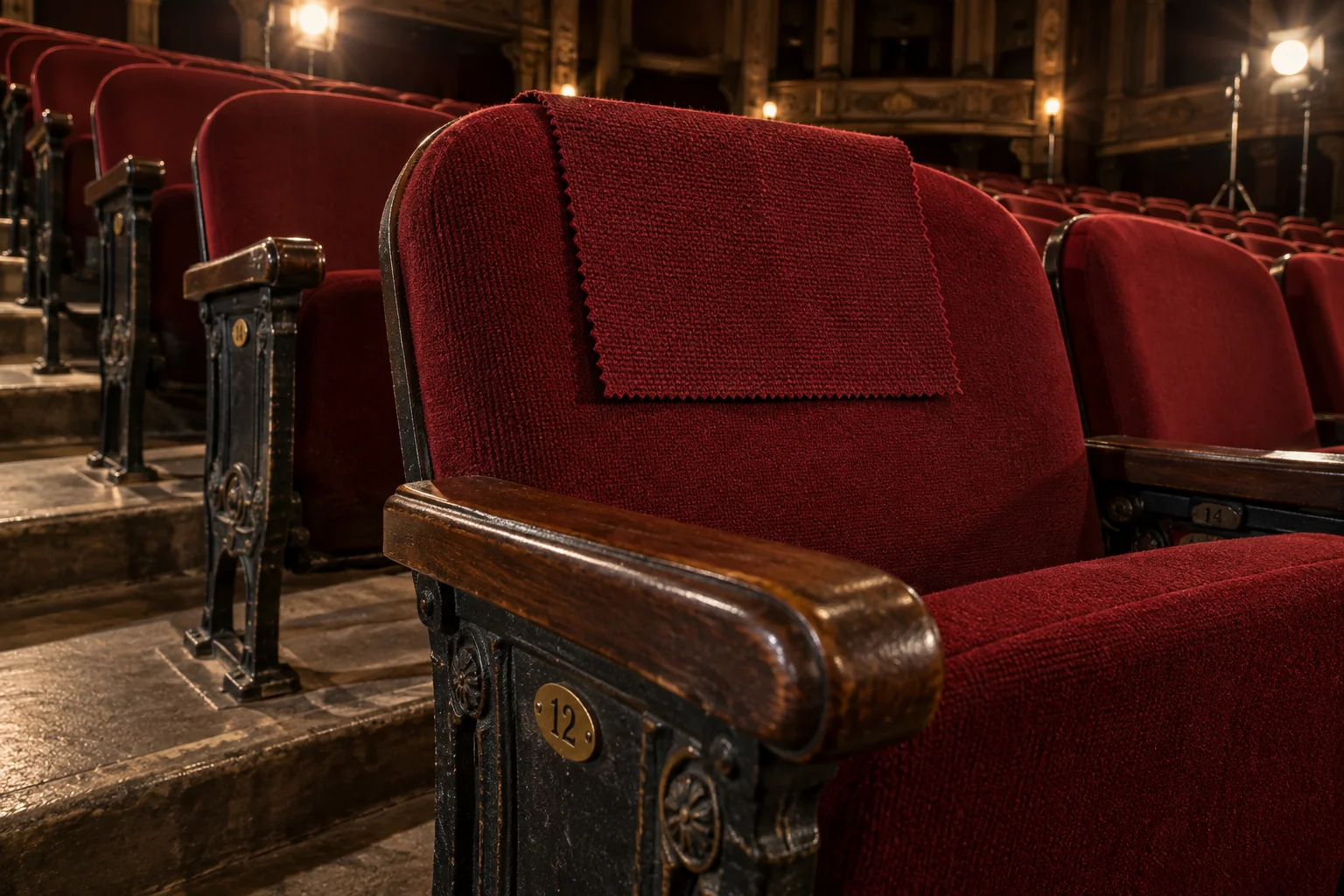
One new seat breaks the row it sits in.
Fixed seating is a single assembly, which is why auditorium seat repair beats replacement. Change one seat and you change the spacing, the sightline and the numbering the house sells by.
- A modern seat is a different width, so the row no longer lands on its floor fixings
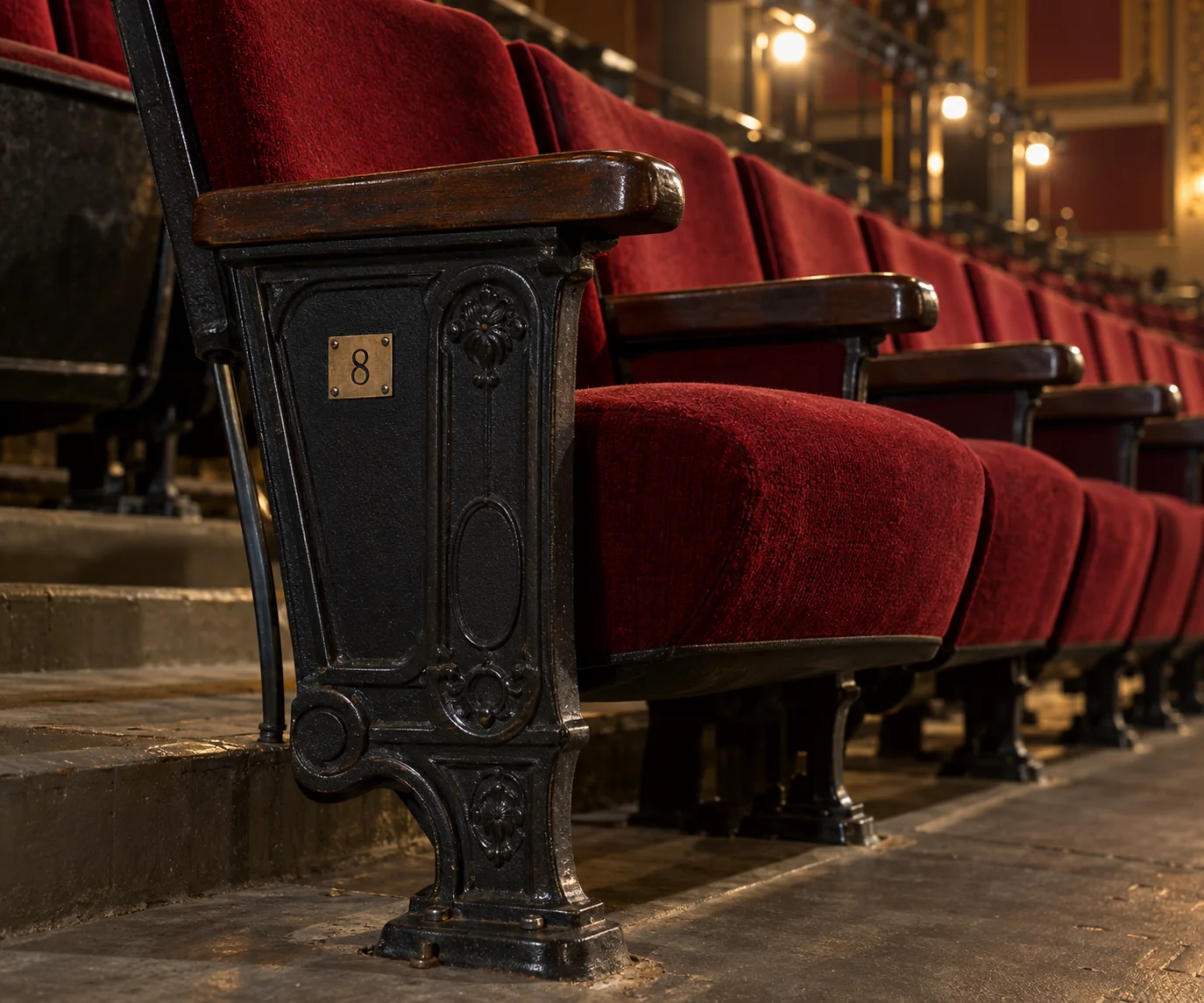
- Seat and row numbers are fixed to the standards, not to the seat
- A new frame sits at a different height, and patrons feel it before they see it
- The fabric will not match, and one bright seat reads from the back of the house
- Rebuilt covers are cut from one lot and material matched to the seats that stay
A school auditorium over the summer break.
Front rows worn through, back rows sound, and a seat model discontinued long before the current principal arrived: auditorium seat repair by block, in one closure.
- 01
Survey and number
Every seat walked and recorded by row and number, so the report matches the house plan.

- 02
Seats out in blocks
Pans and backs unbolted a block at a time; the standards stay fixed to the floor.
- 03
Strip, re-foam, re-cover
Old covers become the pattern; new foam is cut to the original profile.
- 04
Refit and test the fold
Each seat returns to its own number and is folded a dozen times before it is signed off.
- 05
House handed back
Rows reset, aisles cleared, and a list of the seats that are now sellable again.
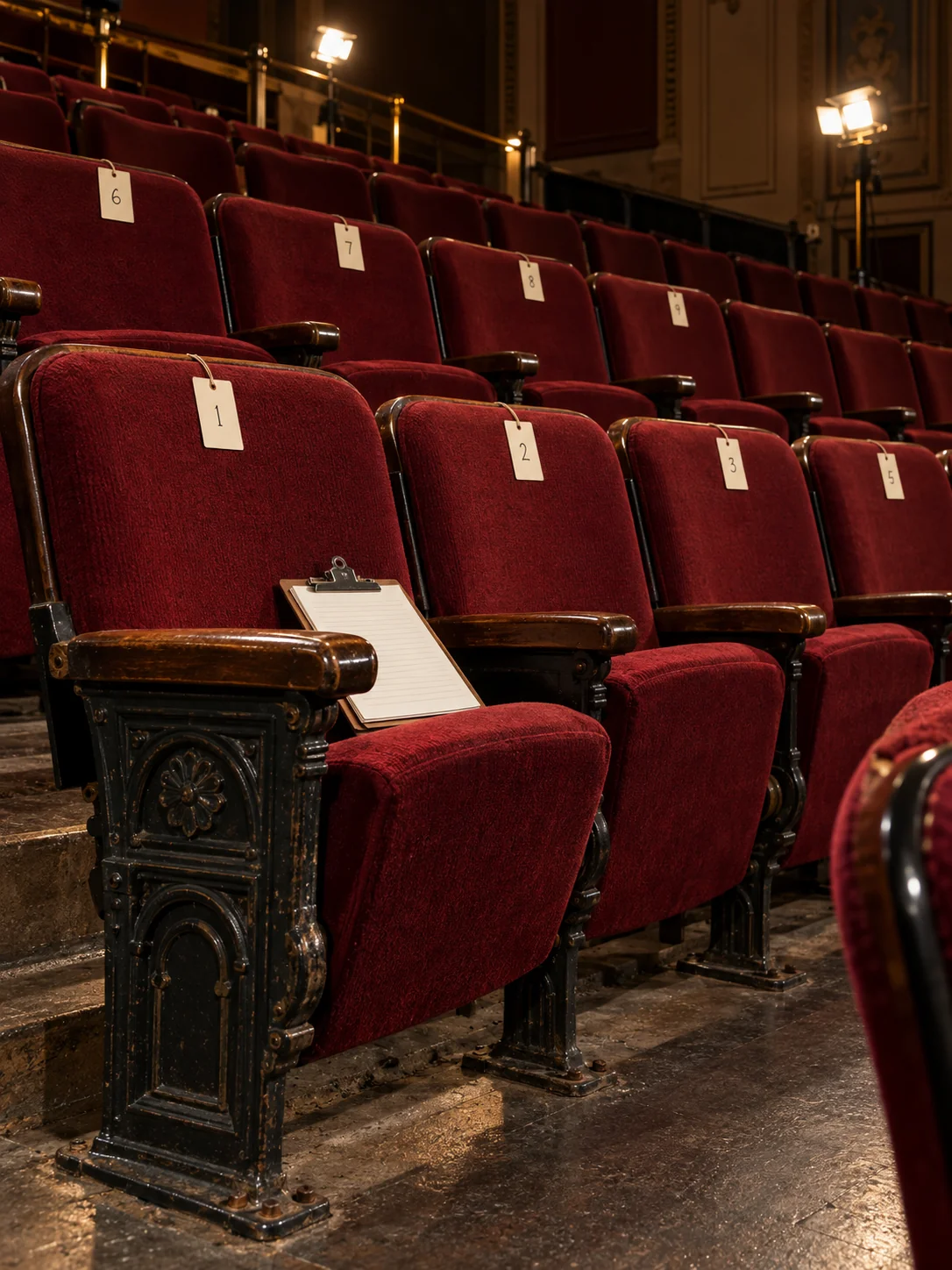
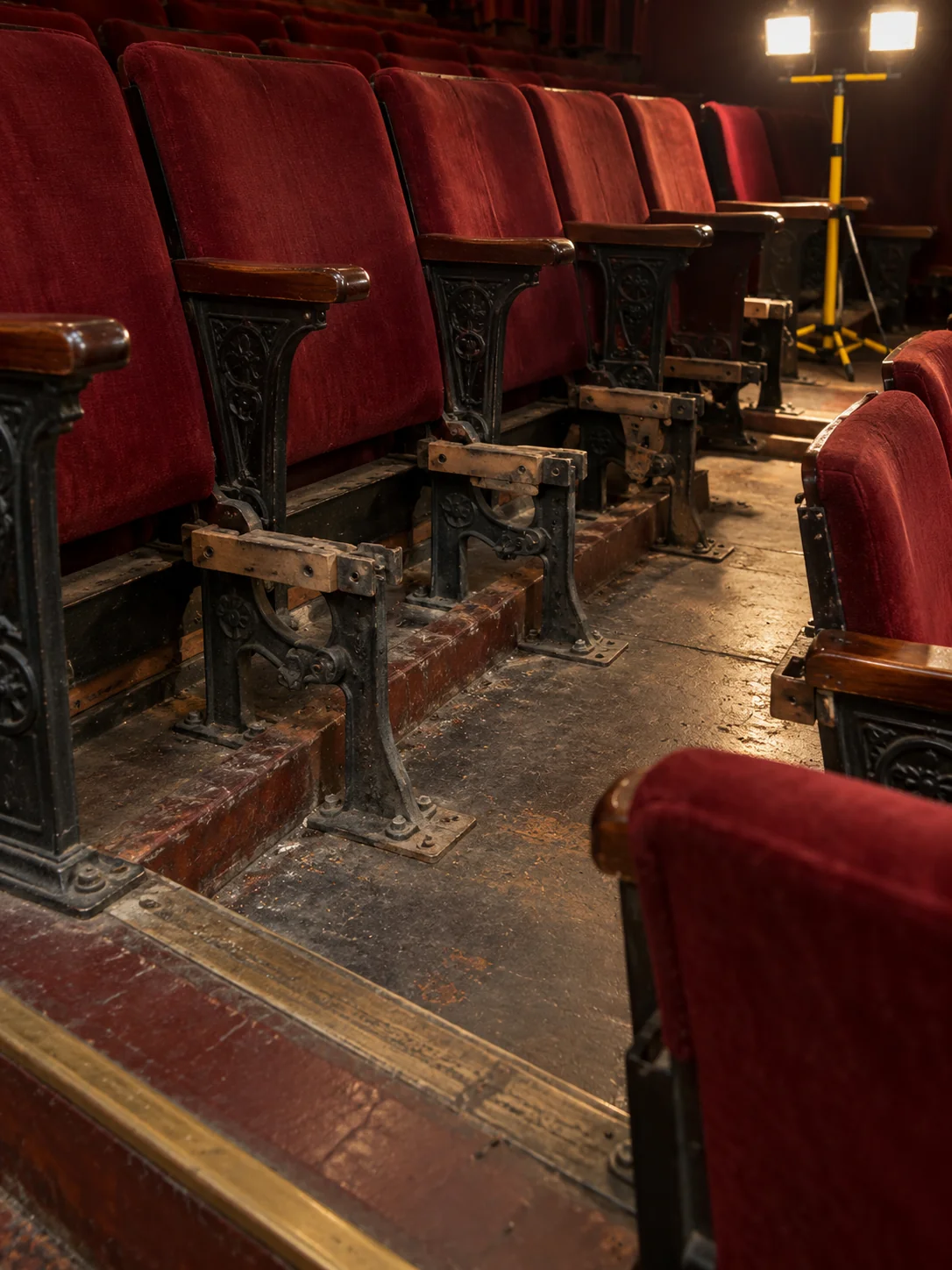
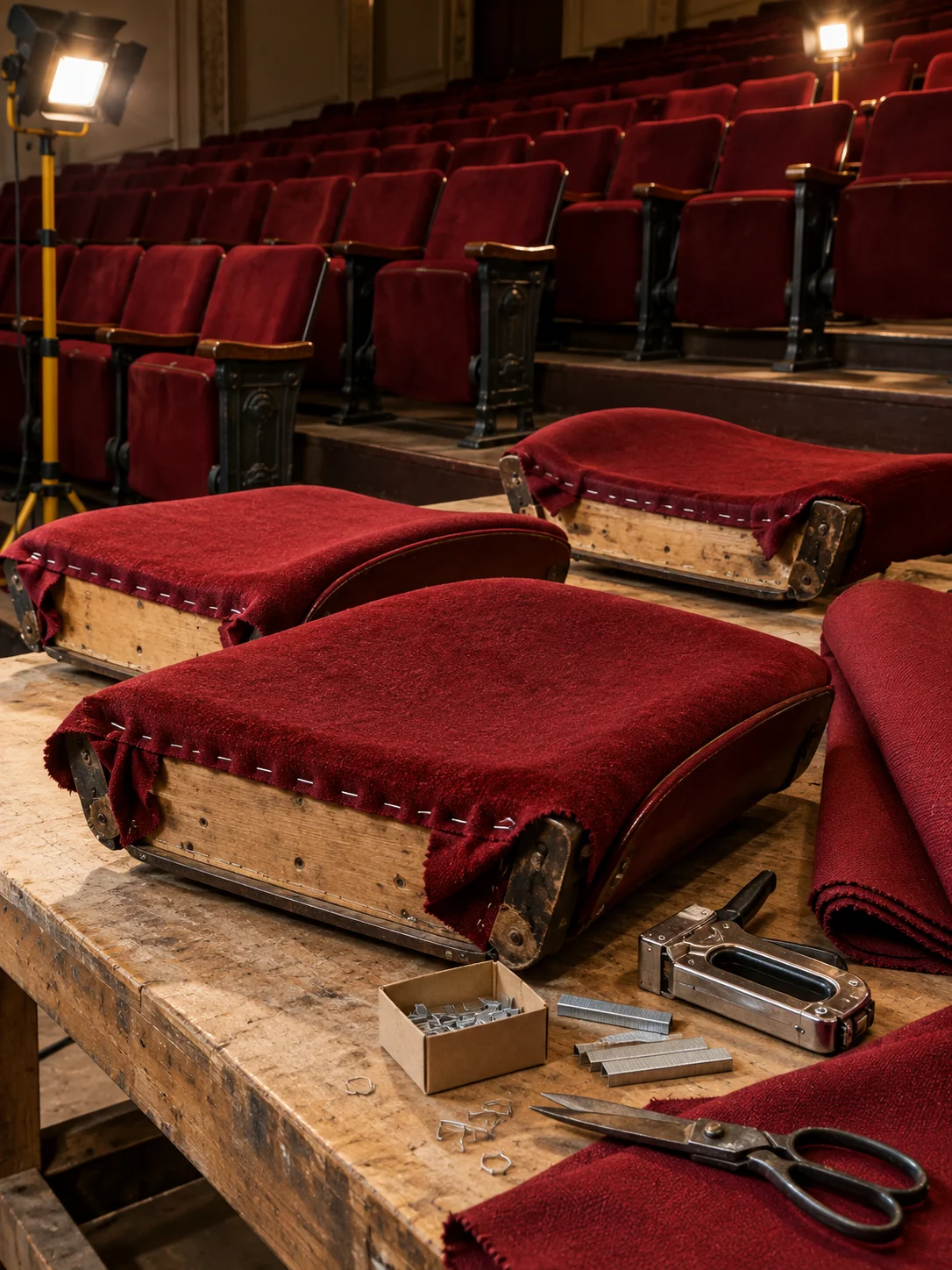
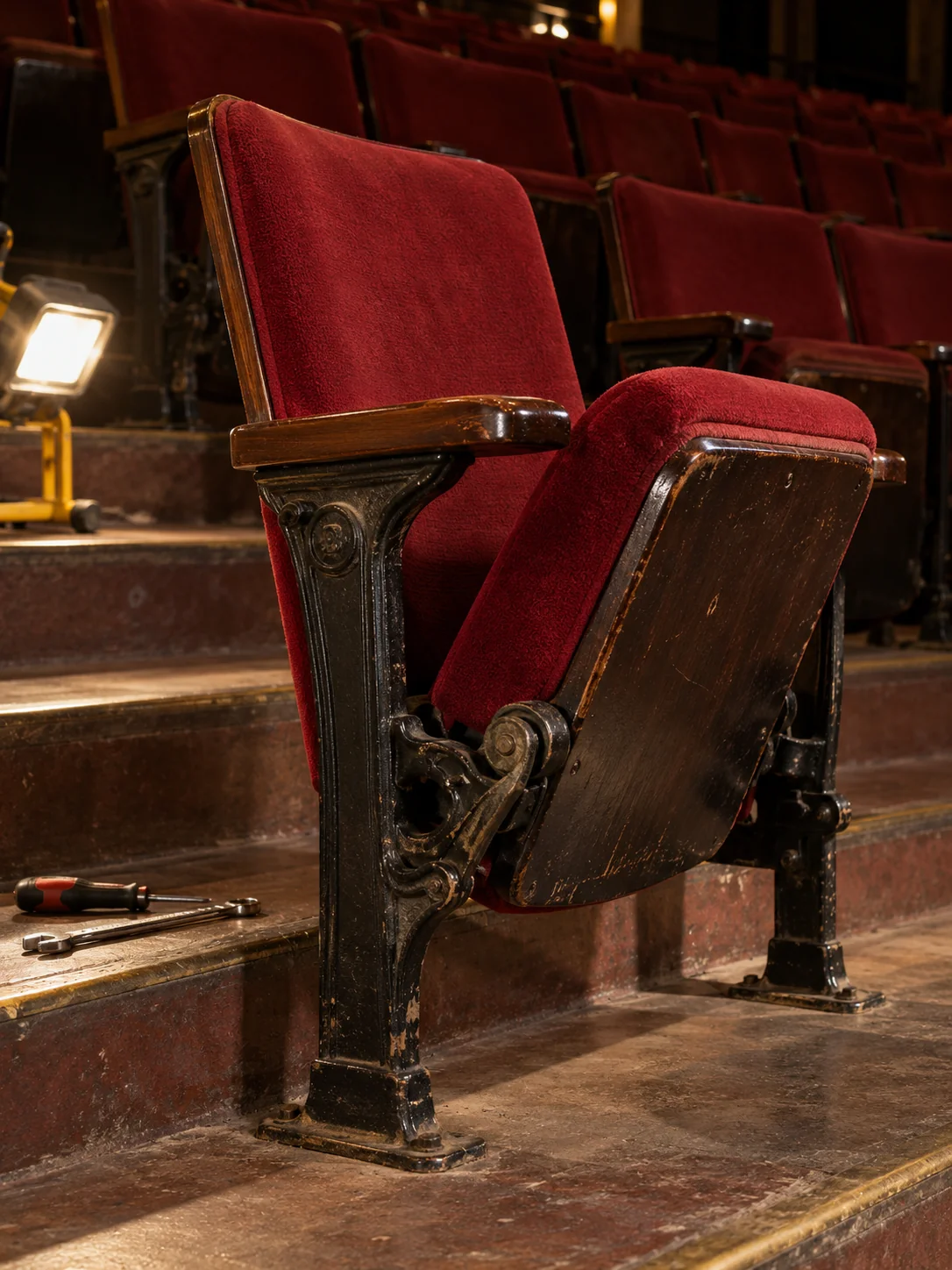
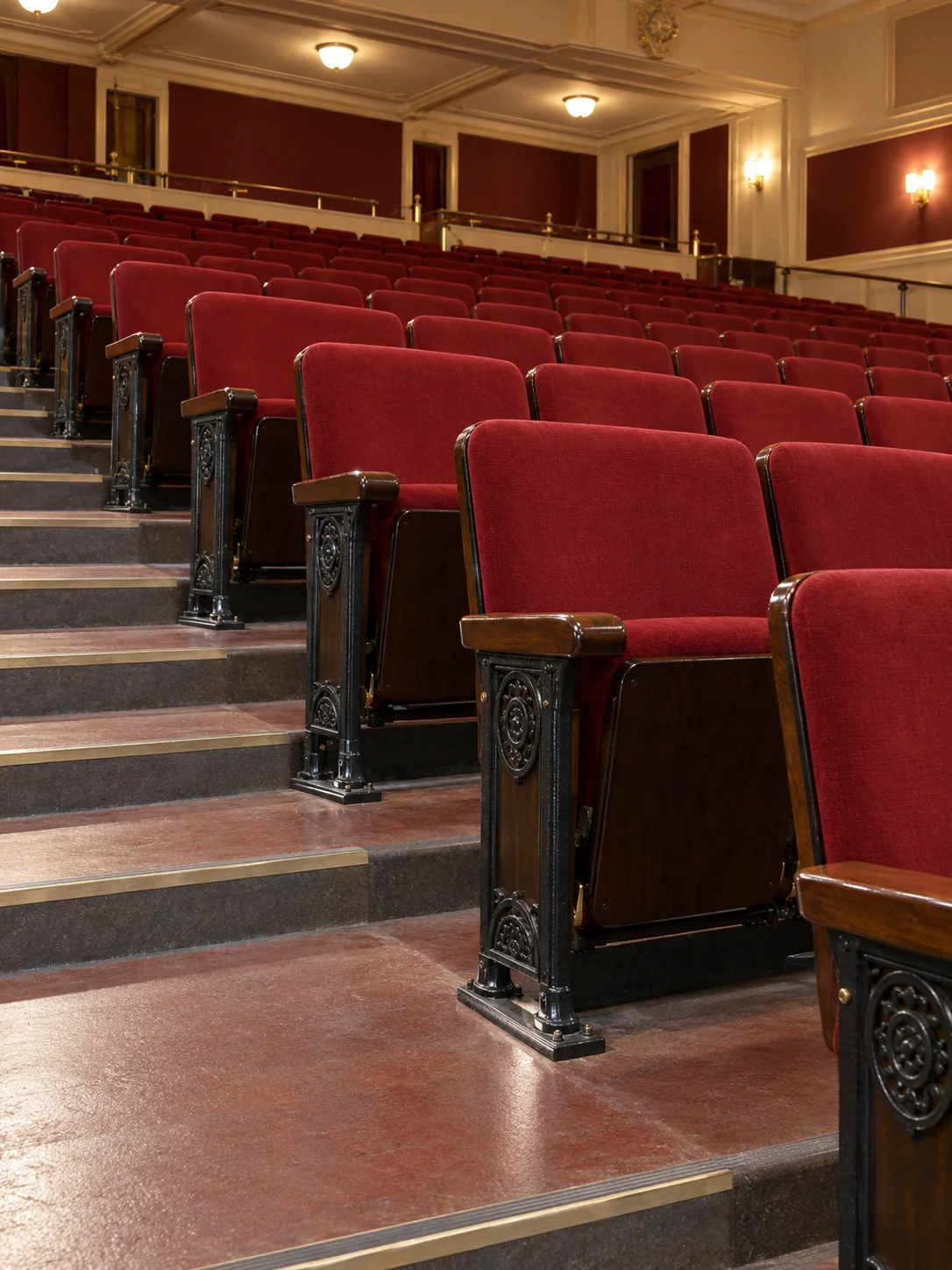
Closures run through off-hours service and bulk projects, with a certificate of insurance filed before the first day on site.
What we take, and what stays bolted down.
| Part | Usual fault | Where it is worked | Whose job |
|---|---|---|---|
| Seat pans | Fabric through at the nose, foam flat | Unbolted, worked in the shop | Ours |
| Back panels | Split seams, kicked corners | Shop, with the pans | Ours |
| Arm caps | Rubbed bare, edges chipped | In the house or the shop | Ours |
| Aisle and end panels | Scuffed by traffic and cleaning carts | In the house | Ours |
| Standards, hinges, fixings | Broken castings, loose floor bolts | In place | Your seating contractor |
The same seat, back in its own number.
More in the before and after gallery.
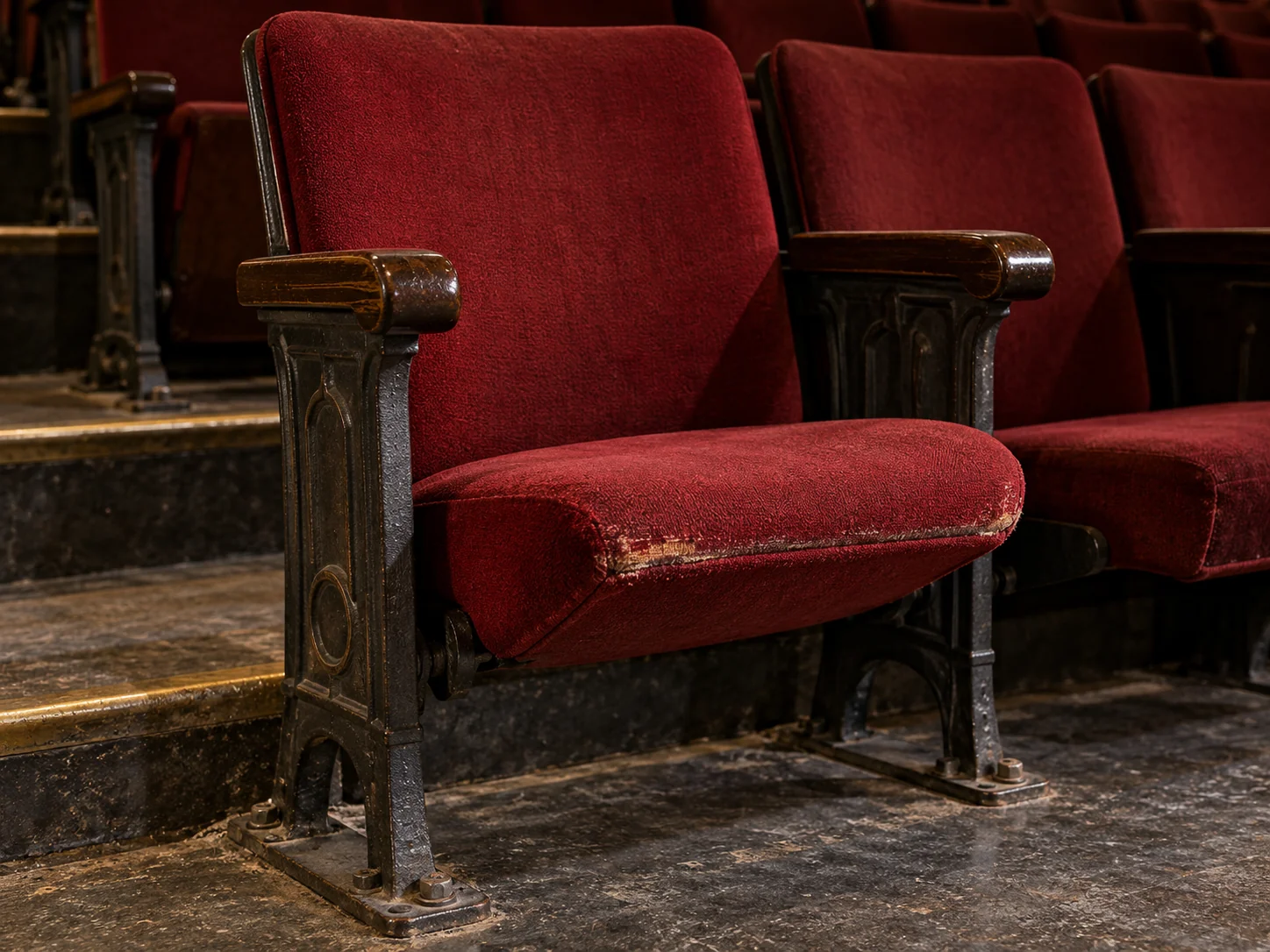
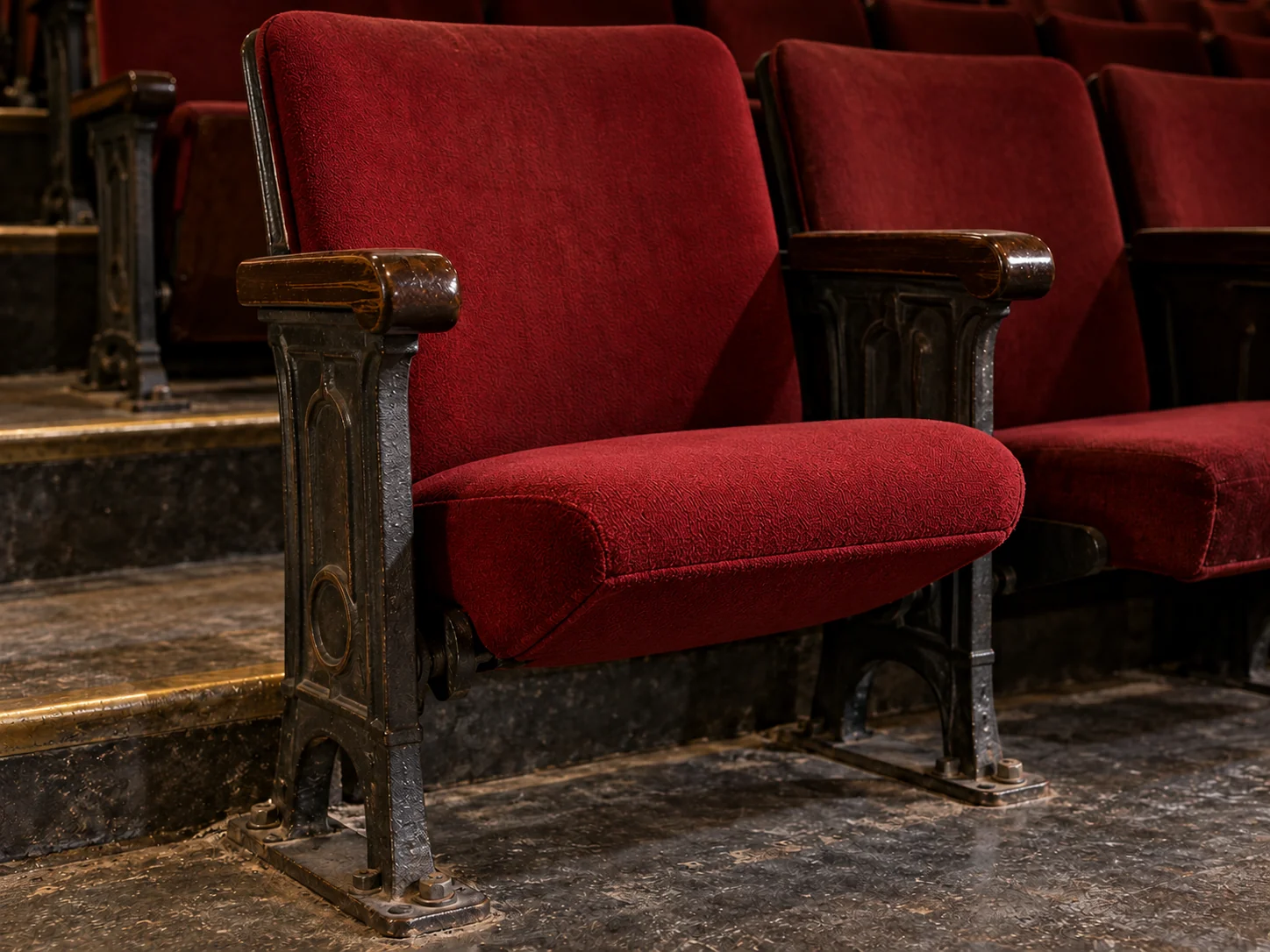
Single seat. Pan re-foamed and recovered, refitted to the same standard and number.
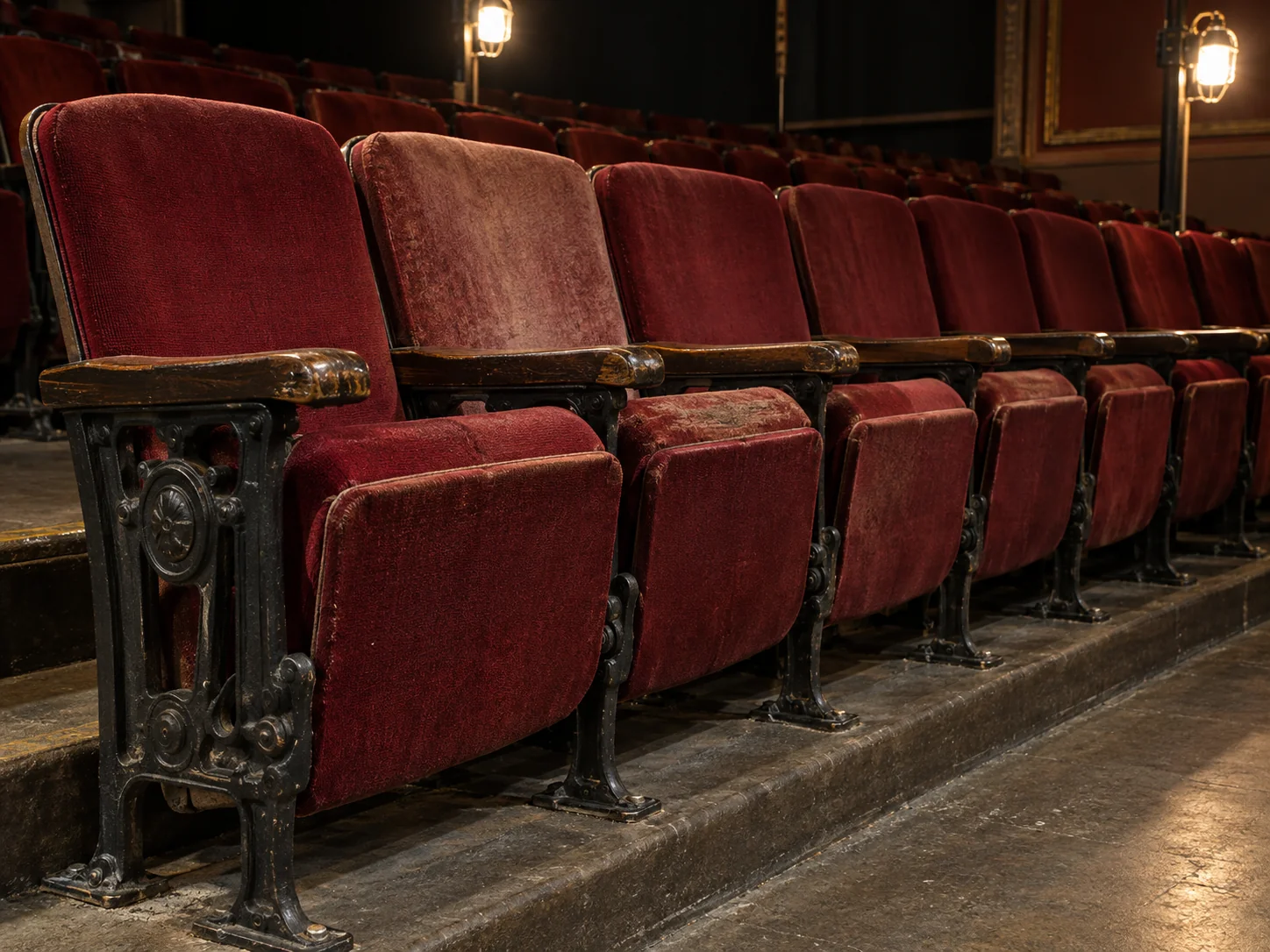
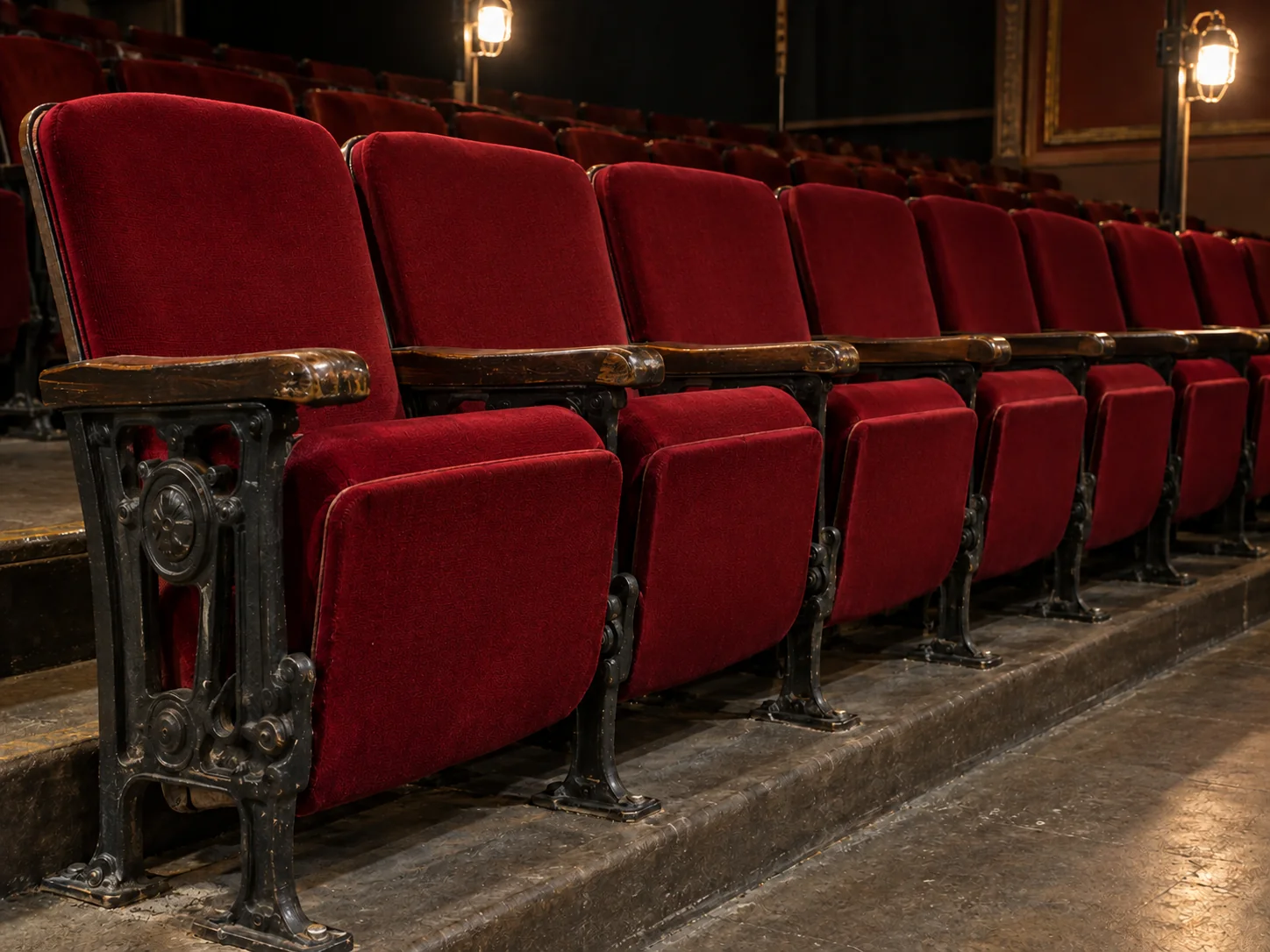
Full row. Done as one block so the run reads evenly from the back of the house.
If the house needs more than repairs.
Around the house.
Auditorium seat repair sits on the entertainment venues hub, alongside theater seat repair, cinema work and studio furniture.
What house managers ask.
Our seat model is discontinued. Can it still be repaired?
Yes. The upholstered parts are rebuilt on your original pans and frames, so the seat keeps the same width, height and spacing as the rest of the row.
Why not just replace the broken seats?
A new seat is a different width and profile, so it breaks the row spacing and the numbering, and it never matches the fabric beside it.
How many seats can be done in a closure?
We work in blocks between events or across a school break, taking seats out row by row so the house can still be opened if it has to be.
Can you match fabric across a phased project?
The fabric is specified once and cut from one lot per phase, with the spec kept on file so later blocks still match the seats already done.
Do you repair the mechanisms too?
We repair the upholstered half and refit it to your hardware. Broken castings, gravity lifts and floor fixings go to your seating contractor.
Send the seats you cannot sell.
A list of row and seat numbers, plus one photo of a typical fault, is enough to price auditorium seat repair by block. Or book a seat survey and we will walk the house.