
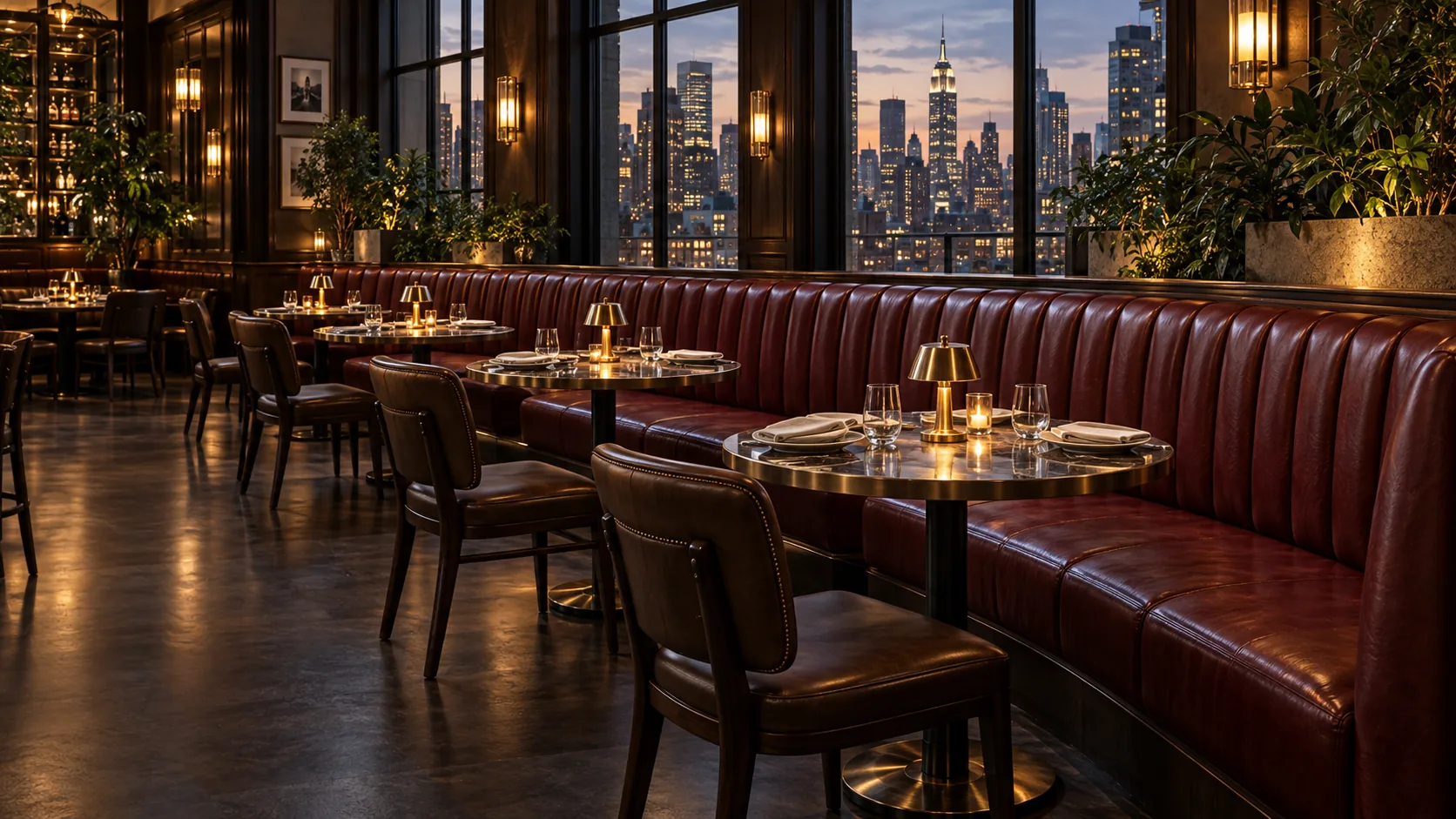
A booth wears in three layers. You only ever see one.
The cover fails where you can point at it. The foam under it fails quietly, months earlier. The carcass almost never fails — which is why restaurant seating repair NYC happens overnight, in place.
Three layers, three completely different lifespans.
A stack of three, wearing out on different schedules. Scoping off the layer you can see is how restaurant seating repair NYC turns into a recover it never needed.
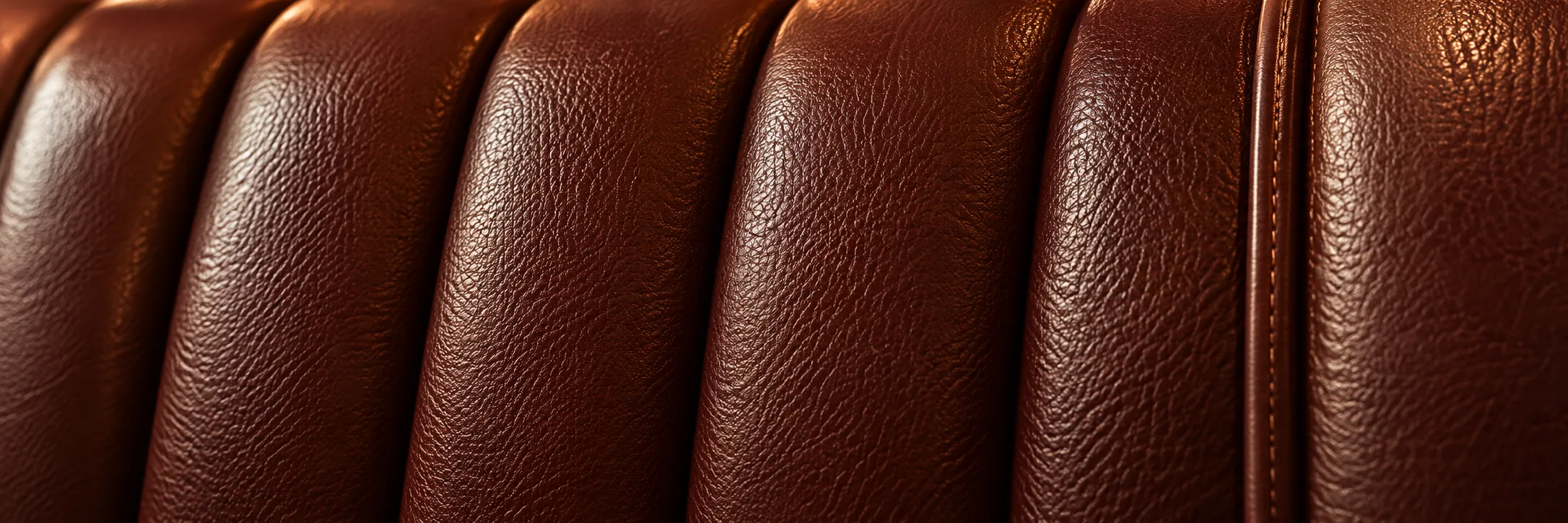
The cover. Visible, and it fails at edges.
The layer everyone photographs, and where most restaurant seating repair NYC stops. It gives way at piping, seams, roll edges and the front lip — the lines that flex — and it is the only layer a room gets to pick a color for.
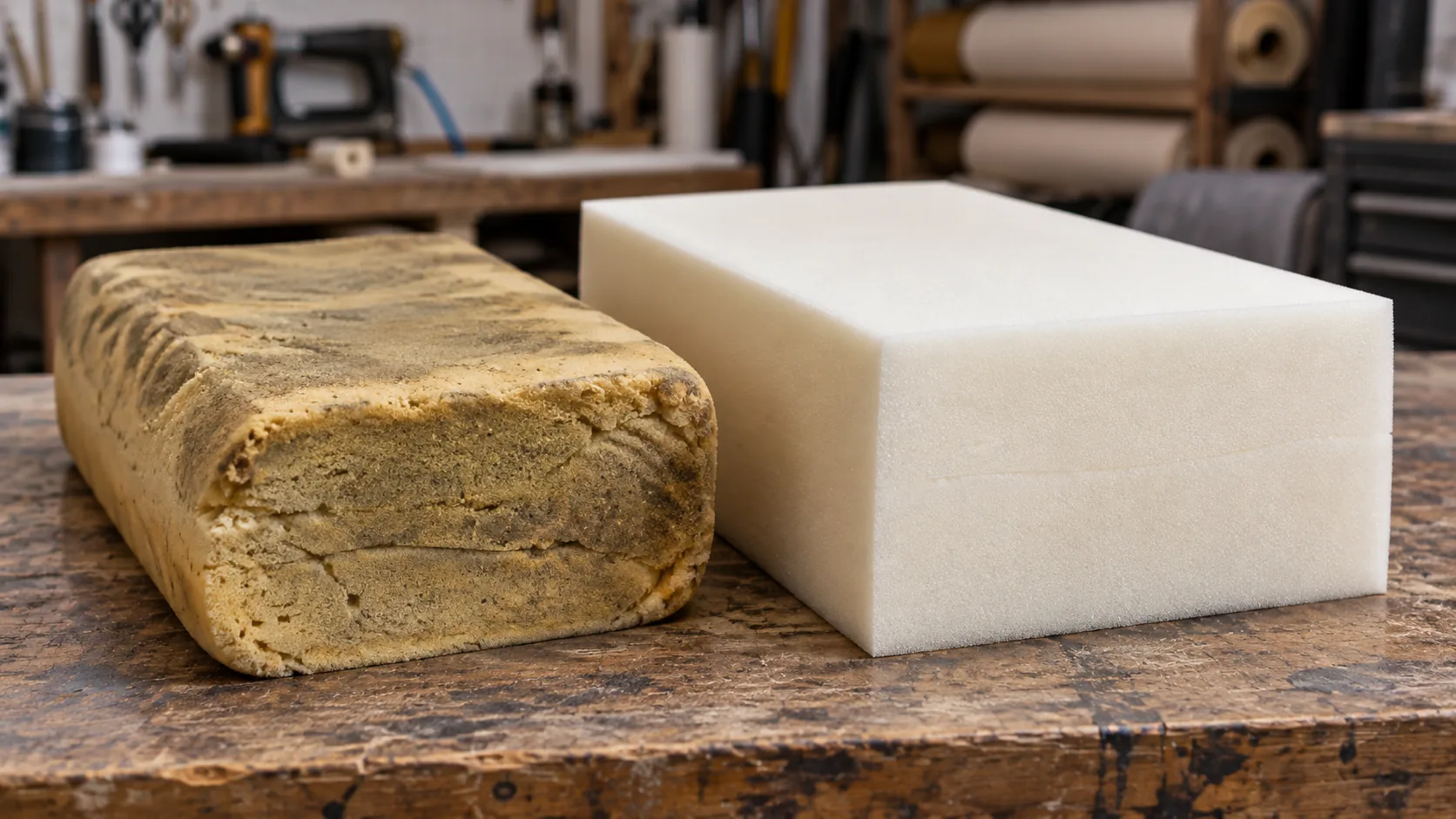
The soft middle. It dies without a mark on it.
Foam oxidises; webbing loses tension. Both happen under an intact cover, so nothing looks wrong — just a bay guests stop choosing and a seat that sits low.
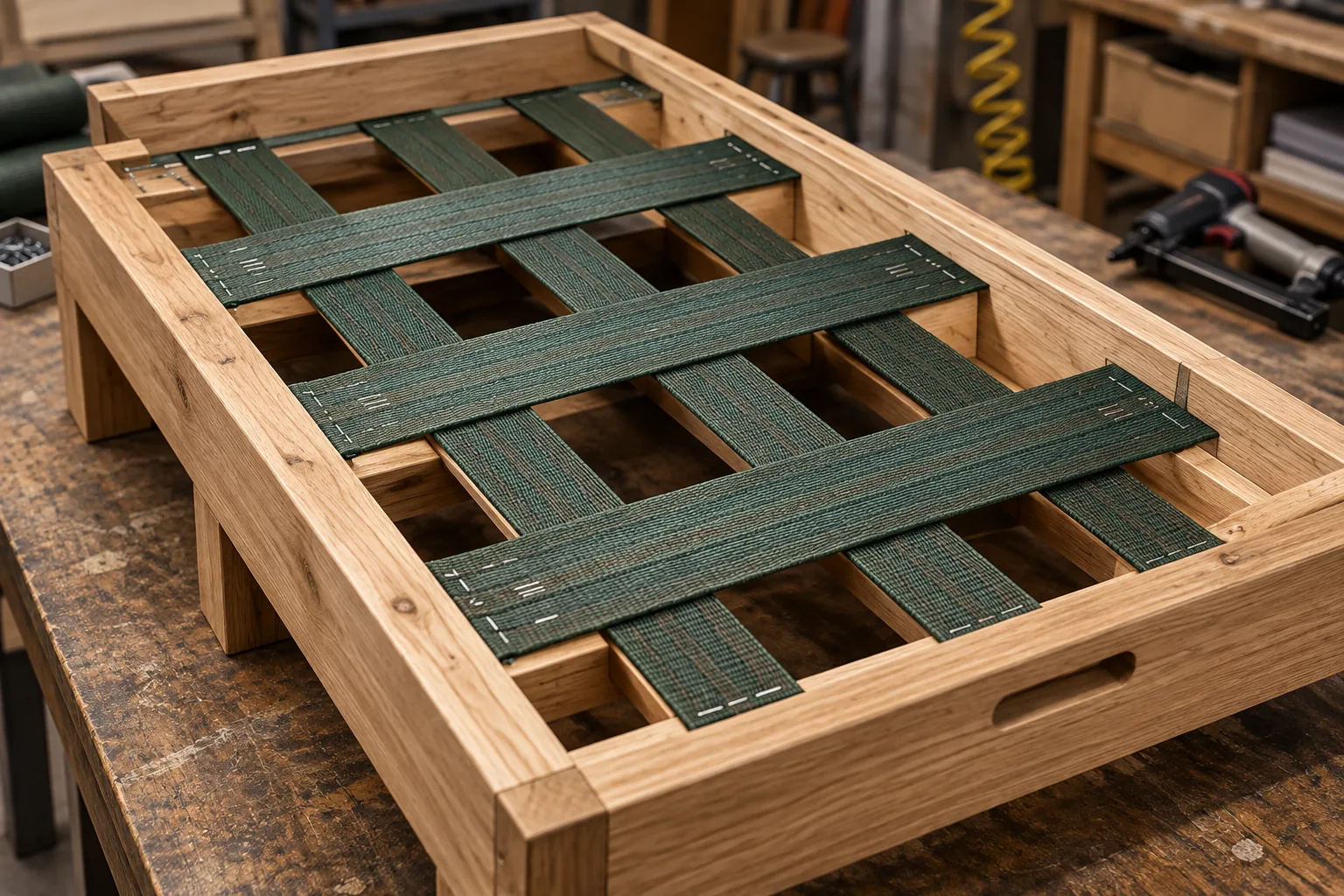
The carcass. It is joinery, and it stays.
Timber frame, plinth and fixings, built like joinery — makers of fixed seating like Figueras build to the same logic. Because the carcass stays, everything above it is replaced around it, at night.
Six covers. Five of them gave way on a line, not a surface.
All cover faults, which is why restaurant seating repair NYC is quoted per bay. Contract covers are rated for it — makers like Pindler publish abrasion abrasion figures — but no rating covers a welt knelt on for six years.
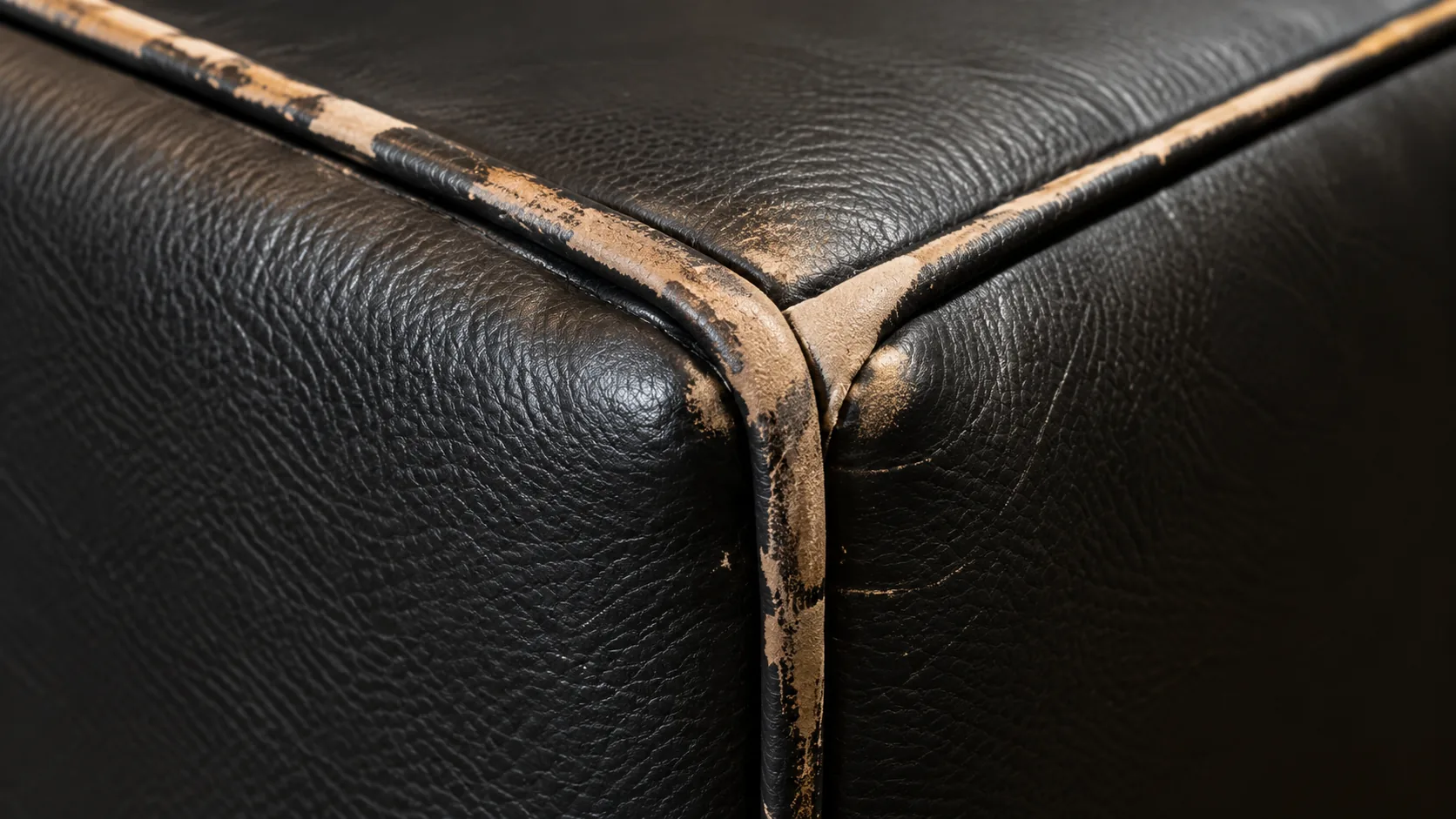
Piping, worn through
The welt stands proudest, so restaurant seating repair NYC starts here. Once the backing shows, the cord has to be re-covered.
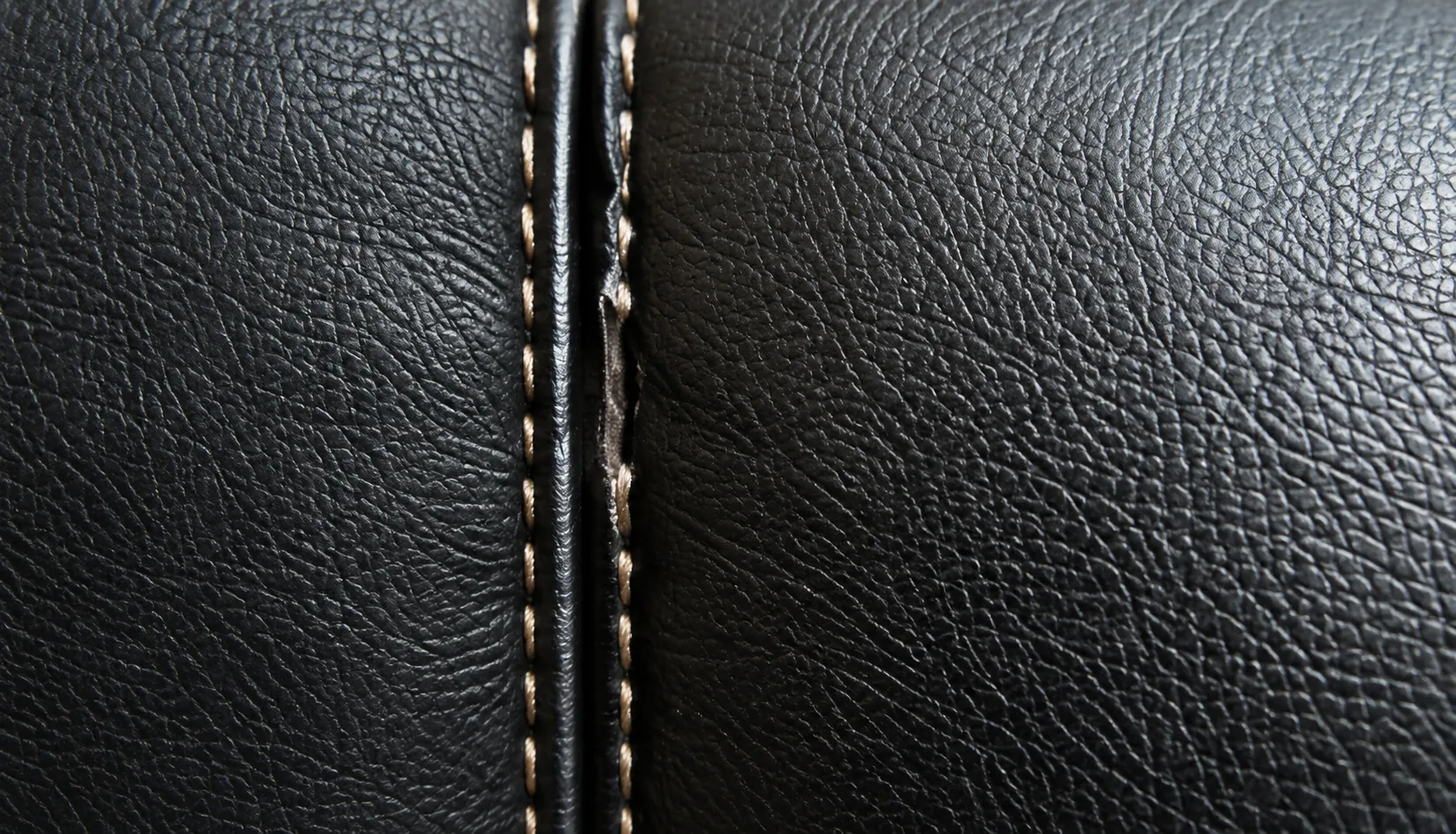
Seam, split along the stitch
Thread outlives the leather. The split spreads along the line, so it is a re-sew, not a panel.
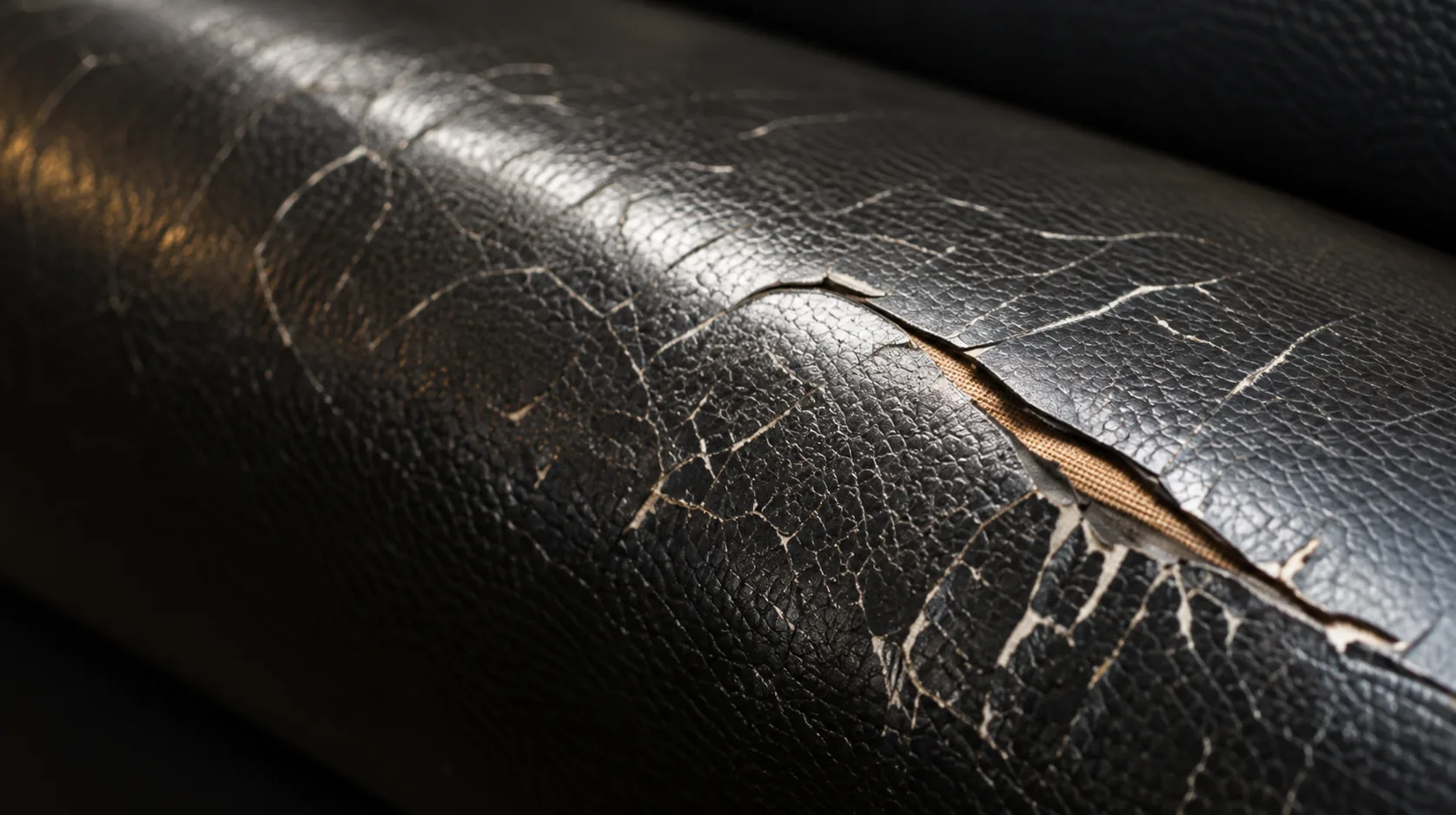
Roll edge, cracked open
The tightest radius on the piece. Finish cracks, then the backing comes through. Past filling.
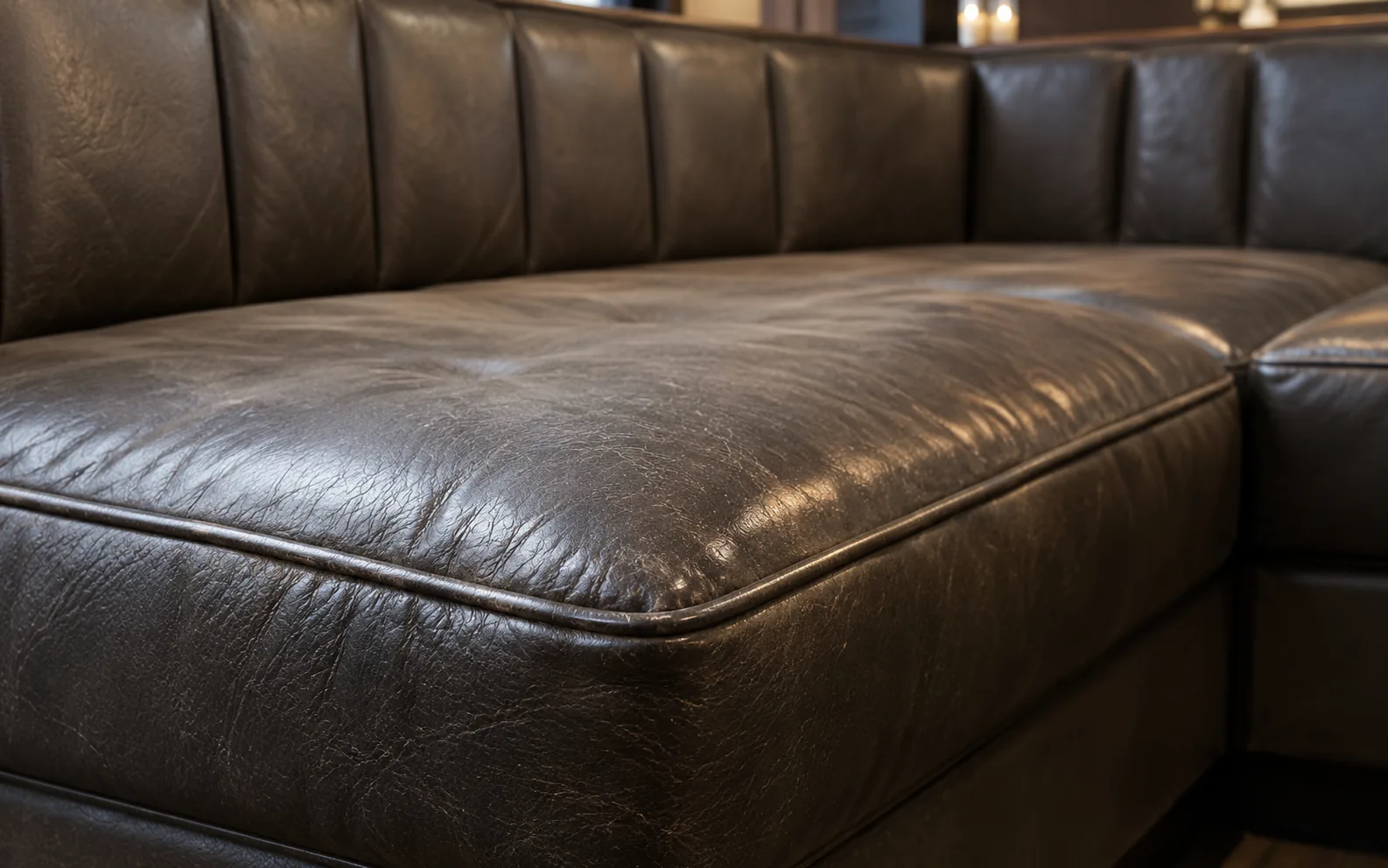
Deck, stretched and creased
Not a tear. The cover has stretched past the foam — a layer-two problem wearing a layer-one face.
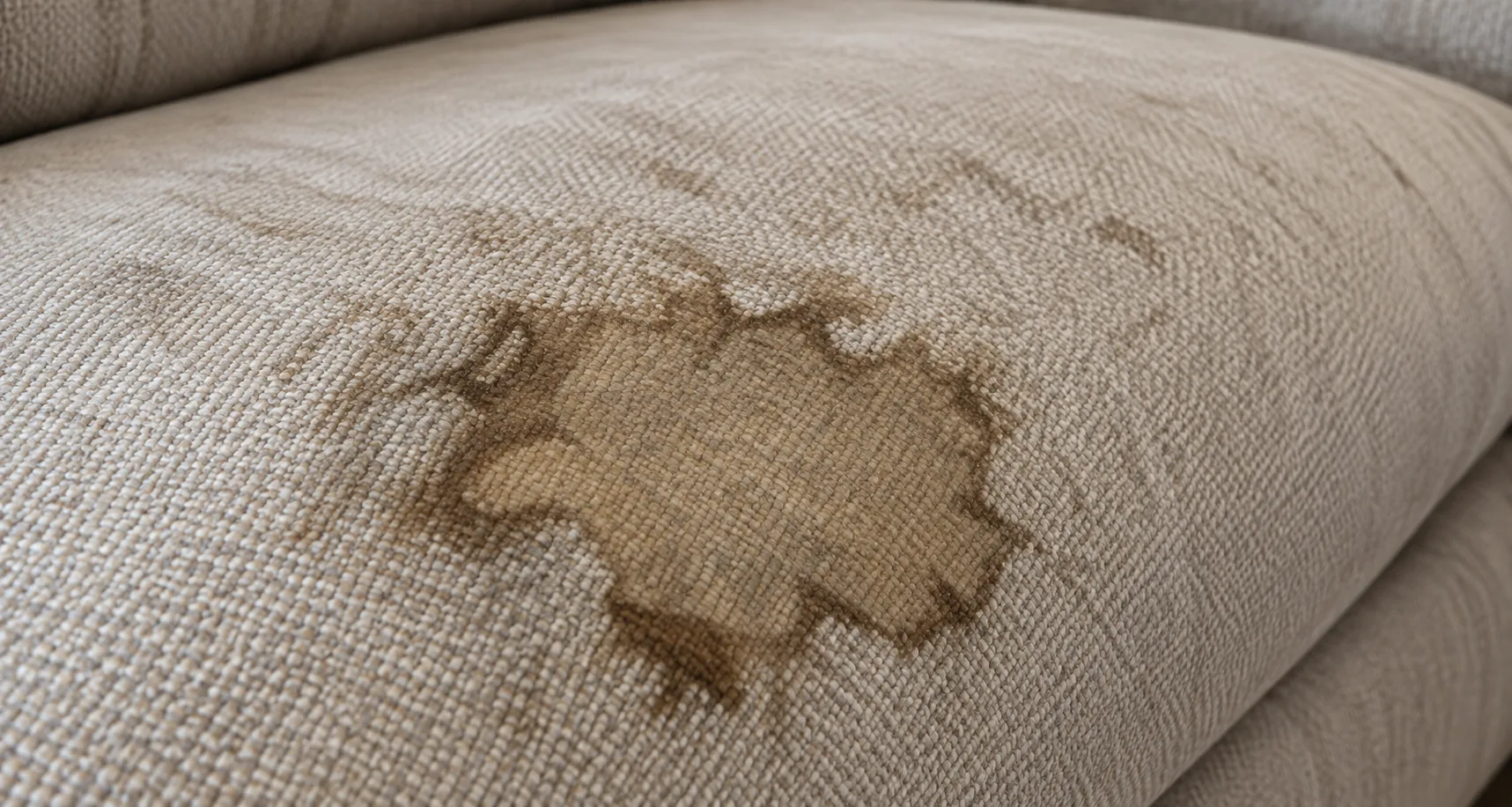
Fabric, stained through
Woven, not leather, and that decides the restaurant seating repair NYC route. A stain in the weave is a recover; the same mark on sealed hide wipes off.
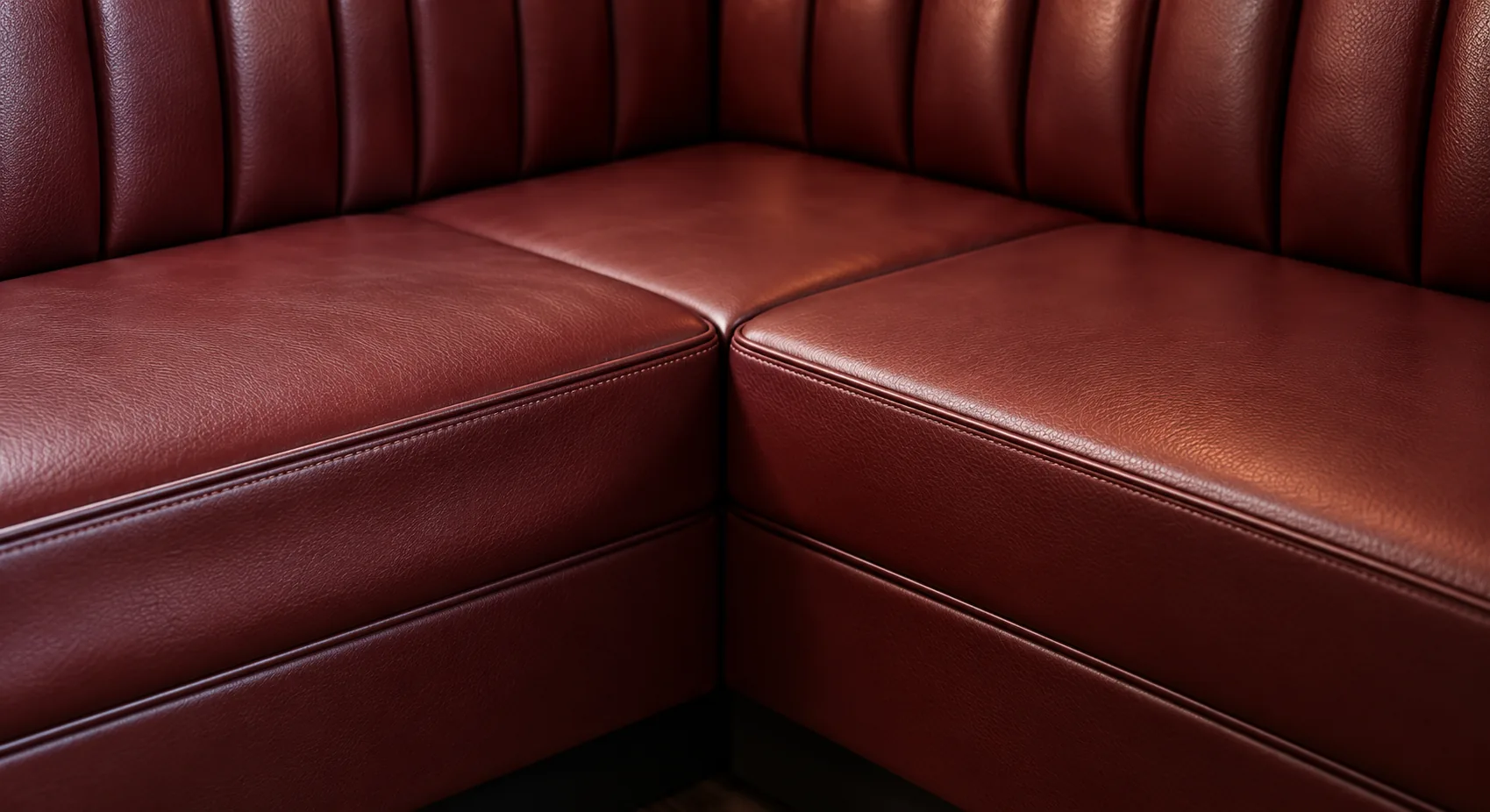
The corner, still sound
Included on purpose. A sound junction outlasts everything around it, and a bay is not condemned by its neighbor.
The complaint is never "the foam has gone".
It arrives as a table servers steer people away from. Because nothing is torn, this is the layer most often left out of a quote.
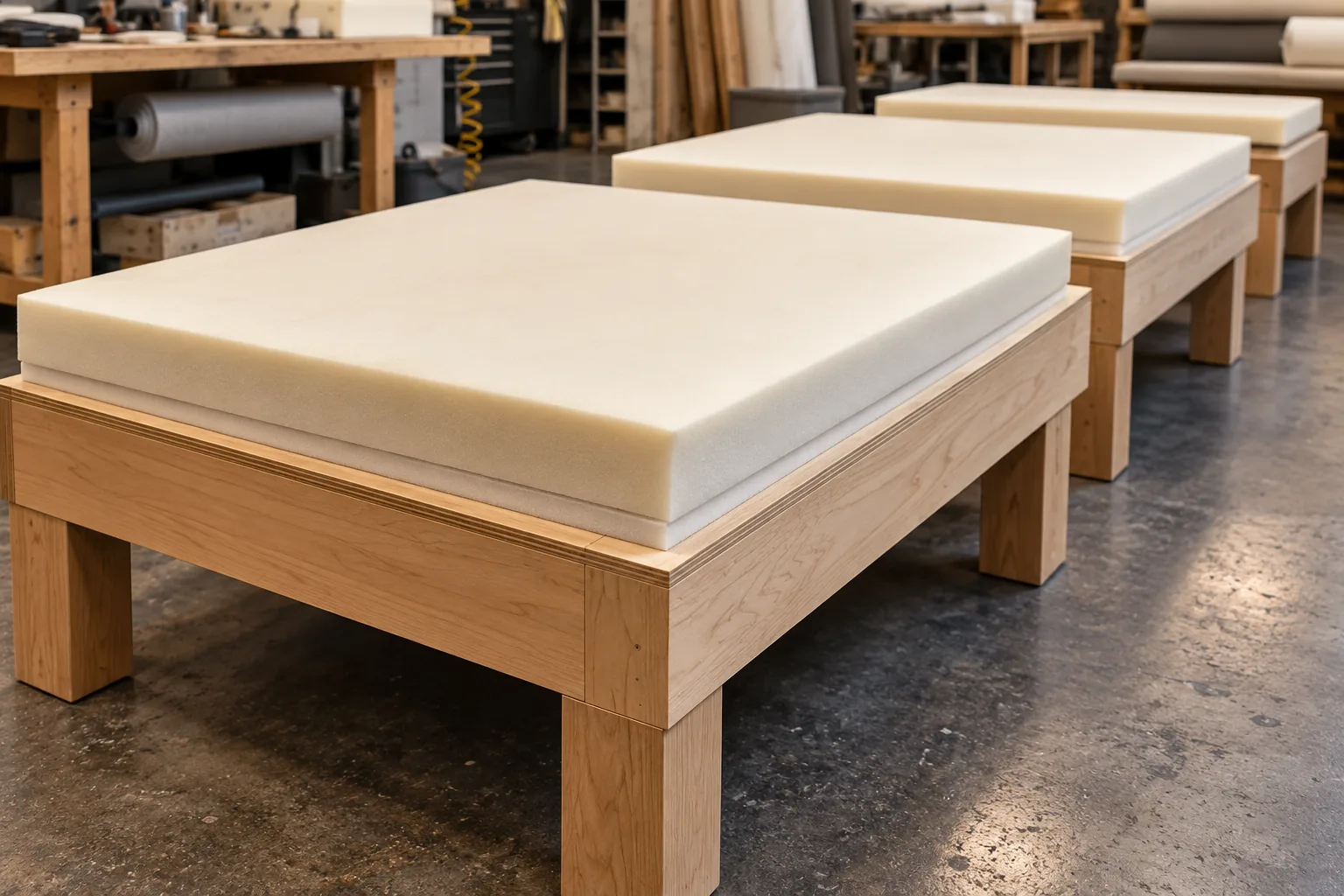
Seat height decides it: if one bay sits lower than its neighbor, the foam or the webbing has gone.
If the cover is sound and only the middle has failed, it is cushion replacement or custom cushions. Loose-cushion benches live on the banquette cushions page.
Bolted to the building, which is why the work comes to it.
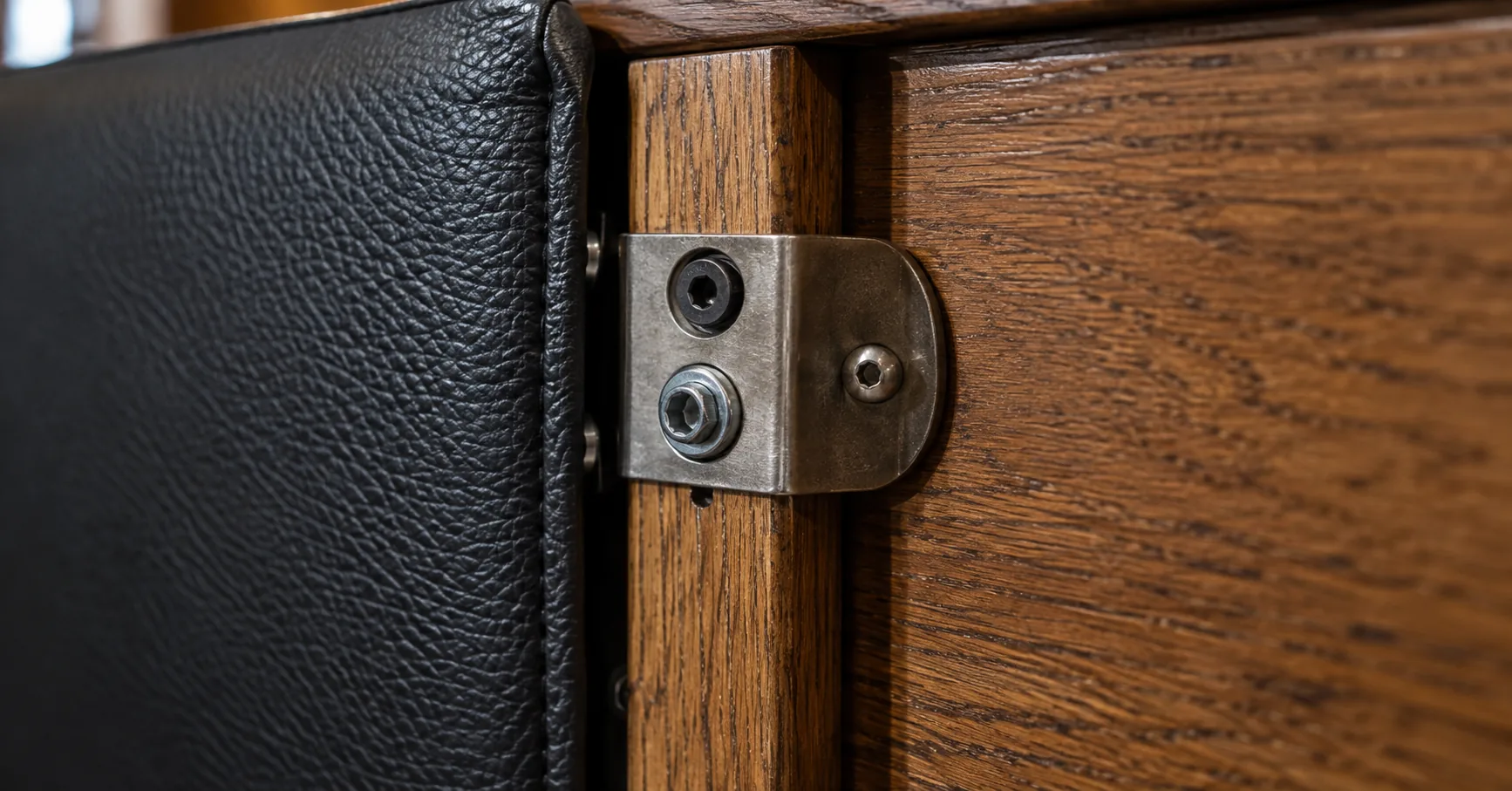
Brackets tie the frame to a post, a wall or the floor. No run is designed to be carried out of a door.
So the workshop travels: covers are cut off site, the run is rebuilt in the room. It is why restaurant seating repair NYC is quoted by the night.
Timber that has stayed dry will take another cover, and another after that. A split rail is put right first. See wood repair.
The build decides which layers are reachable in one night.
Same three layers in each. What changes is how many faces come off to reach them, and that sets the restaurant seating repair NYC schedule.
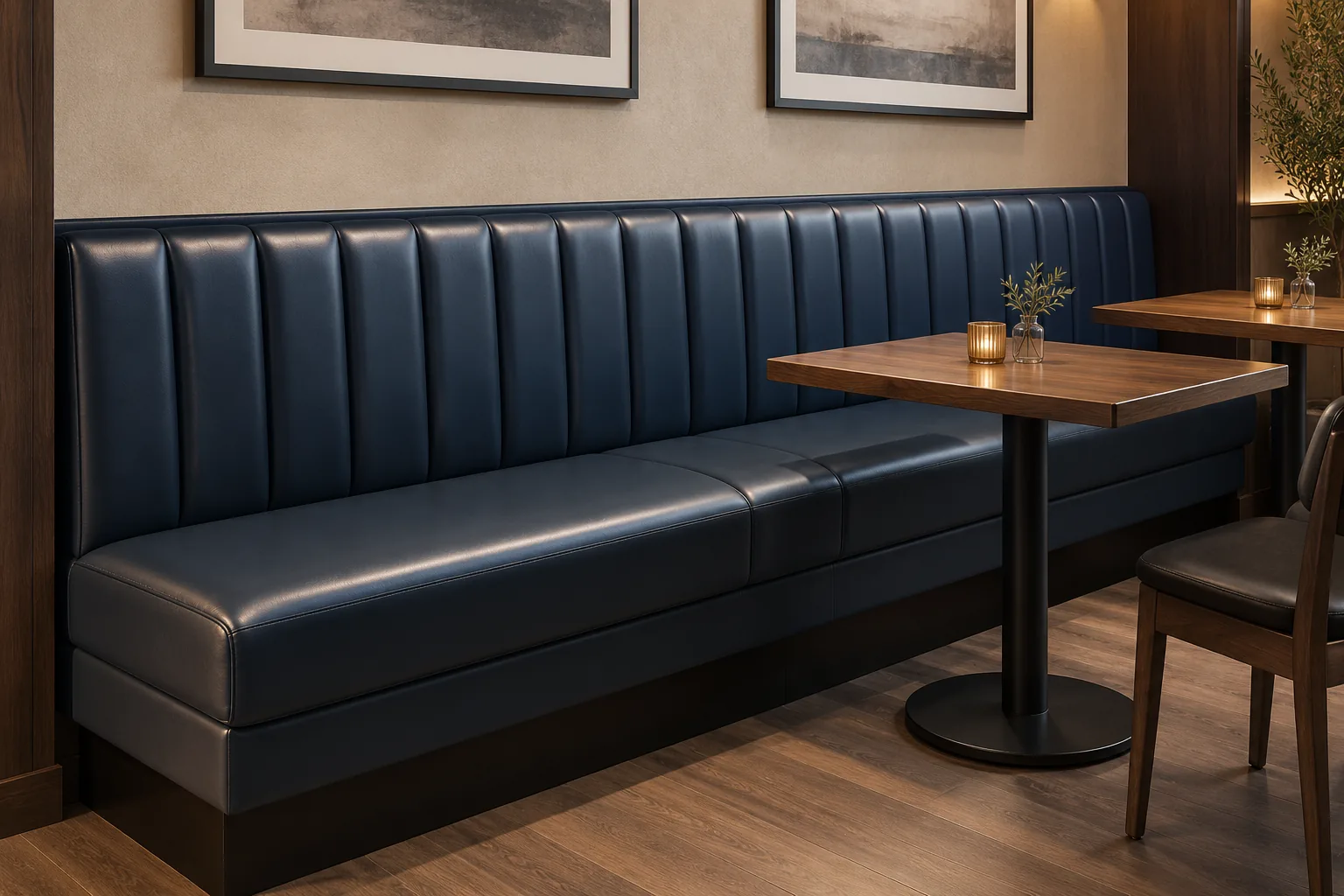
Straight wall run
One face, one open side: the simplest restaurant seating repair NYC there is. Bays go in sequence and the room stays usable behind a screen.
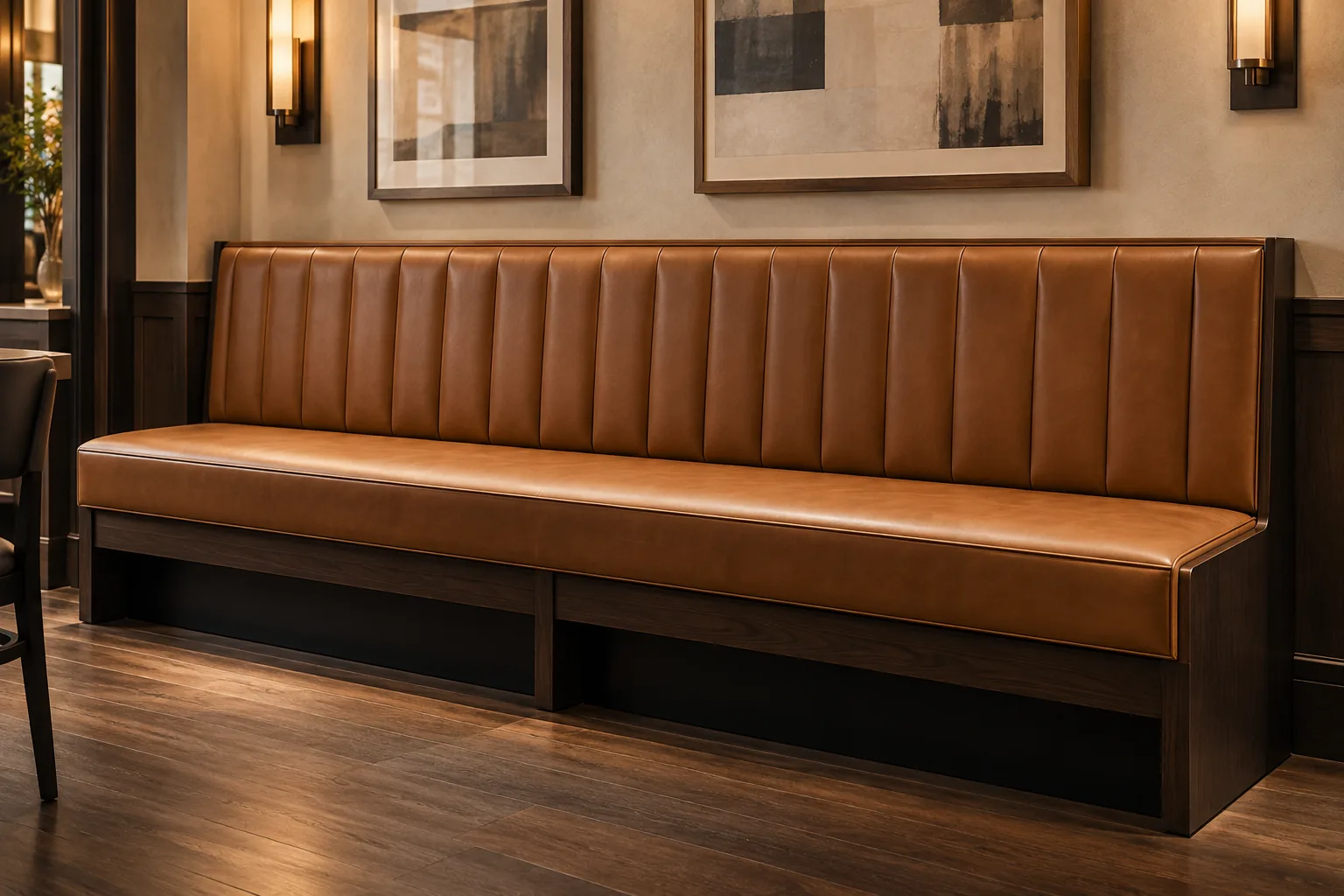
Single-sided run
The back is fixed to the wall and stays. Deck and front come off from the aisle.
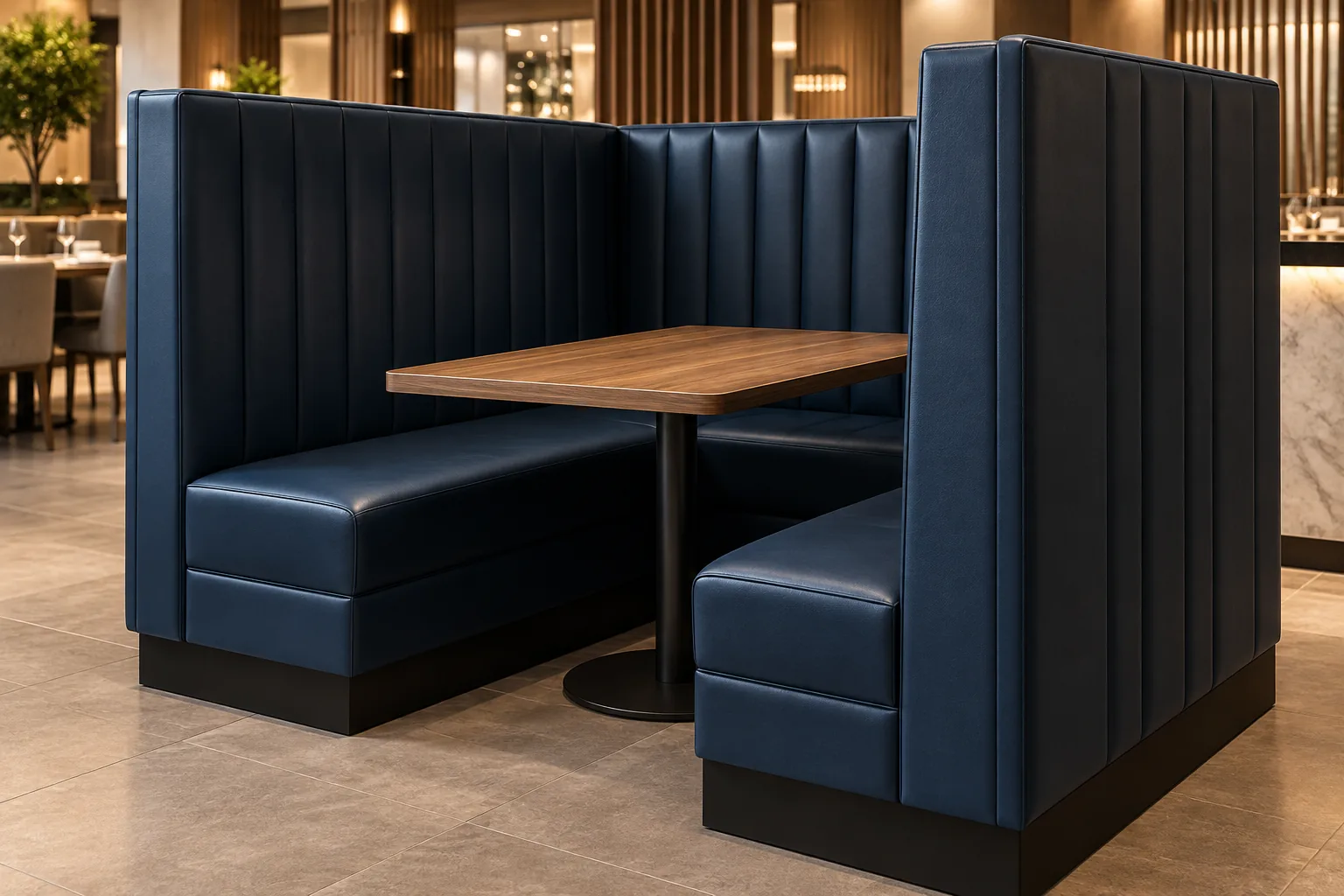
Back-to-back booths
One carcass, two covers. Both faces go the same night or the shared back reads as two ages.
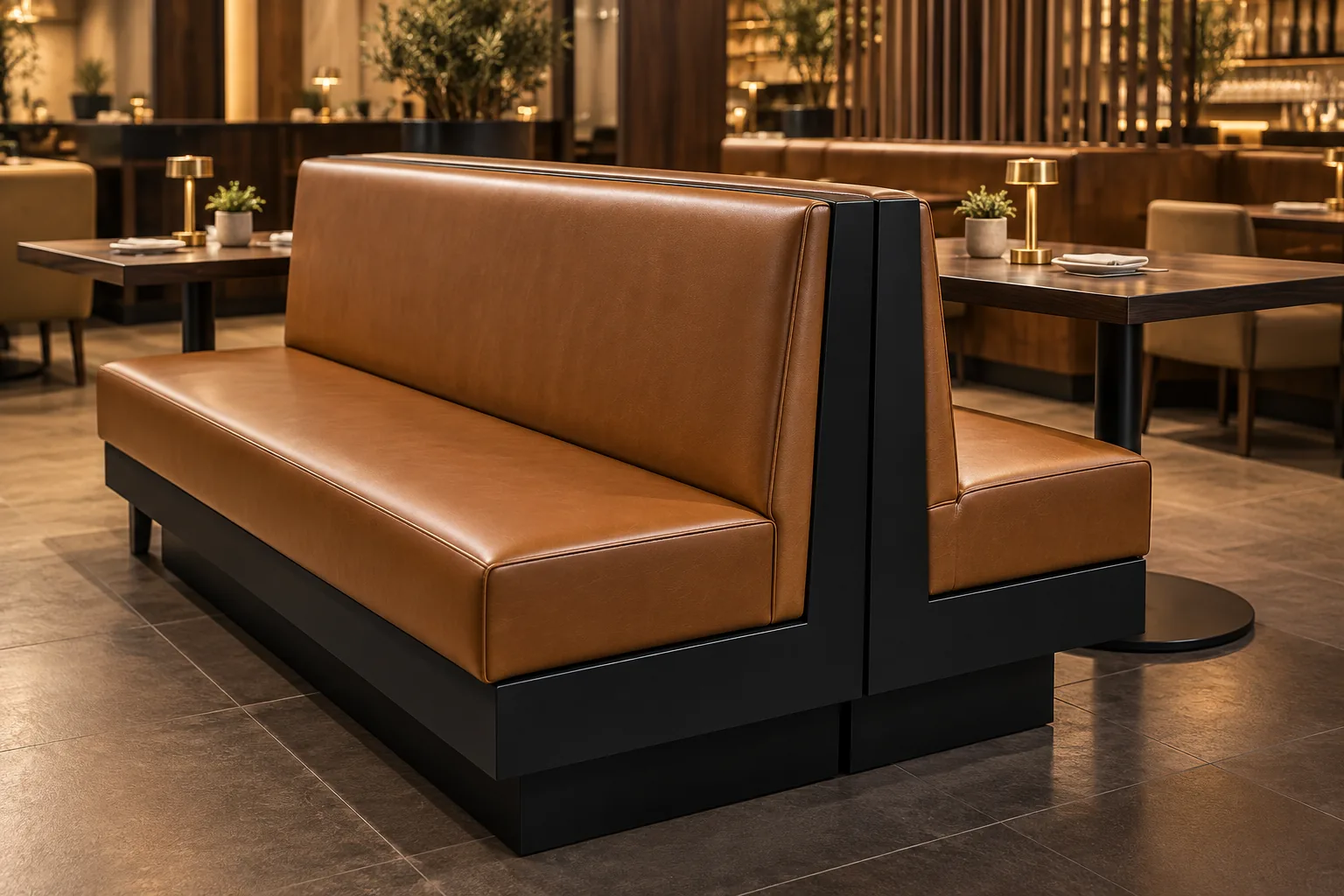
End-panel returns
The panel closing a run takes trolleys, not people. Often the worst piece, and the easiest to replace alone.
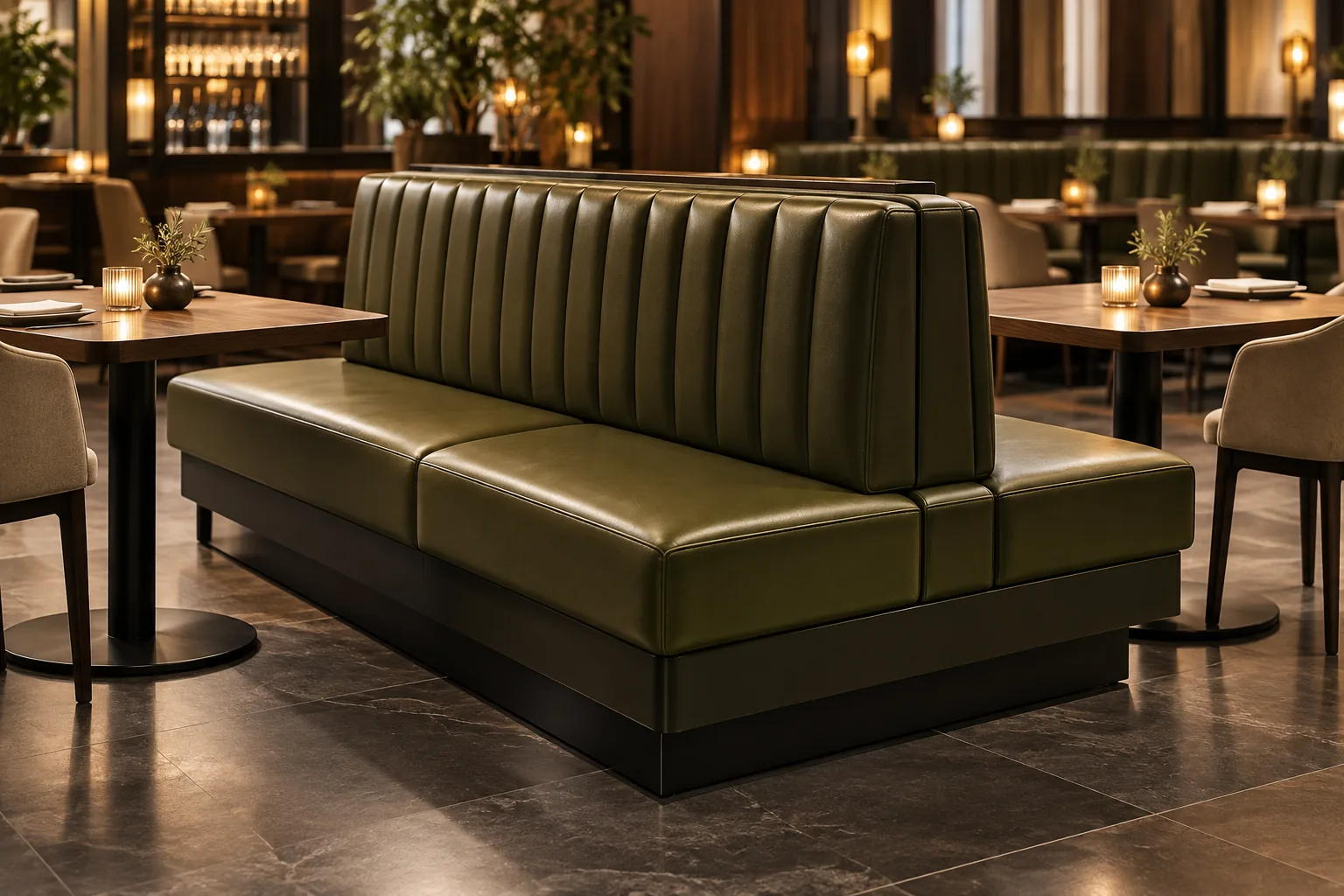
Freestanding double-sided
Against nothing, so every face is scoped and restaurant seating repair NYC is simplest here. The plinth is reachable all the way round.
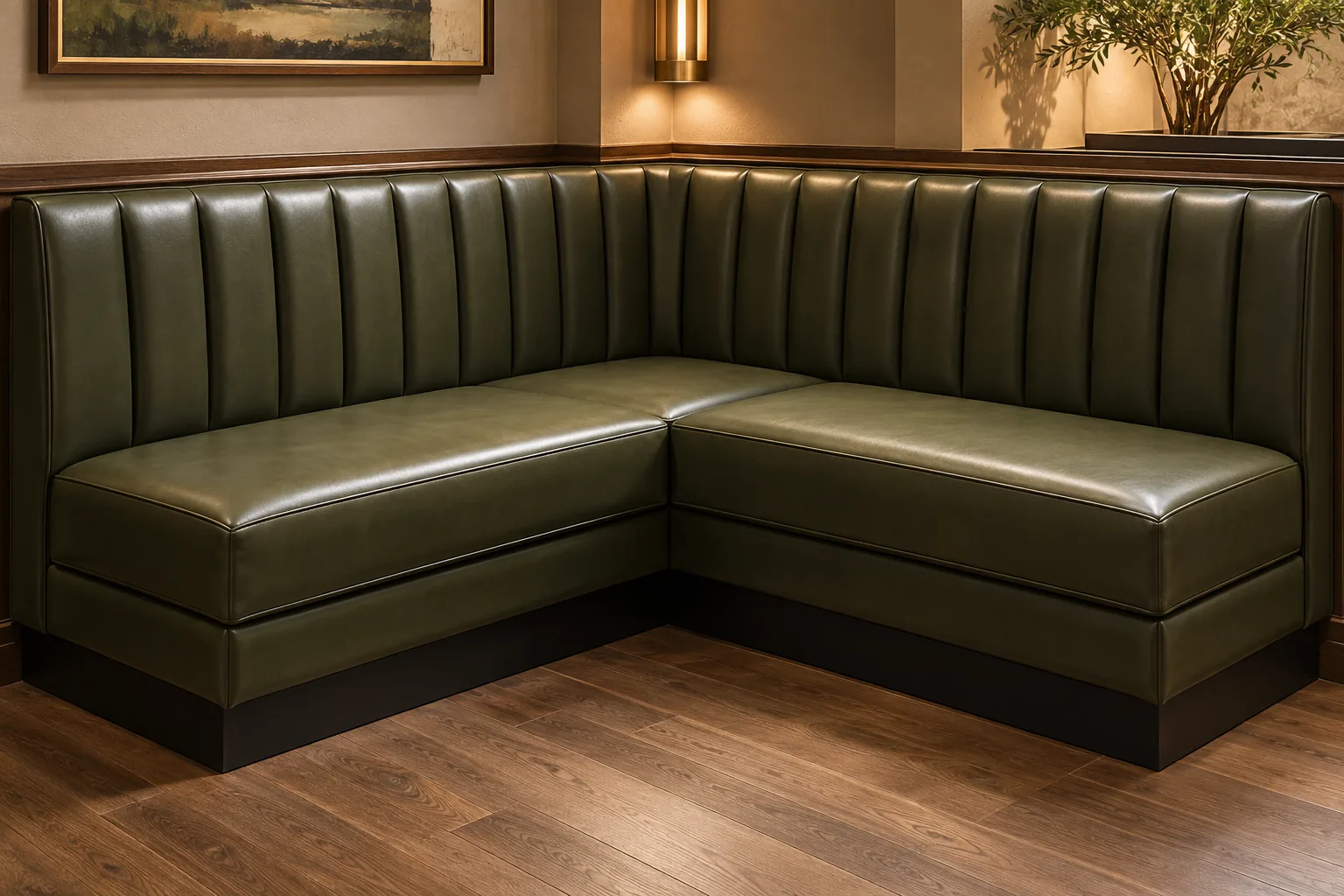
L-shaped corner
Two runs meeting. The corner deck is cut to the angle, so it is templated on site.
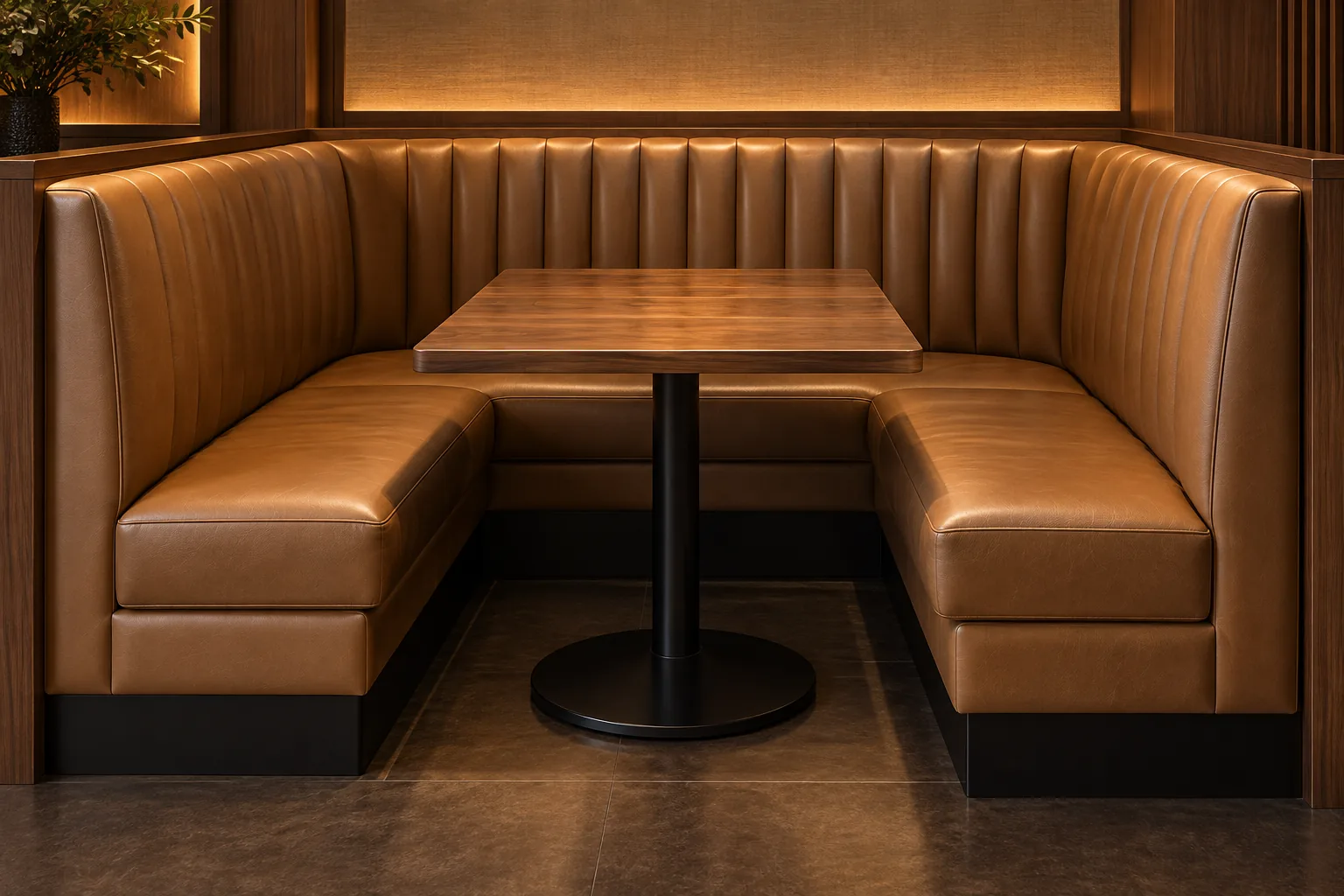
U-shaped, three sides
Three decks, two corners, one table — one night of restaurant seating repair NYC. Long to strip, but self-contained: one night.
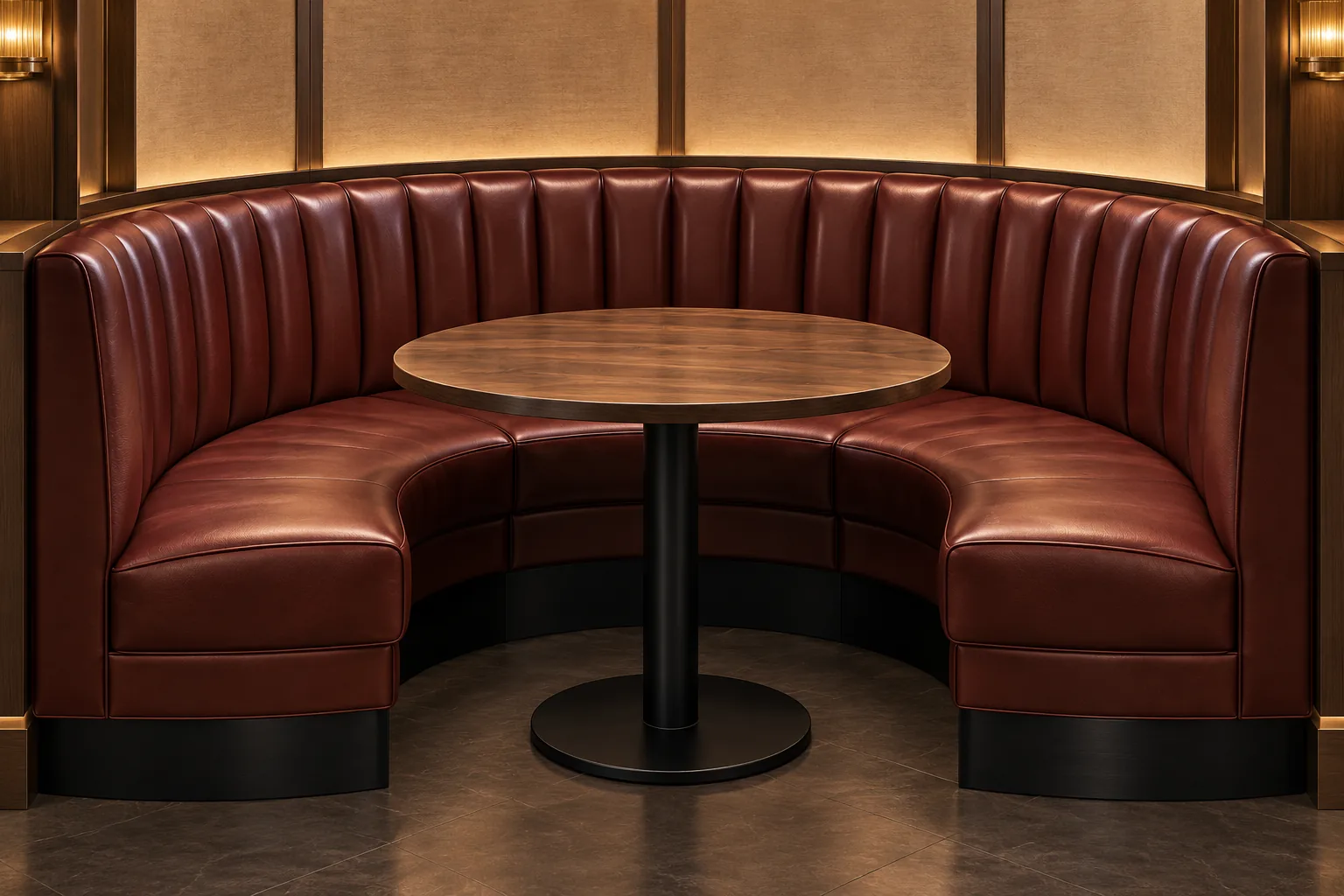
Curved and round
Every panel is unique to its position, so it is measured piece by piece before anything is cut.
A whole run going back to bare frame is covered on booth and banquette reupholstery. Where one bay has a single fault and the rest of the run is fine, it is booth and banquette repair. This page works out which you have.
One was matched. Two were re-specified.
Two endings at two prices. Matching means the new work disappears against bays you are not touching. Re-specifying means the whole run changes.
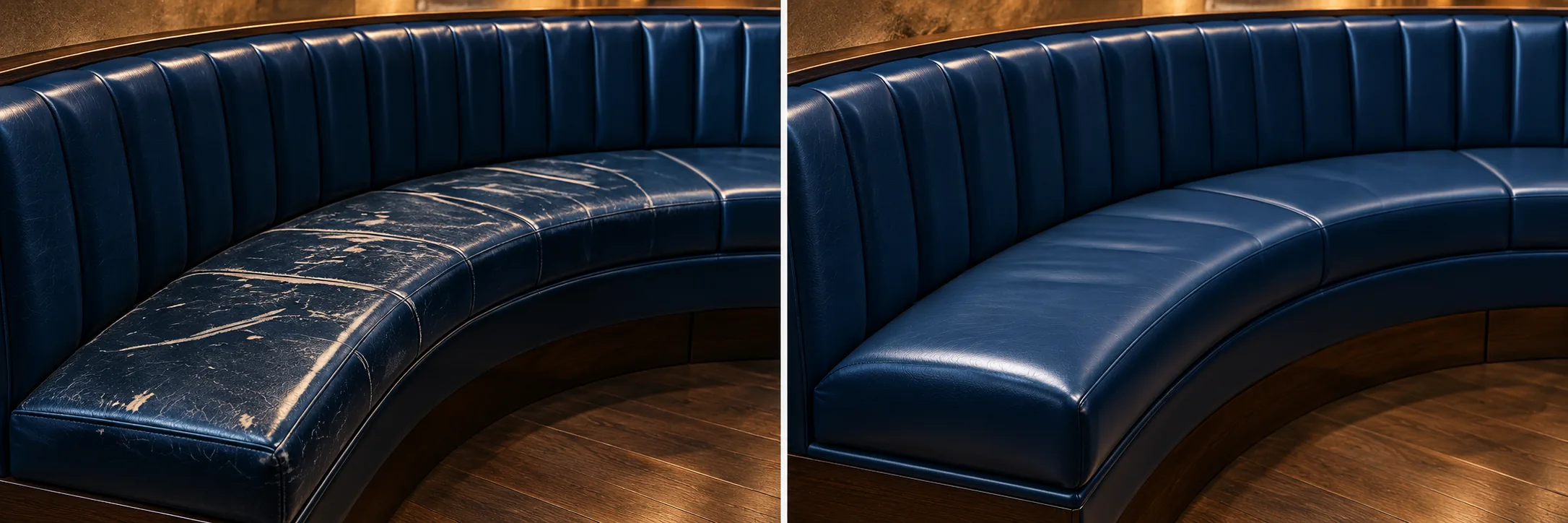
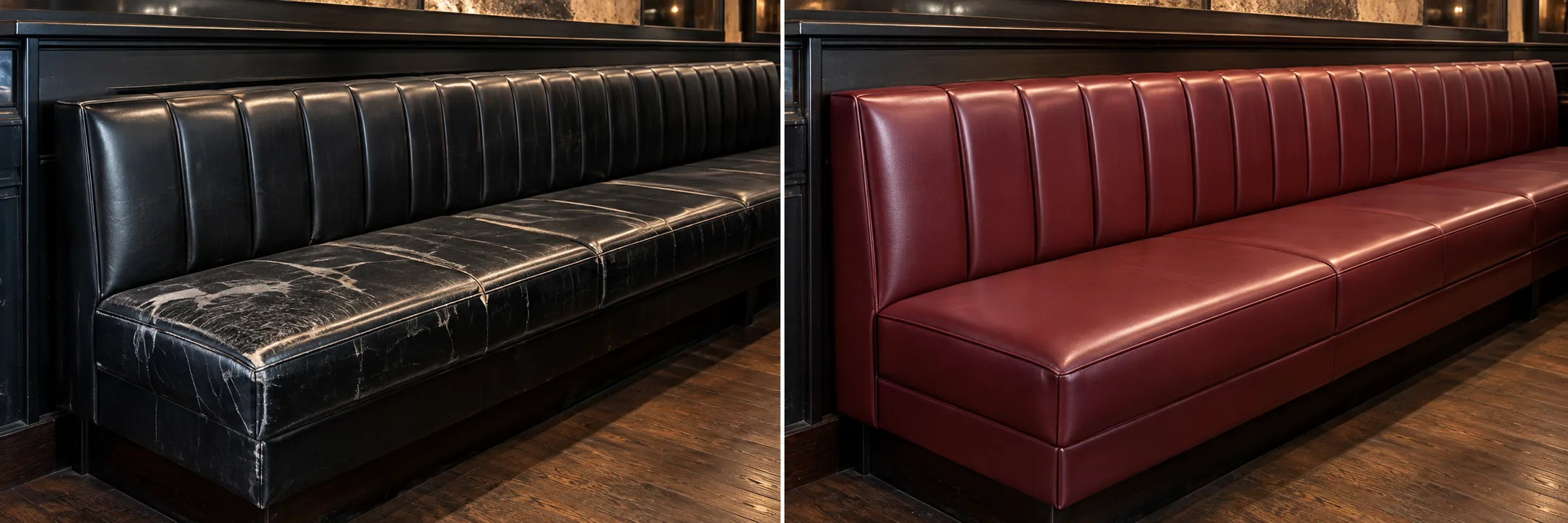
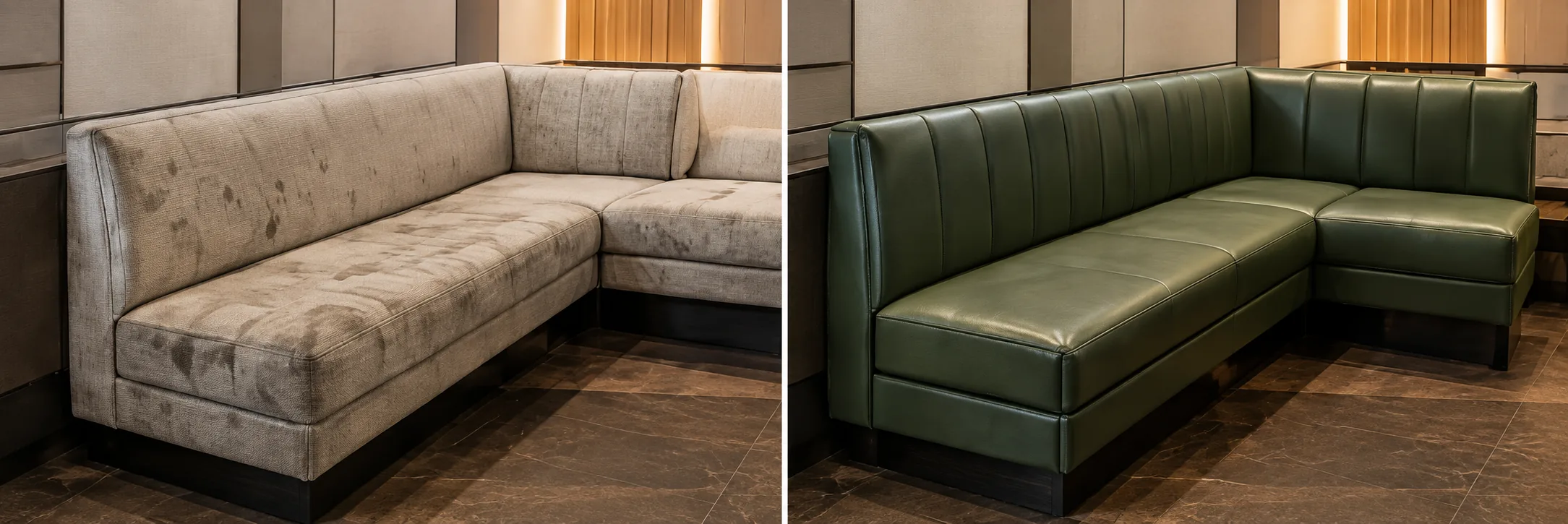
Same three layers, six different rooms.
Dining rooms, bars and workplace cafés all buy fixed seating because it seats more people per square foot. They inherit the same stack.
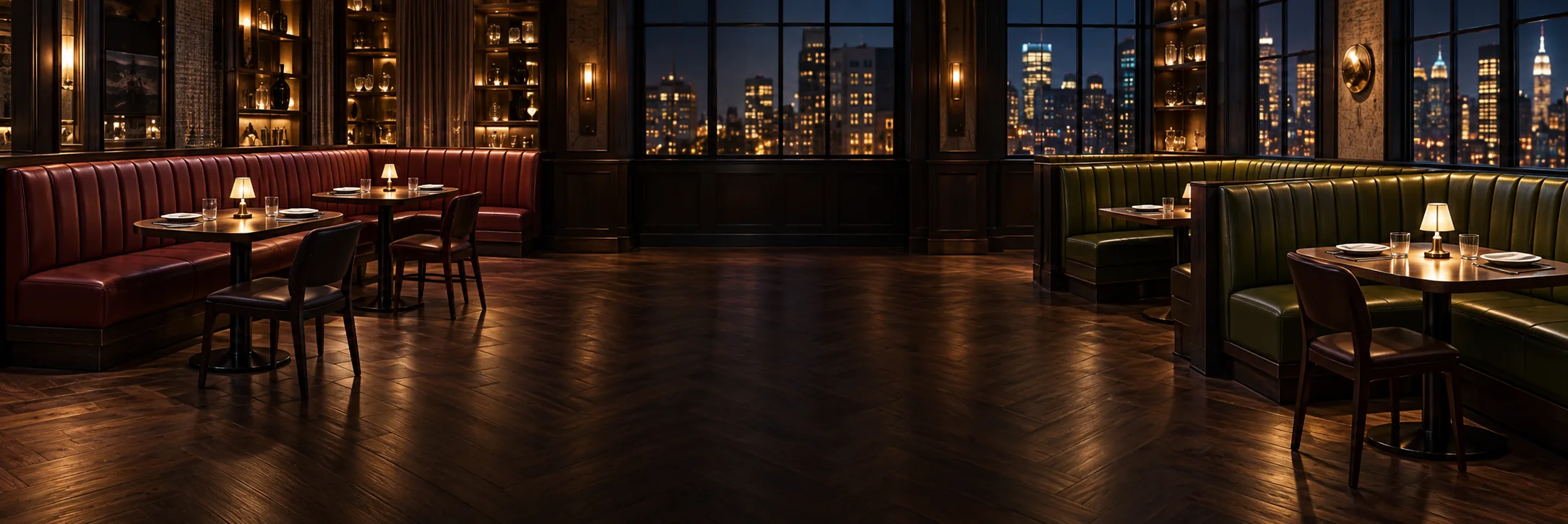
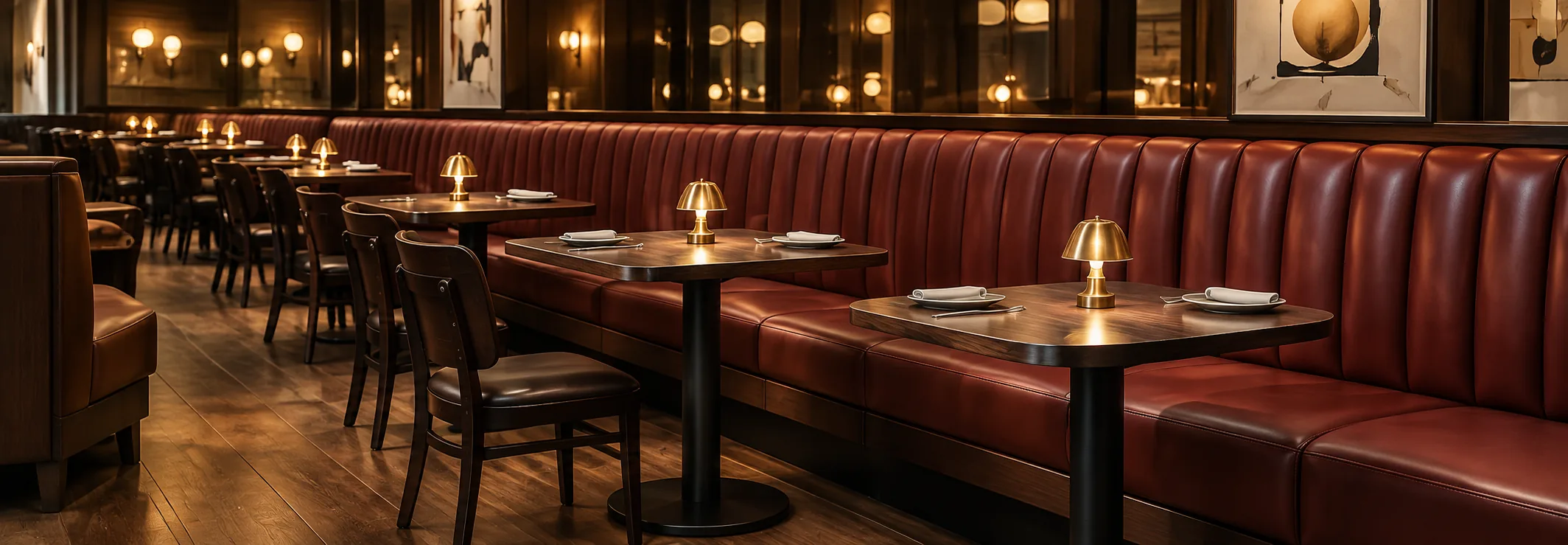
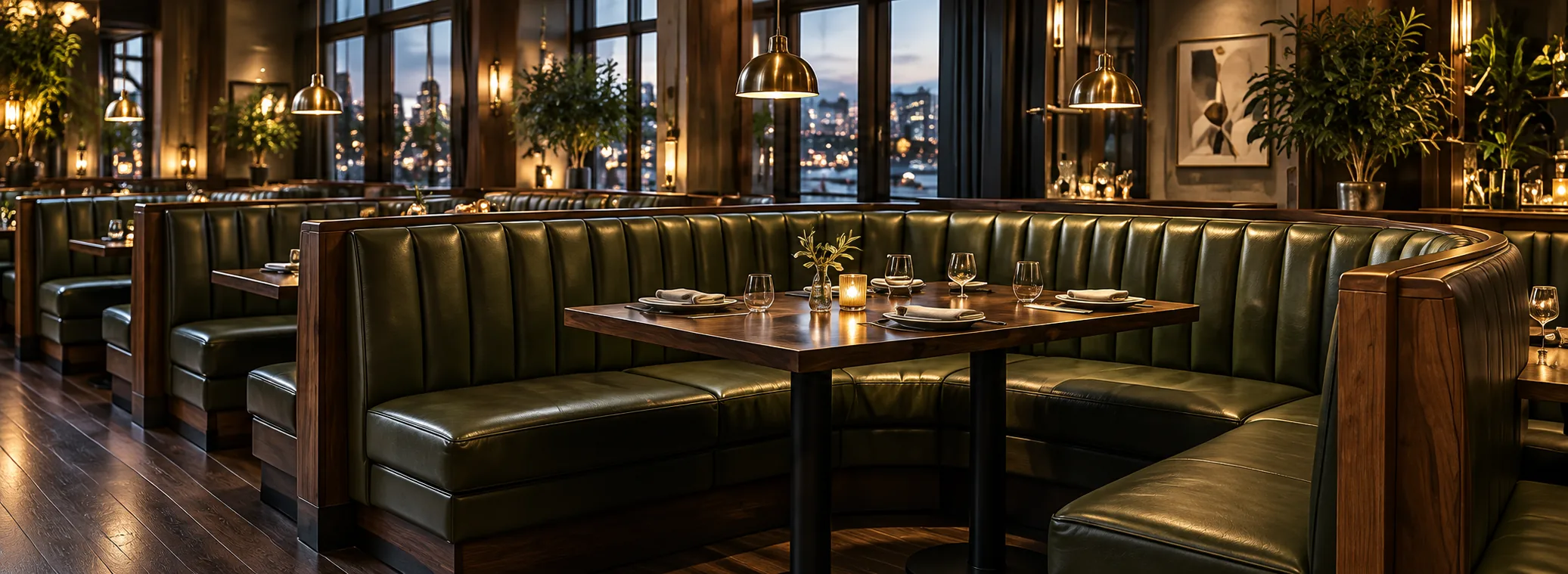
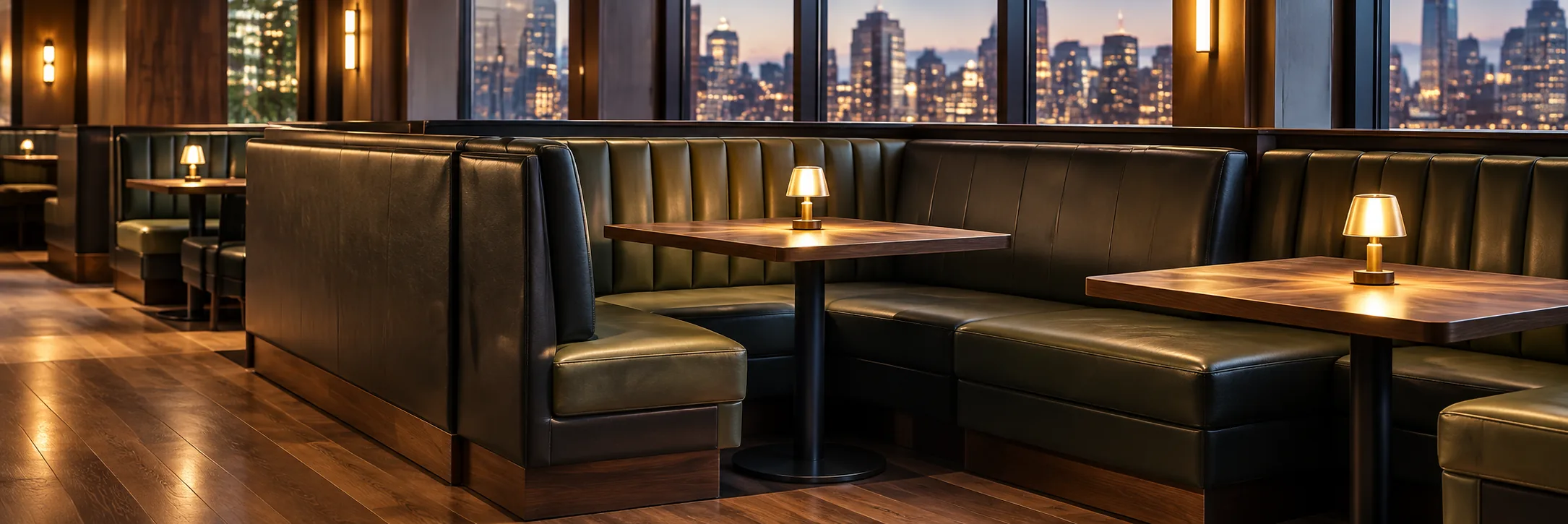
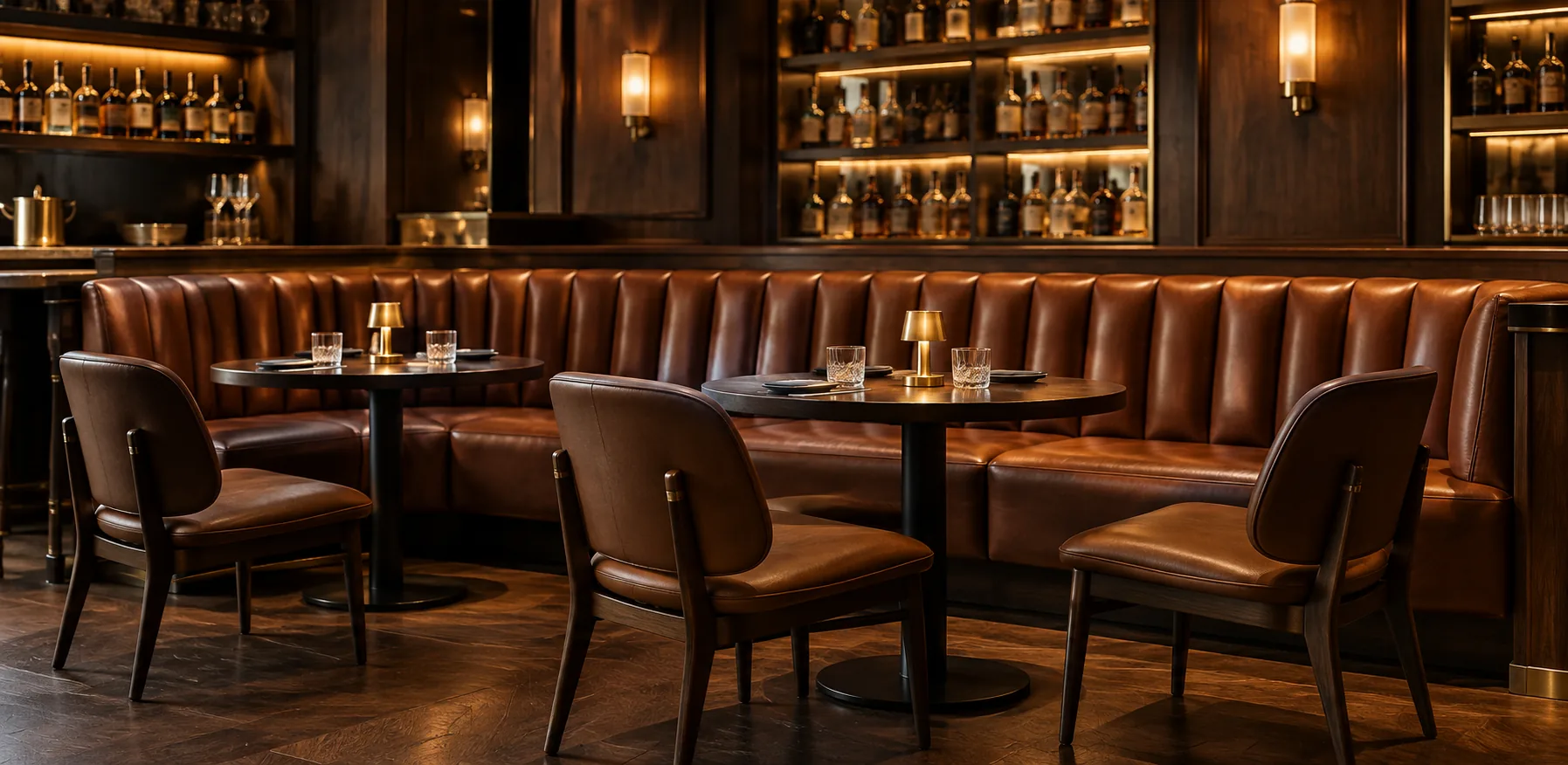
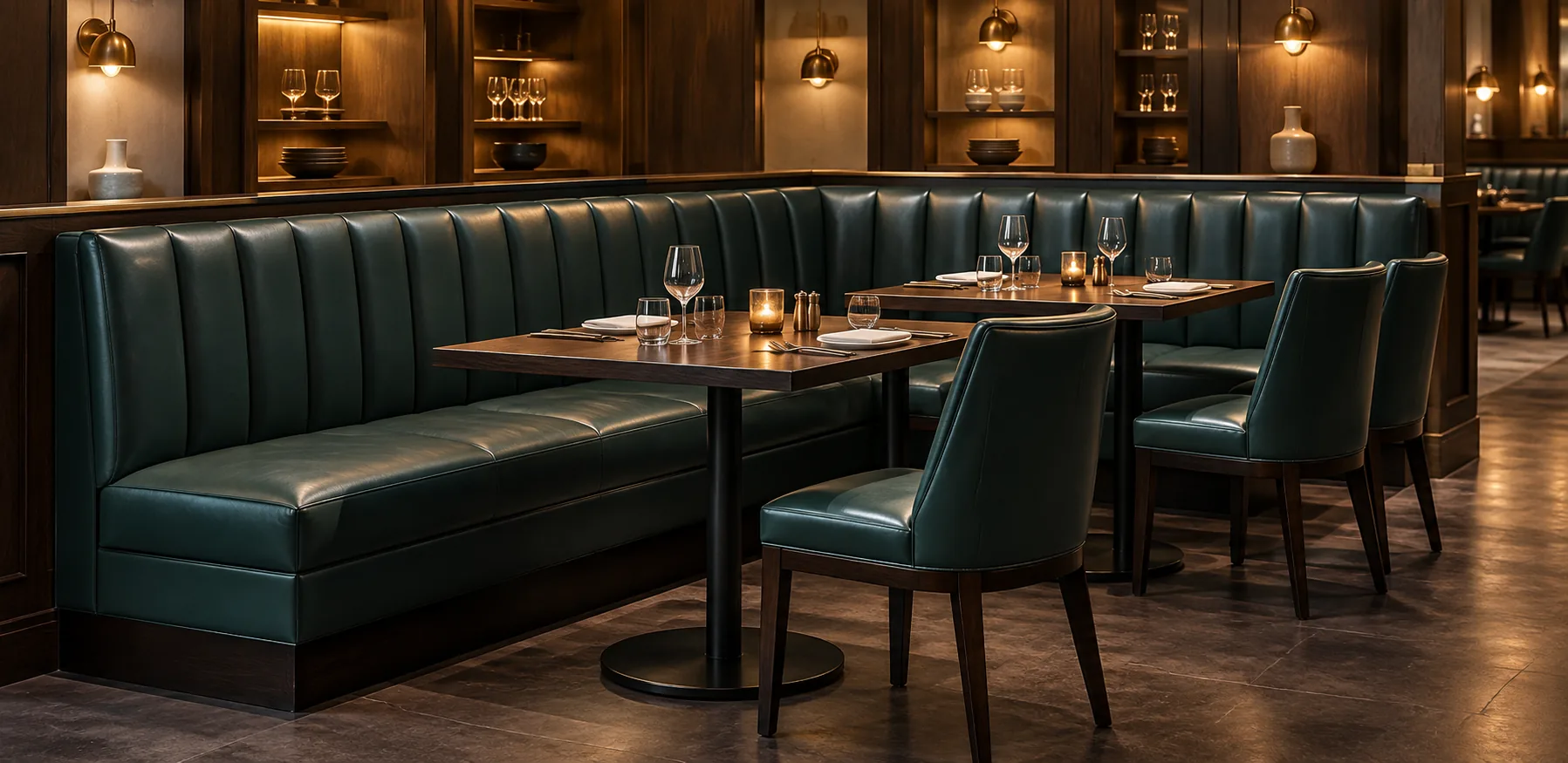
What actually gets booked is one layer, on a few bays.
Whole-run work is the largest version and the rarest. Far more often it is one of these. All services.
The seating that is not bolted down.
Fixed seating does not travel, so we come to the room.
Every run here was worked on where it stands — see restaurants — and the same build turns up in hotels and bars across all three areas below.
What operators ask before booking a night.
How do I tell which layer has actually failed?
Sit in the bad bay, then in the one next to it. If it sits lower, the middle has gone. Photographs settle the cover; only sitting settles the middle.
Can you do one bay without touching the rest of the run?
Yes, and it is the commonest restaurant seating repair NYC job. The limit is matching bays that have already aged.
Does the dining room have to close?
No. Restaurant seating repair NYC happens in place, overnight, between last cover and first service. Longer runs are staged across consecutive nights.
Is replacing the foam cheaper than recovering?
Usually by a wide margin, and guests notice it. If the cover is sound, refoaming is a fraction of a recover.
Can we change color while the run is open?
Yes, once every bay is being done. Changing color on some bays but not others is the one version that does not work.
What does restaurant seating repair NYC usually cost?
Restaurant seating repair NYC is priced by layer and by bay. We give a number from photographs plus the seat-height check.
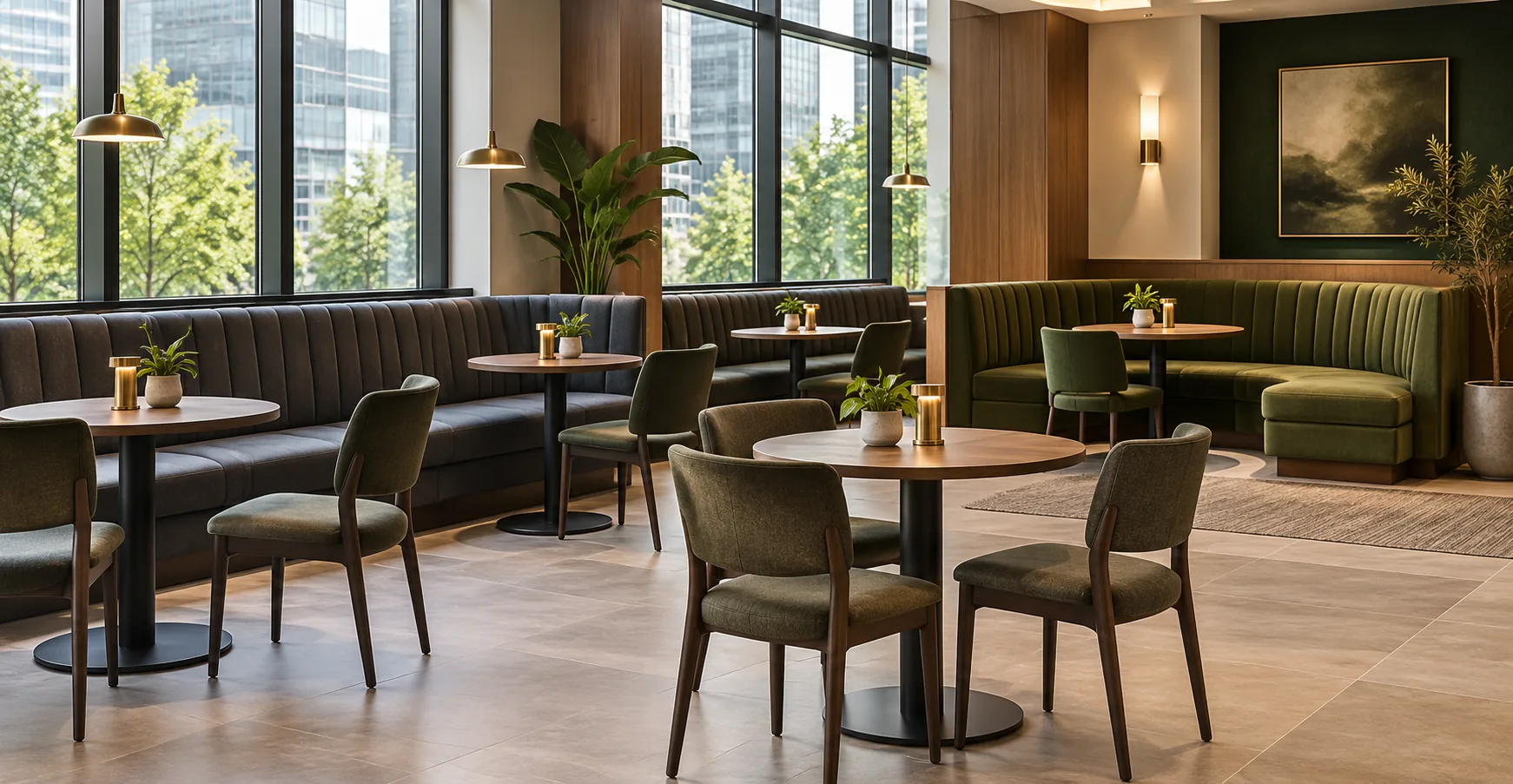
Send the worst bay, and sit in the one beside it.
Two photographs of the damage, one of the whole run, and one line saying whether the bad bay sits lower. That prices restaurant seating repair NYC without a visit.