
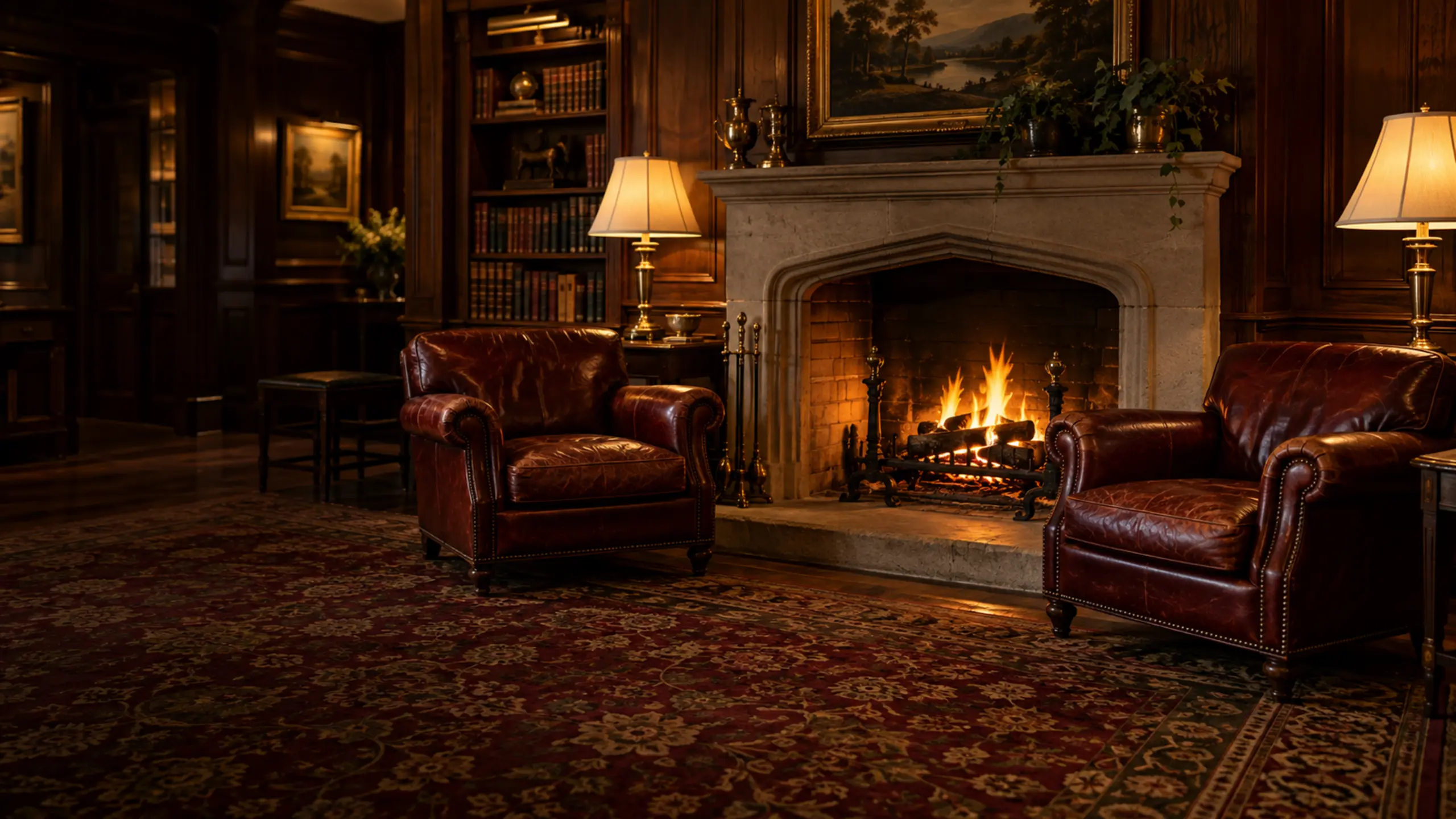
The finish can come back. The hide cannot.
Restoration rebuilds what sits on top of the leather. Whether that is worth doing depends on one thing: whether the hide underneath is still alive.
A club chair is three layers, and only two come back.
Leather club chair restoration starts by naming the layer that has gone. The answer decides whether the chair is restored, repaired or recovered.
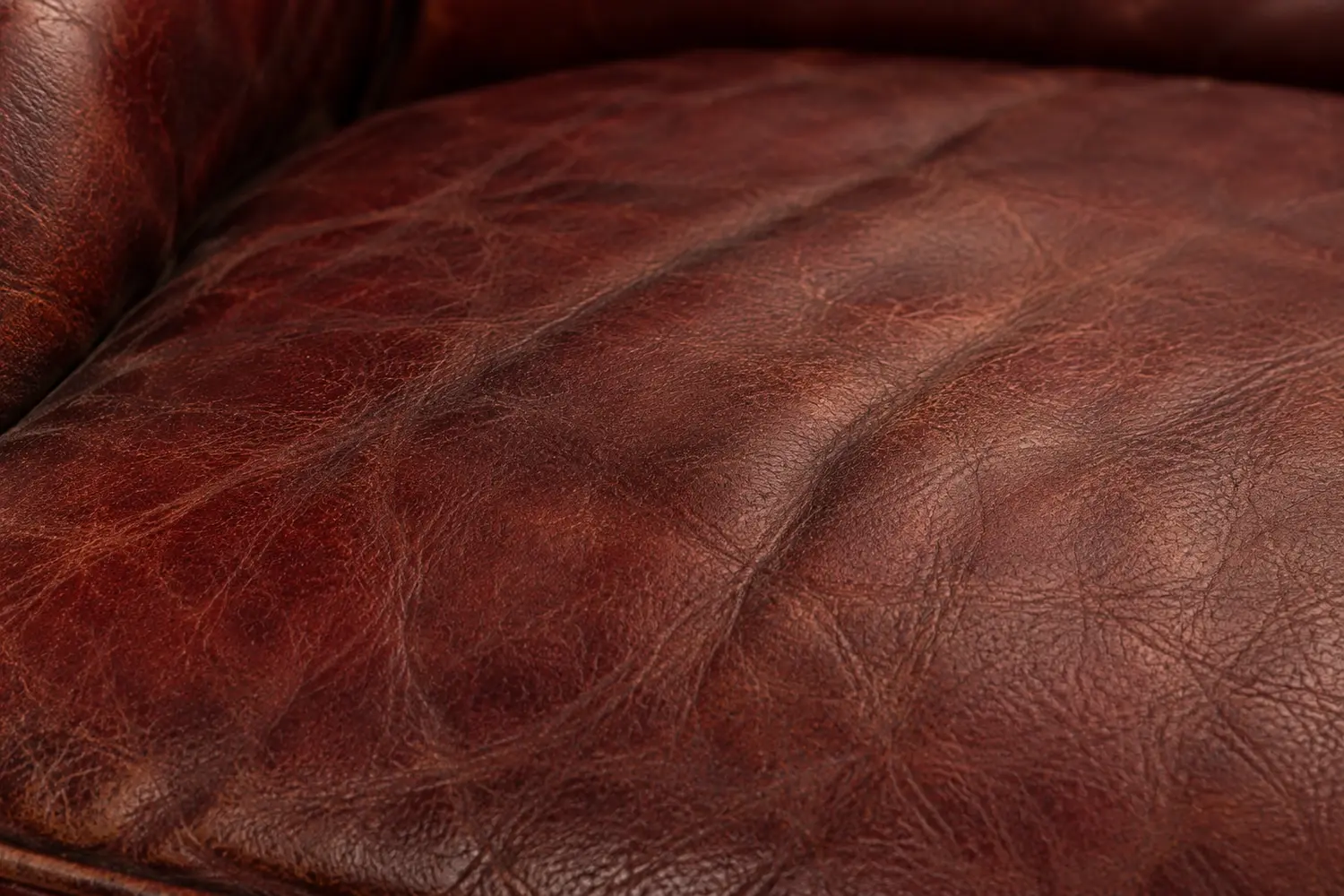
The topcoat
The clear layer that takes the handling. Once it is gone, the chair looks dry and marks easily.
Comes back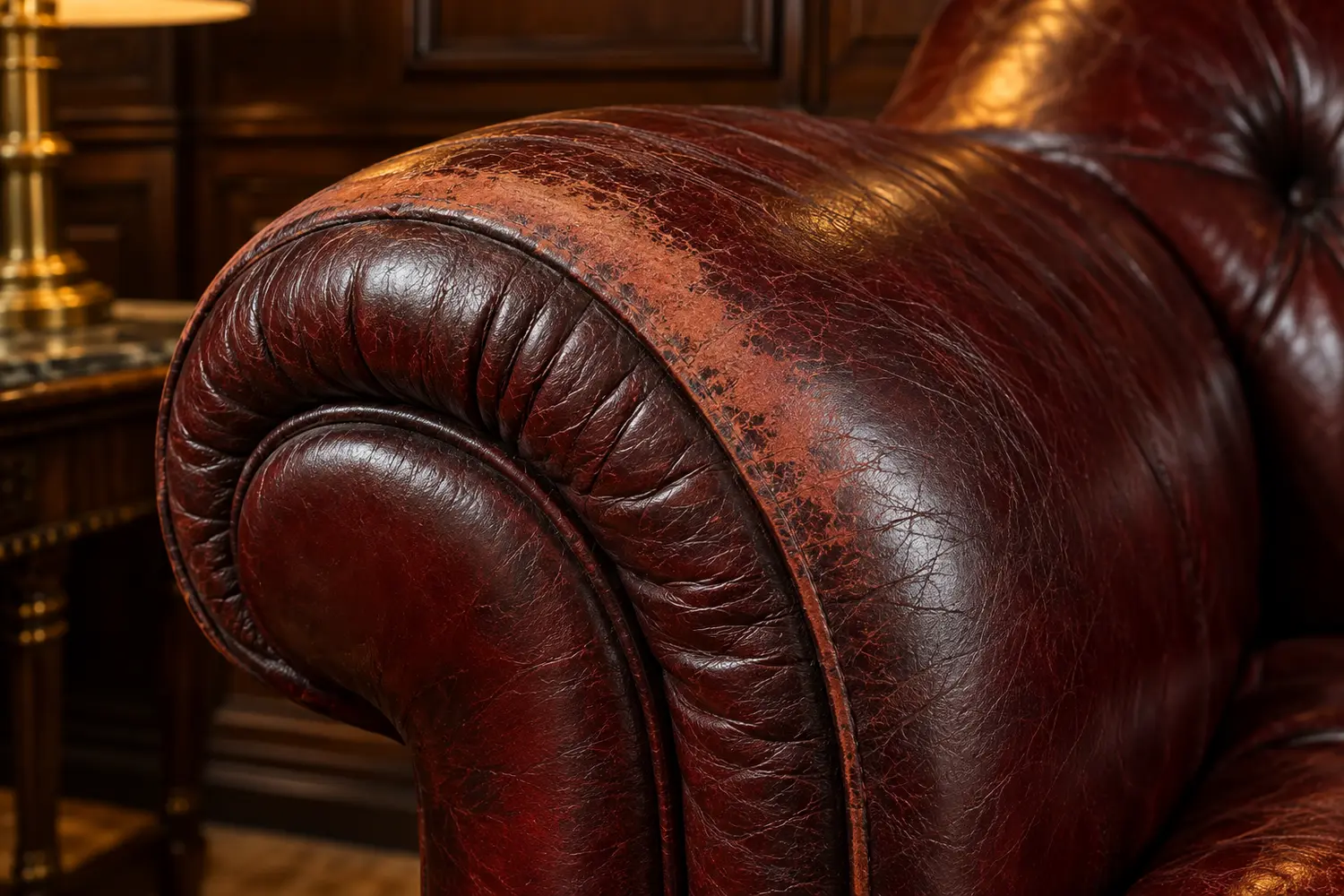
The color
Rubbed through on arms and seat fronts. Rebuilt in layers so the panel keeps its depth.
Comes back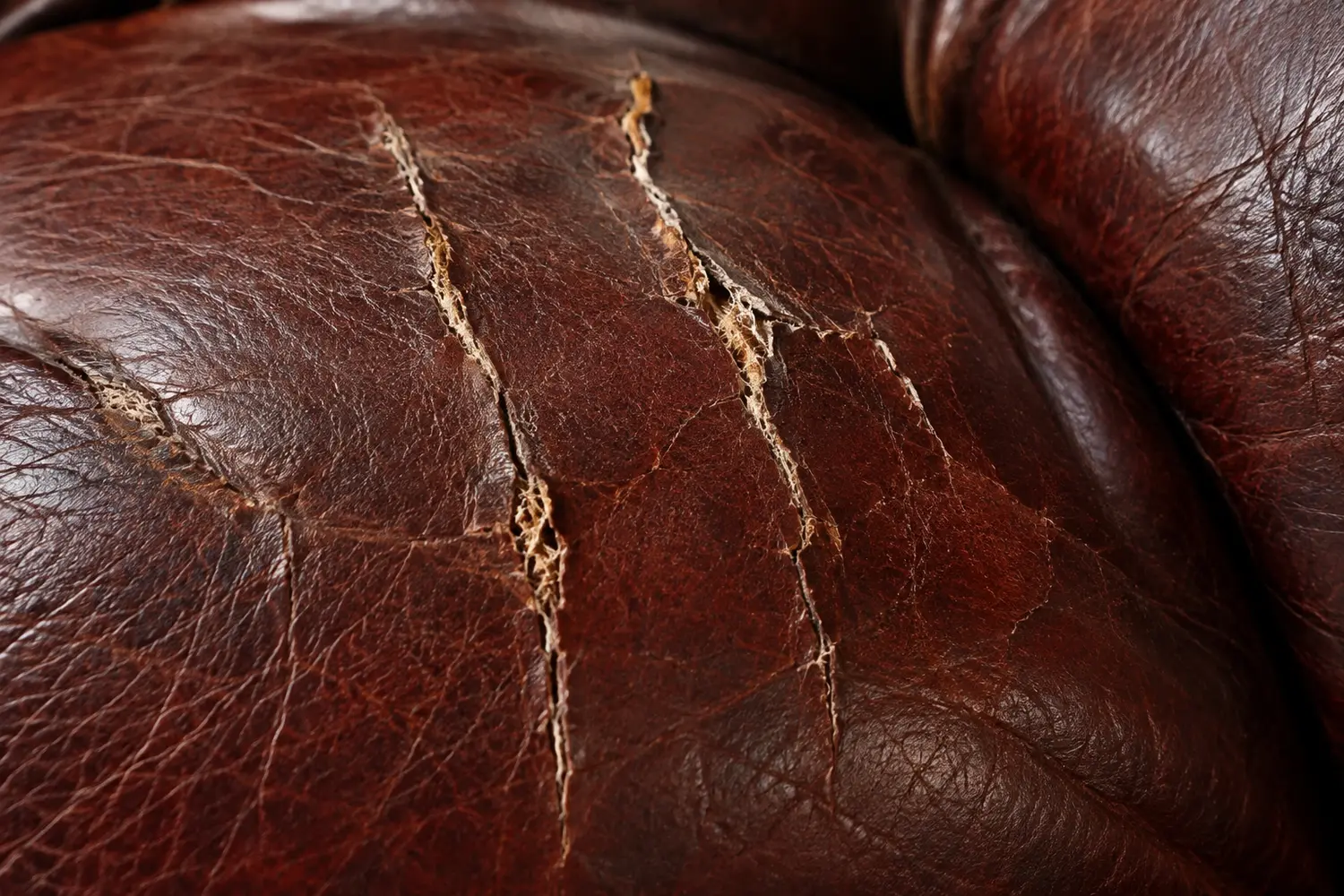
The hide
Cracked through to the fibers and gone brittle. No finish will hold this together for long.
Does not come backOne test settles it before anyone quotes.
Press the panel beside the damage and watch the crack. It takes a second, it costs nothing, and it decides the whole job.
The surface flattens and the crack disappears while the panel is bent. The hide still has life in it, and a rebuilt finish will move with the chair instead of splitting off it.
Leather club chair restoration holdsThe crack holds its shape and pale fibers show along the edges. Any finish laid over that will crack again in the same line, usually within a season.
Reupholstery insteadOne crack on a chair that is otherwise sound is a spot repair, not a restoration. Where half a set passes and half fails, the set is done in two grades and matched.
Two wingbacks out of the library, back by Tuesday.
Both were dry and rubbed pale on the arms, and both passed the flex test.
- 01
Clean and strip
Old finish, wax and years of polish come off before anything goes on.

- 02
Feed the hide
The leather is fed and left to take it up, so it flexes again before color goes near it.
- 03
Build the color
Thin coats, with the darker tones left in the creases, so the chair keeps its history.
- 04
Seal to the right sheen
Matte where the room is matte. A gloss finish is what makes a restored chair look replaced.
- 05
Cure, then return
The finish hardens before the chairs go back to the library and the next pair leaves.
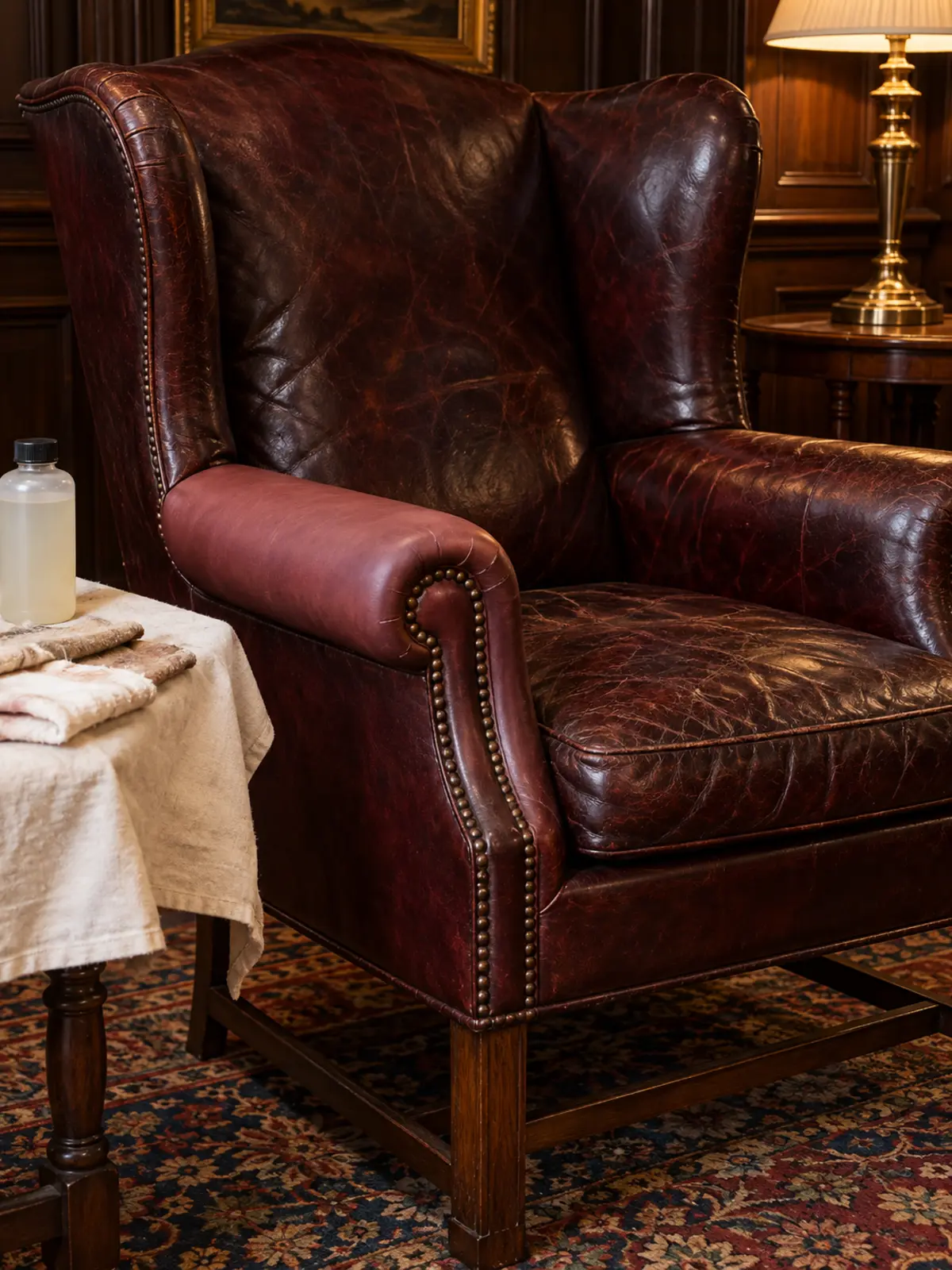
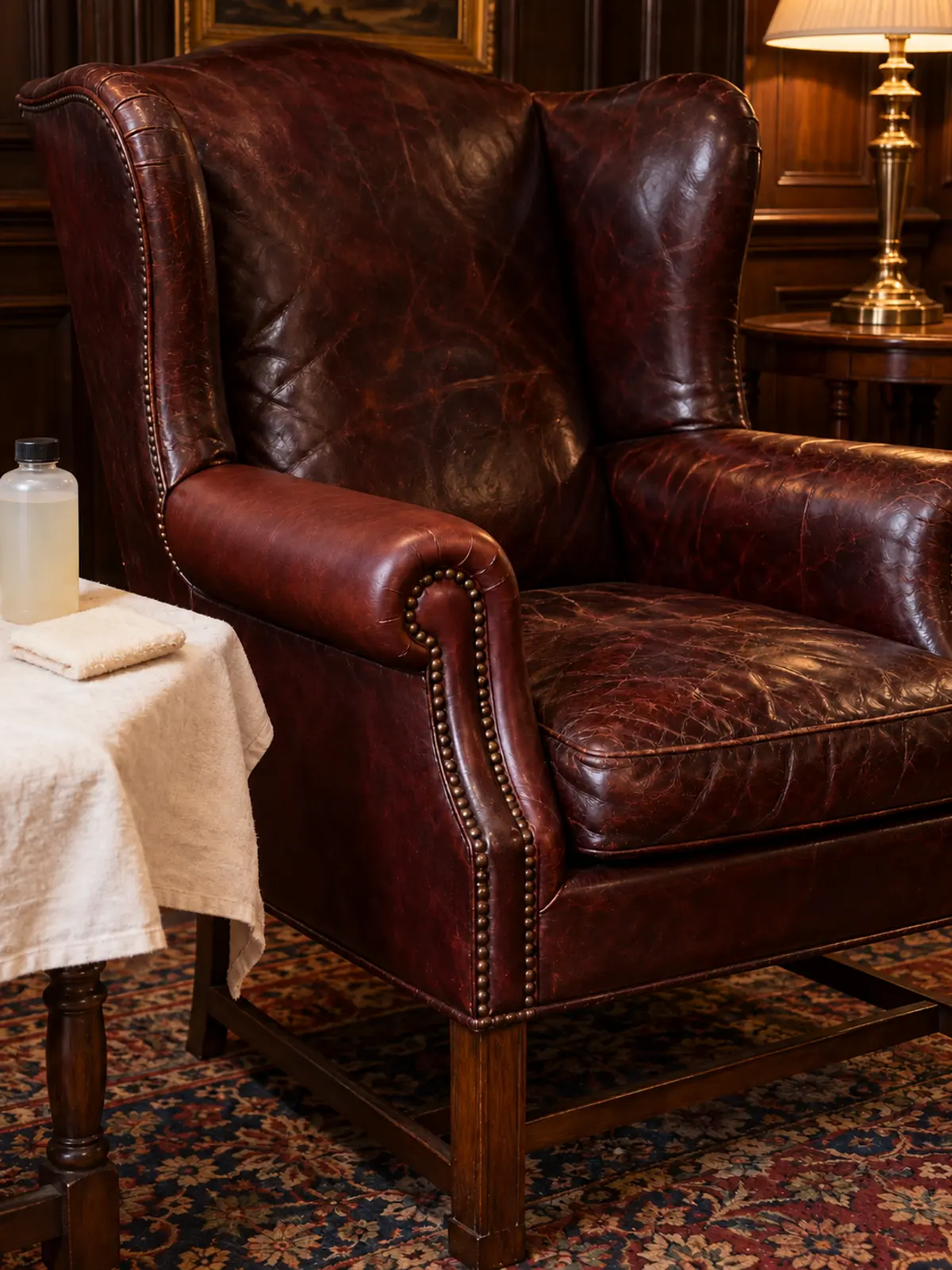

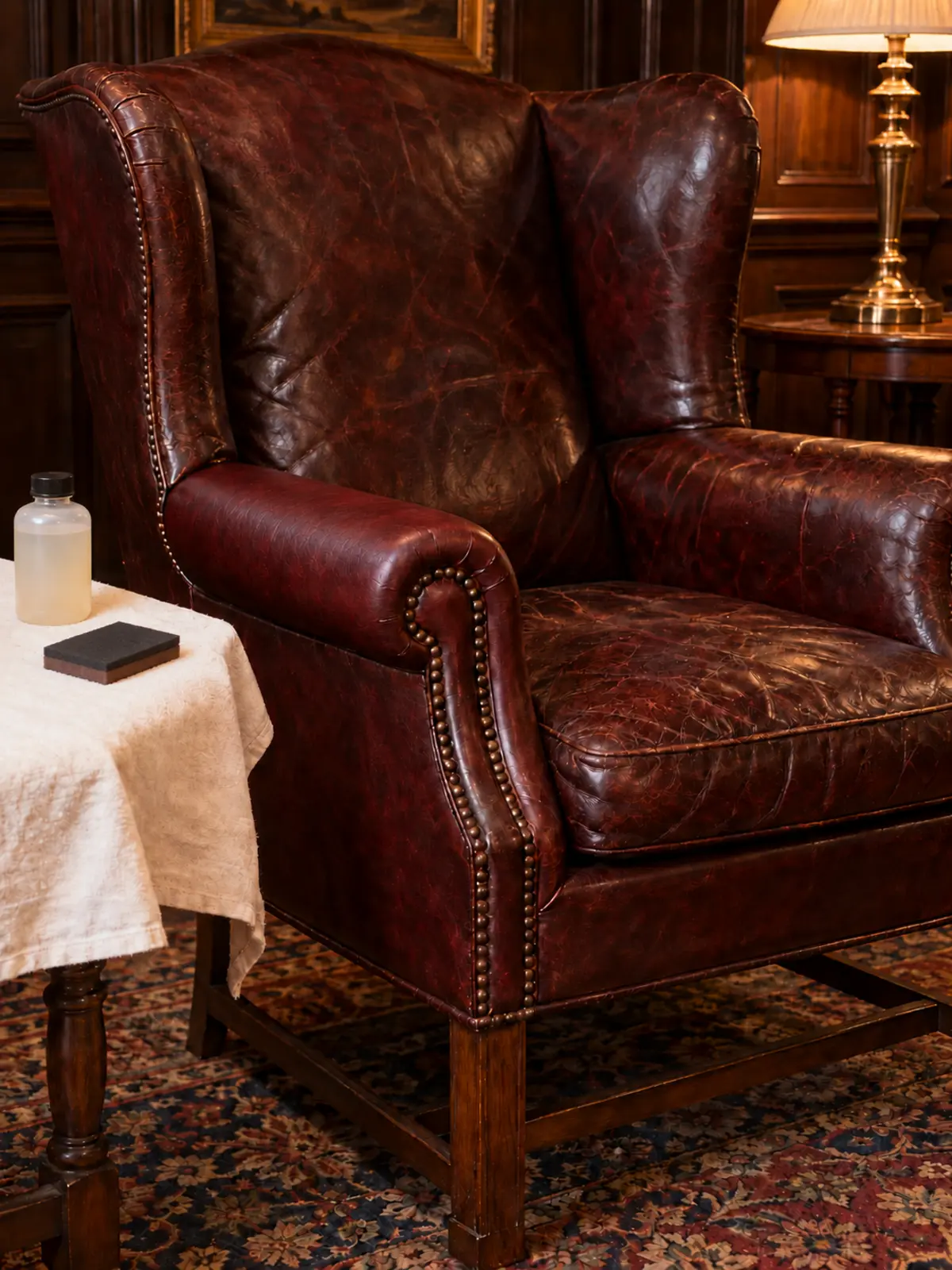

Chairs travel in batches through pickup and delivery, with a certificate of insurance to the club before the first collection.
What restores well, and what usually does not.
| Piece | Usual condition | What returns | Where it happens |
|---|---|---|---|
| Club chairs and wingbacks | Dry, pale arms, sound hide | Color, depth, sheen | Shop, in batches |
| Chesterfield sofas | Buttoned panels dulled | Color into the buttons and folds | Shop |
| Card and dining chairs | Seat fronts rubbed through | Color, matched across the set | Seats off, shop |
| Bar stools | Tops dull, edges pale | Color and a harder topcoat | In place or shop |
| Locker room benches | Abraded, often cracked through | Often nothing: these are usually recovered | Assessed on site |
Older, not newer.
More in the before and after gallery.
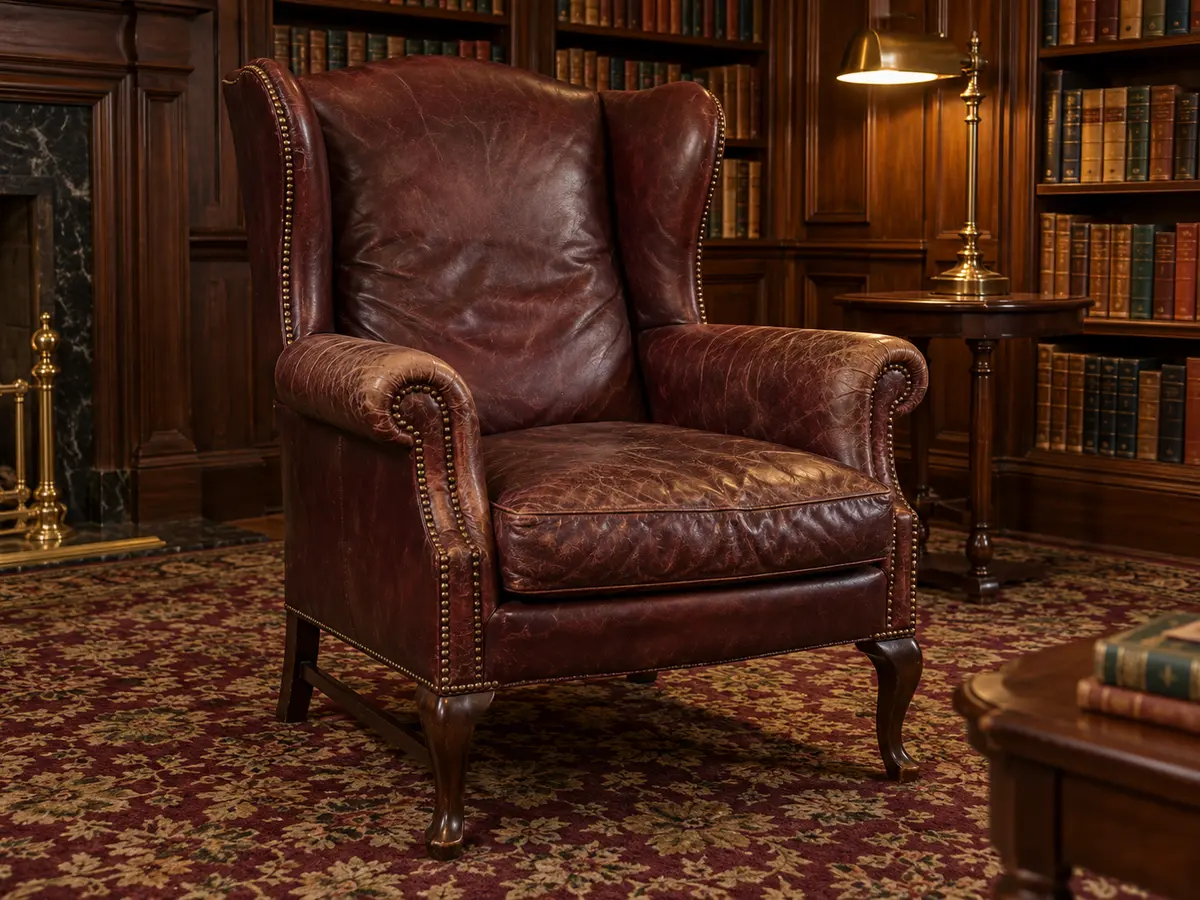
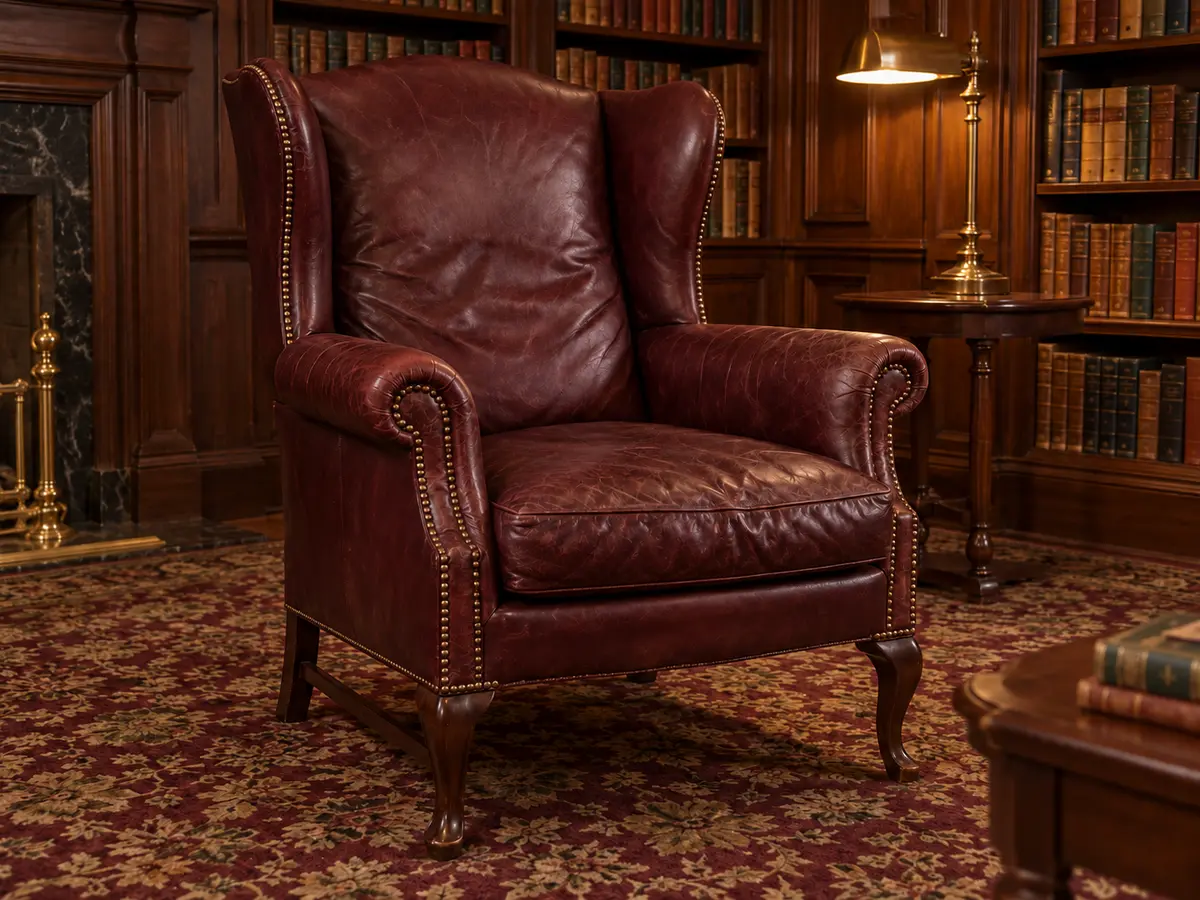
Library wingback. Same hide, same creases. Only the finish is new.
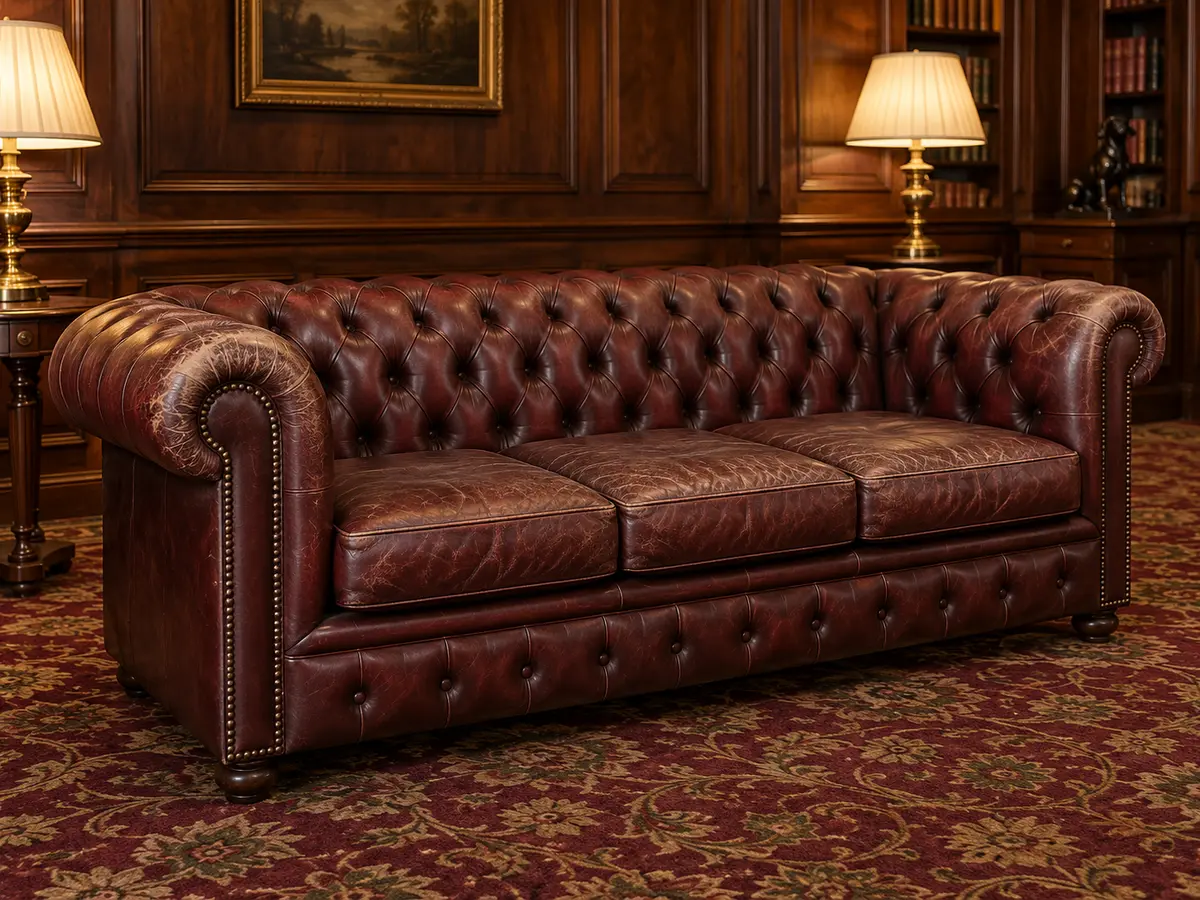
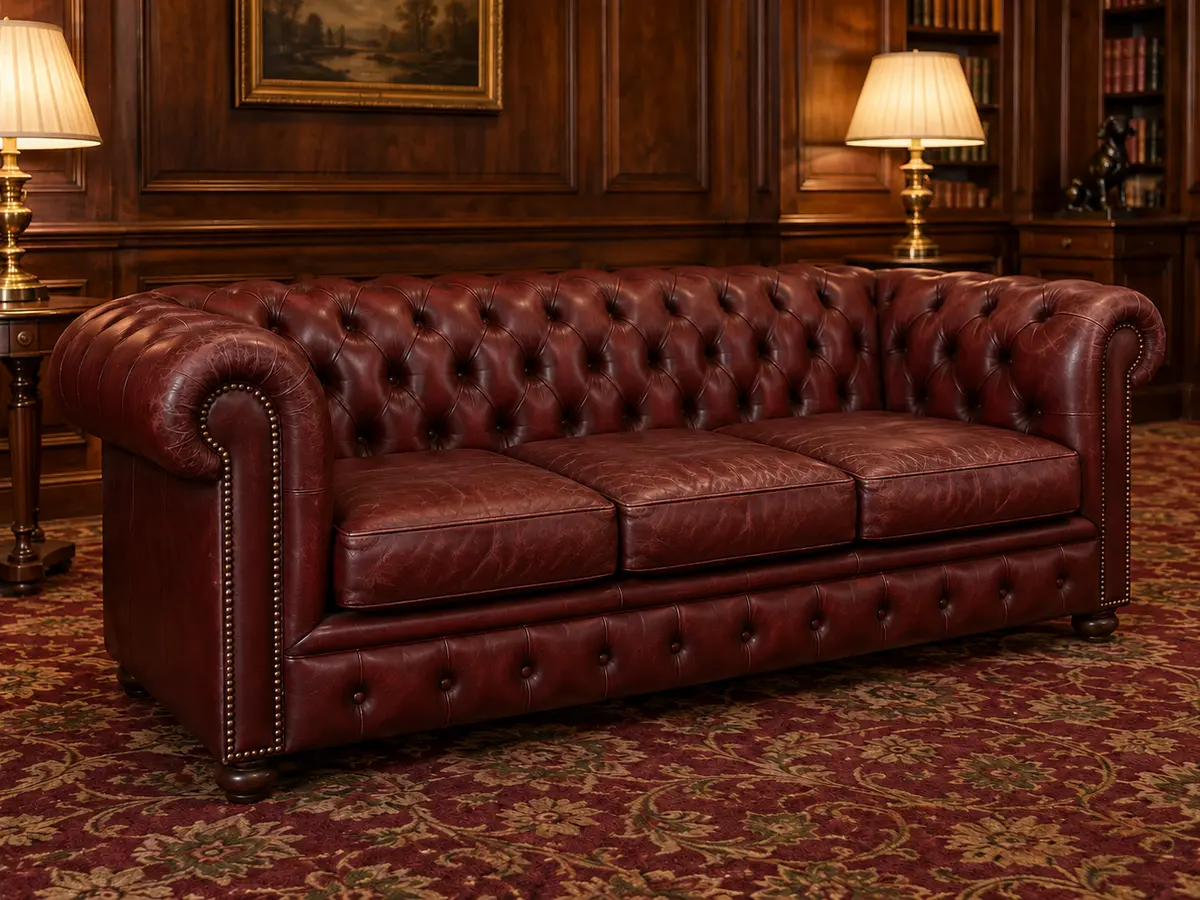
Lounge chesterfield. Color worked into the buttons and folds, where it always goes first.
We say so at the walkthrough.
Around the clubhouse.
Leather club chair restoration is one service on the private and country clubs hub, which plans the building room by room, the way member-owned clubs budget their public rooms.
The work itself
Leathers and venues
Where we work
What house committees ask.
What is leather club chair restoration, exactly?
The old finish is cleaned and stripped back, the hide is fed, then color and a new topcoat are built on the original leather. No new hide is fitted.
How do you know a chair can be restored?
We flex the panel. If the surface closes again and the crack disappears, the hide is alive and restoration will hold. If the crack stays open and pale, the hide has gone.
Will the chair still look old?
It will look cared for rather than new. Depth and variation are built back in, because a club chair finished flat looks like a replacement.
Can you restore a whole set to match?
Yes. A set is done together and matched to the chairs that are staying in the room, with the color kept on file for later phases.
How long is the room without its chairs?
Restoration needs curing time, so chairs usually go out in batches and come back before the next batch leaves. The room is never emptied at once.
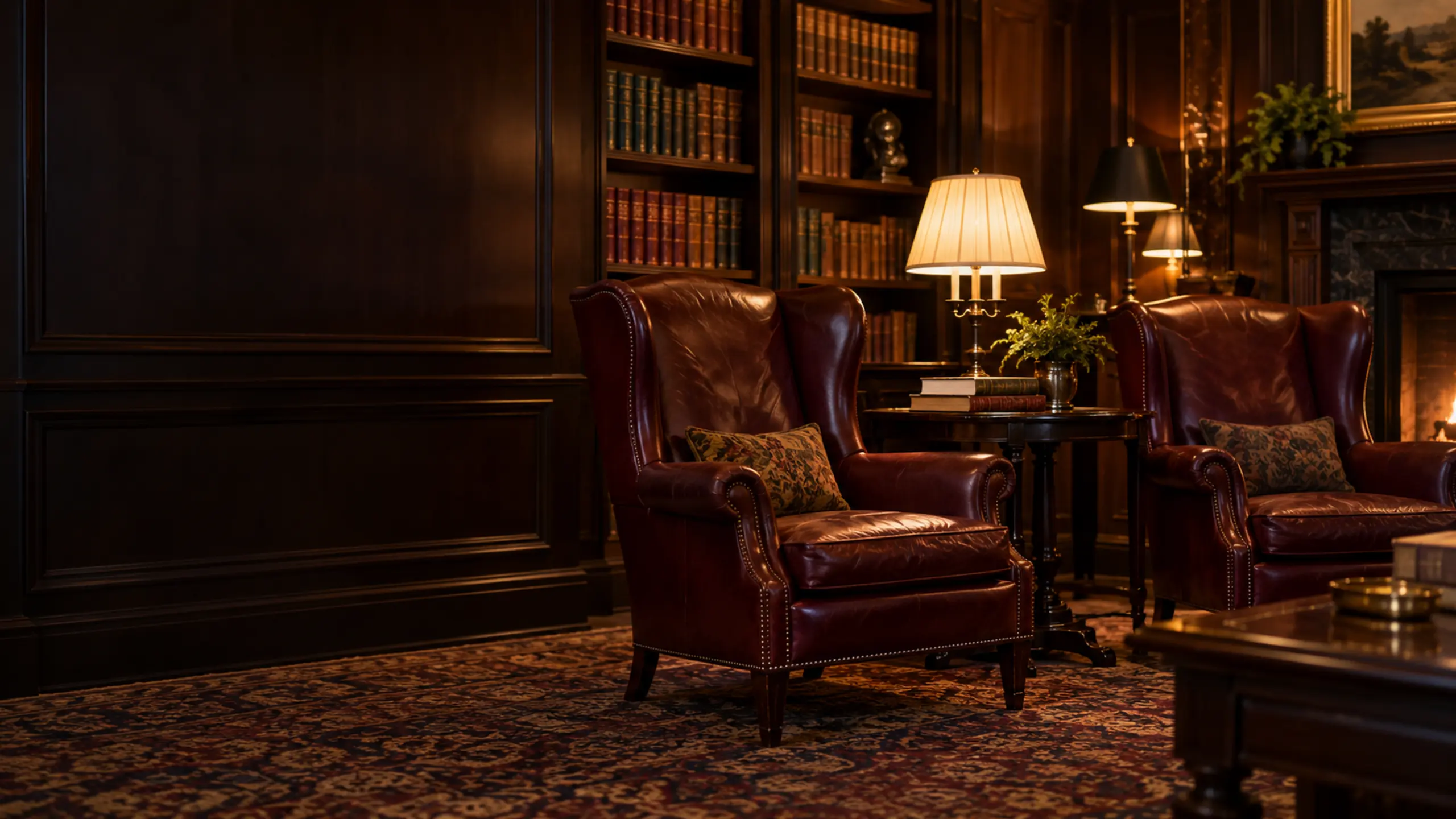
Press the panel and photograph the crack.
That one photo tells us whether leather club chair restoration will hold, or whether the set is due for new hide. Or book a walkthrough and we will test the chairs ourselves.