

Antique leather sofa repair
The leather outlived what holds it up.
On a sofa this old the hide is usually the strongest thing in it. What gave way is jute, twine and glue — all of it reachable from underneath.
Photograph the underside, not just the seat
Why it failed
Two clocks, running at different speeds.
Leather ages in plain sight. Everything under it ages quietly, then all at once. That gap is the whole of antique leather sofa repair.
A hide kept out of sun can still be working a century on. Jute webbing cannot. The twine holding the coil springs upright goes brittle unseen, and hide glue lets go without a sound.
So the seat drops and the owner is told it needs reupholstering. Usually that is the wrong job. Antique leather sofa repair goes in from beneath and leaves the surface alone.
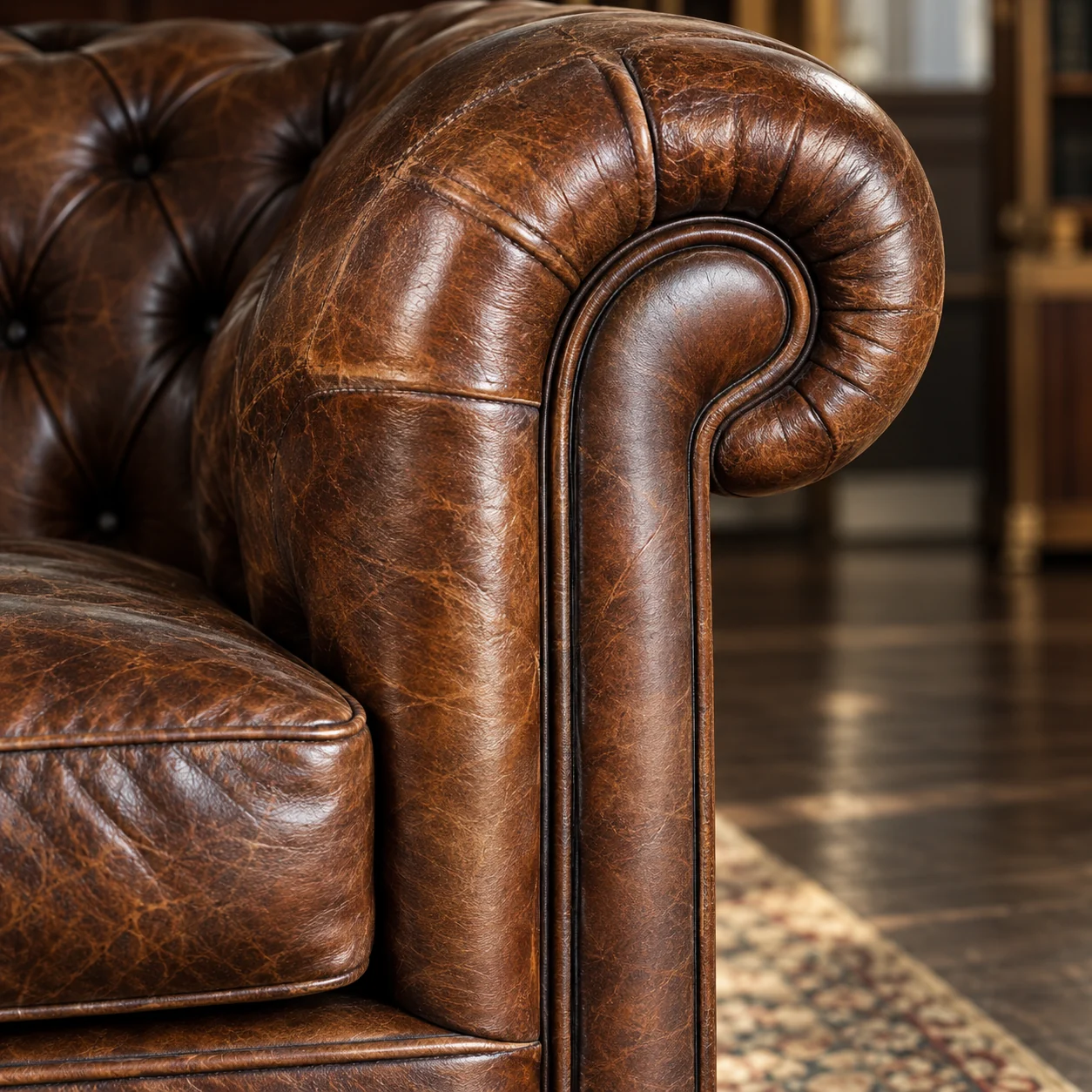
Darkened arm tops and creases where people sat are what you cannot buy back. Replace the cover and you own the shape without the history.
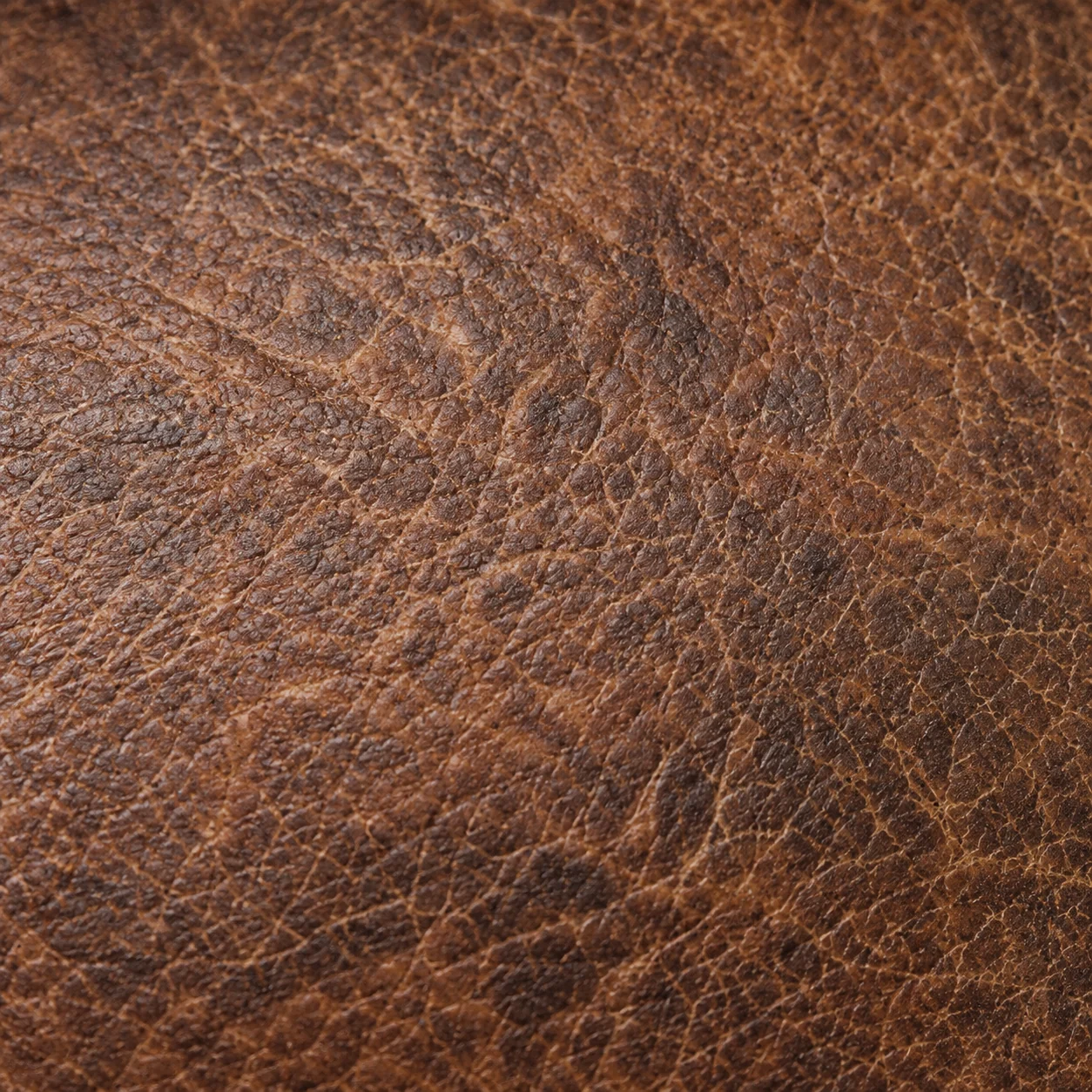
A hide still doing its jobGrain open, color uneven, nothing split.
And the half you never seeWebbing, coils and twine, all behind the panel.
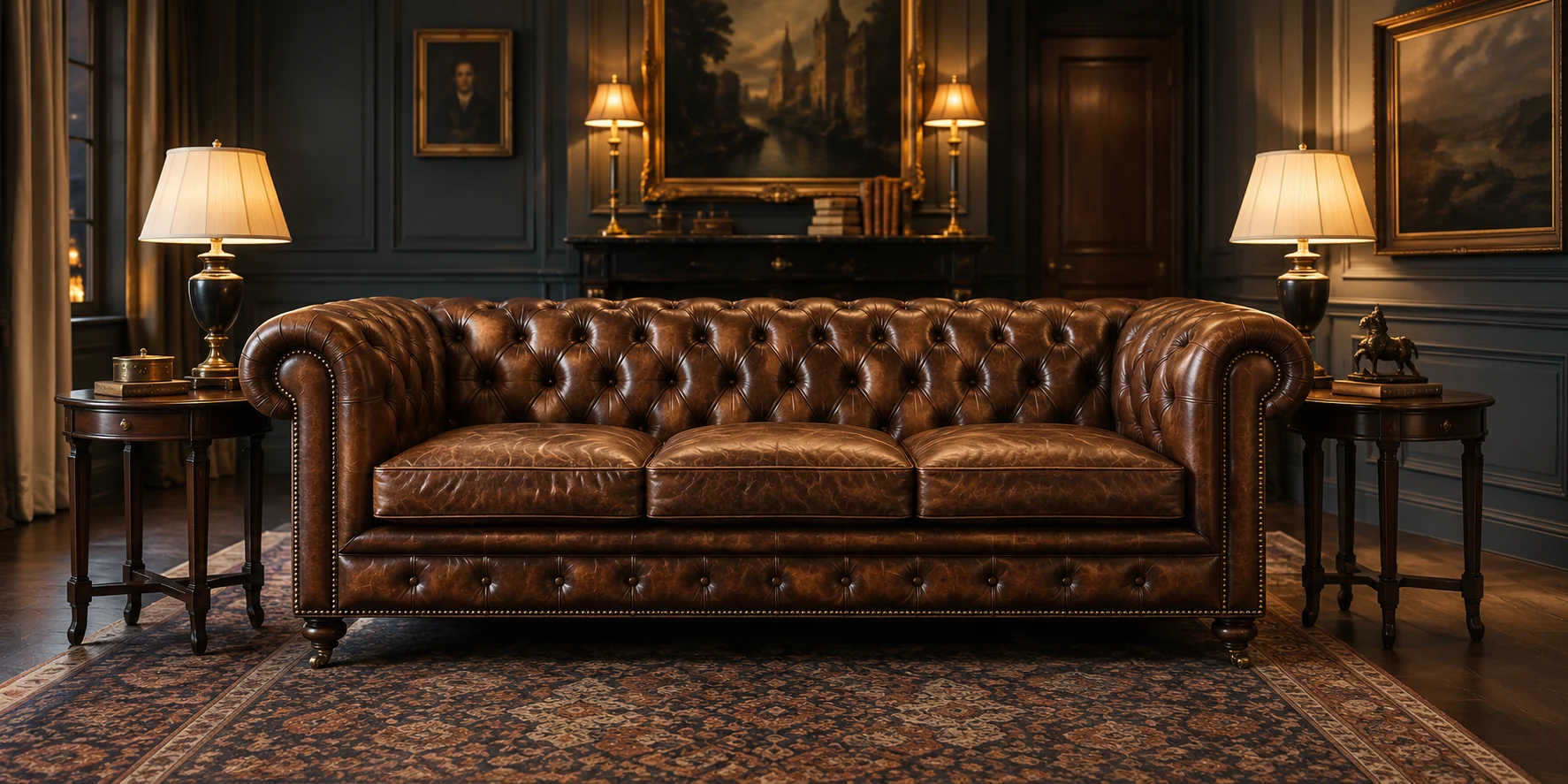
The seat is where the clocks separateIt can look like this and still drop when you sit in the middle.
What you are feeling
You can tell what let go by where you feel it.
Antique leather sofa repair starts with which one it is
The whole seat sinks, evenly
The webbing. Jute has torn off the rail, so nothing carries the springs.
Cover stays onA hard edge or a poke, in one place
A spring. A coil has broken, or a tie snapped and it now leans into the stuffing.
Cover stays onA creak or a shift as you sit
The frame. Glue has released in a dowel or mortise, and the joint works.
Cover stays onPowder on your hand from the surface
The hide itself, breaking down. The one failure really about the leather.
Different conversation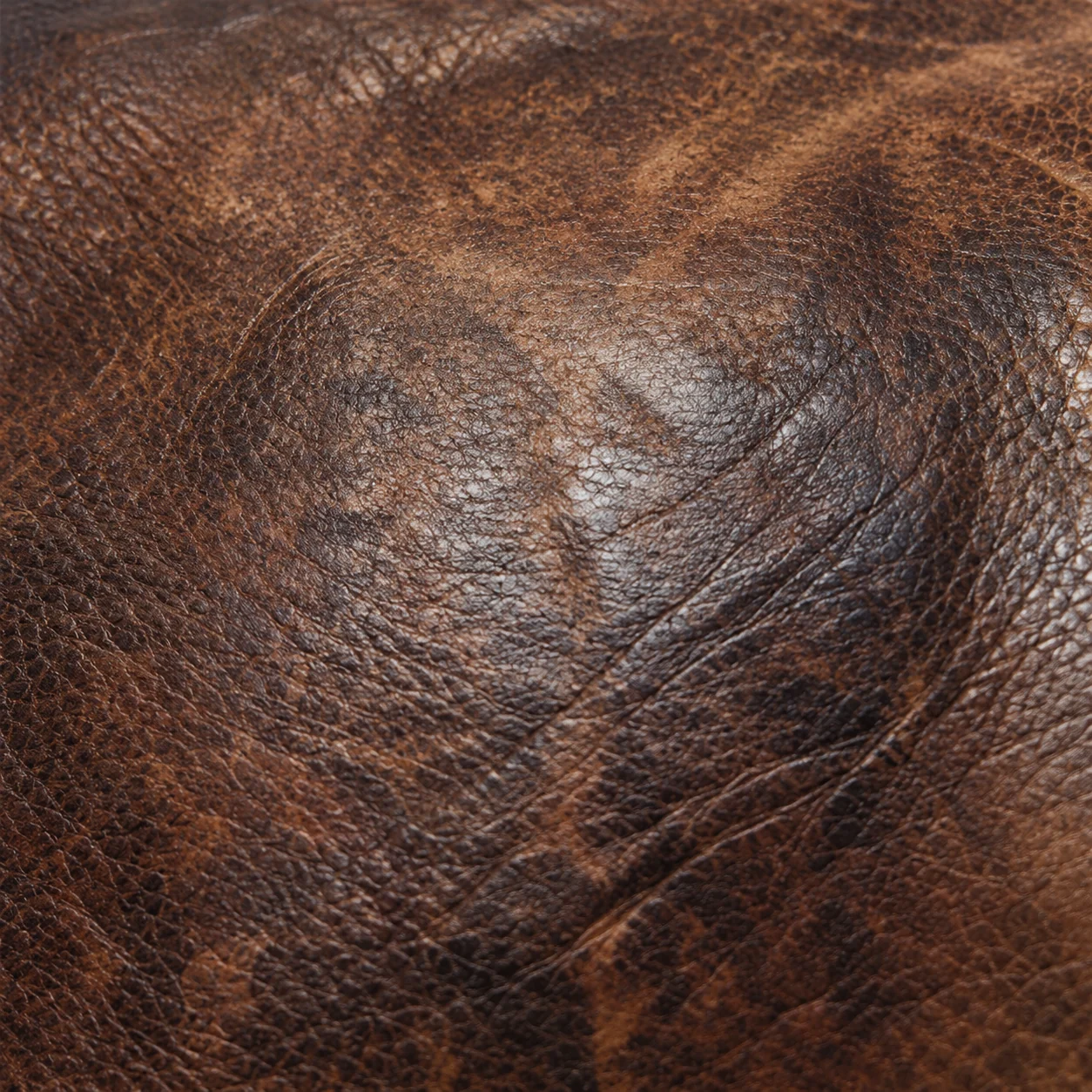
Slack, not stretchedNothing under it. Structural.
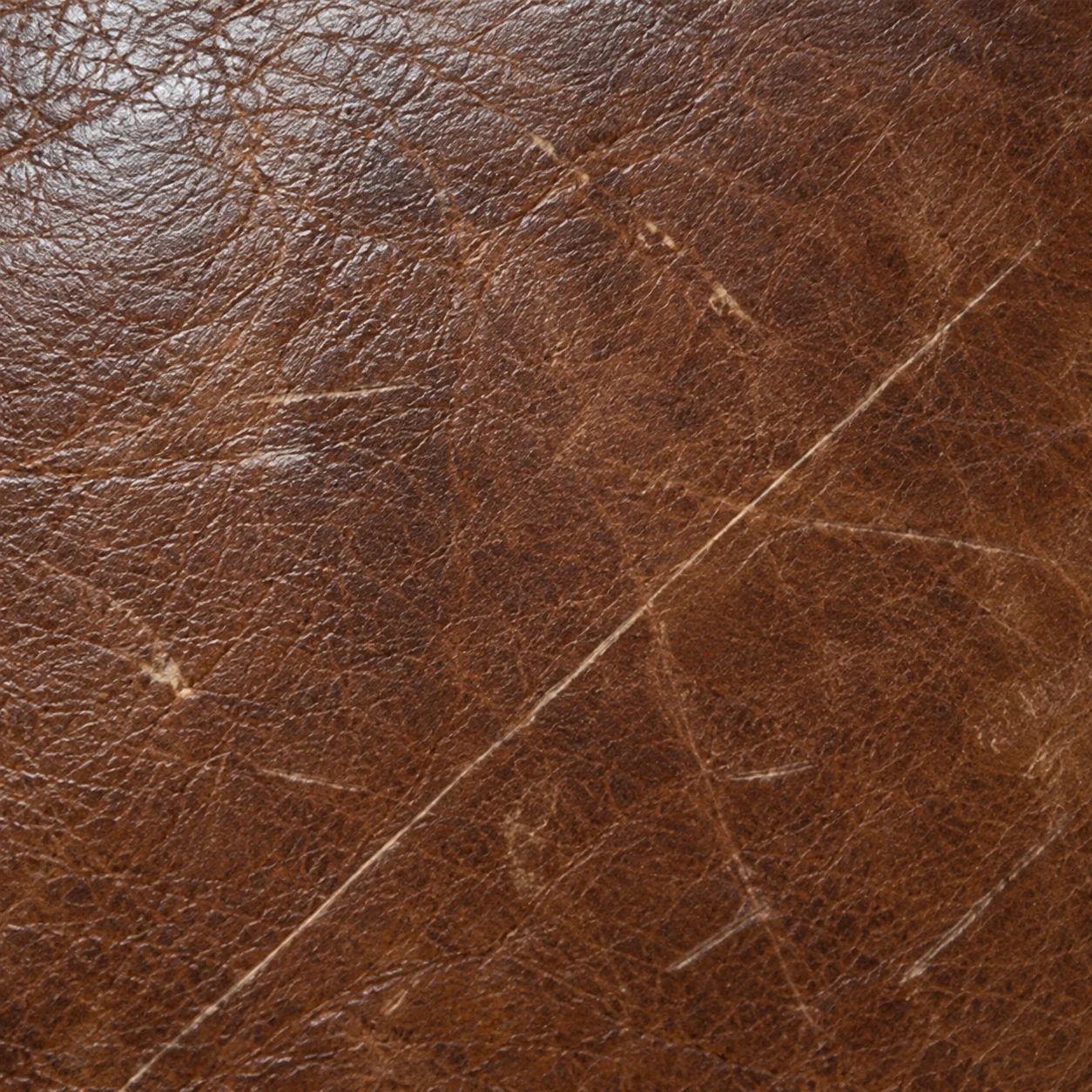
Pale scratchesColor moved, hide intact.
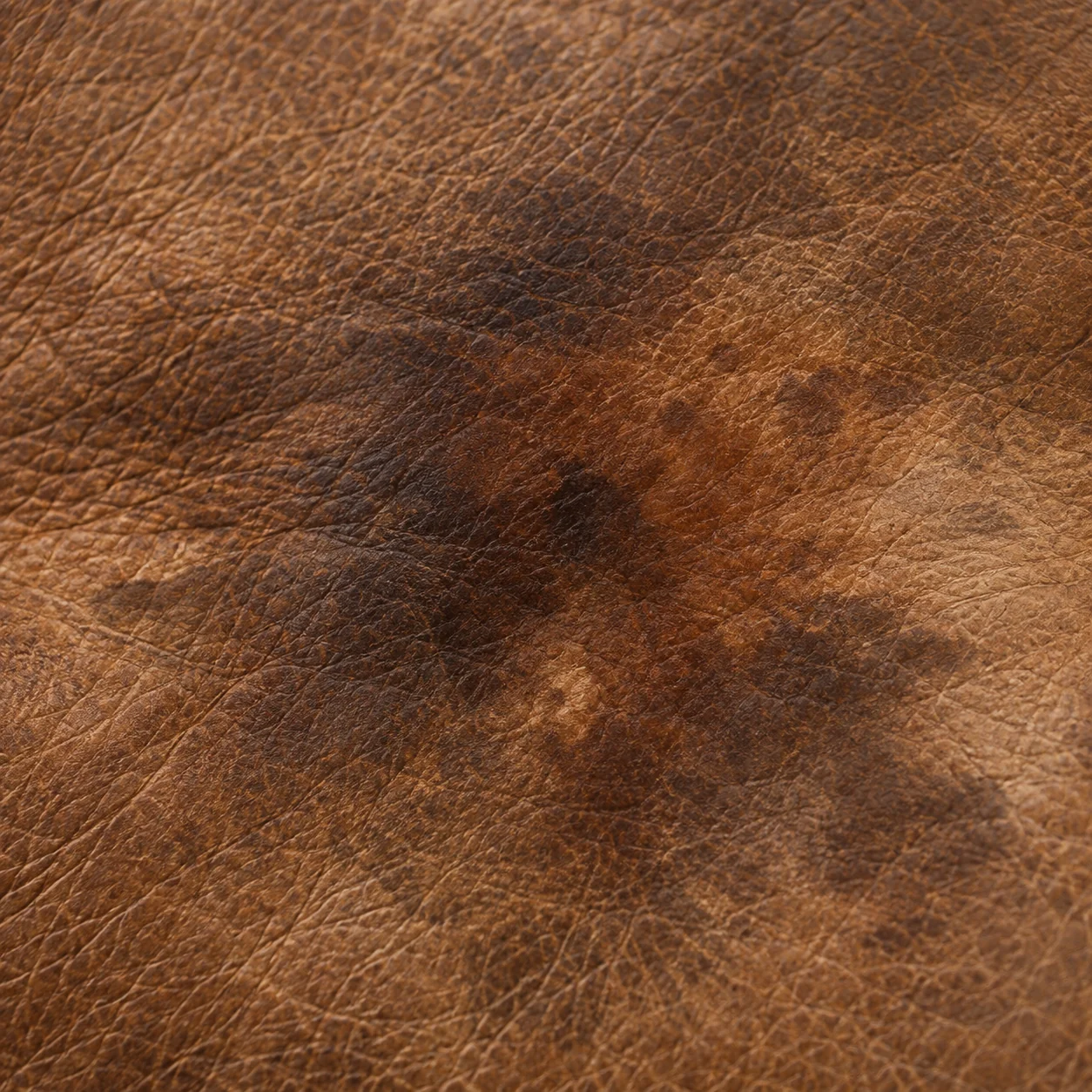
A dark patchSomething soaked in. Depth decides.
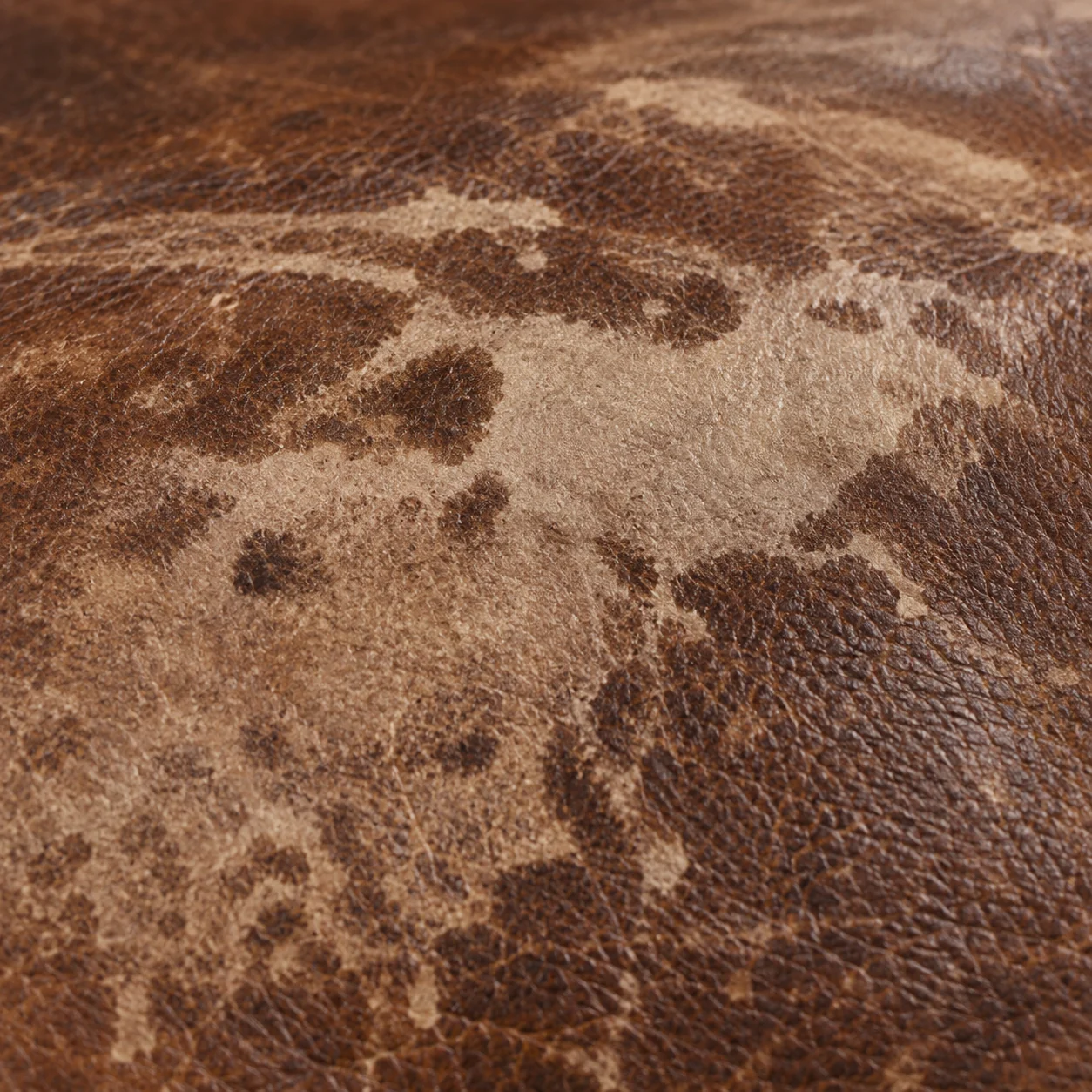
Worn to the rawFinish gone, fiber sound.
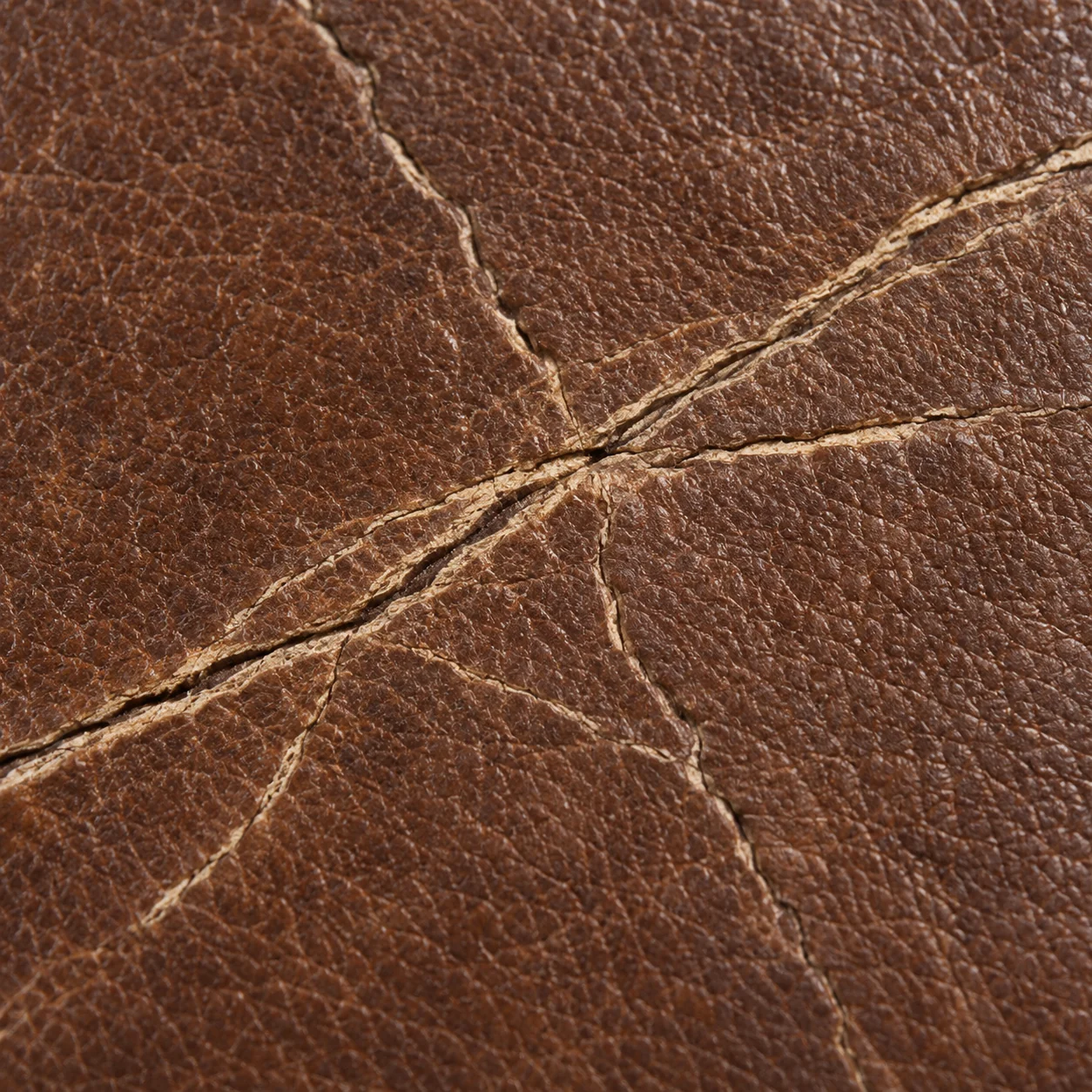
Cracks from one pointSomething hard pushed up under it.
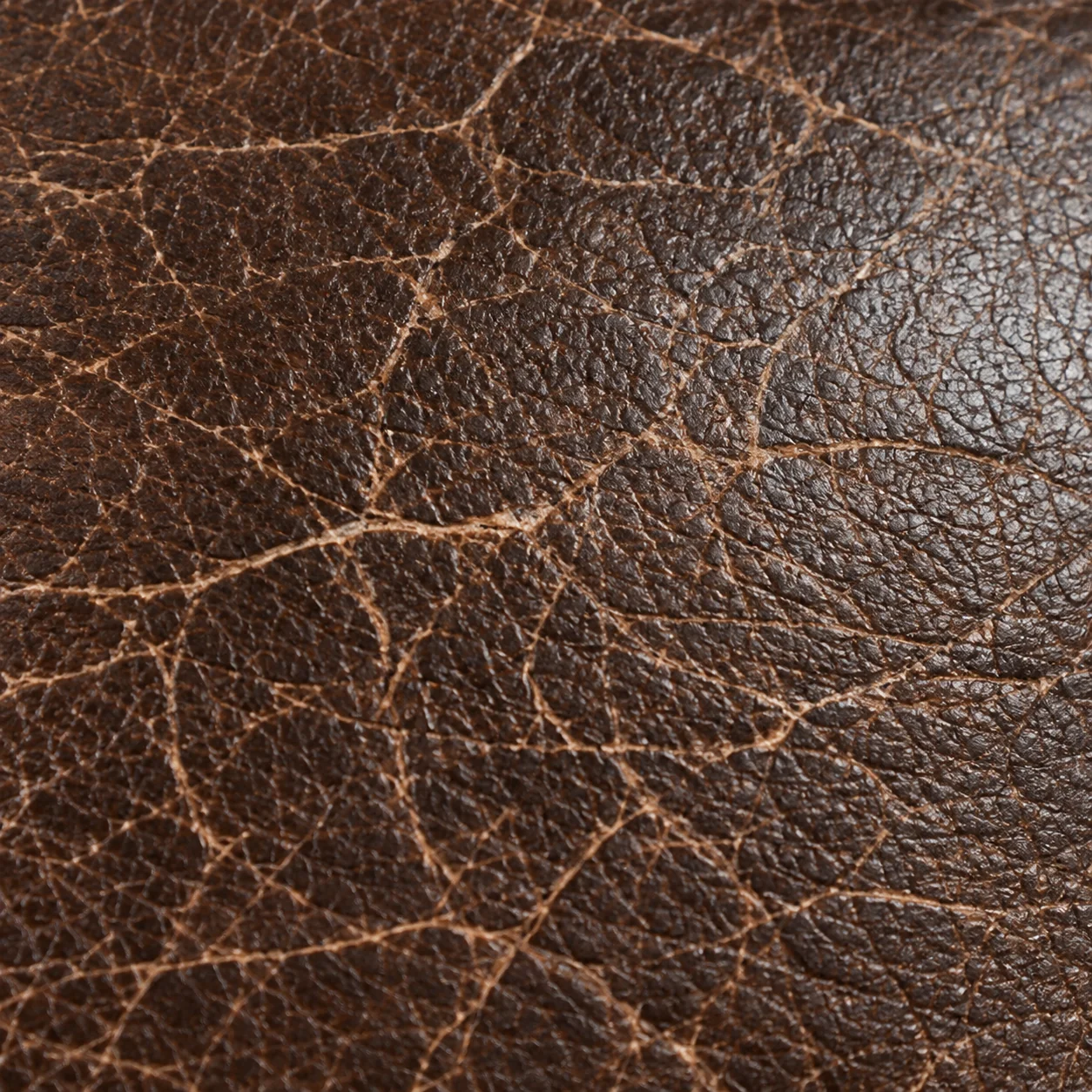
Crazing all overAn old recolor, not the hide.
Why we leave the cover on
A tacking rail only holds so many holes.
Every time a cover comes off and goes back, the wood underneath pays for it.
An antique sofa is tacked, not stapled. Pull the cover and you leave a line of holes in a softwood rail; the next tacks have to find fresh wood between them. Do that a few times and the rail stops gripping — tack-sick, upholsterers call it — and the only repair is to splice a new one in.
That is a permanent change to an antique, made for a job that often did not need doing.
It is also why antique leather sofa repair is quieter than people expect: the sofa upside down, nothing happening to the side you look at.
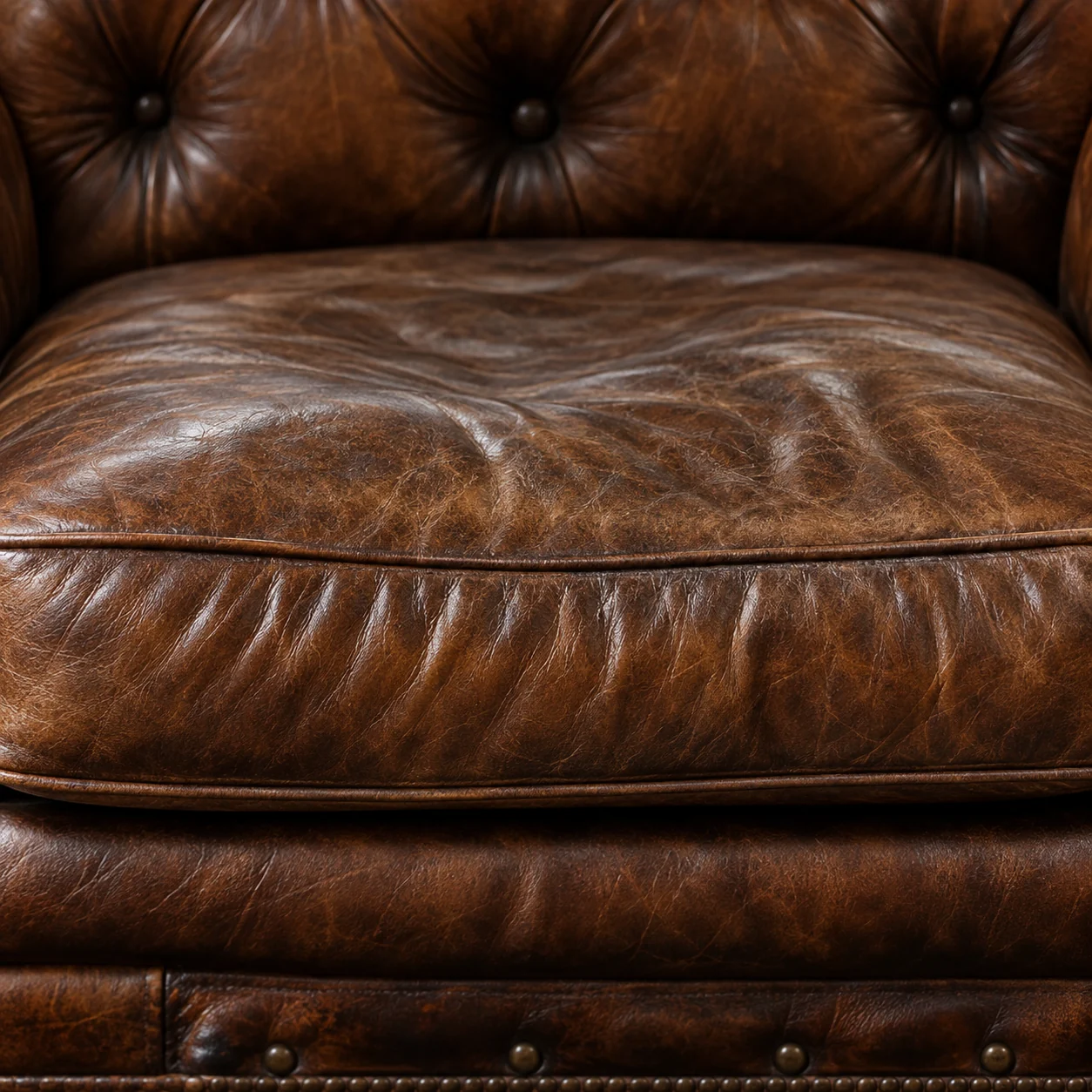
The rail, and what is in itEvery head is a hole in softwood, and there are only so many.
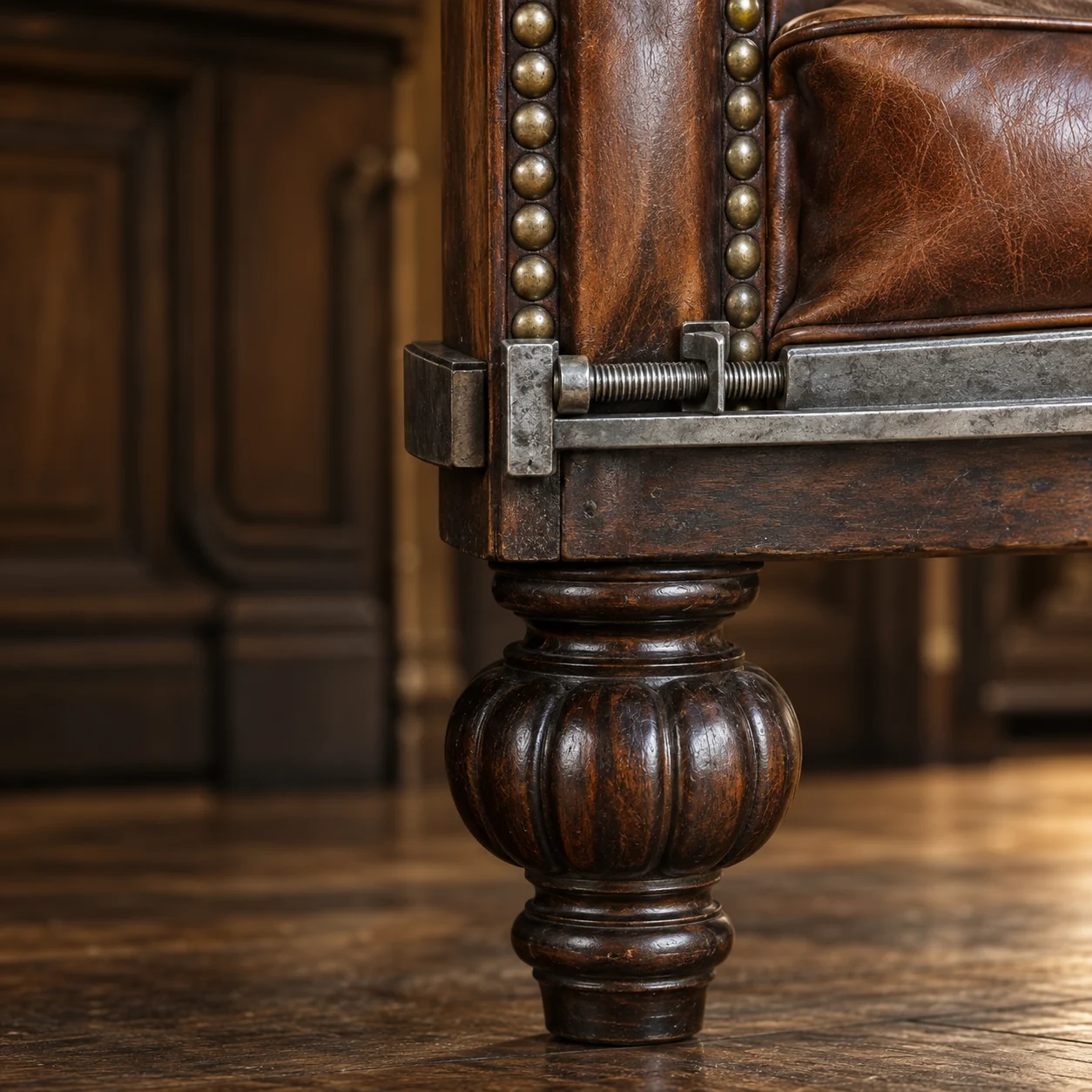
What a previous hurry leavesA plate over an opened joint. It stops the wobble and weakens the timber.
The work
It all goes in through the bottom.
Six moves of antique leather sofa repair, cover untouched
01 — THE DUST COVER
The black cambric was tacked on last, so it comes off first.
02 — READ IT BEFORE TOUCHING IT
Which webs tore, which pulled their tacks, where the twine broke. The original build is the pattern every antique leather sofa repair copies.
03 — WEBBING, STRAINED AND TACKED
New jute under tension from a web stretcher, interwoven as the original was, tacked into sound wood.
04 — THE SPRINGS GET RE-TIED
Each coil pulled upright and lashed to its neighbors. That returns the shape, not just the firmness.
05 — OPEN JOINTS, RE-GLUED IN KIND
Hide glue softens with heat and moisture, so the next person can open the joint.
06 — THE BOTTOM CLOSES UP
Fresh cambric, tacked back on. From above nothing has changed, except that it carries you — which is what a finished antique leather sofa repair looks like from the room.
Wrongly blamed
Six things people blame the leather for.
Antique leather sofa repair: thread, cord and twine perish first
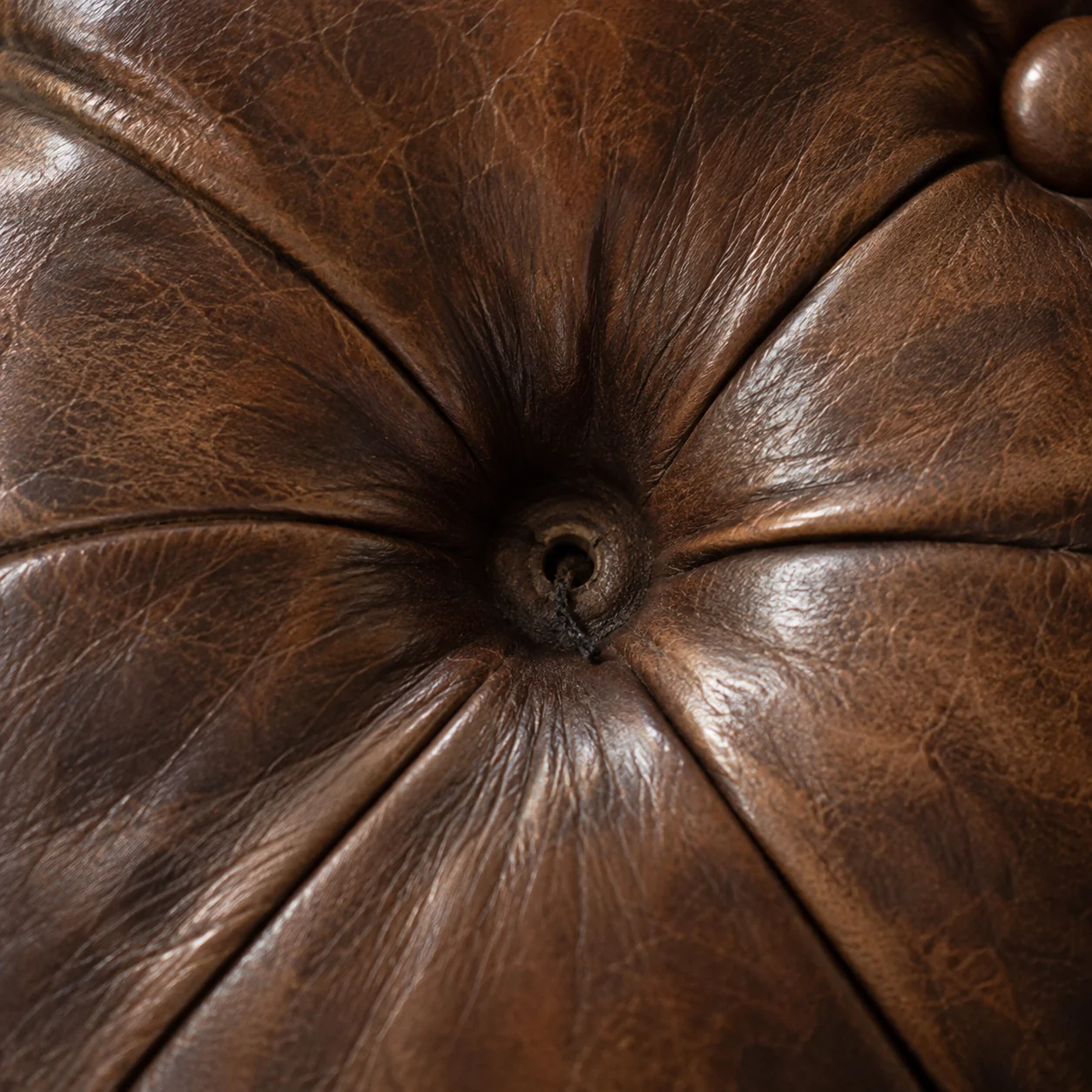
A button goneThe twine broke, not the hide.
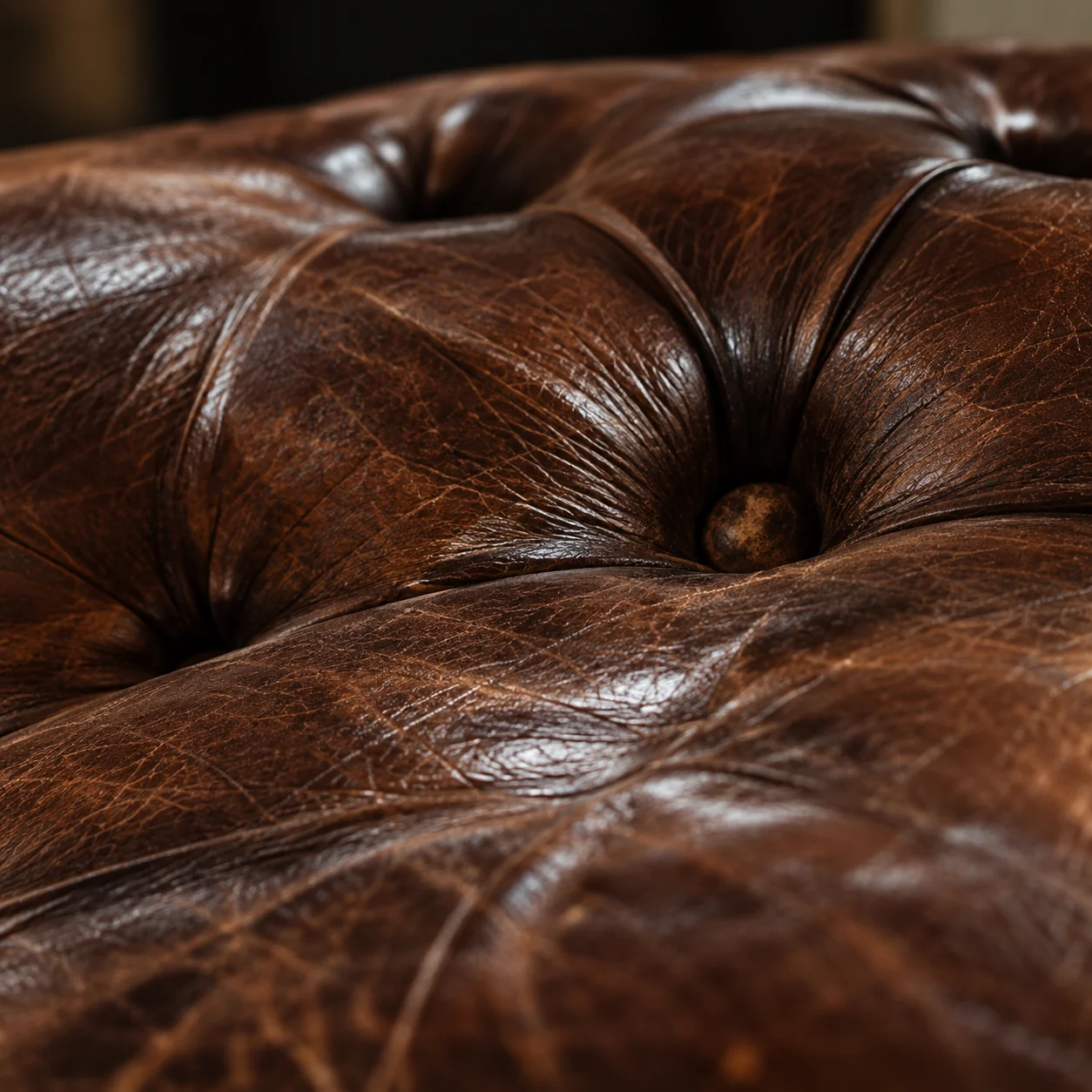
One still holdingTwine run to the base and knotted off.
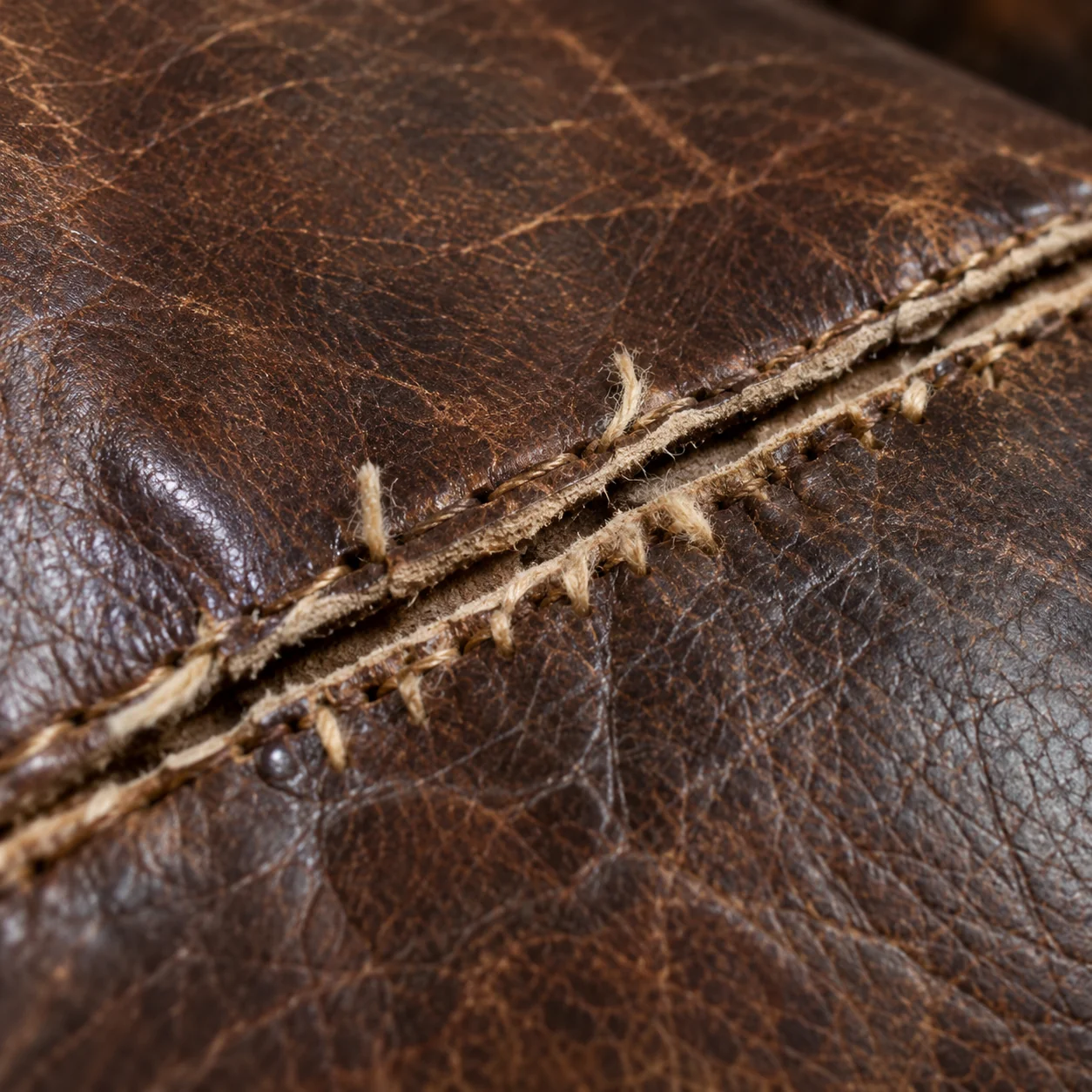
A seam let goThread perished. Both panels are whole.
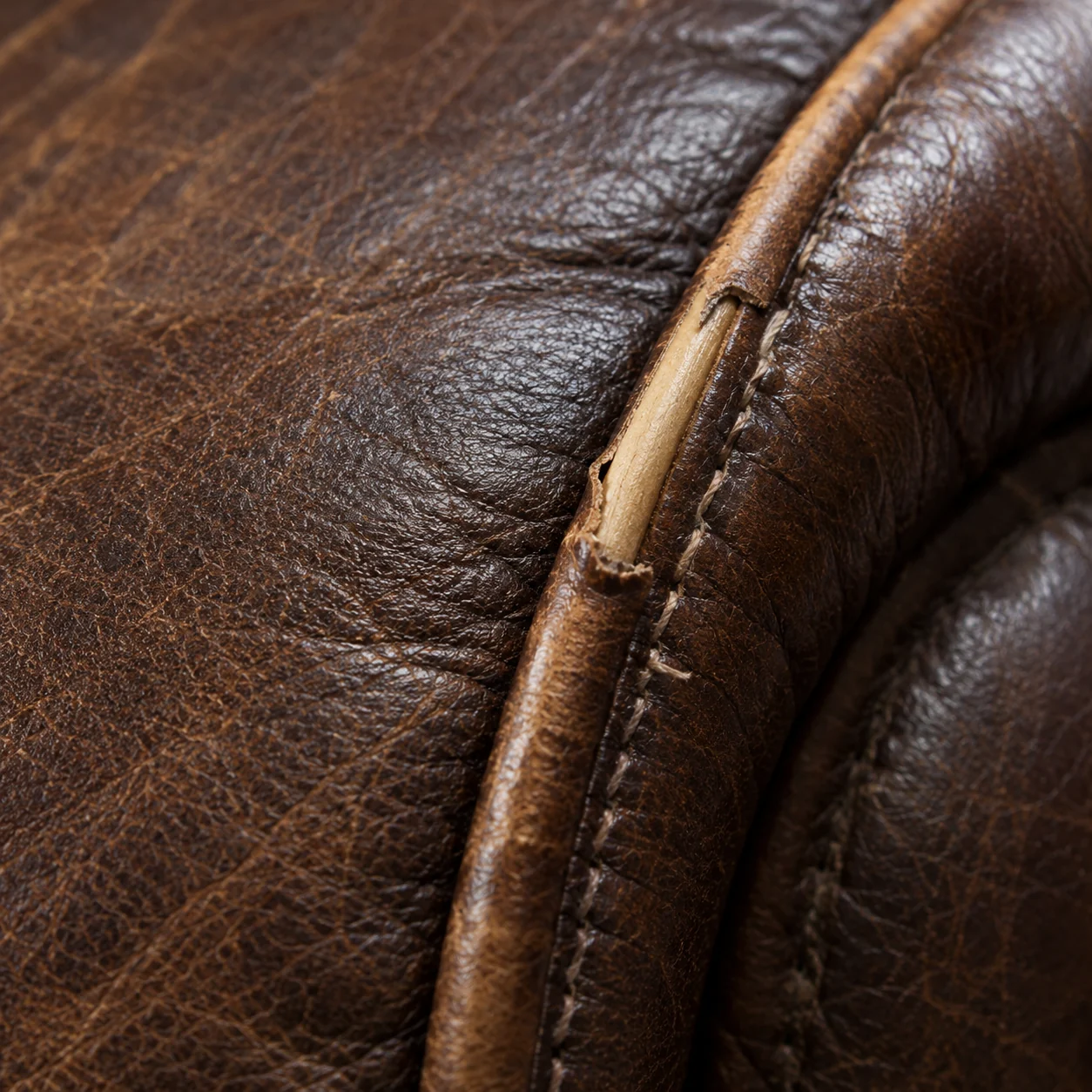
Piping split openThe cord gets re-covered, not replaced.
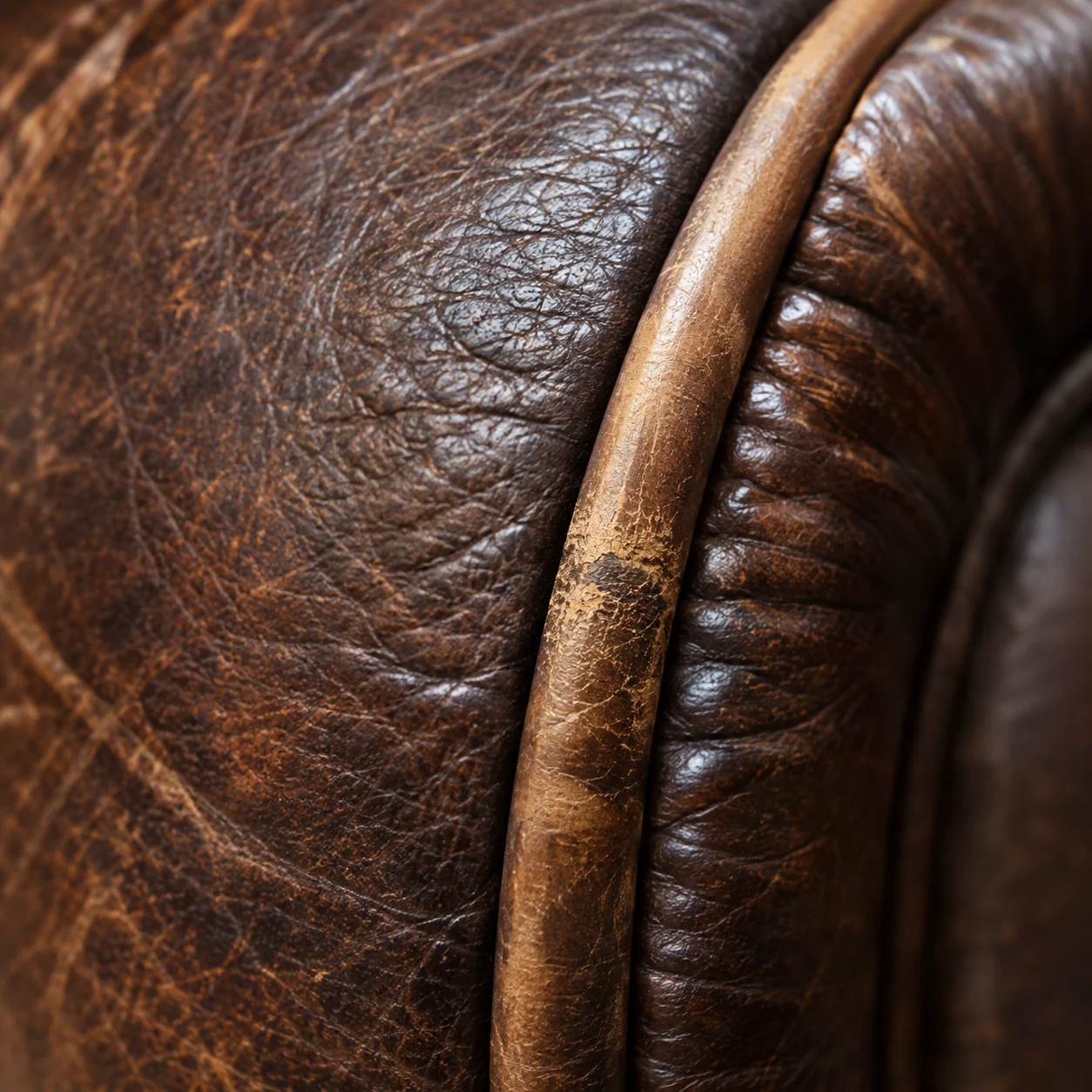
Piping rubbed paleThe highest line on the arm goes first.
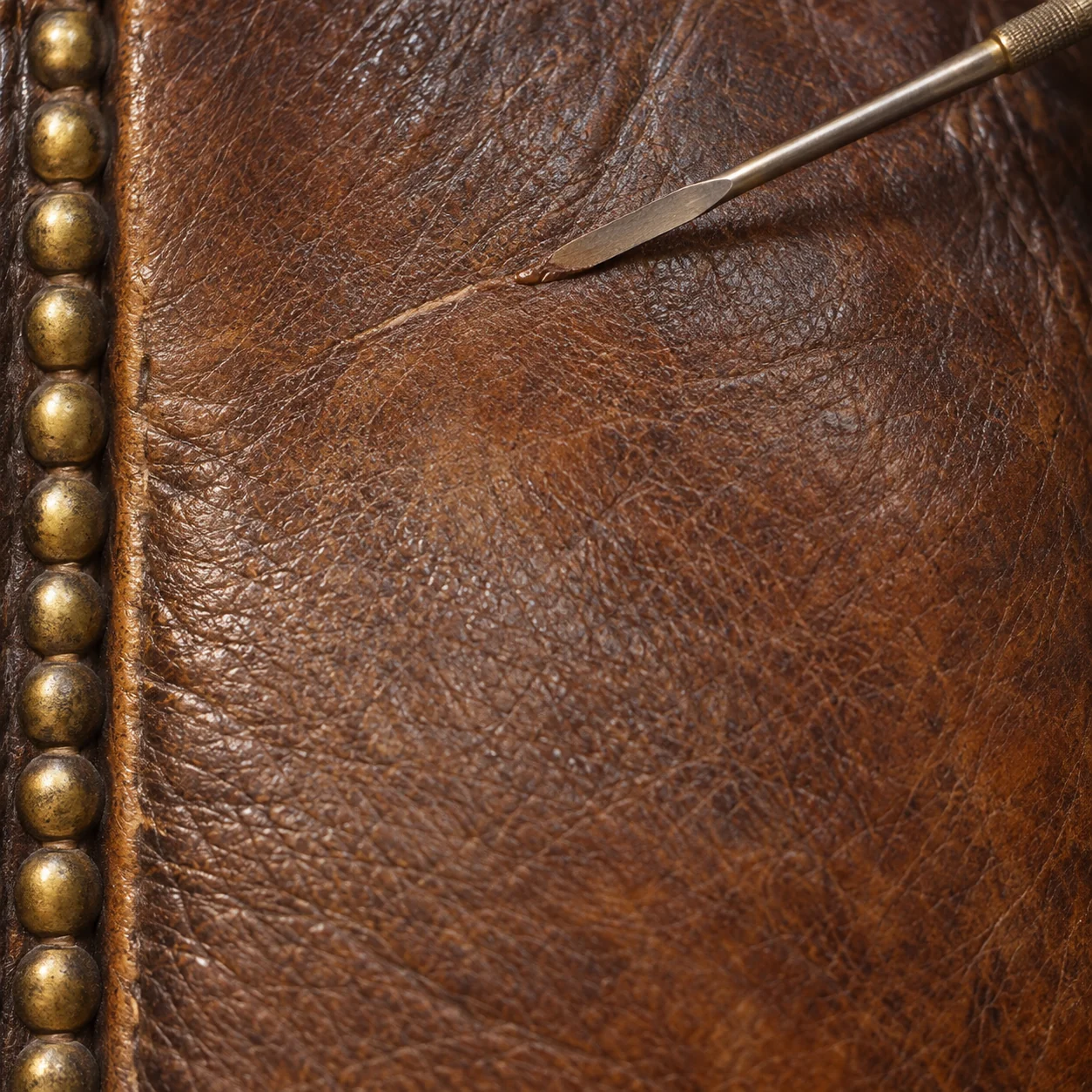
Cracking at the nail lineLeather works hardest where it is pinned.
What we will not do
Zigzag springs would make it a different sofa.
There is a fast version of antique leather sofa repair. We do not offer it.
The quick answer to a dropped antique seat is to tear out the coils and staple in serpentine springs, the flat zigzag wire of modern frames. It feels firm on the day and permanently removes what made the sofa worth keeping.
Staples for tacksFaster to drive, and far worse for the rail when the cover next comes off.
Foam for hairCheap and uniform, and it compresses to a shape the seat was never built around.
PVA for hide glueIt sets harder than the wood. The joint never opens cleanly again.
A recolor to even it outIt hides the wear, and the age with it. Ask for it knowingly.
Face-up work
The rest is done by hand, on the good side.
Antique leather sofa repair with the cover still on
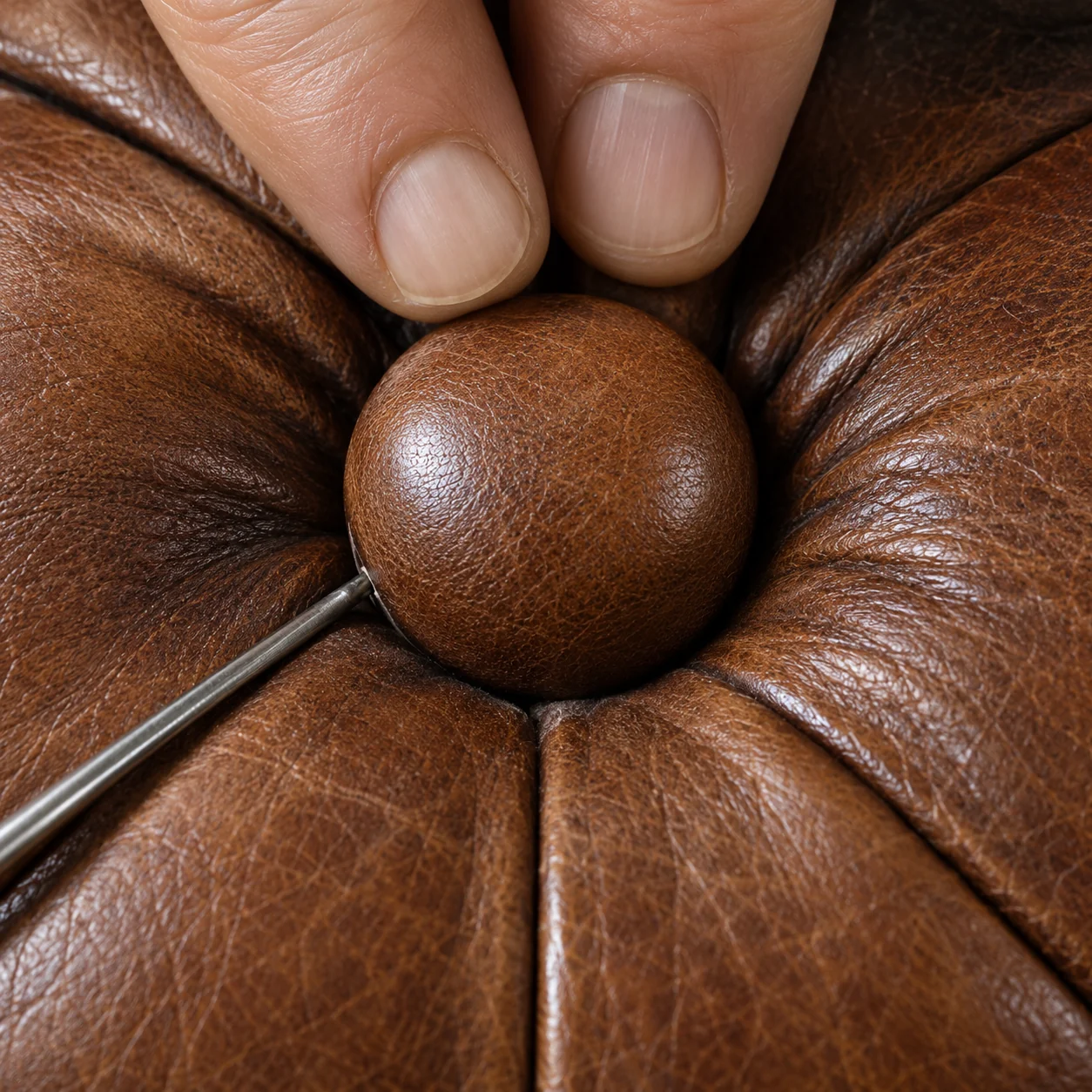
Re-tying a buttonTensioned to match the tufts either side.
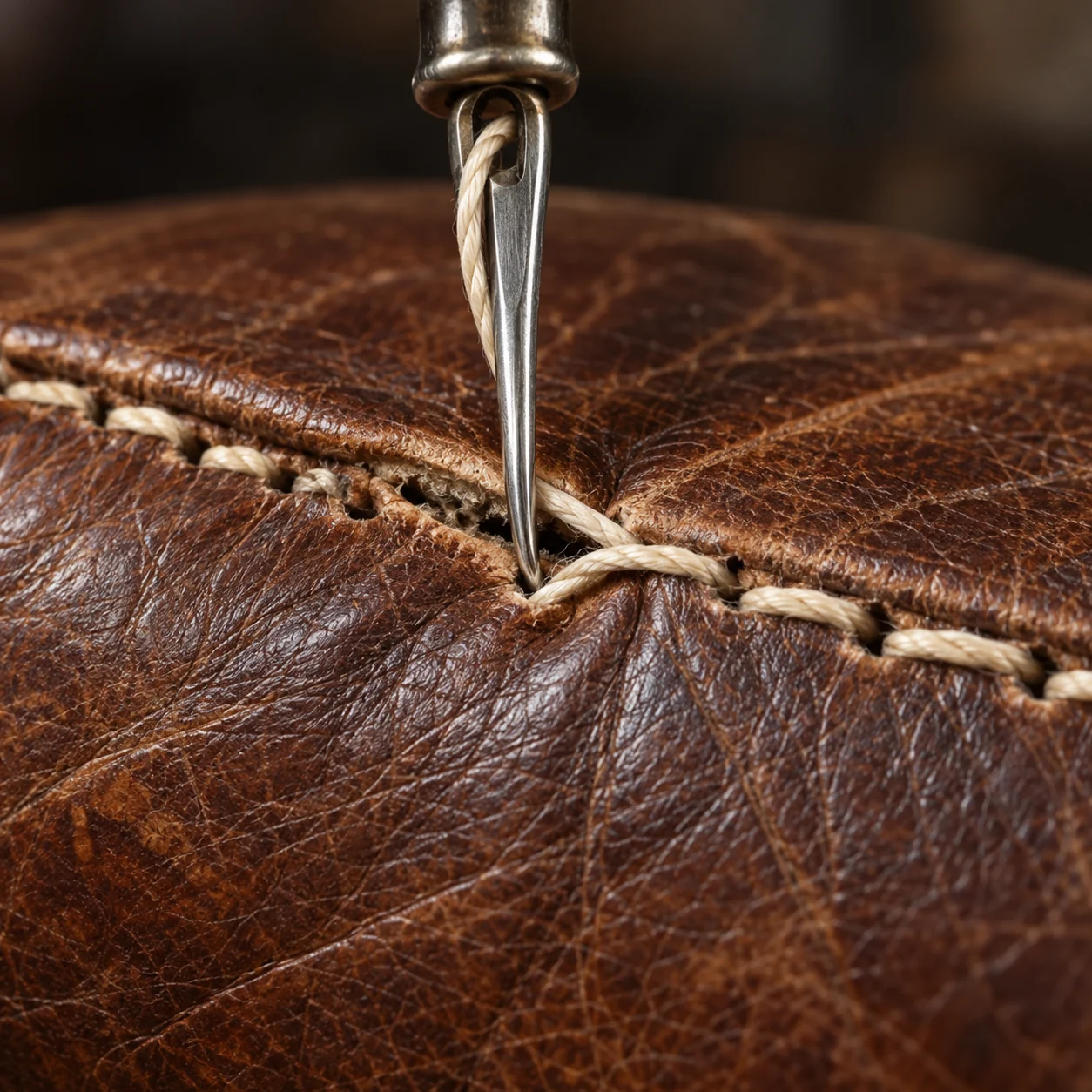
Closing a seamBack through the original holes wherever they hold.
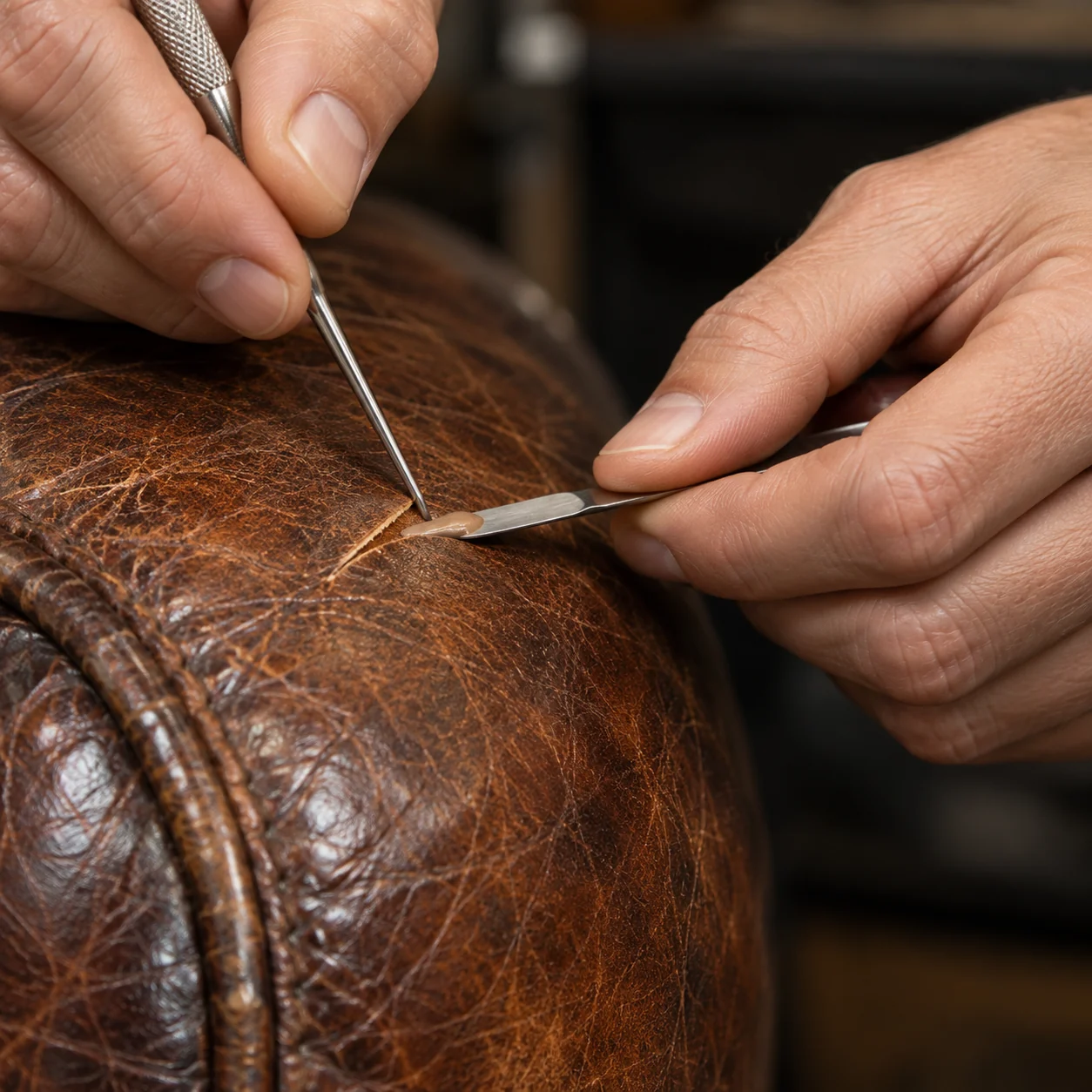
Opening a split firstEdges lifted and cleaned before anything goes in.
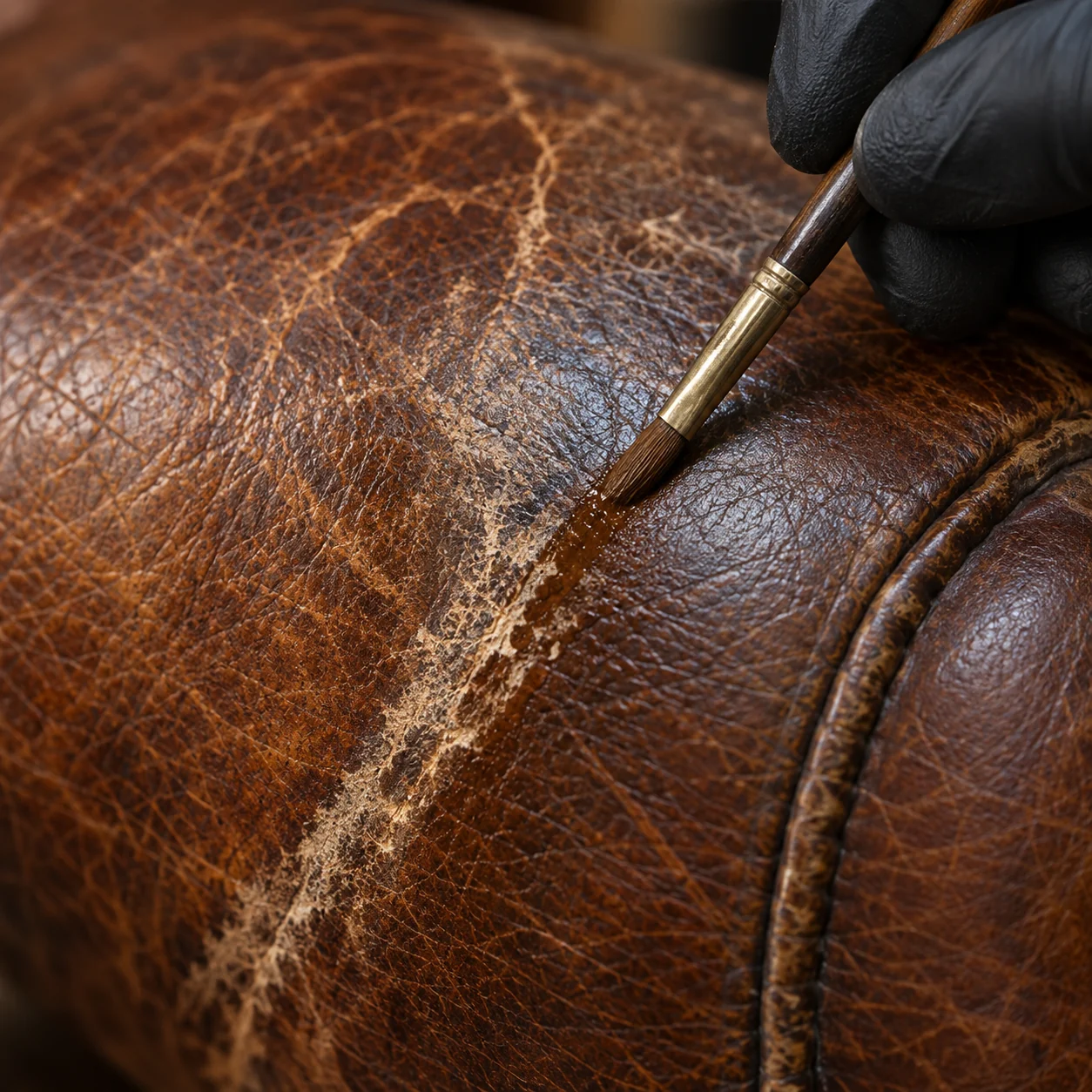
Filling a crack runThin passes, so the mend still bends.
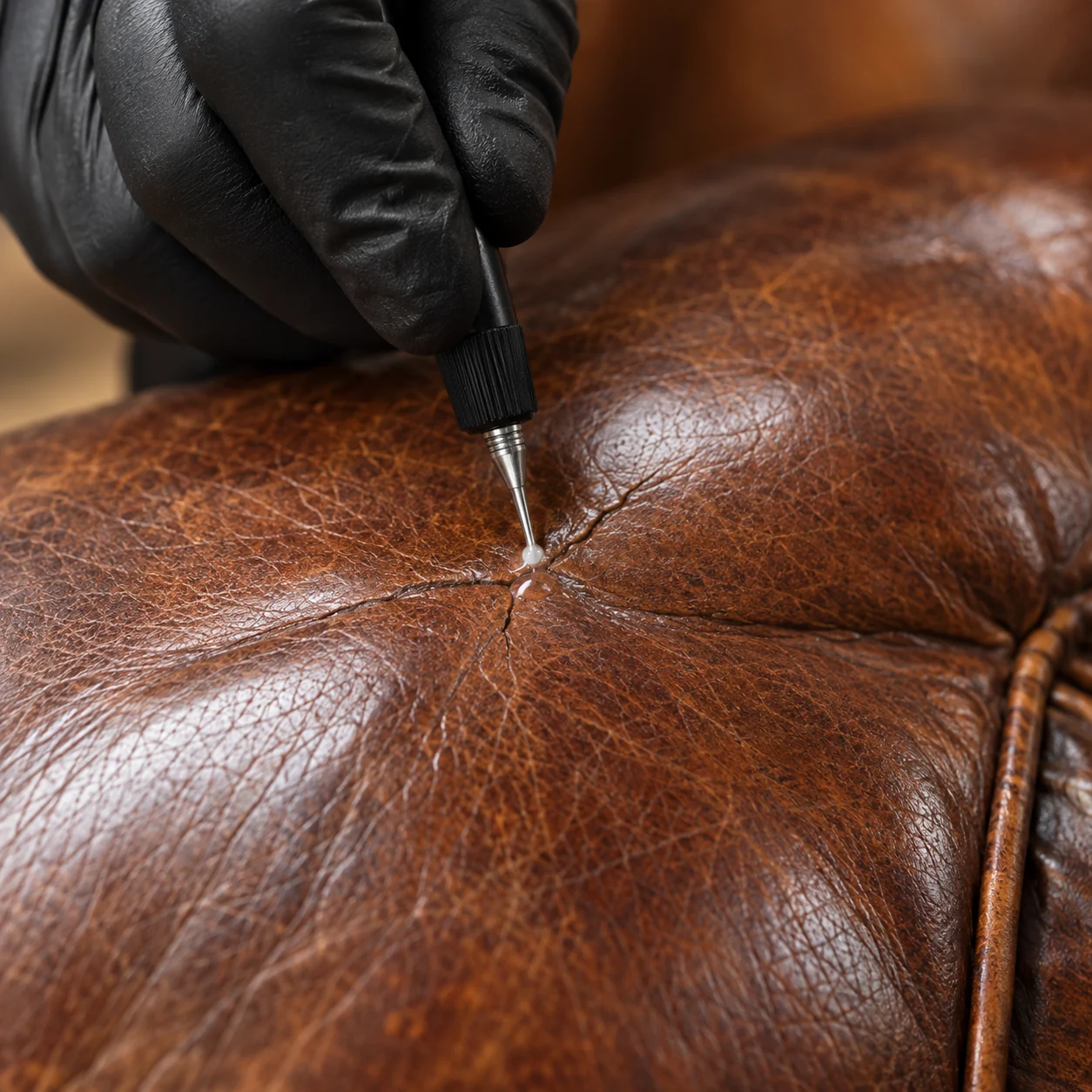
Working into a pointWhere cracks meet, on a needle not a blade.
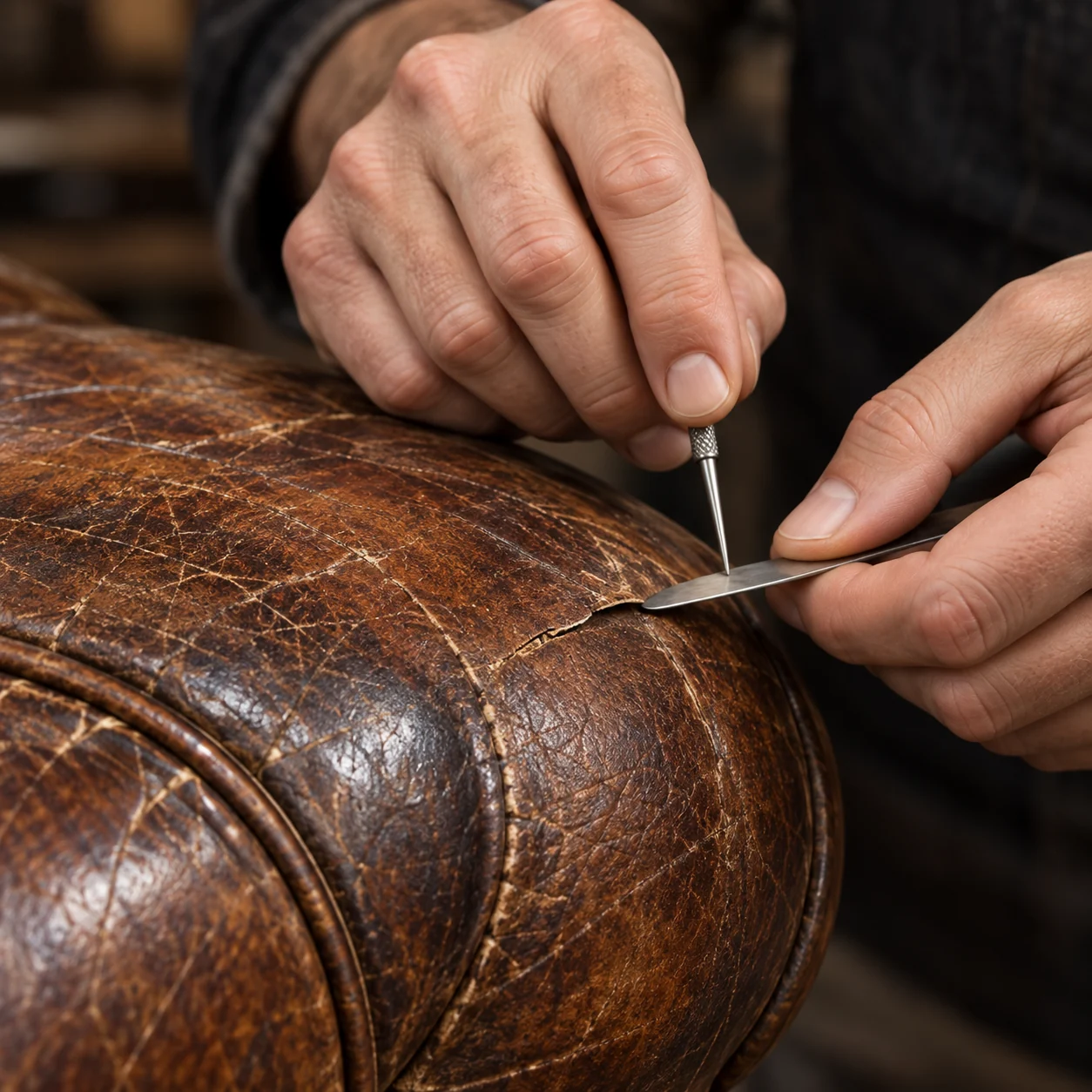
Levelling it backFlush by hand, so the grain reads continuous.
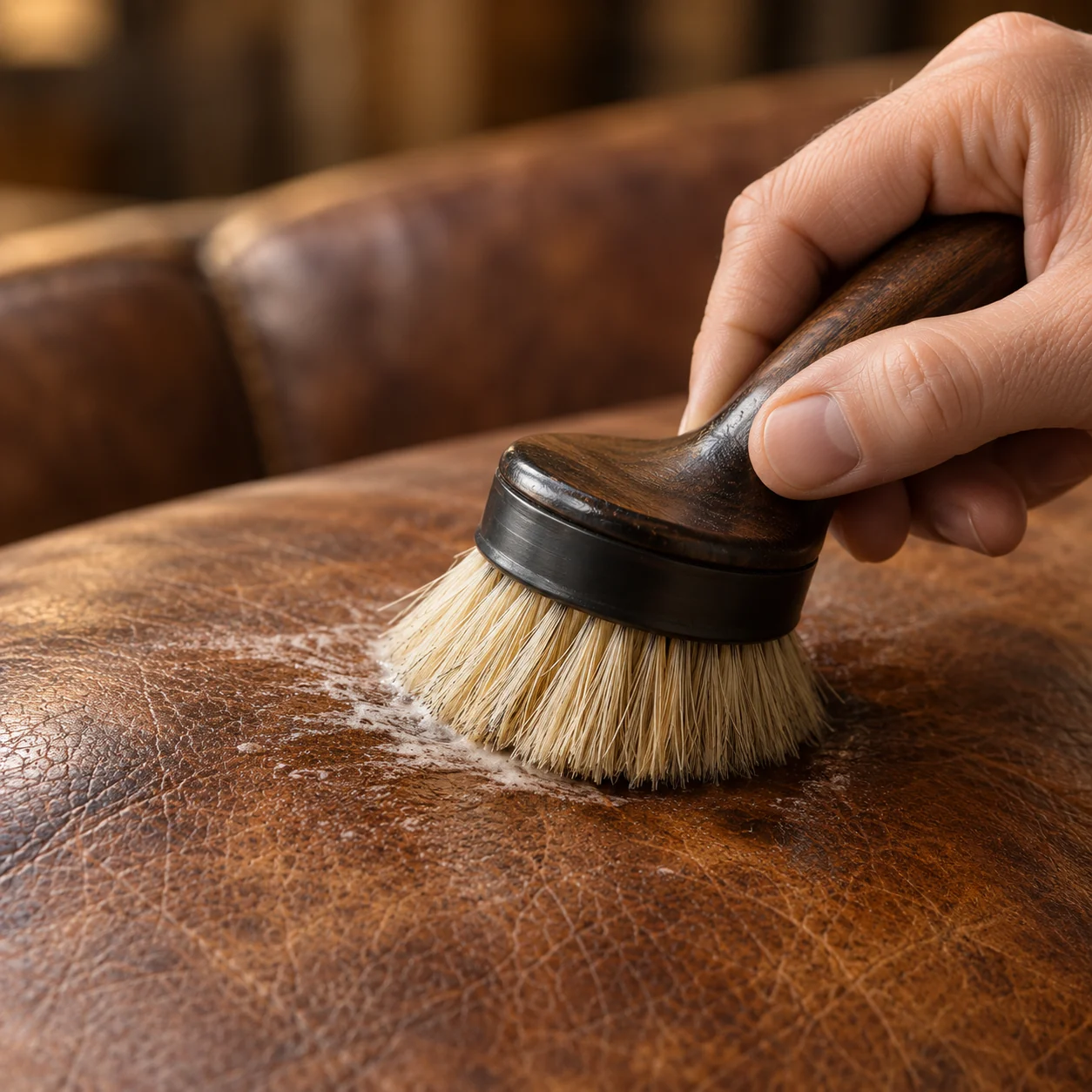
Into the grainA dauber reaches what a cloth skims over.
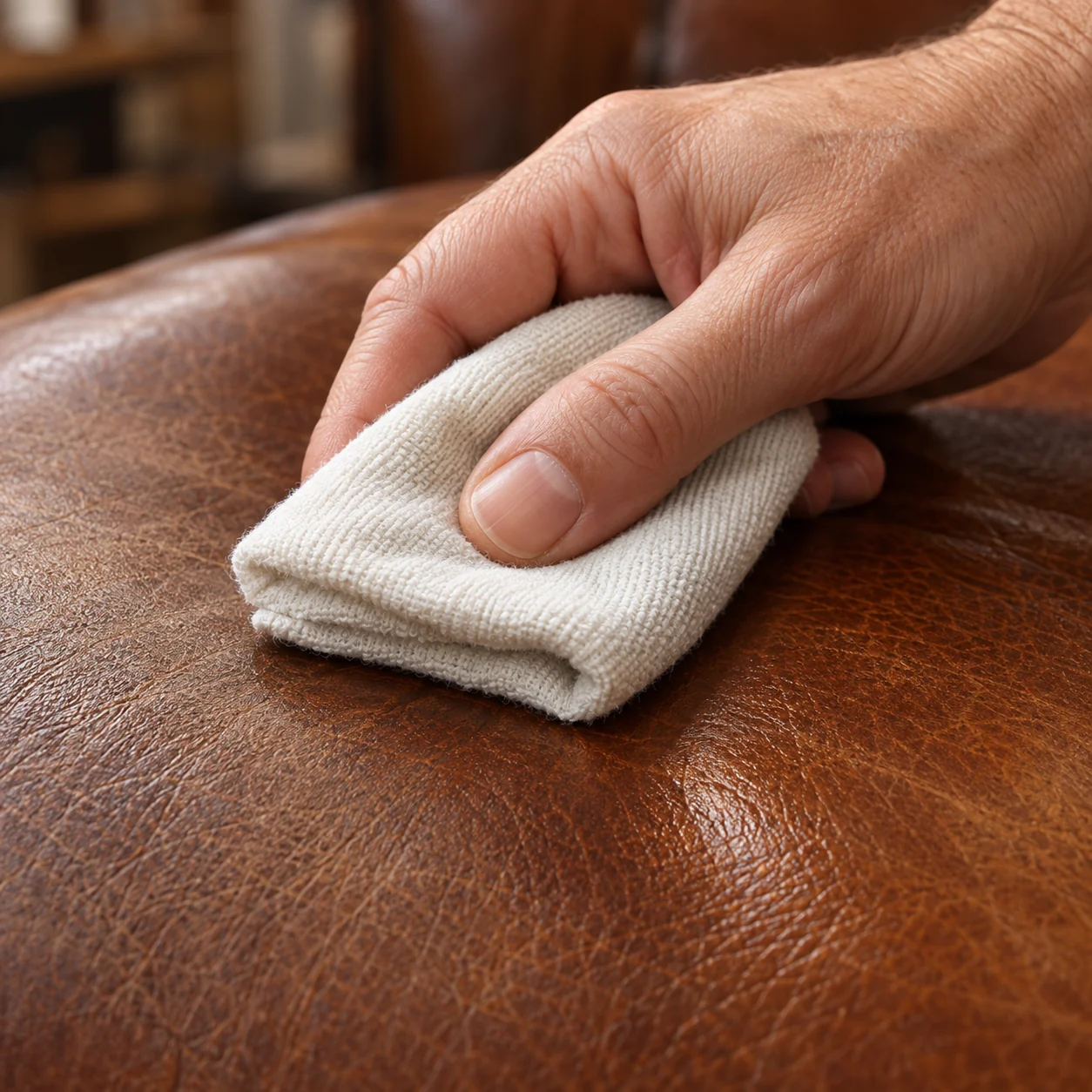
Off again by handWhat the hide will not take is lifted off.
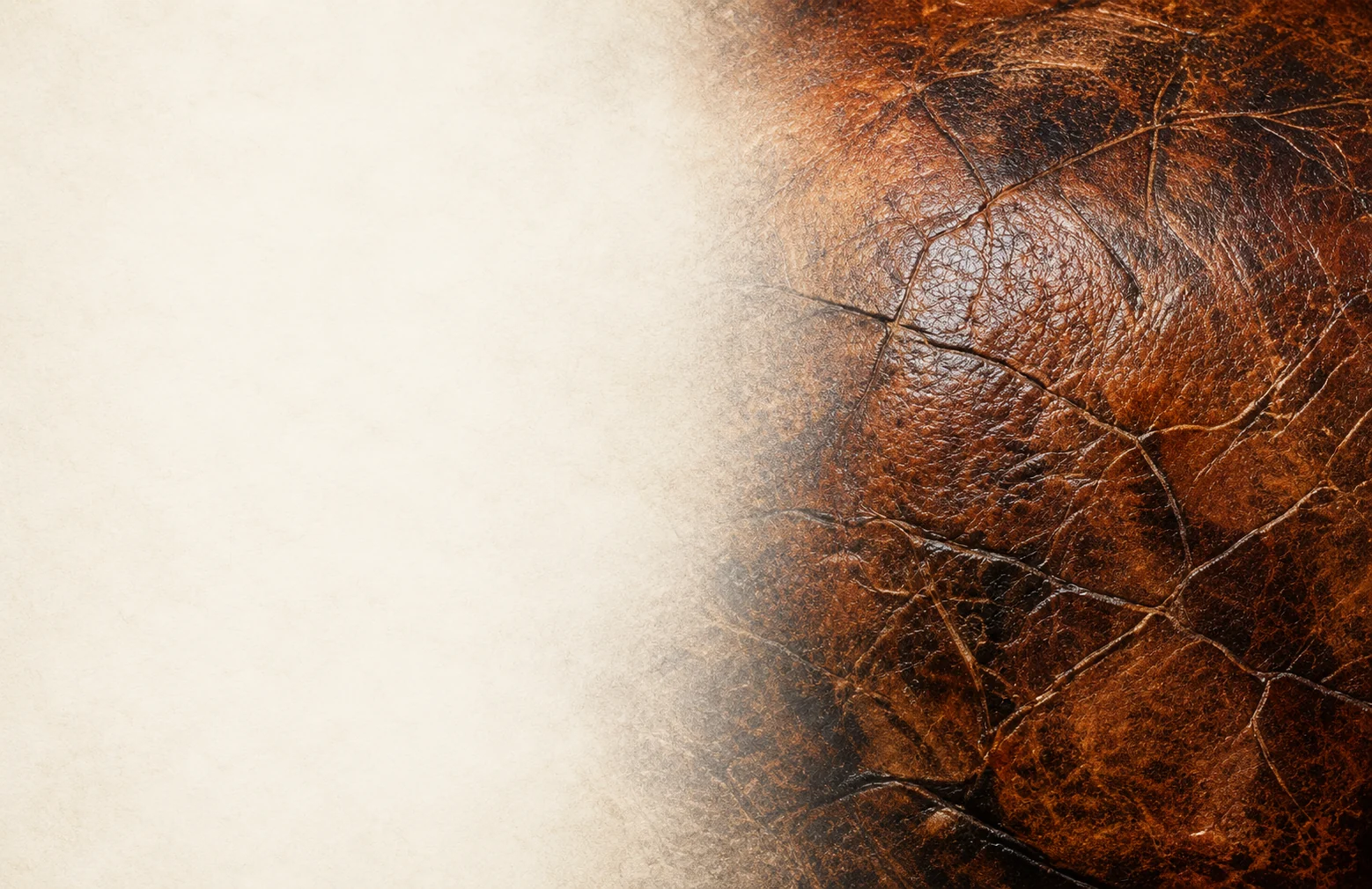
Where the argument runs outPast a point it is the hide splitting, not a coating, and nothing underneath changes that.
The honest limit
Sometimes the hide really is the problem.
Everything above assumes the leather is still leather. Occasionally it is not.
Old vegetable-tanned hide can break down into a dry, rust-colored powder that comes away on your fingers. When we find that, antique leather sofa repair stops being the right description, and we say so first.
A degrading hide consolidated for sale is a different discipline, on the page for antique dealers. Replacing the cover outright is leather sofa reupholstery, and where one panel has gone there is often a donor panel on the sofa itself. Joinery sits under wood repair; the glue argument is set out in adhesives for the conservation of fine furniture.
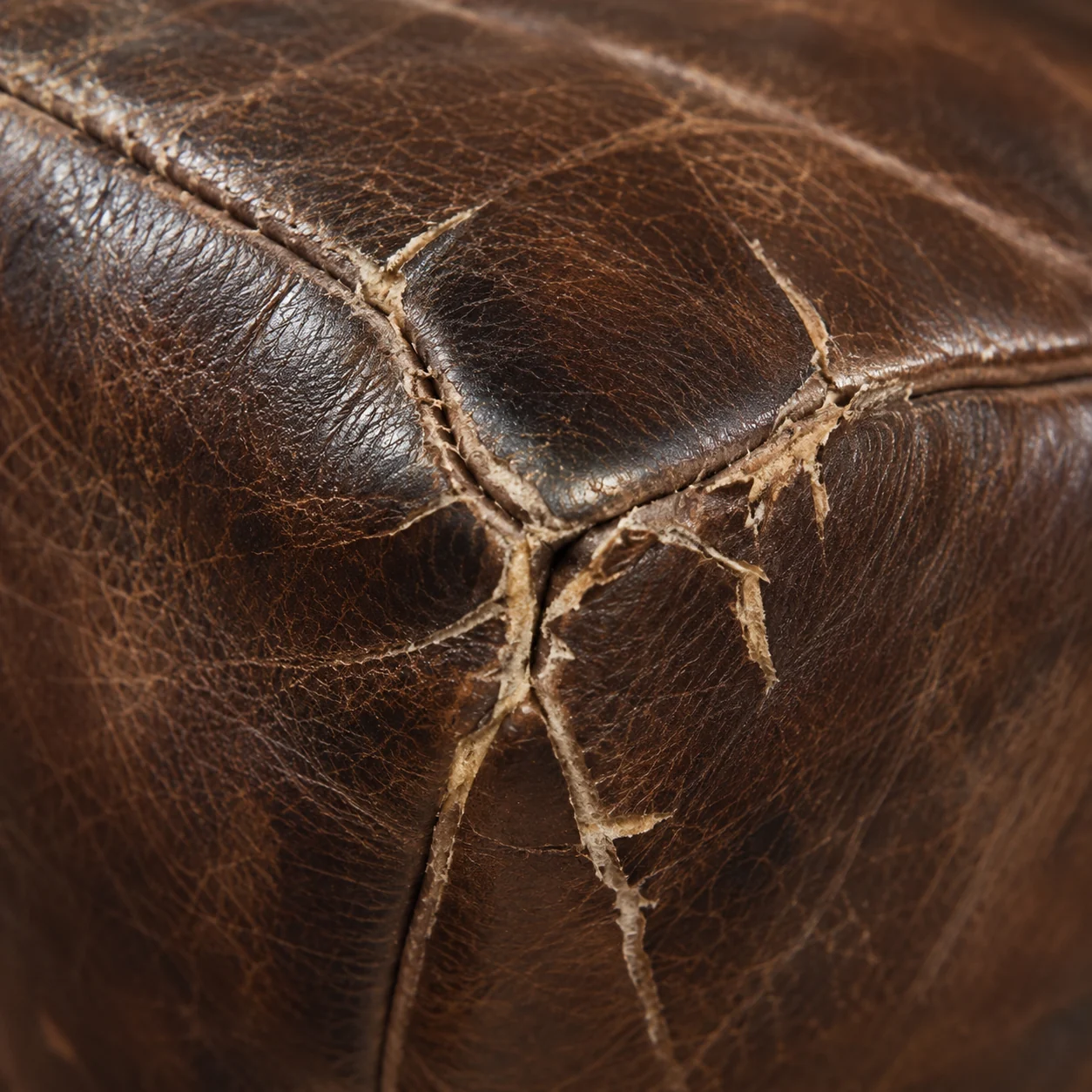
The tellPale fiber in a split means it is past the finish.
One shape, two states
Worn and sound, side by side.
Illustrations, not job photographs
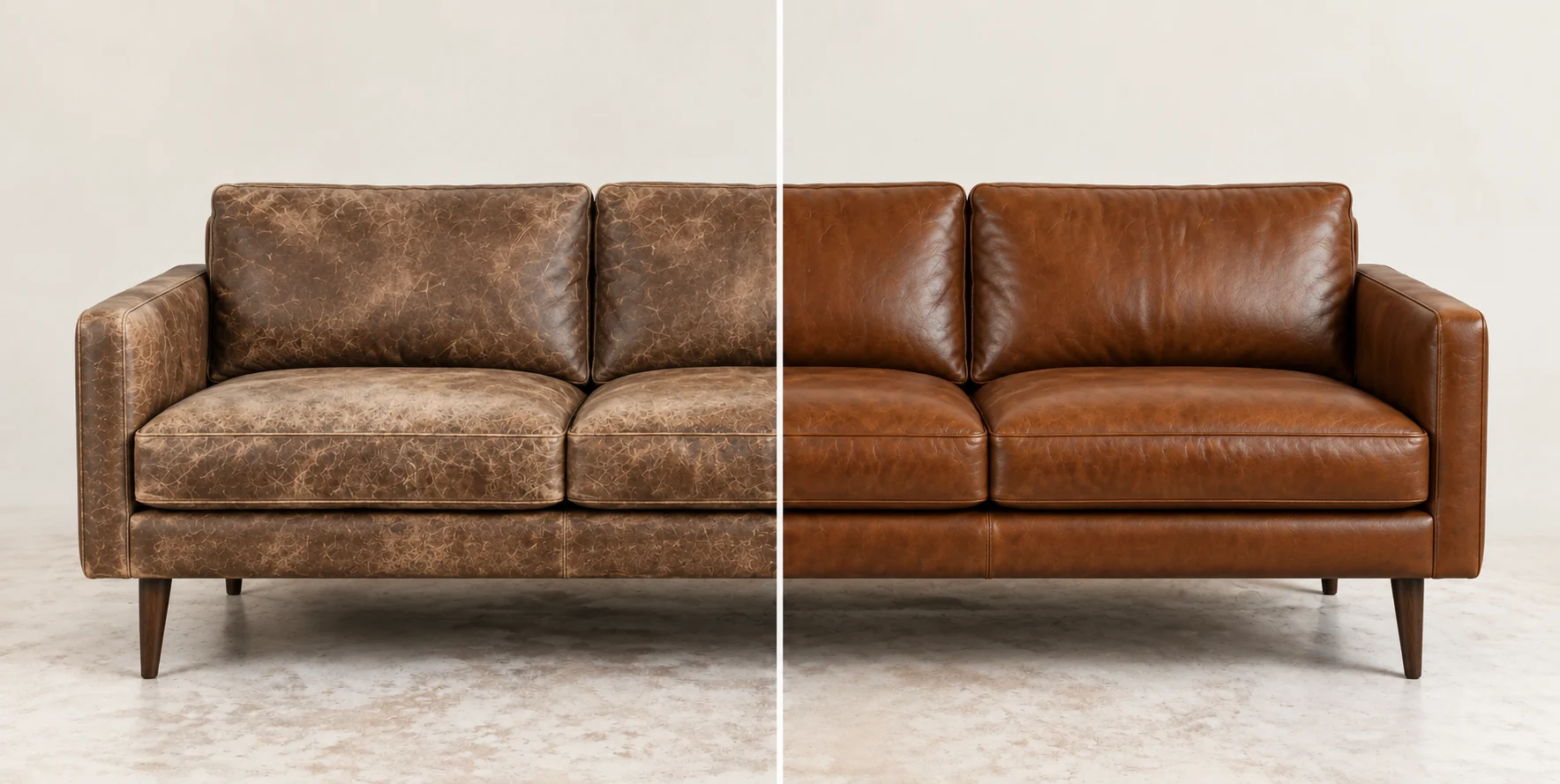
What the pairs showOne half worn, one half sound, same piece. This first is modern — the one shape here where antique leather sofa repair is not the answer and recovering outright is.
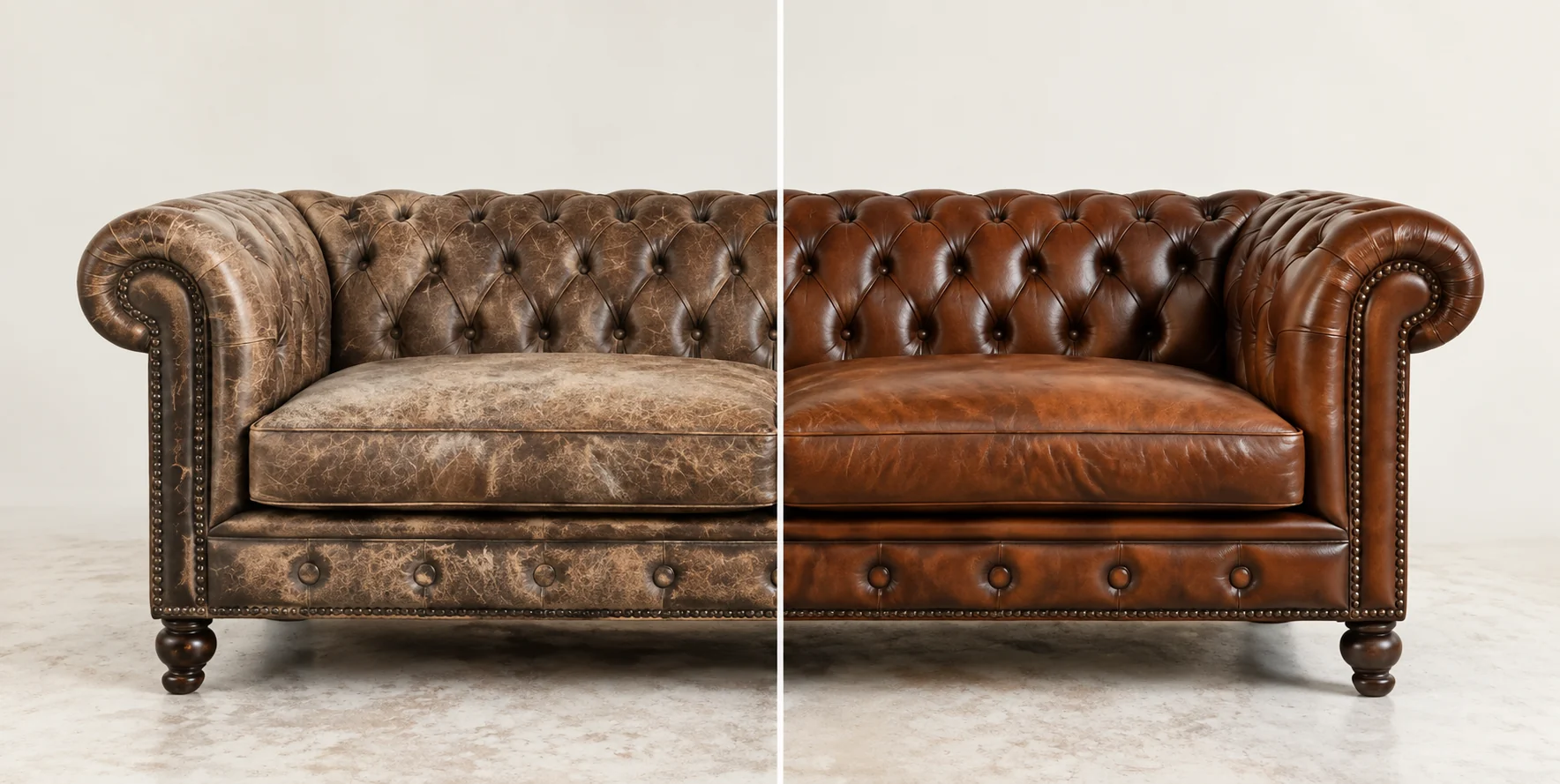
ChesterfieldMost faults here are twine, reached from the back and base.
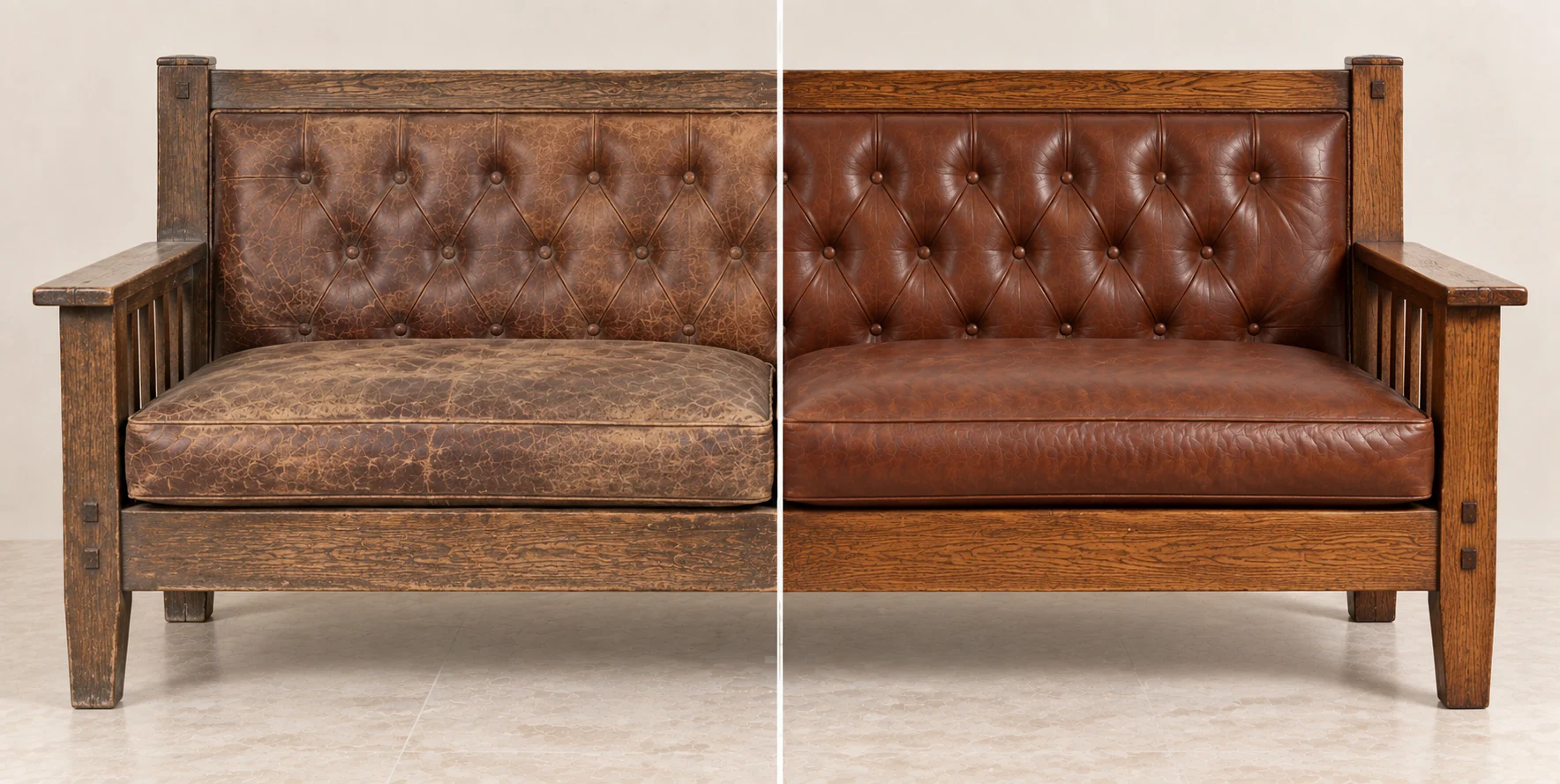
Oak-framed settlePanels drop into an exposed frame, so no tacking rail is touched.
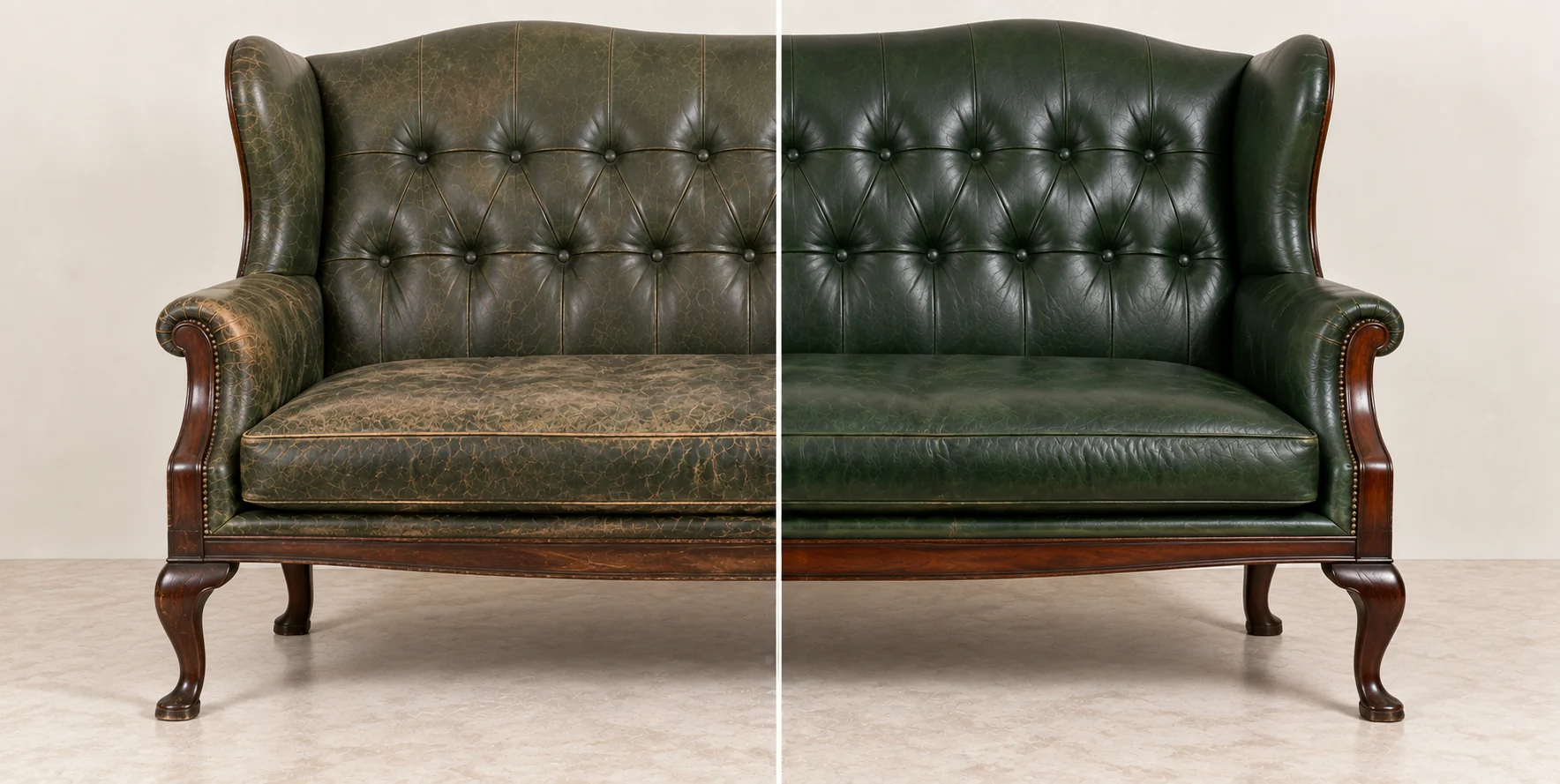
Wingback setteeColored hides are hardest to match. That is the argument for keeping it.
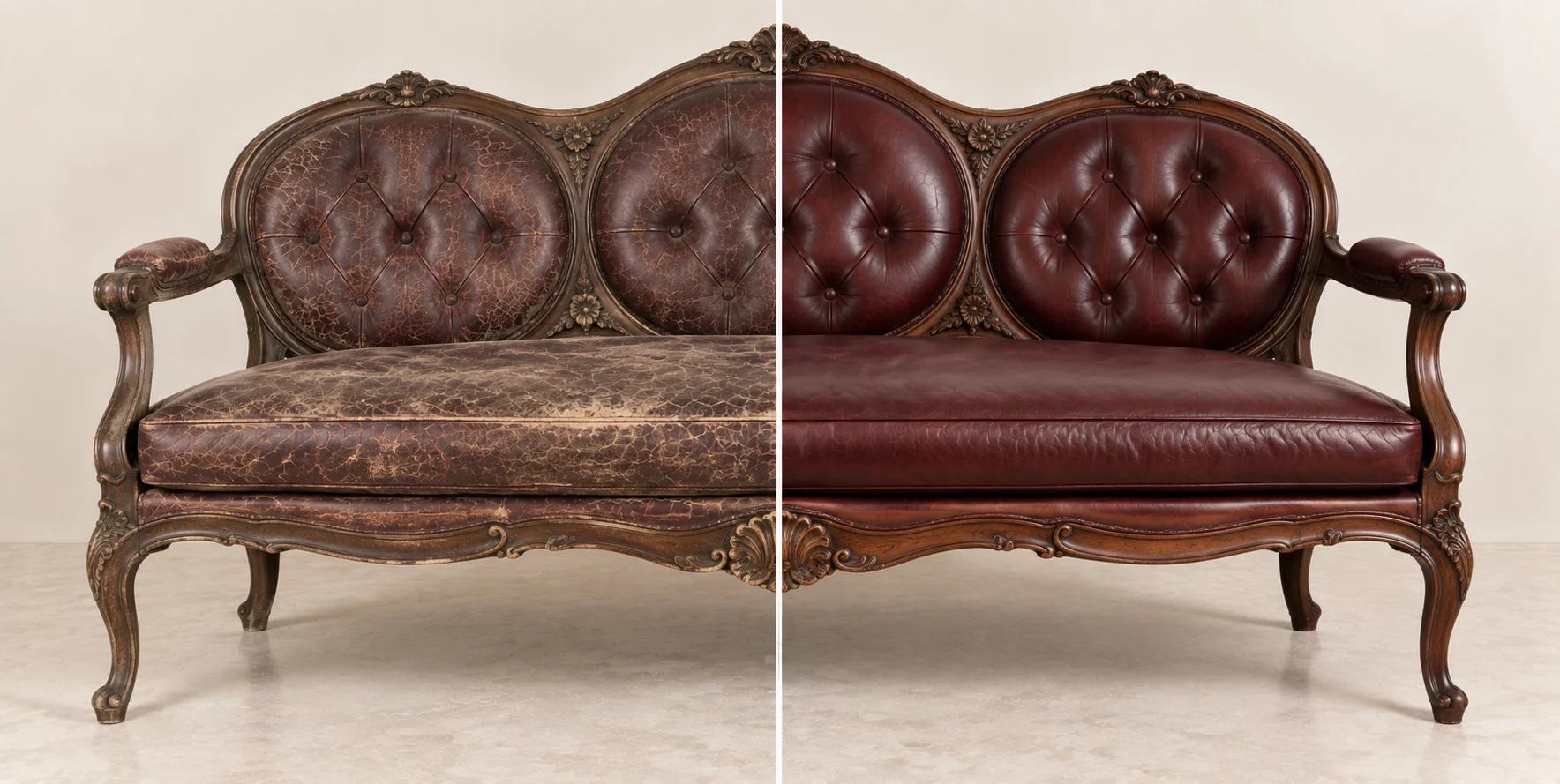
Medallion backCarved show-wood all round. Frame work and leather work are separate trades.
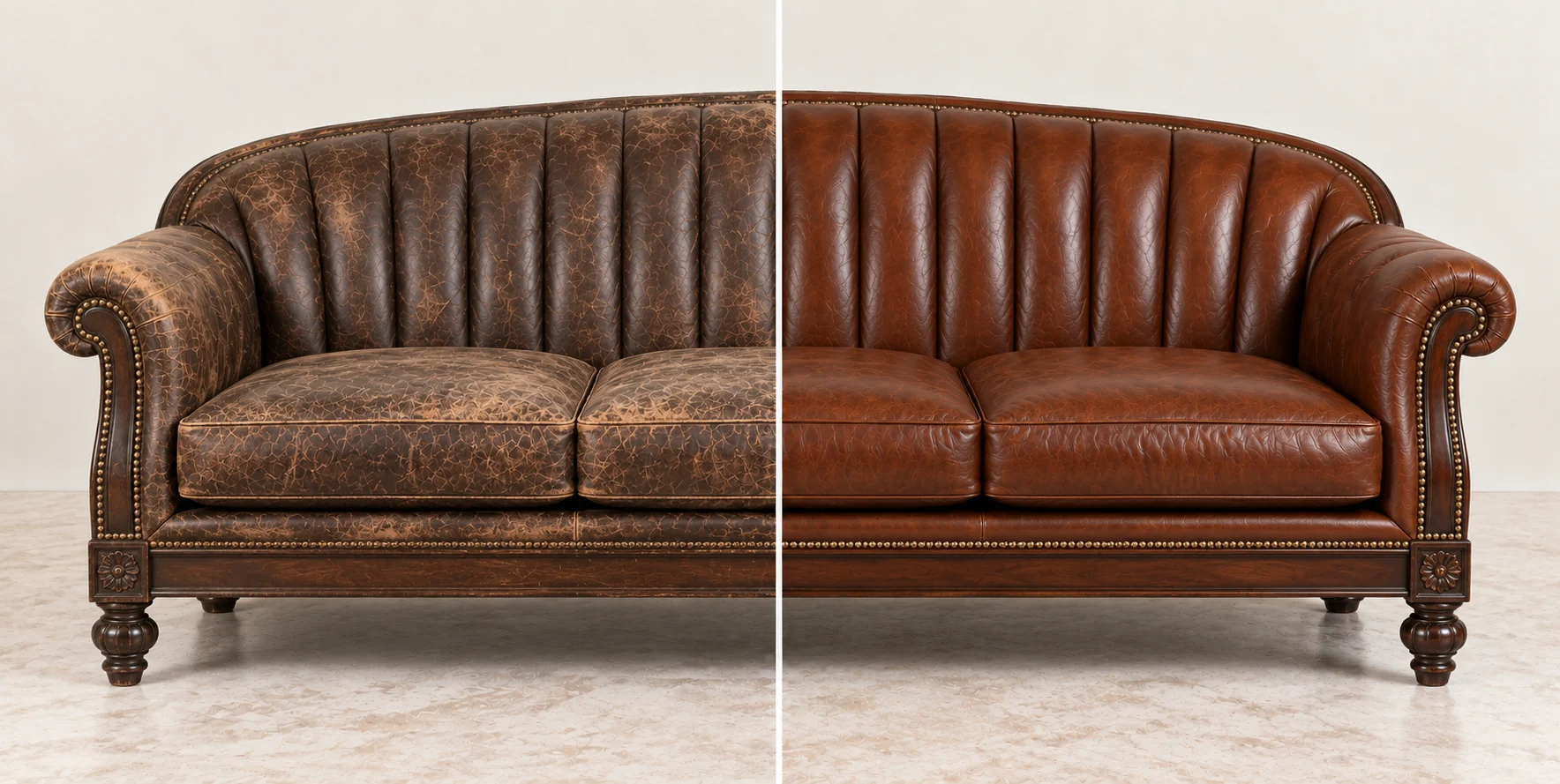
Channel backFlutes hold stuffing in compartments, so one collapsed channel stays one.
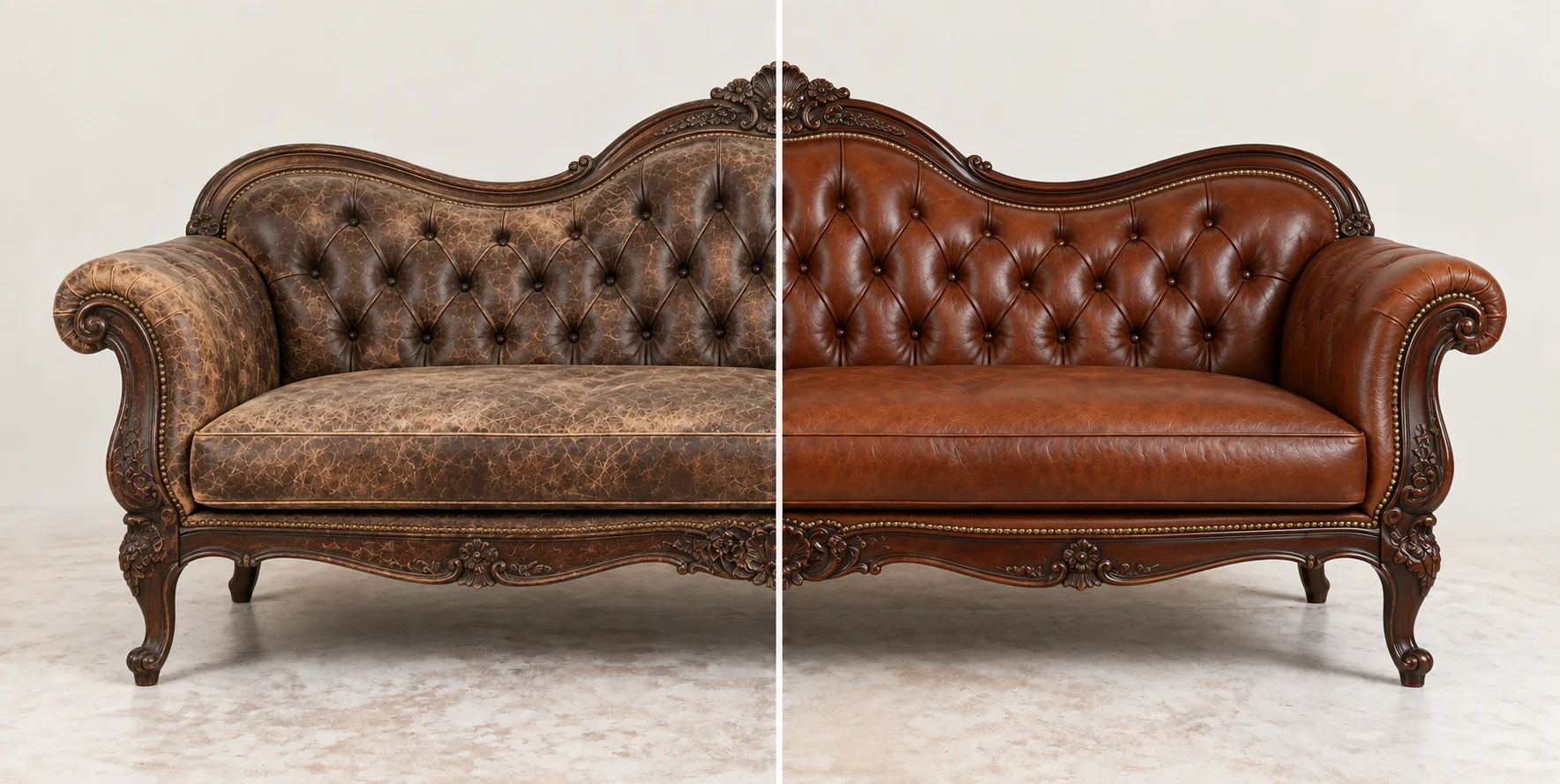
Carved crestSerpentine rails, short legs. Joints take the strain before the seat does.
Where the work happens
Most of it happens where the sofa already is.
Antique leather sofa repair needs trestles, not a booth

The reason to work in placeA sofa this size is turned, not carried. Tipping it in the room is less handling than two moves.
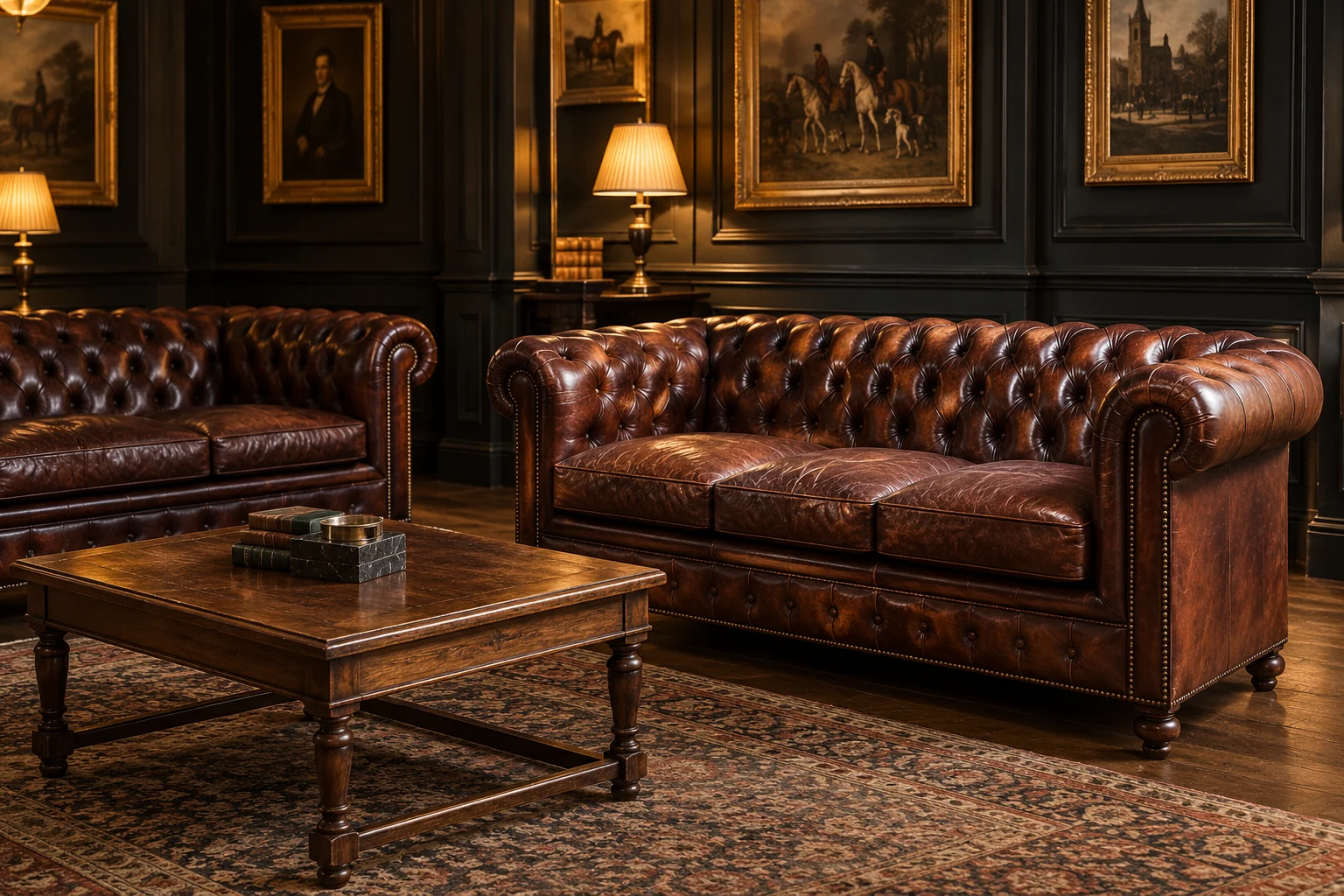
Tight against a tableClearance at the front matters more than floor area.
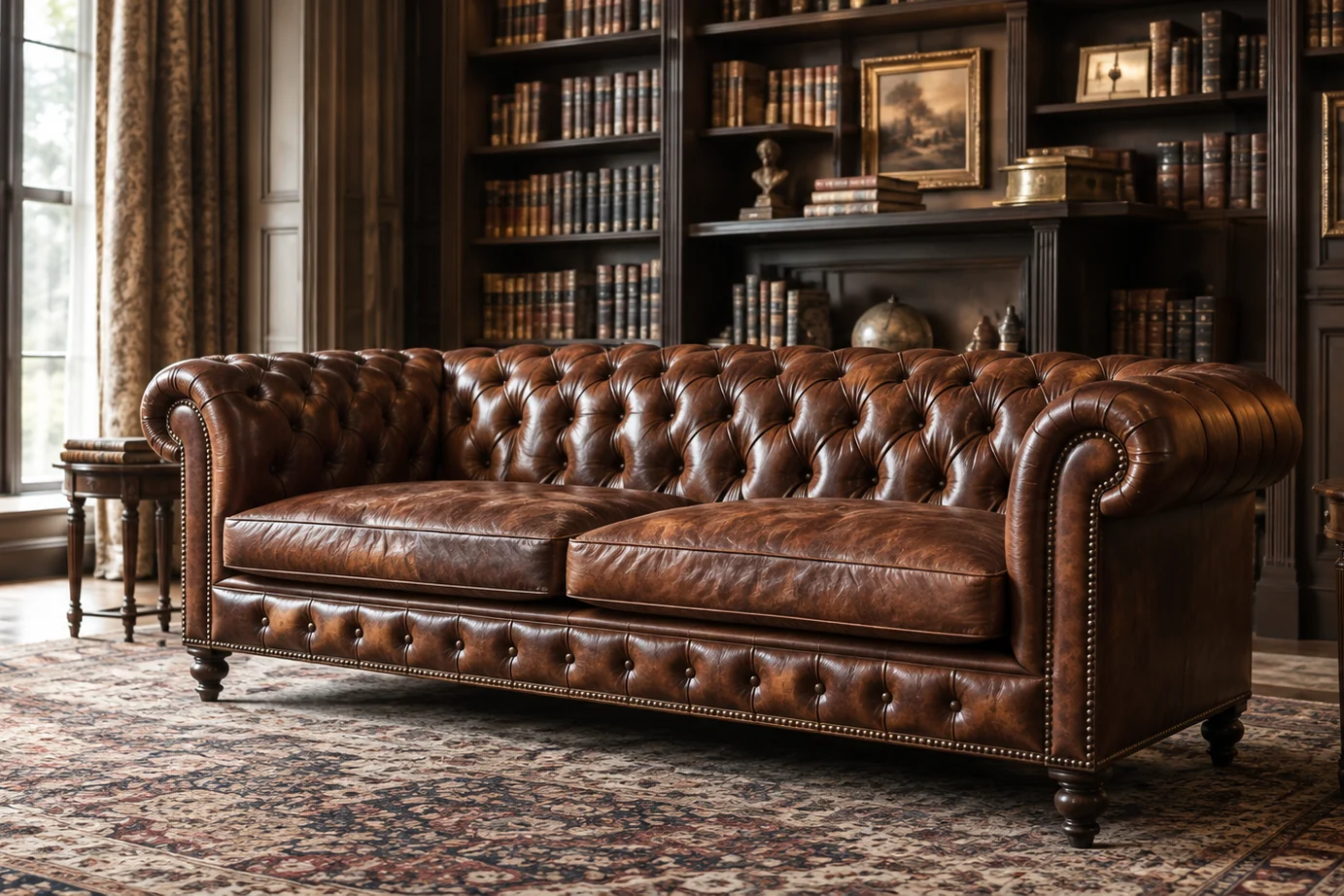
Backed onto shelvingA sofa against a wall wears unevenly. One arm takes it.
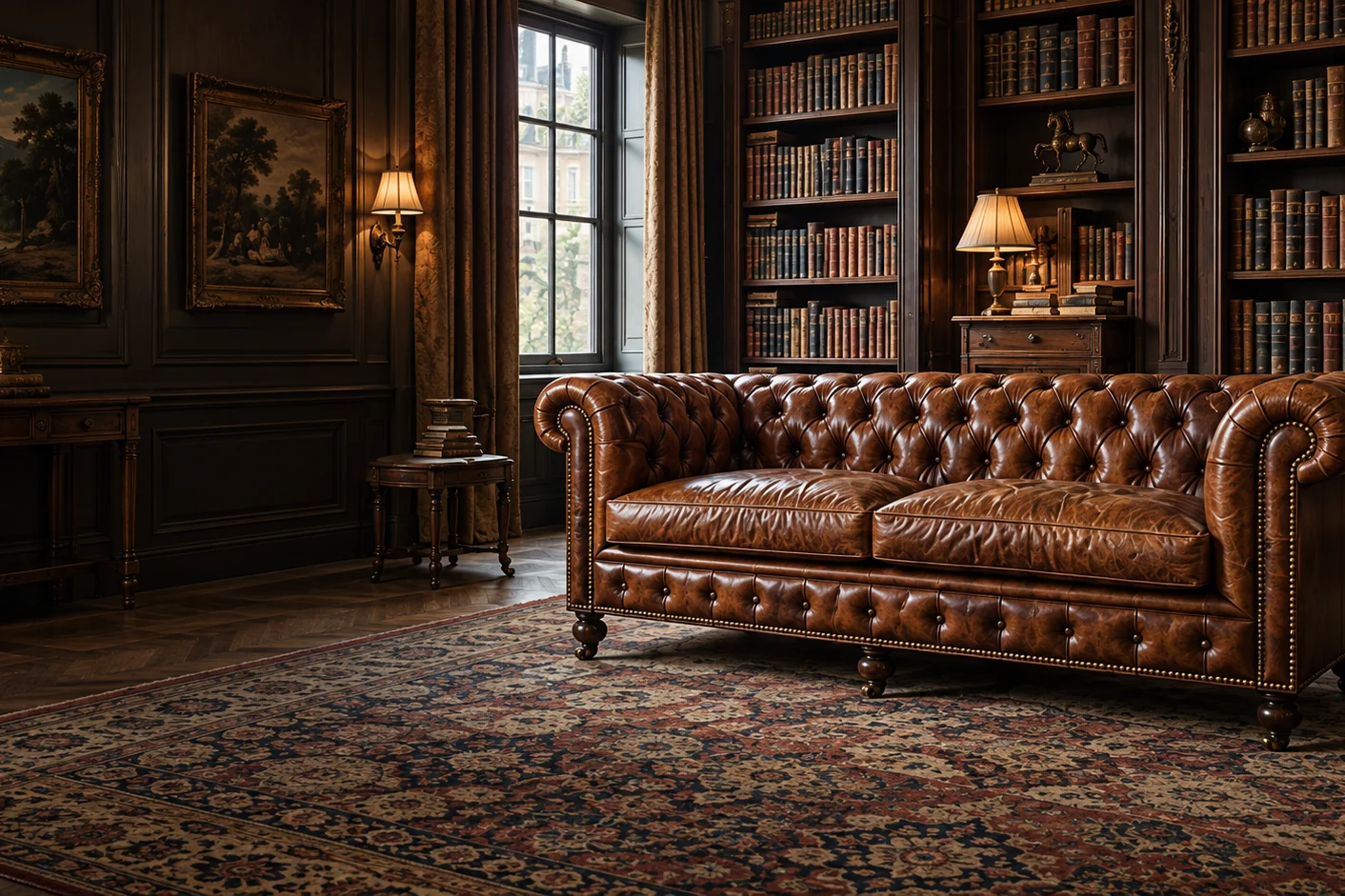
Beside a windowWorth telling us. Sun on one end explains a color shift.
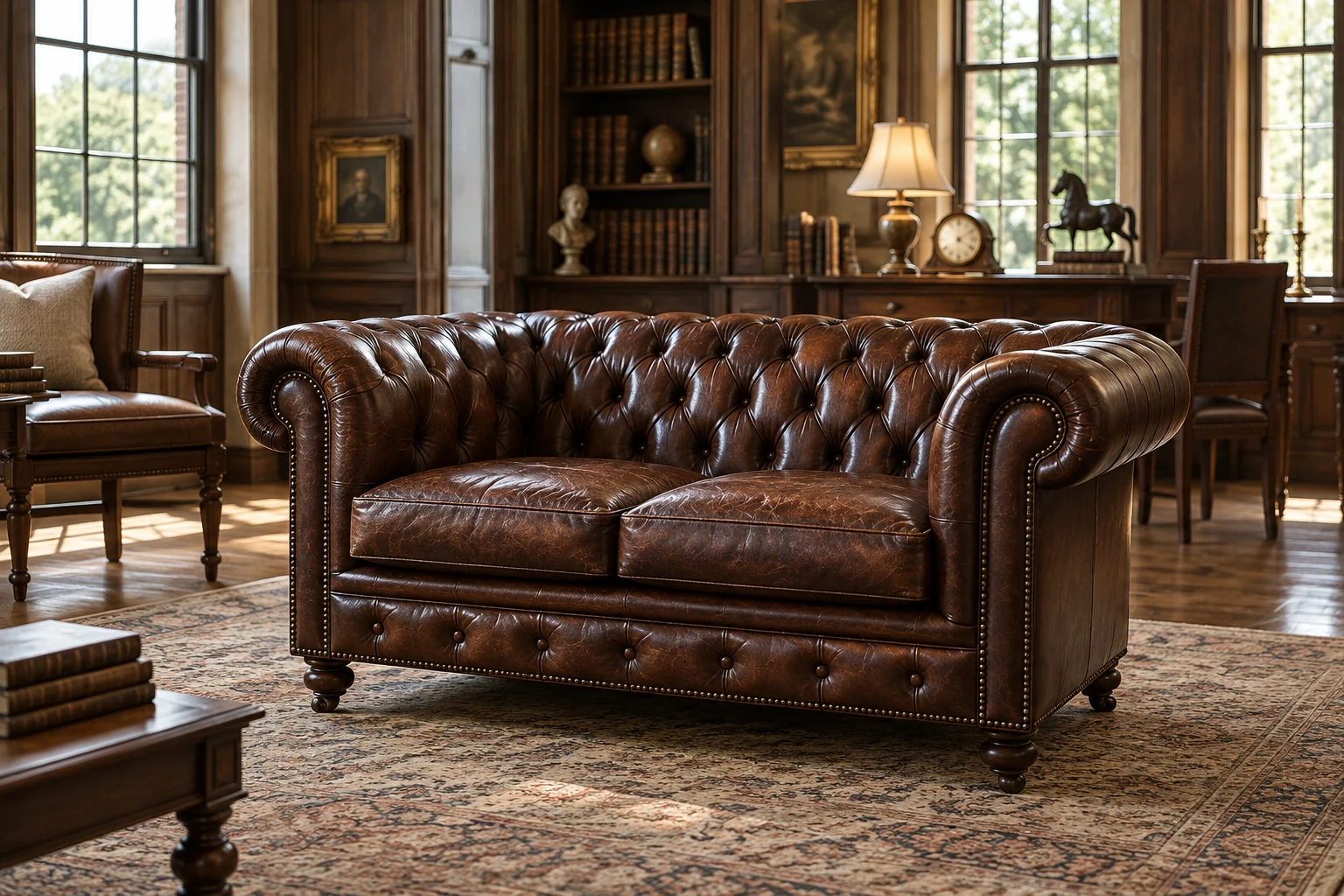
Daylight from two sidesThe best room to photograph in. The worst to leave an old hide in.
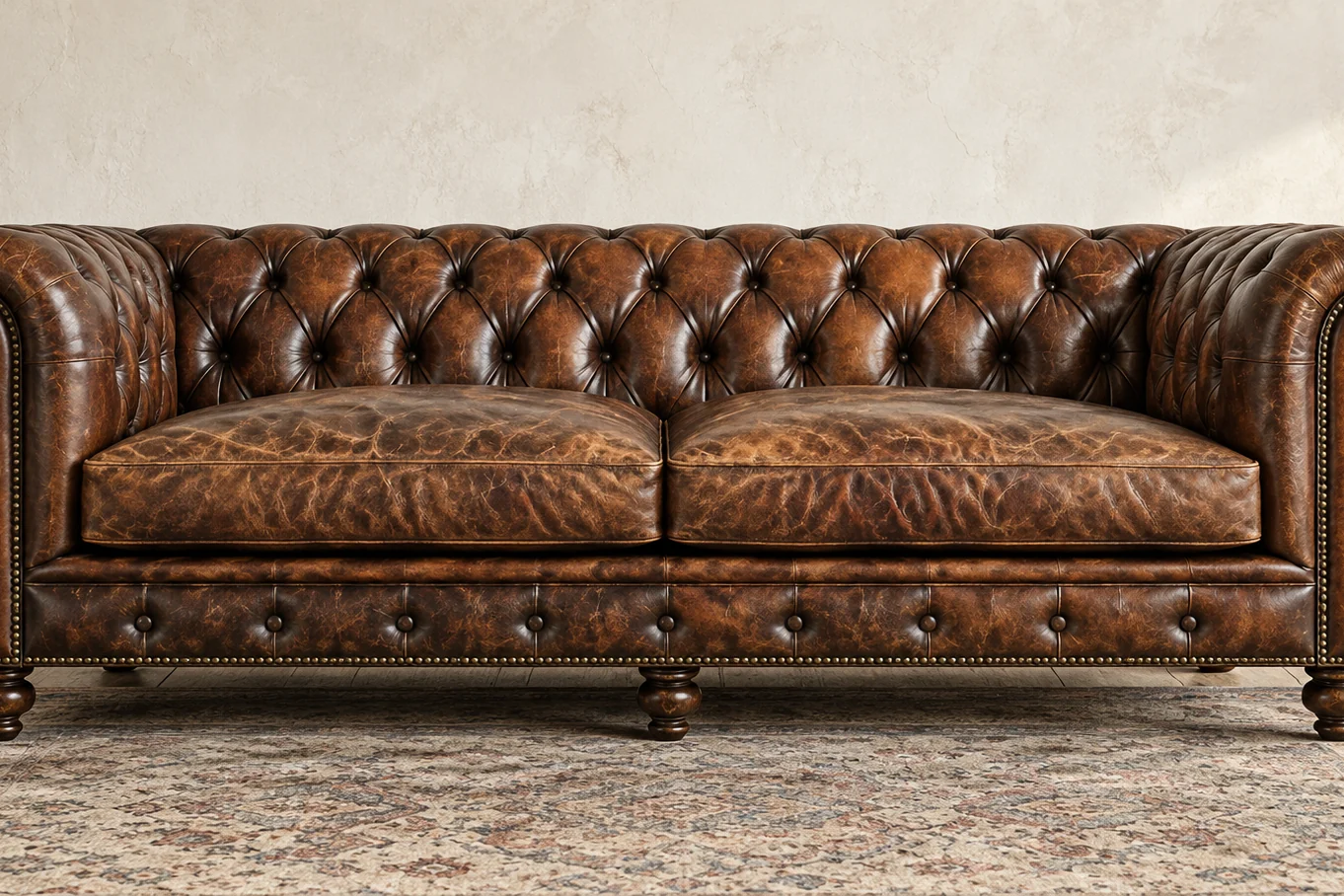
A plain wall behind itThe photograph we ask for first. The shape tells us how it was built.
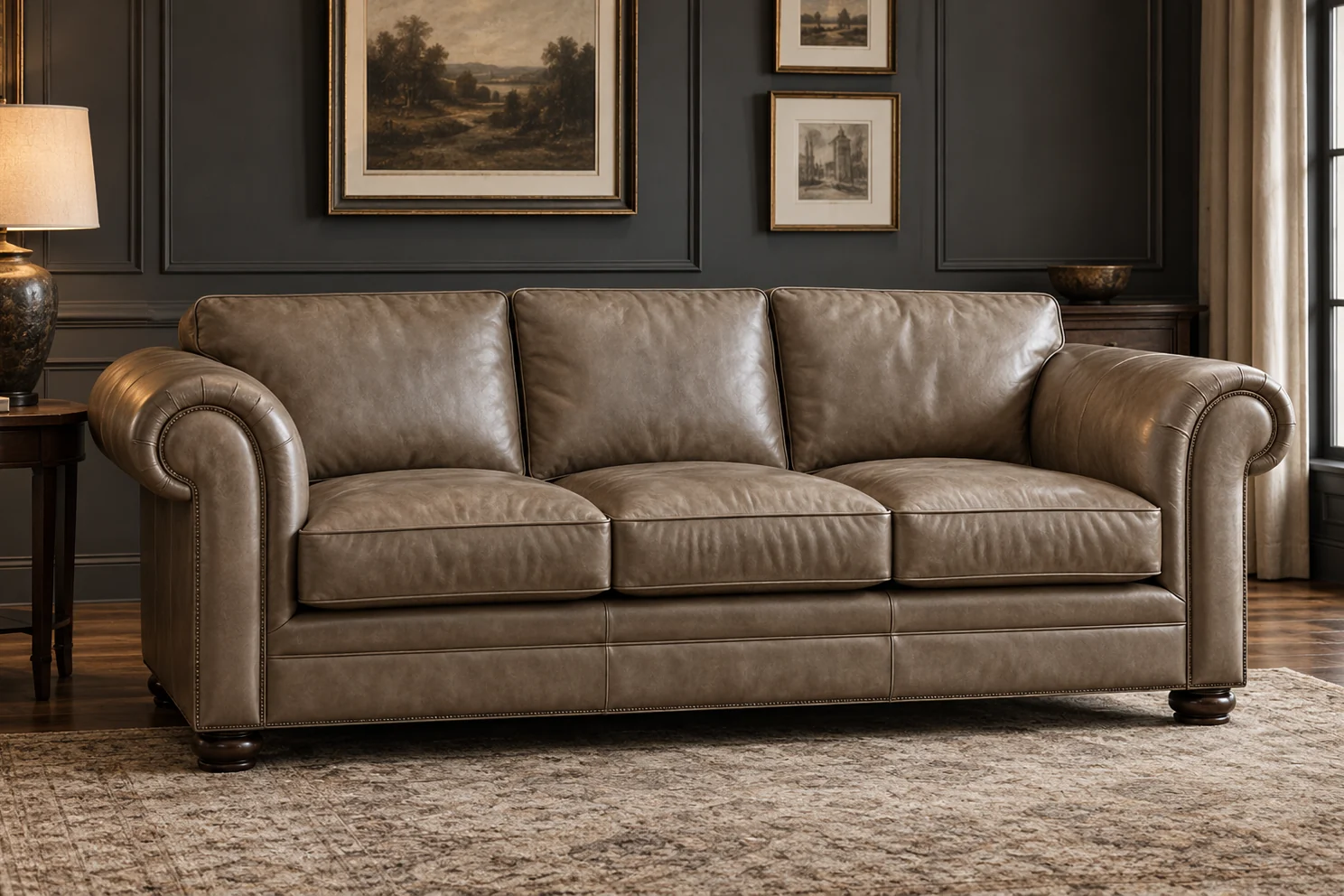
Not every hide is brownPale hides show every repair, so color is judged in the room's light.
Shapes we see
Eight frames, and what gives out on each.
Antique leather sofa repair, frame by frame
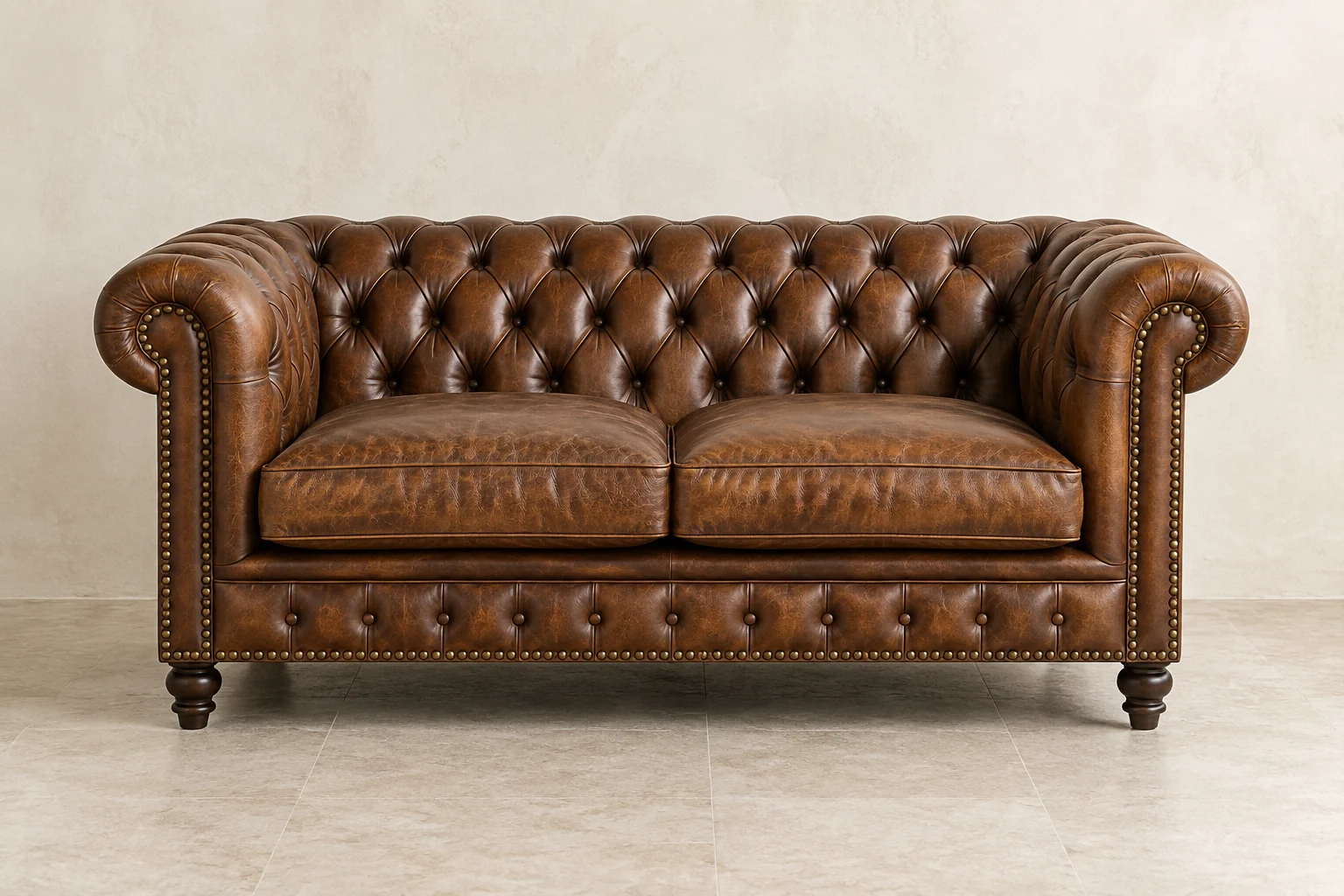
Chesterfield, two-seatButtons on the seat too. Twine first, webbing second.
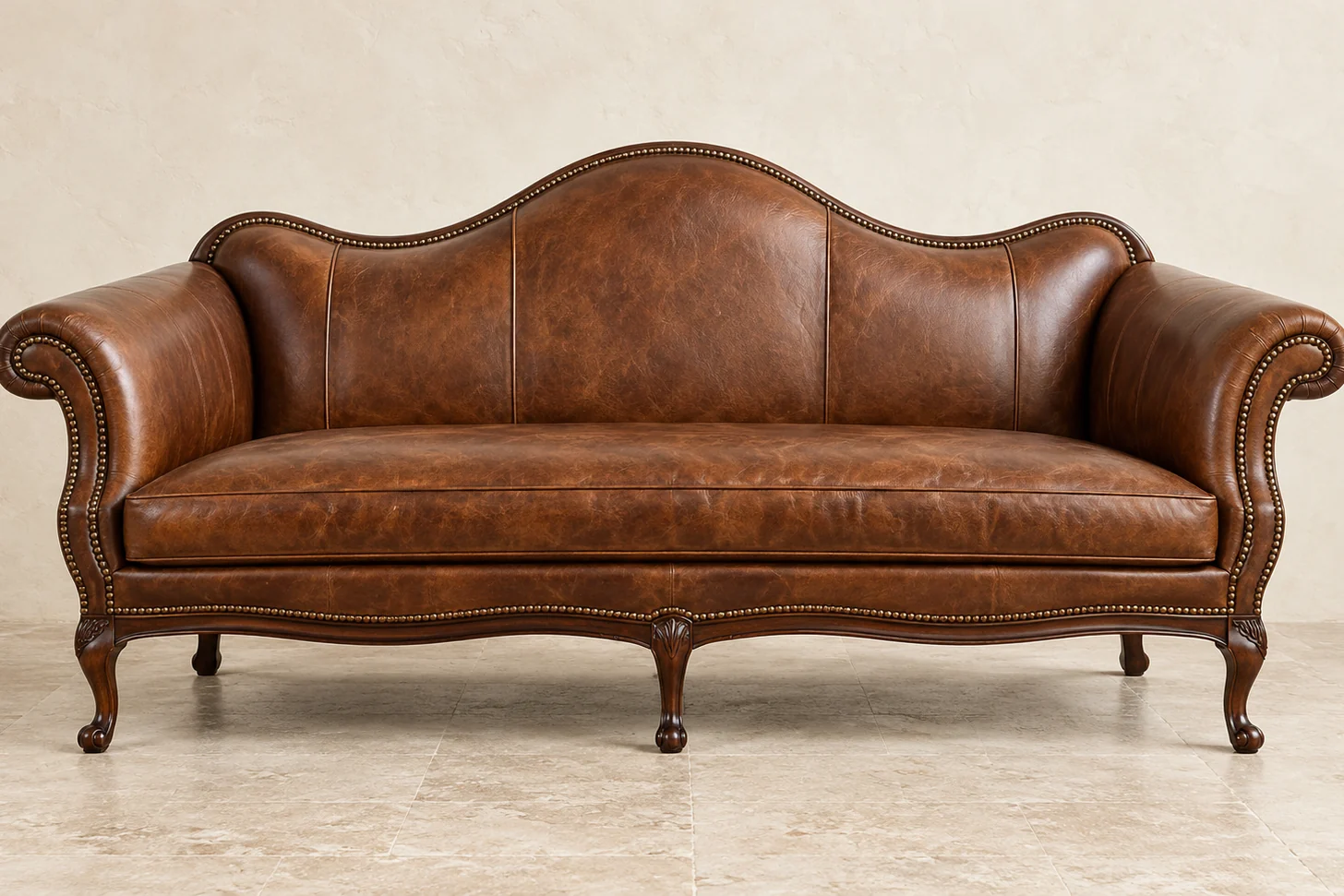
CamelbackBuilt over shaped rails. Joints open there first.
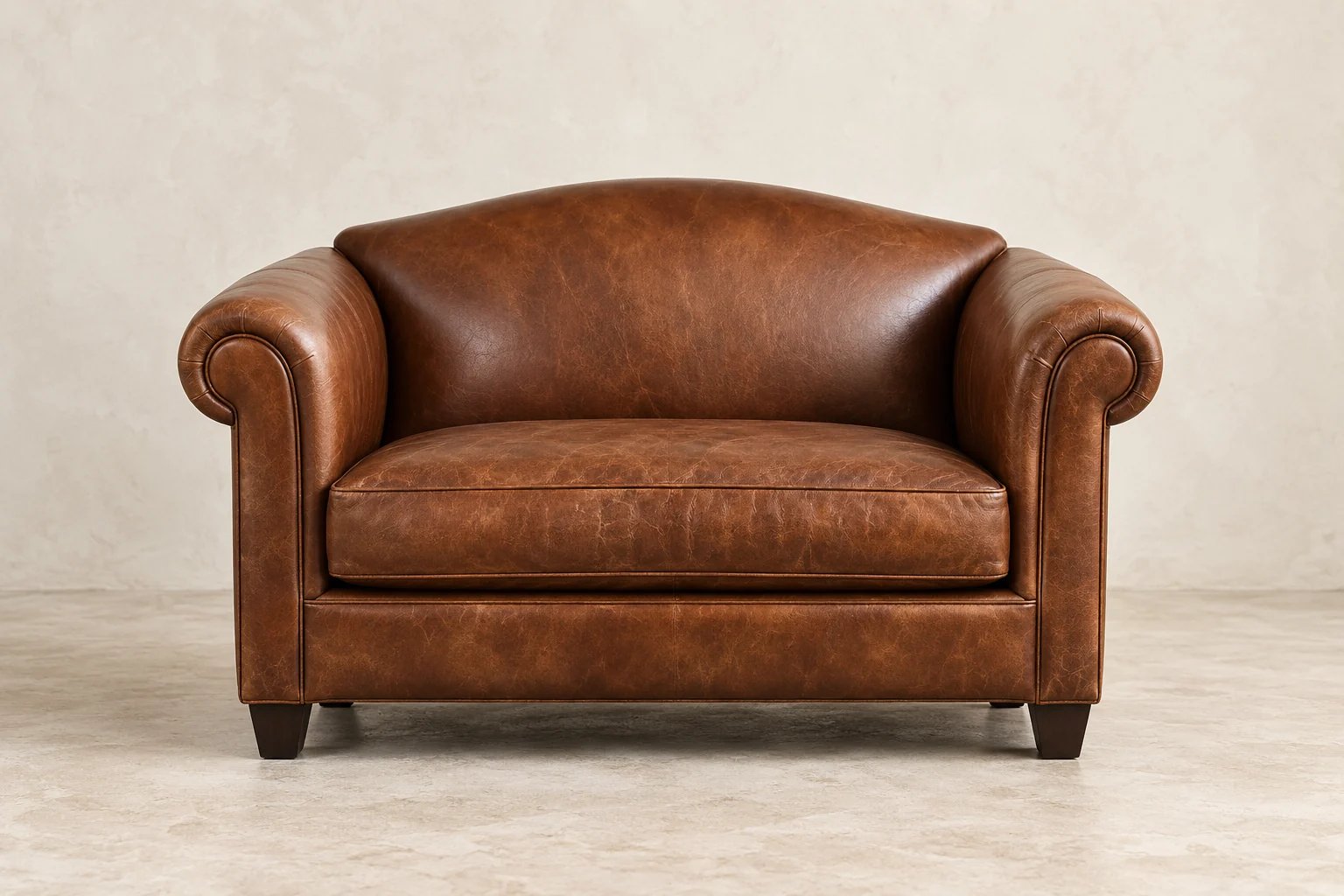
Club setteeWide arms get sat on. The piping goes before the panel.
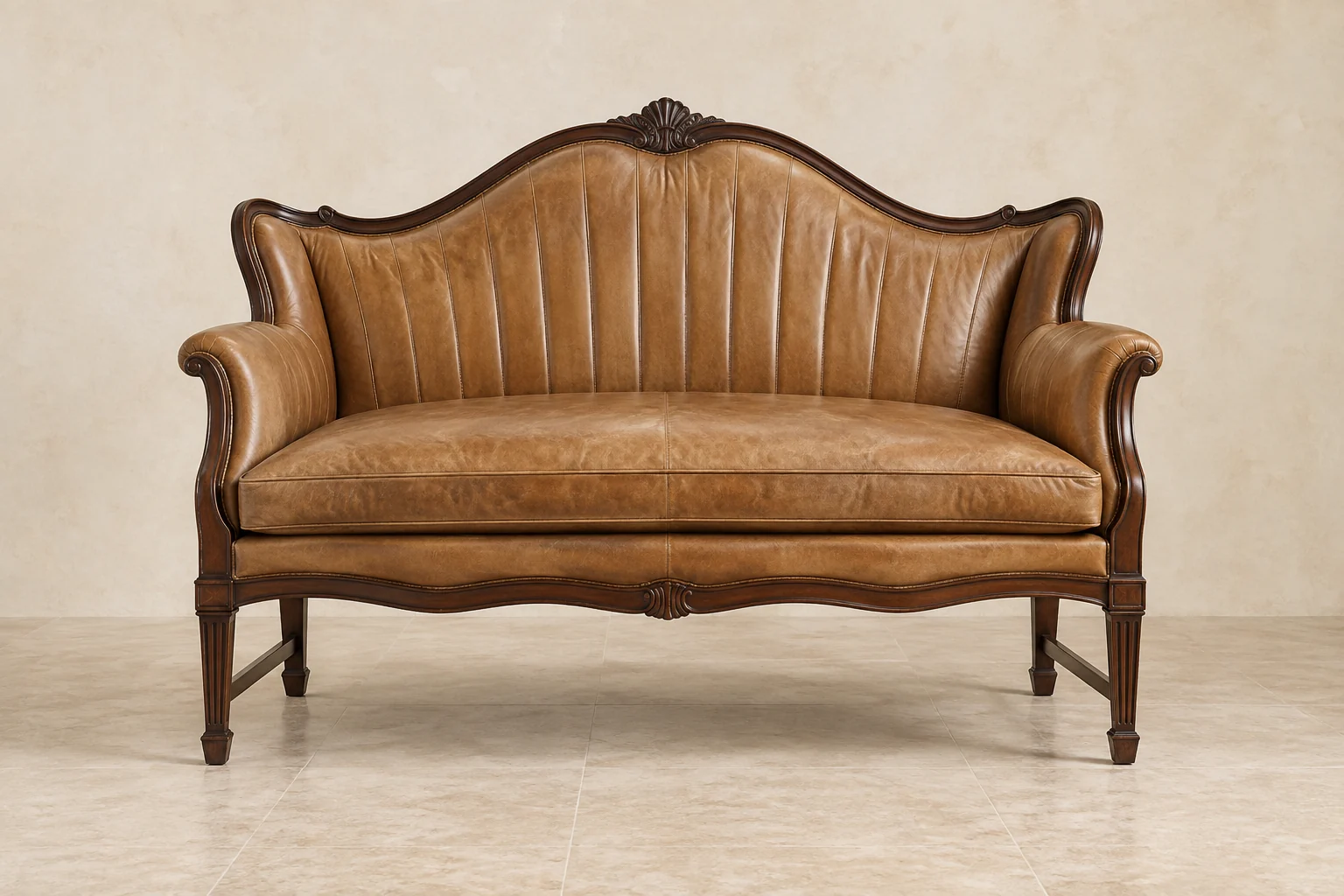
Carved crestShow-wood everywhere. Nothing is tacked unprotected.
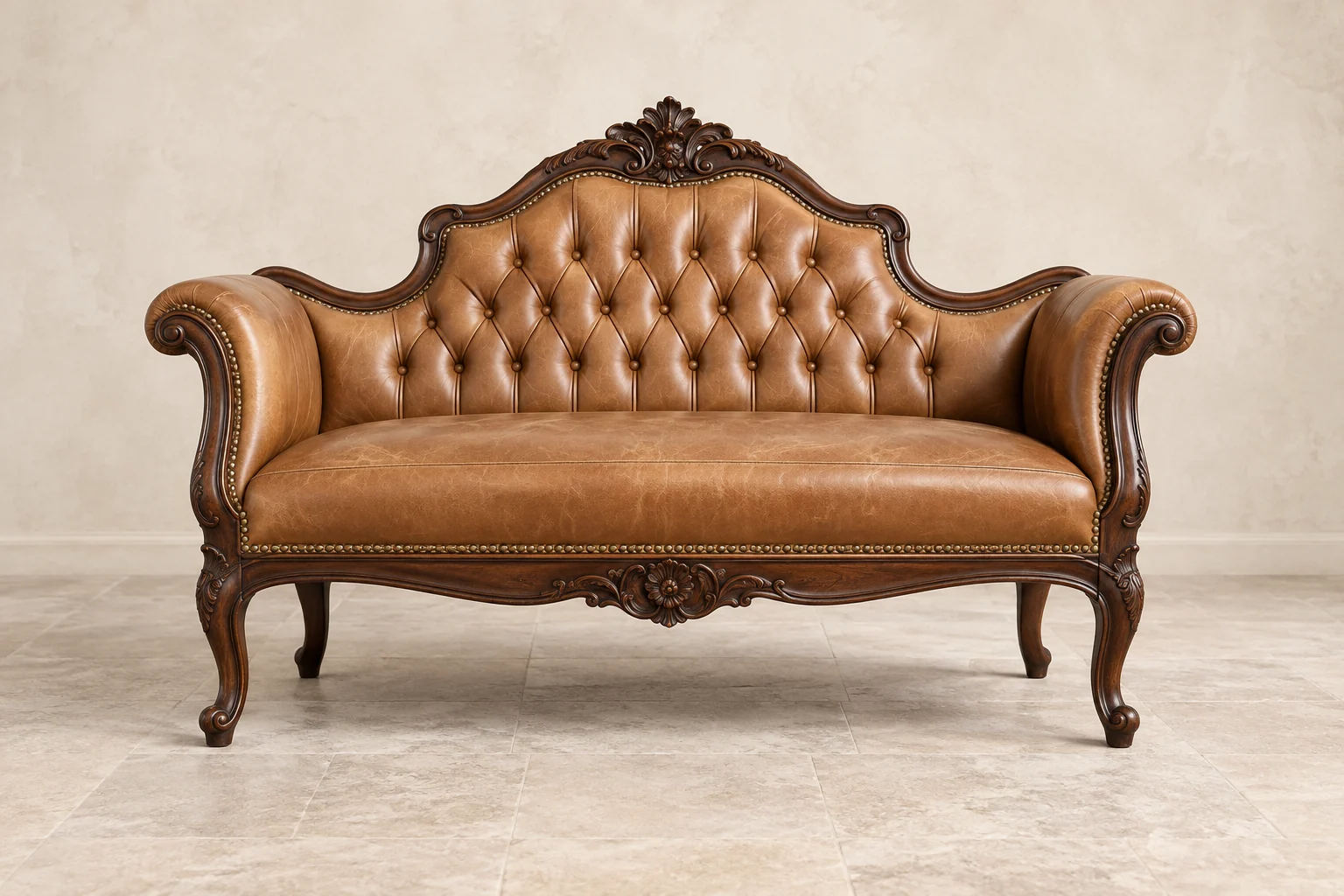
Ornate VictorianCabriole legs, hide glue, and worth keeping that way.
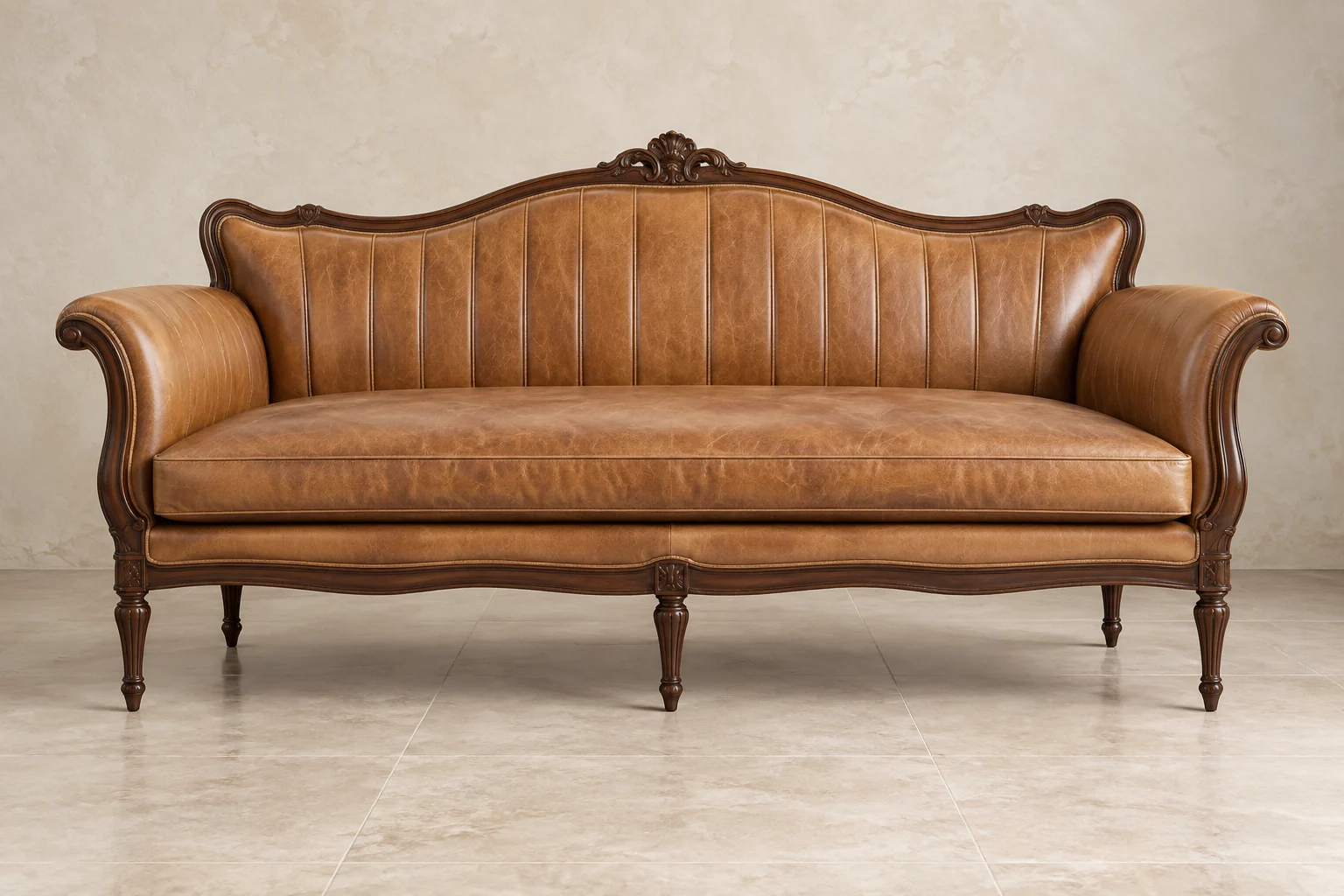
Camelback setteeLong seat, one cushion. One failed web shows immediately.
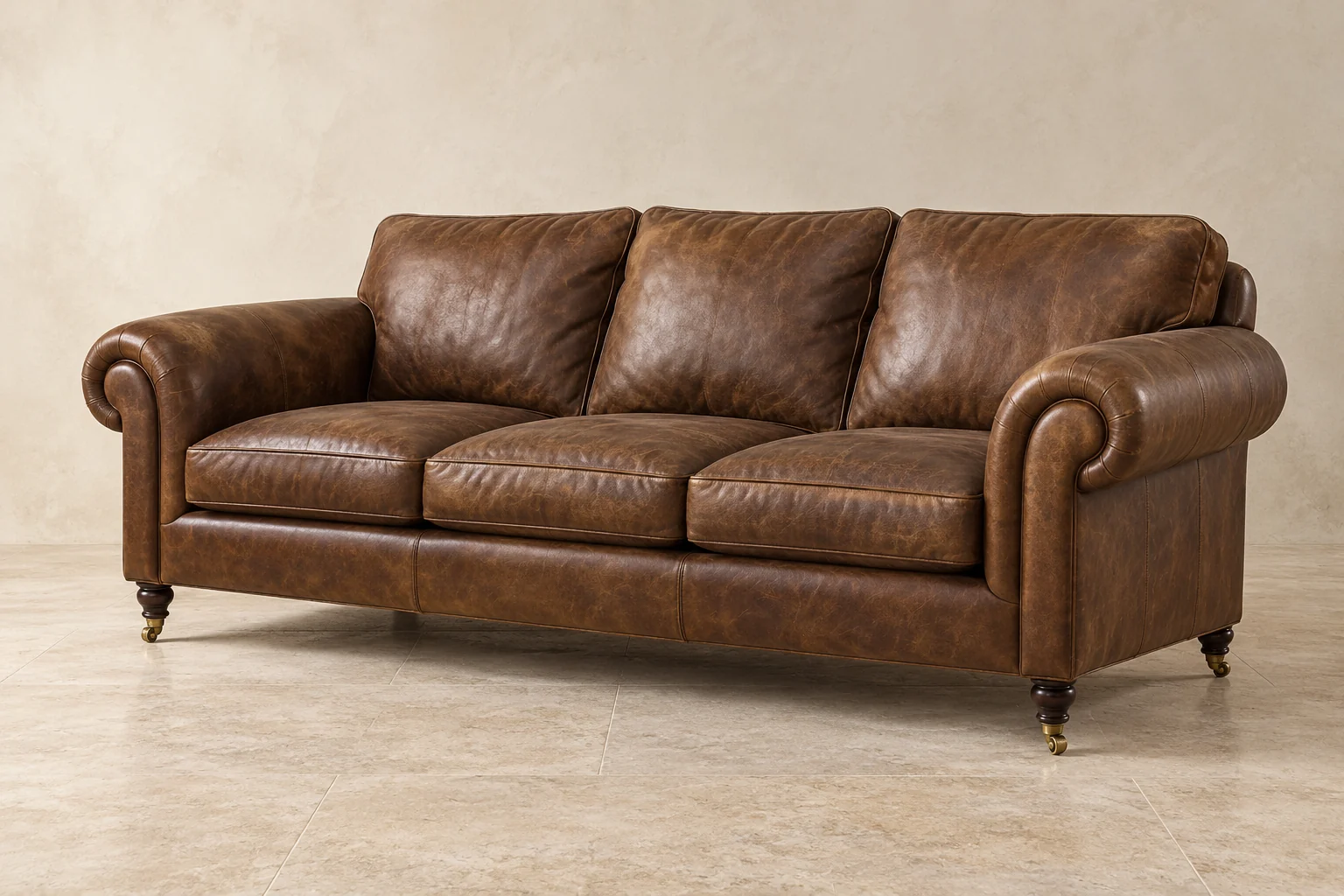
Rolled arm, loose cushionsCushions lift out, so interiors are dealt with alone.
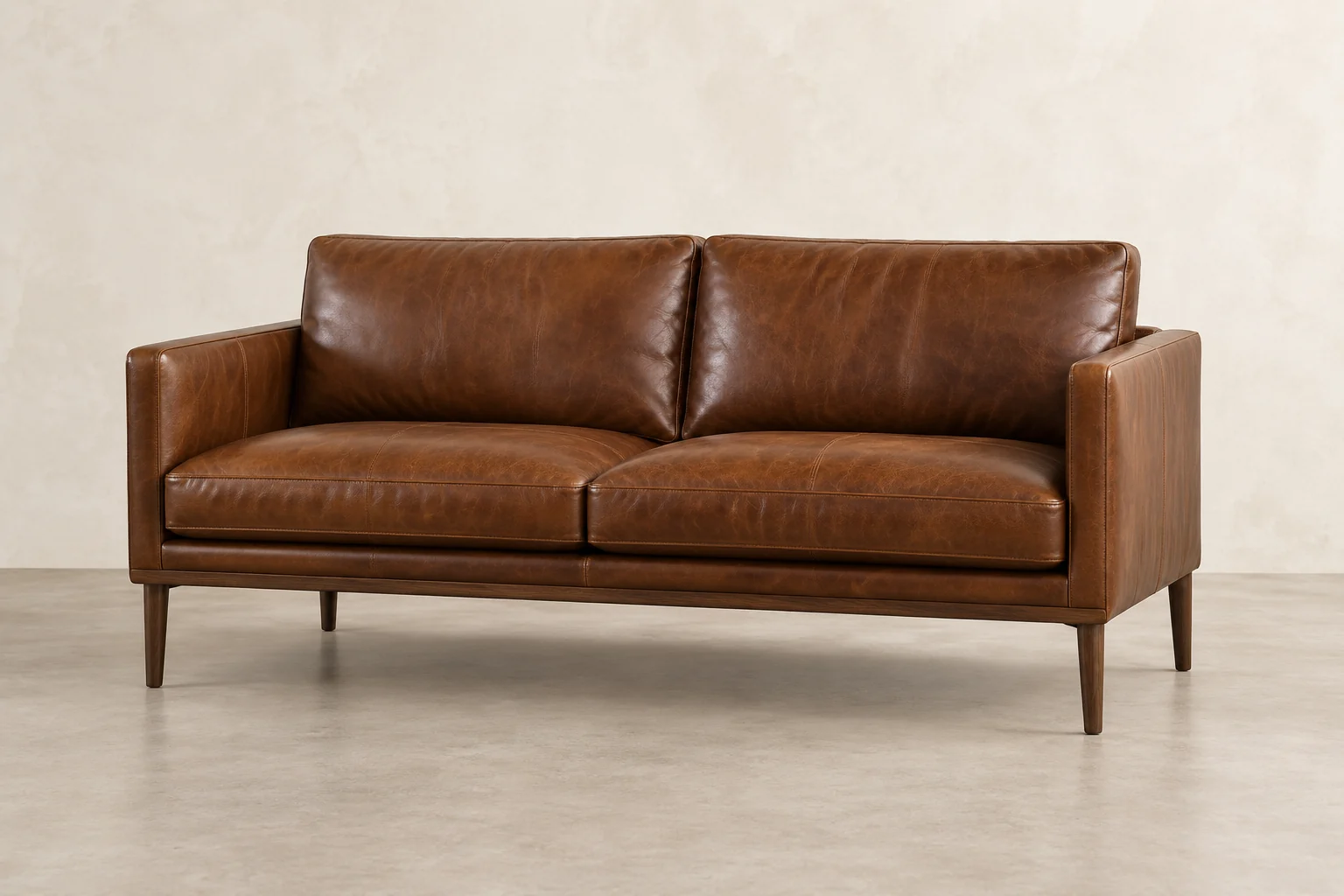
Later two-seaterTapered legs usually mean modern springing. Simpler answer.
Before you send photographs
Four pictures settle most of it.
Antique leather sofa repair quoted from photographs
01 — THE WHOLE SOFA
Straight on, in daylight. That gives us period and construction.
02 — THE UNDERSIDE
Tip it back against a wall and shoot the bottom. Almost nobody does.
03 — WHERE IT SAGS
From the side at seat height, so the dip reads as shape, not shadow.
04 — THE WORST OF THE LEATHER
Close, with a hand in frame, to tell a crack from a split.
Asked most often
What owners want to know first.
Will the repair reduce what it is worth?
Work underneath, cover in place, reversible materials: least likely to. Stripping and recoloring, most likely.
Can you do it in the apartment?
Often. Most antique leather sofa repair happens with the piece upside down. Joints that must be knocked apart travel.
Do you have to match the original materials?
Structurally, yes. Antique leather sofa repair that leaves the piece harder to work on later has solved one problem and created another.
It smells musty. Is that the hide?
More often the hair and hessian, which hold decades of dust — handled without the cover coming off. See leather cleaning.
One cushion is worse than the rest. Just that one?
Seat by seat is normal on a long sofa, and antique leather sofa repair is priced that way. Where cushions lift out, interiors are handled alone — see cushion repair.
Start here
Send the underside first.
Tell us where it sinks and what you hear when you sit down. Antique leather sofa repair is usually decided from photographs, before anyone visits.
Manhattan · Brooklyn · Queens · Long Island · New Jersey