

Home/Commercial/Capabilities/Project process
Commercial furniture repair process
The repair is rarely the part that takes longest.
Five stages, each with one condition it has to meet before the next can start. None of them is measured in days, because days are not what holds a job up.
- 01Assessment
- 02Written scope
- 03Access and paperwork
- 04The work window
- 05Sign-off
The root
Almost nothing on the schedule is the repair itself.
The bench work is the one part anyone can measure at a survey. The rest of a commercial furniture repair process is approvals.
A job runs at the speed of its slowest open approval, not at the speed of the work.
- A signed scopemoves a date forward.
- An unaccepted certificatestops one.
- A missing purchase orderstops one quietly.
The five stages
The commercial furniture repair process, stage by stage
You do not move to the next stage until the line above it is true. That is how repair works inside a building that is not ours.
-
01

Assessment
Every piece leaves the survey with its own verdict.
We walk the room one piece at a time: repair in place, repair off site, recolour, re-cover or replace a panel. We record the leather or vinyl, frame and foam, seam wear, and whether the piece is fixed to the building. Averaging a room gives a scope that changes halfway through, and that is the most expensive thing that can happen.
Exit conditionEvery piece has a verdict, not an estimate.
-
02
Written scope
A scope is a document somebody can approve.
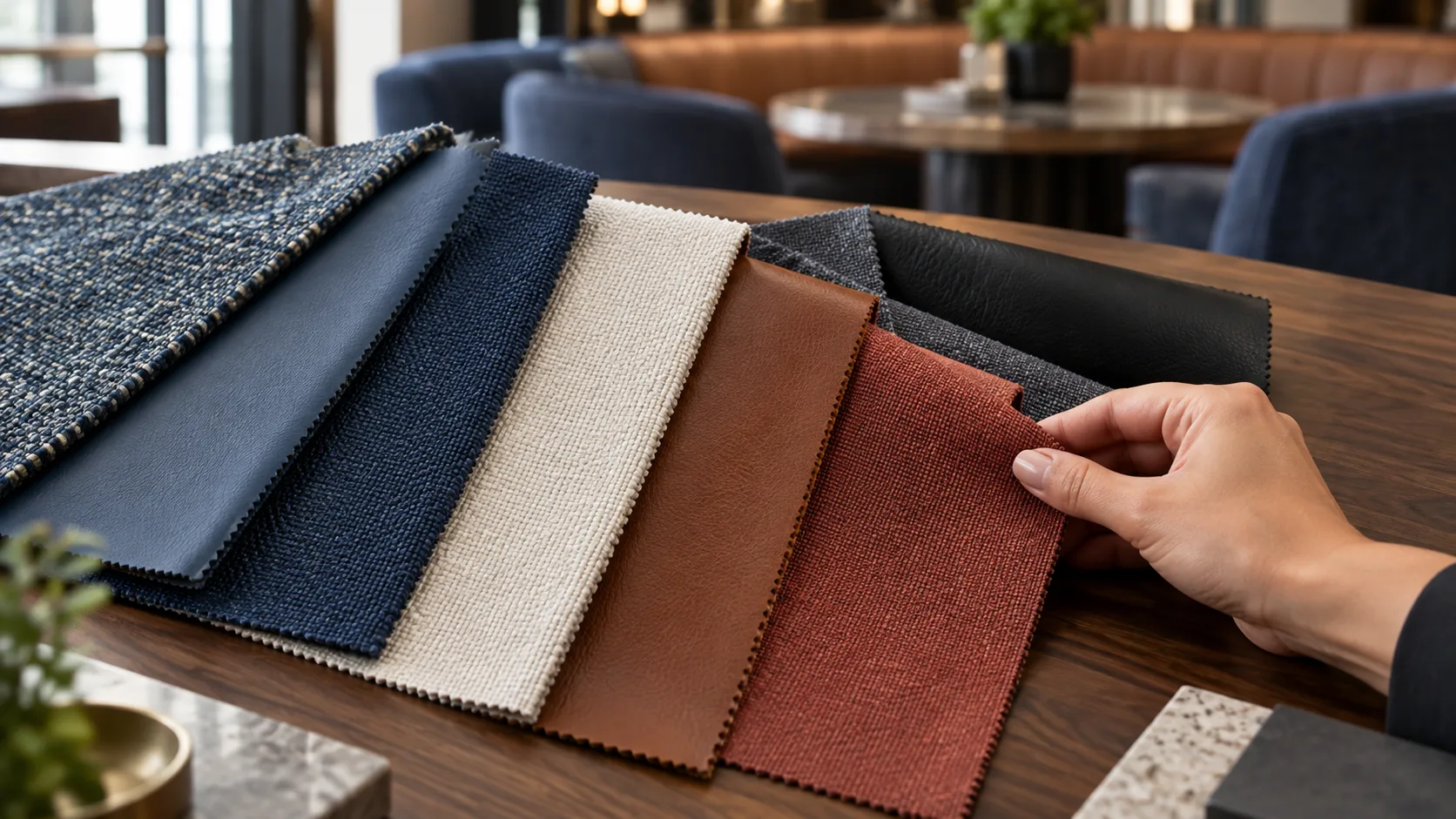
One line per piece, each with its method and its material. The colour formula is settled here through custom colour matching, and any hide or fabric to source goes through material matching now, because material lead time is part of the schedule.
Exit conditionSomeone with a budget has approved it in writing.
-
03
Access and paperwork
Two systems have to say yes before a tool is unpacked.
The building has to accept a certificate of insurance naming the right entities, and your purchasing system has to hold us as a set-up vendor before it can raise an order. Neither depends on the other, so run them side by side, starting on the day of the survey.
Exit conditionThe building has accepted the certificate and your system can raise a purchase order.
-
04
The work window
Your trading hours set the window, not ours.
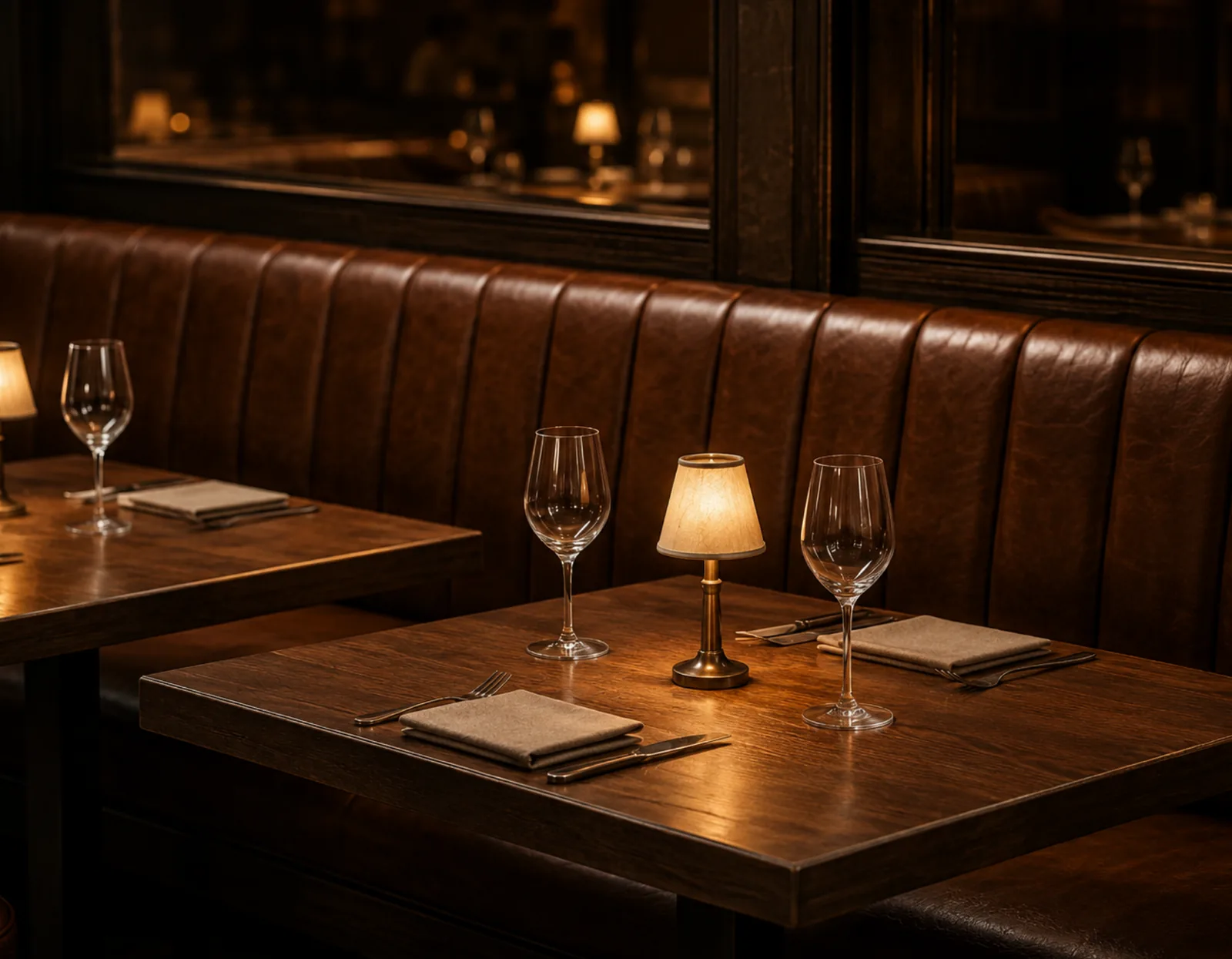
Most pieces are repaired on site. A room that cannot lose seats is worked in off hours or overnight, so the floor is set before opening. Built-in booths and banquettes are re-covered where they stand. Loose pieces that need the workshop go out on a tracked pickup and delivery.
Exit conditionThe room is usable at the hour you need it.
-
05
Sign-off
The job ends with a file, not just an invoice.
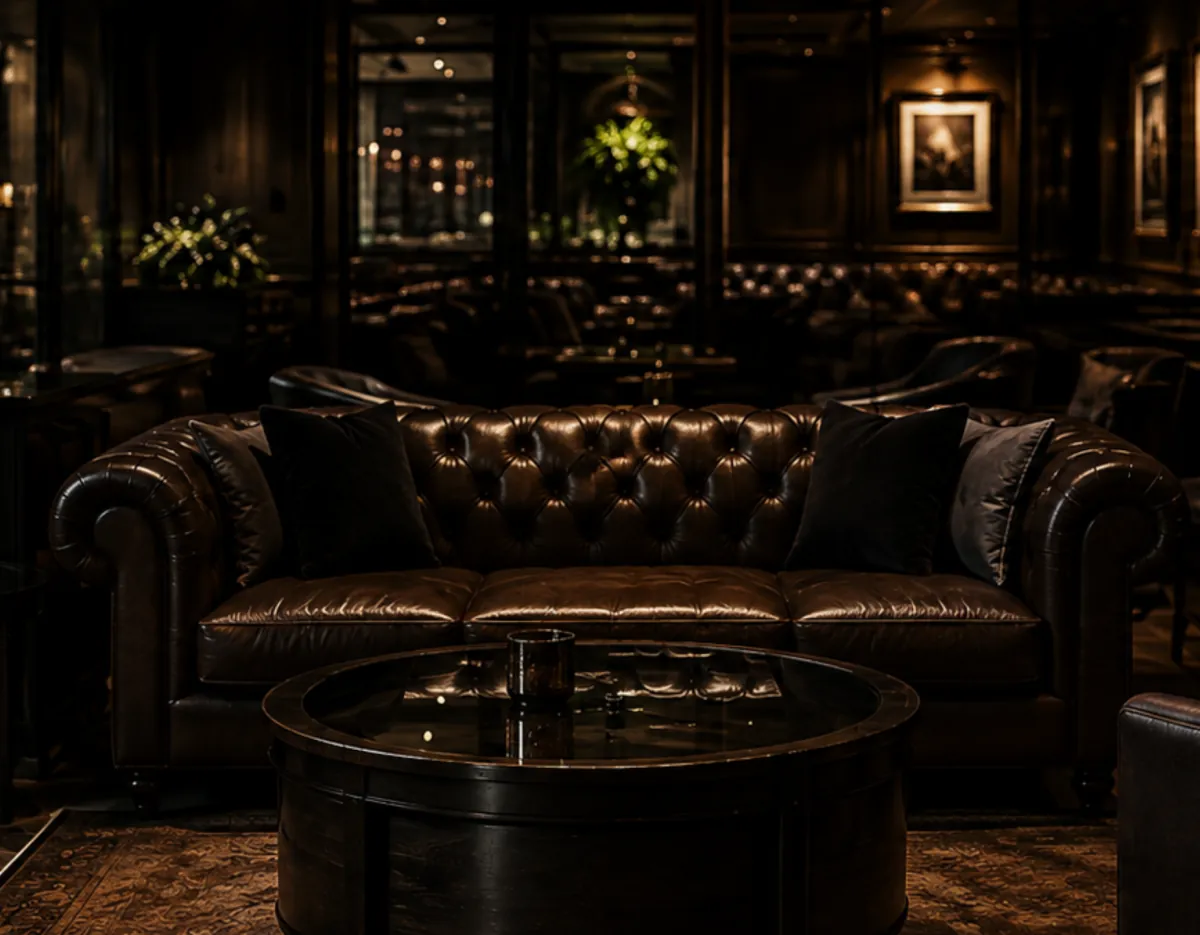
You get the colour formula, the material reference and the method for each piece. A seat damaged next year can be matched without a new survey, a supplier such as Global Leathers or District Leather Supply can send the same hide again, and a maintenance programme runs off the same record.
Exit conditionThe record can reproduce the work without another survey.



Stages one and two are ours to move. Stage three is yours and your building's, and it is where most of the calendar goes. Start it on the day of the survey, not the day of approval.
Phasing
A big room is worked in passes, not all at once.
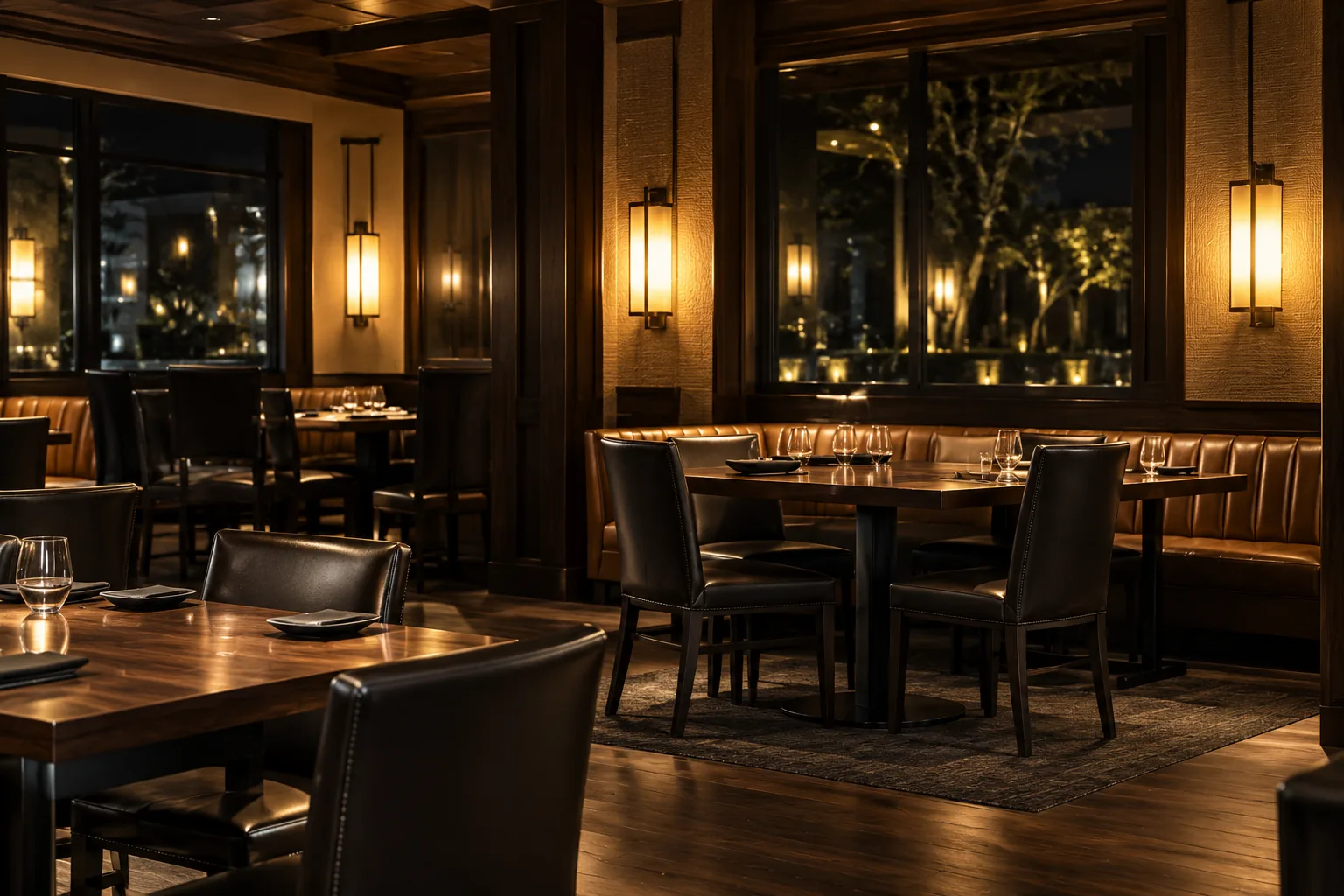
Phasing is what lets a floor keep trading while a long run of seating is worked through.
- First pass
Prove the method on one section.
- Room closed
- The largest pass, because the whole floor is free.
- Room trading
- One bay in one closed window, checked in daylight before the rest is committed.
- Middle passes
Repeat the approved method bay by bay.
- Room closed
- Passes run back to back, in the order the material needs.
- Room trading
- Quiet sections first, the ones that seat every night last.
- Last pass
The last pass is inspection.
- Room closed
- The whole room walked together, under its real lighting.
- Room trading
- Early bays re-checked against the last, after weeks of use.
Phasing is agreed in the written scope, not on the first night, because it changes price, access and running order.
Questions
What purchasing asks before the first visit.
How does the commercial furniture repair process work from start to finish?
In five stages: an assessment that gives every piece its own verdict, a written scope with one line per piece, access and paperwork (the building's insurance requirement and your vendor setup), the work window around your trading hours, and a sign-off record of colour, material and method. Each stage has one condition to meet before the next begins.
How long does the commercial furniture repair process take?
We will not put a number on this page, and anyone who does before seeing the room is guessing. The timeline is set by whichever condition is still open, not by the amount of repair. After the survey you get a scope that lists the open conditions and says which are ours and which are yours.
Does the room have to close?
Usually not. Most work is done in place, and rooms that cannot lose seats are worked after hours or overnight. The alternative to closing is phasing: quiet sections first, the busiest last.
What holds up a start date most often?
Paperwork, almost every time: a certificate the building rejects for naming the wrong entity, or an approved scope with no vendor record behind it, so no purchase order can be raised. Both can start on the day of the survey and run in parallel.
What happens if the scope changes once work has started?
It goes back into writing before it goes onto the floor. Extra pieces, or a verdict that changes once a cover comes off, are priced and approved as an addition. Assessing every piece at the start is what keeps this rare.
Start here
Tell us about the room. We will tell you which condition is open.
Every commercial furniture repair process starts the same way: an assessment that gives each piece its own verdict. We work across New York City, Long Island and northern New Jersey. Send your insurance requirement and vendor form with the enquiry, or ask for a quote from photos first.