Home/Commercial/B2B Programs/Maintenance
Cared For Monthly,
Not Replaced
Every Few Years
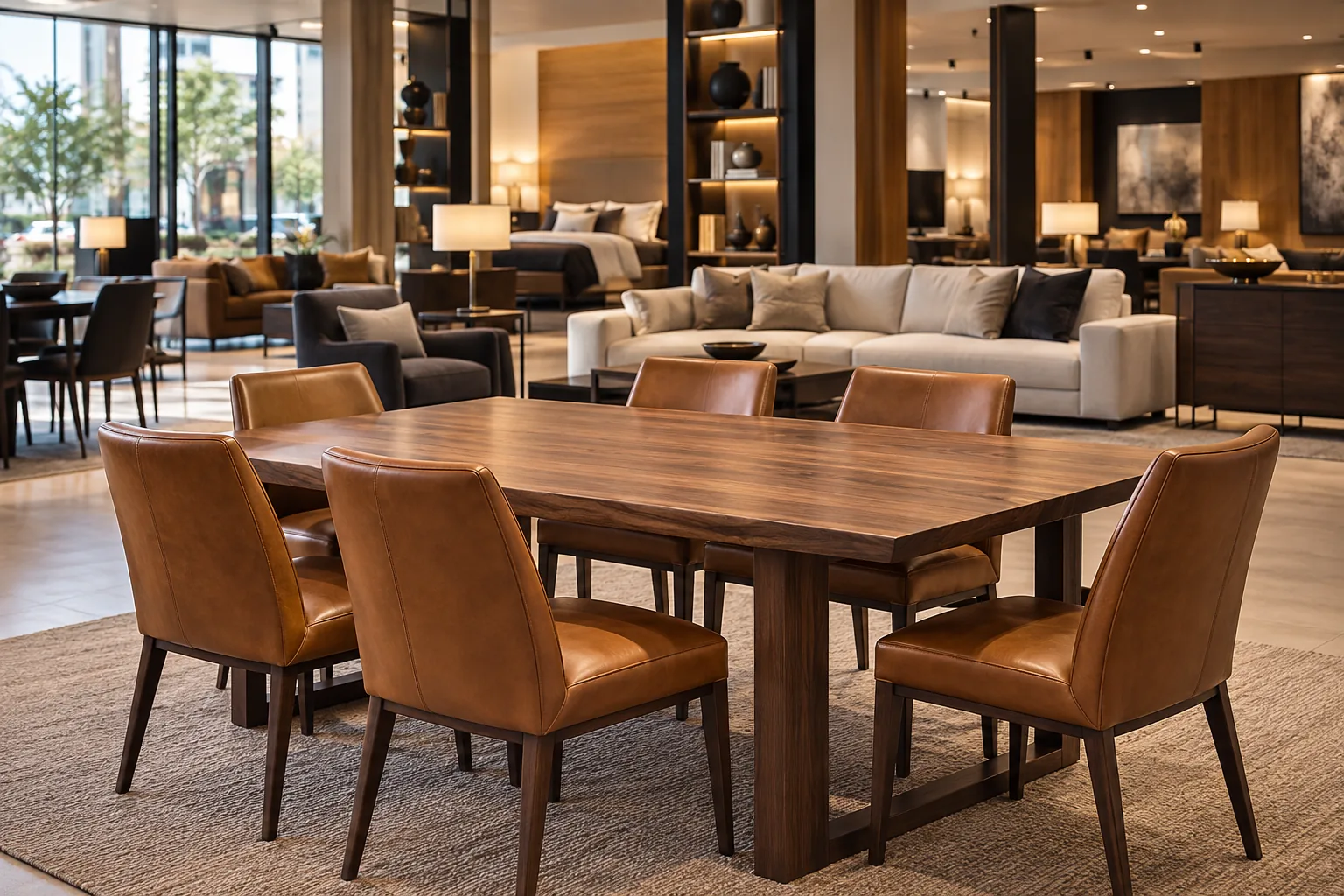
Commercial leather furniture maintenance is a standing appointment, not a rescue. One visit a month, in your quiet hours, on your floor: cleaned, conditioned, protected and put back before the room opens. Nothing is allowed to become a replacement order.
New York · Long Island · New Jersey
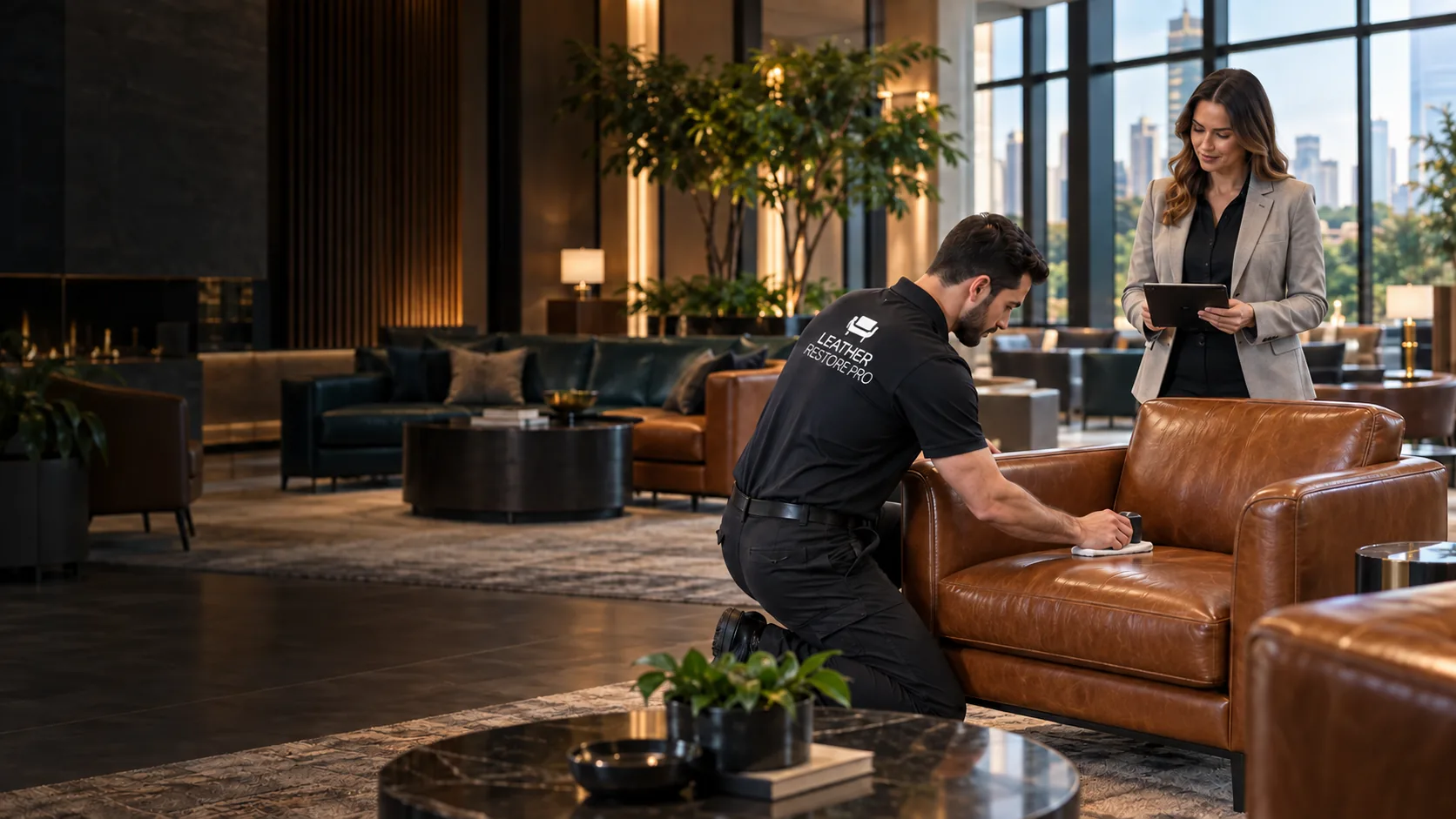
Monthly, or once
A recurring agreement, or a single refresh to see the work first.
On your floor
Cleaned, conditioned and repaired in the room, during your quiet hours.
Nothing deferred quietly
Anything left for next month is written down with the reason.
A record per address
Photographs, scope and sign-off filed against the building.
Care before replacement
Commercial leather furniture maintenance starts before the damage does.
Nothing on a commercial floor fails all at once. It dulls, dries, loosens at a seam and thins at the edges, and then one day it is a capital request. Every one of those is small while it is still small.
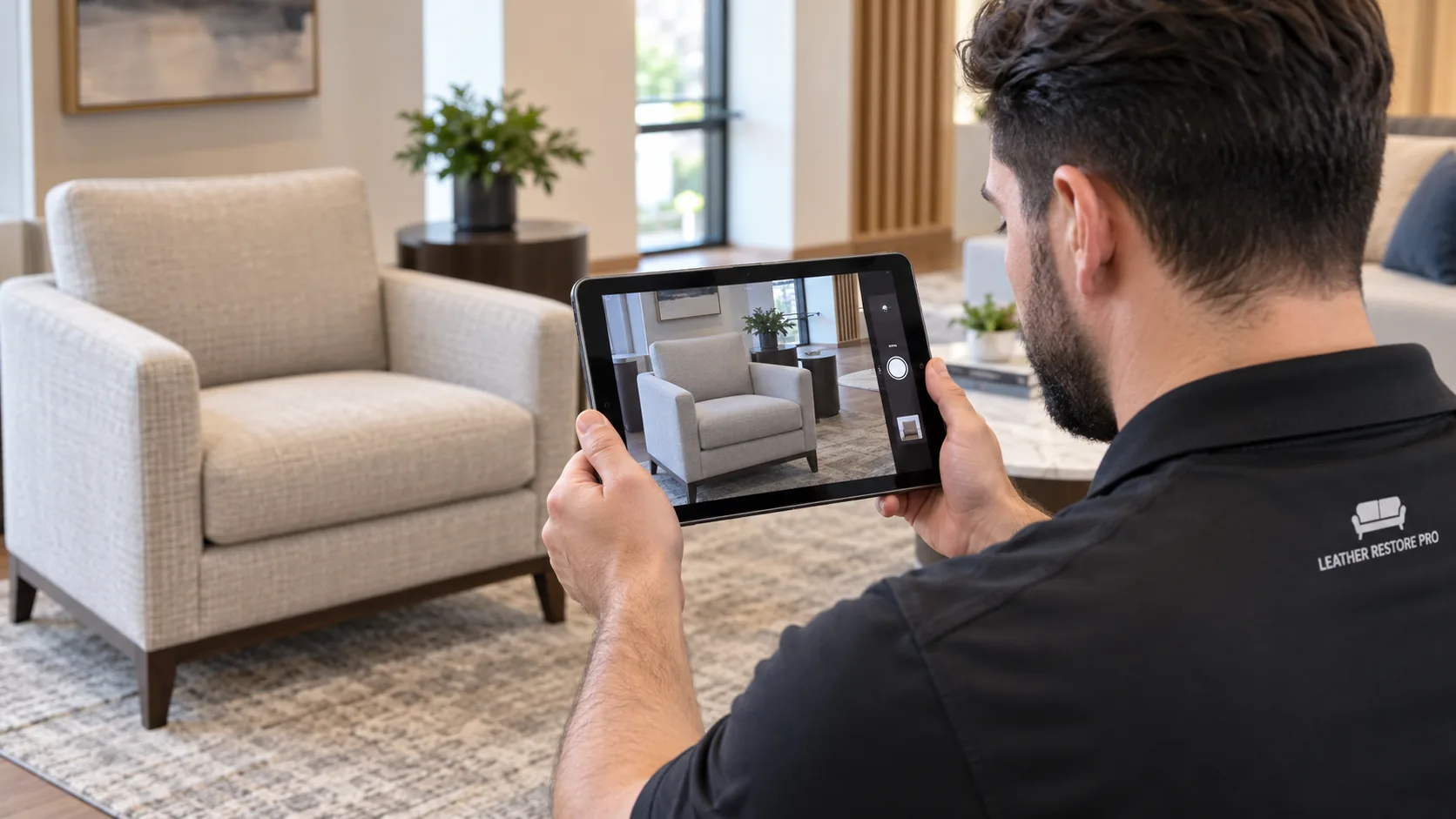
Wear is recorded, not remembered
Every piece is logged the first time we see it, so the next visit has something to measure against instead of an opinion.
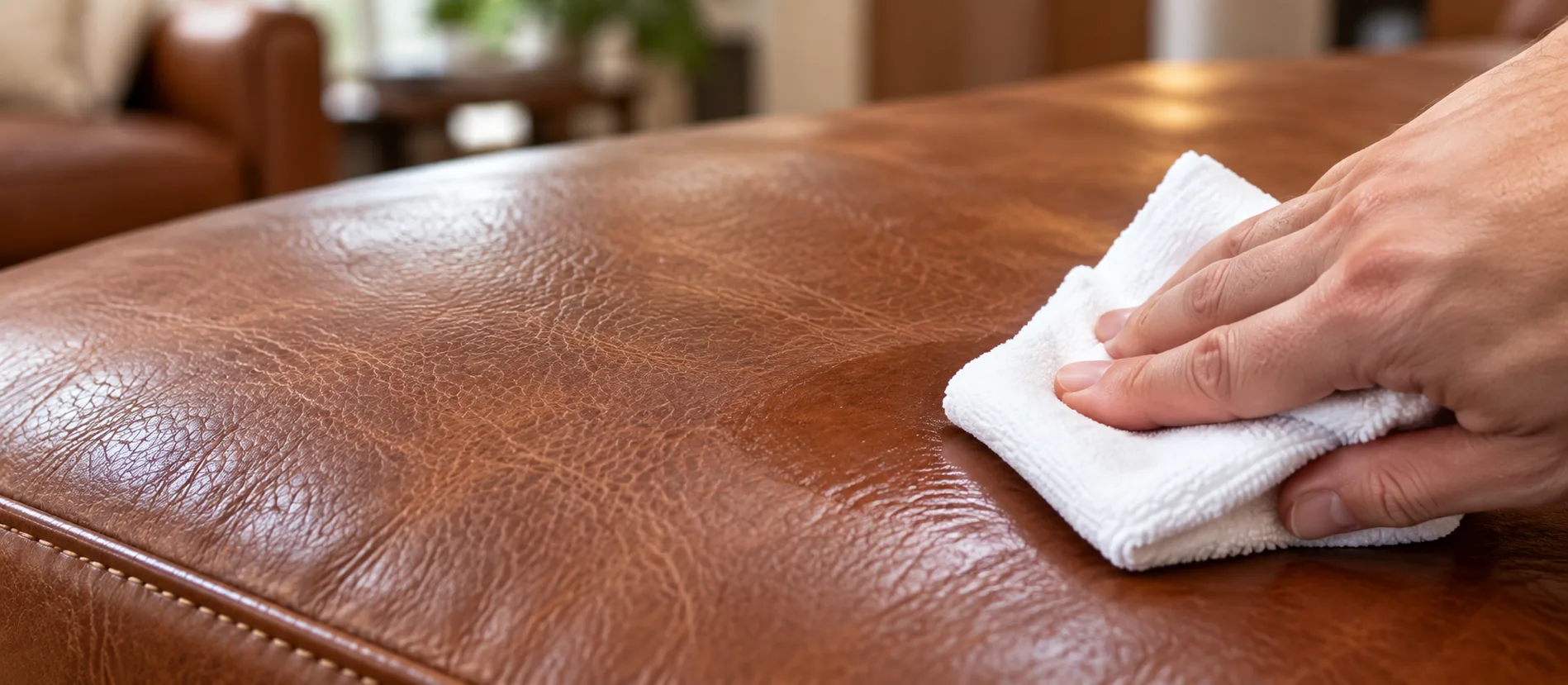
Soil is lifted before it sets
Hand oils, food and grit work into the grain and then abrade it from the inside. Removed monthly, they never get the time.
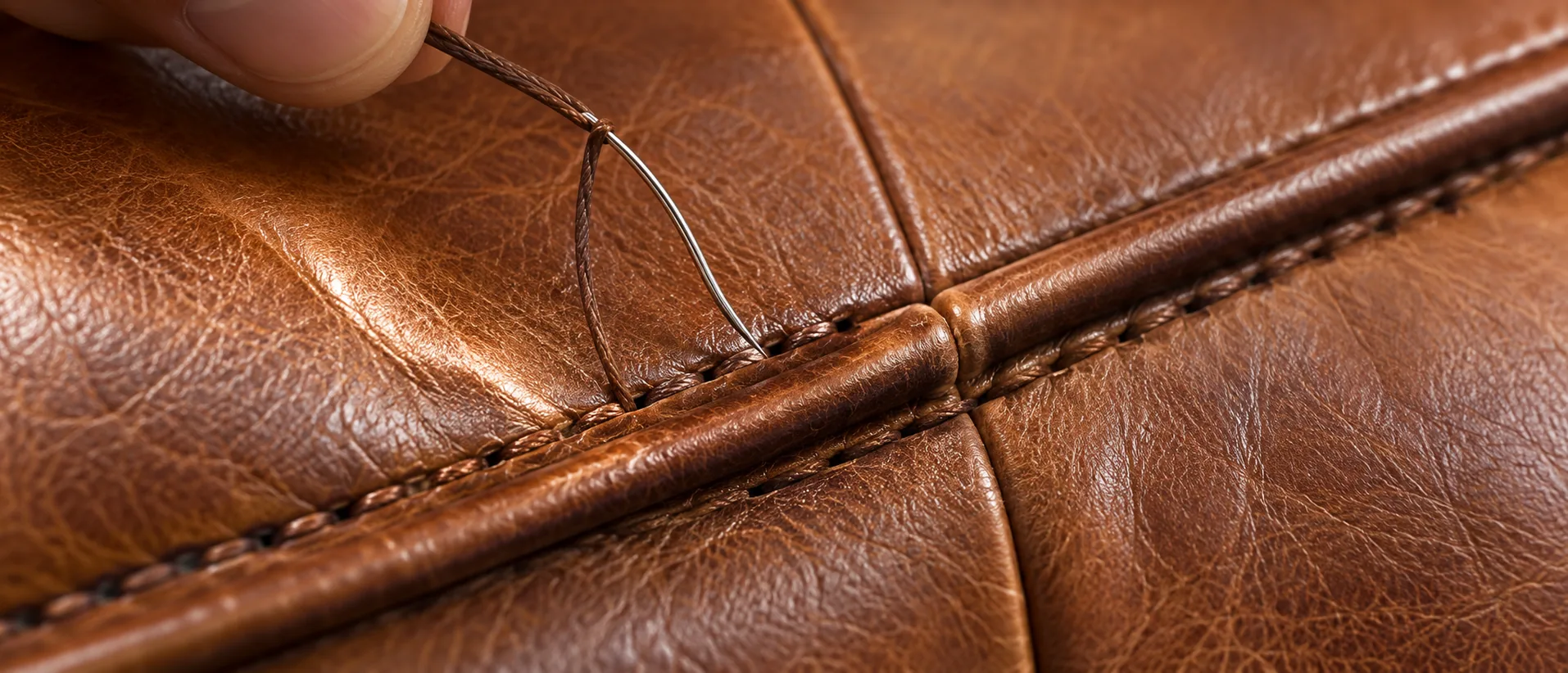
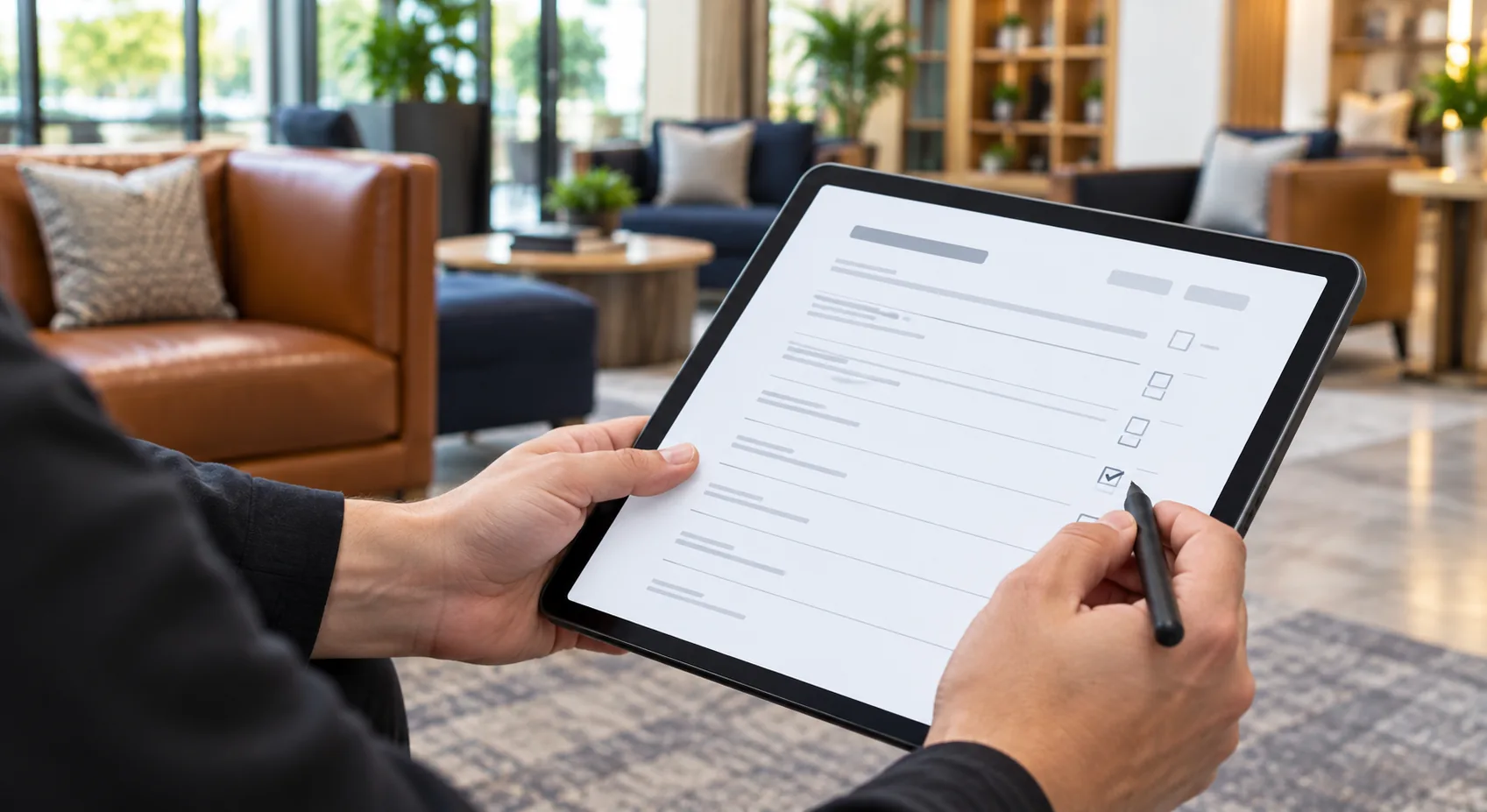
Nothing is deferred silently
What we leave for next month is written down, with the reason and what it will need when it comes back around.
Most of what commercial leather furniture maintenance catches is ordinary: cleaning, conditioning and protection, done on a schedule instead of after a complaint. Holding furnishings in service rather than replacing them is also what building operations standards such as LEED for existing buildings ask of an operator.
Two ways to start
Start monthly, or start with one visit.
There are two doors and no others. Commercial leather furniture maintenance is sold monthly, because that is the only interval at which the work stays small. The one-time refresh exists so you can see it done before signing anything.
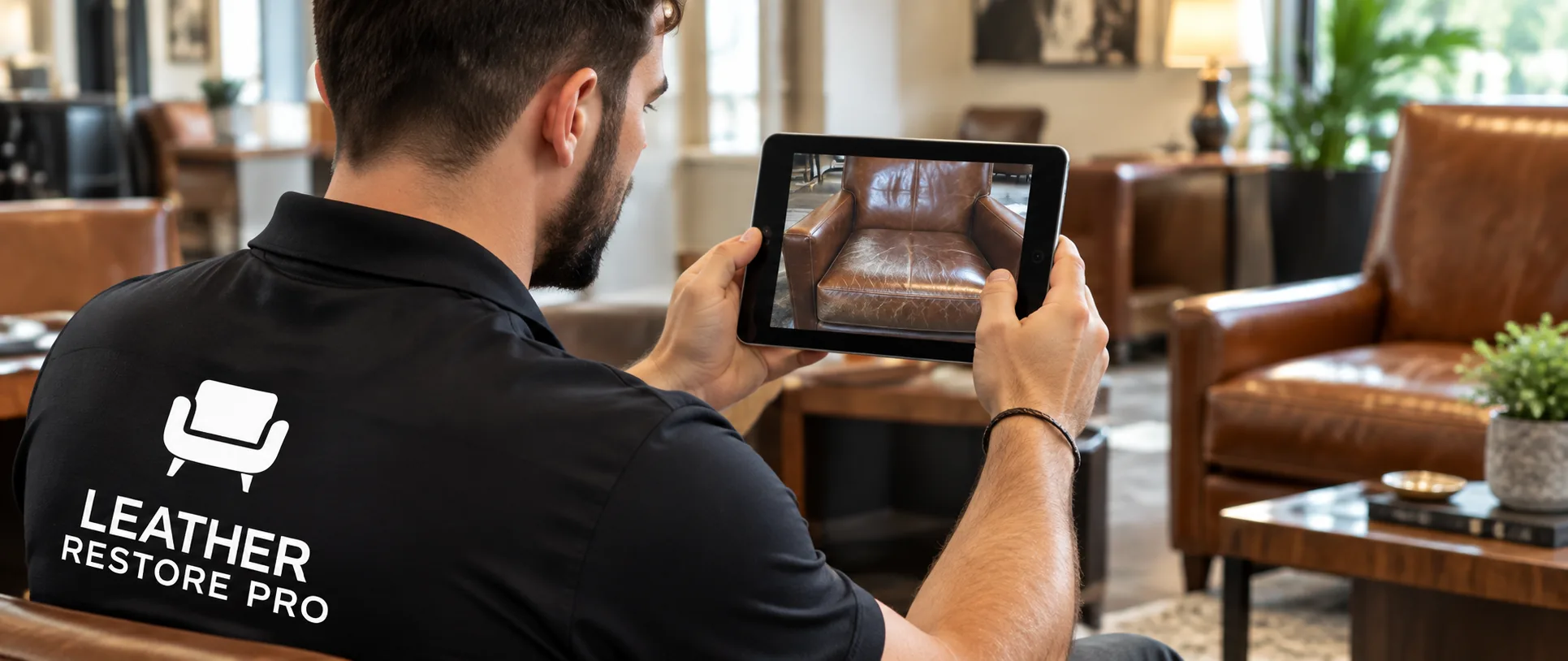
The monthly program
One visit a month at a fixed rate, the same crew each time. Cleaning, conditioning, protection, color touch-ups, seams, cushions and frames are all inside the visit, not quoted on top of it.
Book an assessment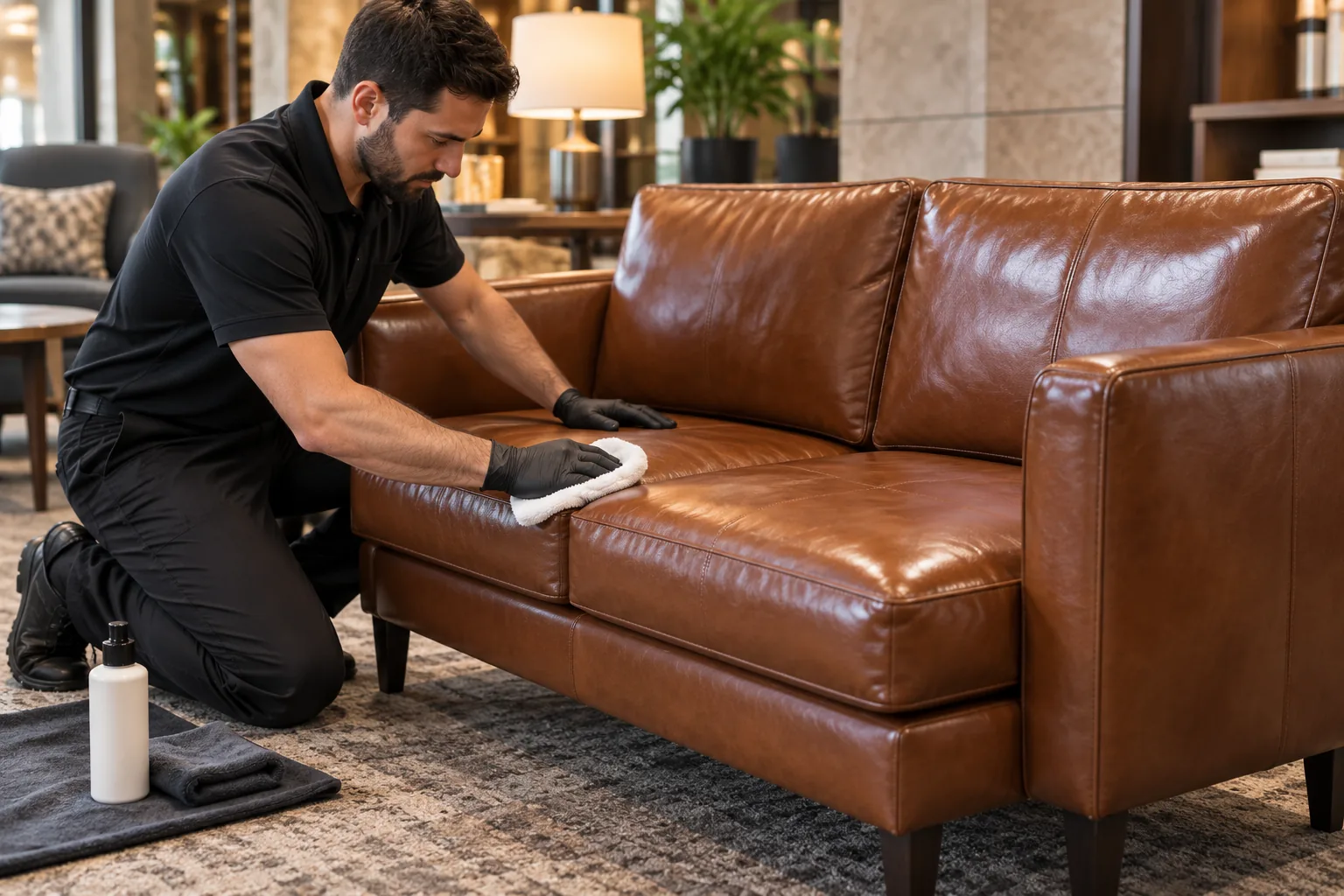
The one-time refresh
A single visit, quoted per piece from photographs. Most buildings use it to see the work on their own furniture before putting a monthly agreement in front of an owner.
Send photographsLarger rollouts and multi-address work run through service contracts and bulk projects. A failure that cannot wait for the next visit is an emergency repair.
What it costs
Monthly rates, by the kind of room.
Published, because it is always the first question and a program nobody can budget for never starts. The rate covers the visit itself — everything in the next band — for one address.
| Space | Monthly |
|---|---|
| Hotels and lobbiesPublic seating in use around the clock | $1,200per month |
| Clubs and loungesHeavy evening use, deep-seated leather | $900per month |
| OfficesReception, conference and executive seating | $700per month |
| Restaurants and barsBanquettes, booths and stools | $600per month |
| HealthcareWaiting rooms and treatment seating | $400per month |
Rates are for the monthly program. A one-time refresh is quoted per piece from photographs, and anything already past maintenance — a tear, a failed panel, a collapsed frame — is quoted as commercial leather repair rather than folded into the monthly rate.
Inside one visit
What commercial leather furniture maintenance covers each month.
The same eight things, every visit, whether or not anything looks wrong. The point of a fixed rate is that nobody has to decide whether a small job is worth calling in.
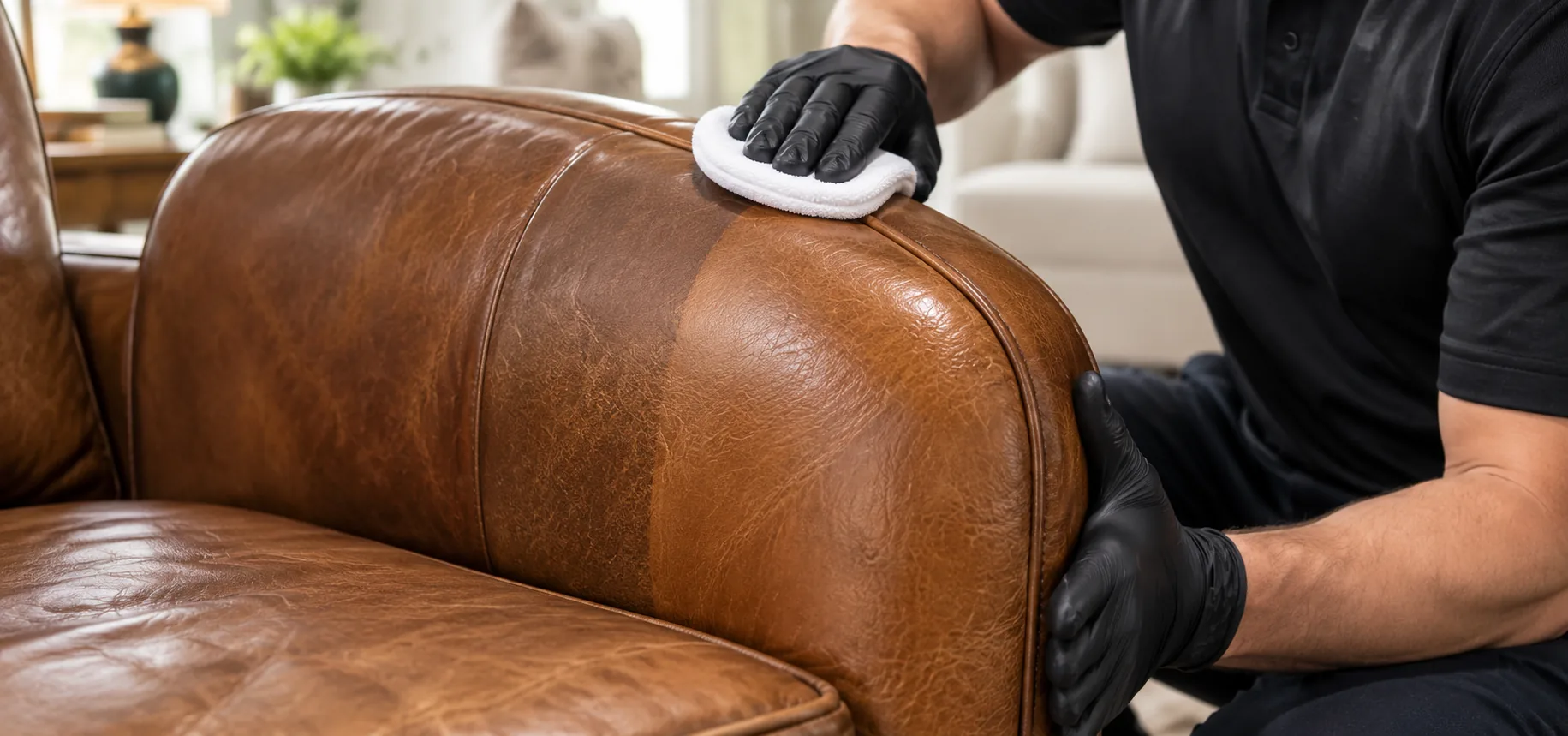
Clean
Soil lifted from the grain, not just the surface.
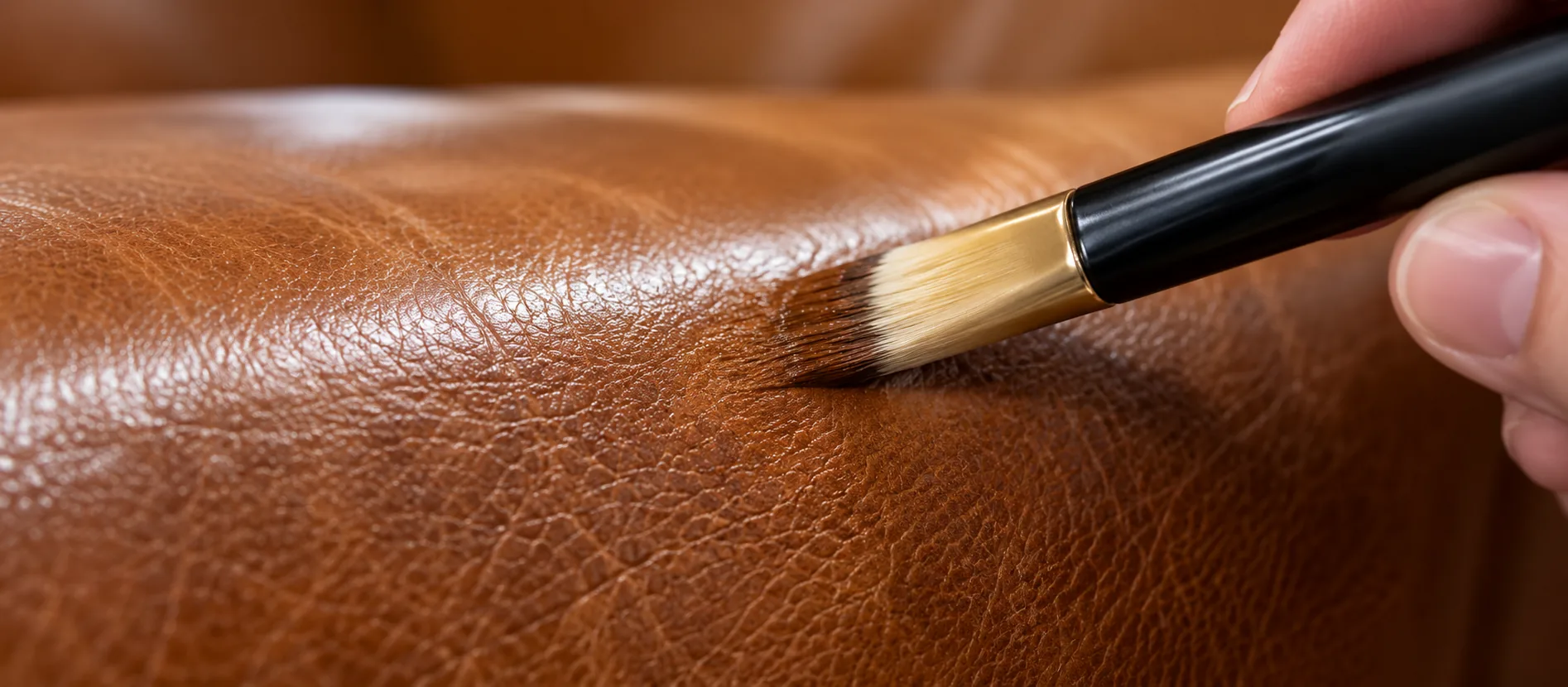
Condition
Oils replaced before the hide stiffens and cracks.
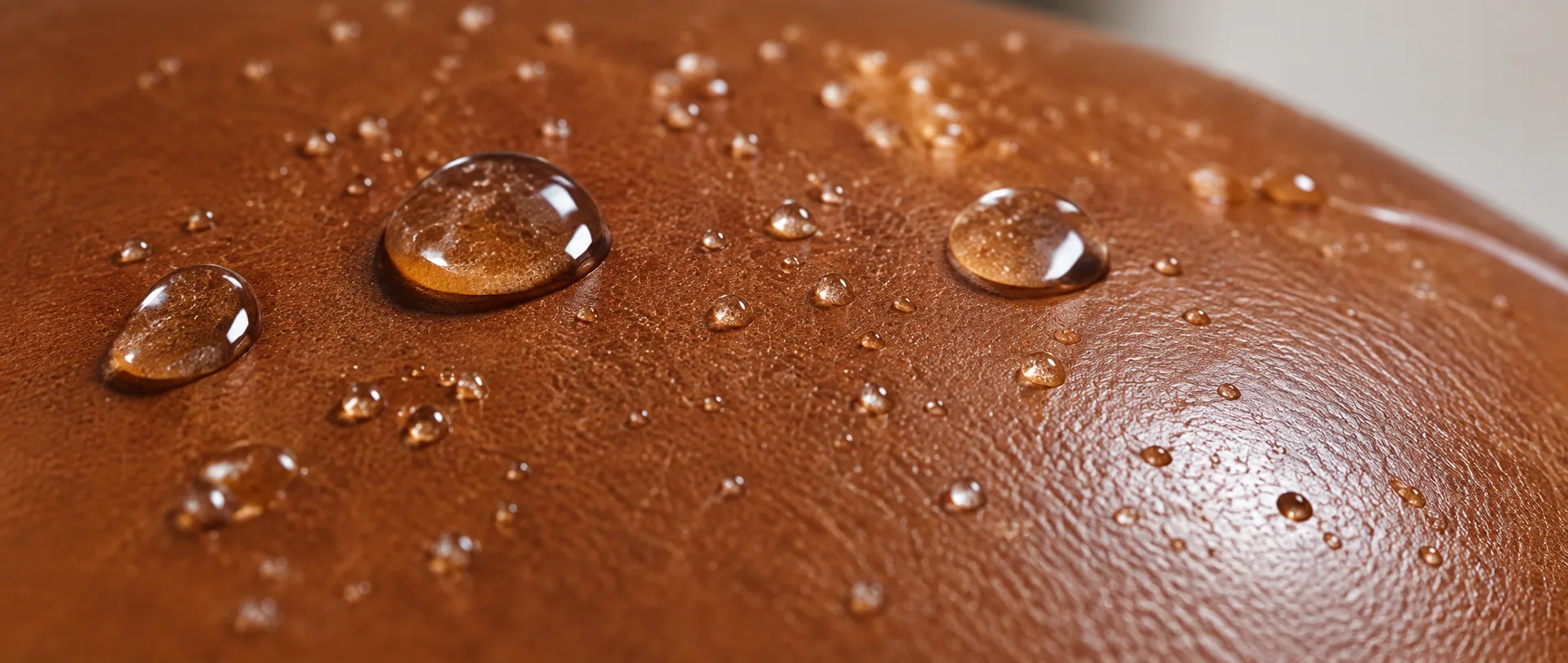
Protect
A finish that gives the next spill somewhere to sit.
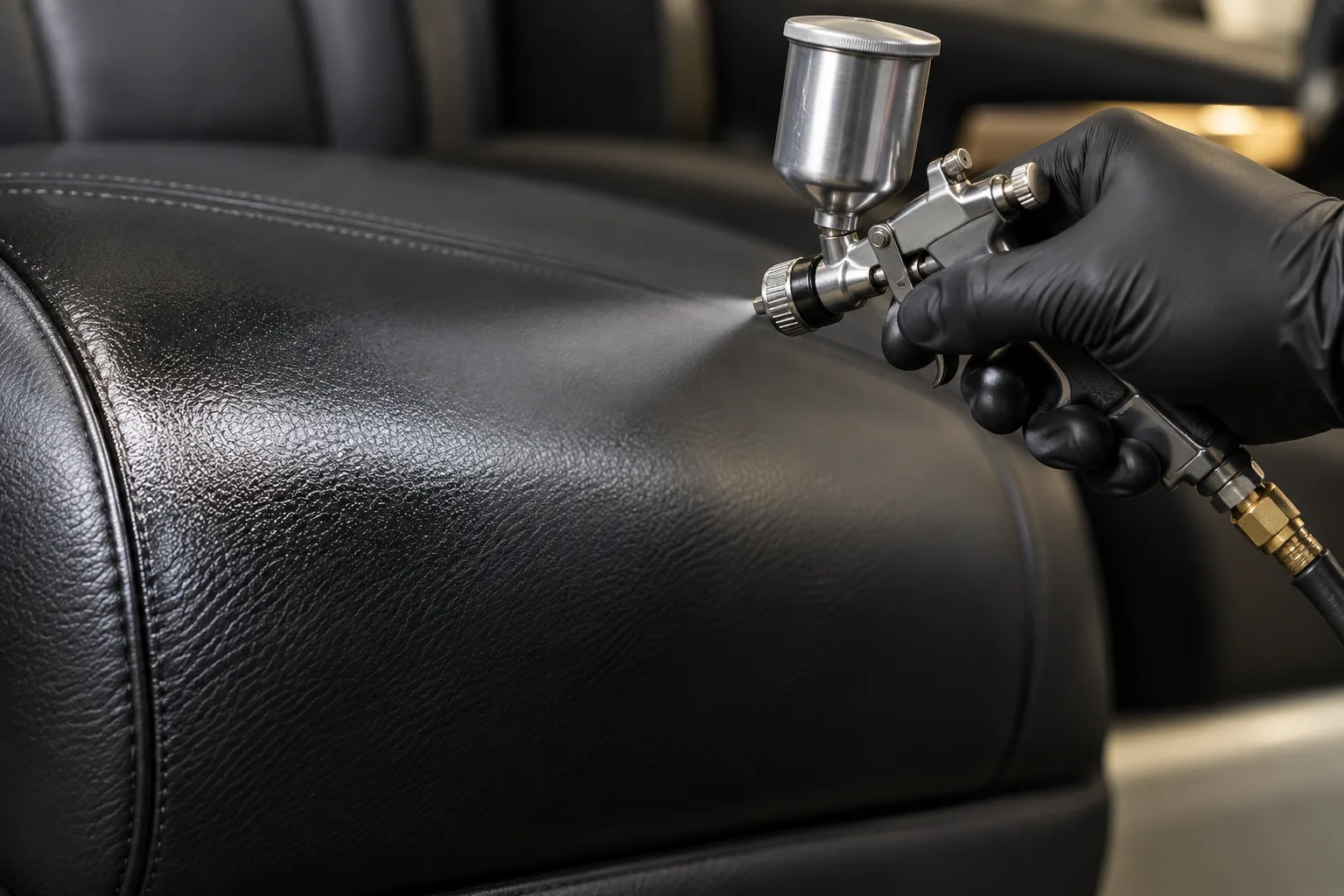
Color touch-up
Thin areas rebuilt before the hide shows through.
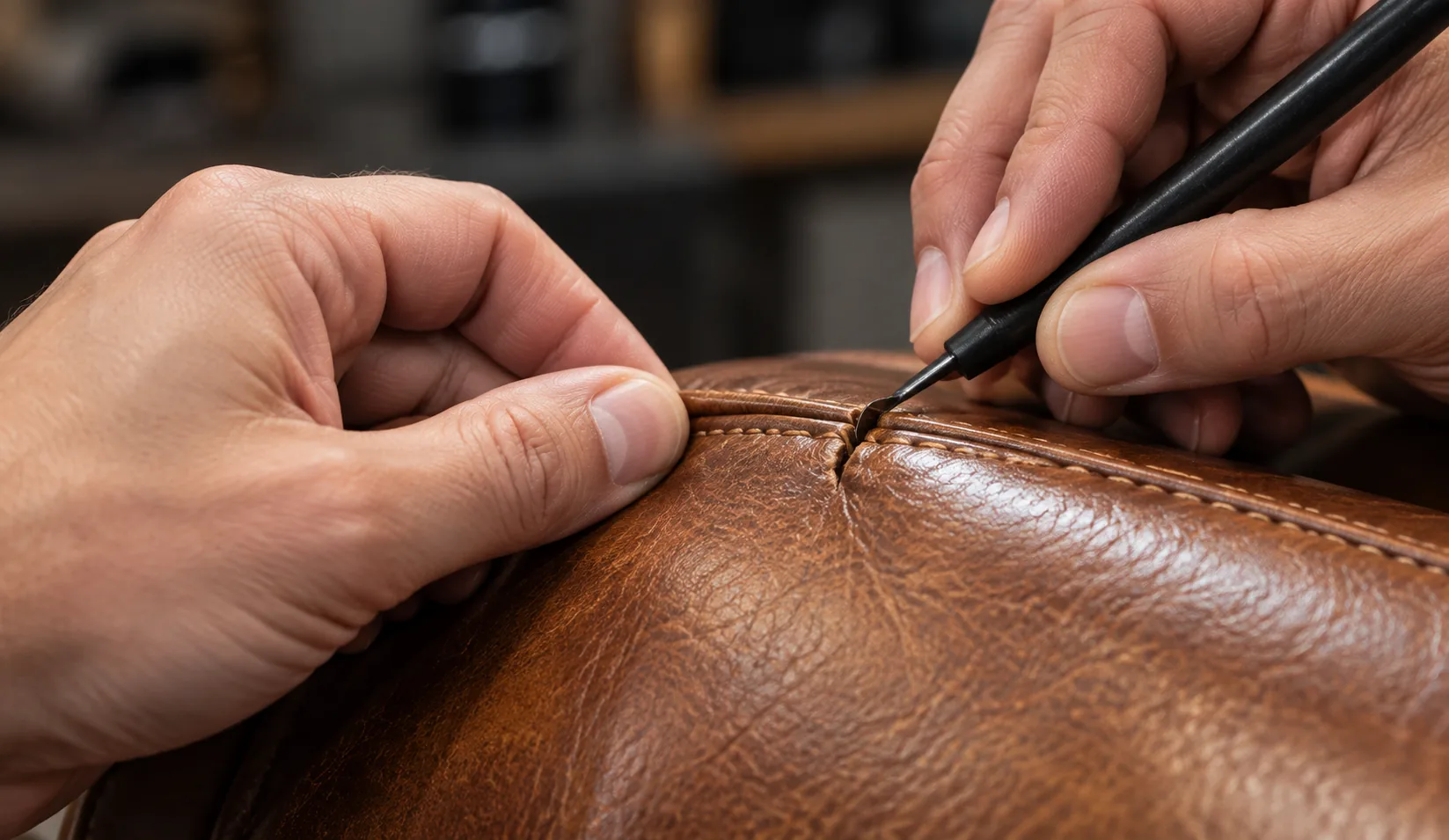
Seams
Stitching closed while it is still one loose run.
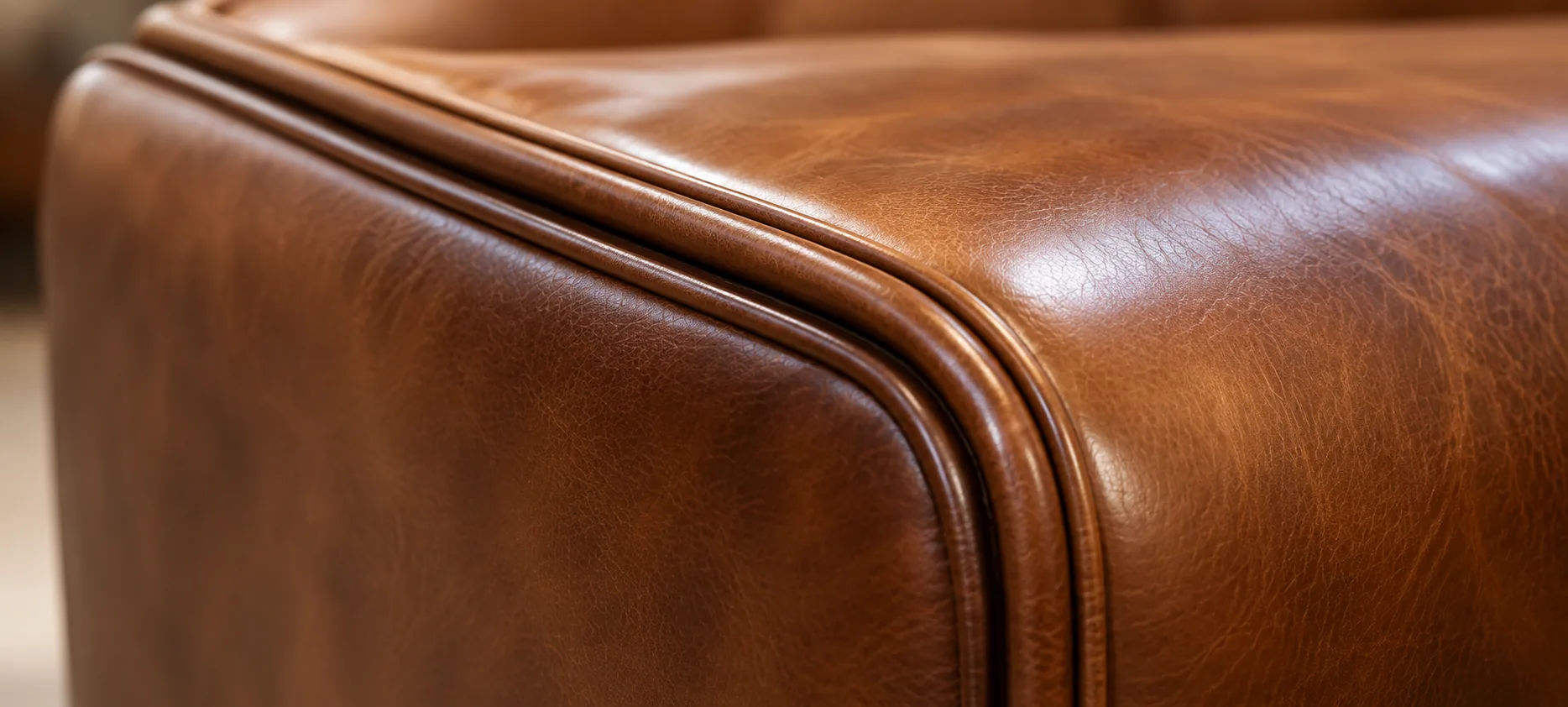
Piping and edges
The first thing to go, and the cheapest to save.
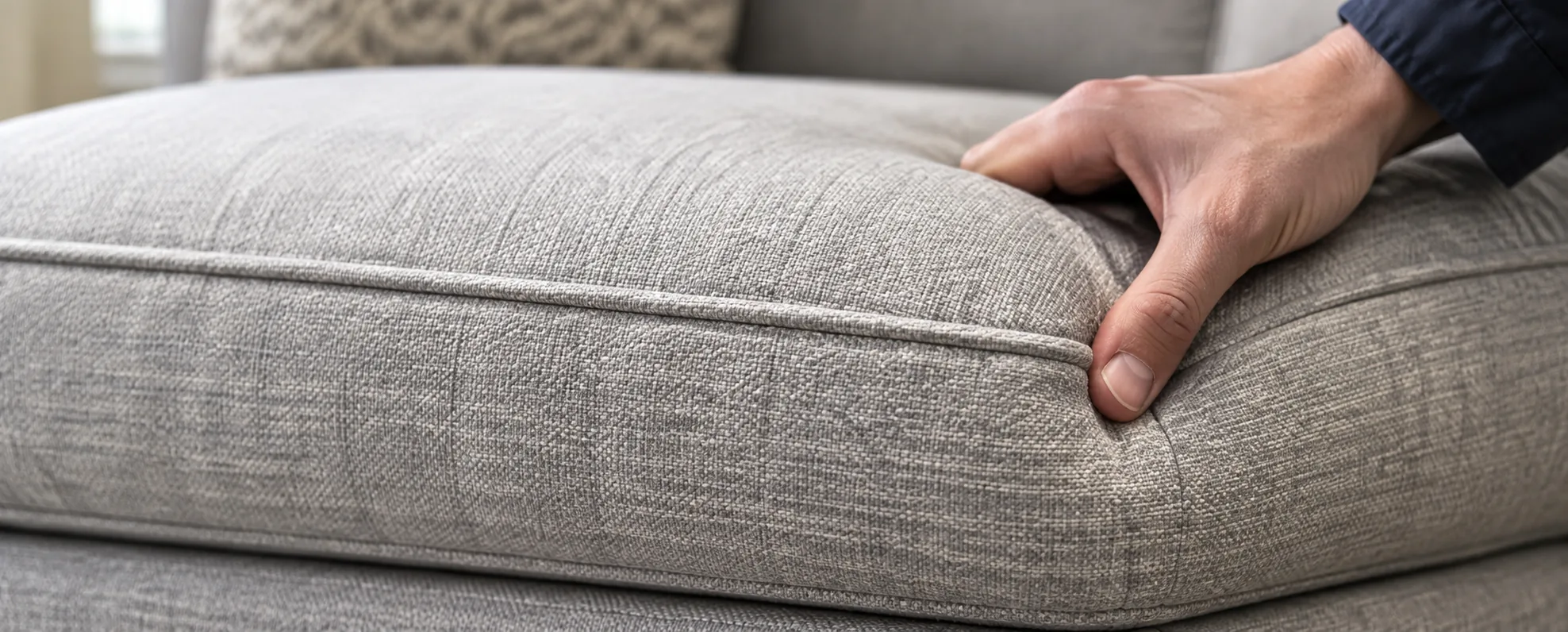
Cushion support
Foam tested by hand, not by how it looks.
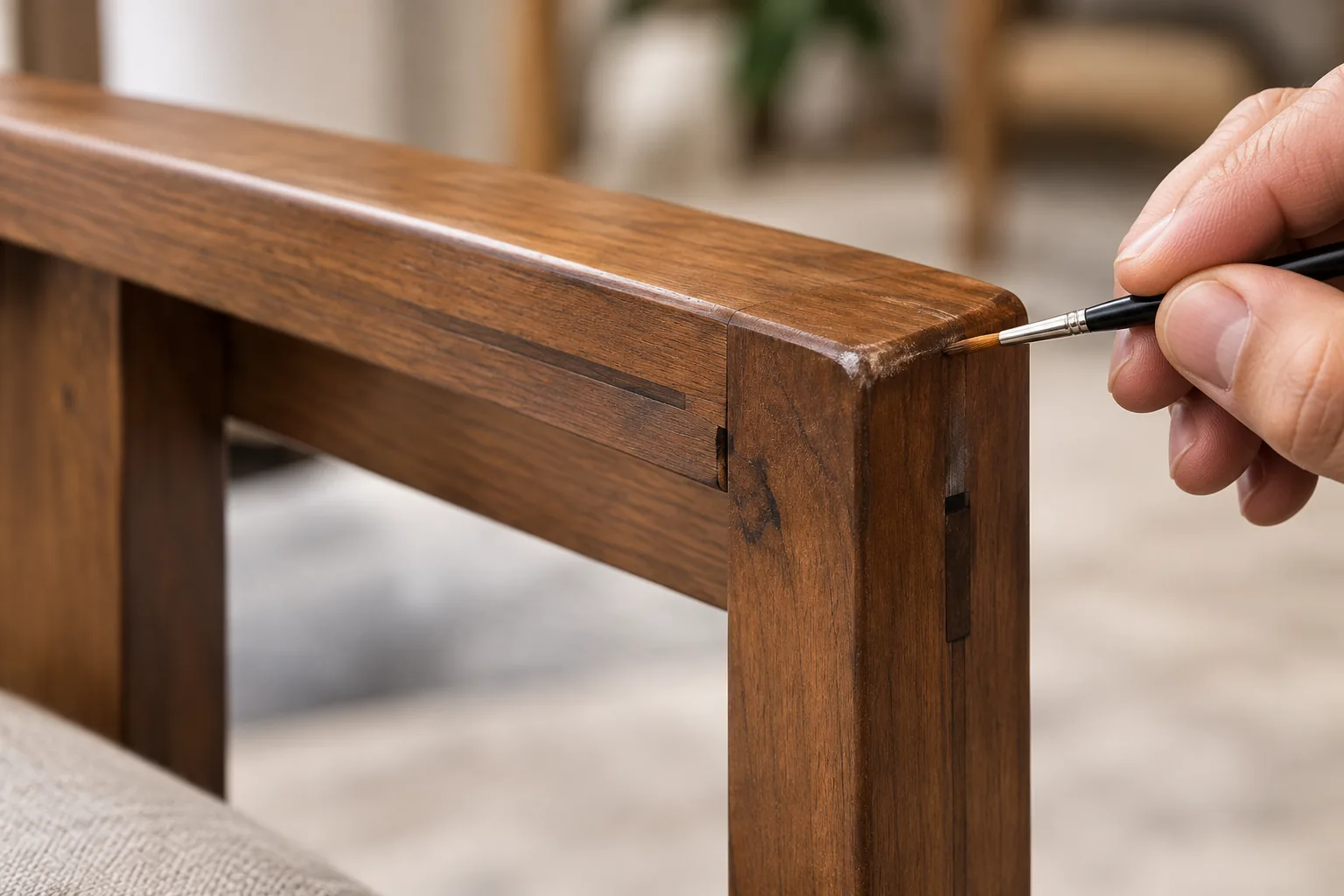
Wood and frames
Legs, arms and show-wood carried in the same visit.
Before anything is touched
Every visit opens with a condition check.
A month is long enough for something to change. The check is what turns a routine visit into a useful one.
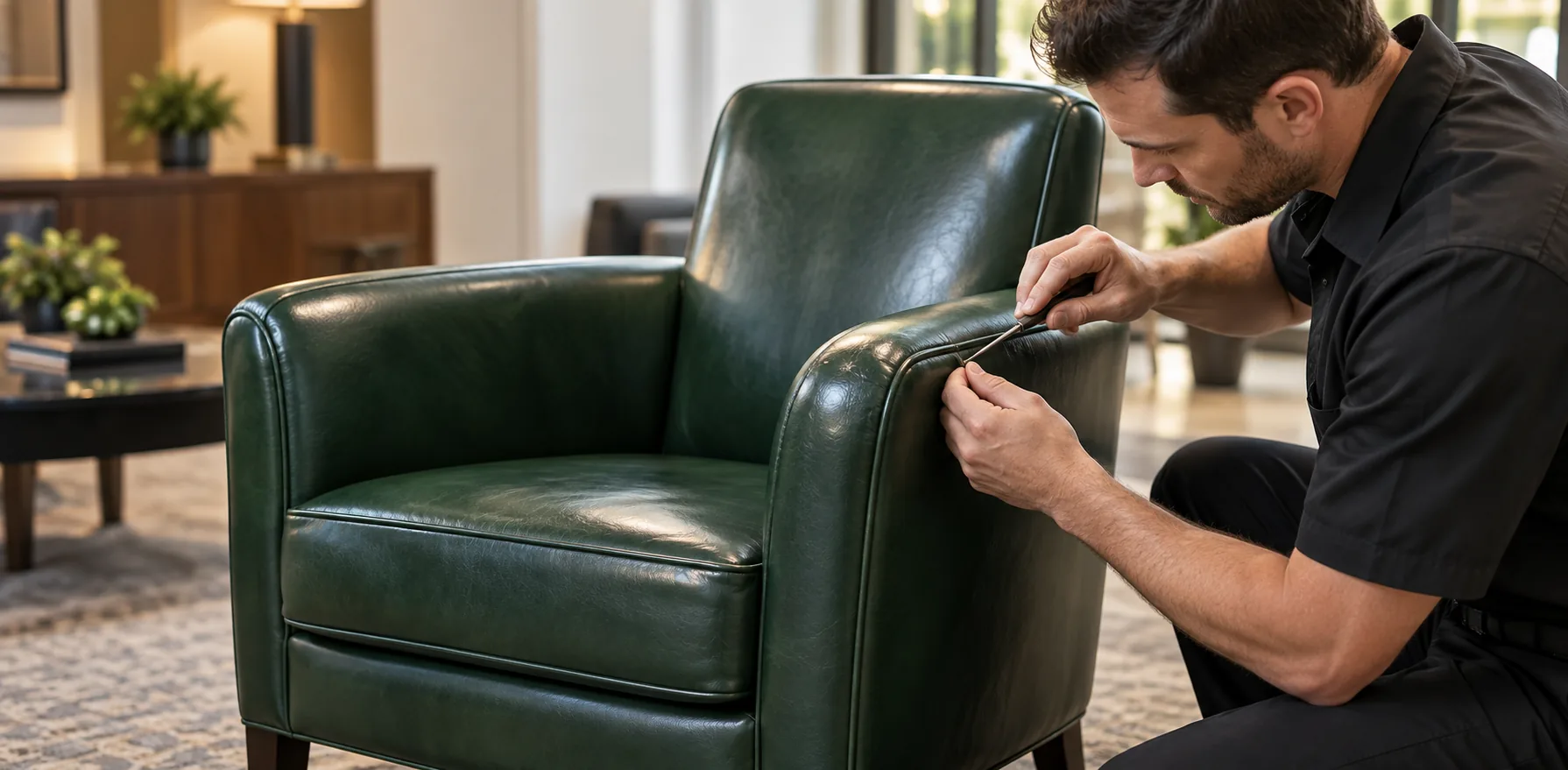
- What changed. Measured against last month's photographs, not against memory.
- What moved up. A seam that has started to open goes to the front of this visit.
- What is past it. A piece that now needs repair is flagged and quoted, not quietly cleaned around.
Read the room
Where commercial furniture wears first.
Seven places, in roughly the order they give out. Knowing that order is most of what commercial leather furniture maintenance is: the visit goes where it counts instead of wiping a whole room down evenly.
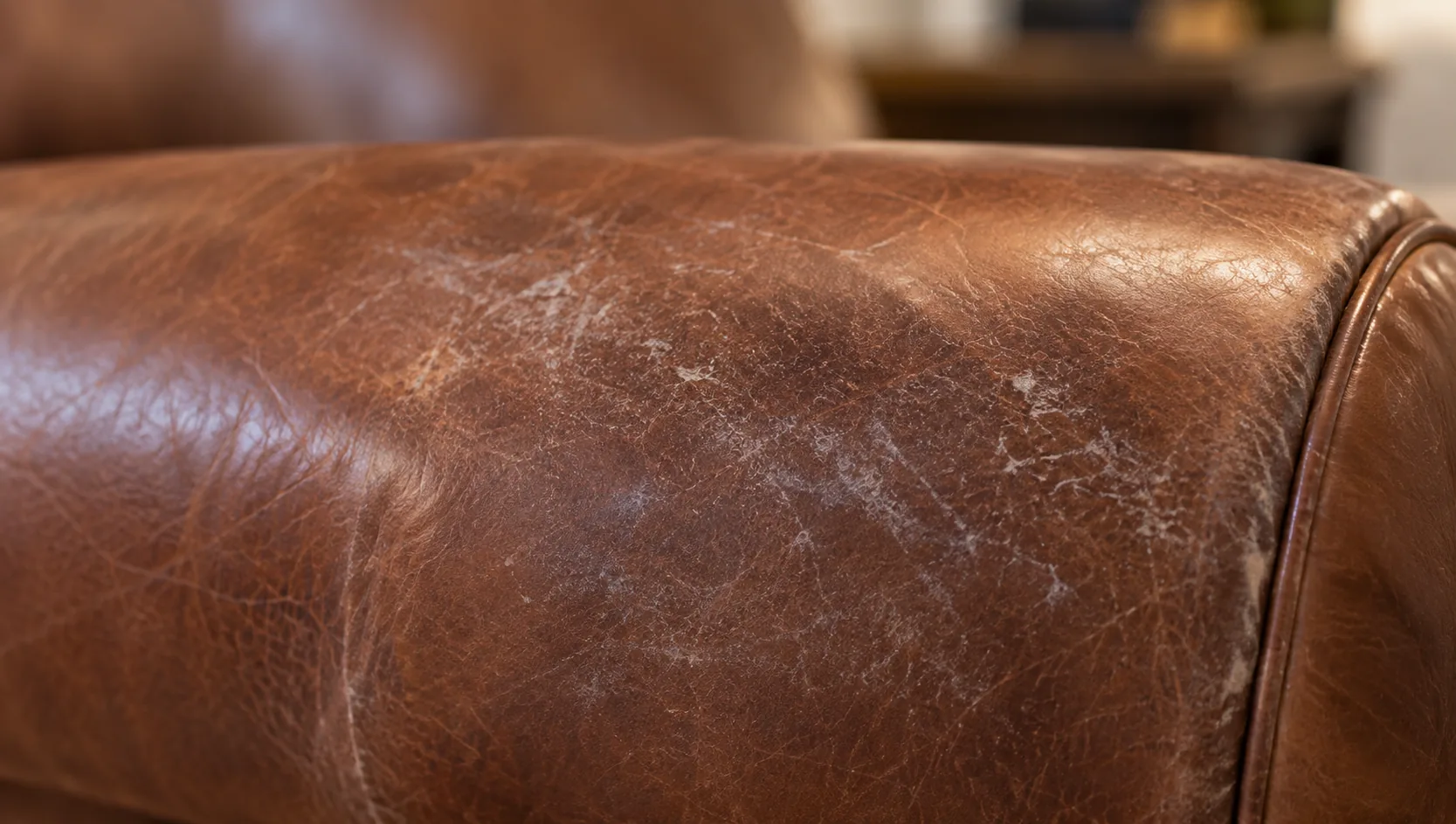
Seat center
Takes the whole weight, every sitting.
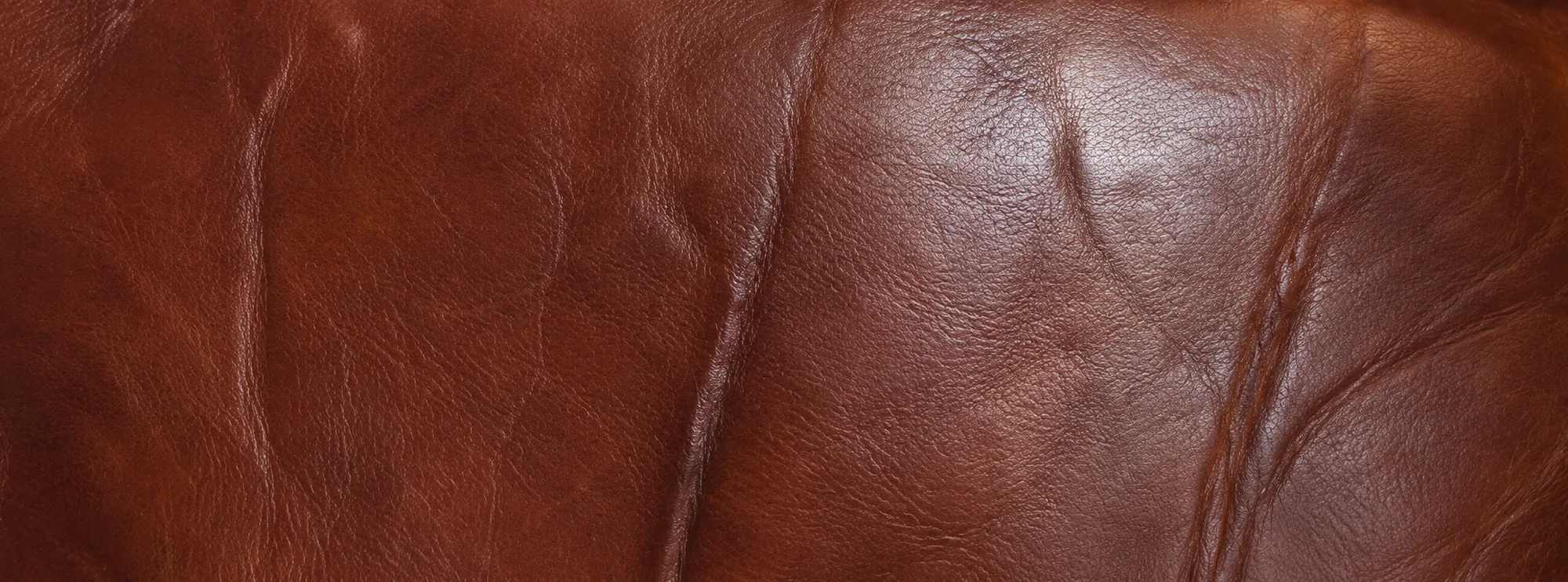
Front edge
Dragged across on the way in and out.
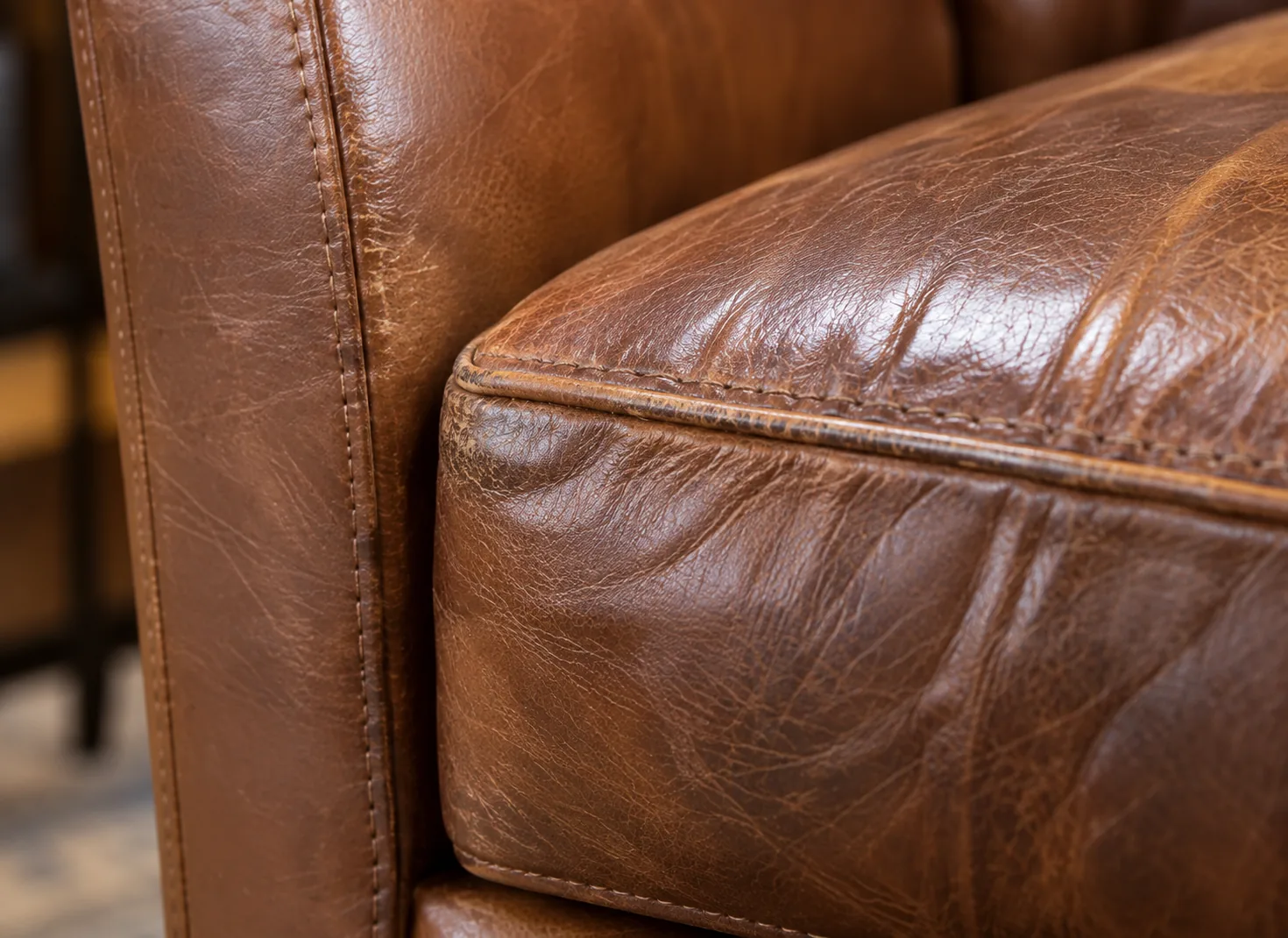
Armrests
Hands, sleeves, keys and phones.
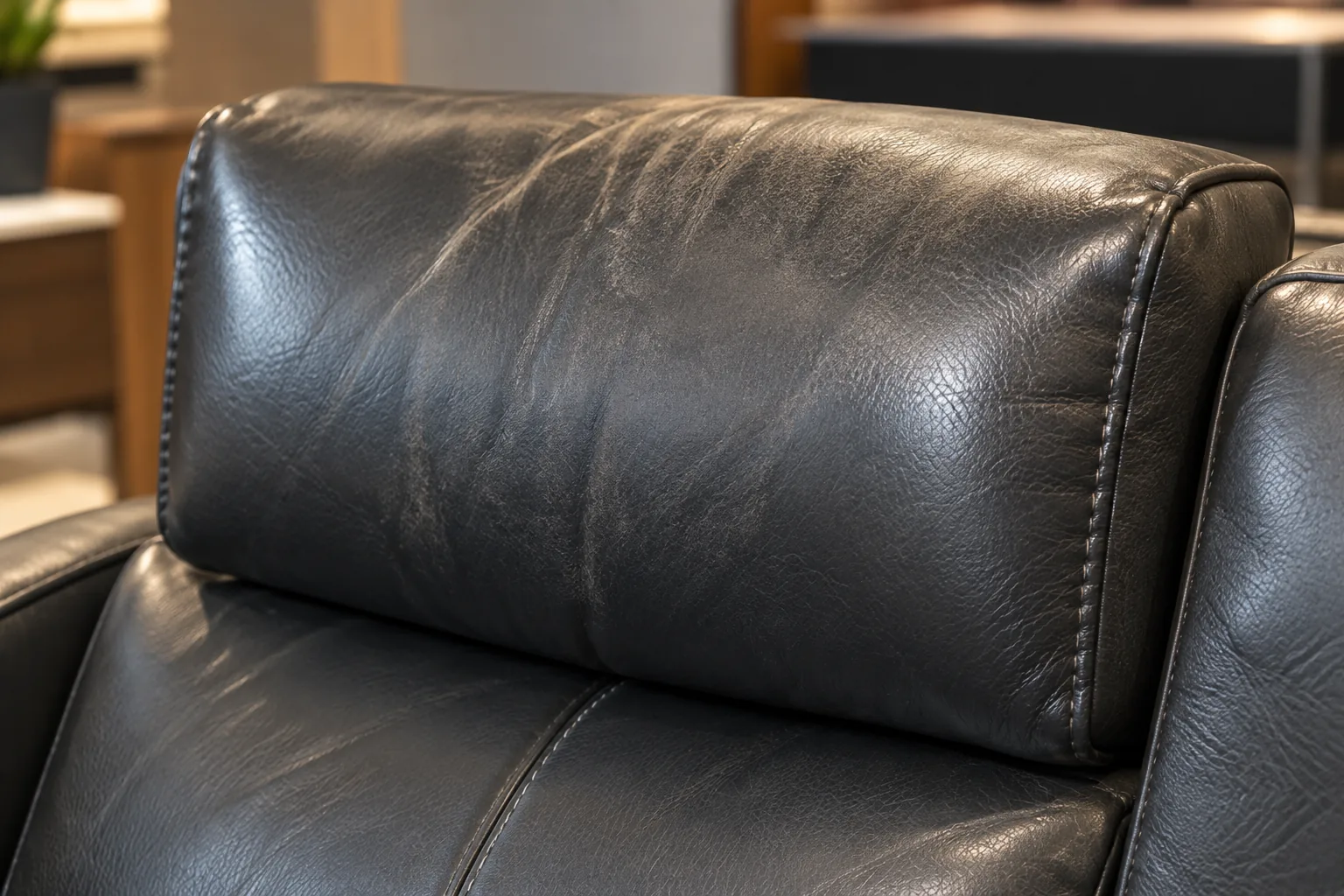
Headrests
Hair oils go straight into the finish.

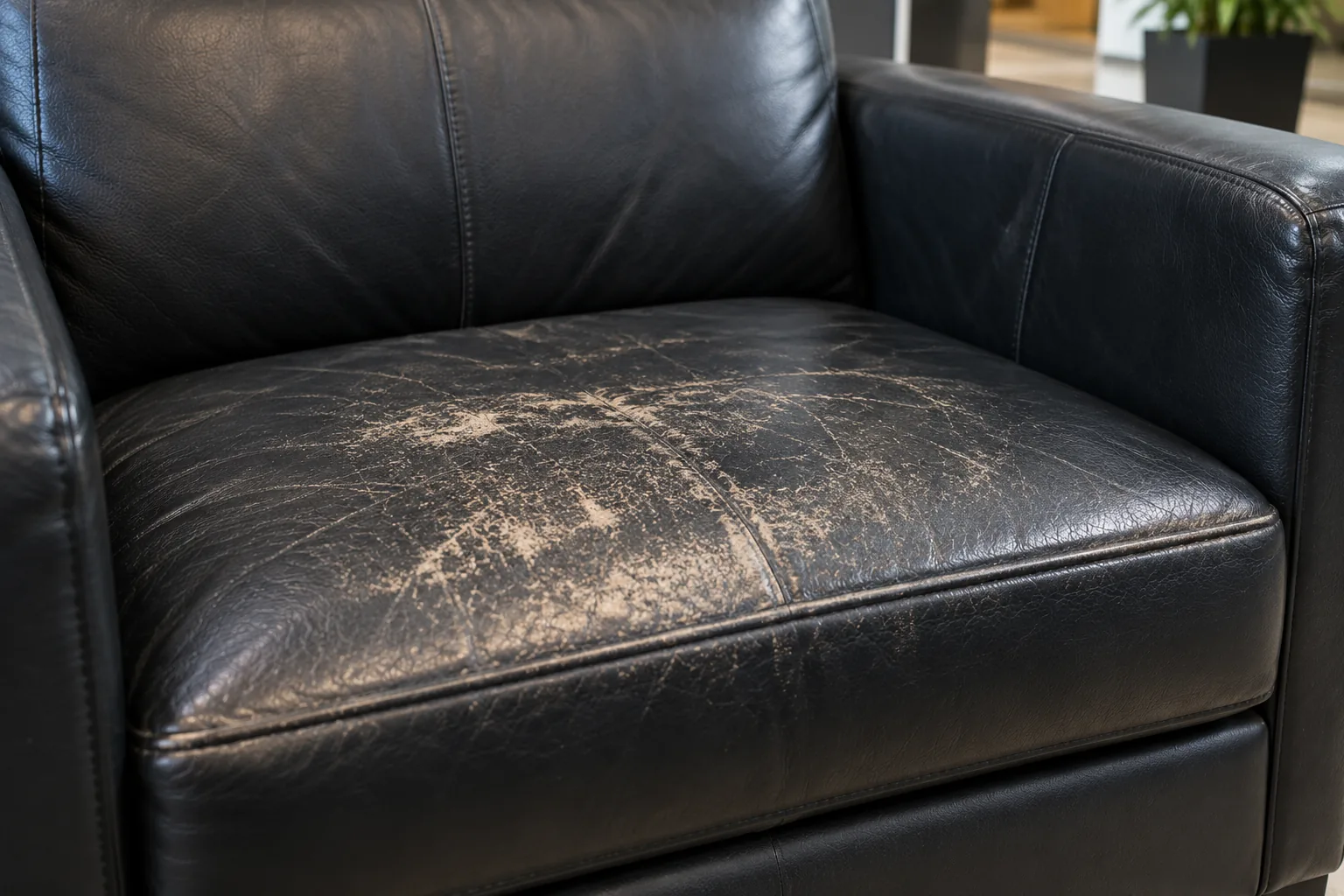
Seam corners
Where two panels pull against each other.
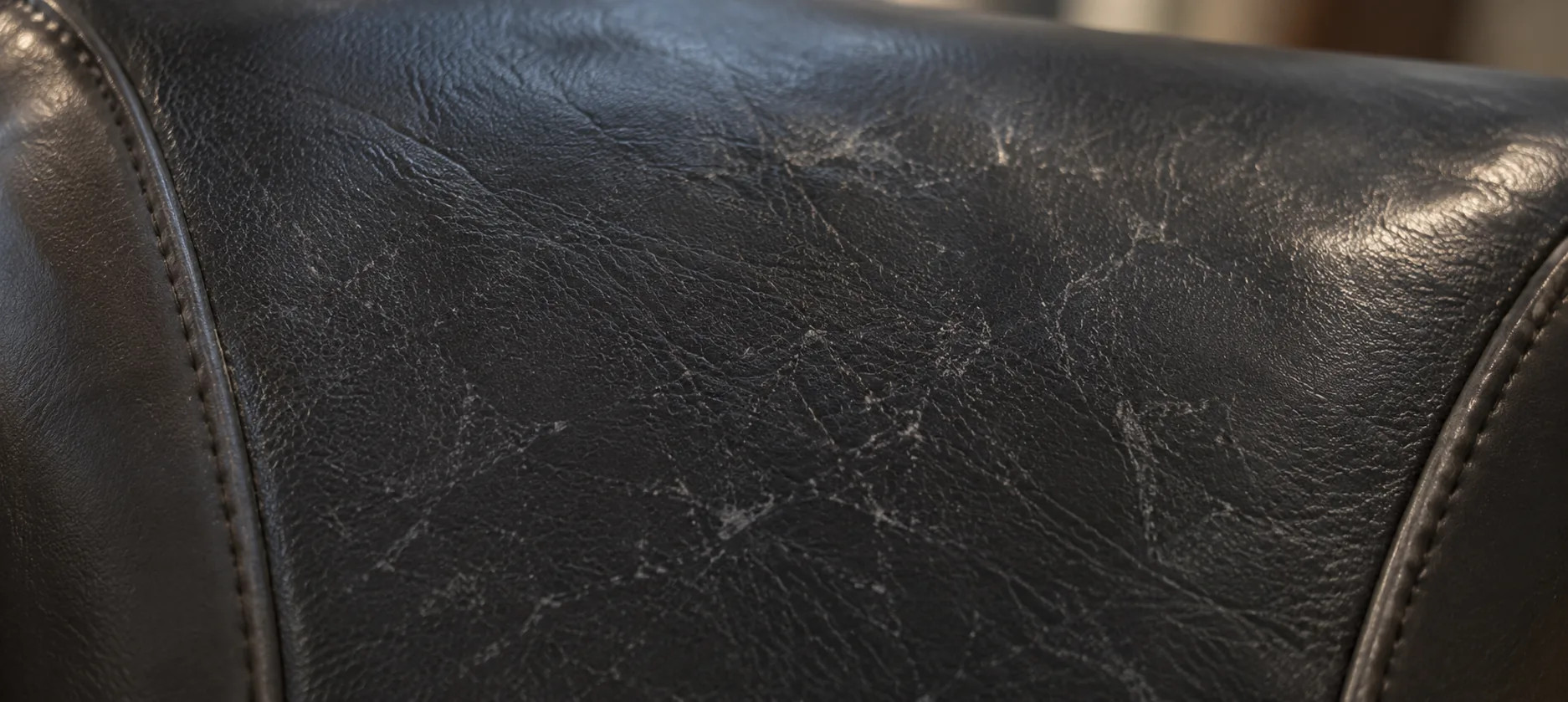
Chair backs
Rubbed by walls, tables and other chairs.
Open floor scuffs
Trolleys, bags and cleaning equipment.
Caught late, these become scuff, armrest and color restoration jobs. Caught monthly, they are part of the visit.
How a program runs
Six steps, then the same visit every month.
Setting it up takes one walk-through and one conversation. After that, commercial leather furniture maintenance repeats on its own schedule without anyone having to raise it.
Step 01
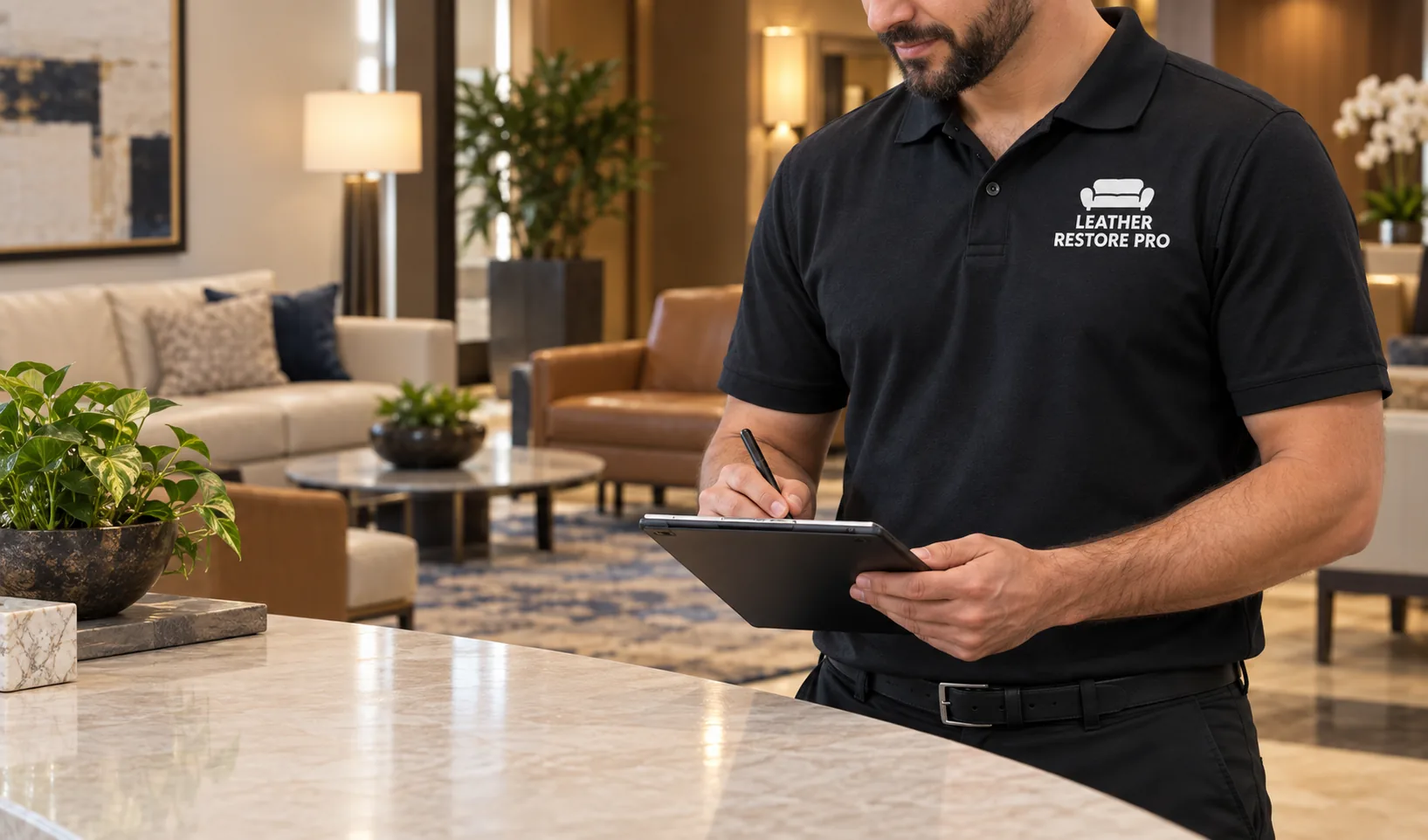
Walk the floor
Every piece is found, photographed and listed by room, so the program covers what is actually there.
Step 02

Agree the priorities
What gets attention first, what can wait, and what is already past maintenance and needs repair.
Step 03
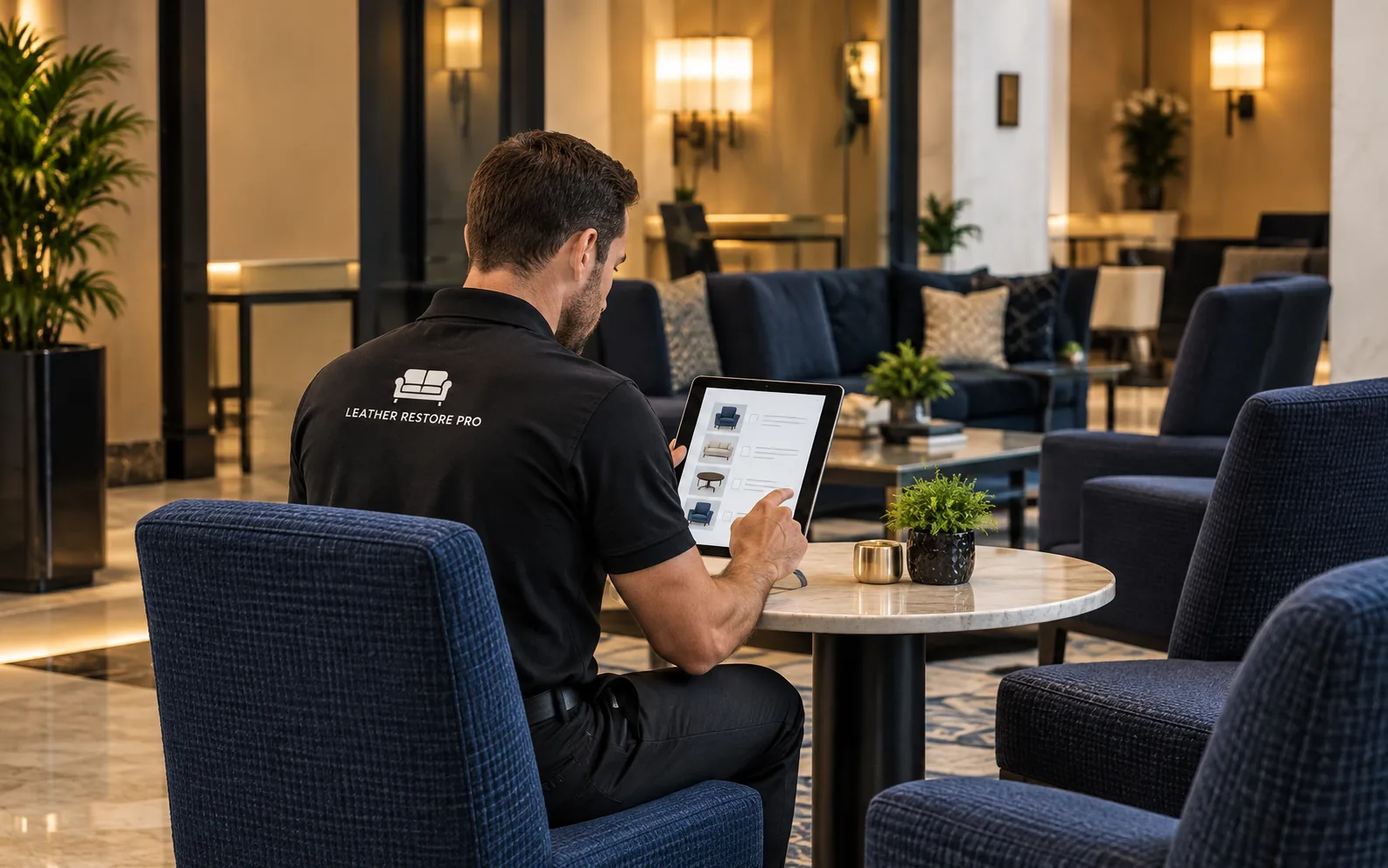
Fix the window
One repeating slot in hours the room is free. The date is the building's, not ours.
Step 04
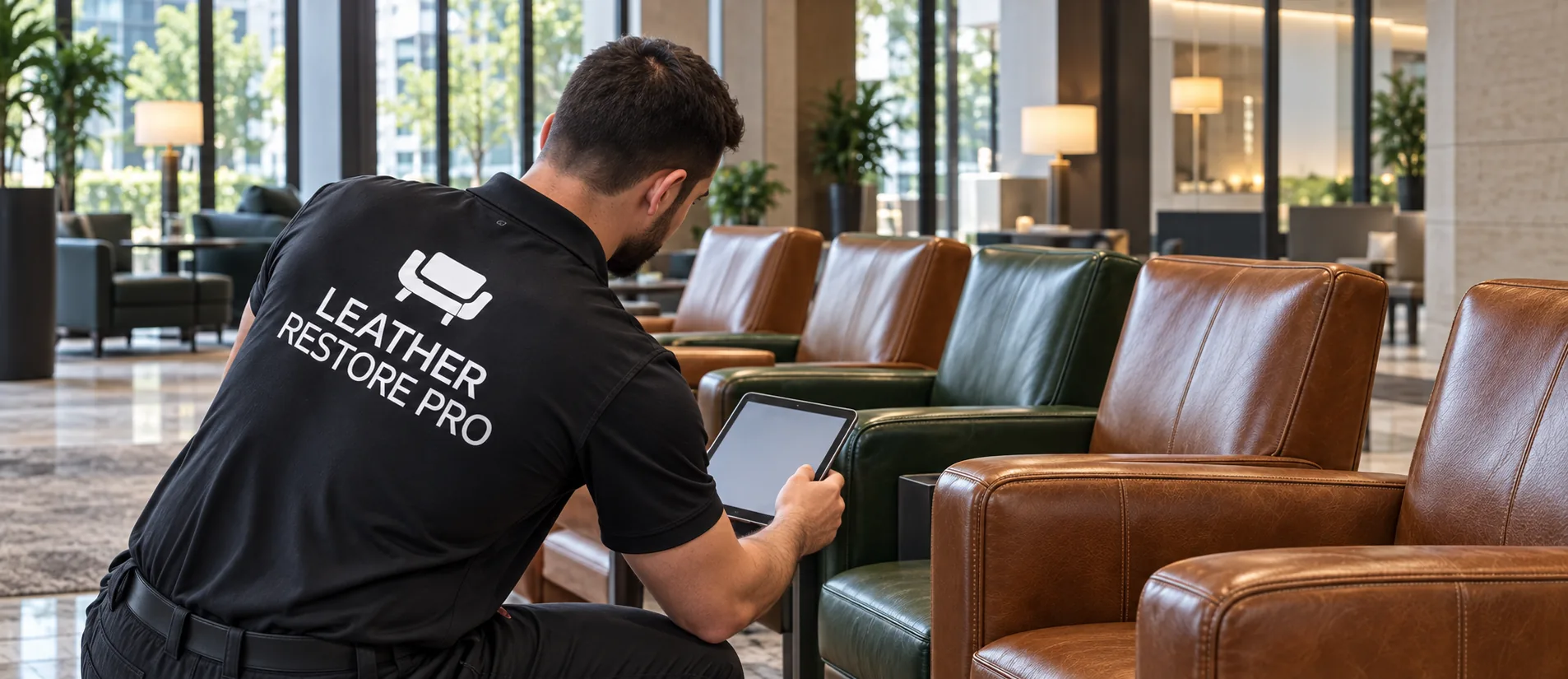
Work on site
Cleaning, conditioning, protection and small repairs are finished in the room. On-site repairs.
Step 05
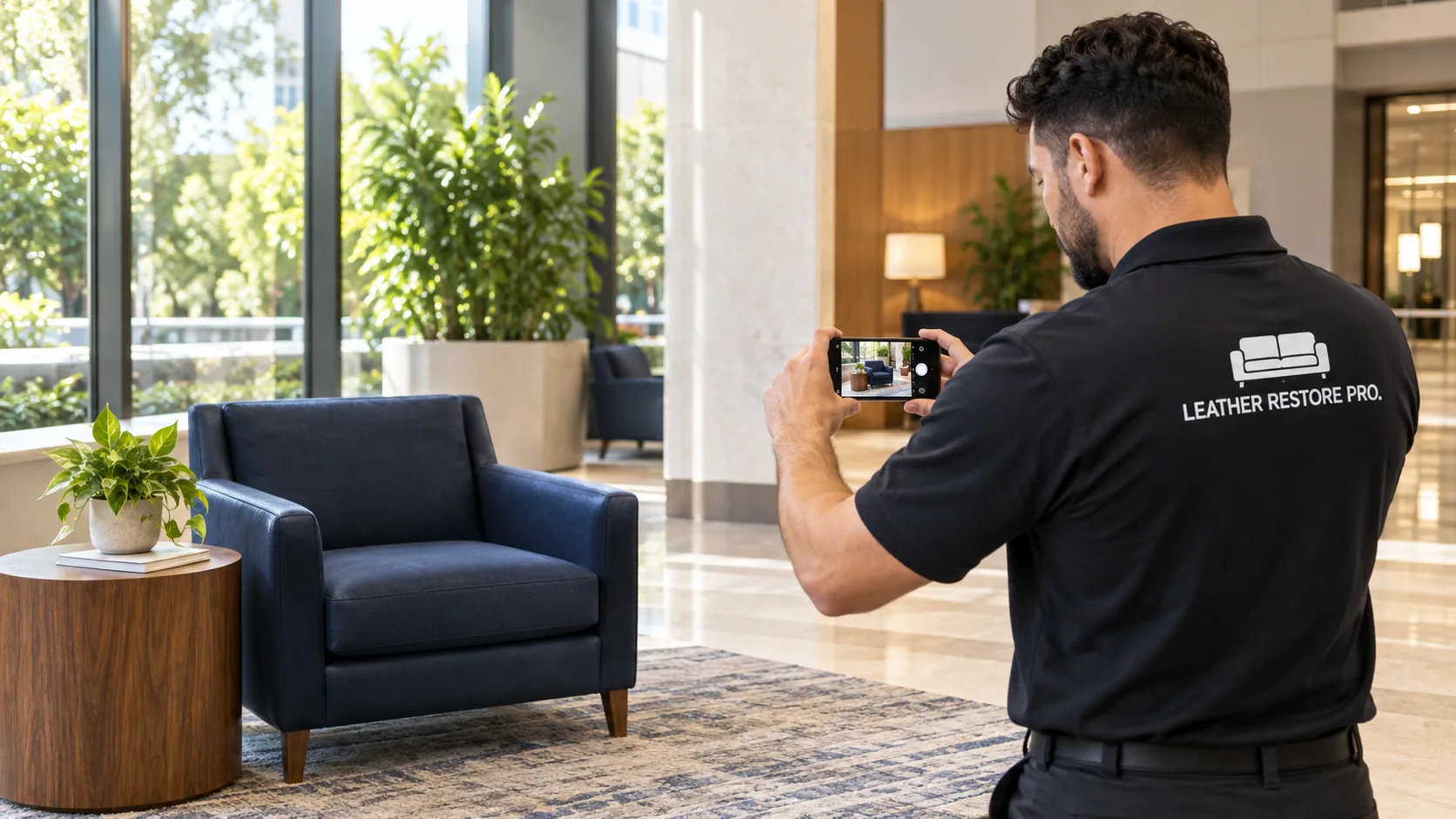
Photograph the result
The same pieces, the same angles, every month, so change is visible rather than argued about.
Step 06
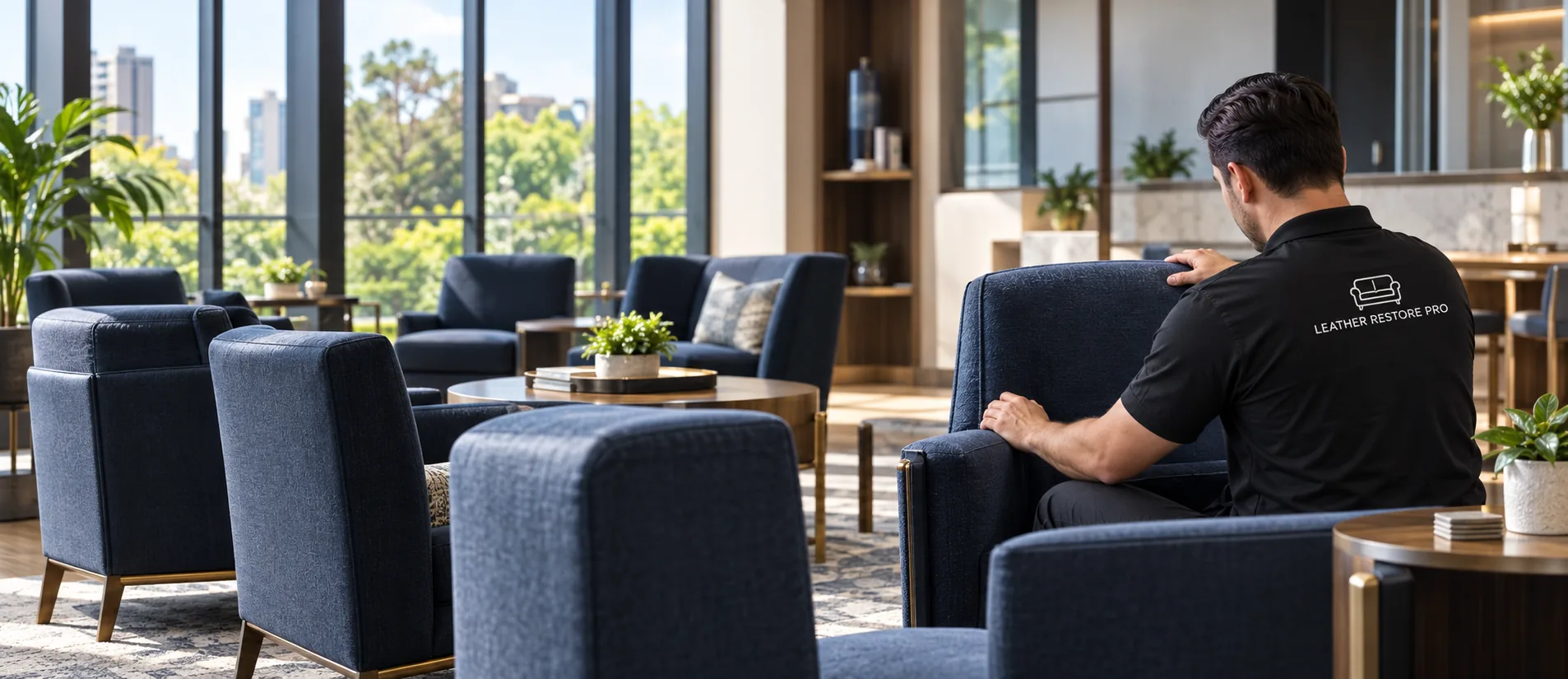
Set the next visit
Anything deferred is carried forward in writing with a reason and a date.
The cadence
One visit a month, every month.
Monthly is the only recurring interval we sell. Longer gaps let soil set and finishes thin, and by the visit after that the work is no longer commercial leather furniture maintenance — it is repair, at repair prices.
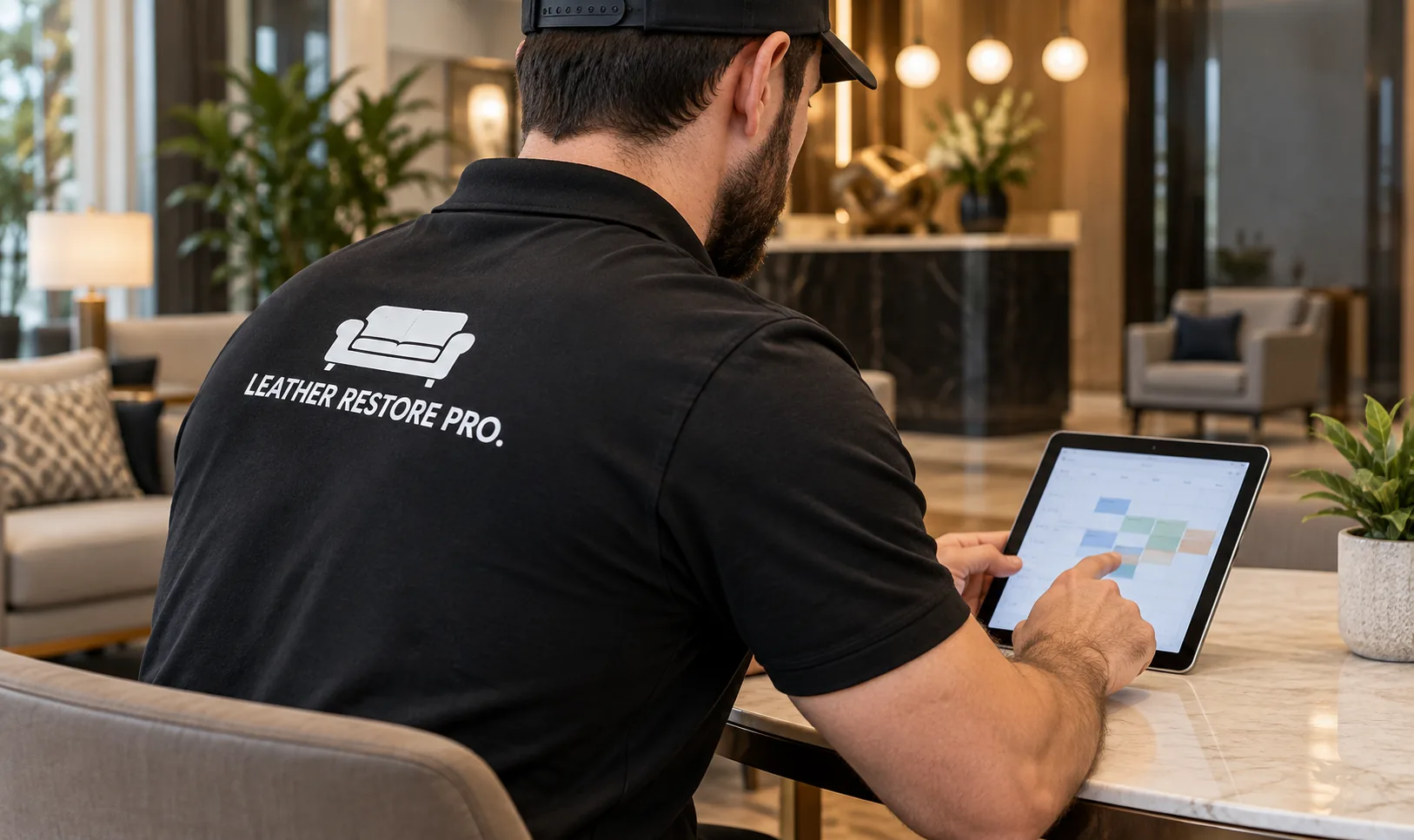
The record grows every month
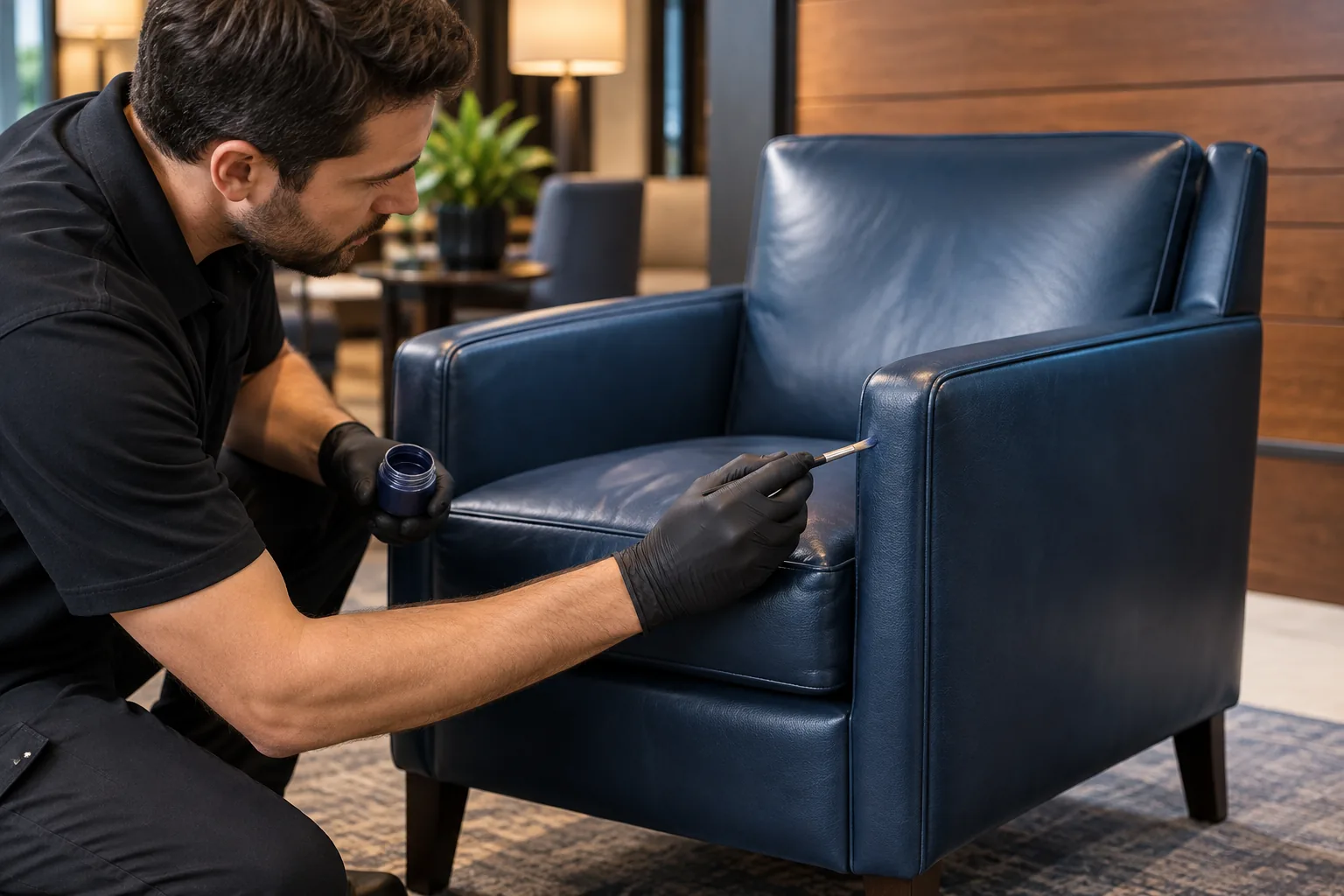
The same crew, the same pieces

Nothing closes for it
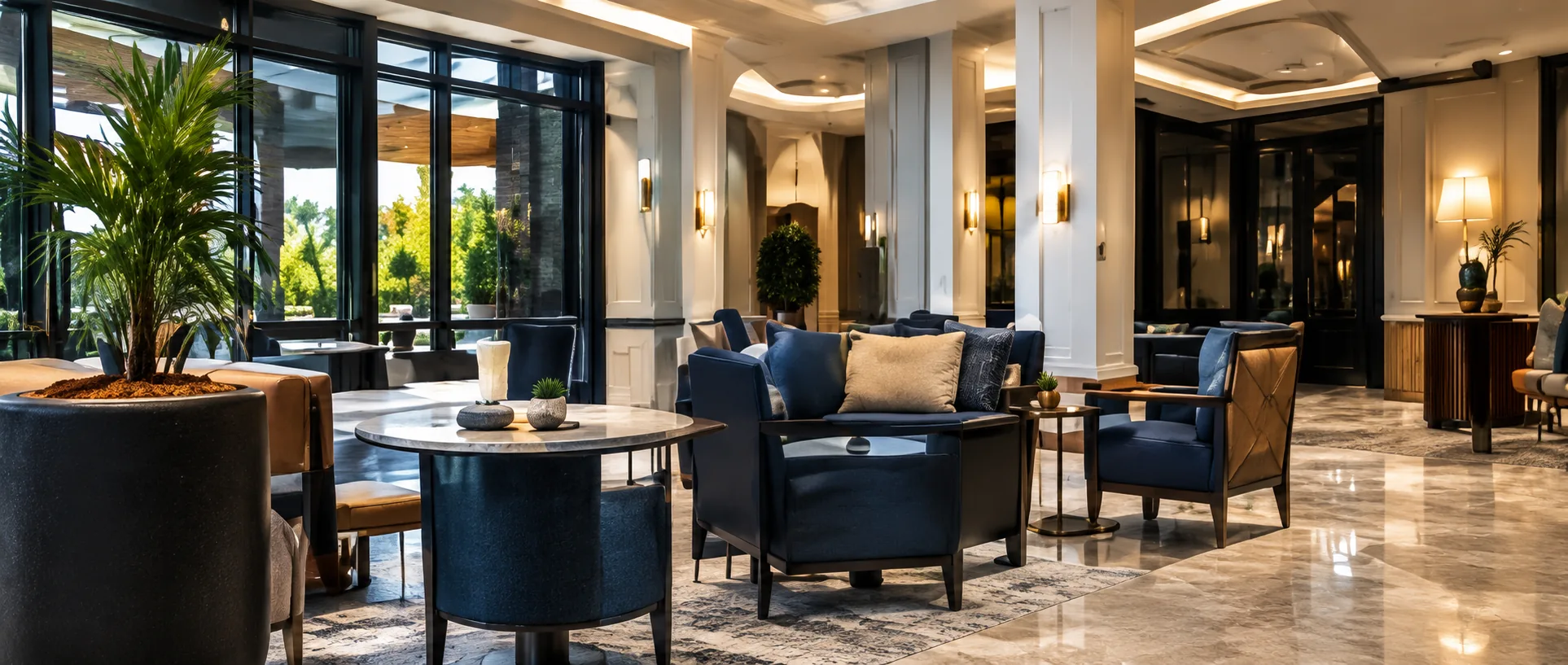
The room opens as normal
Visits are booked into hours the room is free, including overnight. Off-hours service.
Where we work
Rooms that never get to close.
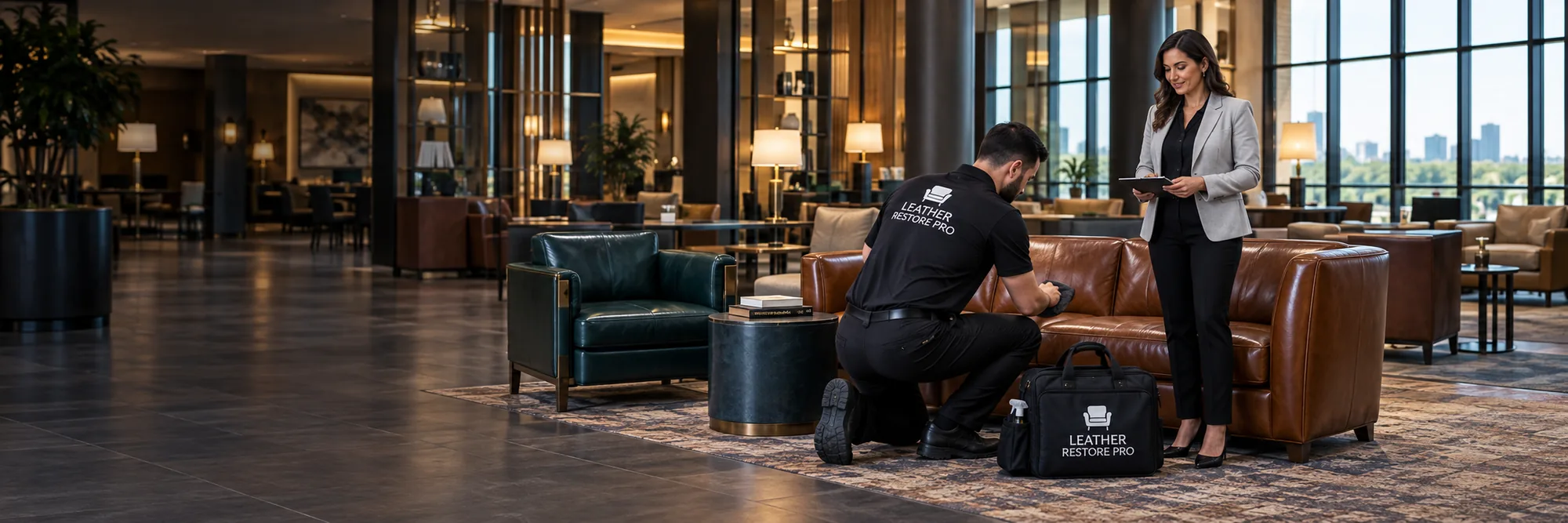
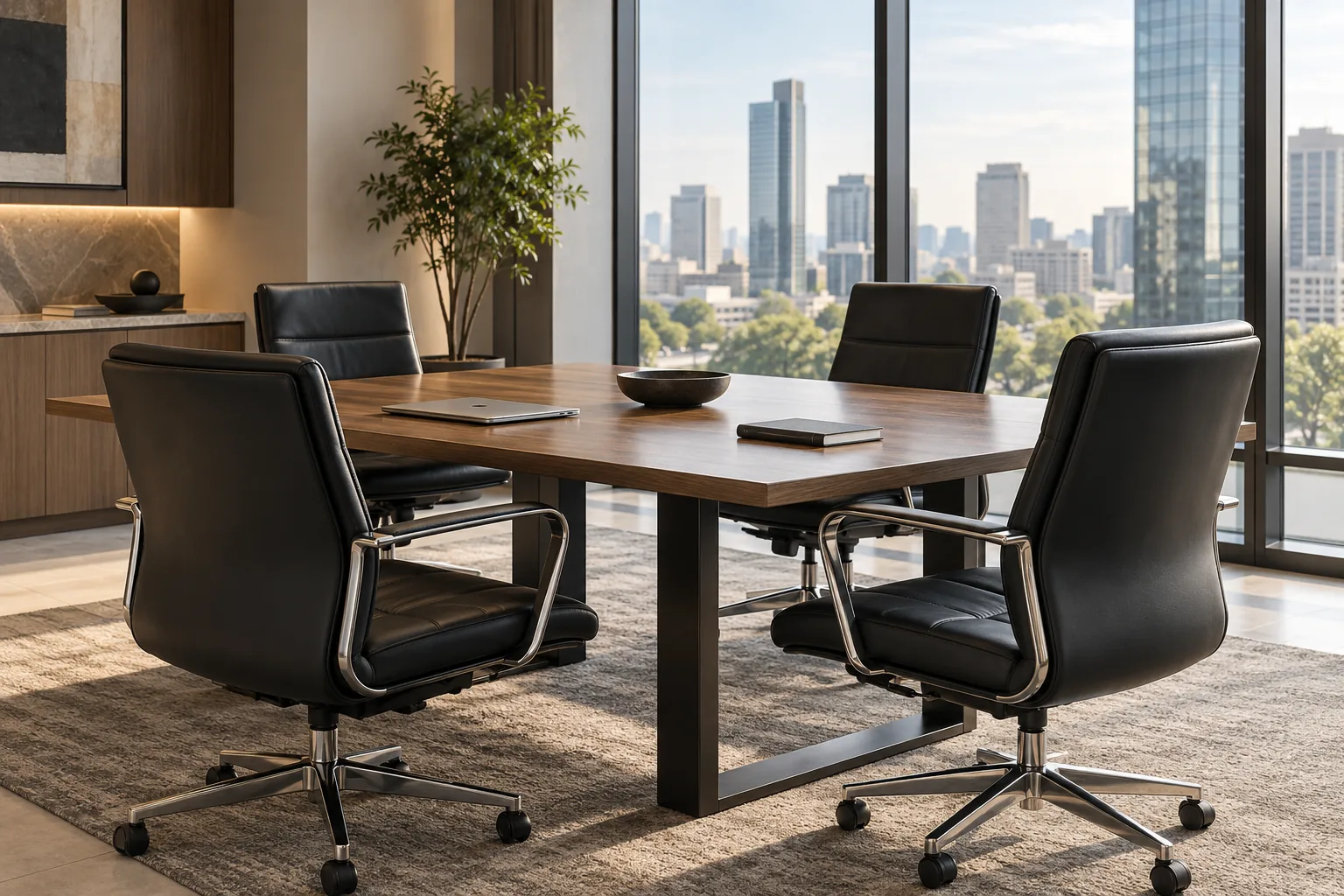
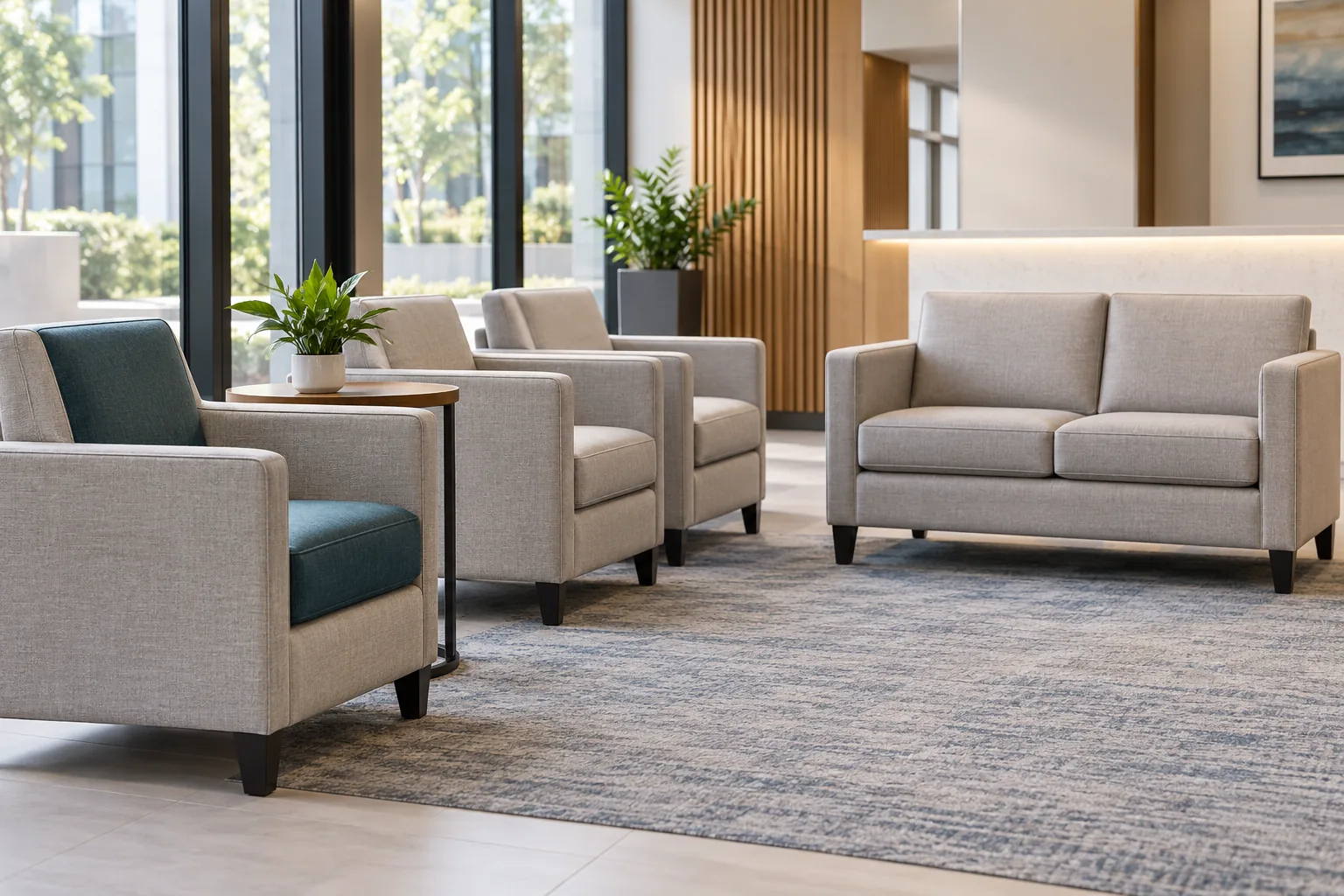
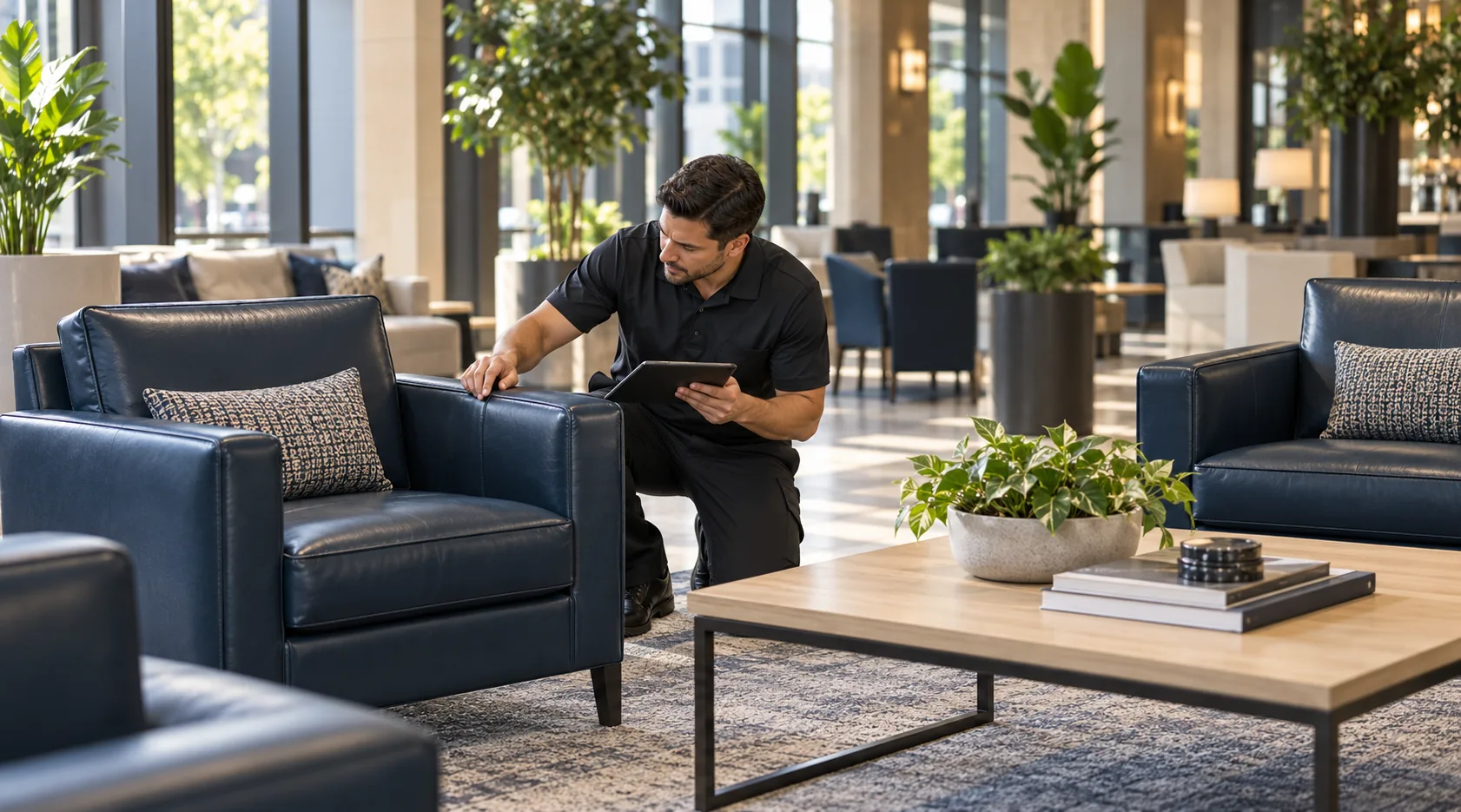
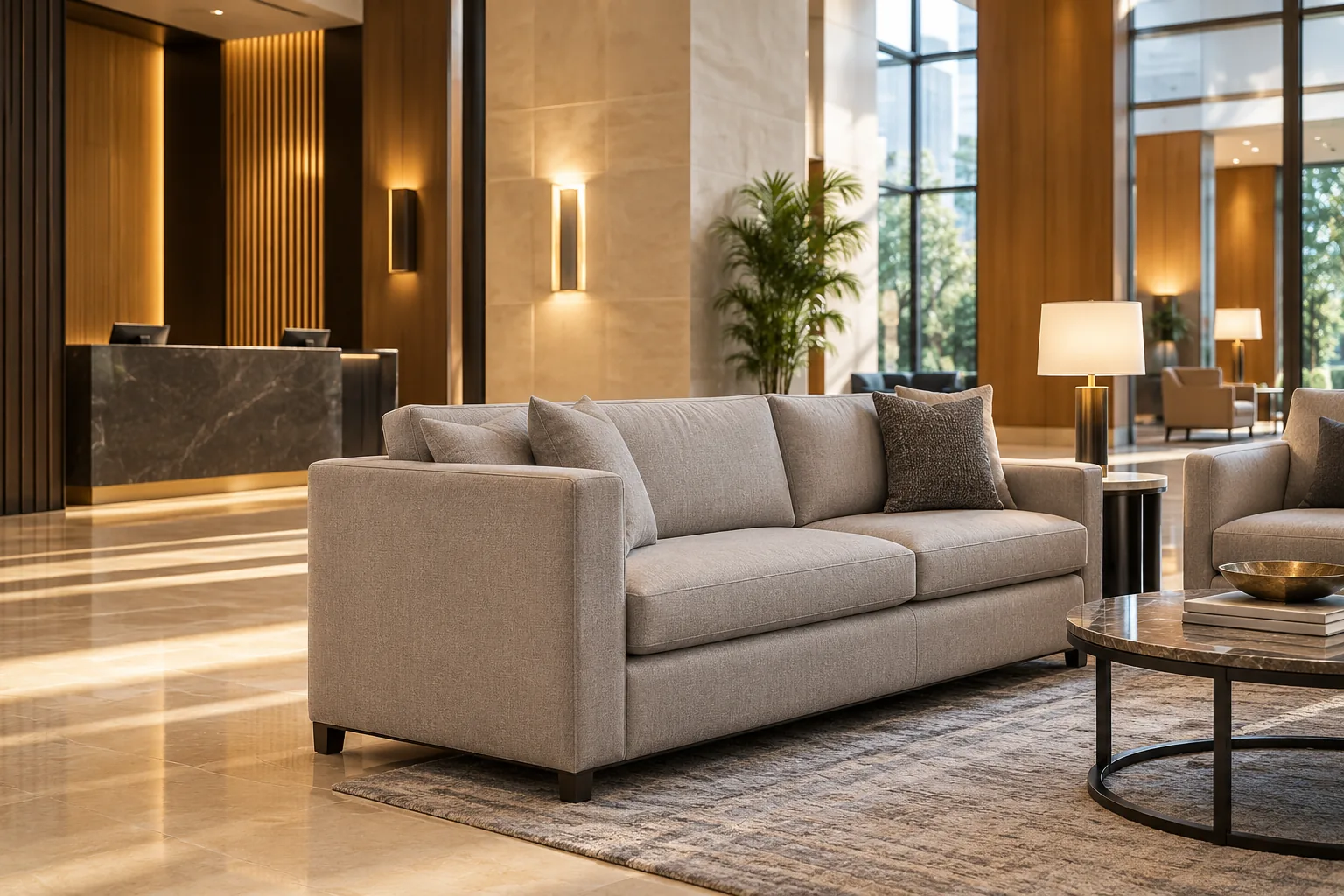
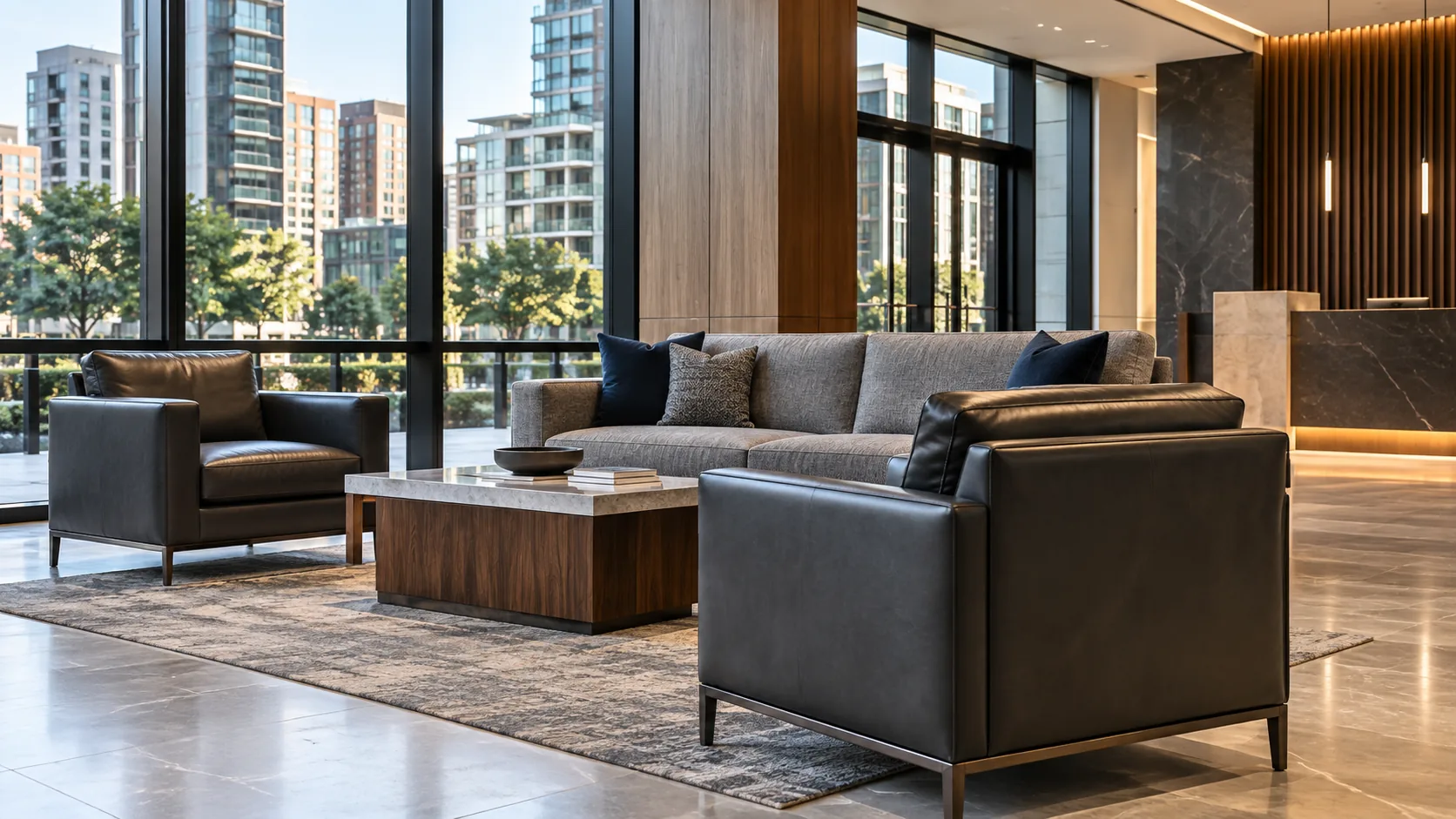
Commercial leather furniture maintenance is built around the fact that the space has to open tomorrow. Every one of these is worked in the gap the room already has.
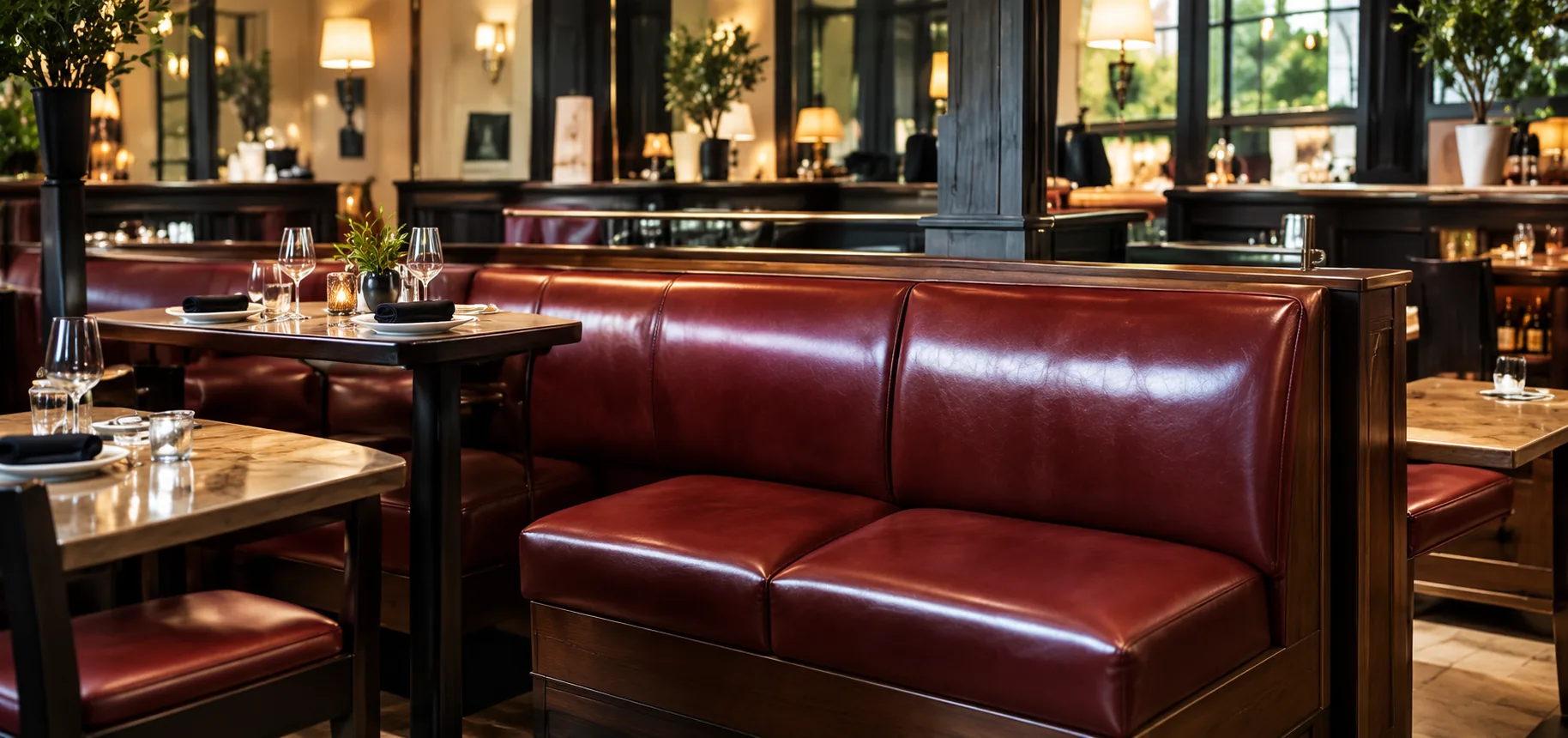
What we keep in service
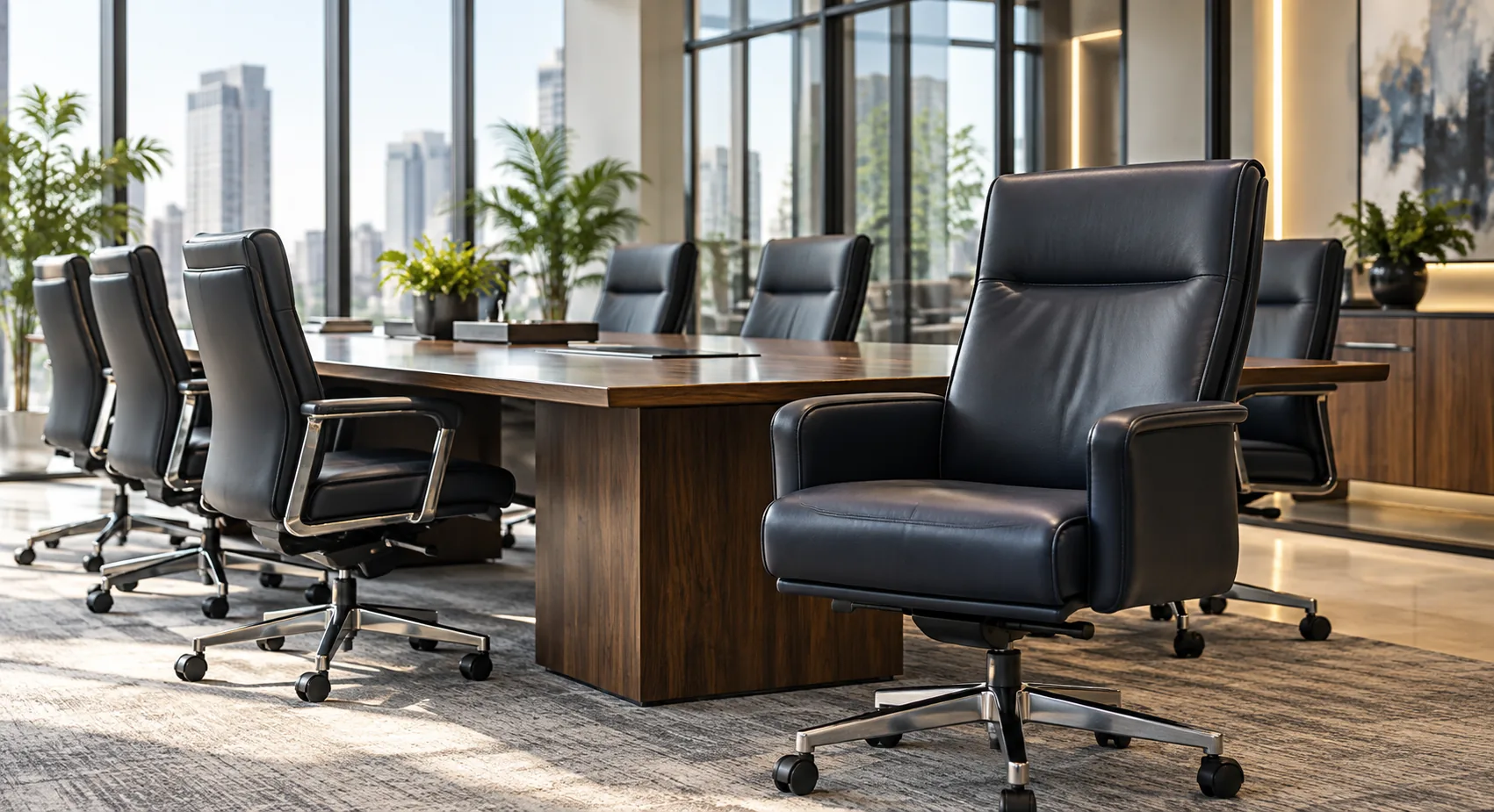
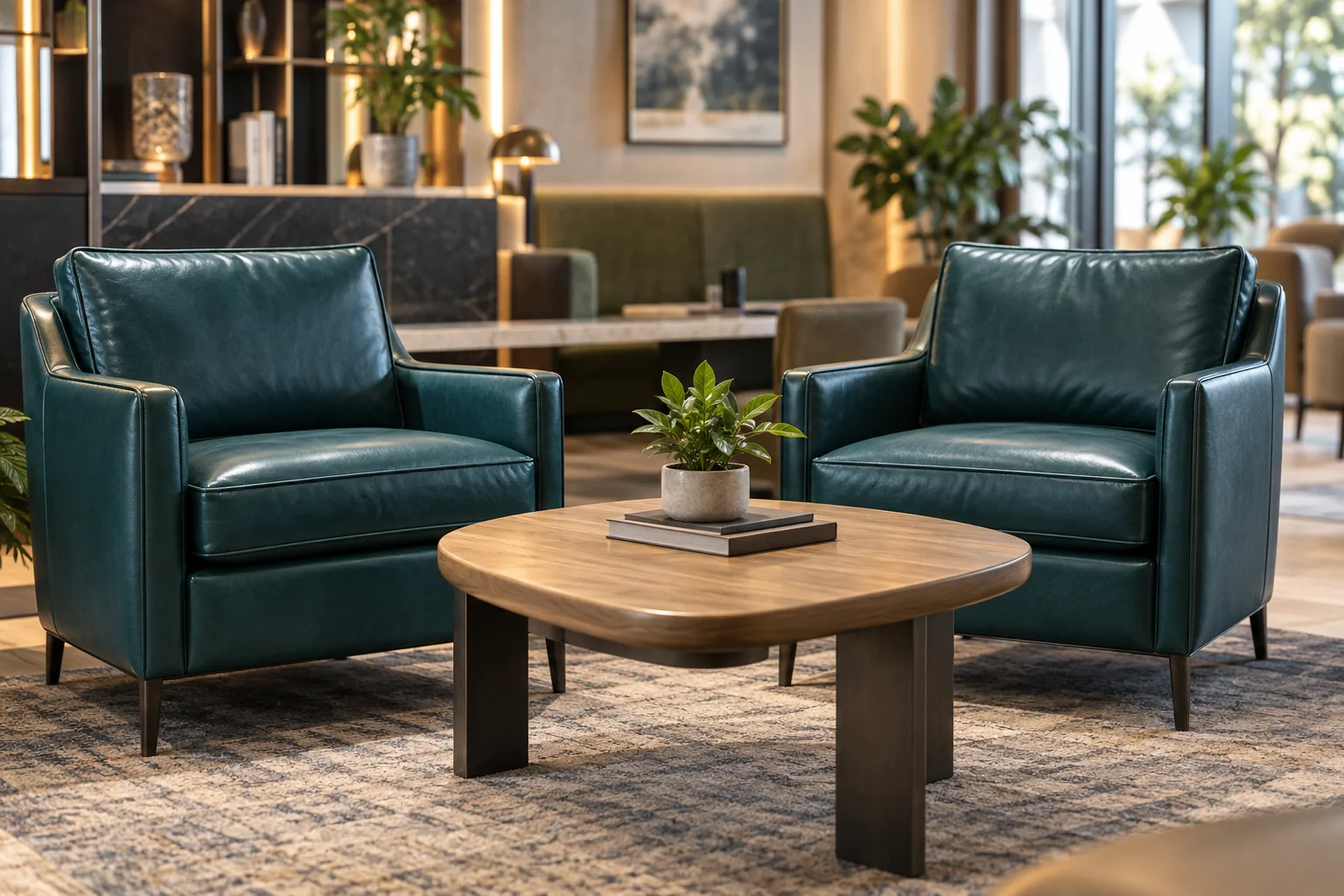
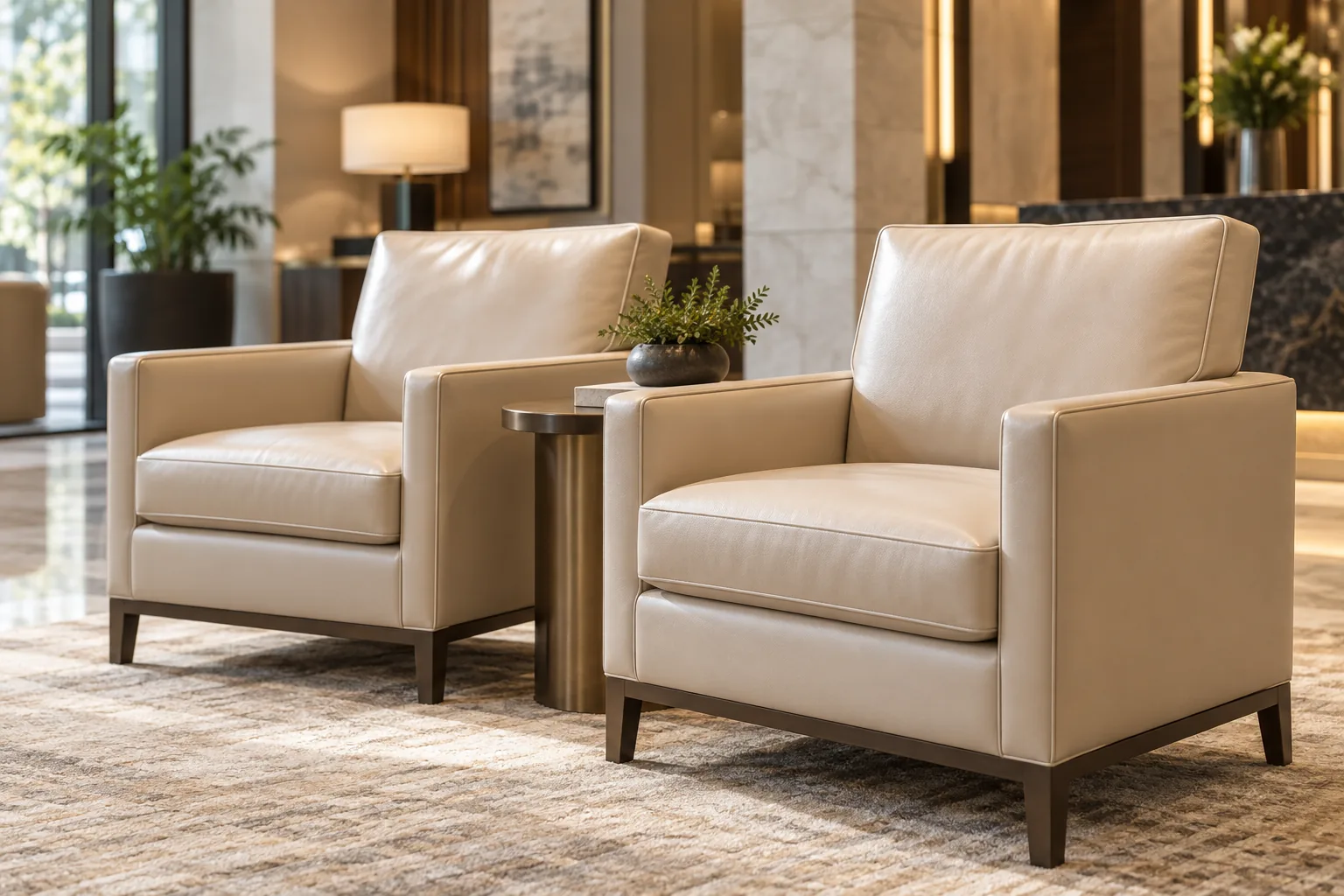
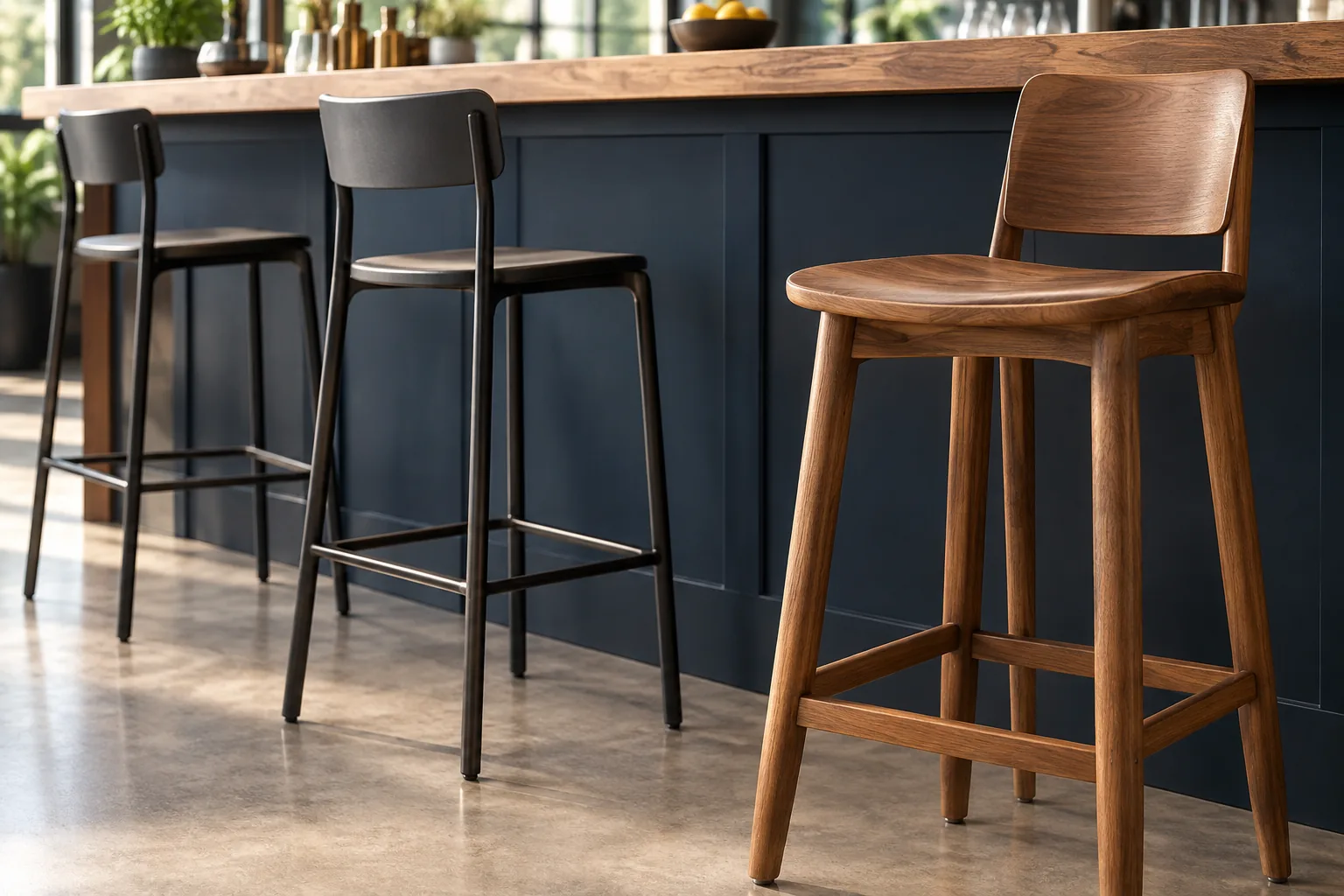
Furniture that stays in the room.
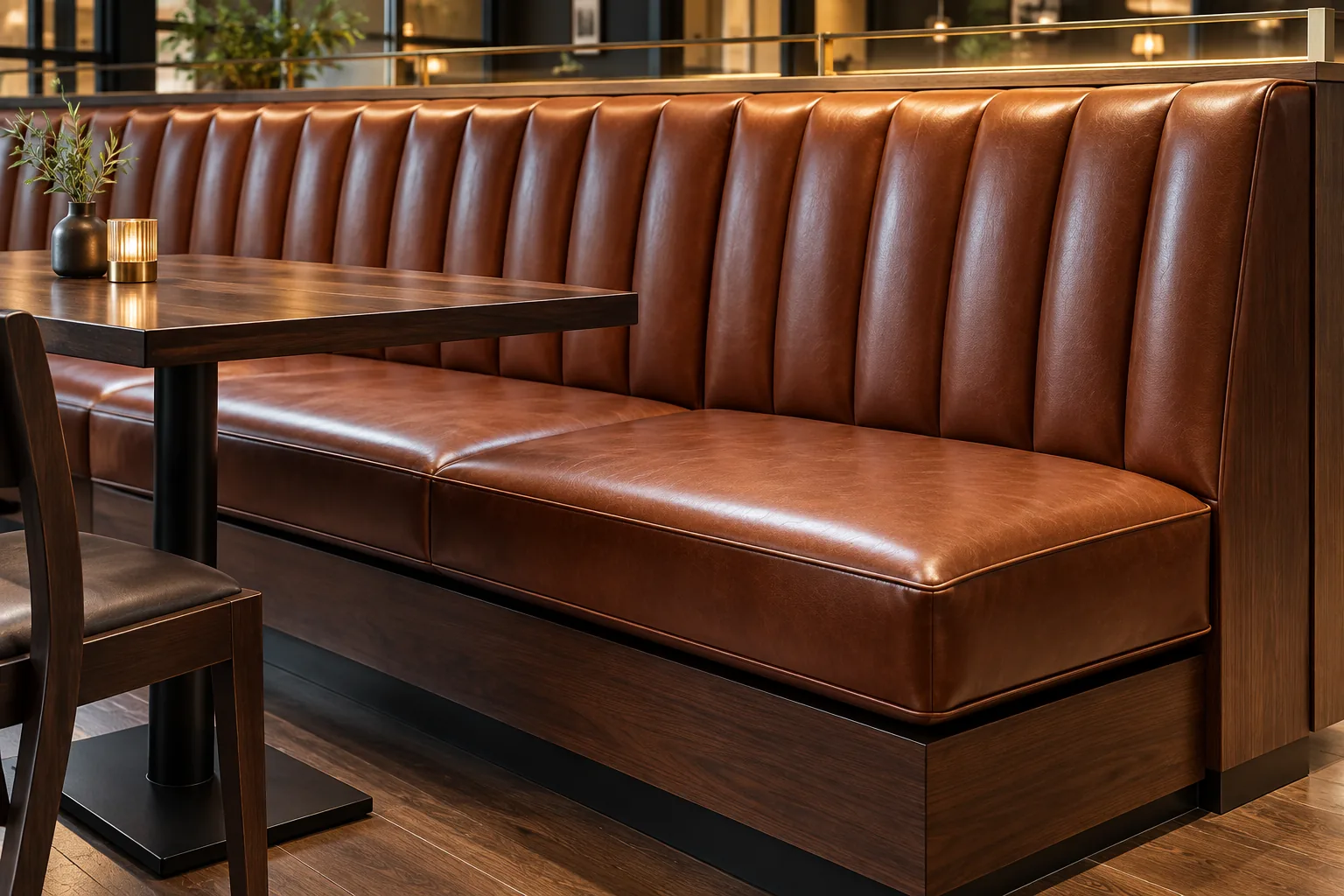
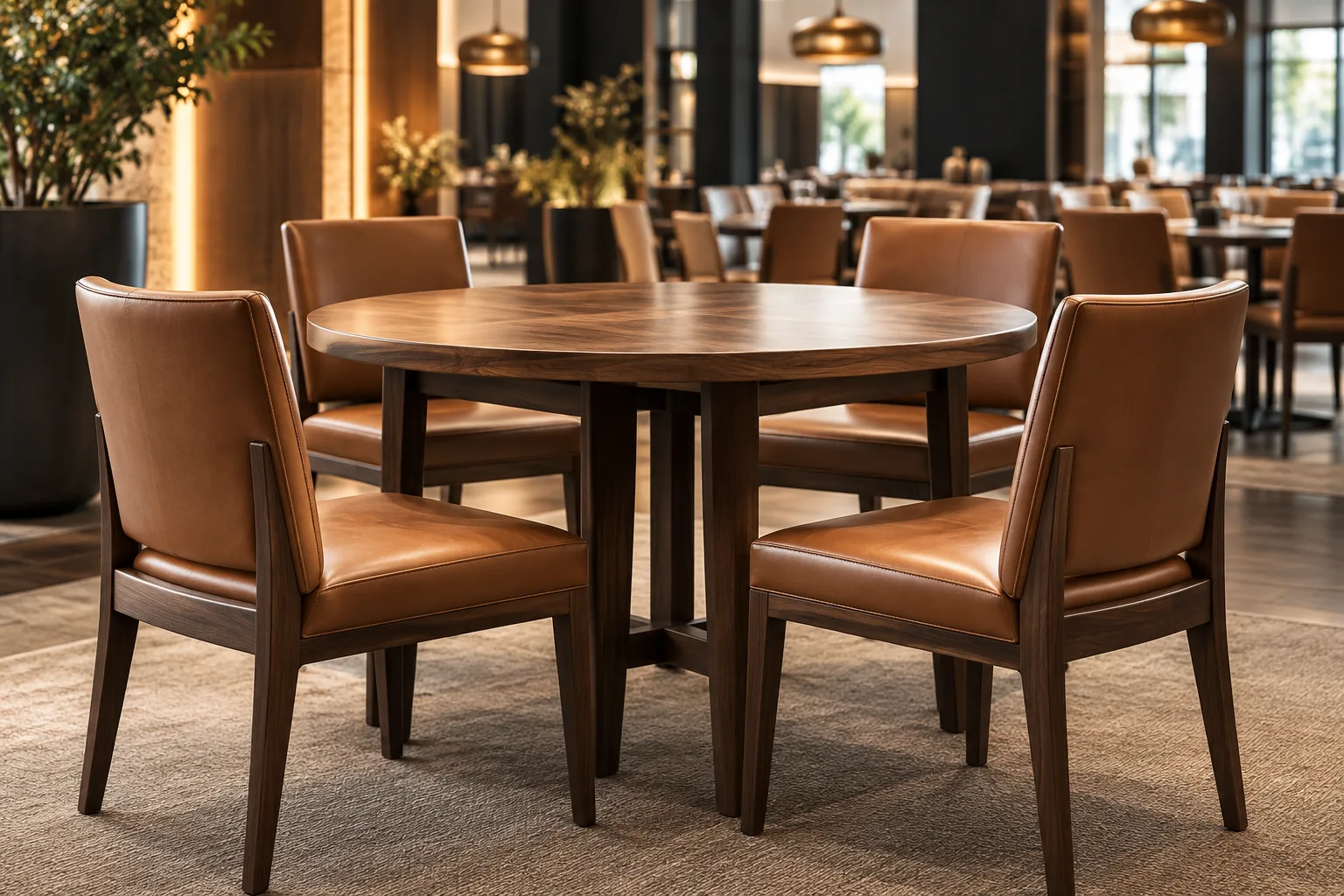
Specified seating was chosen against the floor, the light and the rest of the scheme. Keeping it is almost always cheaper and quieter than matching a discontinued line.

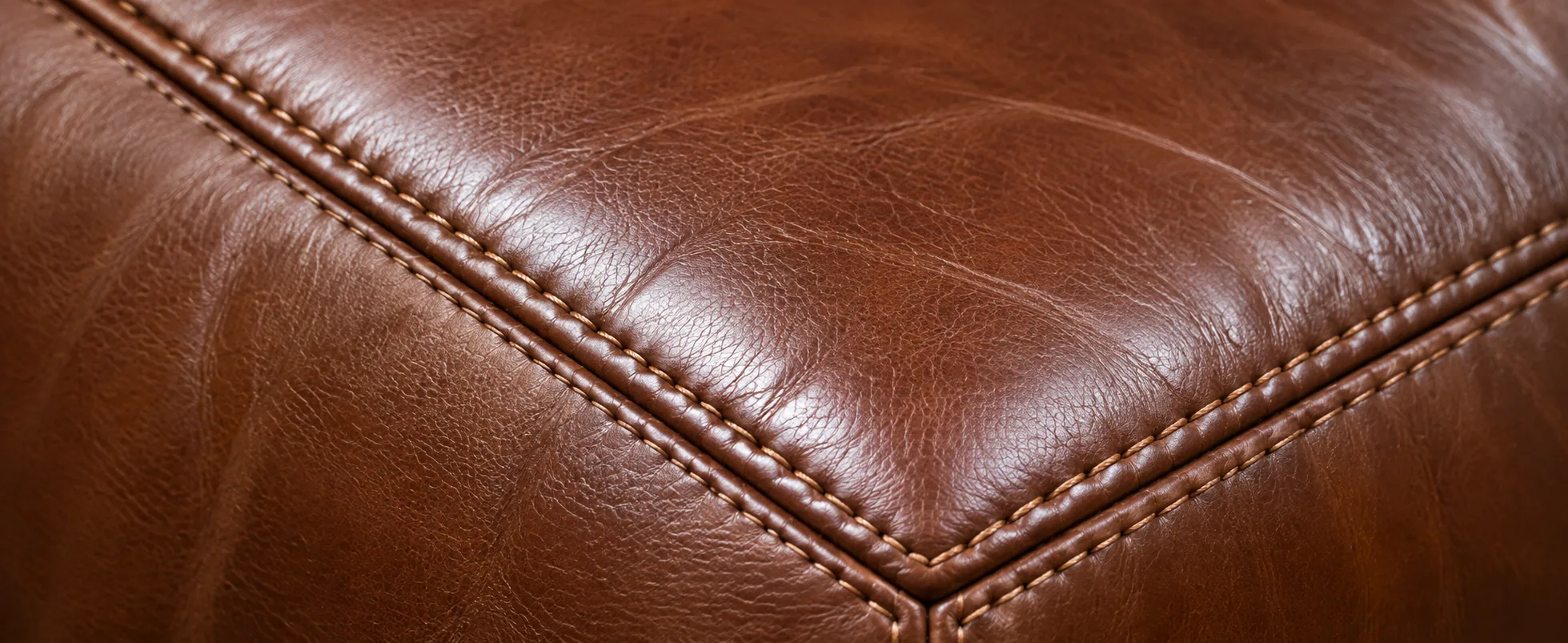
Not one routine
The right care for each material.
Leather is fed, fabric is not, and a wood frame wants neither. Using one routine across a mixed room is how a floor ends up with four different problems at once.
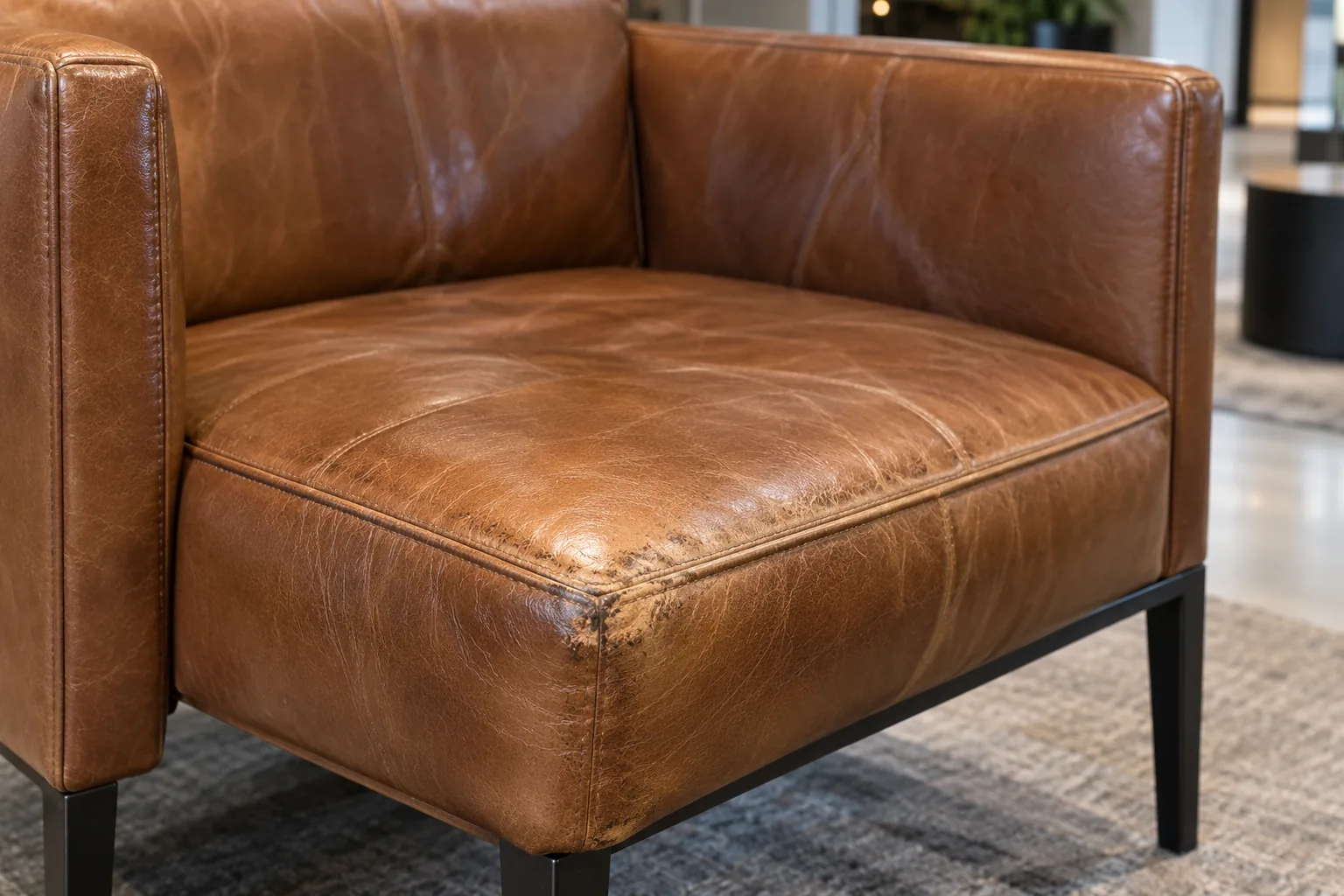
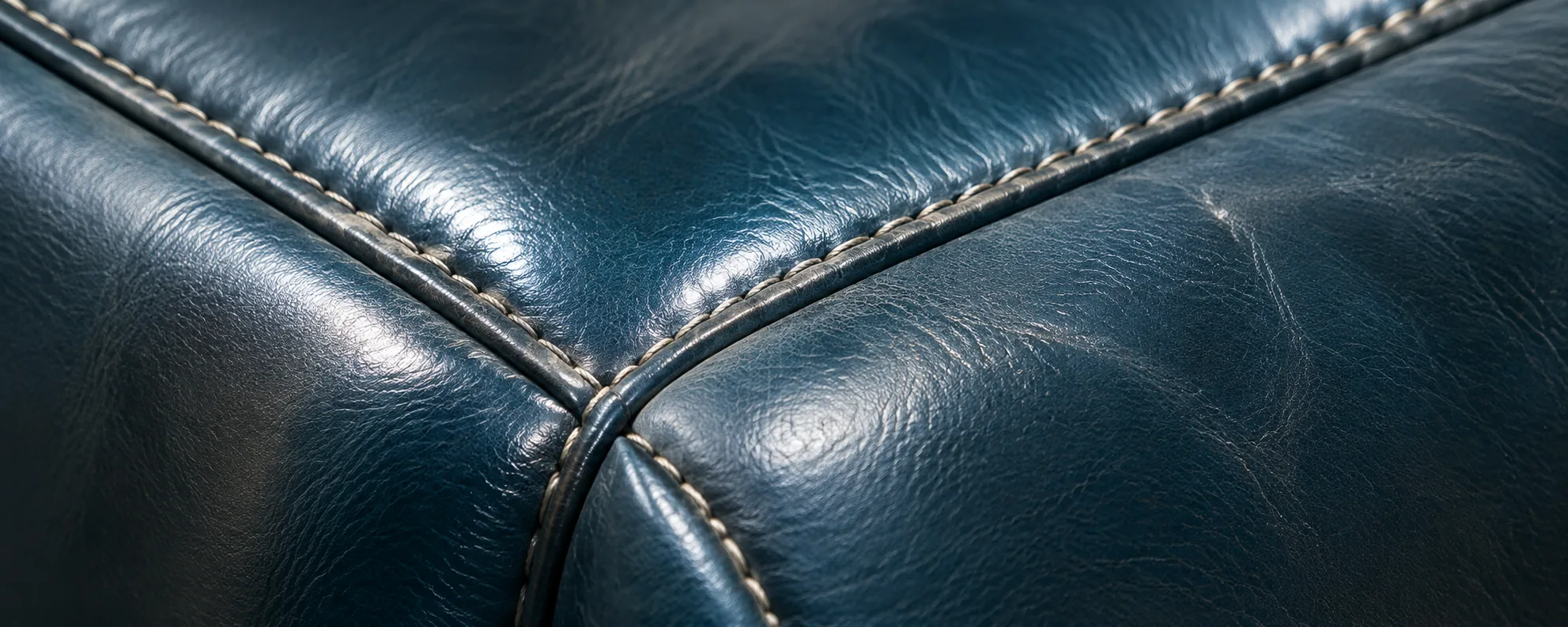
Semi-aniline leather
Softer hand, thinner finish. Conditioning matters more here.
Semi-aniline leather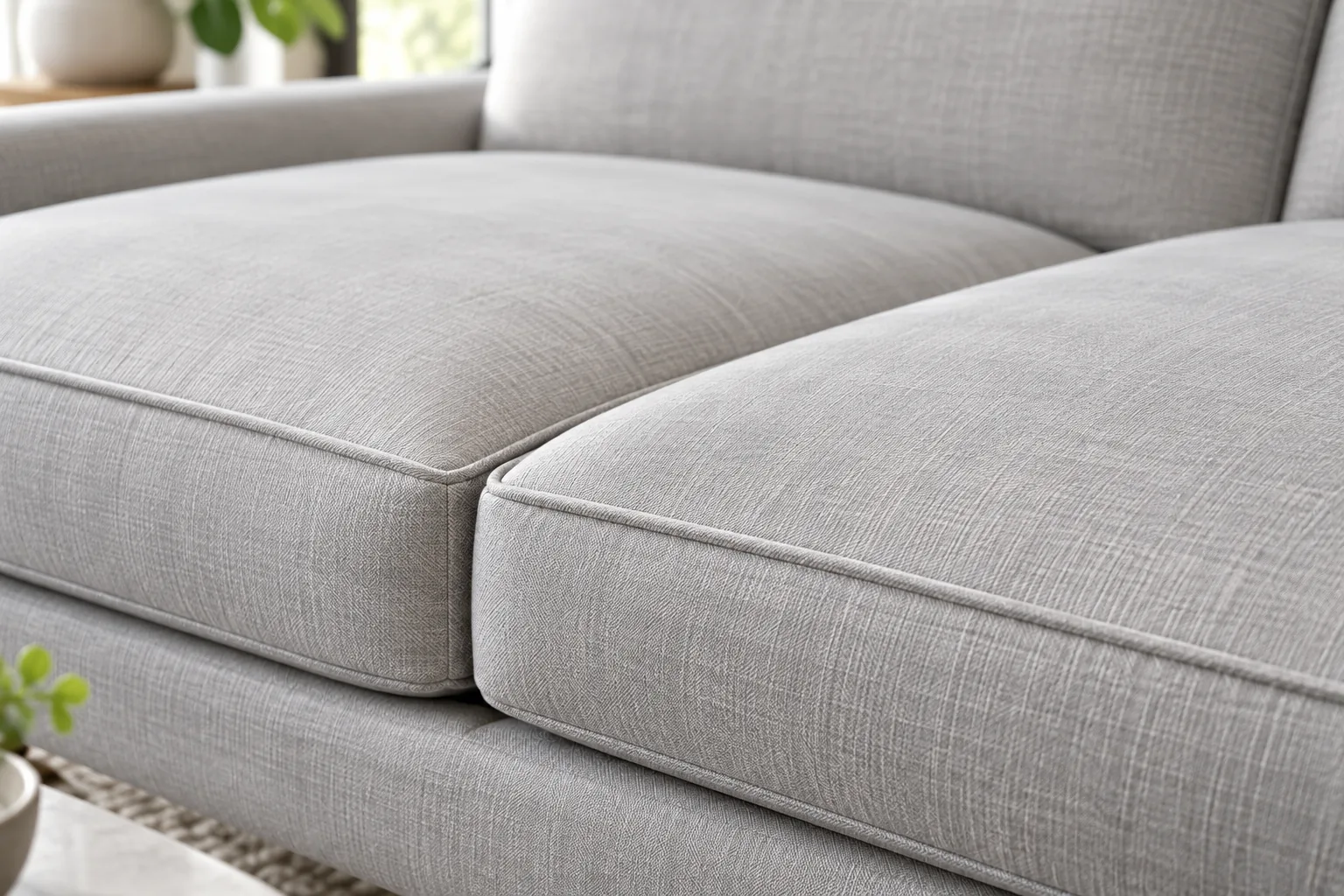
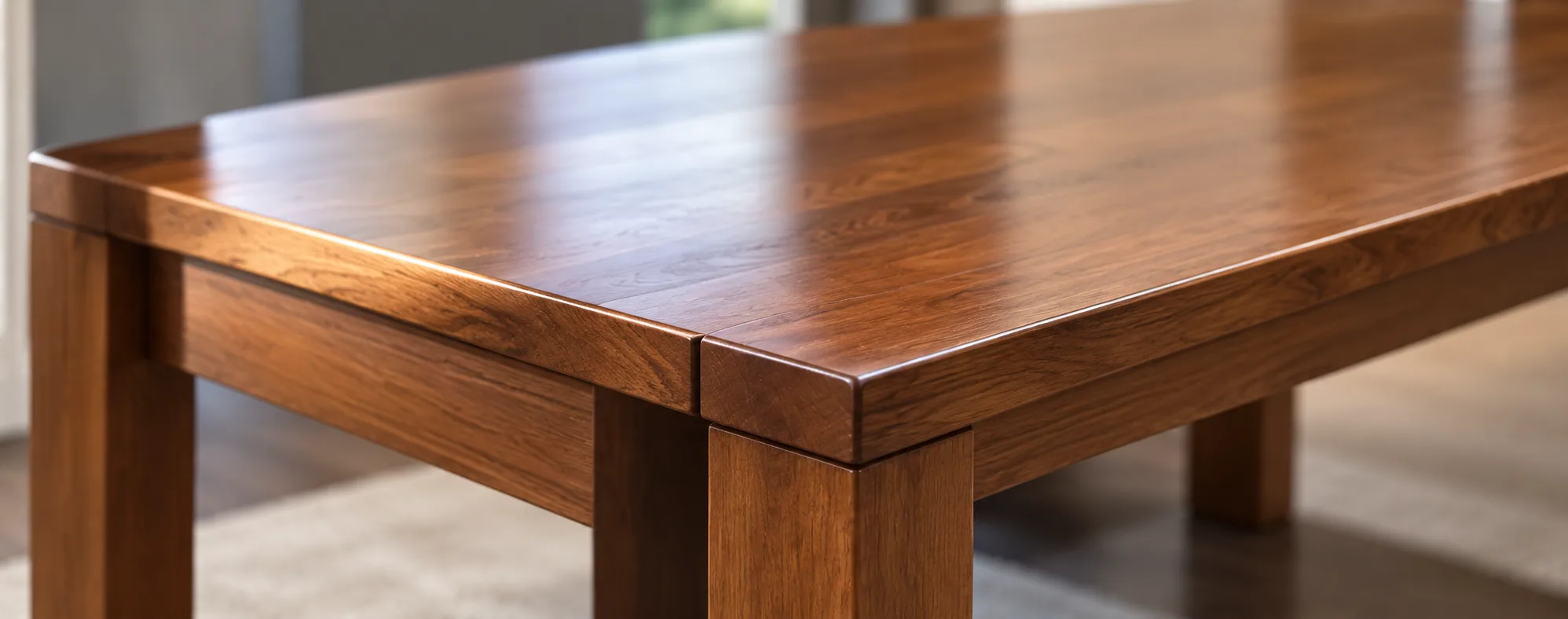
If you are not sure what a piece is covered in, photograph it and we will tell you. The full materials guide covers everything we carry.
Between full restorations
Refresh the worn areas without redoing the piece.
A seat that has gone thin in two places does not need a whole hide. Where finish remains, the worn area is rebuilt inside the visit.
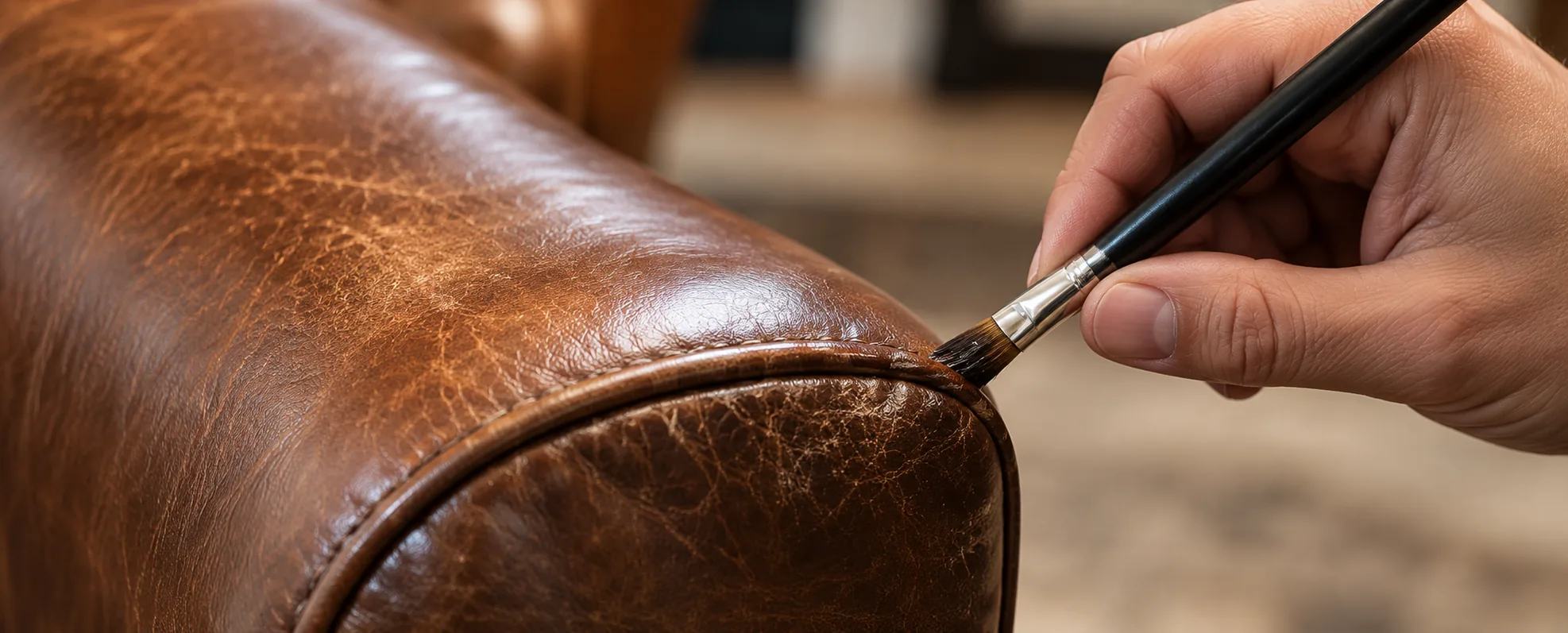
Read what is left
How much finish remains decides whether an area can be refreshed at all.
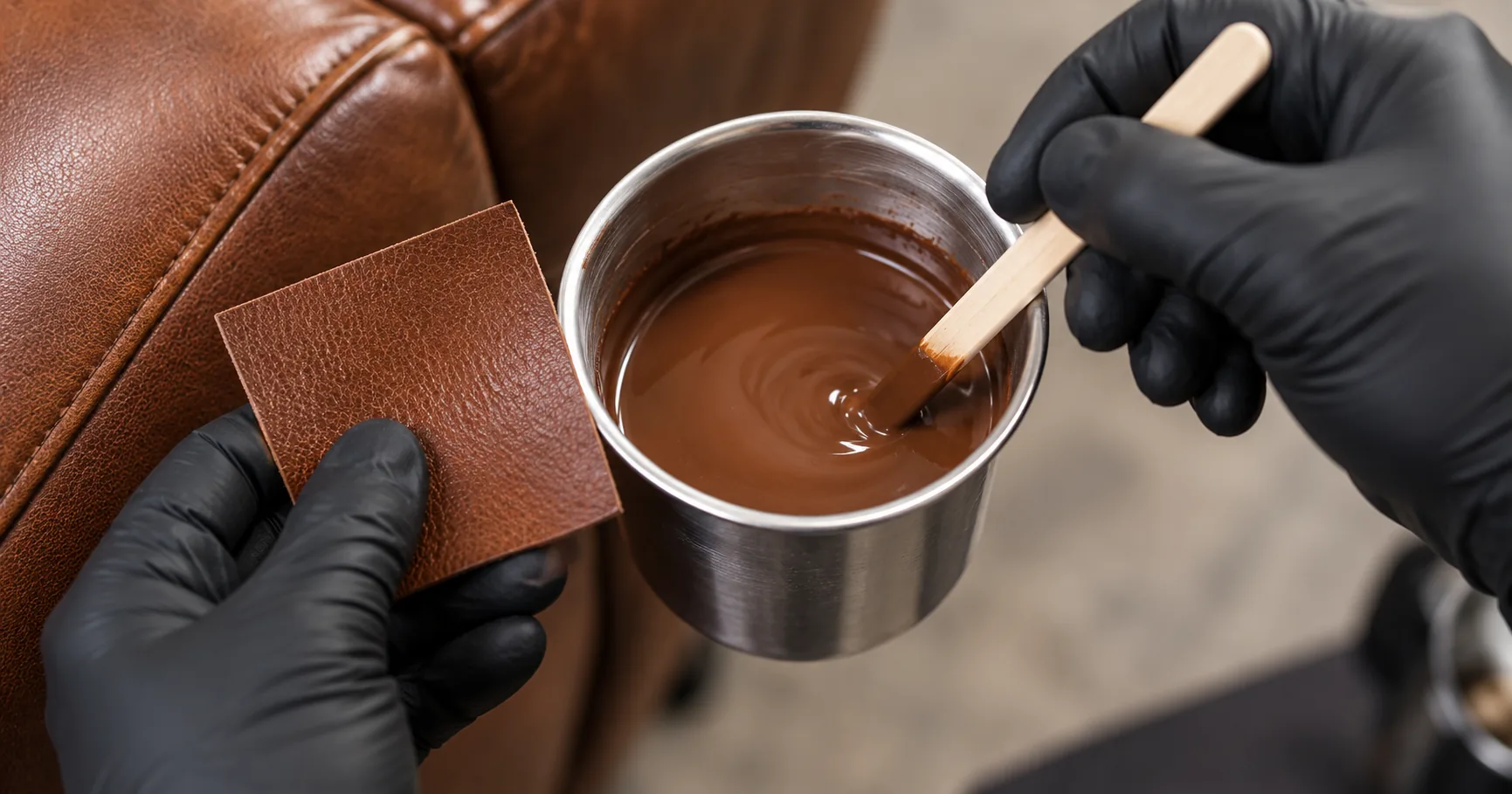
Match on the piece
Color is built against the furniture under the room's own light. Custom color matching.
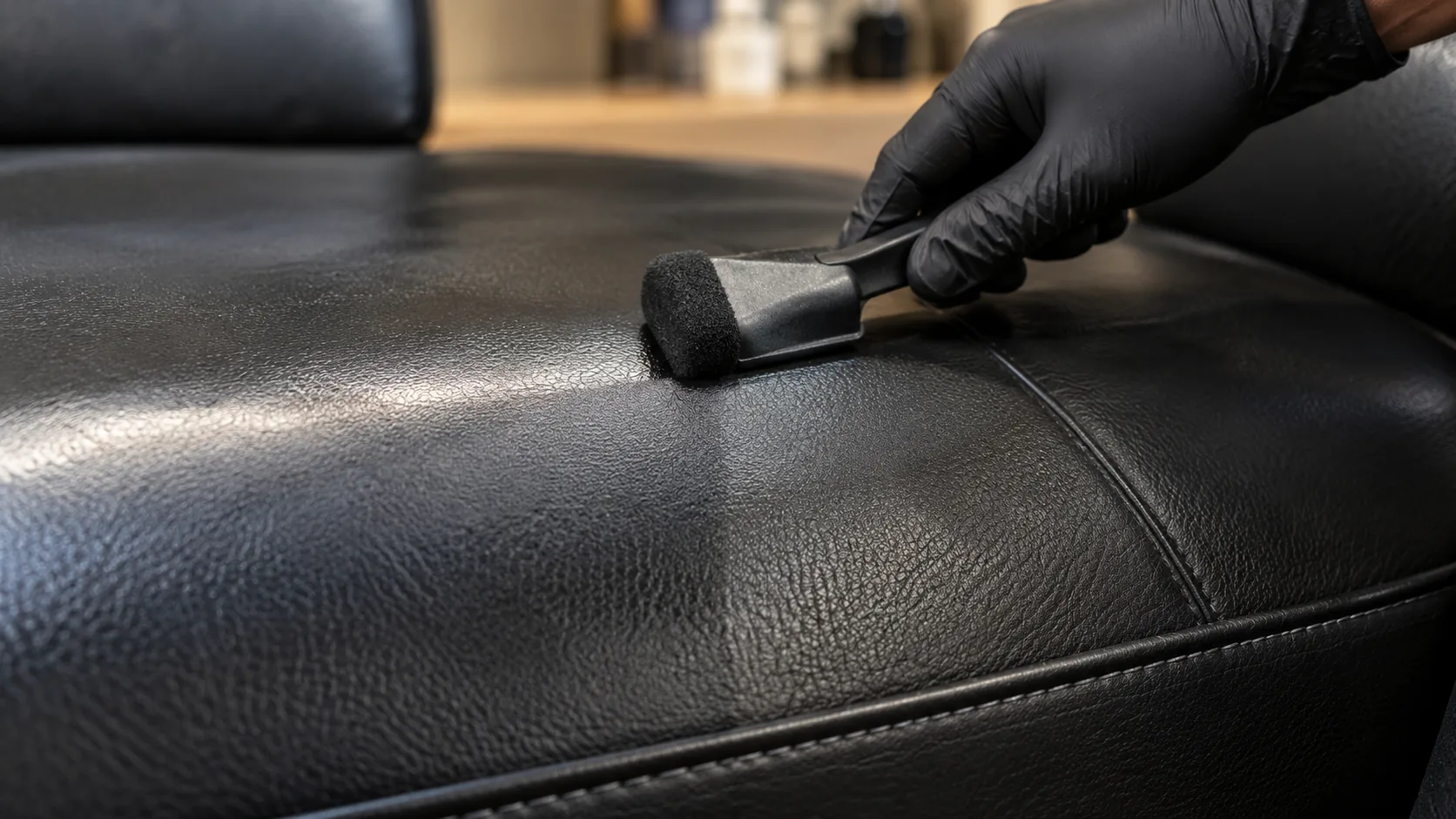
Apply only where it is thin
The worn area is rebuilt. The sound leather beside it is left alone.
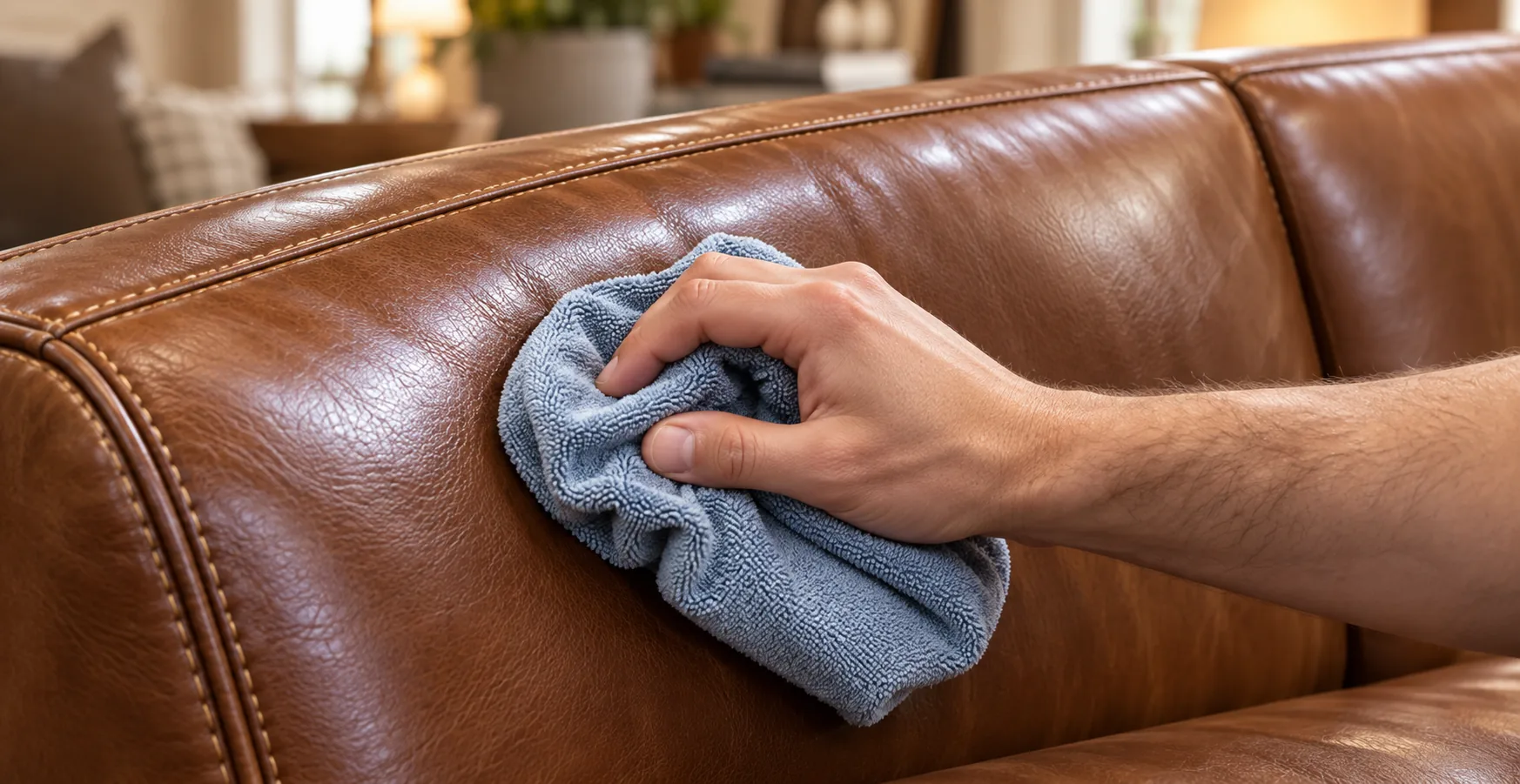
Blend the sheen
A matched color with the wrong gloss still reads as a patch.
Under the surface
Support matters as much as appearance.
A spotless seat nobody wants to sit on twice is still a complaint. Foam and seams are checked by hand every visit.
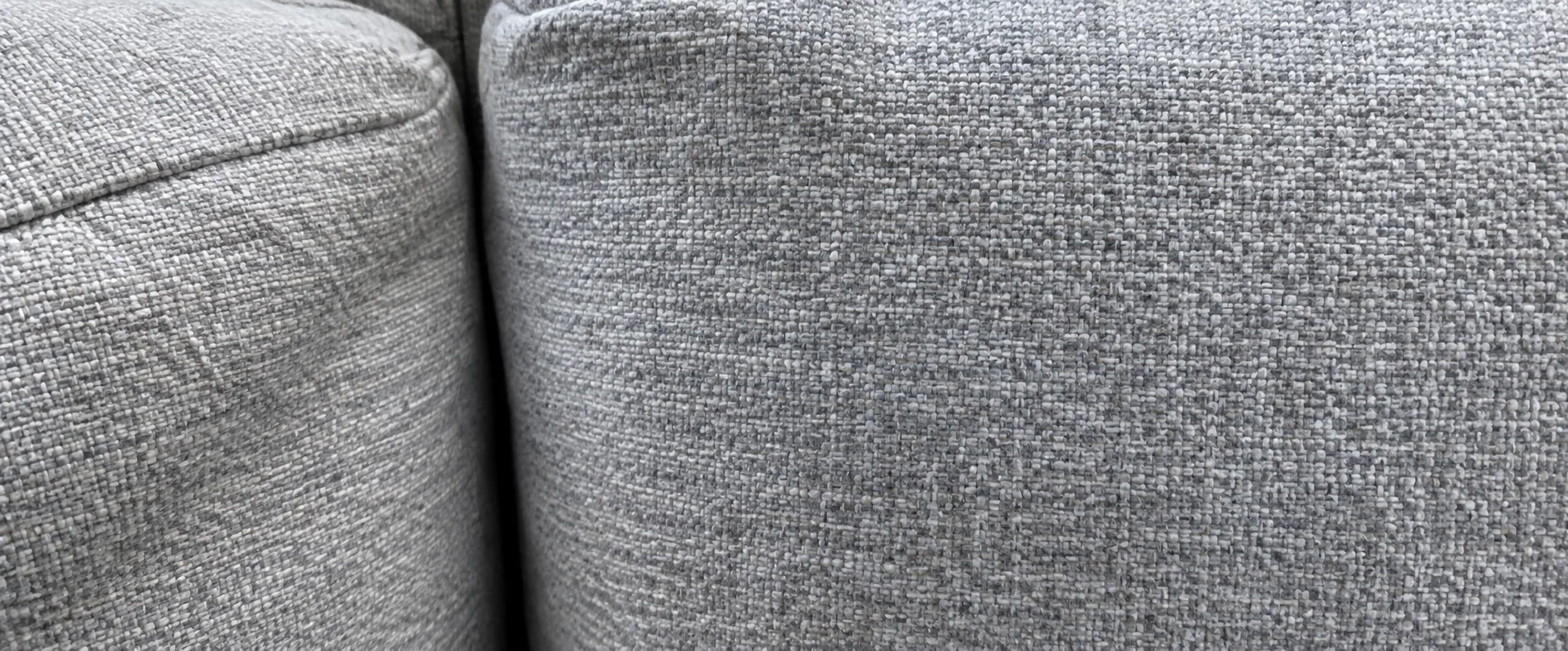
Seams under load
A seam that has started to pull is holding less than it looks.
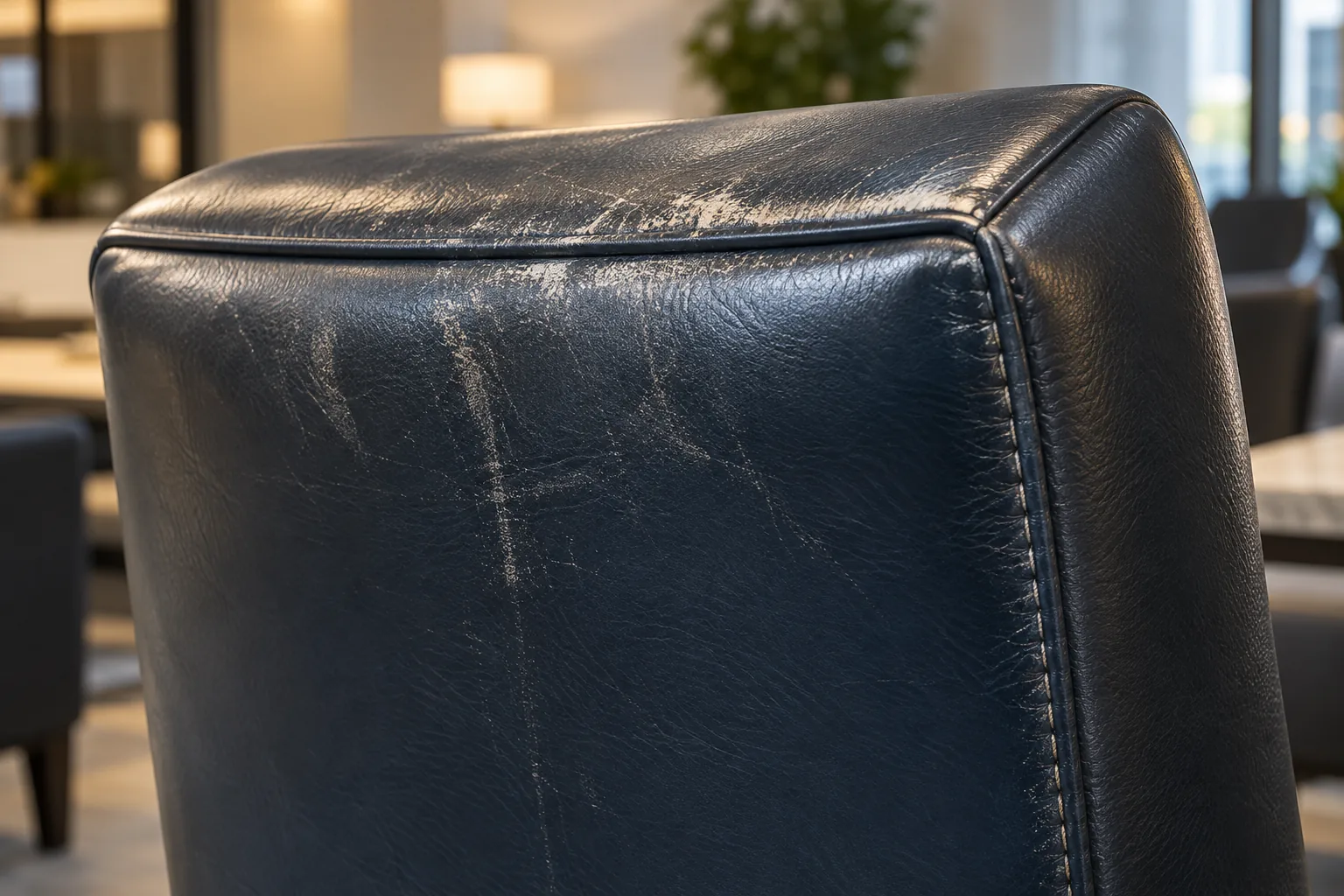
Corners and edges
Corners collapse first because everyone perches on them.
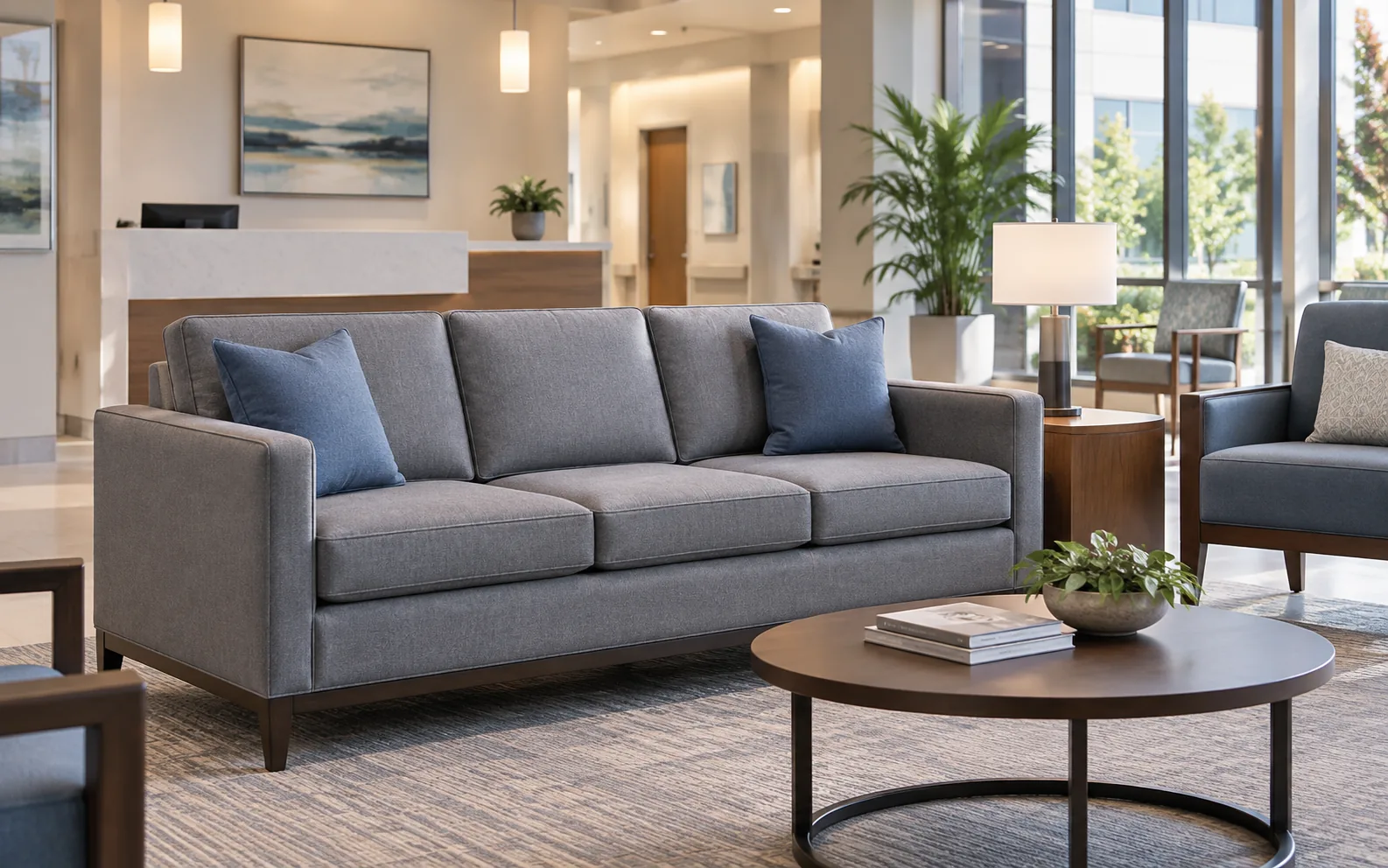
Foam that still holds
When it stops recovering, the fill is replaced rather than the piece. Cushion replacement.
After every visit
A written record, filed against the address.
Nothing closes on a verbal. Every commercial leather furniture maintenance visit ends in the same document, so an owner, an auditor or the next manager can read what has been happening without asking anyone.

The record is handed over at the end of the visit, not chased for afterwards.
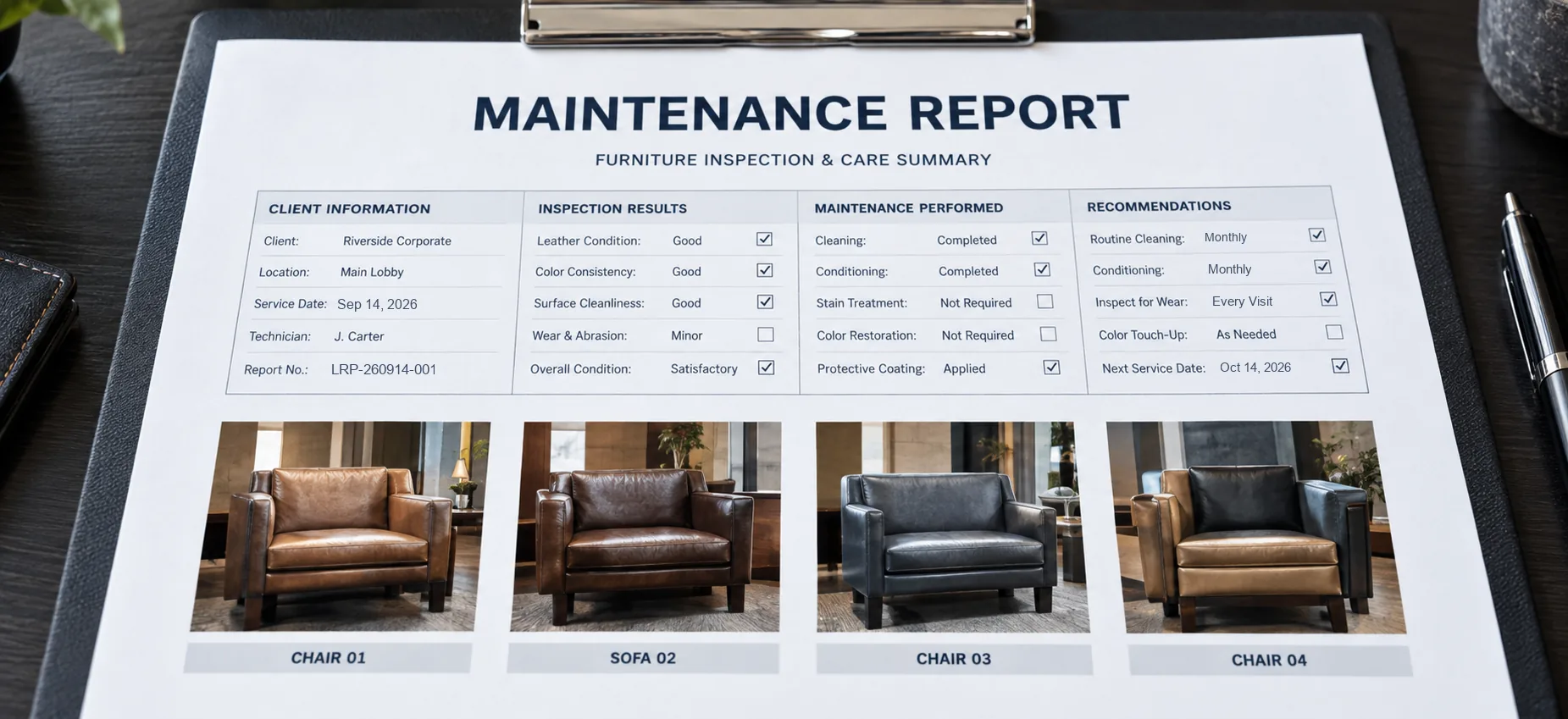
The format of the report. Services performed, the date of the visit and the date of the next one, against a named address and a reference number.
It is the same evidence an inspection asks for. Keeping a dated operations record against each asset is ordinary facilities practice, set out in the Whole Building Design Guide on facilities operations and maintenance. Seating is an asset like any other.
Small interventions
Noticeable improvement without a rebuild.
All three pieces stayed in the room. None was replaced, recovered or taken away.

Armchair, color rebuilt on the worn seat and arms
Hotel lounge
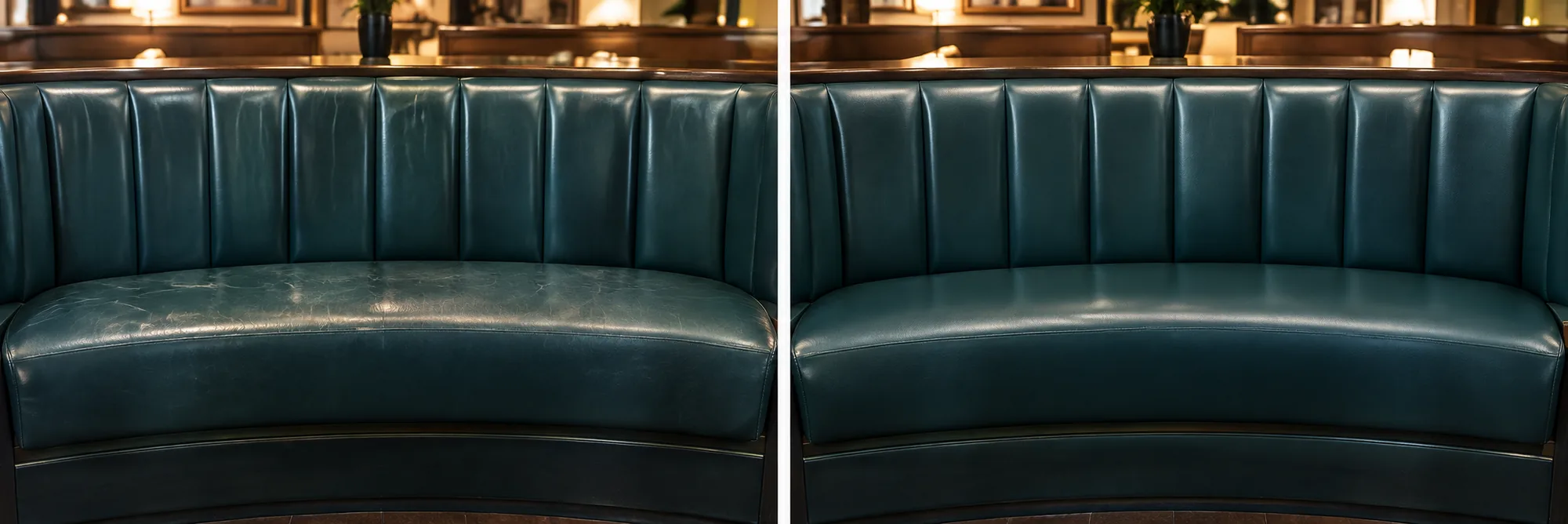
Banquette, cleaned and re-protected in place
Restaurant
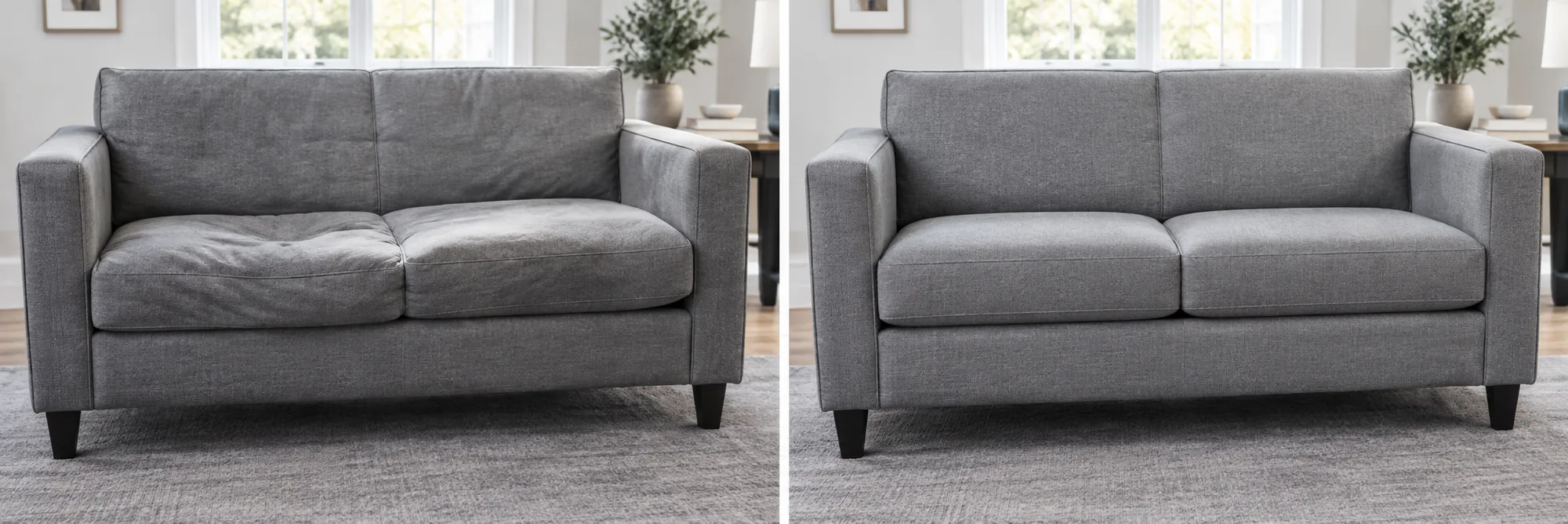
Fabric sofa, cushion support rebuilt
Office lounge
More completed work, commercial and residential alike: before and after gallery.
Before you ask for a rate
Commercial leather furniture maintenance, answered plainly.
How often do you come?
Monthly. That is the whole program, and it is the only recurring cadence we sell. A visit every month is what keeps the work small enough to finish in the room without closing it.
Can we try it once before committing?
Yes. The one-time refresh is a single visit, quoted per piece from photographs, with no agreement behind it. Most buildings start there and move to the monthly program afterwards.
Does the furniture leave the building?
Almost never. Cleaning, conditioning, protection, color touch-ups, seams and cushion support are all finished on site during your quiet hours. A piece only leaves for a frame rebuild or a full panel replacement.
What if a piece is already past maintenance?
Then it is a repair, not commercial leather furniture maintenance, and it is quoted separately so the monthly rate stays honest. That work goes through commercial leather repair instead.
Do you handle fabric and wood as well as leather?
Yes. Performance fabric, upholstery fabric and show-wood are carried in the same visit, on their own routines. Leather is fed, fabric is not, and using one routine on the other is how finishes get ruined.
What do we get after each visit?
A written record filed against the address: what was found, what was done, what was deferred and why, with photographs of the same pieces from the same angles each month.
Start with one room
Send the address and the photographs.
A wide shot of the space, a close shot of anything already worn, and the hours the room is free. You get back a monthly rate for commercial leather furniture maintenance, or a price for a single refresh — whichever you want to start with.